



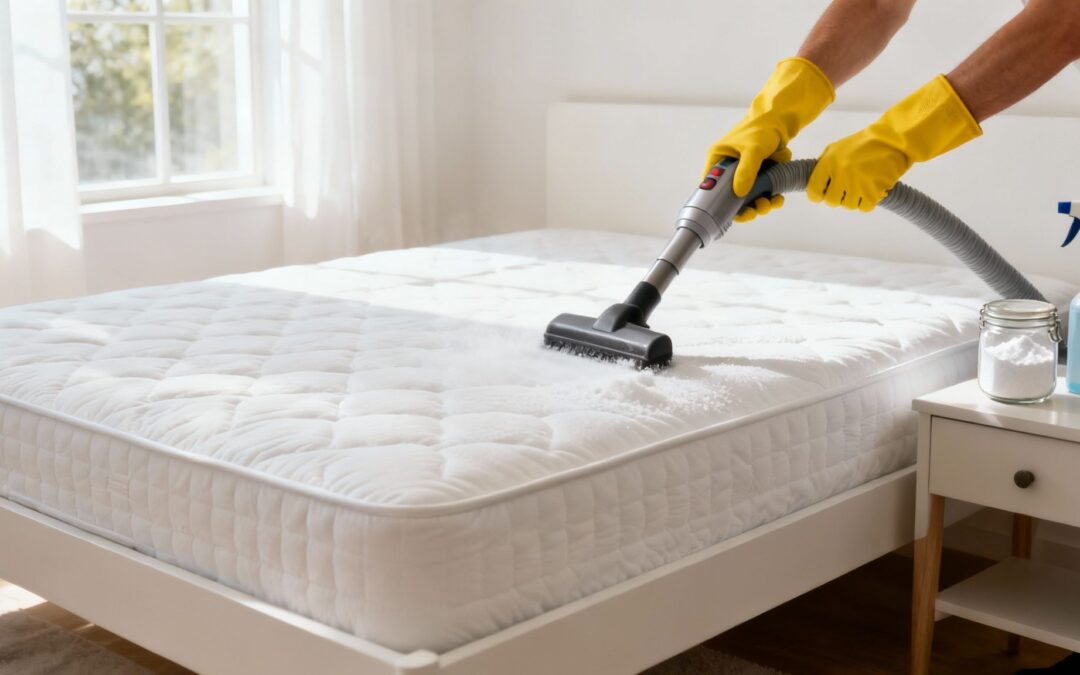
A proper mattress clean involves more than just a quick wipe-down. To really get it fresh, you need to vacuum the entire surface, spot-treat any stains, deodorise everything with a good sprinkle of baking soda, and then let it air dry completely. This whole process is designed to get rid of dust, allergens, and lingering odours, making for a much healthier place to sleep.
Your Guide to a Fresher, Healthier Mattress
It’s an easily overlooked fact, but we spend about a third of our lives in bed. Over time, our mattresses collect an unseen buildup of dust mites, dead skin cells, sweat, and allergens. Forgetting to clean your mattress isn't just a minor oversight; it can directly impact your sleep quality and overall well-being, especially for anyone dealing with allergies or asthma.
This guide goes beyond a simple checklist. We're diving into practical, real-world methods to get your bed back to a fresh and hygienic state. We’ll cover everything from a quick seasonal refresh to tackling those unexpected, stubborn stains.
Why a Clean Mattress Matters More Than You Think
A clean sleeping surface is the foundation of good health. The benefits go far beyond just looks or getting rid of strange smells. Regularly cleaning your mattress is one of the most effective ways to improve your indoor air quality and create a true sanctuary for restorative sleep.
A proactive cleaning routine can help:
- Reduce Allergens: Minimise your exposure to dust mites and other microscopic irritants that trigger allergy and asthma symptoms. A single used mattress can have anywhere from 100,000 to 10 million mites hiding inside.
- Prevent Odours: Get rid of the source of musty smells caused by sweat and bacteria, ensuring your bed always feels and smells fresh.
- Extend Mattress Lifespan: Removing corrosive stuff like sweat and body oils helps preserve the integrity of the foam and fabrics, protecting your investment.
- Improve Sleep Quality: A clean, fresh-smelling bed just feels more relaxing and comfortable, which is essential for deep, uninterrupted sleep.
A truly healthy sleep environment starts with the materials themselves. To ensure a truly healthy sleeping environment for everyone, especially infants, it's crucial to consider the materials used in your mattress; for instance, researching the best non-toxic crib mattress can provide valuable insights into creating a safer space.
The Tools You Already Have
You don't need a bunch of expensive, specialised products to give your mattress a proper clean. Most of the essentials are probably already sitting in your cleaning cupboard. Before we get into the nitty-gritty, let's gather the basics.
You'll want to have these on hand:
- A vacuum cleaner with an upholstery attachment
- Baking soda
- Mild, clear dish soap or laundry detergent
- A few clean cloths or microfibre towels
- Cold water
With just these simple items, you have everything you need to handle routine maintenance, deodorising, and a lot of common stains. Throughout this guide, we'll show you exactly how to use them to get the best results, so you can feel confident tackling any cleanup job that comes your way.
Your Simple Routine for Great Mattress Upkeep
Keeping your mattress in top shape doesn't need to be a massive, once-a-year ordeal. A bit of regular attention can make all the difference in stopping dust, allergens, and funky smells from building up. Think of it as simple, ongoing maintenance that keeps your bed fresh and extends its life.
First things first, and it’s the easiest step of all. When you're changing your sheets, don't just whip the old ones off and throw the new ones on. Strip everything—the fitted sheet, the flat sheet, and especially the mattress protector—and just let the mattress breathe for a few hours.
If you can, open a window and let some fresh air and sunlight hit the mattress. It’s a fantastic natural sanitiser. The UV rays help knock out surface-level bacteria and dust mites, while the airflow whisks away any moisture from sweat. It costs nothing but works wonders.
Get Friendly with Your Vacuum Cleaner
After your mattress has aired out, it's time to give it a good vacuum. This isn't just a quick once-over; you want to be methodical to get rid of all the invisible gunk that builds up over time, like dead skin cells, dust, and other allergens.
Pop the upholstery attachment on your vacuum—its wide head is perfect for covering the surface. No upholstery tool? The crevice tool is your next best bet for getting right into the seams and along the edges where grime loves to collect.
Start in one corner and work your way down in overlapping rows, just like you're mowing a lawn. This ensures you don't miss a single spot. Pay extra attention to any tufts, seams, or quilting, as that’s where dust and mites really settle in. Don't forget to run the vacuum along the sides, too.
The Magic of a Baking Soda Deodorise
Once you've vacuumed, it's time to deodorise and pull out any last bits of moisture. For this, baking soda is your best friend. It’s natural, cheap, and brilliantly effective at neutralising odours instead of just covering them up.
Sprinkle a generous, even layer of baking soda over the entire mattress surface. Don’t be stingy—a standard box should do the trick for a queen-sized bed. A kitchen sifter can help you get a fine, even coat without any clumps.
Now, just let it sit and do its thing. For a quick refresh, 30 minutes is enough. But if you’re tackling some stubborn smells or want a deeper clean, leaving it for several hours—or even up to 24 hours if you have the time—will give you the best results. The longer it sits, the more odour and moisture it absorbs.
Once the baking soda has worked its magic, vacuum it all up. Use the same systematic, overlapping pattern as before to make sure you get every last particle of powder off the mattress. It should now smell and feel noticeably fresher.
This simple cycle—stripping, airing, vacuuming, and deodorising—is the foundation of good mattress hygiene. Do this every few months, and you'll slash the allergens and keep your bed feeling clean and inviting. For more ways to keep your mattress in great shape, check out these comprehensive mattress care tips.
A few more tips to fold into your routine:
- Rotate Your Mattress: Every time you do this deep clean, rotate your mattress 180 degrees (head to foot). This promotes even wear and stops those annoying body impressions from forming.
- Wash Bedding on Hot: When you strip the bed, toss your sheets, pillowcases, and mattress protector in a hot wash cycle to kill off dust mites and bacteria.
- Don't Forget the Pillows: Your pillows need love too! Many can be washed or at least aired out in the sun to keep them just as fresh as your mattress.
By making this straightforward process a regular part of your cleaning schedule, you’re not just looking after your investment—you're creating a healthier foundation for a truly great night's sleep.
Let's be honest, life happens. No matter how careful you are, that morning coffee, a late-night snack, or a pet mishap is almost inevitable. But a spill doesn't have to spell disaster for your mattress. The real secret is to act fast and use the right approach for the stain you're dealing with.
The golden rule of stain removal? Blot, never rub. Seriously. Rubbing just grinds the stain deeper into the mattress fibres, making it bigger and a whole lot tougher to get out. Always grab a clean, dry cloth and press gently on the spill to soak up as much as you can before you do anything else. This one small action makes a massive difference.
Think of your regular cleaning routine as your first line of defence.
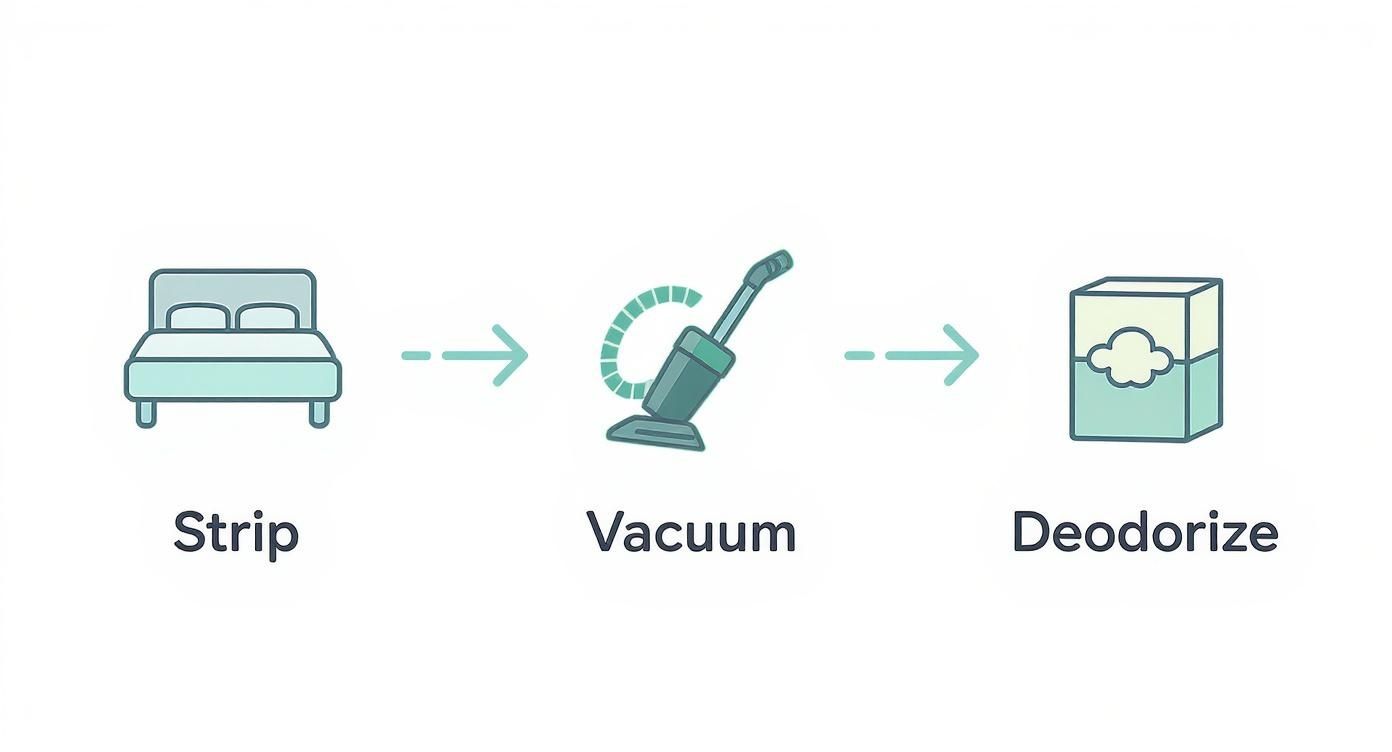
Stripping the bed, giving it a good vacuum, and deodorising regularly keeps things fresh and stops minor issues from turning into major stains.
Tackling Protein-Based Stains Like Blood and Sweat
When you're up against biological stains like blood, sweat, or vomit, the approach is very specific. Your number one rule here is to always use cold water. Hot water will literally "cook" the proteins, setting them permanently into the fabric. Once that happens, the stain is there for good.
For a fresh blood stain, start by blotting with a cloth dampened in cold water. Then, a bit of 3% hydrogen peroxide works like magic. Dab it directly onto the stain and watch it fizz—that's the peroxide breaking down the blood. Blot the residue away with another cold, damp cloth and repeat until it's gone.
Sweat stains, those pesky yellow patches that build up over time, need a different strategy.
- Whip up a paste using baking soda, a pinch of salt, and a few drops of water.
- Spread this paste right over the yellowed area.
- Let it sit for at least 30 minutes to an hour; it'll work to draw the stain out.
- Once it's dry, scrape off the paste and vacuum the area thoroughly. If the yellowing is stubborn, a light mist of a 50/50 white vinegar and water solution can help lift what's left.
Removing Urine Stains and Odours
Urine stains, whether from a child or a pet, are a two-part problem: you've got the visible stain and that lingering smell from uric acid crystals. Your best friend here is a simple solution of white vinegar and water.
First, blot up as much of the fresh urine as you can. Next, lightly spray the spot with a one-to-one mix of white vinegar and water. Don't soak the mattress—a light mist is all you need. The vinegar gets to work neutralising the ammonia in the urine.
After letting the vinegar mix sit for about 10-15 minutes, cover the entire damp area with a thick layer of baking soda. The bicarb will react with the vinegar, fizzing a little as it pulls the stain and odour-causing acid right out of the mattress fibres.
Leave the baking soda on until it’s completely dry and crusty, which might take a few hours. Once it's dry, vacuum it all up with your upholstery attachment. This trick cleans, sanitises, and deodorises all in one hit.
Dealing with Food and Drink Spills
For those everyday spills like coffee, tea, or juice, the game plan is to dilute and lift. As always, blot first to get rid of the excess liquid. For most drink stains, a few drops of clear dish soap mixed into a cup of cold water does the trick beautifully.
Dab the soapy solution onto the stain with a clean cloth, working from the outside in to stop it from spreading. Be patient and use as little liquid as possible. Follow up by blotting with a dry cloth to lift the soap and the stain with it.
If you're dealing with a greasy food stain, cornflour or baking soda is your first move. Sprinkle it over the greasy mark and let it sit for 20 minutes to absorb the oil. Vacuum it off, then treat whatever is left with your mild dish soap solution. The key to success is always using the least amount of liquid needed to get the job done.
For quick reference, here’s a breakdown of how to tackle some of the most common mattress stains you're likely to encounter.
DIY Stain Removal Guide for Common Mattress Stains
| Stain Type | Recommended Cleaning Solution | Application Method |
|---|---|---|
| Blood | Cold water and 3% Hydrogen Peroxide | Blot with cold water first. Apply a small amount of hydrogen peroxide, let it fizz, then blot away the residue with a clean, damp cloth. |
| Sweat/Yellow Stains | Baking soda, salt, and water paste; 50/50 white vinegar & water spray | Apply the paste to the stain, let it dry for 30+ minutes, scrape off, and vacuum. For lingering stains, lightly mist with the vinegar solution. |
| Urine | 50/50 white vinegar & water solution, followed by baking soda | Lightly spray the stain with the vinegar mix. Let it sit for 10-15 mins, then cover generously with baking soda. Vacuum up when completely dry. |
| Coffee/Tea | Clear dish soap and cold water | Blot the excess liquid. Gently dab the soapy solution onto the stain, working from the outside in. Blot with a dry cloth to lift the residue. |
| Grease/Oil | Cornflour or baking soda, then clear dish soap and water | Sprinkle cornflour on the stain to absorb oil, let sit for 20 mins, then vacuum. Treat any remaining mark with a mild detergent solution. |
This table should help you react quickly with the right ingredients you probably already have at home, turning a potential disaster into a minor cleanup job.
Deep Cleaning to Banish Allergens and Dust Mites
Sometimes, the things you can't see are what mess with your health the most. Beyond the odd stain or odour, your mattress can become a breeding ground for dust mites, bacteria, and allergens. If you have asthma or allergies, this invisible world can trigger nightly discomfort, ruin your sleep, and make respiratory symptoms flare up.
While regular vacuuming and deodorising are great habits, a proper deep clean every so often is non-negotiable for tackling these hidden irritants. This isn't just about surface-level tidiness; it’s about sanitising your sleep environment for better breathing and a genuinely hygienic rest.
The Unseen World in Your Mattress
It’s an unsettling thought, but your mattress is a thriving ecosystem. We shed millions of dead skin cells every night, which is basically an all-you-can-eat buffet for dust mites. It's their waste particles that are a major trigger for people with allergies and asthma. This is a particularly big deal for us in Australia, as our climate can create the perfect breeding conditions for these pests.
The link between unclean beds and respiratory issues is well-documented. A single mattress can be home to up to 10 million dust mites, which is a pretty shocking health risk. With over 2 million Australians living with asthma and a massive 45% of the population dealing with allergies—80% of which are dust mite-related—the need to properly clean a mattress becomes a critical part of staying healthy. You can dig into more stats on mattress hygiene in this Australian sleep guide.
Harnessing the Power of Steam Cleaning
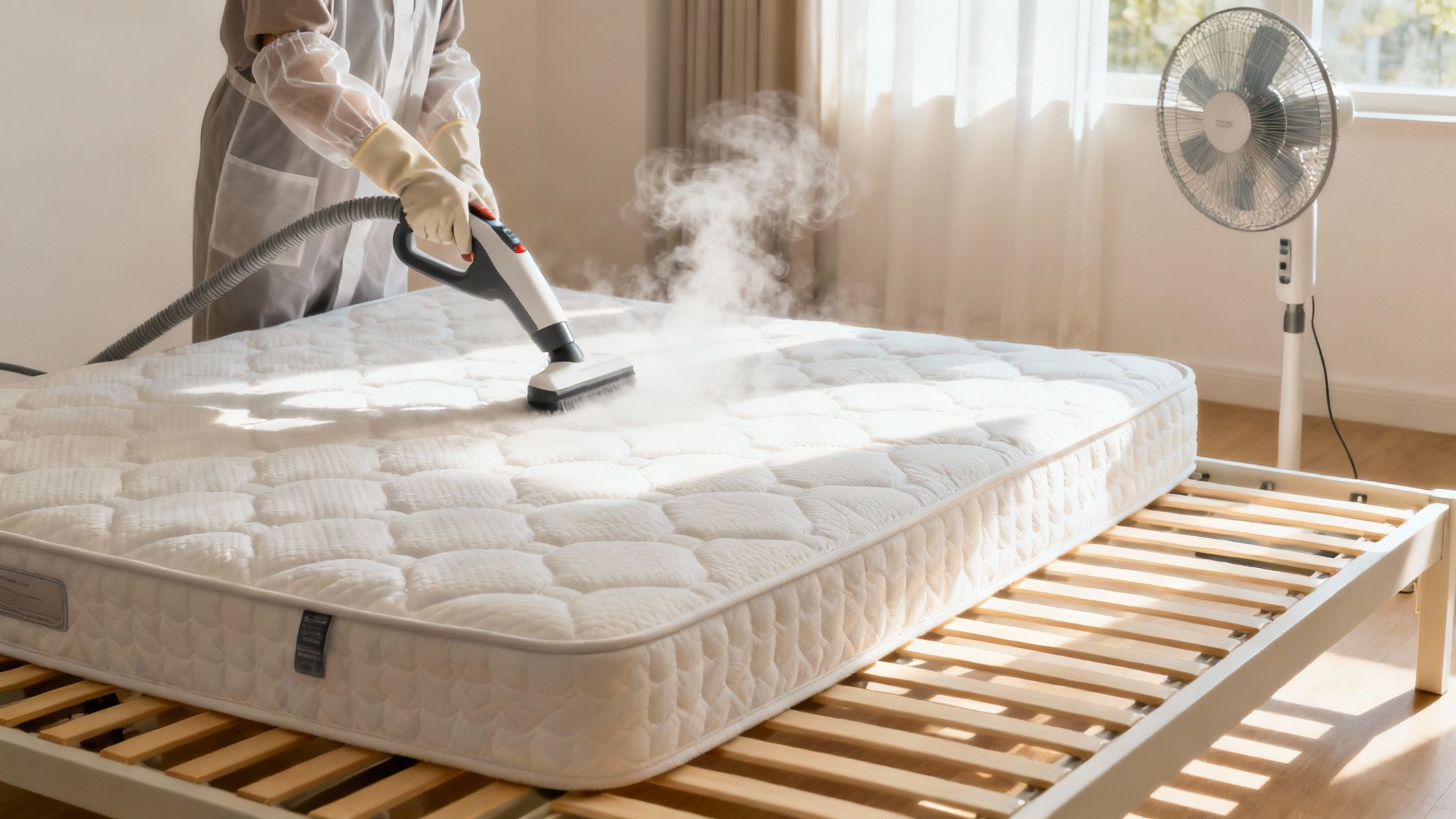
One of the most effective deep-cleaning methods out there is steam cleaning. It works by using high-temperature vapour to get deep into the mattress fibres, killing bacteria, dust mites, and other nasties on contact—all without harsh chemicals. It’s a powerful, non-toxic way to sanitise your bed.
The intense heat doesn't just eliminate pests; it also helps break down the proteins in allergens, rendering them harmless. This makes it an ideal solution for anyone trying to create an allergy-friendly sleeping space.
Important Note: Steam cleaning is fantastic for many mattress types, but it's a no-go for memory foam or latex. The high heat and moisture can permanently damage their cellular structure, wrecking their support and lifespan. Always, always check your manufacturer's care instructions before you start.
How to Safely Steam Clean Your Mattress
If you've confirmed your mattress is compatible (most traditional innerspring and some hybrids are fine), using a steam cleaner is pretty straightforward. You can either hire a machine or use a personal handheld unit designed for upholstery.
Here’s a practical way to approach it:
- Prep the Mattress: First, give your mattress a thorough vacuuming, just like we covered in the routine upkeep section. This gets rid of all the loose dust and debris, helping the steam penetrate more effectively.
- Use Long, Slow Passes: Hold the steamer nozzle a few centimetres above the fabric. Work your way across the entire surface in long, overlapping strokes. Go slowly—this gives the heat enough time to do its job and properly sanitise each section.
- Focus on Crevices: Pay extra attention to the seams, tufts, and edges. This is where dust mites and allergens love to congregate. If your machine has a smaller attachment, use it to get right into those tight spots.
- Keep it Moving: Whatever you do, don't let the steamer sit in one spot for too long. The idea is to apply hot vapour, not to soak the mattress. Constant, steady movement is key.
The Crucial Step: Drying a Steamed Mattress
After you clean a mattress with steam, letting it dry completely is non-negotiable. Any trapped moisture is the perfect recipe for mould and mildew, which completely defeats the purpose of your deep clean. This drying process can take several hours, so it's best to start your steam cleaning first thing in the morning.
To speed things up and get a thorough dry:
- Maximise Airflow: Open every window in the bedroom to create a good cross-breeze.
- Bring in the Fans: Set up one or more fans to blow directly across the mattress surface.
- Use a Dehumidifier: If you've got one, a dehumidifier is brilliant for pulling moisture out of both the air and the mattress itself.
- Harness Sunlight (Carefully): If you can, leaning the mattress near a sunny window helps. Just avoid prolonged, direct sunlight, as it can damage some fabrics.
Before you even think about putting sheets back on, press down firmly on the mattress in a few different spots with a clean, dry towel. If you feel any dampness at all, it needs more time. Your patience here is crucial for a healthy, mould-free result.
Knowing When to Call in a Professional
While DIY methods are fantastic for general upkeep and tackling minor spills, there are times when home equipment just won't cut it. Knowing when to step back and call in a professional is key to not only saving your mattress but also protecting your time, effort, and health.
Sometimes, the battle is simply too big for baking soda and a vacuum cleaner. Recognising the limits of your DIY arsenal is the first step. If you’ve tried multiple times to lift a stubborn stain with no luck, or if a mark seems to creep back after drying, it’s a sign the problem has sunk deep into the mattress layers. At this point, more scrubbing or adding liquid can actually make things worse by spreading the stain or causing moisture damage.
The Tell-Tale Signs You Need an Expert
Certain scenarios almost always need a professional's touch. Persistent, musty odours are a major red flag. If you’ve deodorised your mattress more than once but a strange smell lingers, it could point to a deeper issue like mould or mildew growing inside the mattress core—something you definitely don’t want to tackle alone.
It's probably time to hire a professional service if you're dealing with:
- Deep-Set Stains: Marks from things like red wine, coffee, or old biological fluids have had a long time to set and are notoriously tough to remove completely.
- Persistent Odours: A smell that just won't go away, especially a musty or sour one, often means bacteria or mildew is hiding deep inside.
- Major Liquid Spills: If a large amount of liquid has soaked right through, a professional’s powerful extraction gear is the only way to get it all out and stop mould from growing.
- Mould or Mildew Concerns: Spotting any visible signs of mould, or just smelling that distinct earthy odour, requires immediate professional help to safely sanitise the mattress.
- Severe Allergen Buildup: For anyone with severe allergies or asthma, a professional deep clean can pull out a much greater volume of dust mites, dander, and other triggers than any home vacuum cleaner.
Professionals have the specialised equipment and know-how to clean a mattress safely and effectively. Their industrial-grade machines can flush out deep-seated grime and extract nearly all the moisture, something a home steam cleaner or wet/dry vac simply cannot do.
What to Expect From a Professional Service
When you hire a reputable company, you’re not just getting a person with a machine; you're getting genuine expertise. A trained technician will first inspect your mattress to figure out the fabric type and the nature of any stains. This lets them choose the right cleaning solutions that won’t damage the material.
The most common and effective method they use is hot water extraction, which you might know as steam cleaning. The process usually looks something like this:
- First, they pre-treat stubborn stains and heavily soiled areas with specialised cleaning agents.
- Next, they inject a high-pressure spray of hot water and cleaning solution deep into the mattress fibres.
- Finally, they use a powerful vacuum to suck out the water, along with all the dissolved dirt, bacteria, and allergens.
This method gives your mattress a true, hygienic deep clean and seriously cuts down on drying time compared to any DIY attempt. For a Melbourne homeowner, finding a service that uses powerful, truck-mounted equipment often means a more efficient clean with less noise inside your home.
Budgeting for a Professional Clean in Australia
The cost of professionally cleaning a mattress can vary, but it's often more affordable than you might think, especially when you weigh it against the price of a brand-new mattress.
In Australia, prices are typically based on the mattress size. You can expect to pay anywhere from $80 to $150 on average, with larger king-size beds costing between $150 and $220. If you want a more detailed look at what to expect, you can find a helpful cost breakdown here. Think of it as an investment that not only restores your mattress but also contributes to a much healthier place to sleep.
Your Mattress Cleaning Questions, Answered
Even with the best guide, there are always a few tricky questions that come up. Let's run through some of the most common ones I hear from clients to clear up any confusion and help you get the best possible results.
Getting these details right is the difference between a quick, effective clean and accidentally causing bigger problems like mould or fabric damage.
How Often Should I Clean My Mattress?
This is a great question, and the answer really depends on what you mean by 'clean'. I tell my clients to think of it in two ways: regular upkeep and a proper deep clean.
For general maintenance, a good vacuum and deodorise every three to six months is perfect. An easy way to remember is to do it when you change your bedding for the season—say, swapping your heavy winter duvet for a lighter one. This is usually enough to keep on top of the day-to-day buildup of dust, skin cells, and minor allergens.
A full deep clean, however—like a steam clean or a serious stain removal session—is something you'll want to tackle once or twice a year. If you're dealing with bad allergies, have pets sharing the bed, or someone's been sick, you might want to do it more often to keep your sleeping space as hygienic as possible.
Can I Use a Carpet Cleaner on a Mattress?
It’s tempting, I know. You've got the machine right there, and it seems like it should work. But you have to be extremely careful here. While you can technically use the upholstery attachment from a carpet cleaner, it’s a risky move if you don't know what you're doing.
The biggest danger is over-wetting the mattress. Carpet cleaners are designed to flush out dirt with a lot of water, and if that moisture soaks deep into the foam or springs, it can take forever to dry. This creates the perfect damp, dark environment for mould and mildew to grow, which is a far worse problem than the stain you started with.
If you’re set on trying it, stick to these rules:
- Only ever use the upholstery or handheld attachment.
- Set the machine to the lowest possible water setting.
- Go over the area several times on the suction-only function to pull out every last drop of moisture.
- Be prepared to let it dry for a very long time.
Honestly, a professional service with powerful truck-mounted gear is a much safer bet. Our machines have incredible suction power, meaning we can pull almost all the moisture back out and eliminate any risk of mould.
How Long Does a Mattress Take to Dry?
Drying time is probably the most critical part of the whole process when you clean a mattress. A damp mattress is a health risk, so you can't rush this. The exact time will depend on the cleaning method you used, how much water was involved, and even the humidity in the room.
After a light spot-clean, you might find the area is bone dry in just 2-4 hours. But after a more intense steam clean or wash, you need to budget at least 6-8 hours, and sometimes up to a full 24 hours, for it to dry completely.
To speed things up and make sure it's properly dry:
- Get a Cross-Breeze Going: Open the windows on opposite sides of the room to let the air circulate.
- Bring in the Fans: Point a few fans directly across the surface of the mattress.
- Use a Dehumidifier: On a damp Melbourne day, a dehumidifier will be your best friend. It actively pulls moisture out of the air and, by extension, your mattress.
Before you even think about putting sheets back on, press down hard on the cleaned spot with a clean, dry towel. If you see or feel any dampness, it needs more time. Never, ever make a bed with a mattress that isn't 100% dry.
When DIY methods just won't cut it, trust the experts to bring your mattress back to life safely and effectively. Right Price Carpet Cleaning uses powerful, truck-mounted steam cleaning to eliminate deep-set dirt, allergens, and moisture, giving you a truly hygienic clean with much faster drying times. Get your instant quote and book your Melbourne mattress cleaning service online today at https://rightpricecarpetcleaning.com.au.
Recent Comments