



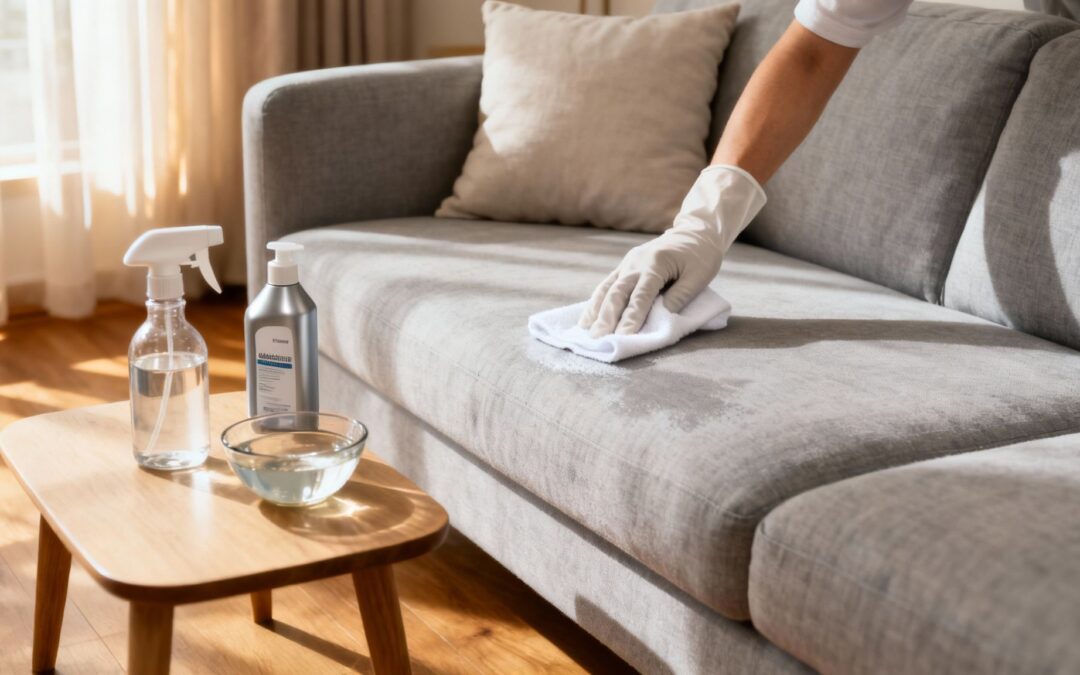
Before you even think about grabbing a bottle of cleaner or mixing up a DIY solution, you need to play detective. Your couch has a secret, and it’s usually hiding on a little tag tucked away under a cushion or along a seam.
This tag is your cleaning bible. It has a simple one-letter code—W, S, S/W, or X—that tells you exactly what you can and can't use. Getting this wrong is the fastest way to a cleaning disaster.
Decode Your Couch to Choose the Right Cleaner
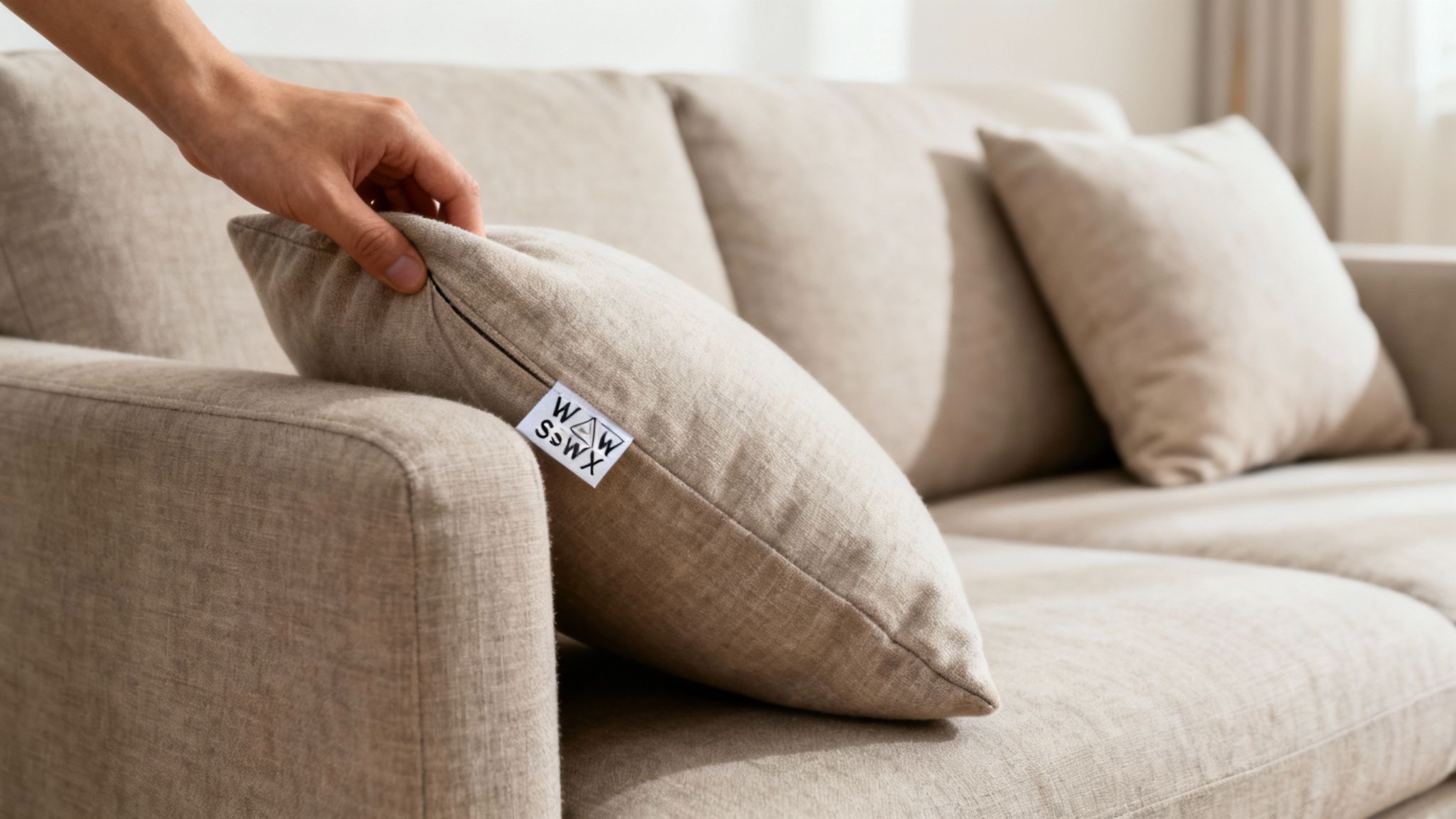
Think of that little tag as the instruction manual for your sofa. Ignoring it can lead to permanent damage like faded colours, unsightly water rings, or even fabric shrinkage. It’s a small detail, but it’s the most important one.
Let's break down what each of those letters means so you can clean with confidence.
Your Couch Cleaning Code Cheat Sheet
That little tag on your couch is everything. It tells you exactly what kind of cleaner is safe to use on your specific upholstery. Here’s a quick guide to understanding what each code means for you.
| Code | What It Means | Safe Cleaning Solutions |
|---|---|---|
| W | Water-Based Cleaner Safe | This is the most common and user-friendly code. You can use water, gentle soap solutions, or most commercial upholstery shampoos. |
| S | Solvent-Based Cleaner Only | Water is the enemy here! You must use a water-free dry-cleaning solvent. Using water can cause permanent rings and discolouration. |
| S/W | Solvent or Water-Based | You’ve got options. Both water-based cleaners and solvents are safe, but it's always best to start with the mildest choice first. |
| X | Vacuum Only | The most delicate of them all. Do not use any liquid, foam, or solvent. For stains, your only safe bet is calling in a professional. |
Once you know your code, you can move forward without guessing. It takes the anxiety out of the process and ensures you won't accidentally ruin your favourite piece of furniture.
Knowing the code is step one, but it also helps to have a general idea of your couch's fabric. For a deeper dive, this guide on understanding different upholstery materials is a fantastic resource.
Pro Tip: I can't stress this enough—always spot-test. No matter what the tag says, apply a tiny amount of your cleaner to a hidden spot, like under a cushion or on the back skirt. Let it dry completely. If you see any weird discolouration or texture changes, don't use it. This two-minute test has saved me from countless disasters.
Australians are definitely paying more attention to proper fabric care. It's estimated that household consumption of cleaning products, including those for couches, will hit around AU$425.83 million in 2025. It’s clear we want effective, safe solutions for our homes.
Whipping Up a Powerful DIY Couch Cleaner at Home

Before you reach for a pricey commercial product, have a look in your pantry. You can whip up a fantastic couch cleaning solution with just a few simple ingredients you already own. Going the DIY route is not only easier on your wallet, but it also gives you total control over what you’re spraying on your furniture. For anyone with kids, pets, or allergy sensitivities, that’s a huge plus.
And honestly, making your own cleaner is much easier than you'd think. It all comes down to matching the right recipe to your couch's specific cleaning code. With the right mix, you can tackle everyday dirt and light stains without resorting to harsh chemicals.
The Go-To Solution for Water-Safe Fabrics (Code W)
If your couch is labelled with a 'W' or 'S/W' code, a simple water-based cleaner is your best mate. This gentle yet effective mix uses the grease-cutting power of dish soap and the natural cleaning punch of white vinegar.
Here’s our tried-and-true recipe:
- 1 cup of warm water: This helps dissolve everything and gets to work lifting dirt.
- 1/2 cup of white vinegar: A natural deodoriser that's great at breaking down mild stains.
- 1 tablespoon of clear dish soap: Cuts right through grease and grime without leaving a film.
Just combine these in a spray bottle and give it a good shake. Lightly mist the stained area—the key is to avoid soaking the fabric—and then gently blot with a clean microfibre cloth. You want to lift the stain out, not rub it deeper into the fibres.
A common mistake I see is people adding way too much soap. More bubbles don't mean a better clean; they just create a sticky residue that will attract even more dirt later on. Stick to the measurements for a cleaner that actually works.
A Safe Solvent-Based Cleaner for Delicate Fabrics (Code S)
When your couch tag says 'S' for solvent-only, water is completely off-limits. Using a water-based cleaner on these fabrics can lead to permanent damage like water rings and ugly browning. For these more delicate materials, rubbing alcohol is the perfect ingredient for a safe DIY spot treatment.
This incredibly simple mix works wonders on ink spots or tougher stains on solvent-safe upholstery.
- 1 cup of rubbing alcohol (isopropyl alcohol): This is the star ingredient because it evaporates quickly without leaving moisture behind—absolutely crucial for 'S' code fabrics.
- 1 cup of white vinegar: You can add this to boost cleaning power for 'S/W' fabrics, but if your couch is strictly 'S' code, stick to just the alcohol.
Pour a small amount of rubbing alcohol onto a clean white cloth. Never pour it straight onto the couch. Gently dab the stained area, working from the outside of the stain inward to stop it from spreading. The alcohol lifts the stain onto the cloth and then vanishes, protecting your delicate fabric.
With these simple recipes, you’ve got a powerful, custom-made couch cleaning solution ready for just about anything. Just remember to always do a quick spot test on a hidden area first. This gives you the confidence to clean without worrying about causing any unintended damage.
When DIY solutions just aren't cutting it against a stubborn, set-in stain, it’s time to head to the cleaning aisle. But walking into a store and seeing a wall of commercial products can be overwhelming. How do you know which one will actually work?
It's a lot simpler once you know what you’re looking for. The trick is to match the cleaner to your specific couch fabric and the type of mess you’re dealing with. Not all cleaners are made equal, and picking the right one means you get the job done without wasting money or, even worse, damaging your furniture.
Foams, Sprays, and Concentrates Explained
Most commercial cleaners boil down to three main types. Each one is designed for a slightly different job and fabric.
- Foam Cleaners: These are a lifesaver for delicate fabrics or any material with an 'S' code (solvent-only). The foam works by lifting dirt to the surface without soaking deep into the fibres, which is brilliant for preventing those annoying water rings and other damage. You just spray it on, work it in gently, and vacuum it up once it's dry. Easy.
- Spray Cleaners: This is what most people reach for. Sprays are perfect for general spot-cleaning on any 'W' (water-safe) fabric. They give you a direct, targeted hit right on the spill or stain. The only thing to watch out for is oversaturating the spot—a little goes a long way.
- Concentrated Liquids: Think of these as the heavy-duty option. Concentrates are powerful solutions that you dilute with water and use in an upholstery cleaning machine. They’re not for a little spill; they’re for when you need to deep clean the entire couch.
If you're a pet owner, you know that some messes need a bit more firepower. For issues like pet incontinence, it’s worth looking into specialized pet incontinence cleaning solutions designed to break down those specific proteins and odours.
What to Look For and What to Avoid
Honestly, the most important thing you can do is read the label. It’s your best line of defence against accidentally ruining your couch. Look for products that clearly state they're safe for your specific fabric type—for instance, "safe for use on synthetic microfibre."
The demand for safer products is really changing the game. In fact, the couch and upholstery cleaning sector is a huge part of Australia's cleaning services industry, which is valued at around AUD 18.05 billion in 2024. A big driver behind that number is that more and more people are looking for sustainable and eco-friendly cleaning solutions.
Here’s a quick rundown of the ingredients to keep an eye out for.
Ingredients to Look For:
- Enzymatic cleaners: These are brilliant for organic stains like pet accidents, wine, or food spills. The enzymes literally break down the proteins that cause the stain and odour.
- Plant-based surfactants: A much gentler alternative to the harsh chemical detergents you find in some older products.
- Solvent-based (water-free) options: An absolute must-have if your couch has an 'S' cleaning code. Water will wreck it.
Ingredients to Avoid:
- Bleach: Just don't. It can cause irreversible discolouration and will weaken the fabric fibres over time.
- Ammonia: This is another harsh chemical that’s far too aggressive for most types of upholstery.
- Perchloroethylene ("Perc"): You might find this in some old-school dry-cleaning solvents. It's a harsh chemical that you're better off avoiding in products you use at home.
Choosing a product with the right formula makes all the difference. You get a powerful clean that’s actually safe for your furniture and your family.
A Practical Guide to Application and Stain Removal
Having the right cleaning solution is a great start, but it's your technique that really makes the difference. Knowing how to apply it correctly is what turns a potential disaster into a satisfying "I did that!" moment. And it all begins before you even open the bottle.
First things first: vacuum your couch. I mean really vacuum it. Grab an upholstery or crevice tool and get right into the seams, under the cushions, and along the frame. You need to pull out all the loose dirt, pet hair, and crumbs. Skipping this step is a classic mistake—you’ll just end up turning dry grit into a muddy mess the second you add a liquid cleaner.
Mastering the Art of Application
The golden rule of stain removal? Blot, never rub. Seriously. When you scrub a fresh spill, you're not just cleaning it; you're grinding the stain deeper into the fabric and spreading it over a much bigger area.
Instead, grab a clean, white microfibre cloth. Apply your cleaning solution to the cloth, not directly onto the stain—this gives you much more control. Then, start blotting from the outside of the stain and work your way in. This simple trick contains the spill and lifts it out of the fabric and onto your cloth. Keep switching to a clean part of the cloth so you're not just dabbing the mess back on.
I once saw a client try to scrub a red wine spill on a light beige couch with a coloured sponge. The aggressive rubbing not only pushed the wine deeper but also transferred dye from the sponge, creating a much larger, multi-coloured problem. Blotting with a white cloth would have saved the cushion.
Once you've blotted the stain away, you'll want to "rinse" the spot. Just dampen a fresh cloth with plain water (only if your couch is Code 'W' safe!) and gently blot the area again. This helps remove any cleaning residue and prevents those frustrating water rings from forming as it dries.
How to Tackle Common Couch Stains
Of course, not all spills are created equal. A greasy pizza mishap needs a totally different approach than a spilt cup of coffee. To help you out, here’s a quick guide for some of the most common—and stubborn—stains you’re likely to face.
The key is always to act fast. The longer a stain sits, the more it bonds with the fabric fibres, making it significantly harder to remove completely.
| Stain Type | Recommended DIY Solution | Effective Commercial Product Type |
|---|---|---|
| Red Wine & Coffee | Blot immediately, then apply a mix of dish soap and white vinegar (for 'W' fabrics). | An oxygen-based stain remover that lifts tannins without harsh bleach. |
| Grease & Oil | Sprinkle bicarb soda on the stain to absorb the oil. Let sit for 20 mins, then vacuum. | A solvent-based spot cleaner ('S' code safe) that can break down lipids. |
| Ink | Dab carefully with a cloth dampened with rubbing alcohol ('S' code safe). | A specialised ink remover or a solvent-based spot treatment. |
Whether you're using a homemade mix or a store-bought product, having the right tool for the job makes all the difference.
Finally, let's talk about drying—it’s crucial. Let the cleaned area air dry completely. If you want to speed things up, point a fan at the damp spot; this also helps prevent water marks. Whatever you do, resist the urge to use a hairdryer. Direct heat can permanently set any faint traces of the stain you might have missed. With the right technique, your couch will be looking refreshed and stain-free in no time.
Knowing When to Call a Professional Cleaner
While a good DIY cleaning solution can tackle plenty of everyday spills and general grime, there are times when calling in the professionals is the smartest move.
Recognising your limits isn’t admitting defeat; it’s protecting your investment. Sometimes, the risk of causing irreversible damage to your couch far outweighs the cost of a professional service.
Certain situations are immediate red flags. If you're dealing with very delicate or expensive fabrics like silk, velvet, or suede, it's best to leave them to an expert. These materials can be incredibly unforgiving, and a single mistake with the wrong solution can lead to permanent watermarks, colour bleeding, or texture damage.
Likewise, for that one stubborn, set-in stain that has resisted all your best efforts, a professional has access to specialised solvents and equipment that simply aren't available over the counter.
Signs You Need an Expert
It's not just about the fabric type. The scale and nature of the problem are also key indicators. If you're unsure, it’s always better to be safe and make the call.
- Widespread Water Damage: If your couch has been hit by a flood or a significant leak, professional help is essential. They use powerful, industrial-grade extraction and drying equipment to stop mould and mildew from growing deep within the foam and frame.
- Unknown or 'X' Cleaning Codes: If you can't find a cleaning code tag, or if it’s marked 'X' (vacuum only), don't risk it. A professional can identify the fabric and use the appropriate dry-cleaning methods to clean it safely without causing damage.
- Deep-Seated Odours: Lingering smells from pets, smoke, or mildew often go far deeper than the surface fabric. Professionals use ozone treatments or deep steam cleaning to neutralise these odours right at their source.
This simple flowchart helps visualise the first steps for common household stains.
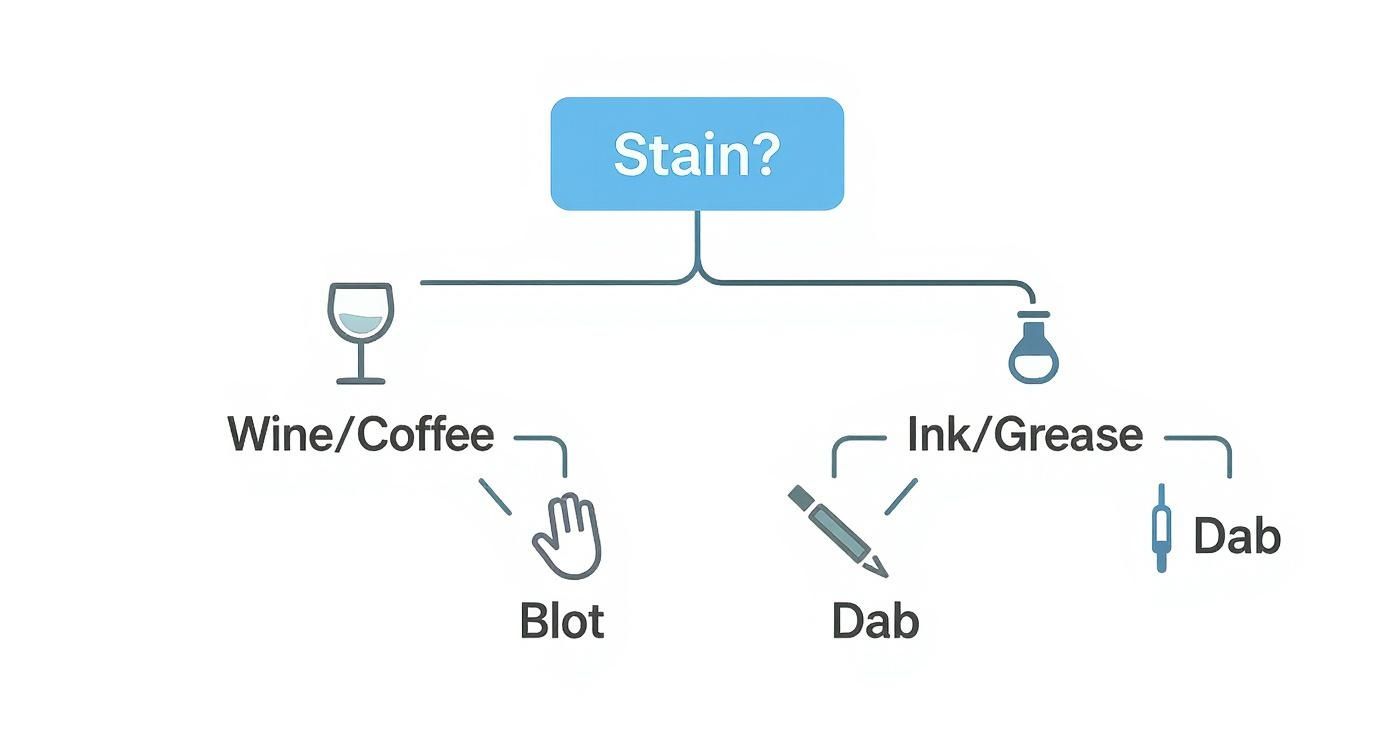
While the first response might be simple, this shows that more complex stains often need more than just a surface-level approach to fix properly.
A professional cleaner brings more than just a powerful machine. They bring expertise in fabric identification, stain chemistry, and advanced techniques, ensuring the job is done right without damaging your furniture.
The commercial cleaning sector in Australia has seen a significant annual growth rate of about 10.6% between 2019 and 2024, highlighting a clear trend of homeowners trusting experts for bigger jobs. You can read more about the growth of professional cleaning services and what it means for households.
Ultimately, a professional couch cleaning not only restores your furniture's appearance but also extends its life, saving you money in the long run.
Common Questions About Couch Cleaning
Even with the best guides, questions always pop up when it's time to tackle the couch. Getting the right answers can be the difference between a quick refresh and a full-blown cleaning headache. Here are some of the most common questions we get asked about cleaning upholstery.
How Often Should I Clean My Couch?
For general upkeep, a thorough vacuum every one to two weeks is a great habit to get into. It’s a simple step that pulls up surface dust, crumbs, and pet hair before they have a chance to get ground deep into the fabric.
When it comes to a proper deep clean with a cleaning solution, you should aim for every 6 to 12 months. Of course, that timeframe really depends on your lifestyle. If you have kids, pets, or your couch is the centre of daily life, you might find a deep clean is needed every three to four months to keep it looking and smelling fresh. And remember, spills and stains should always be treated as soon as they happen.
Can I Use a Carpet Cleaner on My Sofa?
This is one we hear all the time, and the answer is a firm "maybe." Many carpet cleaning machines come with upholstery attachments designed for furniture, but whether you can use one comes down to your couch's cleaning code.
If your couch has a ‘W’ or ‘S/W’ code, a carpet cleaner can be a good option. But you absolutely must do a spot test first. The powerful suction and heat from these machines can sometimes be too aggressive for certain fabrics, potentially causing stretching, texture damage, or colour bleeding.
A word of warning: never, ever use a water-based machine on a couch with an 'S' (solvent-only) or 'X' (vacuum-only) code. You'll almost certainly end up with permanent water rings, browning, or even fabric shrinkage.
How Do I Get Rid of Lingering Pet Smells?
Pet odours are notoriously stubborn because they don't just sit on the surface; they seep deep into the fibres and cushions. A quick wipe-down just won't cut it. For fabrics with a 'W' code, the most effective approach is a two-step process that neutralises the smell at its source, rather than just masking it.
- Start with Baking Soda: First, give the entire couch a thorough vacuum, getting right into every nook and cranny. Then, sprinkle baking soda generously over all the fabric surfaces. Let it sit for at least a few hours—overnight is even better—to absorb those funky odours, then vacuum it all up.
- Follow with a Vinegar Solution: For a deeper treatment, mix equal parts white vinegar and water in a spray bottle. Lightly mist the fabric, being careful not to soak it through. Vinegar is a natural deodoriser that breaks down the bacteria causing the smell. Gently blot the area with a clean cloth and let it air dry completely.
This one-two punch tackles both surface and deeper odours, leaving your couch smelling clean and neutral without any harsh chemicals or artificial fragrances.
When DIY methods just aren't cutting it for tough stains or a full deep clean, Right Price Carpet Cleaning provides professional results across Melbourne. Our powerful truck-mounted steam cleaning and expert technicians can restore your upholstery safely and effectively. Get an instant quote online and see the difference a professional clean can make. Learn more at https://rightpricecarpetcleaning.com.au.
Recent Comments