



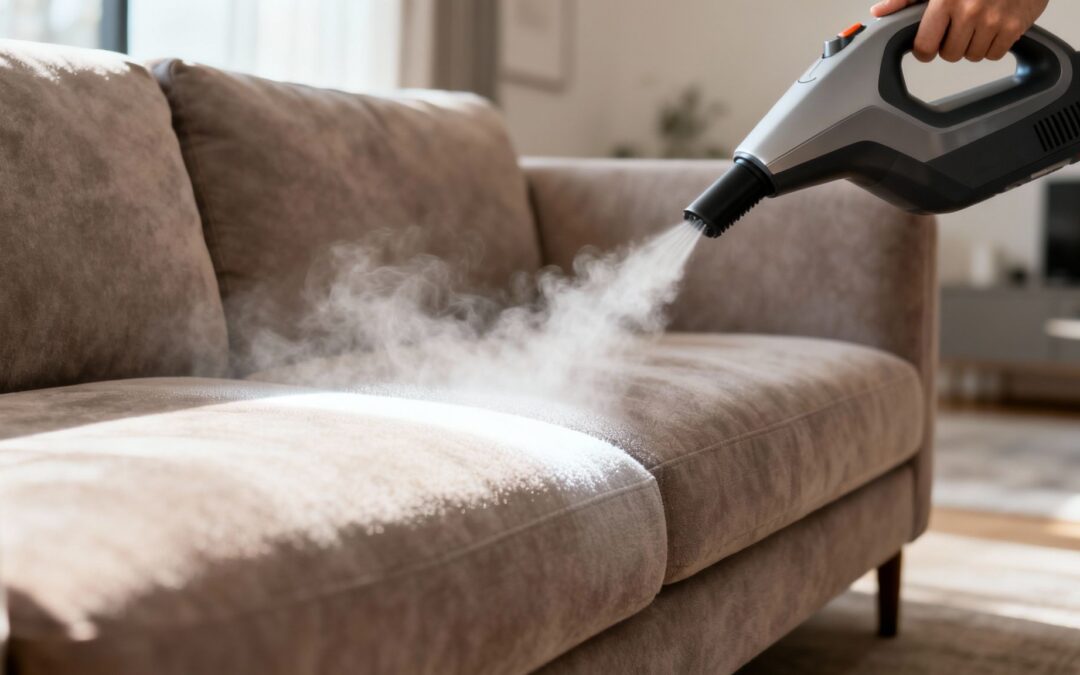
When you want to steam clean upholstery, you're looking for more than just a surface wipe-down. You need a method that uses high-temperature vapour to get deep into the fabric, dissolving stubborn dirt and sanitising the fibres from the inside out. This is the best way to tackle built-up grime, neutralise lingering odours, and kill hidden allergens—all without relying on harsh chemicals. It's the secret to a genuinely clean and healthy home.
Why Steam Cleaning Is a Game Changer for Your Furniture
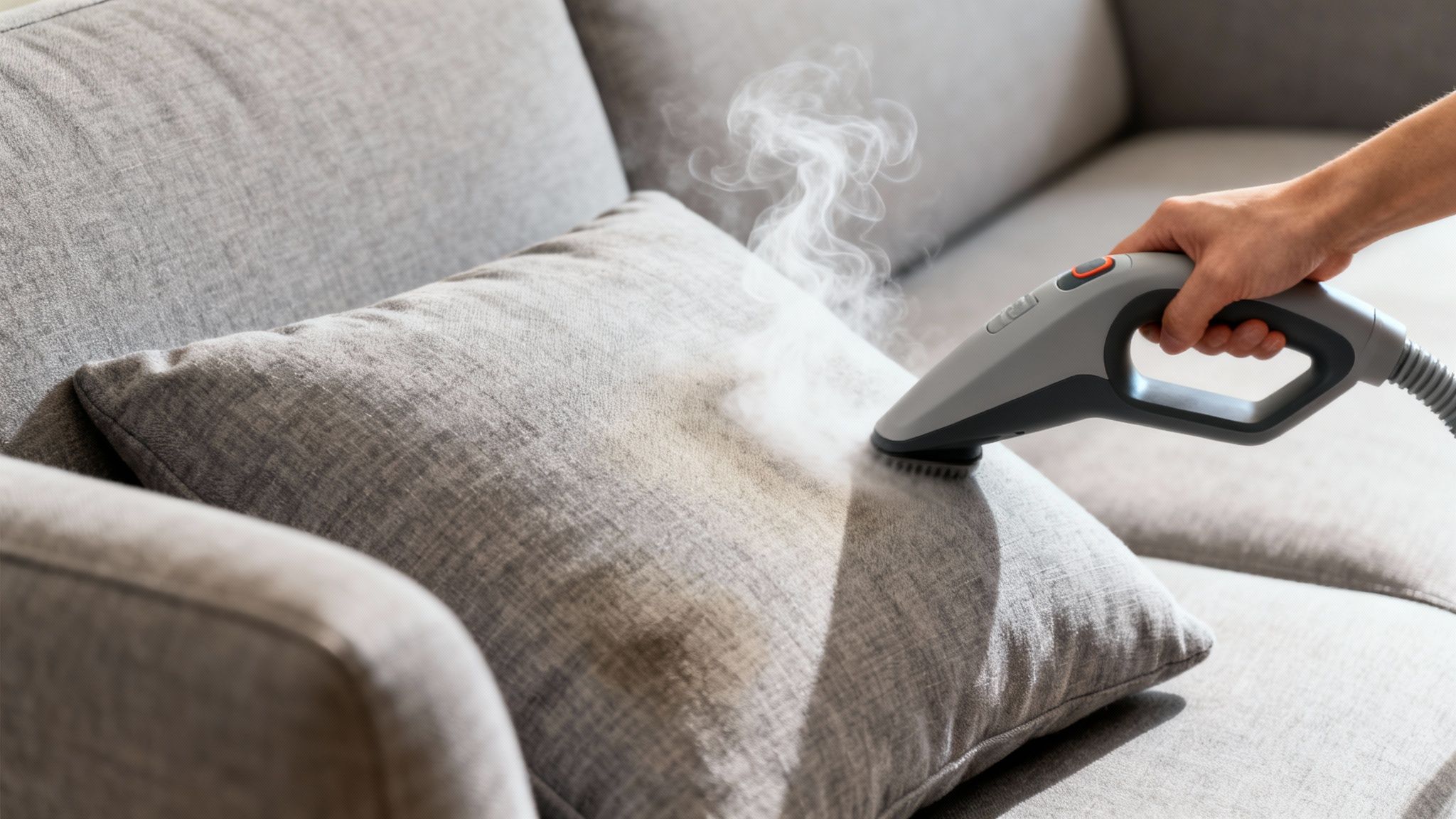
It’s time to look past standard cleaning sprays and wipes. While they might seem to handle a surface-level spill, they often just push dirt deeper into the fabric or leave behind a sticky chemical residue that attracts even more grime. This is where steam cleaning completely changes the game. Its real power is in delivering a deep, restorative clean using nothing more than superheated water.
The science behind it is simple but incredibly effective. A steam cleaner heats water well past boiling point, usually to around 120°C or higher, turning it into a low-moisture, high-temperature vapour. When this dry steam hits your upholstery, it gets to work on a microscopic level.
The Deep Sanitising Power of Vapour
That intense heat is the key. It effortlessly dissolves the stubborn grime, body oils, and food spills that have bonded to the fabric fibres over the years. This process is what lifts away the dirt that makes your furniture look dull and feel slightly sticky to the touch.
Even better, that heat is a natural sanitiser. It’s powerful enough to kill off a whole host of unwelcome guests hiding deep in your sofa, including:
- 99.9% of common bacteria and viruses that live on the surface.
- Dust mites, a major trigger for allergies and asthma sufferers.
- Mould spores that might have started to develop in slightly damp spots.
This makes steam cleaning an amazing choice for any household with kids, pets, or family members sensitive to allergens. You’re not just cleaning what you can see; you’re creating a healthier living space for everyone.
With steam, you’re neutralising odours at their source instead of just masking them with artificial fragrances. The vapour kills the bacteria causing the smells, leaving your furniture genuinely fresh.
A Chemical-Free Approach to Cleaning
One of the biggest wins for steam cleaning is the complete absence of harsh chemicals. Many commercial upholstery shampoos and spot treatments are loaded with chemicals that can irritate skin, trigger respiratory issues, or leave behind a tacky residue that actually attracts more dirt over time.
Steam cleaning relies purely on the power of heat and water, making it a safe and eco-friendly solution. This approach protects the integrity and colour of your fabric while ensuring your home remains a safe, non-toxic environment.
Of course, steam is just one part of a good furniture care routine. To get a handle on the broader principles of upholstery maintenance, it’s worth learning how to clean fabric sofa at home in 5 simple steps. That guide offers a great foundation for general upkeep, which perfectly complements the deep-cleaning power of steam.
Setting Your Upholstery Up for Success
The secret to a fantastic, professional-looking result when you steam clean isn't really about the machine itself—it's all in the prep work. Diving straight in with the steamer is tempting, I get it, but it often just pushes existing dust and crumbs deeper into the fabric, turning them into a muddy mess. A few simple actions before you even plug the machine in can make all the difference.
Think of it as setting the stage for a truly deep clean. Your first move should always be a thorough vacuum. And I don't just mean a quick once-over. Use your vacuum's crevice tool to get right into the seams and corners where dust, pet hair, and crumbs love to hide. After that, go over all the main surfaces with the upholstery brush attachment to lift away all that surface-level debris.
Decoding Your Furniture's Care Tag
Before you introduce any moisture, it's time to play detective. Find the manufacturer's care tag on your furniture, which is usually tucked away under a cushion or along a seam. This little tag holds a crucial piece of information: the cleaning code. Understanding this code is absolutely non-negotiable if you want to avoid a cleaning disaster.
- W: This means you can safely use water-based cleaners. It's a green light for steam.
- S: This code calls for solvent-based cleaners only. Do not use water or steam, as it can cause serious damage.
- W/S: This is the most flexible code, letting you know that either water or solvent-based cleaners are safe to use.
- X: This means vacuum only. Any kind of liquid, including steam, will likely stain or shrink the fabric.
Proper preparation goes beyond just the furniture itself. It’s about understanding the specific care requirements for different materials. For instance, you can find expert tips and guidelines for comprehensive sheepskin rug care which helps you appreciate why following these manufacturer codes is so critical for delicate fabrics.
Pre-Treating and Patch Testing
Once you've got the codes sorted, you can tackle any noticeable stains. Applying a suitable pre-treatment solution gives the cleaner a head start on breaking down stubborn spots from things like coffee spills or food. Always apply the pre-treater sparingly with a microfibre cloth, dabbing gently rather than rubbing—that can just damage the fibres.
Crucial Tip: Always, always perform a patch test. Choose a small, hidden spot—like the back of a skirt or under a cushion—and apply a small amount of steam. Let it dry completely to check for any colour bleeding or texture changes before you even think about cleaning the rest of the piece.
This careful preparation is what separates a DIY job from a professional one. It's a principle well-understood in the Australian upholstery cleaning industry, where meticulous service is key to managing business costs. Data from the ATO shows that small cleaning businesses' total expenses can range from 40% to 78% of their turnover, making efficient, damage-free work essential for staying profitable. You can discover more insights on industry benchmarks for cleaning services from the ATO.
Getting Your Steam Cleaning Technique Down Pat
Alright, with all the prep work done and dusted, it's time for the main event. This is where the magic really happens—lifting out all that deep-seated grime and bringing a bit of freshness back to your furniture. A great result here is all about technique. It’s not a race; it’s about being steady and methodical to get an even, thorough clean without soaking the fabric.
Two of the most common mistakes I see are moving way too fast or lingering in one spot for too long. Both can lead to nasty watermarks or a patchy finish. The goal is simple: apply just enough hot vapour to break down the dirt, then lift it away immediately. You want to leave behind just a hint of moisture that will dry quickly and evenly.
The journey from a prepped couch to a refreshed one starts with a few key steps. This little workflow is a great reminder of the groundwork you need to lay before the steam even enters the picture.
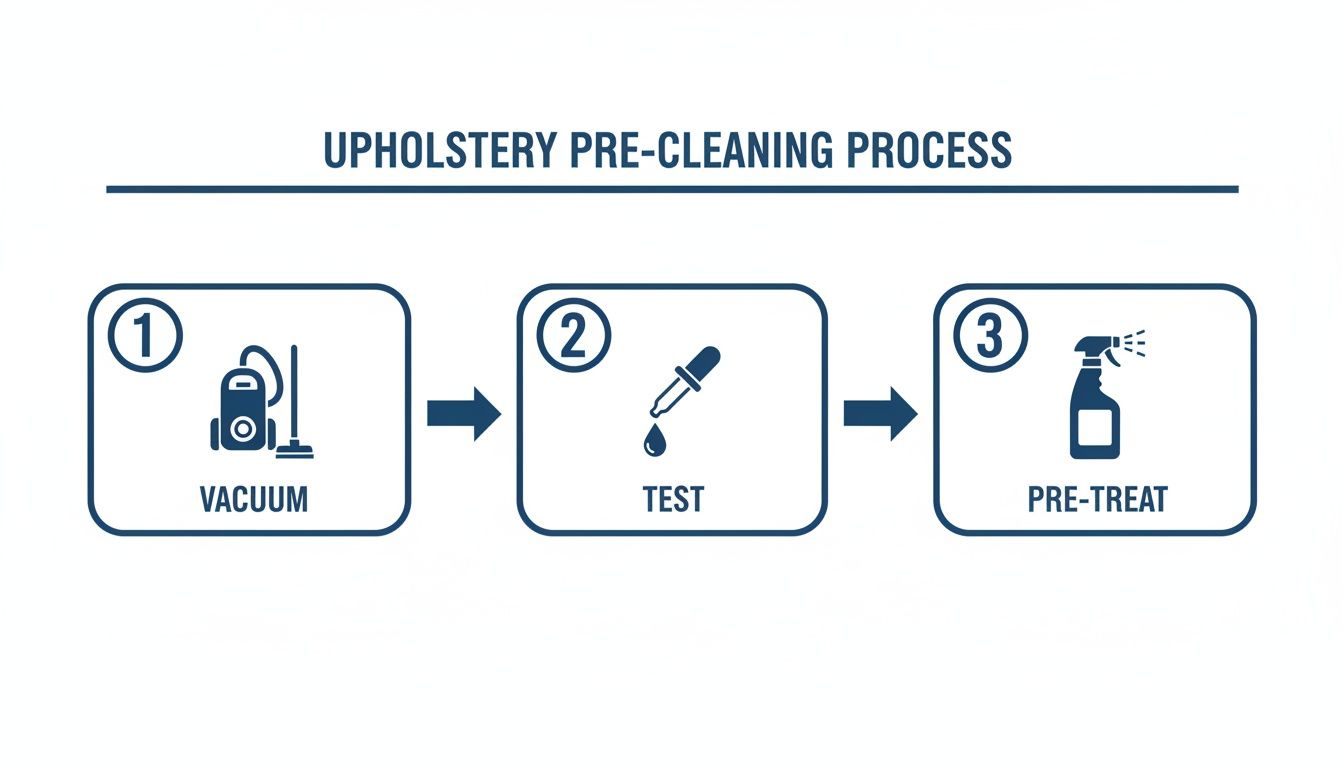
Visualising these preliminary actions—vacuuming, testing, and pre-treating—really drives home how important they are for creating the perfect canvas for an effective steam clean.
Choosing the Right Attachment for the Job
Your steam cleaner probably came with a bunch of different nozzles and brushes. Don't just grab the biggest one thinking it'll get the job done faster. Picking the right tool is your first real step towards a professional finish, as each attachment is designed for a specific purpose.
For the big, flat areas like seat cushions and backrests, a wide upholstery tool fitted with a microfibre bonnet is your best mate. It spreads the steam out evenly, and the bonnet does a great job of soaking up the dirt and extra moisture you've just loosened.
When you get to the tricky bits—corners, seams, or detailed spots like button tufts—swap over to a smaller detail nozzle or a crevice tool. This lets you aim a concentrated jet of steam exactly where you need it most.
Remember, the attachment isn't just a nozzle—it's a tool for control. A smaller tool gives you greater precision for tight spots, preventing you from accidentally spraying steam onto wooden legs or other non-fabric parts of your furniture.
Working in a Systematic Grid
To sidestep a patchy, uneven result, fight the urge to clean in random zig-zags. The best approach is to work in a systematic grid. Just mentally divide large surfaces, like the back of a sofa, into smaller, more manageable squares—about 30x30 cm is a good size. This organised method ensures you cover every single inch without missing spots or over-saturating others.
Always start at the top of the furniture and work your way down. It's a simple rule, but it stops drips from mucking up areas you've already cleaned. For instance, hit the top of the backrest first, then the main back panel, followed by the arms, and finish with the seat cushions.
As you clean each square in your grid, keep these principles in mind:
- Overlap Your Passes: Use slow, deliberate strokes with the steamer, overlapping each pass by about 50%. This is key for consistent coverage and avoiding those tell-tale cleaning lines.
- Maintain Constant Motion: Never, ever let the steamer head just sit in one spot. Keeping it moving is crucial to prevent the fabric from getting too wet, which leads to water stains and ridiculously long drying times.
- Listen to Your Machine: Pay attention to the sound of your steamer. You're after a consistent, steady hiss of steam. If it starts to sputter or spit out water, just pause for a moment and let it build up pressure again.
This methodical grid system is the secret sauce for achieving that uniform, "just-cleaned" look across the entire piece. It turns what could be a chaotic effort into a controlled, effective process.
Proper Drying for a Flawless Finish
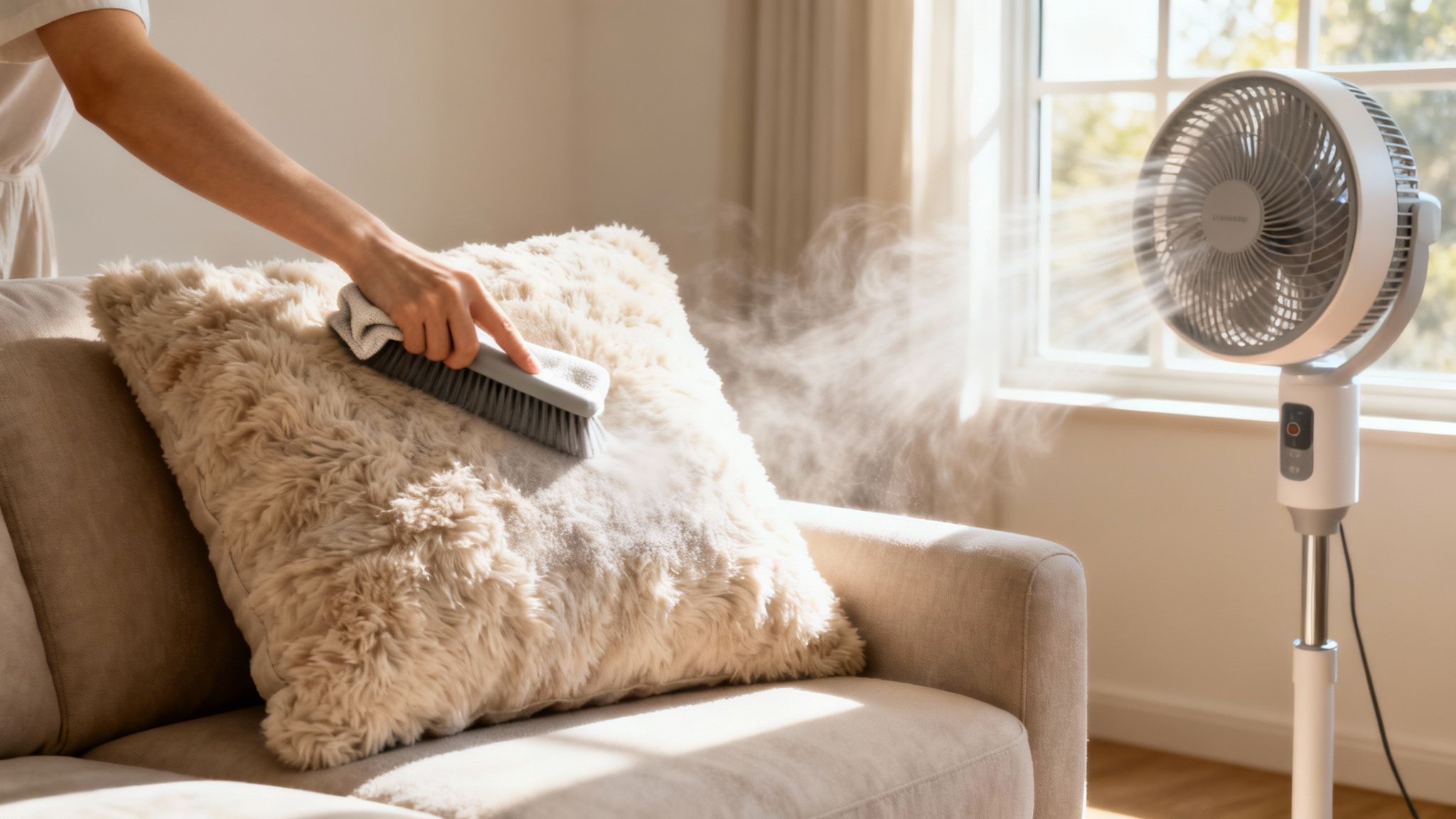
Don't be tempted to switch off the steamer and call it a day. The work isn't quite over yet. The drying phase is just as critical as the cleaning itself, and rushing this part is a surefire recipe for musty odours, mildew, and even those annoying watermarks. Getting the drying right ensures your furniture looks and feels as fresh as it should.
Your main goal is to get plenty of air circulating around the freshly cleaned piece. Leaving it in a stuffy, closed room is asking for trouble. Instead, you need to create a breezy environment that helps the moisture evaporate and whisks away the damp air.
- Open windows on opposite sides of the room to get a natural cross-breeze going.
- Set up a pedestal or box fan and aim it at the upholstery—not too close, just enough to keep the air moving.
- Run a dehumidifier in the room to pull excess moisture from the air, which is a lifesaver on those humid Melbourne days.
Setting Realistic Drying Expectations
So, how long will it actually take? Well, that depends heavily on the fabric type, how much steam you used, and the humidity in your home. Densely woven fabrics will naturally hold onto moisture for longer than lighter materials. While some surfaces might feel dry to the touch in an hour, the internal padding can take significantly more time to dry out completely.
As a general rule, plan for the furniture to be out of commission for at least four to eight hours. To give you a benchmark, professional services in Australia using powerful hot-water extraction methods often quote drying times of 3–6 hours, which is a lot faster than other wet cleaning options. This is a good target to aim for with a DIY approach. You can get more details on professional upholstery cleaning standards and costs in Australia.
Whatever you do, never try to speed things up with direct heat from a hairdryer or space heater. This can cause the fabric to shrink, warp, or develop water stains as it dries unevenly. Patience is your best tool here.
The Final Touch for a Perfect Feel
Once the upholstery is completely dry, you might notice the fabric fibres feel a bit stiff or flattened. Don't worry, this is completely normal. The final step is all about restoring that soft, plush texture you love.
Grab a clean, soft-bristled brush—an upholstery brush or even a new, soft clothes brush will do the trick—and gently brush the fabric. Use light, overlapping strokes against the grain first, then finish by brushing with the grain. This simple action fluffs up the fibres beautifully, leaving your furniture feeling as good as it looks and ready to be enjoyed again.
Knowing When to Call a Professional Cleaner
While rolling up your sleeves and steam cleaning your own upholstery can be satisfying, there are definitely times when stepping back and calling in a professional is the smartest move. DIY is fantastic for general upkeep and tackling minor spills, but some situations carry a real risk of causing permanent, expensive damage if you don't have expert training.
Knowing when to make that call is key to protecting your furniture investment.
For instance, if you're dealing with a cherished antique piece or furniture made from delicate, high-maintenance fabrics, it’s time to pause. Materials like silk, velvet, or jacquard can be easily ruined by the high heat and moisture from a standard home steamer. A professional has specialised low-moisture equipment and perfectly pH-balanced solutions designed just for these tricky textiles, ensuring a safe and effective clean.
The Limits of DIY Cleaning
Sometimes, the challenge isn’t the fabric but the stain itself. Deep-set stains from things like red wine, ink, or pet accidents often go far beyond the surface fibres, soaking deep into the padding. A home steam cleaner just doesn't have the suction power or the specialised treatments needed to pull those stubborn marks all the way out.
Worse yet, applying heat incorrectly can actually set a stain permanently, making it impossible to remove later.
Think of these scenarios as red flags that it's time to call for backup:
- Water-Sensitive Fabrics: Any furniture with an "S" (Solvent only) or "X" (Vacuum only) on its cleaning tag is an absolute no-go for DIY steam cleaning.
- Widespread Odours: If you're battling a persistent smell from smoke or pets, a professional's deep extraction and industrial-strength deodorising treatments will do a far better job.
- Unknown Fabric Type: Is the care tag missing? If you can't confidently identify the material, don't risk it. A pro can run tests to figure out the safest way to clean it without causing damage.
A professional service isn’t just about having better equipment; it’s about their diagnostic skill. They can accurately assess fabric types, identify mystery stains, and choose the perfect combination of technique and cleaning solution to fix the problem safely.
Understanding the Value of Professional Services
Hiring a professional to steam clean your upholstery is an investment in their expertise and your own peace of mind. They show up with powerful, commercial-grade machines—often truck-mounted—that generate much higher heat and far stronger suction than any unit you can rent or buy.
This powerful combination means they can flush out deeply embedded dirt, grime, and allergens, then extract nearly all the moisture. The result is a much deeper clean and significantly faster drying times.
Average Professional Steam Cleaning Costs in Australia
The cost of this expertise varies, but it's often more affordable than replacing a piece of furniture you've accidentally ruined. Here’s a general idea of what you can expect to pay for professional services across Australia.
| Furniture Item or Material | Average Price Range (AUD) |
|---|---|
| Standard Armchair | $60 – $80 |
| Two-Seater Sofa | $80 – $120 |
| Three-Seater Sofa | $120 – $180 |
| Large Sectional Lounge (L-Shape) | $180 – $250+ |
| Dining Chair (per chair) | $15 – $25 |
| Delicate Fabrics (Silk, Velvet) | $180 – $230 (per item) |
These prices are a guide and can be influenced by the level of staining, fabric type, and your location. For a more detailed breakdown, you can explore typical upholstery cleaning costs in Australia to get a clearer picture of the investment.
When you weigh the cost against the risk of ruining a beloved sofa that could cost thousands to replace, the value of calling a professional becomes crystal clear.
Got Questions About Upholstery Steaming?
Even with the best game plan, it’s natural for questions to come up when you’re deep into a project like this. Let’s tackle some of the most common things people ask when steam cleaning upholstery, so you can feel confident from start to finish.
Getting these little details right is what protects your furniture and delivers that satisfying, professional-looking result.
How Often Should I Be Steam Cleaning My Furniture?
This really comes down to your household. For a sofa in a busy family home with kids, pets, or anyone sensitive to allergens, a good deep steam clean every 6 to 12 months is a solid rule of thumb. It keeps everything fresh, hygienic, and looking its best.
On the other hand, for a piece in a quieter room that doesn't see a lot of daily traffic, you can easily stretch that to every 18 to 24 months. The best way to push out those deep cleans is to keep up with regular vacuuming—it’s amazing what a difference it makes in keeping surface dust under control.
Can I Just Use Tap Water in My Steam Cleaner?
While you technically can, I’d strongly advise against it. It’s much better to use distilled or demineralised water instead. Here’s why: tap water, particularly in hard water areas, is loaded with minerals like calcium and magnesium.
Over time, these minerals build up inside your steamer as limescale, which can clog up the machine’s internal parts. That build-up kills its performance and can eventually lead to a breakdown. Switching to distilled water is such a simple, cheap step that will dramatically extend the life of your steam cleaner and stop mineral spots from being deposited on your beautiful fabric.
Think of it this way: using distilled water is a small, inexpensive insurance policy for your appliance. It guarantees your steamer runs smoothly and gives you nothing but pure, clean steam every time, without leaving any chalky residue behind.
Steam Cleaner vs Carpet Cleaner: What's the Real Difference?
This is a classic point of confusion, so let's clear it up. A true steam cleaner heats water to a very high temperature to create a dry, low-moisture vapour that sanitises and cleans deep down. It’s fantastic for killing germs, dust mites, and loosening grime without needing any chemicals.
A carpet cleaner, which is often called a hot water extractor, works in a totally different way. It sprays a mix of hot water and a cleaning solution onto the fabric, then immediately uses powerful suction to vacuum up all the dirty liquid. While many carpet cleaners come with great upholstery attachments, their main job is to wash and extract, making them the go-to for lifting heavy soil and deep, set-in stains.
For a general sanitising job or just freshening things up, a dedicated steamer is your best bet. But for tackling a really grubby, heavily soiled piece of furniture, an extractor is probably the better tool for the job.
Will Steam Cleaning Get Rid of Every Single Stain?
Steam is incredibly effective on general dirt, grime, water-based spills, and a lot of fresh stains. The high heat does a brilliant job of breaking down the bonds that hold the stain to the fabric fibres.
However, it’s not a magic wand for absolutely every type of mark. Old, set-in stains from things like oil, ink, red wine, or permanent marker usually need some extra muscle. These kinds of stains typically require a targeted pre-treatment with a specialised stain remover designed for that specific substance. A word of caution: applying steam first can sometimes permanently set these stubborn stains, so always deal with them before you start the main clean.
For a professional clean that tackles deep-seated dirt and stubborn stains with powerful, truck-mounted equipment, trust the experts at Right Price Carpet Cleaning. Our technicians deliver a deeper, longer-lasting clean with faster drying times, ensuring your furniture is fresh, hygienic, and ready to enjoy. Get your free, instant quote today at https://rightpricecarpetcleaning.com.au.
Recent Comments