



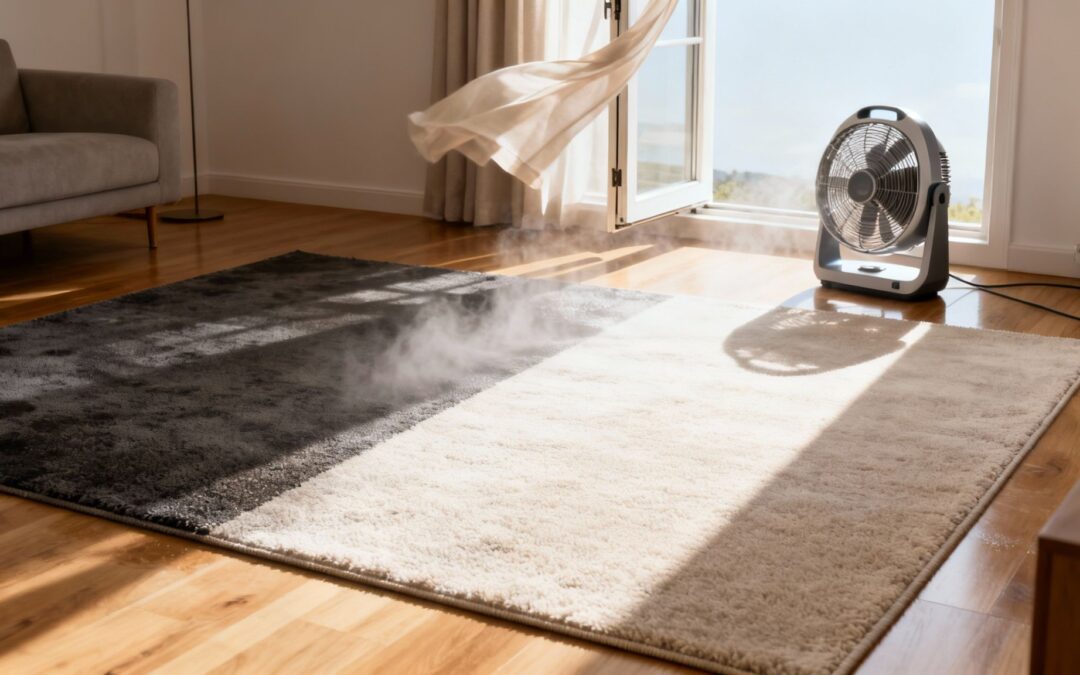
So, you've just had your carpets professionally steam cleaned, and you're wondering when you can get back to normal life. The big question is always, "How long until it's dry?"
Most of the time, you can expect your carpets to be fully dry within 6 to 12 hours. On a good day with plenty of fresh air, that time can shrink to as little as 4 hours. But if it's a humid, sticky day with no breeze, you might be looking at a full 24 hours.
How Long Your Carpet Really Takes to Dry
Getting a handle on drying times helps you plan your day and, more importantly, keeps you from walking on damp floors. That 6-to-12-hour window is a solid rule of thumb, but it’s not set in stone. Several factors can either speed things up or slow them right down, turning what should be a quick job into an overnight wait.
It’s a bit like drying your laundry. A t-shirt on a breezy, sunny day is dry in no time. A thick woollen jumper in a damp, closed-off room? That’s going to take a while. Your carpet is exactly the same. The type of fibre it’s made from, the humidity in the air, and even the power of the cleaning machine all have a say in the final drying time.
Carpet Drying Time At a Glance
To give you a clearer picture, here’s a quick breakdown of what you can realistically expect under different conditions. This table shows just how much the environment and the equipment used for the job can influence the outcome.
| Scenario | Estimated Drying Time | Key Influences |
|---|---|---|
| Optimal Conditions | 4-6 Hours | Professional truck-mounted unit, good ventilation, low humidity, synthetic carpet. |
| Average Conditions | 6-12 Hours | Standard professional clean, moderate humidity, some airflow, mixed or wool carpet. |
| Poor Conditions | 12-24+ Hours | DIY rental machine, high humidity, no ventilation, thick pile or waterlogged padding. |
Here in Australia, especially with Melbourne's famously unpredictable weather, a true professional can consistently get you results on the faster end of that scale. Why? It comes down to the gear.
High-powered, truck-mounted systems are the gold standard because they have incredible suction, pulling out over 95% of the moisture they put in. This is the main reason we can confidently aim for drying times of just 4 to 6 hours. This level of efficiency has been a benchmark of quality ever since hot water extraction became the go-to method for deep cleaning. You can learn more about the technology and other professional cleaning facts to see what sets the pros apart.
Key Factors That Control Carpet Drying Time
Ever wondered why your neighbour’s carpet was dry in a flash while yours seemed to stay damp for an entire day? It’s not just random luck. The answer lies in a combination of several key variables all working together. Understanding these factors gives you a realistic idea of how long your carpet will take to dry and what you can do to speed things up.
Think of it this way: drying a carpet is all about evaporation. Anything that helps water turn into vapour and move away from the carpet will speed up the process. On the other hand, anything that traps moisture or slows its escape will leave you with damp floors for much longer.
This chart shows how different conditions can create optimal, average, or poor drying scenarios.
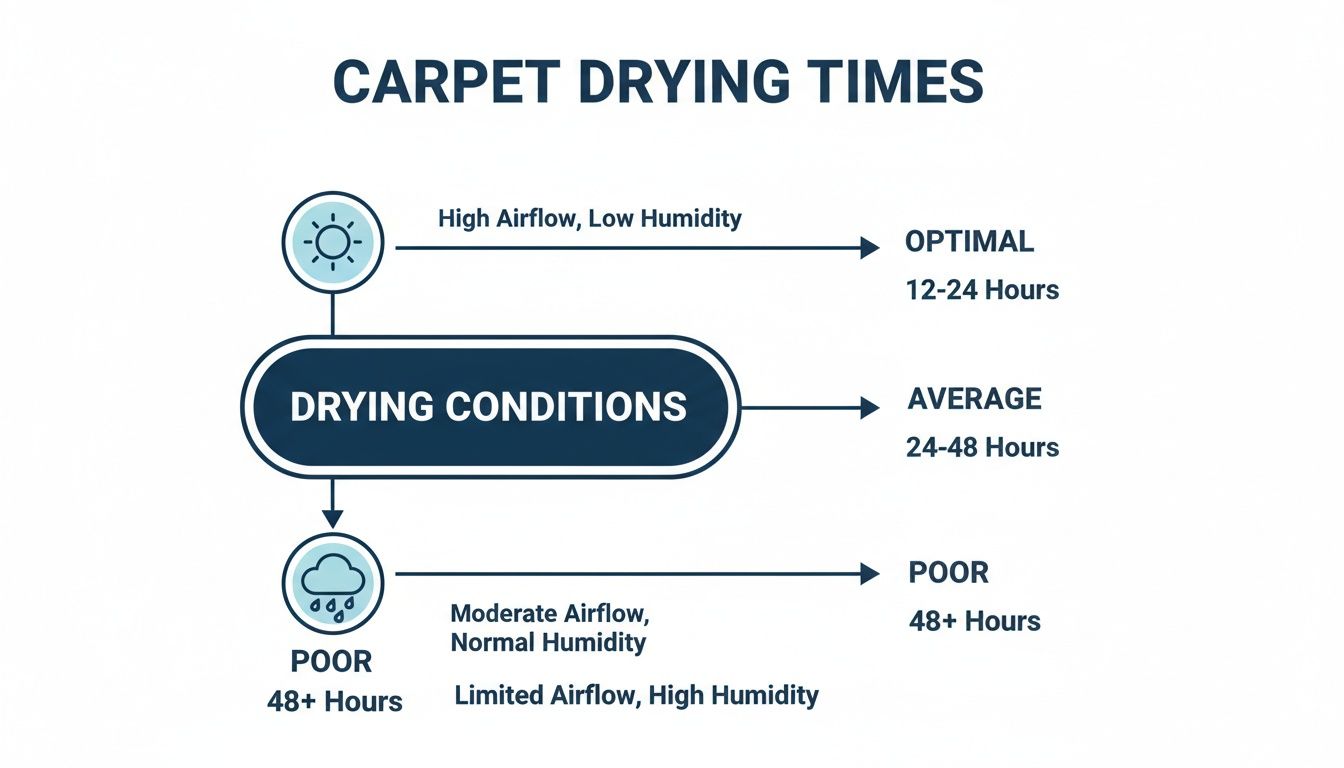
As you can see, powerful equipment and good ventilation get the job done fastest, while things like high humidity and dense carpets can really slow everything down.
The Carpet Itself: Fibre and Density
Not all carpets are created equal, especially when it comes to drying. The material your carpet is made from and how it’s constructed play a massive role in how much water it holds onto.
- Synthetic Fibres (Nylon, Polyester): These materials are a cleaner’s best friend because they aren’t very absorbent. They release moisture relatively quickly, which is why they usually fall into the faster end of the drying spectrum. A low-pile nylon carpet is typically one of the quickest to dry.
- Natural Fibres (Wool): Wool is a beautiful and durable choice, but it’s also highly absorbent. A thick woollen carpet can hold a surprising amount of water, making its drying time naturally longer than its synthetic cousins. It needs a careful, professional touch to avoid over-saturation.
The pile density also matters a great deal. A thick, plush, high-pile carpet has more surface area and can trap moisture deep within its fibres, which will always extend the drying period.
Airflow and Ventilation Inside Your Home
Air circulation is probably the most critical factor you can actually control. Stagnant, humid air just sitting over a damp carpet is never going to help it dry.
Imagine hanging wet towels out to dry on a calm, still day versus a windy one. They’ll dry much faster with a steady breeze whisking the moisture away, right? The exact same principle applies to your carpet. Creating cross-ventilation by opening windows and using fans creates an indoor "breeze" that carries the evaporating moisture out of the room.
Stagnant air is the enemy of fast drying. The more you can move damp air away from the carpet's surface and replace it with drier air, the quicker the evaporation process will be. This simple action can cut hours off your total wait time.
Humidity and Temperature
The weather outside and the climate inside your home have a direct impact on drying. Humidity is simply the amount of moisture already in the air. On a humid day, the air is already saturated and can't absorb much more water from your carpet, which can drastically slow down evaporation.
In Australian homes, particularly in Sydney and Melbourne where humidity can fluctuate, the average drying time for steam cleaning ranges from 6 to 24 hours. A professional service will always aim for the lower end of this scale by using powerful extractors that pull out almost all of the water used during the clean. You can learn more about how equipment impacts the differences between steam and dry cleaning methods on NSCGMaintenance.com.au.
Temperature helps, but it’s less important than airflow and humidity. A moderately warm room (around 20-22°C) can help speed up evaporation, but only if that newly humid air is being moved out of the space.
Professional vs. DIY Cleaning Drying Speed
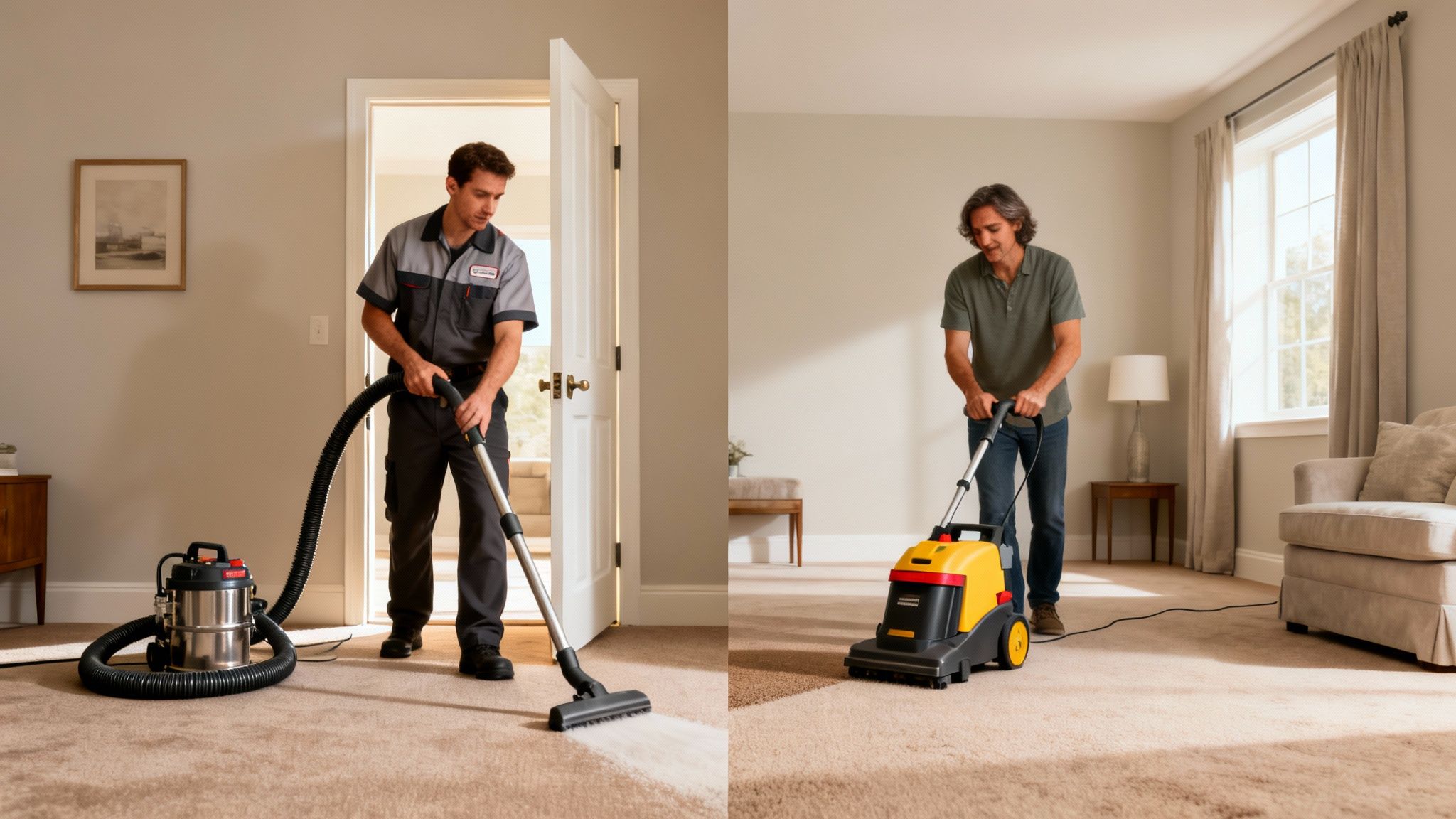
When you're wondering how long a carpet will take to dry after a steam clean, the answer usually boils down to a simple choice: did you hire a pro or rent a machine from the shops? While saving a few dollars with a DIY unit is tempting, the difference in drying time isn’t just a few hours—it can be days.
The real difference-maker is the raw power of the equipment. A professional service like Right Price Carpet Cleaning uses a truck-mounted hot water extraction system. This isn't just a slightly better vacuum; it's an industrial-grade engine built for one thing: getting as much water out of your carpet as possible.
Think of it like trying to dry a soaked sponge. A DIY rental machine is like squeezing it by hand—you’ll get some water out, but a lot stays trapped deep inside. A truck-mounted unit, on the other hand, is like putting that sponge in a high-speed centrifuge. Its massive vacuum suction yanks the vast majority of water back out of the carpet fibres and, just as importantly, the padding underneath.
The Power of Professional Equipment
A professional technician’s goal is to leave your carpet as dry as humanly possible the moment they finish cleaning. They can pull this off thanks to a couple of key advantages that DIY machines just can't compete with.
- Superior Suction Power: Truck-mounted systems generate incredible vacuum strength, pulling back over 95% of the moisture they put down. This sheer efficiency is the single biggest reason a professional clean dries so much faster.
- Precise Water and Heat Control: An experienced technician knows exactly how much hot water is needed for your specific carpet type and how dirty it is. They avoid the most common DIY mistake: absolutely saturating the carpet, which forces water deep into the underlay where it can stay trapped for days on end.
Across Australia, this professional approach is what delivers reliable results. Experts confirm that professional gear can be up to 50 times more powerful than rental units, which is why a 6 to 12-hour drying window is a realistic target for most jobs. This advanced tech doesn't just speed up drying; it also kills 99.99% of bacteria with perfectly controlled heat and suction.
The Risks of DIY Rental Machines
Going the DIY route can feel empowering at first, but it often ends in a soggy, frustrating mess. The problem is twofold: the machine is weak, and the user is inexperienced. When you're weighing up your options, it's worth considering the common pitfalls of DIY solutions, which can sometimes create bigger headaches, much like in other home maintenance tasks.
A classic DIY scenario is going over a stubborn stain again and again, slowly pushing litres of water deep into the padding without realising it. The rental machine just doesn't have the grunt to pull all that deep-seated moisture back out, creating the perfect damp, dark environment for mould and mildew to take hold.
At the end of the day, a professional clean isn't just about getting the dirt out. It's about restoring your carpet without causing new problems. That investment ensures your floors are clean, fresh, and ready for you to walk on in hours, not days.
Practical Steps to Dry Your Carpet Faster
Waiting for your carpet to dry can feel like watching paint dry, but you’ve got more control over the process than you might think. By taking a few simple, proactive steps, you can seriously cut down the drying time after a steam clean. This gets you back to normal life sooner while protecting your investment.
Think of a damp carpet as a collection of countless tiny puddles trapped in the fibres. Your goal is to help that moisture evaporate and get it out of your home as efficiently as possible. The key is creating an environment that encourages this process through great airflow, the right temperature, and controlled humidity.
Create Powerful Air Circulation
The single most effective thing you can do is get the air moving. Stagnant, humid air sitting above your carpet acts like a wet blanket, trapping moisture and slowing evaporation to a crawl. You need to create a consistent breeze to wick that dampness away from the carpet fibres and push it out of the room.
Here’s how to do it:
- Open Windows and Doors: This is the easiest way to create a cross-breeze. Opening windows on opposite sides of the house allows fresh, drier air to flow in while pushing the moist air out.
- Turn on Fans: Use whatever you've got—ceiling fans, pedestal fans, or even small box fans. The trick is to position them to blow air across the surface of the carpet, not directly down onto it. This sweeping motion is what carries the moisture away.
- Use Your HVAC System: Switch your air conditioning system’s fan to the "ON" setting instead of "AUTO." This keeps air circulating throughout your home, even when the cooling or heating isn't actively running.
For those tricky spaces without traditional windows, exploring strategies for ventilating rooms without windows can make a huge difference in speeding up the drying process.
Control Your Indoor Climate
Beyond just moving the air around, you can tweak your home’s climate to make it less friendly for moisture. Your air conditioner and dehumidifier are powerful allies here, acting like sponges that pull water directly out of the atmosphere.
Pro Tip: In summer, run your air conditioner. It’s a natural dehumidifier and will cool the air, making it less saturated with moisture. In cooler, damp weather, a dedicated dehumidifier is your best bet for creating an optimally dry environment. A moderate temperature of around 20-22°C is ideal.
Keep Off the Carpet
Finally, one of the simplest yet most important steps is to minimise foot traffic. Walking on a damp carpet does more than just track dirt onto your freshly cleaned floors.
It compresses the carpet pile, which restricts airflow between the fibres and can make it dry in a matted, flattened state. If you absolutely have to walk on it, wear clean, white socks to avoid transferring dirt or dyes. By giving your carpet the space it needs to breathe, you ensure it dries evenly and looks its best once everything is done.
How to Know When Your Carpet Is Truly Dry
After a steam clean, your carpet might feel dry to the touch within a few hours, but don't be fooled. The real test is what’s happening underneath, deep within the carpet fibres and, crucially, the underlay. Moisture trapped in these hidden layers is what leads to those awful musty odours and potential mould growth.
Simply walking on the carpet in socks isn't a reliable indicator of dryness. True dryness means every single layer, right down to the subfloor, is completely free from moisture. Rushing this final stage is a common mistake that can completely undermine the benefits of the clean itself.
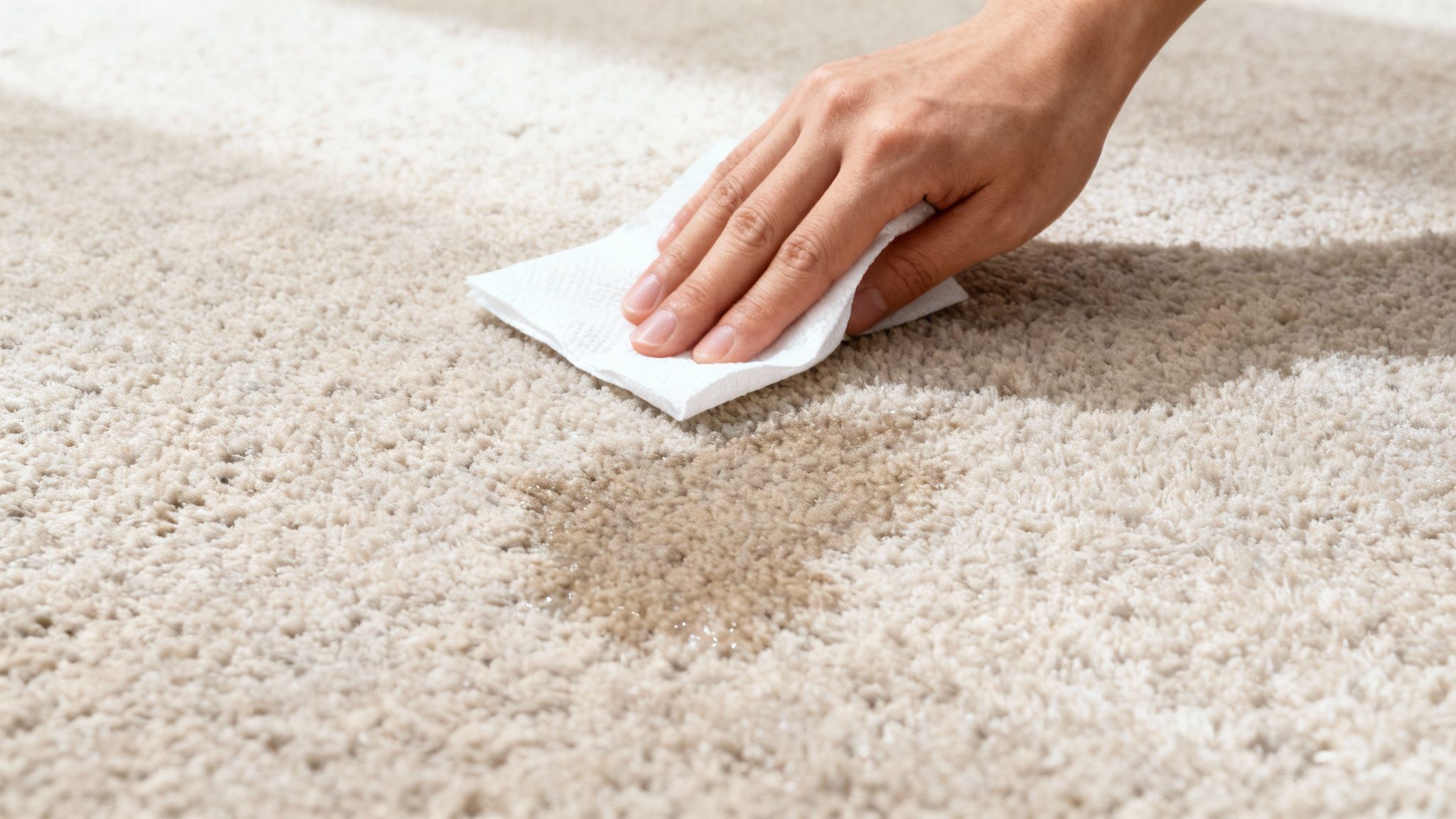
The Paper Towel Test
For a definitive check, there’s a simple but incredibly effective test you can do. It’s a reliable way to uncover any hidden dampness that your hands might miss, especially in the thick padding beneath the surface fibres.
Here's how to do it:
- Grab a fresh, folded sheet of white paper towel.
- Find a section of carpet that gets less airflow, like in a corner or under where furniture usually sits.
- Place the paper towel on the carpet and press down firmly with the palm of your hand for a good 10-15 seconds.
- Lift the towel and check it for any signs of moisture. If it comes away even slightly damp, your carpet isn't ready.
This little trick reveals the deep-down moisture content, giving you a clear answer on whether your carpet still needs more time to dry.
A lingering sour or musty smell is the most obvious red flag. If your room smells anything other than fresh and clean 12 hours after the job was finished, it’s a sign that the carpet is still too damp and bacteria might be starting to grow.
The Risks of Moving Furniture Back Too Soon
Patience is absolutely key here. Moving furniture back onto a carpet that isn't 100% dry can cause permanent damage, undoing all the hard work and investment of a professional clean. The sheer weight of heavy furniture crushes the carpet fibres, preventing air from circulating and trapping moisture right underneath.
This trapped dampness can lead to some serious, and often irreversible, issues:
- Dye Bleeding: Wooden furniture legs can bleed their varnish or stain directly into the damp carpet fibres, creating a permanent, discoloured patch that’s impossible to get out.
- Rust Stains: Any metal feet, staples, or casters on the bottom of your furniture will quickly rust when left on a damp surface, leaving behind ugly orange stains that are a nightmare to remove.
- Mould and Mildew: Creating a dark, damp, airless spot under a sofa or cabinet is the perfect recipe for mould growth on your carpet and its underlay.
Protect your investment by waiting until the carpet passes the paper towel test. This one final step ensures your floors are not just clean, but truly dry and healthy for your home.
Of course. Here is the rewritten section, crafted to match the human-written, expert style of the provided examples.
Frequently Asked Questions About Carpet Drying
Even after you've done everything right, a few questions always pop up during those final hours of drying. Think of this as your quick guide for navigating the last leg of the journey, ensuring your carpets end up perfectly dry and fresh.
You've got the fans going and the windows cracked, but now the smaller details come to mind. Is it okay to walk on it? Should you crank up the heat? And what if a weird smell starts to appear? Let's tackle these one by one.
Can I Walk on the Carpet While It Is Drying?
It’s best to keep off the carpet as much as possible while it’s still damp. Freshly cleaned carpet fibres are in a vulnerable state, and any foot traffic can create new problems before they even have a chance to dry.
Your shoes, and even your bare feet, can transfer dirt, oils, and grime directly onto the clean, damp fibres. This can cause immediate resoiling, completely undermining the deep clean you just paid for. The weight from walking also crushes the carpet pile, which can lead to it drying in a matted, flat position instead of its usual plush, upright texture.
If you absolutely must cross the room, pop on a pair of clean, white socks or the disposable shoe covers your technician may have provided. This is the safest way to minimise transferring soils or dyes. Whatever you do, don't wear your outdoor shoes on the damp carpet.
Will Turning Up the Heat Make My Carpet Dry Faster?
While a warm room definitely helps with evaporation, just cranking your heater up to full blast isn't the best strategy. In fact, if you do it without proper ventilation, you can actually make things worse by trapping humidity in the room.
The real key is air movement, not just intense heat. A combination of gentle warmth and strong, consistent airflow is the winning formula for quick drying.
- Use Fans: Air movement from fans is what physically lifts and carries moisture away from the carpet's surface.
- Moderate Temperature: Aim for a comfortable room temperature, somewhere around 20-22°C. This helps the air hold more moisture without turning the room into a sauna.
- Ventilate: All that warm, moist air needs an escape route. Crack open a window or use your home’s ventilation system to push it outside.
Using your home's central heating in winter is perfectly fine, but always pair it with fans and a source of fresh air. You need to be actively removing the damp air, not just circulating it.
What Happens If My Carpet Takes More Than 24 Hours to Dry?
If your carpet is still noticeably damp after a full 24 hours, it officially enters a risk zone. This prolonged dampness creates the perfect breeding ground for mould, mildew, and bacteria to take hold.
The first sign you’ll likely notice is a distinct musty, sour, or earthy smell. That odour is a clear red flag that microorganisms are starting to multiply deep within the carpet fibres and underlay.
If you find yourself in this situation, it’s crucial to act immediately. Maximise every bit of ventilation you have—open every possible window and door. Set up as many fans as you can and aim them directly at the dampest spots. If you had the carpet cleaned professionally, call the company right away. They can bring back high-powered air movers to sort out the issue before any permanent damage occurs.
Is It Normal for a Carpet to Smell After Steam Cleaning?
A slight, clean-but-damp smell right after a steam clean is completely normal. This is usually just the scent of the damp wool or synthetic fibres, and it should disappear entirely once the carpet is fully dry.
However, if a strong, unpleasant, or pungent odour develops while it's drying, or if a musty smell hangs around for more than 24 hours, it could signal an underlying problem. Sometimes this is due to wicking, where old, deep-set spills and soils get pulled to the surface during the evaporation process. In other cases, it might be the first sign of mildew growth caused by over-wetting or poor drying conditions.
If the smell is foul and just won't go away, don't hesitate to contact your cleaning professional. They can help figure out what’s causing it and tell you the best way to fix it.
Ready for a deep clean that leaves your carpets fresh, vibrant, and dry in hours, not days? The team at Right Price Carpet Cleaning uses powerful, truck-mounted equipment to deliver superior results with minimal downtime. Get your free, instant quote online and see the professional difference. https://rightpricecarpetcleaning.com.au
Recent Comments