



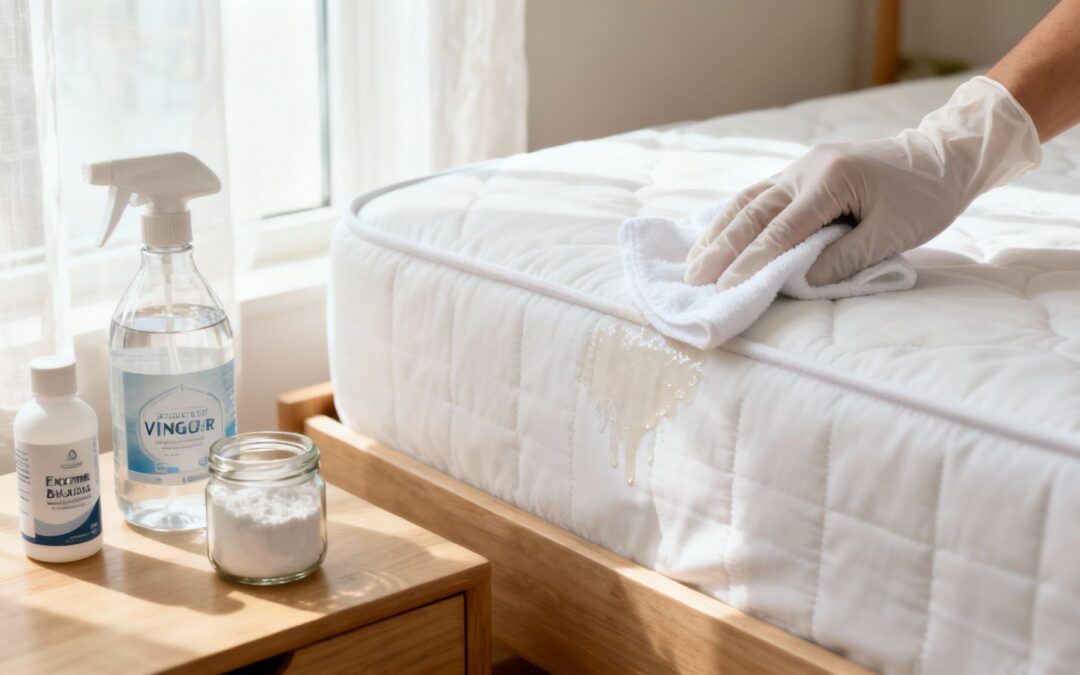
When you find a pee stain on the mattress, what you do in the next few minutes is everything. The absolute first move is to strip all the bedding off and get a dry towel onto that wet spot, pressing down to soak up as much as you can before it sinks deeper into the mattress.
Your Immediate Action Plan for Mattress Accidents
Discovering a wet patch on the mattress—whether it’s from a pet or a child—is always a frustrating moment. But how you react in the first 15 minutes will decide whether it's a minor cleanup or a permanent stain with a smell that just won't quit. Speed is your best friend here.
The most critical first step is to absorb the excess urine before it has a chance to set. Grab a clean, dry towel or a stack of paper towels and press firmly into the wet area. Don't be shy; use your body weight to really push down. You’ll be surprised how much liquid you can pull out this way.
Crucial Tip: Always blot, never rub. Rubbing just grinds the urine deeper into the mattress fibres, which locks in the stain and smell, making them a nightmare to get out later. Gentle, firm pressure is what you need to lift the liquid out.
This initial damage control is what sets you up for a successful deep clean. In Australia, where bedwetting affects around 15-20% of children aged 5-7 years, this quick-response drill is a familiar routine for many families. Start by stripping the bed and blotting the wet area—advice from Australian mattress experts suggests this can remove up to 70% of surface urine within the first 5 minutes, stopping it from seeping deeper. You can learn more about these initial mattress cleaning findings online.
First 15 Minutes Checklist
Follow these steps immediately after discovering a urine accident to minimise damage.
| Timeframe | Action To Take | Why It's Critical |
|---|---|---|
| 0-2 Mins | Strip all bedding immediately. | Prevents urine from spreading or setting into your sheets and doona. |
| 2-5 Mins | Blot the wet spot with a dry towel. | Absorbs the majority of the liquid before it soaks into the mattress core. |
| 5-10 Mins | Apply firm, consistent pressure. | Lifts moisture from deep within the fibres instead of just the surface. |
| 10-15 Mins | Repeat blotting with fresh towels. | Continue until the area feels only slightly damp, not wet. |
This checklist isn't just about cleaning; it's about preventing long-term damage before it even starts.
The First Steps to Success
Your primary goal is containment and absorption. Think of it like a spill on a carpet; you want to stop it from spreading and soak up the source before it becomes a permanent problem. Getting all the bedding into the wash immediately also stops the urine from setting into those fabrics, which makes your laundry job much easier later on.
This visual guide breaks down the essential first two actions to take when you find a wet spot on your mattress.
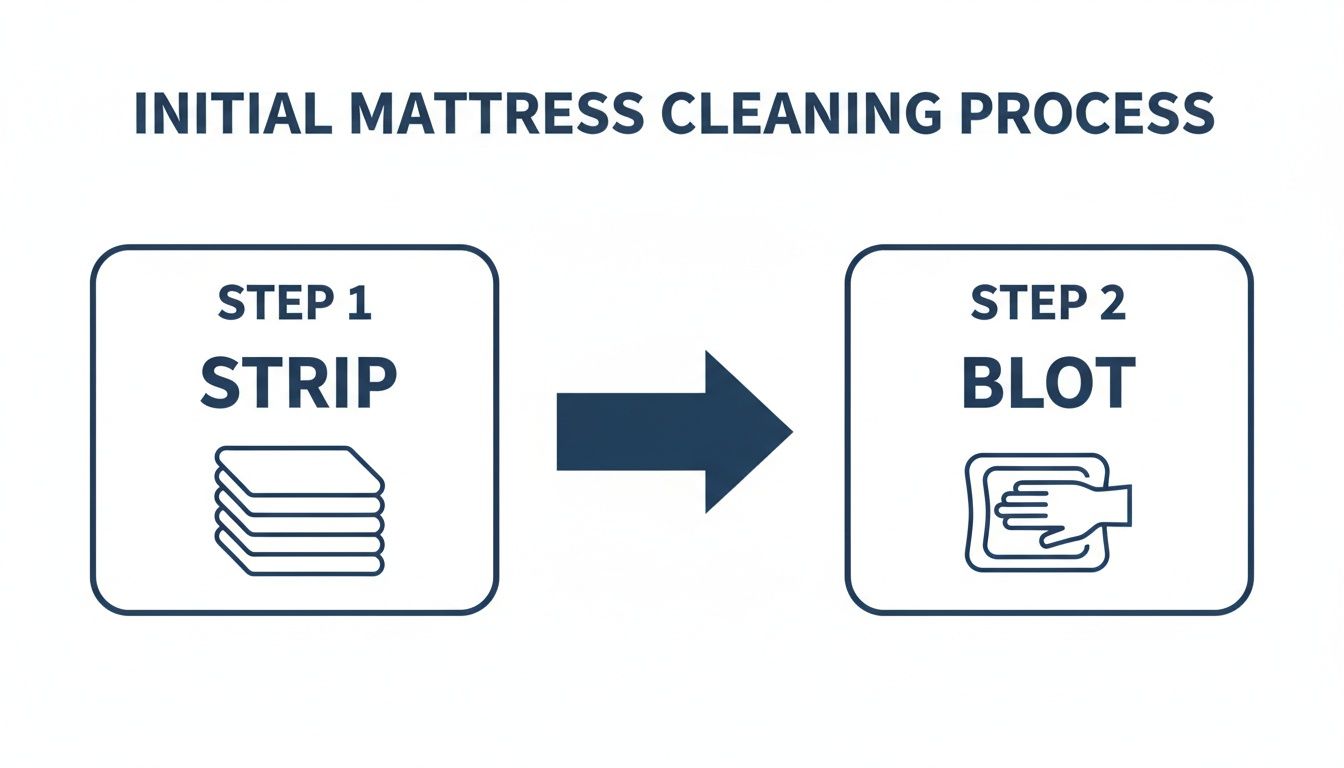
Following this simple two-step process—stripping the bed and blotting the stain—is the most effective way to minimise long-term damage before you even think about reaching for a cleaning solution.
By getting this done right away, you dramatically increase your chances of completely removing both the stain and the odour. Once you’ve blotted the area until it’s only slightly damp to the touch, you're ready to move on to the actual cleaning and deodorising process.
Choosing Your Cleaning Arsenal
With the immediate blotting done, it’s time to decide how you’re going to tackle the stain itself. Before you start scrubbing, you need to pick your weapon. Your two best options are a trusted DIY solution using common household items or a commercial bio-enzymatic cleaner made specifically for this exact problem.
Each approach has its own strengths, and what’s best for you often comes down to how fresh the stain is, the type of mattress you have, and frankly, what you've got under the sink right now. For a brand-new accident, a DIY mix can be surprisingly effective and costs next to nothing.
The Power of Your Pantry: a DIY Solution
Chances are, you already have everything you need for a solid first response sitting in your kitchen. A simple mixture of white vinegar and water (in a 1:1 ratio) works wonders on fresh urine stains.
The acetic acid in the vinegar is the star of the show here. It gets to work neutralising the ammonia in urine, which is the main source of that sharp, unpleasant smell. After you’ve treated the area with this solution, you’ll follow up with bicarbonate of soda to draw out the leftover moisture and absorb any lingering odours.
This method is:
- Cost-effective: You're just using items you already own.
- Readily available: No need to run to the shops when an accident happens.
- Gentle: It's safe for most standard mattress fabrics.
However, it's worth remembering that a DIY solution is at its best when the stain is still damp. It might not have enough grunt to fully break down old, set-in stains where the uric acid has had time to crystallise and really take hold.
The Science of Commercial Enzyme Cleaners
For tougher, older, or particularly pungent stains (we’re looking at you, pets), a bio-enzymatic cleaner is your most powerful weapon. These cleaners aren't just covering up the smell; they are systematically destroying it at a molecular level.
Bio-enzymatic cleaners are packed with specific enzymes that act as catalysts to break down the organic compounds in urine, like uric acid crystals. These crystals are the true source of that stubborn, lingering odour, and only enzymes can properly eliminate them.
This approach is highly recommended for any set-in stain because the enzymes literally digest the stain and odour-causing bacteria until there’s nothing left. If you're interested in the nitty-gritty, it's helpful to have a basic understanding how different stain removers work on a chemical level.
Making the Right Choice for Your Situation
So, which one should you grab? It really depends on your specific circumstances. If you've just discovered a fresh accident from a child in the middle of the night, the vinegar and bicarb soda method is an excellent and immediate first line of attack.
On the other hand, if you're dealing with a mysterious old stain you’ve just uncovered or a potent pet urine spot, investing in a good quality enzymatic cleaner will save you a world of time and frustration. These formulas are built to handle the complex proteins in urine, ensuring you completely eradicate the source of the smell. This is especially crucial for preventing pets from re-marking the same spot.
Tackling a Fresh Urine Stain: Your Practical Guide
Alright, you’ve managed the initial spill and blotted up the excess liquid. Now it's time to shift from damage control to a proper deep clean. Whether you're reaching for a homemade vinegar solution or a store-bought enzyme cleaner, the next steps are all about breaking down the urine without soaking your mattress.
The trick is to apply your cleaning solution lightly. A spray bottle is your best friend here. Give the affected area a light mist, making sure you cover the stain and a small border around it. Whatever you do, resist the urge to drench it. Oversaturating the mattress will only push the urine deeper and make the drying time painfully long, which can lead to mildew.
The 'Blot, Never Rub' Technique
Once you’ve sprayed the solution, walk away for about 10 to 15 minutes. This gives the cleaner—whether it's the acid in the vinegar or the enzymes in a commercial product—time to get to work breaking down the uric acid crystals and bacteria.
Next, grab another clean, dry cloth and start blotting the area again. Just like you did in the first step, your technique is critical. Press down firmly to lift the cleaning solution and the dissolved urine out of the mattress fibres. Don't be tempted to scrub.
Expert Tip: Rubbing the stain is one of the most common mistakes people make. It can easily damage the delicate mattress fabric and, worse, it grinds the stain deeper into the padding, making it almost impossible to remove completely. Always blot gently but firmly.
For a heavily soaked mattress, this process is non-negotiable. A simple but highly effective mix of dishwashing liquid and vinegar (at a 1:3 ratio) can break down the proteins in about 70% of cases. You can learn more about how to manage moisture in a mattress here. This initial treatment is what sets you up for the final, and most important, step.
Unleash the Power of Bicarbonate of Soda
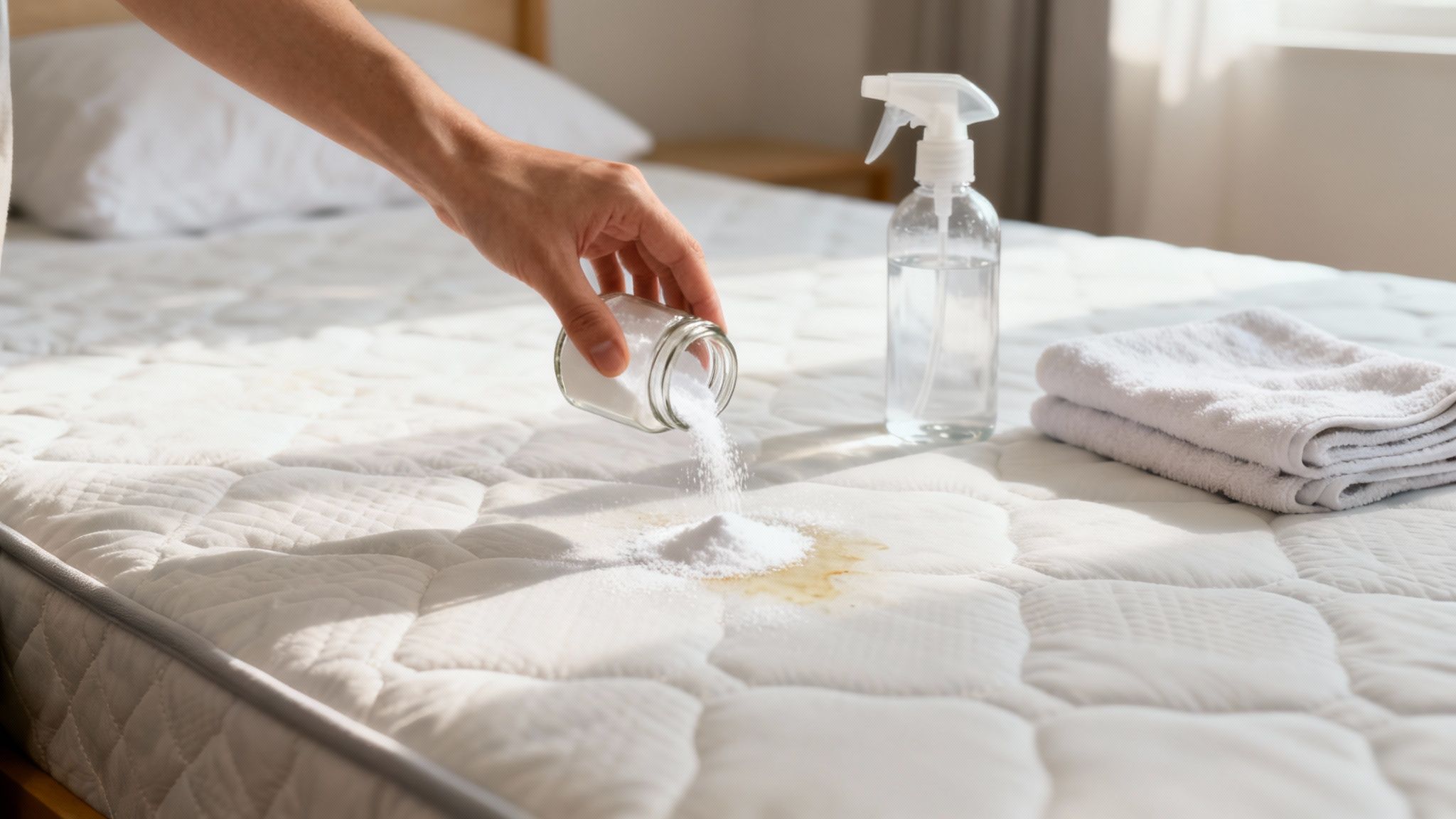
After you’ve blotted the area until it feels only slightly damp, it’s time to bring out your secret weapon for odour removal: bicarbonate of soda. Be generous here—you want to apply a thick, even layer that completely covers the entire treated spot.
This simple white powder is a powerhouse for two key reasons:
- It’s a moisture magnet. The bicarb soda will draw out any remaining dampness from both the urine and the cleaning solution you used.
- It neutralises odours. Urine is acidic, and bicarb soda is alkaline. This chemical reaction tackles any lingering ammonia smells right at the source.
Now, play the waiting game. Let the bicarb soda sit on the mattress for as long as you possibly can. A minimum of eight hours is a good start, but leaving it for a full 24 hours will give you the best shot at eliminating the odour for good. Patience is key here; it’s what stops that smell from creeping back later.
The Final Clean-Up
Once the bicarbonate of soda has done its job, it’s time for the final step. Get your vacuum cleaner and attach the upholstery tool. You need to thoroughly vacuum up all the dried powder from the mattress surface.
Go over the area several times, moving in different directions to make sure you get every last bit. When you’re finished, the stain should be gone, the smell should be neutralised, and your mattress will be well on its way to being completely fresh and dry again.
How to Tackle Old Set-In Urine Stains
Finding an old, dried urine stain is a whole different ball game than dealing with a fresh accident. By the time you spot it, the liquid part has long evaporated, leaving behind a nasty concentration of uric acid crystals that have literally bonded to the mattress fibres.
Those crystals are the real culprit behind that sharp, stubborn ammonia smell that seems to magically reappear on humid days.
Unlike a fresh spill where vinegar can do a decent job, dried-in stains laugh at simple cleaners. You need something much stronger. Your best weapon here is a high-quality bio-enzymatic cleaner. These are not your average sprays; they contain active enzymes that get to work digesting the uric acid, breaking it down at the source instead of just covering up the smell.
The Saturation and Patience Method
To beat a set-in pee stain, you have to think like the urine did. It soaked deep into the mattress, right? Well, your cleaner needs to do the exact same thing to have any chance of working. A light spritz on the surface just won't cut it.
You’ll need to be quite generous with the enzyme cleaner—much more than you would for a new stain. The idea is to completely saturate the stained area so the cleaner can penetrate just as deeply as the urine did. Let it soak for at least 15-20 minutes before you even think about blotting up the excess with a clean, dry cloth.
Here’s a pro tip: don’t rush to dry the area. The enzymes need moisture and time to do their job properly. The longer the cleaner stays damp, the more time those enzymes have to break down the tough uric acid crystals.
This is a common battle in plenty of Australian homes. Hygiene stats show that around 42% of households with pets or young kids deal with urine-related stains every year. The key is to properly saturate the area with a bio-enzymatic remover so it gets deep down. The drying process can take 24-48 hours, but during this time, the enzymes are actively degrading the uric acid, which is crucial for preventing the 75% odour return rate you often get with standard cleaners. For more on this, check out the great advice on removing stubborn pet stains on pet-lab.com.au.
Repeating the Process for Best Results
Don't get disheartened if the stain or smell is still there after your first go. Deeply set stains are stubborn and often need two, or even three, applications to be completely gone. This is totally normal.
If you need to treat it again, here’s what to do:
- Let the mattress dry completely after your first attempt.
- Give the area a good check for any lingering smells or faint discolouration.
- If you find any, re-apply the enzymatic cleaner, making sure again to let it soak in properly.
- After your final treatment, let the mattress air dry thoroughly.
Once the mattress is bone dry, try placing it in a room with some indirect sunlight for a few hours. The natural UV rays have mild disinfecting properties that can help knock out any final traces of bacteria. It's a great final step to give your mattress the best chance of a full recovery.
Drying Your Mattress and Preventing Future Stains
Getting the stain out is only half the battle. If you don't dry your mattress properly after cleaning it, you’re just trading one bad smell for another—a musty, mildewy one that signals mould growth deep inside the fibres. Making sure it’s bone-dry isn’t just a suggestion; it’s the most critical final step.
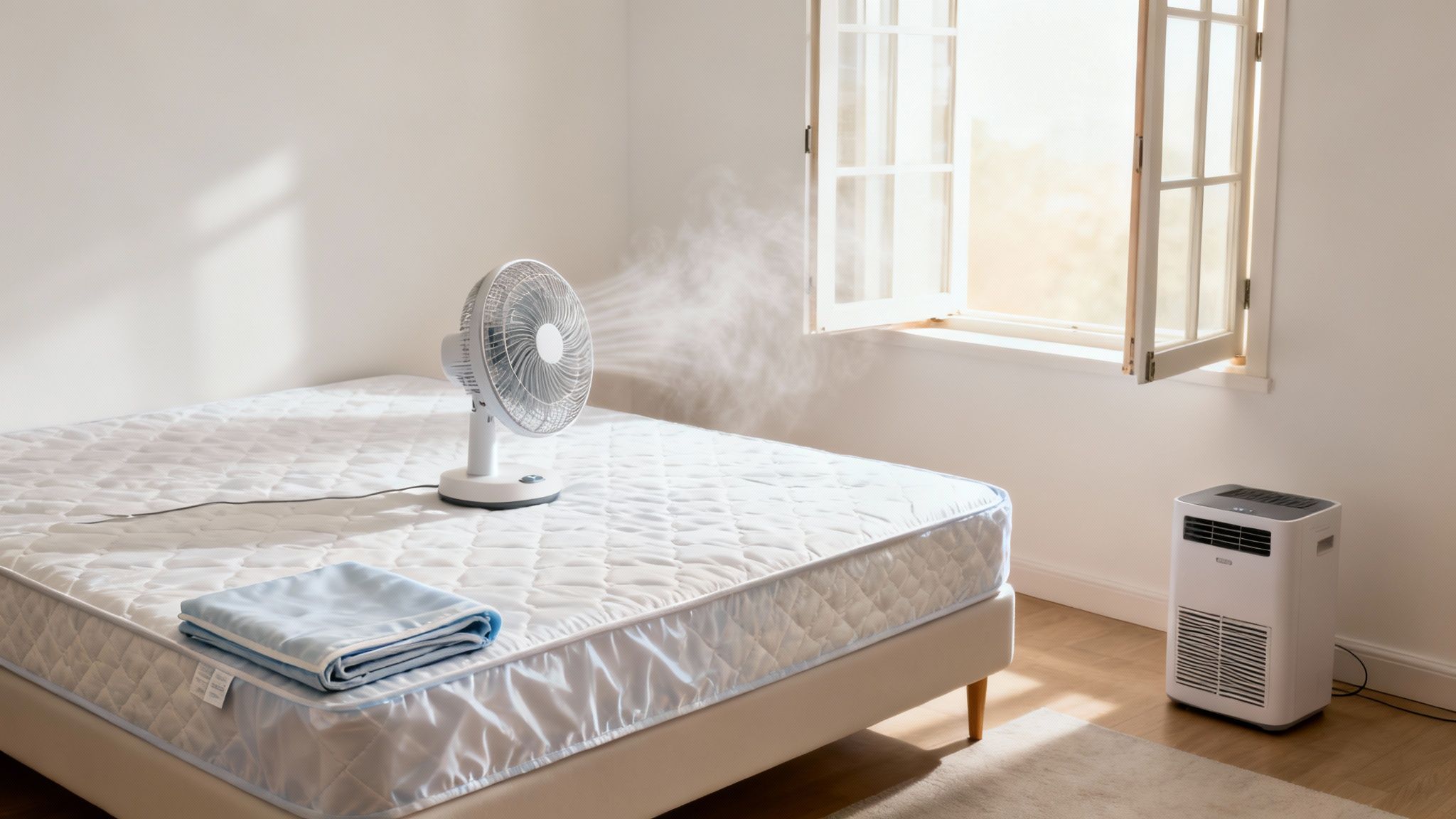
Your best bet is to create as much airflow as you possibly can. Open all the windows in the room to get a good cross-breeze going. If you can, aim a fan directly at the damp spot to seriously speed things up. Got a dehumidifier? Now’s the perfect time to plug it in and let it pull all that extra moisture out of the air.
Just a quick word of warning: never use a hairdryer on a high heat setting. That kind of intense, direct heat can easily shrink or even melt the synthetic fabrics in your mattress and will absolutely ruin memory foam. If you have to use one, keep it on the coolest setting and hold it at least 15 centimetres away from the surface.
Investing in Prevention
Once your mattress is completely dry, the goal is to make sure you never have to do this again. Prevention is always easier than cure, and your single best line of defence is a high-quality waterproof mattress protector.
A good mattress protector isn't just another sheet; it's an insurance policy for your bed. It creates an impermeable barrier that stops liquids from ever reaching the mattress itself, turning a potential disaster into a simple laundry task.
Modern protectors are a world away from those crinkly, plastic-like versions you might remember. Today’s options are breathable, quiet, and comfortable—you won’t even know it’s there.
This one simple investment protects your mattress from all sorts of trouble:
- Stains: It stops not just urine but also spills and sweat from soaking through.
- Odours: It prevents smells from getting trapped deep inside the mattress core.
- Allergens: It acts as a shield against dust mites and other common irritants.
For a more holistic approach to keeping your mattress in top shape, check out these comprehensive mattress maintenance and cleaning tips. Taking care of your mattress with a few proactive measures doesn't just keep it clean; it will significantly extend its lifespan, protecting your investment for years.
Your Top Mattress Cleaning Questions Answered
Even with the best instructions, you're bound to have questions when you’re elbow-deep in cleaning a mattress. Here are some of the most common ones we get asked, with straightforward answers to help you handle any curveballs.
Can I Use Hydrogen Peroxide on a Urine Stain?
Yes, but proceed with caution. A blend of hydrogen peroxide, dish soap, and bicarb soda can definitely work, but remember that peroxide is a bleaching agent. It can easily strip colour from fabrics and might even damage sensitive materials like memory foam.
If you’re set on trying it, you must test it on a small, hidden spot first to see how your mattress reacts. Honestly, for most situations, a purpose-built enzyme cleaner is a much safer and more reliable option, especially if your mattress isn't pure white.
How Long Does a Mattress Really Take to Dry?
This really depends on how soaked the mattress got. A small, lightly treated spot might only take 4 to 6 hours to dry, especially with a fan pointed at it or a window open for good airflow.
However, a heavily saturated area could easily take a full 24 to 48 hours to dry completely. Whatever you do, don't rush this step. Making the bed while the mattress is still damp is a surefire recipe for mould and mildew. Patience is key here—make sure it’s bone-dry to the touch before you even think about putting sheets back on.
Key Takeaway: A damp mattress is a breeding ground for mould. It's far better to wait an extra day for it to dry completely than to risk creating a much bigger, smellier problem down the track.
The Smell Is Gone But a Yellow Stain Remains. What Can I Do?
That faint yellowing you’re seeing is usually from oxidised urochrome—the pigment that gives urine its colour. If the odour is completely gone, you can try a simple cosmetic fix before picking up the phone.
Mix up a thick paste using bicarbonate of soda and a tiny bit of water. Apply it directly over the yellow stain, let it dry completely until it forms a hard crust, and then vacuum it all off. In many cases, this is enough to lift that last bit of surface discolouration. If the stain is stubborn, it might be time for professional help.
When Should I Call a Professional Mattress Cleaner?
Sometimes, DIY just won't cut it. It’s time to call in the professionals if:
- You've tackled the stain two or three times, but the odour keeps coming back.
- The accident was a big one, covering a large part of the mattress.
- Your mattress is a high-end model made from delicate materials like natural latex or premium memory foam.
Professionals have powerful hot water extraction machines that can flush out deep-set contaminants and pull moisture from the mattress core—something that’s impossible to replicate at home.
If you've tried everything and that stubborn stain or odour just won't budge, it might be time for professional help. The team at Right Price Carpet Cleaning uses powerful, truck-mounted steam cleaning equipment to deep clean mattresses, removing embedded dirt and odours that DIY methods can't reach. Get an instant quote online and restore your mattress today.
Recent Comments