



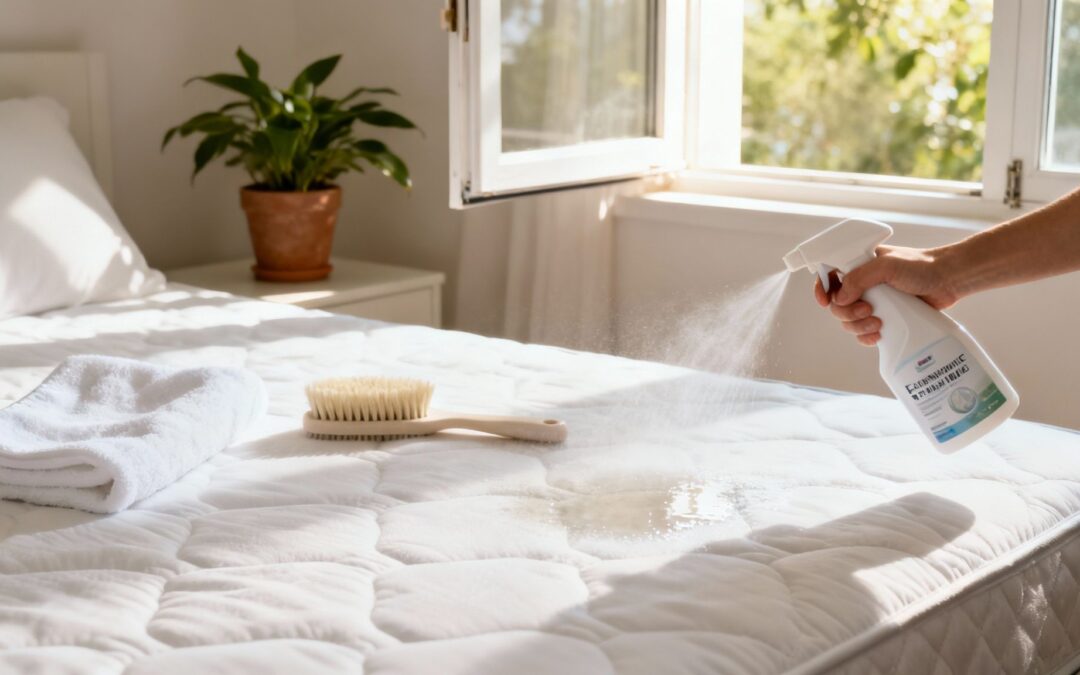
When you find a urine stain on your mattress, you need to move fast. The first thing to do is blot the area with a dry towel to soak up as much liquid as you can. After that, you'll treat it with a cleaning solution—something like diluted white vinegar or a proper enzymatic cleaner works best to break down the uric acid that causes those stubborn stains and smells. Acting immediately is your best shot at stopping the urine from sinking deep into the mattress fibres for good.
Your Immediate Action Plan for Mattress Urine Accidents
Finding a wet spot on your mattress is frustrating, but what you do in the first few minutes can make all the difference between a simple clean-up and a permanent problem. Think of it less as damage control and more as setting the stage for a deep clean that leaves your mattress fresh and hygienic.
Time is your biggest enemy here. Urine soaks into porous mattress materials incredibly fast, allowing uric acid crystals to form deep inside. These little crystals are the real culprits behind that lingering, ammonia-like smell that seems to come back, especially on humid days. According to Australian cleaning guidance, getting to work within the first 10 to 30 minutes is absolutely vital. If you act that quickly, you can cut the odds of needing a professional cleaner by around 50%—a huge win for both your mattress and your wallet. For more insights on this, you can learn about the best practices for mattress care on Sleep Republic.
To make it even easier when panic sets in, here's a quick checklist of what to grab and do right away.
First Response Checklist: What to Grab and Do Now
| Action Item | Why It's Critical | Recommended Tool or Material |
|---|---|---|
| Strip All Bedding | Prevents urine from spreading or soaking into the sheets and mattress protector. | Your hands! Get it all into the wash immediately. |
| Blot, Don't Rub | Absorbs excess liquid without pushing it deeper into the mattress core. | Clean, dry towels or thick paper towels. |
| Apply Light Pressure | Maximises absorption from the surface layers of the mattress fabric. | Use the palm of your hand over the towel. |
| Keep It Cold | Avoids "cooking" the proteins in the urine, which can set the stain permanently. | Use only cold water if rinsing is needed later. |
This isn't just about cleaning; it's about preventing a small accident from turning into a costly replacement.
Strip and Blot Immediately
First things first: get all the bedding off the mattress. Sheets, protectors, blankets—everything needs to go straight into the washing machine. Don't let them sit around.
Next, arm yourself with some clean, dry towels or a thick stack of paper towels. The goal is to blot the wet spot firmly. Press down hard, but whatever you do, don't rub. Rubbing just spreads the mess and forces the liquid deeper into the mattress foam, making your job ten times harder. You want to soak up as much moisture as possible before you even think about applying a cleaner. Keep swapping for a fresh, dry towel and continue blotting until it comes away almost completely dry.
Key Takeaway: Always blot, never rub. Rubbing expands the stain and drives urine deeper into the mattress core, making odour removal significantly more difficult.
This simple diagram breaks down the first three steps perfectly.
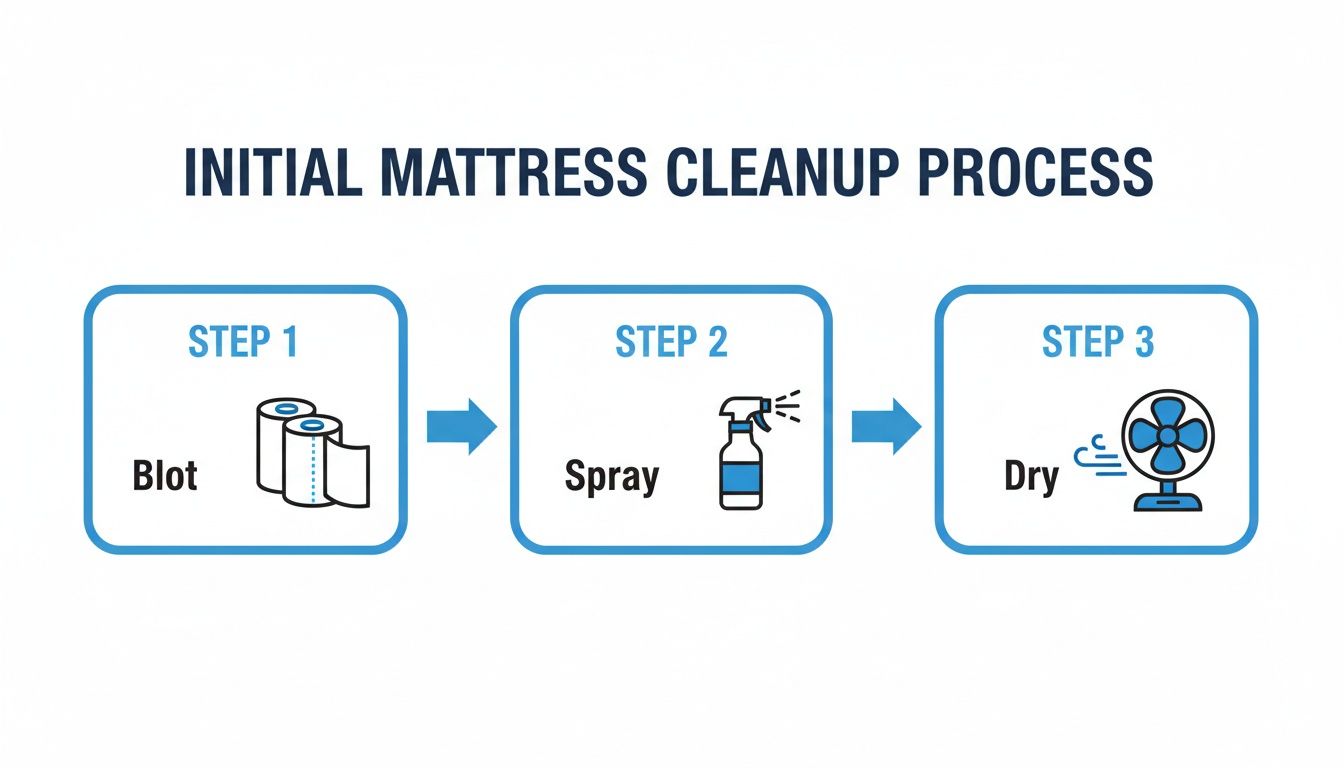
Following this sequence—blot, treat, dry—is the most effective way to tackle the problem head-on and prevent any lasting damage.
Choosing Your Cleaning Weapon: DIY vs Enzymatic Sprays
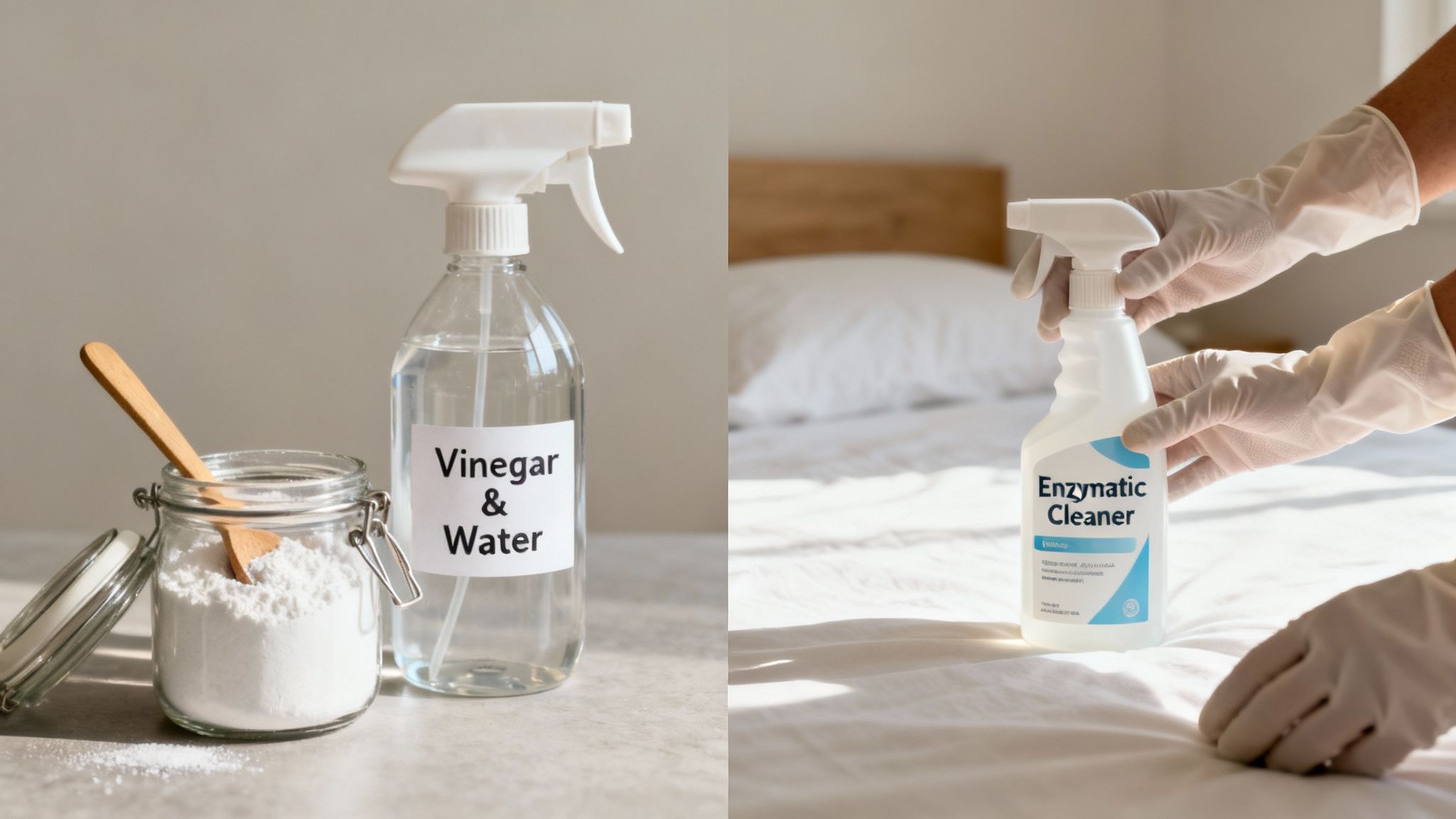
Alright, you’ve blotted up the immediate mess. Now you’re standing at a crossroads. Do you raid the pantry for household staples, or do you reach for a specialised product designed for this exact problem?
This choice between a DIY solution and a commercial enzymatic cleaner is probably the most important one you'll make in the battle against urine stains and lingering smells. Both paths can lead to a cleaner mattress, but they work in completely different ways. Knowing that difference is key to picking the right tool for the job.
The Reliable Household Remedy: Vinegar and Baking Soda
For many minor accidents, especially fresh ones, a simple homemade solution can be surprisingly effective. A mixture of equal parts white vinegar and water is a classic for a reason. Vinegar is an acid, which helps neutralise the alkaline ammonia in urine, tackling the odour at a chemical level. It’s cheap, accessible, and works well for surface-level incidents.
Here’s a practical way to use it:
- Mix Your Solution: Combine one part white vinegar with one part cool water in a spray bottle.
- Spray Lightly: You don't want to drench the mattress. Just dampen the stained area enough for the vinegar to get to work.
- Give It Time: Let the solution sit on the stain for about 10-15 minutes. This gives it time to start breaking down the urine compounds.
- Blot, Blot, Blot: Grab a fresh, dry cloth and gently blot the area again to soak up the excess vinegar solution.
The big limitation here? This method doesn't always deal with the root cause of lingering smells—the uric acid crystals. These are the stubborn remnants that can make odours reappear on humid days. And that’s where a more powerful option comes into play.
The Scientific Approach: Enzymatic Cleaners
If the DIY method is a trusty hammer, an enzymatic cleaner is a precision laser. These cleaners contain beneficial bacteria and enzymes specifically engineered to "eat" the organic matter found in urine. They don't just mask the smell; they completely dismantle the uric acid crystals.
Expert Insight: Think of it like this: a vinegar solution neutralises the odour, but an enzymatic cleaner digests and removes the source of the odour. This makes them far more effective for older, larger, or more pungent stains, particularly from pets.
When you want to know how to clean a mattress of urine for good, enzymatic sprays are almost always the better choice. Data from Australian cleaning product manufacturers shows a pretty stark difference. While household methods might remove the visible stain in 30–50% of fresh cases, they often leave those odour-causing crystals behind. In contrast, quality enzyme formulas claim to eliminate those residual deposits and smells in 85–100% of cases when used correctly. You can explore the data on enzymatic cleaner effectiveness to see just how big the difference is.
Deciding between these two options comes down to weighing up effectiveness, cost, and the specific type of stain you're dealing with. Here’s a quick breakdown.
DIY Solution vs Enzymatic Cleaner: A Head-to-Head Comparison
| Feature | DIY Solution (Vinegar & Baking Soda) | Enzymatic Cleaner |
|---|---|---|
| Effectiveness | Best for fresh, minor surface stains. Neutralises immediate ammonia odour but may not eliminate uric acid crystals. | Highly effective on fresh and old stains. Breaks down and eliminates the entire urine compound, including uric acid. |
| Odour Removal | Good at neutralising surface smells, but odours can return in humid conditions. | Excellent. Permanently eliminates odours by destroying the source, preventing them from coming back. |
| Cost | Very low. Uses common, inexpensive household items you likely already have. | Higher initial cost. A good quality bottle can range from $15 to $30. |
| Ideal For | Small spills from potty-training toddlers, minor accidents caught immediately. | Set-in stains, pet urine (especially cat urine), large accidents, or when you want to be certain the odour is gone for good. |
| Safety | Generally safe for most mattress types, but vinegar's acidity can be harsh on certain natural fibres over time. | Formulated to be safe on most fabrics and materials. Always best to spot-test first. |
So, what's the final verdict? For a small, fresh spill from a potty-training toddler, a bit of vinegar and bicarb soda will probably do the trick. But for a set-in pet stain or a more significant accident, investing in a quality enzymatic cleaner is the smartest move you can make to save your mattress from lasting damage and odours.
The Critical Drying and Deodorising Phase
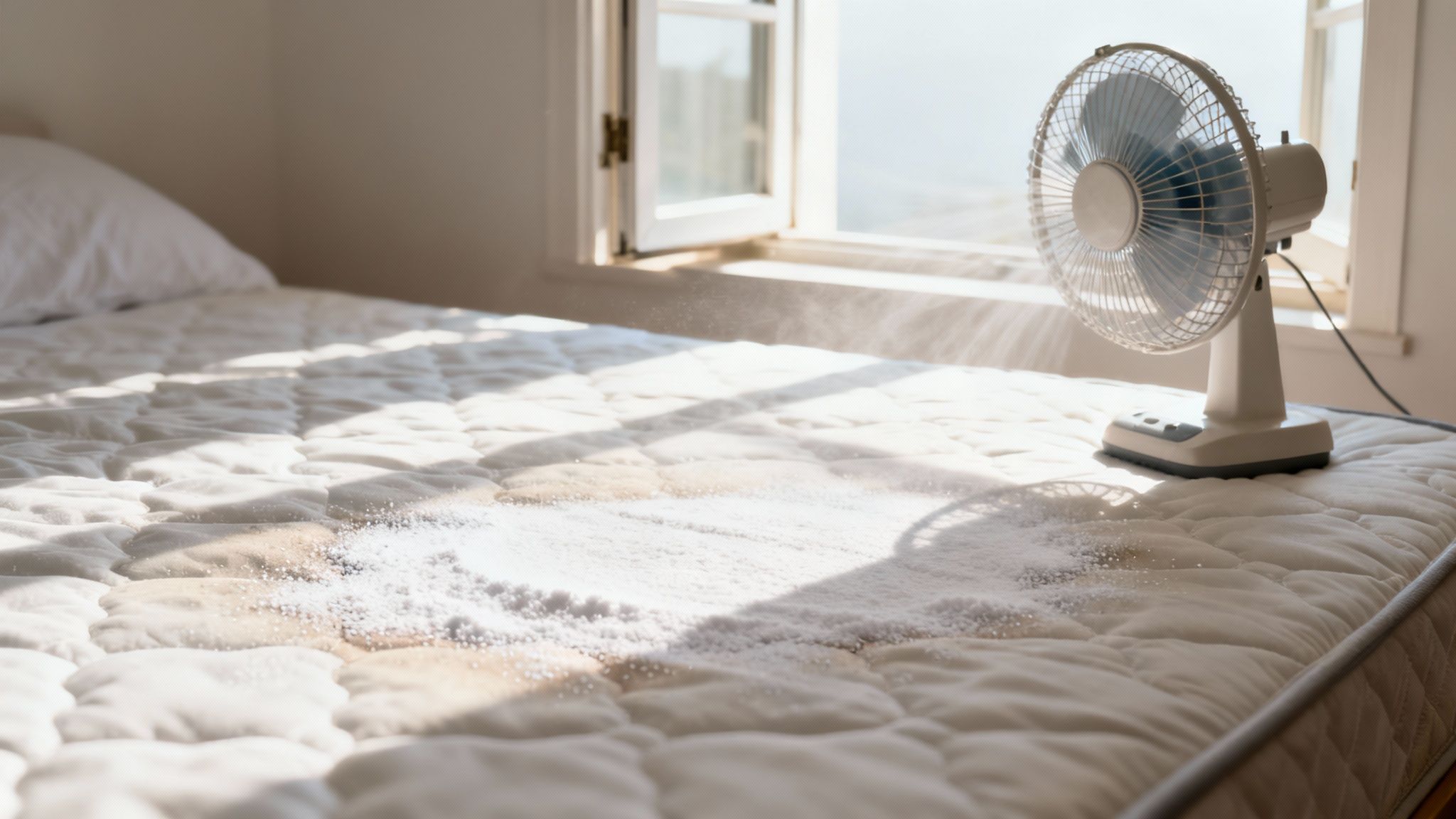
You've successfully treated the urine stain, which is a huge step, but the job isn't quite finished. One of the biggest mistakes people make is rushing to put the sheets back on a damp mattress. This is a recipe for disaster. Any lingering moisture creates the perfect breeding ground for mould, mildew, and bacteria, leading to musty smells and potential health issues.
Properly drying and deodorising your mattress is non-negotiable. This phase makes sure all your hard cleaning work doesn’t go to waste, leaving you with a truly fresh and hygienic place to sleep. Without it, you’ve only solved half the problem.
Harnessing the Power of Bicarb Soda
This is where that humble box of bicarbonate of soda (baking soda) becomes your best friend. After you’ve blotted away the cleaning solution, it's time to sprinkle a generous, even layer of bicarb soda over the entire treated area. Don't be shy with it; you want a noticeable coating that covers every last damp spot.
Bicarb soda is a fantastic natural deodoriser and desiccant. That just means it actively absorbs both odours and moisture from deep within the mattress fibres. The key here is patience. You need to let it sit for as long as you possibly can—ideally for at least 8 to 12 hours, or even overnight. This extended time allows the bicarb to work its magic and draw everything out.
Pro Tip: For an extra boost of freshness, mix a few drops of a gentle essential oil like lavender or eucalyptus into the bicarb soda before you sprinkle it on. Just make sure to mix it thoroughly in a separate bowl first.
This isn't just an old wives' tale; it's a practical step with real results. Australian mattress-care guides suggest that a thorough application of baking soda can reduce surface moisture by up to 70–90% before you even bring out the vacuum. While it won't break down uric acid like an enzyme cleaner, it excels at pulling out the dampness that odours cling to. You can find more details on the effectiveness of this method from Urine FREE.
Maximising Airflow for a Thorough Dry
While the bicarb soda gets to work, you need to help it along by creating as much airflow as possible. A damp mattress stuck in a stuffy room will take forever to dry and seriously increases the risk of mildew setting in.
You can dramatically speed things up with a few simple moves:
- Open the Windows: If the weather's good, open all the windows in the bedroom to get a nice cross-breeze going.
- Bring in a Fan: Position a fan or two to blow directly across the surface of the mattress. Constant air movement is your best friend.
- Use a Dehumidifier: If you live in a humid climate, running a dehumidifier in the room will make a massive difference by pulling moisture straight out of the air.
- Let the Sun In: If you can, angle the mattress to get some direct sunlight. The sun's UV rays are a natural sanitiser and will help kill off any lingering bacteria.
After you've let the bicarb soda sit for several hours, it's time for the final clean-up. Grab a vacuum cleaner with an upholstery attachment and thoroughly suck up all the dried powder. Go over the area several times, hitting it from different angles to make sure you get every last bit.
Once you think you're done, feel the spot carefully. Press down firmly with your hand. If you feel any coolness or dampness at all, it's not ready yet. Give it more time with the fans on. Only when the mattress is 100% bone dry should you even think about remaking the bed.
How to Tackle Stubborn Old Stains and Lingering Smells
It’s incredibly frustrating. You discover an old, yellowed urine stain you missed, or a phantom smell returns days after you thought you’d cleaned it. This is usually the point where people start thinking about replacing the mattress, but with a bit of extra effort, you can often salvage it completely.
The real challenge with old stains is that the water has long evaporated, leaving behind highly concentrated uric acid crystals that have bonded deep within the mattress fibres.
These stubborn crystals are the source of both the persistent discolouration and that recurring odour, which loves to reactivate with a bit of humidity or body heat. To defeat them, you need to shift your strategy from a simple surface clean to a deep, targeted treatment. The goal is to rehydrate and dissolve those crystals so your cleaning solution can actually get in there and break them down.
Amp Up Your Cleaning Approach
For set-in stains, a light spray of a cleaning solution just won't cut it. You need to apply a more potent treatment and give it significantly more time to work its magic.
Don't be afraid to repeat the process. Breaking down months-old uric acid crystals is a battle, not a quick skirmish. Sometimes, it takes two or even three full cleaning cycles to completely knock out the stain and the smell for good.
Here are some more aggressive tactics to try:
- Create a Cleaning Paste: Instead of just using a vinegar spray, mix three parts bicarb soda with one part water to form a thick paste. Spread this directly onto the stain, making sure it’s completely covered. The paste keeps the cleaning agents concentrated right where you need them for longer.
- Extend the Dwell Time: After applying the paste, lightly spray it with your vinegar and water solution until it's damp and fizzing. Now, let this potent combination sit for at least a few hours—or even overnight if you can. This prolonged contact is crucial for dissolving those old uric acid crystals.
- Rely on Enzymatic Power: If a DIY paste isn't getting the job done, it's time to bring in a high-quality enzymatic cleaner. Saturate the old stain thoroughly, then cover it with plastic wrap to keep the area damp. This simple trick prevents the enzymes from drying out, allowing them to work continuously for up to 24 hours to digest all that organic material.
A Realistic Expectation: Let's be honest, set-in stains may never disappear completely, especially on a white mattress. The real goal is to eliminate the odour-causing bacteria and significantly fade the visual stain, making the mattress hygienic and fresh again.
Patience is your most important tool when you need to know how to clean a mattress of urine that’s been there for a while. By repeating these more intensive steps, you stand the best chance of breaking down even the most resilient stains and restoring your mattress.
One Last Step: Making Sure Your Mattress is Truly Sanitised
You’ve done the hard work of cleaning the stain and getting rid of that awful smell. But before you call it a day, there's one final, crucial step to make sure your mattress is genuinely hygienic. Just because the stain is gone doesn't mean the bacteria are. For real peace of mind, you need to sanitise the area properly.
It helps to understand the difference between sanitizing and cleaning. Cleaning gets rid of the visible mess, but sanitising is what reduces the germs and bacteria to a safe level. This is the final barrier between a mattress that looks clean and one that actually is clean.
This isn’t just my opinion; it’s backed by national health standards. Australian guidelines consistently recommend that cleaning should be followed by disinfection where needed. This two-step approach is proven to slash the microbial load on surfaces by over 99%, which is exactly what you want for the place you sleep.
How to Disinfect the Treated Area Safely
The goal here is simple: kill any lingering bacteria without soaking your mattress all over again. The last thing you want is to undo all that careful drying you just did.
A light mist of isopropyl alcohol (you probably know it as rubbing alcohol) is a fantastic and easy way to do this. Here’s how to get it right:
- Get your solution ready. Pour some 70% isopropyl alcohol straight into a clean spray bottle. Don't water it down.
- Mist it lightly. Hold the bottle about 15-20 centimetres away from the mattress and give the treated area a light spritz. You're aiming for slightly damp, not wet.
- Let it air dry. Alcohol evaporates fast, and as it does, it kills bacteria on contact and helps pull out any leftover moisture. Make sure the room has good airflow while you let it dry.
A Quick Word of Caution: Always do a little patch test on a hidden spot of your mattress first—like on the side or underneath—just to make sure the alcohol doesn't cause any discolouration.
Once it's dry, give the entire mattress one last, thorough vacuum using the upholstery attachment. This will suck up any leftover cleaning residue, dust, and anything else, leaving the whole surface feeling fresh and properly clean.
Following these final steps is what separates a quick fix from a complete solution, ensuring you know how to clean a mattress of urine so it’s not just stain-free, but truly hygienic and ready for a good night's sleep.
Knowing When to Call a Professional Mattress Cleaner
Let's be honest, DIY methods are fantastic for tackling many accidents, but there are times when even the best home efforts just won't cut it. Knowing when to step back and call in a professional can save you a lot of frustration, prevent permanent damage, and ultimately protect your mattress investment. Sometimes, the smartest move is knowing when to let an expert take over.
Recognising the signs that a stain has gotten the better of you is key. If you've tried cleaning the spot multiple times only for that stubborn odour to creep back, it's a huge red flag. This usually means the urine has soaked deep into the mattress core, far beyond where any surface treatment can hope to reach. The same goes for very large stains or those that have sat unnoticed for who-knows-how-long—they almost always need specialised equipment to truly fix.
When Your Mattress Type Is a Factor
The kind of mattress you own plays a big part in this decision, too. Certain materials are especially vulnerable to DIY cleaning methods, which often rely on a fair bit of moisture.
- Memory Foam: This material is basically a giant sponge. Using too much liquid can leave it waterlogged, leading to long-term dampness, mould growth, and a breakdown of the foam's supportive structure.
- Pillow Tops & Delicate Covers: These often have detailed stitching and layers of plush fibres. Aggressive scrubbing or harsh chemical solutions can easily damage, mat, or discolour them for good.
- Natural Fibre Mattresses: Materials like wool or organic cotton can have an unpredictable reaction to acidic cleaners like vinegar, which could leave you with a permanent patch of discolouration.
Crucial Takeaway: If the urine has soaked right through to the core of your mattress or if you've repeatedly cleaned it without success, it's time to call a professional. Continuing DIY efforts on a deeply soiled mattress often does more harm than good.
Professionals show up with tools that are simply out of reach for the average household. They use powerful, truck-mounted hot water extraction machines that do two things brilliantly: they flush out deep-set contaminants and immediately suction all the dirty water away. This prevents the mattress core from ever becoming saturated and is far more effective at removing the uric acid crystals causing the smell.
If you find yourself in over your head, remember that services offering specialized carpet and furniture cleaning usually have the right expertise and equipment for tough mattress jobs. Calling a company like Right Price Carpet Cleaning ensures the job is done properly, protecting your mattress for years to come.
Got Questions About Cleaning Mattress Urine? We’ve Got Answers
Even with the best guide in hand, you’re bound to have a few questions pop up, especially when you’re staring down a soaked mattress in the middle of the night. It's a stressful situation, and you need clear, direct answers. Let's tackle some of the most common queries to give you that extra bit of confidence.
Knowing what not to do is just as important as knowing what to do. A lot of people's first instinct is to grab the strongest cleaner they can find, but that can be a massive mistake.
Can I Use Bleach or Ammonia on a Mattress?
In a word: no. Please don't. It’s a common first thought when you’re in panic mode, but harsh chemicals like bleach and ammonia are a complete disaster for mattresses. They will almost certainly damage and discolour the delicate fibres, leaving you with a permanent, ugly reminder of the accident.
Worse still, they don't even solve the real problem. These chemicals can't break down the stubborn uric acid crystals that are the source of that lingering urine smell. Ammonia is particularly bad because its chemical makeup is similar to a component in urine. Using it can actually make the odour worse and might even encourage pets to mark the same spot again.
How Long Does a Mattress Really Take to Dry?
This is a big one, and the answer varies wildly. A small, lightly treated spot might feel dry in 8-12 hours, but a heavily saturated area could easily take 24-48 hours—or even longer—to dry out completely.
A few factors will make a big difference:
- How much liquid soaked in: A small dribble versus a full-blown accident.
- The humidity in your home: A damp, rainy day will slow things down.
- Airflow in the room: A stuffy room is your enemy here.
Our Pro Tip: Always err on the side of more drying time. Before you even think about remaking the bed, press down firmly on the treated area with a dry towel. If you feel even a hint of coolness or dampness, give it more time. A damp mattress is a perfect breeding ground for mould, and that’s a problem you definitely don’t want.
Do These Methods Work on Pet Urine Too?
Yes, the basic principles of cleaning and neutralising uric acid apply to both human and pet urine. But there’s a crucial difference you need to know about. Pet urine, especially from cats, is often far more concentrated and has a much stronger, more pungent odour.
For any pet-related accidents, we strongly recommend skipping the household remedies and going straight for a high-quality enzymatic cleaner made specifically for pet stains. These powerful cleaners are formulated to aggressively break down the unique proteins and potent uric acid in animal urine. Honestly, it's the only way to be sure you’ve completely eliminated the odour and discouraged your furry friend from returning to the scene of the crime.
If you’ve tried everything and that stain or smell just won’t quit, or if the accident was just too big to handle on your own, don’t hesitate to call in the professionals. Expert technicians have the specialised equipment to deep-clean and sanitise your mattress safely and effectively. For reliable, top-tier service across Melbourne, contact Right Price Carpet Cleaning to restore your mattress and your peace of mind. Learn more at https://rightpricecarpetcleaning.com.au.
Recent Comments