



A good leather lounge cleaner is your secret weapon for keeping that beautiful furniture looking its best. Whether it's a specialised commercial formula or a gentle homemade solution you've mixed up yourself, the right product will cut through dirt and grime without harming the material. The real trick is matching the cleaner to your specific type of leather—that’s how you get a safe, impressive result every time.
Your Guide to a Pristine Leather Lounge
Welcome! This is your go-to guide for bringing back the beauty and lustre of your leather furniture. We'll walk you through everything you need to know, from figuring out exactly what kind of leather you have to mastering the best cleaning methods, both store-bought and DIY. You'll learn a proven process for handling everything from everyday dust to those oh-no stubborn stains.
This guide is packed with practical, real-world advice to help you get a flawless finish, whether you're sprucing up a family heirloom or maintaining a brand-new purchase. To make sure all your leather furniture, from a big comfy lounge to a stylish Garrison Leather Accent Chair, stays in top condition, you need a solid game plan. We’ll also cover the crucial steps after cleaning, like conditioning, and share simple tips to keep your lounge looking great for years.
Understanding the Demand for Quality Care
Let's face it, leather furniture is a big investment and a centrepiece in many Australian homes. With an estimated 28–35% of Australian households owning at least one piece of leather-upholstered furniture, the need for proper care is huge.
This isn't just a feeling; the numbers back it up. The Australian leather chemicals and care industry was valued at around USD 194.0 million in 2024 and is only expected to grow. This tells us that people are investing more in their furniture and are actively looking for reliable leather lounge cleaner solutions to protect those investments.
Key Takeaway: Proper cleaning isn't just about looks—it's about protecting what you've paid for. Using the right products and techniques stops premature ageing, cracking, and fading, which ultimately gives your leather furniture a much longer, happier life. This guide is here to give you the confidence and know-how to do just that.
Before You Clean, You Need to Know Your Leather Type
Before you even think about grabbing a bottle of leather lounge cleaner, the single most important thing you can do is figure out what kind of leather you’re actually dealing with. This isn't just a minor detail—using the wrong product can cause irreversible damage. We’re talking discolouration, stiffness, or even stripping the finish right off.
It’s a bit like skincare. You wouldn’t use a harsh scrub on sensitive skin, and the same logic applies here. Every leather has its own personality. Some are coated with a tough, protective layer that can handle general-purpose cleaners, while others are incredibly delicate and porous, soaking up liquids in a heartbeat.
Putting a cleaner meant for a durable, family-proof couch onto a sensitive aniline leather lounge is a recipe for a very costly disaster.
The Three Main Leather Personalities
Most leather lounges you’ll find in Australian homes fall into one of three main categories. Getting to know which one you have is the secret to choosing a safe and effective leather lounge cleaner.
- Protected (or Finished) Leather: This is the workhorse of the leather world and the most common type for family lounges. It has a polymer topcoat that makes it tough against stains and spills. This durable finish gives it a consistent colour and a slight sheen, making it the easiest type to clean by far.
- Aniline Leather: Prized for its buttery-soft, natural feel, aniline leather has no protective topcoat at all. You can see the real grain and markings of the hide. The downside? Because it's so porous, it stains incredibly easily and needs specialised, gentle cleaners.
- Nubuck or Suede: These leathers have that signature velvety, soft texture, which is created by buffing the grain. Just like aniline, they are extremely absorbent and delicate. You can’t clean them with traditional liquid cleaners; they require specific tools like suede brushes and erasers.
Identifying Common Leather Lounge Types
Not sure which one you have? This quick reference table can help you pinpoint your leather's identity and its cleaning needs at a glance.
| Leather Type | Key Characteristics | Recommended Cleaner Type |
|---|---|---|
| Protected (Finished) | Slight sheen, consistent colour, feels smooth. Repels water. | pH-neutral, general-purpose leather cleaner. |
| Aniline | Natural, matte finish. Shows grain and imperfections. Absorbs water quickly. | Specialised aniline cleaner; very gentle, water-based. |
| Nubuck / Suede | Soft, velvety, napped texture. Feels fuzzy. Absorbs water instantly. | No liquid cleaners. Use a suede brush, eraser, or specialised kit. |
Knowing these differences is the first step to avoiding a cleaning catastrophe and keeping your lounge looking its best.
The Simple Water Drop Test
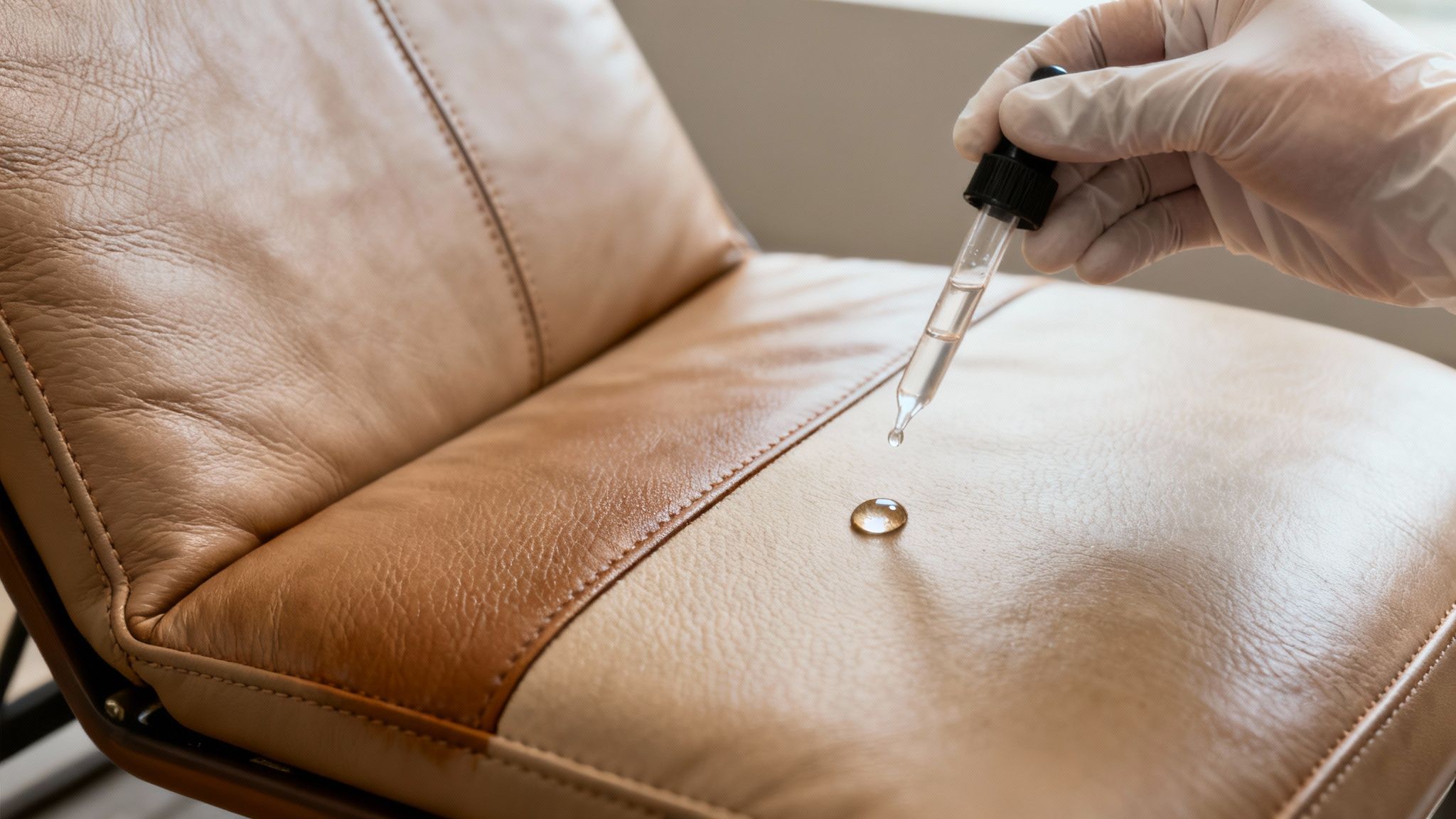
If you're still not sure, don't worry. There’s a simple test you can do right now. Find a hidden spot on your lounge—somewhere on the back or underneath a cushion—and place a single drop of water on the surface.
Now, just watch what happens.
If the water drop beads up and sits on top without sinking in, you almost certainly have protected leather. That topcoat is doing its job. If the water quickly soaks in and darkens the spot, you're looking at aniline or nubuck leather.
This quick test is your best friend. A lounge that absorbs water needs a completely different—and much gentler—cleaning approach than one that repels it. Getting this wrong is an expensive mistake you don’t want to make.
The huge variety of products on the market reflects these different needs. The global leather cleaner market was valued at around USD 1.1 billion in 2023 and is expected to double in the next decade. This growth is being driven by people realising that a one-size-fits-all approach just doesn't work, especially with online sales of specialised care products in our region growing by 20–40% annually. You can learn more about the growth of the leather cleaner market on datahorizzonresearch.com.
By taking a few minutes to identify your leather first, you can choose the right leather lounge cleaner with confidence. It’s the essential first step to a successful, stress-free clean that will keep your furniture looking fantastic for years to come.
Crafting Safe DIY Leather Cleaning Solutions
While there are plenty of powerful commercial cleaners out there, you don't always need a specialised bottle for routine maintenance or minor spills. In fact, sometimes the best leather lounge cleaner is one you can whip up yourself using simple things you already have at home.
Going the DIY route is not only easy on the wallet, but it also gives you complete control over what you're putting on your valuable furniture. Creating your own solution is surprisingly simple—the trick is knowing the right ingredients and, more importantly, the correct ratios. A homemade cleaner is perfect for the regular upkeep of protected leather, helping you tackle light grime and fresh spills before they turn into a bigger headache.
The Gentle Power of White Vinegar and Water
One of the most reliable and trusted DIY recipes is a simple mix of white vinegar and water. It’s a classic for a reason. This combination works wonders on protected leather because the mild acidity of the vinegar is brilliant at lifting surface dirt and oils without being too harsh. Think of it as your first line of defence against everyday build-up.
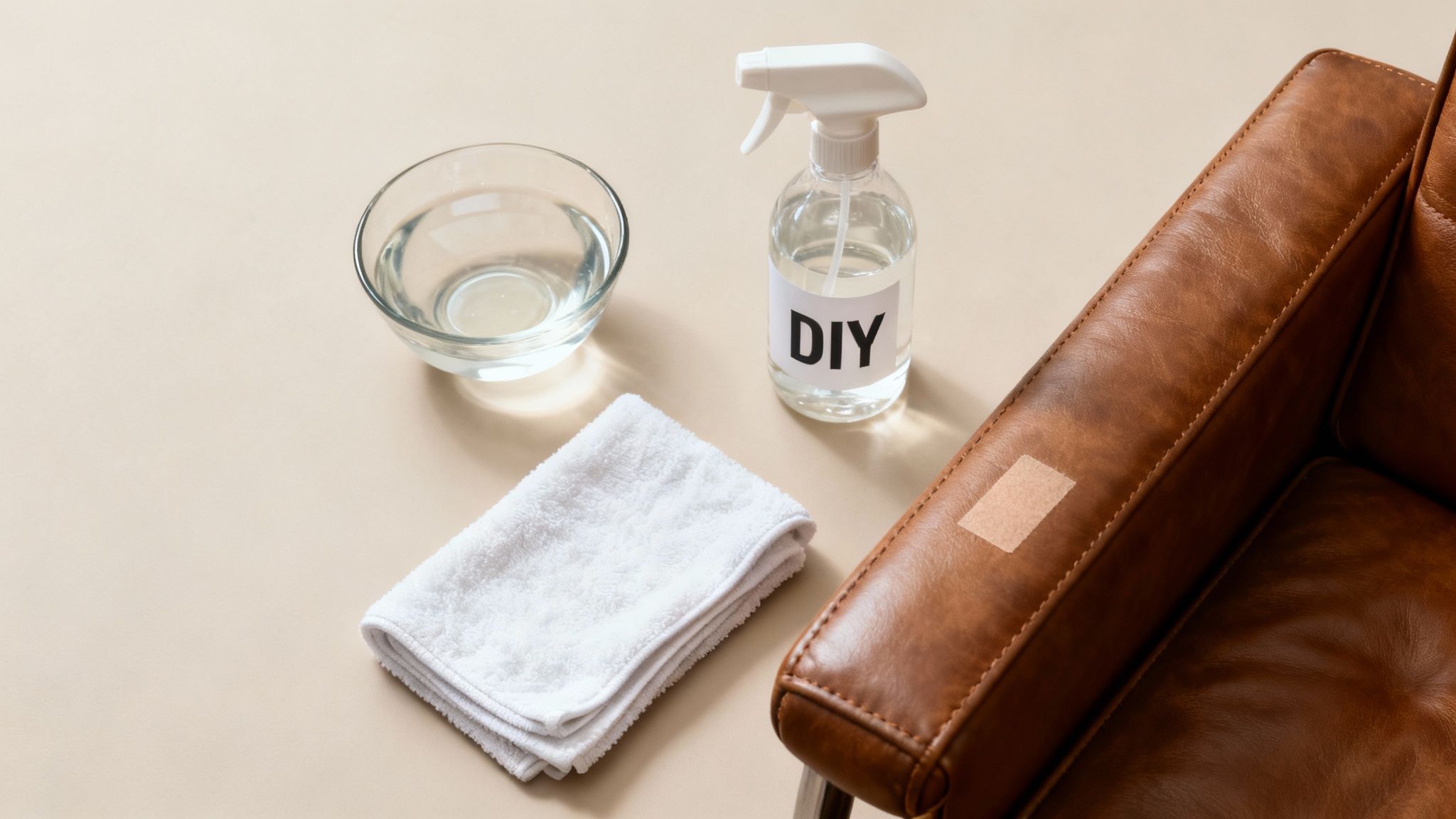
You’ll want to mix the two liquids in a small bowl or, even better, a spray bottle for easy application. The goal here is gentle cleaning, not saturation. A common mistake is pouring the mixture directly onto the leather, which can lead to water spots and uneven absorption, even on finished surfaces.
Your best friend for this job is a clean, soft microfibre cloth. Here's the simple process I recommend:
- Mix Your Solution: Combine a 50/50 solution of plain white vinegar and lukewarm water. For a quick clean-up, half a cup of each is more than enough.
- Apply with Care: Lightly dampen your microfibre cloth in the solution. It should feel moist, not dripping wet. Always wring it out thoroughly.
- Wipe Gently: Work in small, manageable sections. Wipe the leather using gentle, circular motions, which helps lift the dirt without aggressive scrubbing.
- Dry Immediately: This part is key. Follow right behind with a second, completely dry microfibre cloth to buff the area. This step removes any leftover moisture and stops streaks from forming.
This technique is perfect for a bi-monthly refresh to keep your lounge looking its absolute best.
Crucial Reminder: Always, and I mean always, do a patch test first. Find a hidden spot on your lounge—like the underside of a cushion or a patch on the back—and apply a small amount of your homemade cleaner. Let it dry completely to make sure there's no discolouration or damage before you tackle the entire piece.
Using a Mild Soap Solution Correctly
Another great homemade option involves a mild soap and water solution. But—and this is a big but—the type of soap you choose is incredibly important. The wrong kind can strip the leather of its natural oils, leading to dryness, brittleness, and eventually cracking.
You need a soap that is pH-neutral and free from any harsh detergents, dyes, or fragrances. We're talking about pure, unscented soap bars or a gentle, non-alkaline liquid soap. Steer clear of dish soap, laundry detergent, and any ammonia-based cleaners. They are far too aggressive for leather and will cause damage.
What to Use and What to Avoid
Making the right choice here can be the difference between a clean lounge and a ruined one. Here’s a quick guide to help you pick the right soap for your DIY leather cleaner.
| Safe Soap Options (pH-Neutral & Gentle) | Soaps to Avoid (Harsh & Damaging) |
|---|---|
| Unscented, dye-free bar soap (e.g., pure castile) | Dishwashing liquid and detergents |
| Non-alkaline liquid hand soap | Ammonia-based or bleach-containing products |
| Specialised leather soap flakes | All-purpose household surface sprays |
| Gentle baby shampoo (in a pinch, highly diluted) | Furniture polish with silicone or waxes |
To make your cleaning solution, add just a tiny amount of your chosen mild soap to a bowl of warm water. Swish it around to create some suds. Here’s the important part: you’re only going to use the suds, not the soapy water itself.
Scoop up some of the foam onto a soft cloth and apply it to the leather just like you would with the vinegar solution—working in small sections with a gentle, circular motion. The idea is to use as little moisture as possible. After cleaning an area with the suds, wipe away any residue with a separate, clean cloth dampened with only water, and then immediately dry it with a third cloth.
Yes, this multi-step process is a bit more involved, but it’s exceptionally gentle and effective for general cleaning on your protected leather lounge.
Choosing the Best Commercial Leather Lounge Cleaner
While homemade solutions are fantastic for routine upkeep, there comes a time when your leather lounge needs a bit more muscle. For tackling heavy soiling, built-up body oils, or that stubborn grime a simple vinegar solution won't budge, a dedicated commercial leather lounge cleaner is absolutely the best tool for the job.
Walking down the cleaning aisle can feel a bit overwhelming, with countless bottles all promising miraculous results. The key is to look past the marketing hype and understand what’s actually inside the product. Choosing the right formula isn’t about finding the strongest cleaner; it’s about finding one that’s perfectly matched to your leather’s specific needs.
Decoding Different Cleaner Formulas
Not all commercial cleaners are created equal. They’re formulated for different tasks, from a quick tidy-up to a full-blown restoration. Figuring out which one you need is the first step.
- All-in-One Cleaner & Conditioners: Think of these as the multi-taskers of the leather care world. They offer a convenient, single-step process for light cleaning while also replenishing some of the leather's essential moisture. They're ideal for regular maintenance on protected leather lounges that are in good condition but just need a refresh.
- Dedicated Deep Cleaners: When you're dealing with a heavily used lounge that has accumulated significant grime, a dedicated cleaner is your best friend. These formulas are more potent, designed to break down and lift embedded dirt without any conditioning agents mixed in. You'll need to follow up with a separate conditioner, but the result is a much more thorough clean.
- Leather Wipes: For quick clean-ups and tackling minor spills the moment they happen, leather wipes are incredibly handy. While they’re no substitute for a proper deep clean, they are perfect for keeping on hand to prevent small messes from becoming set-in stains.
How to Read the Product Label
The secret to making a smart purchase lies in the ingredient list. Knowing what to look for—and what to avoid—will protect your furniture from accidental damage. A good leather lounge cleaner should nourish the material, not strip it bare.
A critical thing to check is the cleaner's pH level. Leather has a naturally acidic pH, typically sitting between 4.5 and 5.5. Using a cleaner that is too alkaline (like many all-purpose household sprays) can damage the leather’s finish, causing it to become dry, brittle, and prone to cracking over time.
A product labelled as pH-balanced or pH-neutral is specifically formulated to be compatible with your leather's natural chemistry. This is one of the most important features to look for when choosing a safe and effective cleaner.
When you're selecting a commercial product, it's also crucial to know how different cleaners interact with various leather types. This expert guide on choosing the best cleaner for every leather material provides some fantastic guidance on making an informed choice.
Commercial Cleaner Features to Look For
Here’s a quick-glance table to help you identify the heroes and villains on a product label. Understanding these components empowers you to choose a cleaner that will genuinely care for your lounge.
| Feature/Ingredient | Why It Matters | Look For This | Avoid This |
|---|---|---|---|
| Base | Water-based cleaners are gentler and less likely to damage the finish. | Water-based, pH-balanced | Solvents, Alcohol, Acetone |
| Moisturising Agents | Conditioning elements restore moisture and prevent cracking. | Natural oils, Lanolin, Glycerine | Silicones, Waxes, Petroleum distillates |
| Cleaning Agent | The active ingredient should be effective but not harsh. | Surfactants, Mild soaps | Harsh detergents, Bleach, Ammonia |
| Finish | A good cleaner should not leave a residue that attracts more dirt. | Non-greasy finish, residue-free | Products leaving a sticky or glossy film |
Ingredients like silicones and waxes are particularly problematic. While they might give a temporary shine, they don't actually moisturise the leather. Instead, they seal the surface, preventing it from breathing and blocking future conditioning treatments from penetrating, which can lead to drying and cracking down the line.
Ultimately, the best leather lounge cleaner is one that is specifically designed for your type of leather. For a durable, protected leather lounge, a quality all-in-one cleaner might be perfect for your monthly routine. But for a more delicate aniline leather lounge, you must seek out a specialised, gentle formula designed explicitly for that material. Making the right choice now will ensure your lounge stays beautiful and comfortable for many years to come.
Putting It All Together: The Full Cleaning and Conditioning Process
Having the right leather cleaner is a great start, but it's your technique that really brings your furniture back to life. Getting the process right is what guarantees a deep, safe clean and protects your investment for years to come. This walkthrough will cover everything from the initial prep work to the final, crucial conditioning step, turning a chore into a restorative treatment for your beloved lounge.
The whole process isn't just about wiping down a surface. It’s about methodically removing dirt and grime, then putting back the essential moisture that keeps leather supple and healthy. Rushing these steps or skipping them altogether is where damage often happens.
First Things First: Essential Prep Work
Before a single drop of cleaner touches your lounge, you need to prep the surface. Think of it as clearing the canvas before you paint. Loose debris like crumbs, pet hair, and dust can be surprisingly abrasive. If you just wipe over them, you risk scratching the leather's surface with the very dirt you’re trying to remove.
Your first tool should always be a vacuum cleaner with a soft brush attachment. This isn't optional.
- Start with the Surfaces: Gently vacuum all the main surfaces first.
- Get Into the Gaps: Pay close attention to the seams, button tufts, and anywhere the cushions meet the frame. This is where grit loves to hide.
- Lift and Look Underneath: If your cushions are removable, take them off and vacuum the frame underneath. You’ll be shocked at what you find there.
After vacuuming, give the entire lounge a quick wipe-down with a dry, clean microfibre cloth to pick up any fine dust left behind. This simple prep only takes a few minutes but makes a huge difference in the final result. It prevents micro-scratches and lets your leather cleaner work on the actual grime, not surface-level debris.
The infographic below shows how to choose the right cleaner, which always starts with knowing what you're working with.
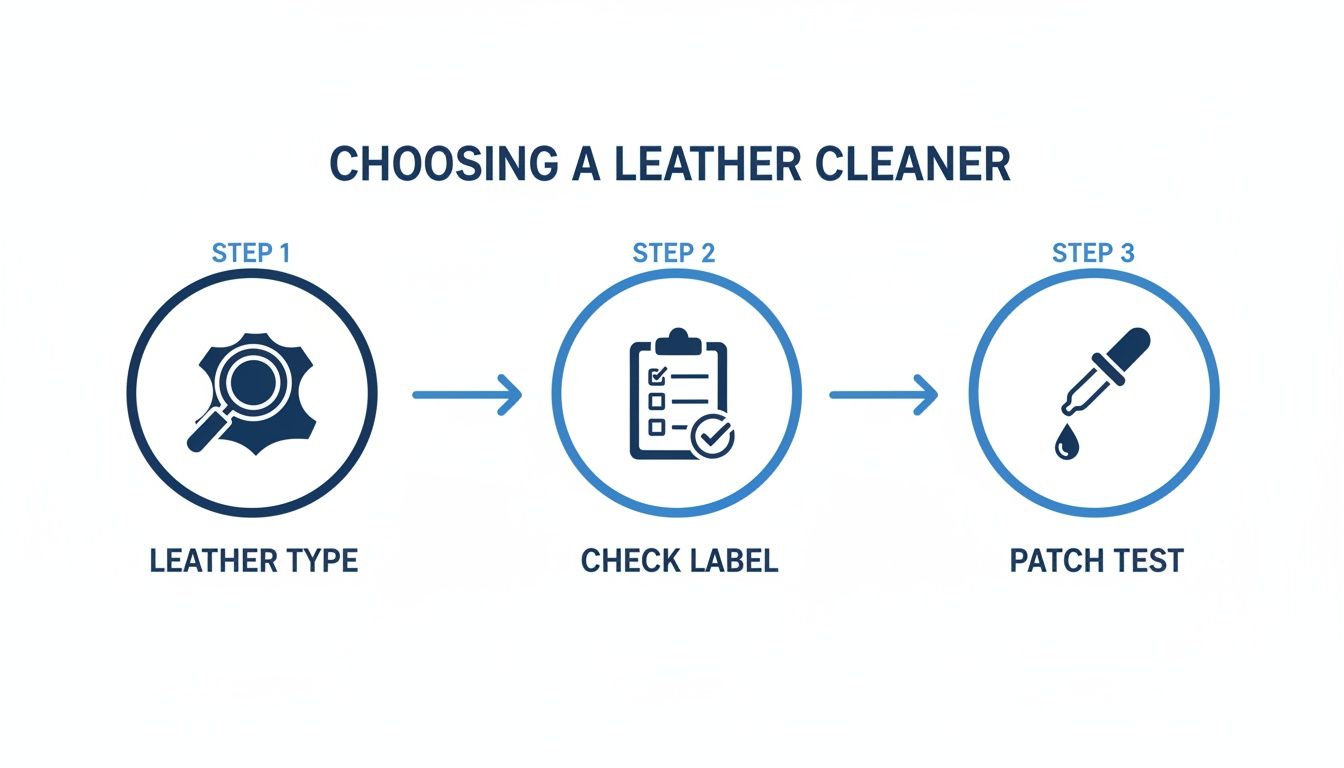
As you can see, every successful cleaning job starts with three non-negotiable checks: identifying the leather type, reading the product label carefully, and doing a small patch test.
Applying Your Leather Lounge Cleaner
Now that the surface is prepped, it's time for the main event. The golden rule here is simple: less is more. Drenching your lounge in cleaner is a common mistake that leads to oversaturation, water marks, and can even damage the leather's internal structure.
Always apply a small amount of your chosen cleaner onto a clean, soft microfibre cloth—never pour it directly onto the leather. This gives you total control over how much product you're using and where it goes.
Work in small, manageable sections, like one cushion or one armrest at a time. Using your dampened cloth, wipe the leather in gentle, circular motions. This technique helps lift dirt from the grain without needing to scrub aggressively, which can easily damage the finish. As soon as a section is clean, grab a separate, dry microfibre cloth and immediately buff away any leftover moisture.
Expert Tip: Steer clear of common household products like baby wipes or all-purpose sprays. A study found that cleaners with the wrong pH level can strip the protective topcoat right off finished leather, leading to premature drying and cracking. Always stick to a dedicated leather cleaner.
The All-Important Drying and Conditioning Phase
After cleaning, letting the lounge dry properly is absolutely essential. Whatever you do, don't try to speed things up with a hairdryer or by dragging it into direct sunlight. Heat is leather's worst enemy; it can cause the material to shrink, warp, and become brittle. Just let it air-dry naturally, well away from any direct heat sources.
Once the lounge is completely dry to the touch, it’s time for the final, non-negotiable step: conditioning. Cleaning is necessary, but it can strip some of the leather's natural oils. A quality leather conditioner is what puts that lost moisture back in.
Think of it like using moisturiser on your skin. It restores flexibility, stops the material from drying out and cracking, and leaves a protective barrier that helps repel future stains.
Apply a small amount of conditioner to another clean, soft cloth. Work it into the leather using the same gentle, circular motions you used for cleaning. Let it sit for the time recommended on the product label—usually about an hour—so it can be fully absorbed. Finally, take one last clean, dry cloth and give the entire lounge a thorough buffing. This final buff removes any excess product and brings out a beautiful, healthy lustre. Skipping this step is like washing your hair without using conditioner—it leaves the material clean, but totally vulnerable.
Of course, you can handle most day-to-day cleaning yourself. But some jobs are best left to the experts. Knowing when to step back and call for help is key to protecting your leather furniture from damage that just can't be undone. Trying to fix a serious issue on your own often ends up making things worse.
Sometimes, a stain or bit of damage is a clear sign that it's time to bring in a professional. If your usual leather cleaner isn't making a dent, that's a good hint the problem has soaked deeper than the surface.
Signs You Need an Expert
- Deep-Set Stains: We've all been there. A pen bursts, a glass of red wine tips over, or you notice dye from new denim jeans has transferred onto the cushion. These stains are notoriously tough. Professionals have specialised solvents and tools that can lift them out without damaging the leather's finish.
- Widespread Discolouration: If your lounge has faded from years of sun exposure or developed large, discoloured patches from body oils, it's not a simple fix. An expert can often restore the colour using special dyes and pigments matched perfectly to your lounge.
- Stubborn Odours: Lingering smells from pets, smoke, or mildew that seem to be embedded deep within the leather and cushions need more than a surface clean. Professionals use commercial-grade deodorising treatments to properly neutralise them.
- Delicate Leathers: Aniline and nubuck leathers are beautiful but incredibly porous and sensitive. One wrong move with a cleaning product can be permanent. For these types of lounges, calling a professional is always the safest bet.
Think of calling a service like Right Price Carpet Cleaning as an investment in your furniture's future. We use industrial-grade equipment and cleaning solutions that aren't available to the public, guaranteeing a deep, safe clean that brings back your lounge's original beauty and feel. For those really challenging jobs, our expertise gives you peace of mind and the best possible outcome for your much-loved furniture.
Of course, here is the rewritten section with a more natural, human-expert tone, following all the provided guidelines and examples.
Common Questions About Leather Lounge Cleaning
Even with the best intentions, looking after leather furniture can feel a bit daunting. It’s one of those things where a little bit of knowledge goes a long way, and getting the right answers can be the difference between a confident clean and a costly mistake. Let's tackle some of the most common questions we hear all the time.
How Often Should I Clean My Leather Lounge?
This is probably the biggest question people have. For day-to-day upkeep, a quick wipe-down with a dry microfibre cloth once a week is perfect. It stops that fine layer of dust from building up.
When it comes to a proper deep clean using a dedicated leather lounge cleaner, aim for every 3-6 months. If your lounge is in the middle of a busy family room with kids and pets, you’ll probably lean closer to the three-month mark. But if it’s in a quieter spot, you can definitely stretch it to six.
Can I Use Household Products To Clean It?
It's tempting to grab whatever's under the sink for a quick spot-clean, but this is where you need to be careful.
A lot of people reach for baby wipes, but that’s a big mistake. They're loaded with moisturisers and chemicals that aren't meant for leather. Over time, they can strip away the protective topcoat, leaving the leather dry and prone to cracking.
So, what about vinegar? A 50/50 mix of white vinegar and water can actually be quite effective for protected leather. The mild acidity is great for lifting grime. Just be sure you never use it undiluted. And a crucial follow-up step: after cleaning with a vinegar solution, you must apply a quality leather conditioner to put that moisture back and keep it supple.
Our Pro Tip: Honestly, it’s always best to stick with products made specifically for leather. Household cleaners often have the wrong pH balance, and the damage they cause is slow and cumulative. You won’t see it happening until it’s too late.
How Do I Deal With Stains and Scratches?
Ink stains cause instant panic, but the trick is to act fast. If you’ve got a fresh ink mark on protected leather, gently dab the spot with a cotton swab dipped in isopropyl alcohol. Dabbing is key—never rub. But you absolutely must do a patch test on a hidden spot first to make sure it doesn't lift the colour. For older stains, or any stain on delicate aniline leather, your safest bet is to call a professional.
Scratches are another common worry. You can often buff out minor surface scuffs with a clean, dry microfibre cloth, or by working in a tiny bit of leather conditioner. If the scratch is deeper and has broken the surface, a colour-matched leather repair kit might be needed. But again, this is one of those jobs where an expert touch often gets a much better result.
For those deep-set stains, noticeable discolouration, or when you just want to know your valuable furniture is in the best hands, Right Price Carpet Cleaning is here to help. Our technicians have the specialised gear and know-how to bring your leather lounge back to life, safely and effectively. Get an instant quote online and see what a difference an expert clean can make.
Recent Comments