



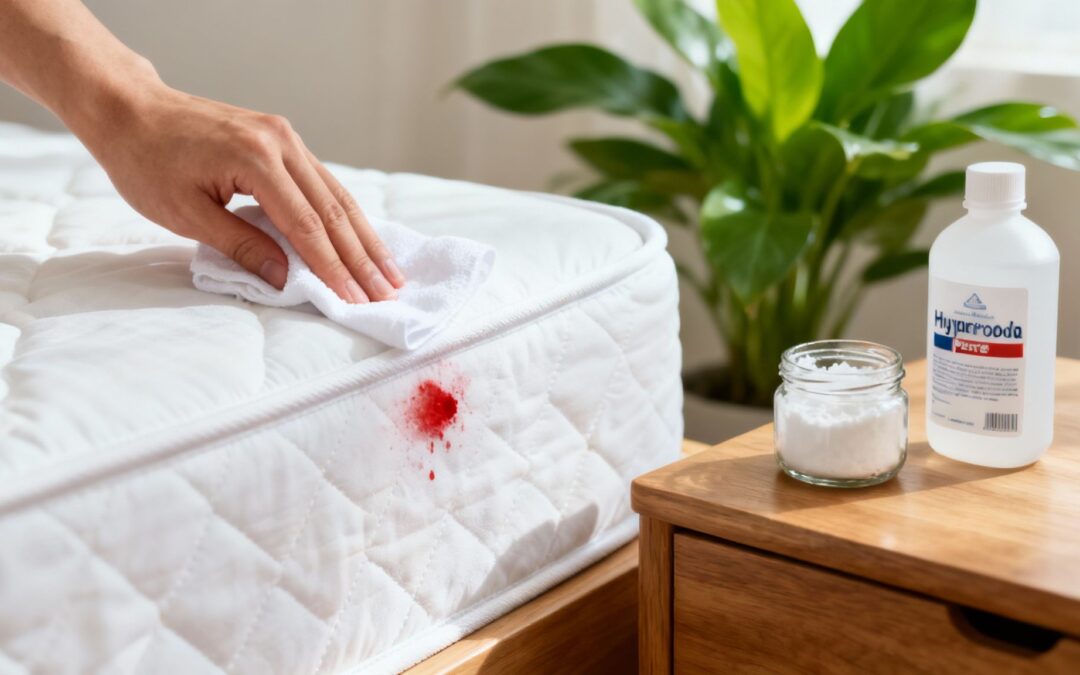
When it comes to getting blood out of a mattress, the golden rule is simple: act fast with cold water and blot—never, ever rub. Getting to it quickly can lift up to 95% of a fresh stain, stopping it from setting deep into the mattress fibres and making the rest of the clean-up a whole lot easier.
Your Immediate Action Plan for Mattress Blood Stains
Discovering a blood stain on your mattress is never ideal, but what you do in the first few minutes is the most important part of the entire process. Your immediate response will often decide whether you're dealing with a simple clean-up or a permanent mark. The goal here isn't a deep clean just yet; it's damage control.
Whatever you do, don't reach for hot water or harsh chemicals. Heat will essentially "cook" the proteins in the blood, setting the stain for good. Your best tool in these first moments is nothing more than cold water and a clean, dry cloth.
First, Assess the Stain
Before you grab anything, take a quick look. Is the stain fresh and wet, or has it already dried? This simple check will guide your entire cleaning strategy and help you pick the right method from the start, saving you a ton of time and effort down the line.
This quick guide shows the two main paths you can take, depending on whether the stain is still wet or has already dried.
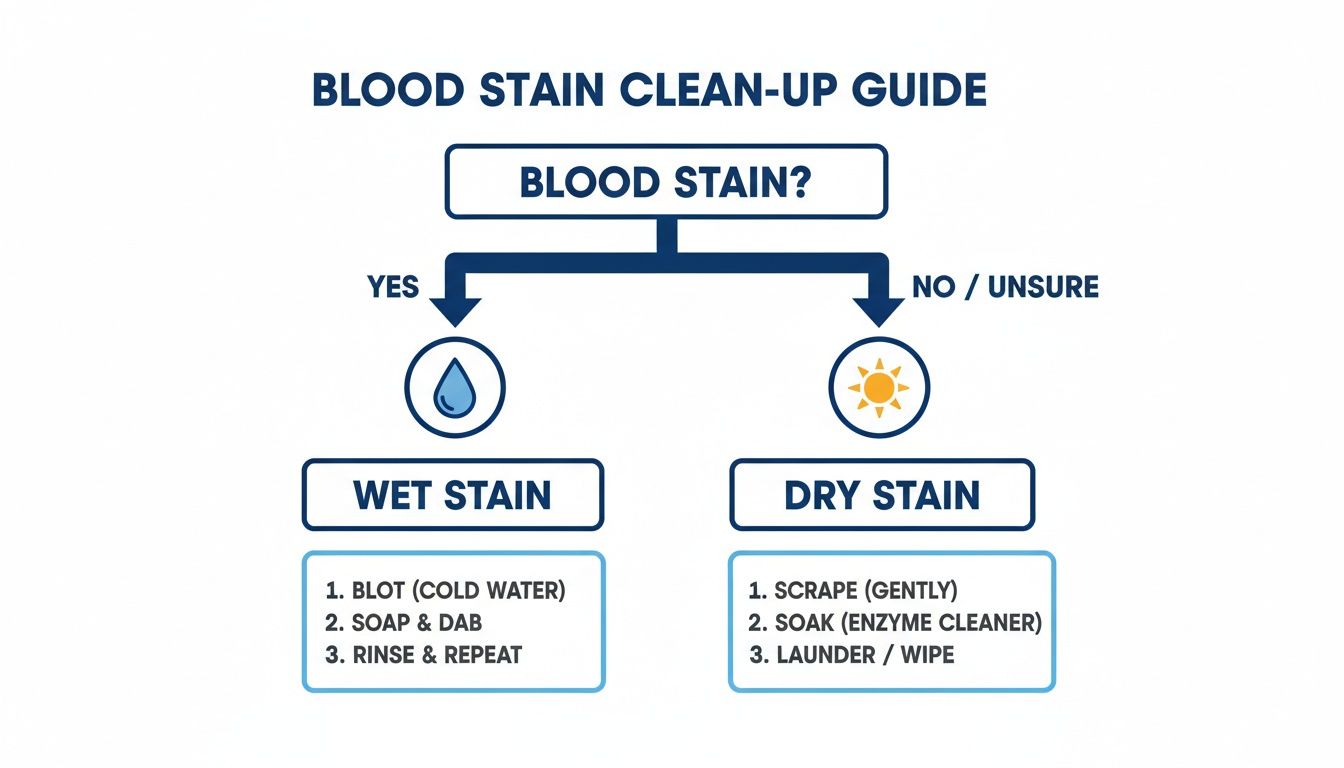
As you can see, tackling a wet stain right away is the path of least resistance. A dried stain, on the other hand, is going to need a bit more muscle.
For those moments when you catch a stain right after it happens, having a quick reference can make all the difference. This table breaks down the essential first steps for dealing with fresh blood.
Quick Guide for Fresh Blood Stains
| Step | Action Required | Why It Works |
|---|---|---|
| Gather Supplies | Grab a clean cloth, a bowl of cold water, and another dry towel. | Having everything ready means you can act immediately before the stain begins to set. |
| Blot Gently | Use the dry cloth to gently press on the stain, lifting excess blood. | Blotting pulls the liquid up and out of the mattress fibres. Rubbing just pushes it deeper. |
| Dampen & Blot | Lightly dampen a clean part of the cloth with cold water and blot the stain again. | Cold water helps break down the blood proteins without setting them, making them easier to lift. |
| Repeat | Continue blotting with a clean, damp section of the cloth until no more blood transfers. | This process systematically removes the stain layer by layer from the outside in, preventing it from spreading. |
Following these simple actions immediately can dramatically reduce the severity of the stain, often removing it entirely before it has a chance to become a real problem.
The Blotting Technique Explained
The biggest mistake I see people make is rubbing the stain frantically. It’s a natural instinct, but it’s the worst thing you can do. Rubbing not only forces the blood deeper into the mattress padding but also spreads it around, turning a small spot into a much bigger problem.
The correct technique is blotting. Here’s how to do it right:
- Take a clean cloth and dampen it lightly with cold water.
- Press it firmly onto the stain for a few seconds.
- Lift the cloth straight up. You should see some of the blood has transferred onto it.
- Fold the cloth to a fresh, clean section and repeat.
Keep this blotting motion going, working from the outside edge of the stain inward to stop it from spreading. It's a surprisingly common issue; research shows that 70% of Australian mattress owners face blood stains each year. The good news is that quick action with just cold water and blotting can handle the vast majority of fresh stains. You can dive deeper into these Australian mattress stain statistics on MattressCleaner.net.au.
Key Takeaway: Always blot, never rub. Blotting lifts the stain out of the mattress fibres, while rubbing grinds it deeper in. This single piece of advice is the cornerstone of successful blood stain removal.
By getting this immediate action plan right, you set yourself up for success. You’ve minimised the stain's severity and prepped the area perfectly for more targeted cleaning methods if they’re still needed.
Using Household Staples to Remove Fresh Blood Stains
Discovering a fresh blood stain can be startling, but the solution is probably already in your kitchen pantry. Don't panic. Simple, everyday items are surprisingly good at tackling these stains, especially if you get to them quickly. A little bit of kitchen science goes a long way here.
The single most critical rule for getting blood out of a mattress is to always use cold water. Blood is full of proteins that coagulate when they hit heat—think of it like cooking an egg. Once the proteins are heated, they permanently bind to the mattress fibres, setting the stain for good.
Cold water, however, does the opposite. It helps break down and dissolve the proteins, making them much easier to lift away. This one simple choice is the foundation of every successful stain removal job.
The Gentle Power of a Baking Soda Paste
For a gentle but powerful approach, especially on delicate surfaces like memory foam or pillow tops, a baking soda paste is my go-to. Baking soda is a mild alkali that helps break down stains, while its fine grit gives you some gentle scrubbing power without damaging the fabric. It’s also brilliant at absorbing odours.
Making the paste couldn't be easier.
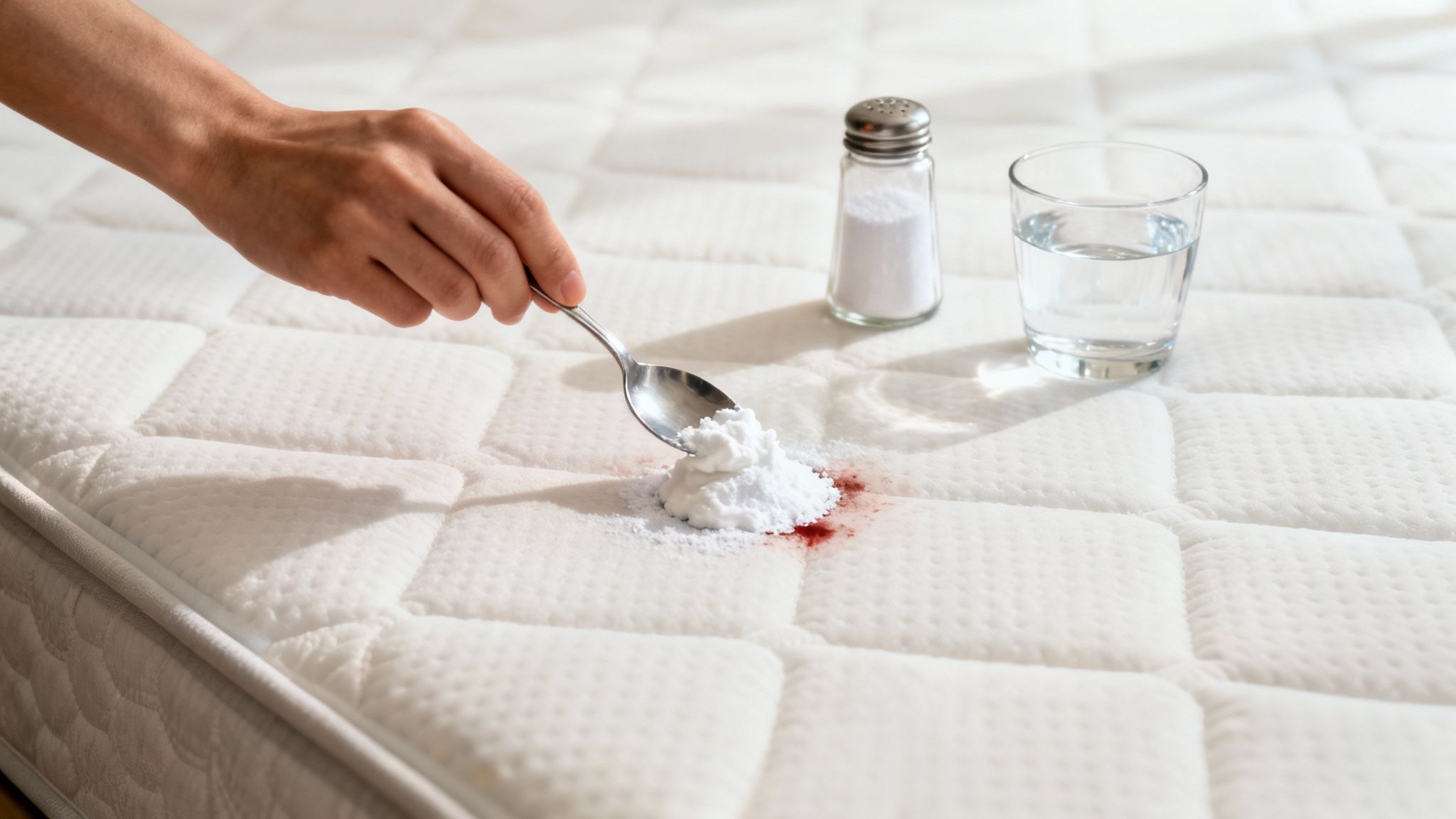
- Combine one part baking soda with two parts cold water in a small bowl.
- Mix it up until you get a thin paste, about the consistency of pancake batter.
- Apply the paste directly onto the blood stain and cover it completely. A thin, even layer is all you need.
Now, just let the paste sit on the stain for at least 30 minutes. You'll see it start to dry out and maybe even change colour as it pulls the blood from the fibres. Once the time’s up, gently scrape off the dried paste with a dull knife or spoon, then vacuum up whatever is left. Finish by blotting the spot with a clean cloth dampened with a little cold water to rinse away any residue.
Harnessing the Dehydrating Effects of Salt
Another hero from the kitchen cupboard is good old table salt. This method works on a completely different principle: osmosis. Salt is a natural desiccant, which is just a fancy way of saying it draws moisture out of its surroundings. When you apply a salt solution, it pulls the blood up and out of the mattress fibres, making it much easier to blot away.
This technique is incredibly simple and uses things you definitely already have.
- Create a solution: Mix two teaspoons of salt into one cup of cold water, stirring until it's all dissolved.
- Apply and blot: Dip a clean, white cloth into the saltwater and use it to blot the stain. Always work from the outside in to stop it from spreading.
- Rinse: Once the stain has lifted, switch to a different cloth dampened with plain cold water and blot the area to remove any leftover salt.
Pro Tip: Never pour any cleaning solution directly onto your mattress. Always apply it with a cloth to control how much liquid you're using. If you oversaturate the mattress, moisture can seep deep into the core, creating a risk of mould and mildew—a much bigger problem than the original stain.
For a fresh stain that’s being a bit stubborn, you can combine the power of both. After blotting with the saltwater solution, make a thick paste of salt and water, apply it to the stain, and let it dry completely before scraping and vacuuming it off.
No matter which household staple you choose, the final step is always the same. Gently pat the cleaned area with a dry towel to soak up as much moisture as you can. This is a crucial first step before letting the mattress air dry completely, ensuring it stays fresh and clean.
What About Old, Dried Blood Stains?
Finding an old, dried blood stain can feel like a lost cause. Fresh stains are one thing—they usually surrender to cold water and a bit of elbow grease. But dried blood? That’s a whole different battle. The proteins have had time to set, bonding with the mattress fibres and becoming incredibly stubborn.
But don’t start pricing new mattresses just yet. While you’ll need to bring out the bigger guns, you can still win this fight. Forget simple soap and water; for dried blood, we need solutions that can break down the stain on a chemical level. This is where oxidising agents and enzymes become your most valuable players, as they’re designed to dissolve the haemoglobin that gives the stain its staying power.
Using Hydrogen Peroxide
One of the most effective weapons in your arsenal against dried blood is 3% hydrogen peroxide, the kind you can grab from any chemist. Its power is in oxidation. When hydrogen peroxide hits blood, it fizzes up, visibly breaking down the biological compounds in the stain.
A word of warning, though: hydrogen peroxide can act as a mild bleach. It’s fantastic on white mattresses, but it can lighten coloured fabrics.
Crucial Tip: Always do a patch test first. Find an inconspicuous spot on your mattress—like a seam on the underside—and apply a tiny drop. Wait a few minutes to check for any discolouration. This simple step can prevent you from trading a blood stain for a big, bleached-out spot.
Once you’ve confirmed it’s safe for your mattress, you can mix up a powerful cleaning solution. Many professional cleaners swear by a simple but effective paste:
- Combine one tablespoon of dish soap and one tablespoon of salt with about ¼ cup of 3% hydrogen peroxide.
- Using a spoon or clean cloth, apply the mixture directly to the stain. Don't saturate it; just enough to cover the mark.
- Let it sit and fizz for about 10 minutes. You’ll see it working as it lifts the proteins.
- Afterward, gently scrape off the residue with a dull knife or the edge of a spoon. Blot the area clean with a cloth dipped in cold water to rinse.
The Meat Tenderiser Trick
This might sound like an old wives' tale, but there's solid science behind it. Unseasoned meat tenderiser is a secret weapon against tough organic stains like blood. Why? Because it contains natural enzymes like papain or bromelain, which are literally designed to break down tough protein fibres—the very thing a dried blood stain is made of.
This is a great option if you're hesitant to use chemicals like hydrogen peroxide. Here’s how to do it:
- Make a paste by mixing one tablespoon of meat tenderiser with two tablespoons of cold water.
- Spread the paste over the dried blood stain, making sure it’s completely covered.
- Let it sit for 30 to 60 minutes. This gives the enzymes enough time to get in there and dissolve the set-in proteins.
- Once the time is up, just wipe away the paste and the loosened stain with a damp cloth.
It’s a surprisingly effective, natural approach. In fact, mattress cleaning professionals in Australia report that over 60% of their call-outs are for blood stains. For these tougher dried spots, a meat tenderiser paste has been shown to work in around 65% of cases on light-coloured mattress covers. You can find more of these Australian cleaning insights at Onebed.com.au.
Reaching for a Commercial Enzyme Cleaner
If you'd rather go with a ready-made product, a commercial enzyme cleaner is your best bet. These cleaners are specifically formulated to dismantle organic messes like blood, urine, or sweat. The enzymes essentially "eat" the stain at a biological level without harming the fabric.
When you're shopping for one, look for a product designed for upholstery or carpets. The key is to make sure "enzyme" or "enzymatic formula" is listed right on the label. As with any product, follow the directions on the bottle, as the application and wait times can vary.
While your mattress is the main event, it's likely the bedding took a hit too. The principles for cleaning sheets are similar, and you can find a great walkthrough on how to remove old blood stains from sheets to tackle the whole problem. Whether you choose a DIY paste or a store-bought spray, these stronger methods give you a real fighting chance against even the most stubborn dried-on stains.
Cleaning Methods Tailored to Different Mattress Types
Applying a one-size-fits-all cleaning approach to your mattress can be a costly mistake. The very materials that make your bed so comfortable—like memory foam or natural latex—are often incredibly sensitive to harsh chemicals and excessive moisture. Using the wrong technique isn’t just ineffective; it can lead to permanent damage.
Before you start, it’s a good idea to know exactly what your mattress is made of. The type of mattress you own will completely change how you tackle a stain. Understanding the differences between latex, memory foam, and hybrid mattresses is the first step in picking a cleaning method that’s both safe and effective.
Caring for Memory Foam Mattresses
Think of memory foam as a dense sponge. Because of this, it's extremely susceptible to water damage. Too much liquid will saturate the foam, leading to ridiculously long drying times and creating the perfect breeding ground for mould and mildew. On top of that, aggressive scrubbing can actually tear the delicate cell structure of the foam.
For these reasons, a low-moisture approach is non-negotiable.
- Avoid Pouring Liquids: Never, ever pour a cleaning solution directly onto a memory foam mattress. Always apply it sparingly with a cloth.
- Gentle Pastes are Your Friend: A paste made from baking soda or salt is perfect here. It gives you gentle cleaning power with minimal water and helps draw the stain out as it dries.
- Dab, Don't Scrub: Use a gentle dabbing or blotting motion. This lifts the stain out instead of grinding it in and protects the foam's delicate structure.
Cleaning Traditional Innerspring Mattresses
Traditional innerspring mattresses are generally a bit tougher than foam models, but they have their own weak spot: the metal coils. If moisture seeps through the top comfort layers and reaches those springs, it can cause rust. Rust will degrade the coils over time and can even stain the mattress from the inside out.
The goal here is to clean the surface effectively while keeping the core dry. You can often get away with slightly more potent cleaners, like a diluted hydrogen peroxide solution, but moisture control is still crucial. Once you're done cleaning, aim a fan directly at the damp spot to speed up the drying process and stop moisture from settling deep inside.
Key Insight: The biggest risk with innerspring mattresses isn't the fabric top, but the metal coils inside. Preventing deep saturation is crucial to avoid rust and long-term structural damage.
Tips for Latex and Hybrid Mattresses
Latex mattresses, particularly natural latex, are known for their durability but can be easily damaged by harsh chemicals. Solvents and strong cleaners can break down the latex, causing it to become dry and brittle. It’s best to stick with mild, natural solutions.
- Mild Soap and Water: A simple mix of gentle dish soap and cold water is usually all you need.
- Avoid Harsh Chemicals: Steer clear of bleach and any strong solvents.
- Gentle Application: Apply your solution with a cloth and blot the area carefully.
Hybrid mattresses are a mix, combining an innerspring core with top layers of foam or latex. For these, you need to treat the top layer based on its material. If it has a memory foam or pillow-top layer, follow the low-moisture rules. Your main focus should be cleaning the surface without letting any liquid soak through to the foam and spring layers below. When in doubt, always use less liquid.
Drying and Deodorising Your Mattress After Cleaning
Getting the stain out is a massive relief, but don't remake the bed just yet. The final steps—drying and deodorising—are just as critical. If you skip this part, you're setting yourself up for trapped moisture, which can quickly lead to mould, mildew, and a musty smell that’s far worse than the original problem.
Properly drying the mattress is about more than just convenience; it’s about protecting its longevity and keeping your sleeping space healthy. The aim here is to get the area bone-dry, not just on the surface but deep down into the foam or padding.
Ensuring Your Mattress Is Completely Dry
First things first, get rid of as much surface moisture as you can. Grab a clean, dry towel and press it firmly onto the damp spot. Don't be afraid to stand on it to apply some real pressure. Keep using dry sections of the towel until it comes away dry.
Once you've blotted, it's all about promoting airflow to whisk that moisture away.
- Open the Windows: If it’s a nice dry day, open up the windows in the room to get a good cross-breeze going.
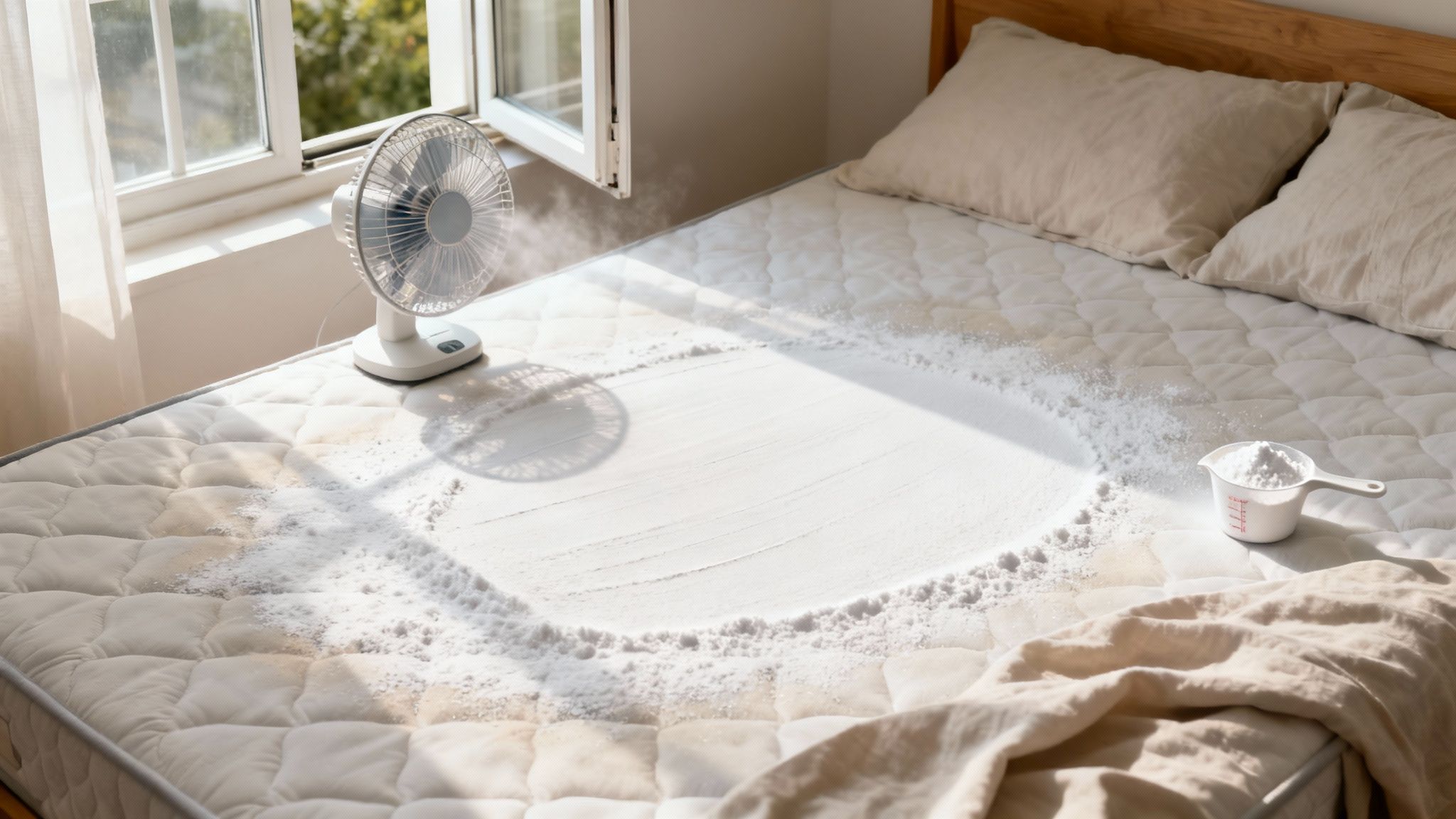
- Use a Fan: This is my top tip. Point a fan directly at the damp area of the mattress. It’s easily the most effective way to speed things up.
- Bring in a Dehumidifier: On those humid Aussie days, a dehumidifier is your best friend. It’ll pull moisture straight out of the air and, in turn, from your mattress.
Patience is key here. Depending on how much liquid you used, it can take anywhere from four to 24 hours for a mattress to dry out completely. Resist the temptation to put sheets on until you're absolutely certain it's dry. Press down firmly to check for any deep-down dampness.
Removing Lingering Odours with Baking Soda
Sometimes, even after a thorough clean, a faint smell can hang around. This is where plain old baking soda comes in—it’s a natural deodoriser that works wonders by absorbing odours, not just masking them.
When the mattress is 100% dry, sprinkle a generous layer of baking soda over the entire surface, paying extra attention to the area you just cleaned. You really can’t use too much, so don't hold back.
Let the baking soda sit for as long as you possibly can. A few hours is good, but leaving it for a full day is even better. It will draw out any last traces of moisture and soak up any remaining smells.
Takeaway Tip: After the baking soda has done its job, grab your vacuum and use the upholstery attachment to suck it all up. Make sure you go over the area a few times from different directions to get all the powder out of the fabric.
Getting your mattress completely dry isn't just a suggestion; it’s essential. In fact, research shows a huge portion of cleaning failures—around 40%—happen because leftover moisture leads to mildew, especially in Australia's humid climates. You can discover more about how pantry staples can save your mattress on Onebed.com.au. This final step ensures your bed is not just stain-free, but genuinely fresh, hygienic, and ready for a great night's sleep.
When to Call in the Pros and How to Stop Stains Before They Start
While the DIY methods we’ve covered work wonders on most stains, sometimes the smartest move is knowing when to hand the job over to an expert. And honestly, the best way to deal with a mattress stain is to prevent it from ever happening.
That’s where a good mattress protector comes in. Think of it as insurance for your bed—a simple investment that saves you a massive headache down the line. A quality waterproof mattress protector acts as a shield, stopping spills, sweat, and other accidents from ever reaching the mattress itself. It’s not just about blood stains; it also protects your mattress from dust mites and allergens, which is a game-changer if you have allergies.
Why a Good Mattress Protector Is a Must-Have
When you're picking one out, look for a protector that’s both waterproof and breathable. Modern materials like polyurethane are brilliant because they block liquids completely but still let air flow through, so you don't get that hot, plasticky feeling that old-school covers used to have. A fitted-sheet style is also your best bet, as it grips the mattress snugly and won't bunch up under your sheets.
It's a small, proactive step that completely changes the game. Instead of frantically searching for how to get blood out of a mattress, you just pull off the protector and toss it straight into the washing machine. Easy.
Knowing When It’s Time to Call for Backup
Even with the best intentions, some stains are just too big, too old, or too stubborn for home remedies. If you’ve tried a couple of methods and that stain isn't budging, or if it's a large patch that has clearly soaked deep into the mattress, it's probably time to call a professional.
Key Insight: Piling on different DIY solutions can sometimes make things worse. You risk oversaturating the mattress, which can lead to mould, or you might accidentally set the stain permanently into the fibres.
It’s time to consider professional help if:
- The stain is bigger than the palm of your hand.
- The blood has been sitting there for a long, long time.
- You’ve already tried a few cleaning tricks with no luck.
- You have a high-end or delicate mattress, like organic latex, and you’re worried about causing damage.
Professional mattress cleaners, like our team here at Right Price Carpet Cleaning, have the right gear for the job. We use powerful hot water extraction (often called steam cleaning) machines and specialised enzymatic cleaners designed to break down tough organic stains. These tools can reach deep into the mattress to dissolve and pull out the entire stain safely—something that’s pretty much impossible to do at home. Plus, we ensure the mattress is dried properly, so there's no risk of mould, leaving your bed truly clean and hygienic.
Common Questions About Getting Blood Stains Out
Even with the best guide in hand, a few questions always pop up when you're face-to-face with a stain. Getting clear answers can make all the difference, giving you the confidence to tackle any blood mark, whether it’s fresh, old, or on a tricky mattress surface. Let's clear up some of the usual uncertainties.
Can I Use Vinegar on a Mattress Blood Stain?
White vinegar gets a lot of praise as a natural cleaning hero, and its mild acidity is pretty good at breaking down the proteins in blood. But that doesn't mean it's the right choice for every mattress. The biggest issue is the strong smell it leaves behind, which can hang around for days if you're not careful.
On top of that, the acid in vinegar can be too harsh for certain materials. Some types of memory foam, for instance, can degrade over time with repeated exposure. If you decide to give it a go, always mix it with an equal amount of cold water, apply it sparingly with a cloth, and never, ever soak the mattress.
Will Hydrogen Peroxide Definitely Bleach My Mattress?
This is a really good question, and the honest answer is: it's a risk. Hydrogen peroxide is an oxidising agent, and that's exactly what makes it so effective at dissolving blood stains. The downside is that this same chemical reaction can also pull the colour right out of fabrics.
While it’s usually fine for pure white mattresses, it can easily leave a bleached spot on coloured, patterned, or even off-white upholstery.
Crucial Tip: Never skip the patch test. Find an hidden spot—like a seam on the underside of the mattress—and apply a single drop of 3% hydrogen peroxide. Give it a few minutes to see if any discolouration happens before you even think about putting it on the stain.
How Long Does a Mattress Really Take to Dry?
Drying time is a massive part of learning how to get blood out of a mattress, and it can vary a lot. Realistically, you’re looking at anywhere from four to 24 hours. The final timing depends on a few things:
- How much liquid you used: A spot treated with a damp cloth will dry much faster than an area you had to saturate a bit more.
- The type of mattress: Dense memory foam clings to moisture for much longer than a traditional innerspring mattress does.
- The ventilation in the room: Good airflow is your best mate here. An open window or a fan can easily cut the drying time in half.
To speed things along, press a dry towel firmly onto the wet area to soak up any extra moisture, then aim a fan directly at the damp spot.
Do These Methods Work for Pet Blood Too?
Yep, they do. The cleaning solutions and techniques that work on human blood are generally just as effective for blood from your pets. The biological makeup is similar enough that cleaners like hydrogen peroxide or a baking soda paste will do the job perfectly well.
However, when it comes to any pet-related stains, it’s often a smart move to grab a commercial enzyme cleaner specifically made for pet messes. These cleaners are absolute powerhouses at breaking down all sorts of biological stuff, not just blood. In Australia, period stains actually account for 45% of blood incidents on mattresses. Commercial enzyme cleaners, which you can find easily at stores like Woolworths and Coles, are designed to tackle this exact type of bio-matter and show an impressive 88% success rate on upholstery. You can find more insights about effective mattress cleaning in Australia on au.koala.com.
Some stains are just too big or stubborn for DIY methods. If you're up against a tough mark or simply want a guaranteed professional result, the team at Right Price Carpet Cleaning has the specialised equipment and know-how to restore your mattress safely and effectively. Book your professional mattress cleaning service with us today at https://rightpricecarpetcleaning.com.au.
Recent Comments