


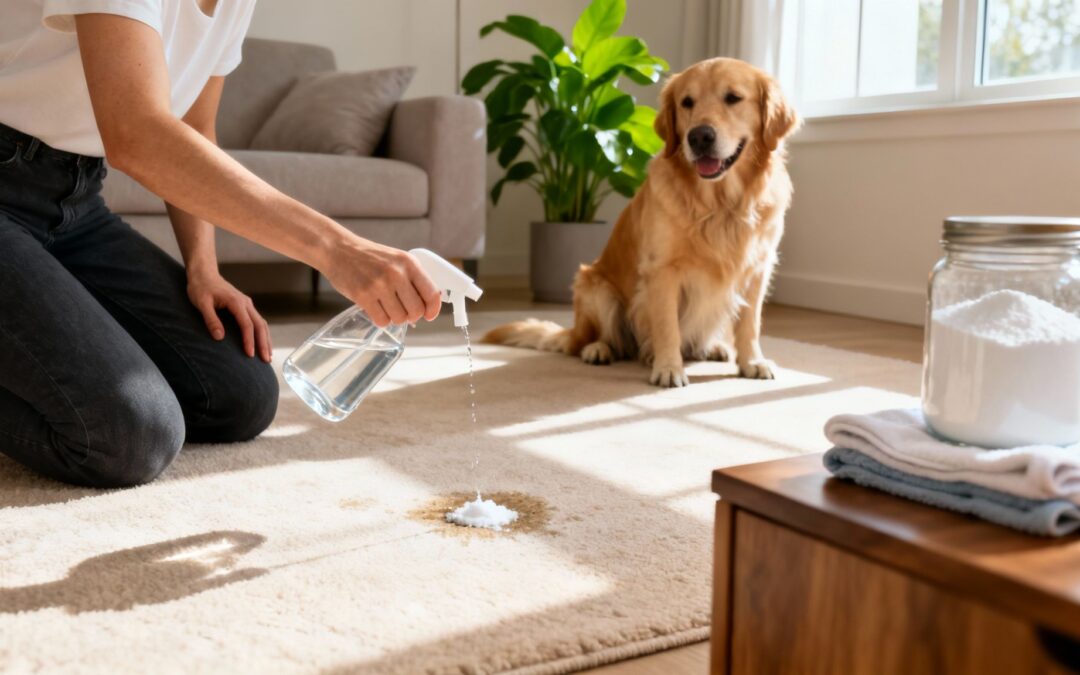
You’ve scrubbed that dog pee stain until your arms ache, but the smell just keeps coming back. Sound familiar? It’s a frustratingly common problem, and it has nothing to do with how well you clean—it’s all about chemistry.
Why That Dog Pee Smell Just Won't Go Away
When you clean up a fresh accident with regular soap and water, you’re only removing the visible, liquid part of the urine. What gets left behind are tiny, stubborn uric acid crystals. These crystals don’t dissolve in water, so they embed themselves deep into your carpet fibres, rug padding, or couch cushions.
This is where the real trouble starts. Those crystals lie dormant, just waiting for a bit of moisture to reactivate them.
The slightest hint of humidity—even on a damp, rainy day in Melbourne—is enough to bring that sharp, ammonia-like smell roaring back to life. This is why an old stain can suddenly seem to reappear out of nowhere.
It’s a bigger issue than most people realise. Here in Melbourne, where so many of us share our homes with dogs, this is one of the most persistent cleaning challenges. In fact, research shows that untreated dog pee can soak right through your carpet and into the underlay in just 30 seconds. Once there, those ammonia crystals form deep down, and when humidity hits, the smell can intensify by up to 200%. You can discover more about how quickly pet accidents can set in and see why a surface clean often isn't enough.
To get rid of the smell for good, you need to go deeper. This guide will walk you through everything you need to know, from tackling fresh messes to knowing when it's time to call for backup.
We’ll cover:
- The crucial first moves to make right after an accident.
- How to choose between powerful enzymatic cleaners and simple DIY solutions.
- Proven techniques for treating carpets, upholstery, and even hard floors.
- When to put down the spray bottle and call in a professional steam cleaning service.
Your First Response to a Fresh Accident
When your dog has an accident, what you do in the first few minutes is more critical than anything that comes after. Acting fast and doing it right can be the difference between a quick clean-up and a smell that lingers for months.
Your main goal is simple: get as much of that urine out as you can, as quickly as possible. You need to stop it from soaking deep into the carpet fibres and reaching the underlay or padding. Once it hits that bottom layer, the battle against the odour gets a whole lot harder.
Blot, Don't Scrub
The most common mistake I see people make is grabbing a cloth and scrubbing frantically at the spot. It feels like the right thing to do, but it’s actually the worst. Scrubbing just grinds the urine deeper into the carpet and spreads it around, making a small problem much bigger.
Instead, you need to blot.
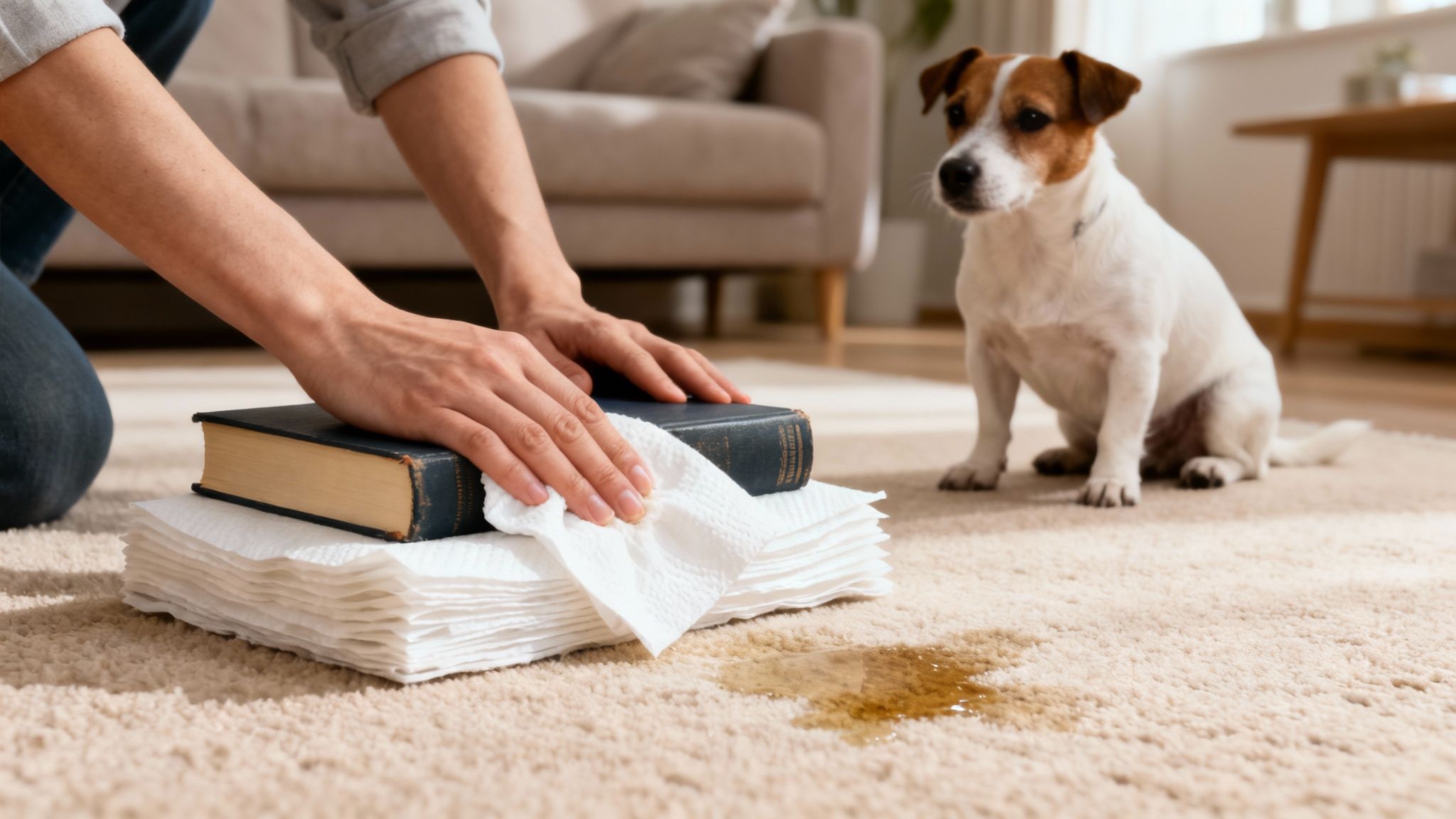
Get a thick stack of paper towels or a clean, absorbent old rag (white is best to avoid dye transfer). Place it directly over the wet patch and apply firm, steady pressure. You’ll literally see the moisture wicking up into the towel. As soon as it’s soaked, grab a fresh, dry one and do it again.
Pro Tip: For maximum pressure, put your stack of paper towels down and stand on it for a minute. Or, if you don't want to do that, place something heavy on top—like a stack of old textbooks or even a cast-iron pan. Leave it for 10-15 minutes to pull out moisture that simple hand pressure can't reach.
Why This Absorption Process Is So Important
Keep blotting with fresh towels until they come away almost completely dry. This first step is your best line of defence because you're physically removing the source of the future smell—the uric acid.
Here’s a quick recap of your immediate action plan:
- Grab Your Gear: A thick wad of paper towels or old, clean white rags is perfect. A microfibre cloth works well too.
- Apply Pressure: Press down firmly on the stain. Don't be afraid to put your body weight into it.
- Swap and Repeat: Keep swapping out the wet towels for dry ones until no more moisture is coming up.
- Resist the Rub: Remember, every time you scrub, you're pushing the problem deeper. Blotting lifts it out.
By focusing purely on absorption first, you've already won half the battle. You’ve dramatically reduced the amount of urine the cleaner has to work on, which makes getting rid of the smell for good so much easier. Now, you’re ready to move on to the cleaning phase.
Choosing the Right Cleaner for the Job
Once you’ve blotted up as much of the fresh accident as possible, you’re at a critical crossroads. What you do next will determine whether you actually get rid of the smell for good or just temporarily mask it. Your two main options are a proper commercial enzymatic cleaner or a DIY home remedy.
To understand why one works so much better than the other, you need to know what you’re up against. That lingering dog pee smell comes from uric acid crystals, which are notoriously stubborn. They don’t dissolve in water or soap, so a standard clean just won't cut it. To permanently kill the odour, you need something that can break these crystals down on a molecular level.
The Power of Enzymatic Cleaners
There’s a reason professionals swear by enzymatic cleaners. They are the gold standard. These aren't just fancy soaps; they're bio-active formulas packed with beneficial bacteria and enzymes designed for one purpose.
When you apply an enzymatic cleaner to a urine stain, these "good" bacteria get to work, producing enzymes that specifically target and feed on the uric acid crystals. Think of them as tiny Pac-Men, literally eating away at the source of the smell until there’s nothing left. This process doesn’t just cover up the odour—it completely eliminates it, which means it won't suddenly reappear on a humid day. For any accident that has soaked into carpet, upholstery, or a mattress, an enzymatic cleaner is non-negotiable.
A huge mistake people make is using a standard carpet shampooer with just soap and water. This often just pushes the urine deeper into the carpet padding. Even worse, the moisture can reactivate the uric acid crystals, making the smell significantly worse once it dries.
When DIY Solutions Can Work (and When They Can't)
DIY solutions, usually a mix of white vinegar and water, are popular because they’re cheap and accessible. Vinegar is an acid, which helps neutralise the alkaline ammonia in fresh urine, cutting down some of that initial sharp smell. It's a passable option for a tiny, brand-new puddle on a hard, non-porous surface like sealed tiles, where the urine can't soak in.
But for anything absorbent—carpets, rugs, mattresses—DIY methods just don’t have the muscle. They lack the specific compounds needed to break down the uric acid crystals. You might think you’ve fixed the problem because the vinegar smell is gone, but those crystals are still there, dormant and waiting.
This is a really common trap. Research shows that home remedies like baking soda might absorb some initial wetness but fail to stop odours from coming back in 60% of cases when the area gets damp again. Given that a reported 78% of Melbourne dog owners struggle with persistent pee smells, especially in carpeted living rooms, relying on a partial fix is a risky game. You can read more about effective dog odour control here.
Ultimately, when you're dealing with something as persistent as dog urine, investing in a high-quality enzymatic cleaner is the only truly effective way to protect your home and ensure that smell is gone for good.
A Practical Guide For Treating Different Surfaces
Dog pee doesn’t discriminate. An accident can happen anywhere, and knowing how to get rid of that lingering smell means adapting your approach to different materials. What works wonders on a synthetic rug could be a disaster for your timber floorboards or favourite armchair.
Success really comes down to understanding how each surface absorbs liquid and which cleaning methods are both effective and safe. Let’s break down the right techniques for the most common spots in your home.
Tackling Carpets And Rugs
Carpets are almost always the most common casualty of pet accidents. For synthetic carpets (like nylon or polyester), you can afford to be a bit more aggressive with your cleaning. After you’ve blotted up as much as possible, generously apply a high-quality enzymatic cleaner. Make sure you saturate the area well beyond the visible stain, as urine spreads underneath. Let it dwell for the time recommended on the bottle—often several hours—to give those enzymes time to get to work.
Wool rugs are a different story entirely. They’re far more delicate and can be permanently damaged by harsh chemicals or overly acidic solutions like vinegar. For wool, always opt for a pH-neutral enzymatic cleaner specifically designed for natural fibres. And before you start, please test the cleaner on an inconspicuous spot to ensure it doesn't cause any colour bleeding.
Cleaning Upholstery And Mattresses
When urine soaks into a couch or mattress, the challenge is to clean it deeply without over-wetting the foam or stuffing inside. If you use too much liquid, you risk creating the perfect environment for mould and mildew. The key here is less is more.
- Blot thoroughly: Your first step is still to blot with intense pressure. Stand on the paper towels if you have to! Your goal is to remove as much liquid as you can from the get-go.
- Use a spray, not a pour: Lightly mist the area with your enzymatic cleaner rather than pouring it on. You want to dampen the fabric, not soak the entire cushion through.
- Work in sections: Apply the cleaner, let it sit for 10-15 minutes, and then blot it out with a clean, dry cloth. It’s much better to repeat this process a few times than to do one heavy, soaking application.
This flowchart can help you decide on the right type of cleaner for your specific situation.
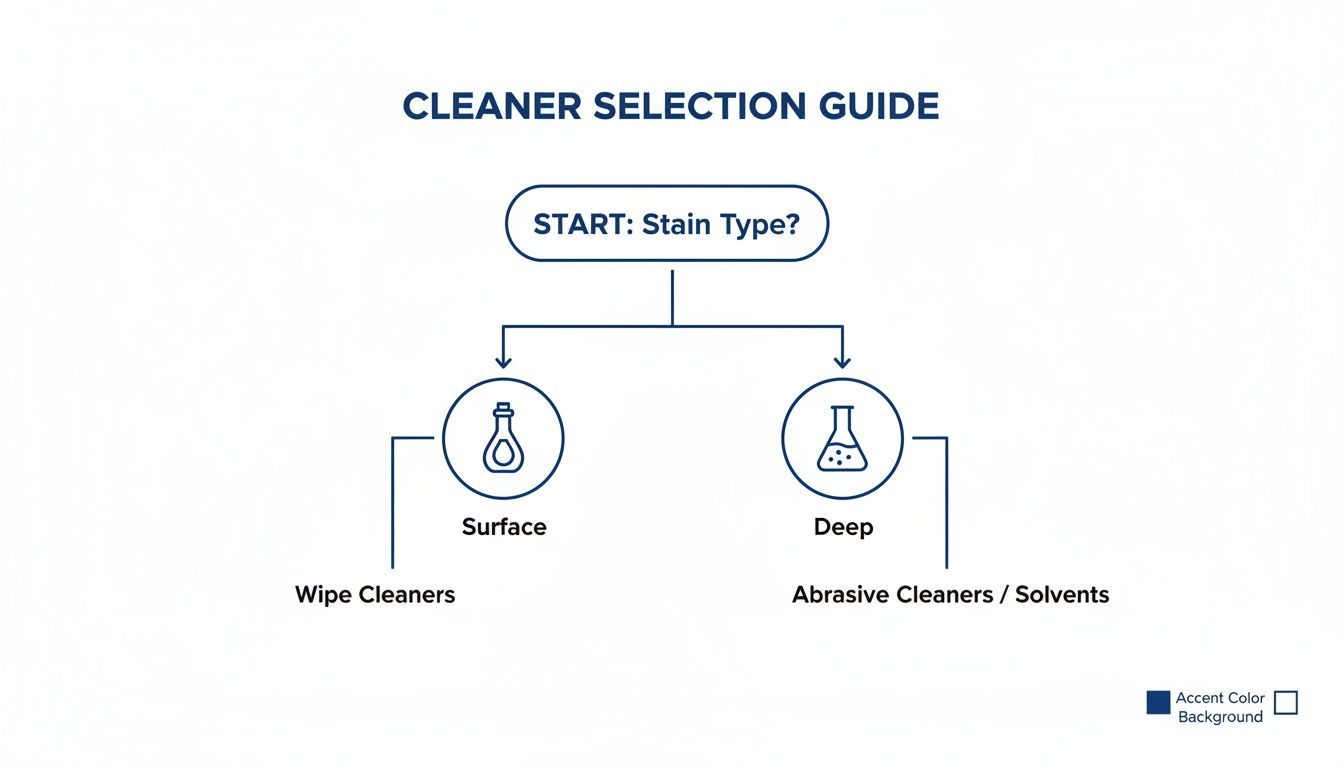
As you can see, while simple surface stains might be manageable with basic solutions, deeper, set-in odours almost always require a more powerful, scientific approach to truly break them down.
Treating Hard Floors
You might think hard floors are the easy-win category, but urine can be surprisingly sneaky. On sealed timber, laminate, or vinyl, wipe up the puddle immediately, then clean the spot with a pH-neutral floor cleaner. Try to avoid using vinegar here, as its acidity can slowly eat away at the protective finish over time.
The real problem lies with porous surfaces like unsealed concrete, tile grout, or the gaps between old floorboards. Urine can seep right into these spots and create a lasting odour that’s incredibly tough to shift.
For grout lines and unsealed wood, an enzymatic cleaner is still your best bet. Apply it directly, let it penetrate for a bit, and then gently scrub with a soft brush before wiping it clean. This ensures you're treating the smell at its source, not just cleaning the surface.
For outdoor spaces, surfaces designed specifically for animals, like the best artificial grass for pets, offer much better drainage and odour control, which makes clean-ups a whole lot simpler.
When to Call in a Professional Carpet Cleaner
You’ve blotted, sprayed, and waited, but that faint, unmistakable smell keeps returning, especially on damp days. Sometimes, despite your best efforts with even the most powerful enzymatic cleaners, the problem is just too deep for a DIY approach. This is when it's time to admit defeat with the spray bottle and bring in the experts.
If you notice stains wicking back to the surface after you’ve cleaned them, or if the dog pee smell returns with a vengeance every time it rains, these are clear signs the urine has saturated the carpet underlay. At this point, no amount of surface treatment will solve the problem; you need to go deeper.
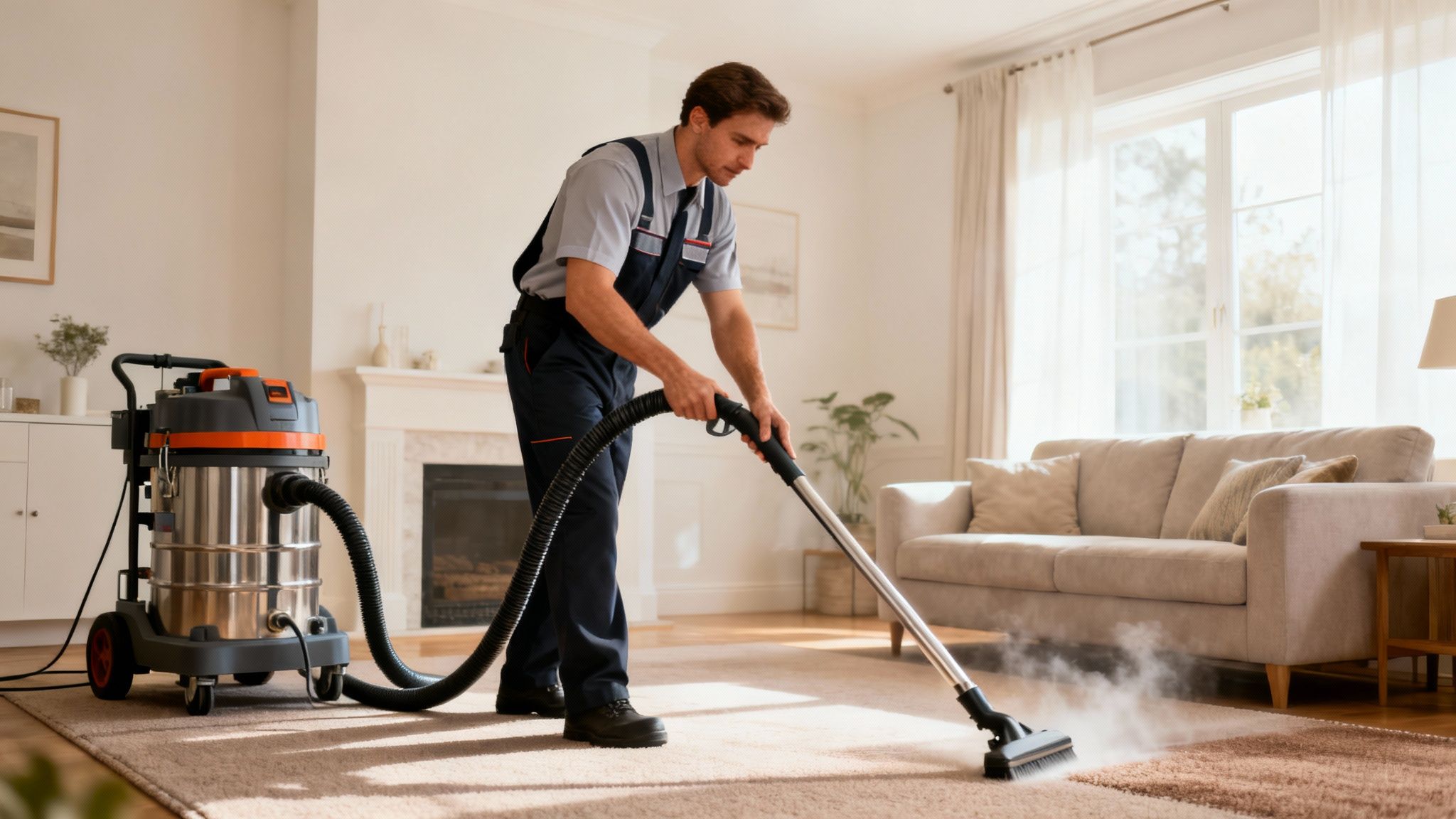
The Power of Professional Steam Cleaning
This is where a professional carpet cleaner, like our team at Right Price Carpet Cleaning in Melbourne, makes all the difference. We use powerful, truck-mounted hot water extraction systems—often called steam cleaning—that the rental machine from the supermarket simply can't compete with.
These units operate at much higher temperatures and use incredibly powerful suction. This combination allows them to inject high-pressure hot water and specialised cleaning solutions deep into your carpet, flushing out the embedded urine crystals from not just the fibres but the underlay as well. The immense vacuum power then extracts almost all the dirty water, contaminants, and odour-causing residue right out of your home.
This isn’t just about cleaning what you can see. It's about restoring the health and hygiene of your entire carpet, from top to bottom.
Why It's a Growing Problem in Melbourne
The challenge of persistent pet odours isn't just you—it's becoming more common across the city. Historical data shows that complaints about dog pee smells in Melbourne rental properties have surged by 35% since 2015. This trend aligns with a huge increase in pet ownership, with Victorian dog registrations jumping 22% to over 476,000 by 2024.
Studies confirm that in 90% of cases, these stubborn smells persist because the carpet underlay was never properly treated. This is a scenario that can even require full carpet replacement in about a quarter of severe instances. You can learn more about tackling stubborn pet urine odours in carpets here.
Hiring a professional isn't just a last resort; it's a guaranteed solution. It’s an investment in thoroughly removing the source of the problem, improving your home’s air quality, and finally getting rid of that dog pee smell for good.
If you're dealing with any of these stubborn situations, it's the most effective and stress-free way to reclaim a fresh, clean home:
- Multiple accidents in the same area have created a deeply saturated spot.
- The smell is present throughout an entire room, indicating widespread or hidden stains.
- You’re preparing a rental property for its final inspection and need to ensure the bond is returned.
Common Dog Pee Smell Questions Answered
Even after you've cleaned up a mess, some nagging questions can stick around. When you're dealing with stubborn dog urine smells, it’s easy to feel like you're missing something. Let's tackle some of the most common uncertainties homeowners face, so you can finally win the battle against that lingering odour.
How Can I Find Old Or Hidden Dog Pee Stains?
One of the biggest frustrations is dealing with smells from stains you can't even see. After an old accident dries, it often becomes invisible to the naked eye, but the uric acid crystals left behind continue to release that tell-tale odour. The best way to play detective is with a UV (ultraviolet) blacklight.
Simply darken the room completely and shine the UV torch across your carpets, rugs, and furniture. Any spots containing urine salts will glow, usually a bright yellow or greenish colour. This little trick is a game-changer because it reveals every single spot that needs attention. Instead of guessing where the smell is coming from, you can target your enzymatic cleaner with military precision. You can pick up an inexpensive UV torch at most pet shops or online.
Will Vinegar Or Enzymatic Cleaners Damage My Wool Carpet?
This is a fantastic and important question, as natural fibres like wool need a bit more care. While a heavily diluted white vinegar solution might seem okay for a quick spot-clean, its acidity can potentially damage delicate wool fibres over time. Honestly, it's a risk not worth taking on an expensive rug.
For wool carpets and upholstery, your safest and most effective bet is a pH-neutral enzymatic cleaner specifically designed for natural materials.
Crucial Tip: No matter what cleaner you're using, always test it on a small, hidden spot first. Try an area inside a closet or under the sofa to make sure there's no discolouration or fibre damage before you tackle the main stain.
This simple patch test takes only a few minutes but can save you from a very costly mistake.
Why Does The Dog Pee Smell Seem Worse After Cleaning?
It’s a bizarre and frustratingly common problem: you clean a spot, only for the dog pee smell to come back stronger than ever. What's going on? This usually happens when you add moisture to the area (especially with DIY solutions) without a powerful way to extract it.
The water reactivates dormant uric acid crystals that have soaked deep into the carpet's underlay or even the subfloor below. So while you've cleaned the surface fibres, you’ve essentially just "woken up" the hidden source of the smell underneath. This is a dead giveaway that the urine has penetrated far deeper than the surface. It confirms the problem needs professional-grade hot water extraction to properly flush out and remove those deeply embedded crystals for good.
Can Certain Smells Stop My Dog From Peeing There Again?
Yes, some scents can definitely act as a natural deterrent. Dogs have an incredibly powerful sense of smell, and they instinctively avoid areas with strong, sharp odours. The most common repellents are:
- Citrus: The smell of lemon, orange, or grapefruit is generally unpleasant to most dogs.
- Vinegar: That sharp, acidic scent of white vinegar is another powerful deterrent they tend to steer clear of.
After you've thoroughly cleaned a spot with your enzymatic cleaner, try spritzing the area with a diluted solution of water and lemon juice or white vinegar. It can be just enough to discourage your dog from making a repeat visit. For a more complete strategy on keeping your entire home fresh, check out these extra tips for eliminating general house odors. When you combine deep cleaning with smart deterrents, you create a much stronger defence.
At Right Price Carpet Cleaning, we know that some odours are just too deep and stubborn for DIY methods to handle. If you're stuck with a smell that just won't go away, our professional truck-mounted steam cleaning services can reach the source and eliminate it completely. Get your instant quote online at https://rightpricecarpetcleaning.com.au and let us restore freshness to your Melbourne home.
For pet urine that has soaked into the carpet fibres or underlay, professional truck-mounted cleaning reaches the source and eliminates the odour completely. View our carpet cleaning prices Melbourne -- from $45 per room.
If pet urine has also reached your mattress, our mattress cleaning Melbourne service removes odour and bacteria using truck-mounted hot water extraction.
Recent Comments