



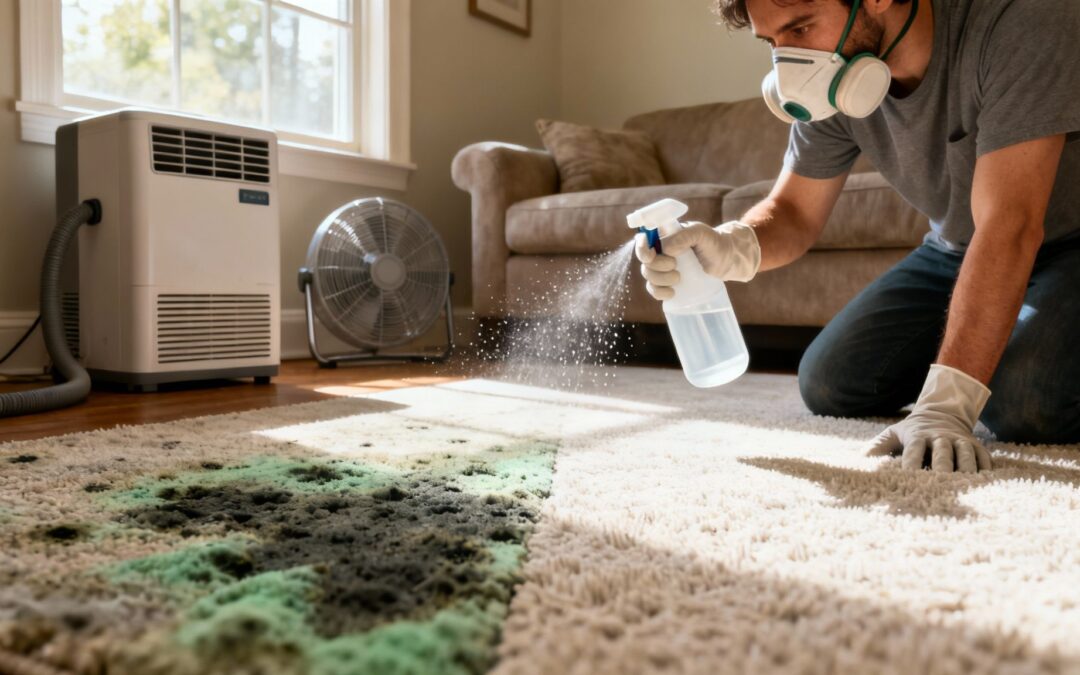
That unsettling moment you spot a dark, musty patch on your floor is about more than just an ugly stain. Discovering mould on your carpet signals a deeper moisture problem that needs to be dealt with, and fast. Acting quickly to remove mould from carpet is the only way to protect your flooring and, more importantly, your family’s health from serious harm.
Why Mould in Your Carpet Is a Bigger Problem Than You Think
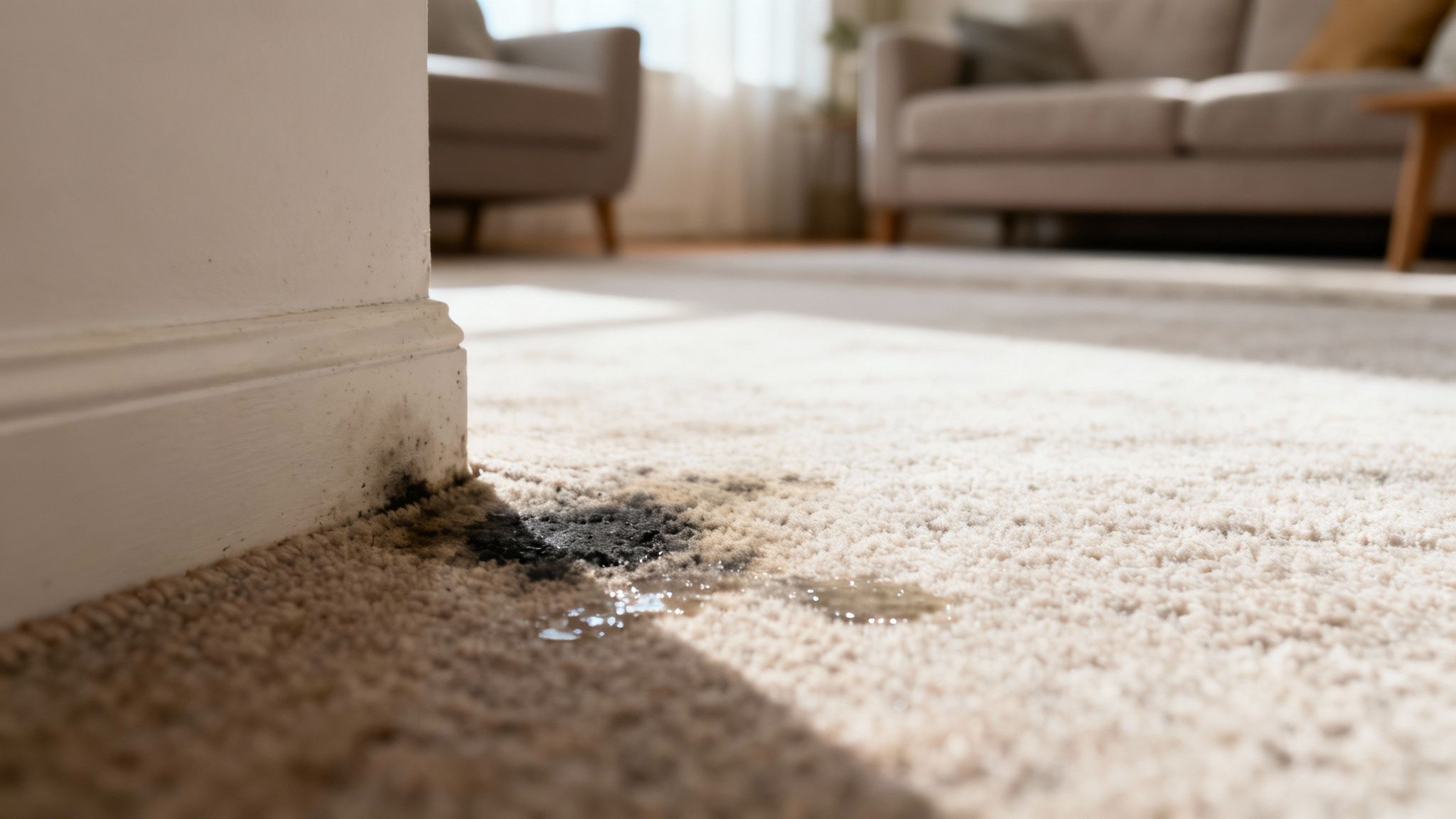
Finding mould can be a real worry, especially for anyone living in Melbourne where dampness seems to be a constant battle. Carpet is the perfect breeding ground for mould spores. Its dense fibres are experts at trapping moisture, dust, and organic debris—basically, everything mould needs to set up shop and thrive.
It could be something as simple as a spill that wasn't dried properly or a small, hidden leak that quietly escalates into a much bigger issue.
You need to understand that mould isn't just a cosmetic problem. It can seriously contribute to poor indoor air quality caused by mould and pose some genuine health risks. When you walk on it or try to clean it, mould releases microscopic spores into the air. Breathing these in can trigger:
- Allergic reactions like sneezing, a runny nose, and skin rashes.
- Coughing, wheezing, and general respiratory irritation.
- Worsening of existing conditions like asthma.
The Scope of the Problem in Victoria
This isn't some rare event, particularly with our local climate. In Victoria, where Melbourne homes are especially prone to mould, a CSIRO study found that 38.8% of all survey respondents reporting mould issues lived right here in the state.
That same study revealed that across Australia, 55% of mould cases were rated as moderate or severe. Carpets were flagged as a primary spot for spores to hide out, all thanks to their porous nature.
Tackling carpet mould isn't just about cleaning a stain. It’s about eliminating a health hazard and addressing the root moisture cause to protect your home environment.
Getting your head around this context is the first step. When you realise how urgent the situation is, you can stop worrying and start taking the right, effective action to create a healthy home.
Essential Safety Gear for Mould Removal
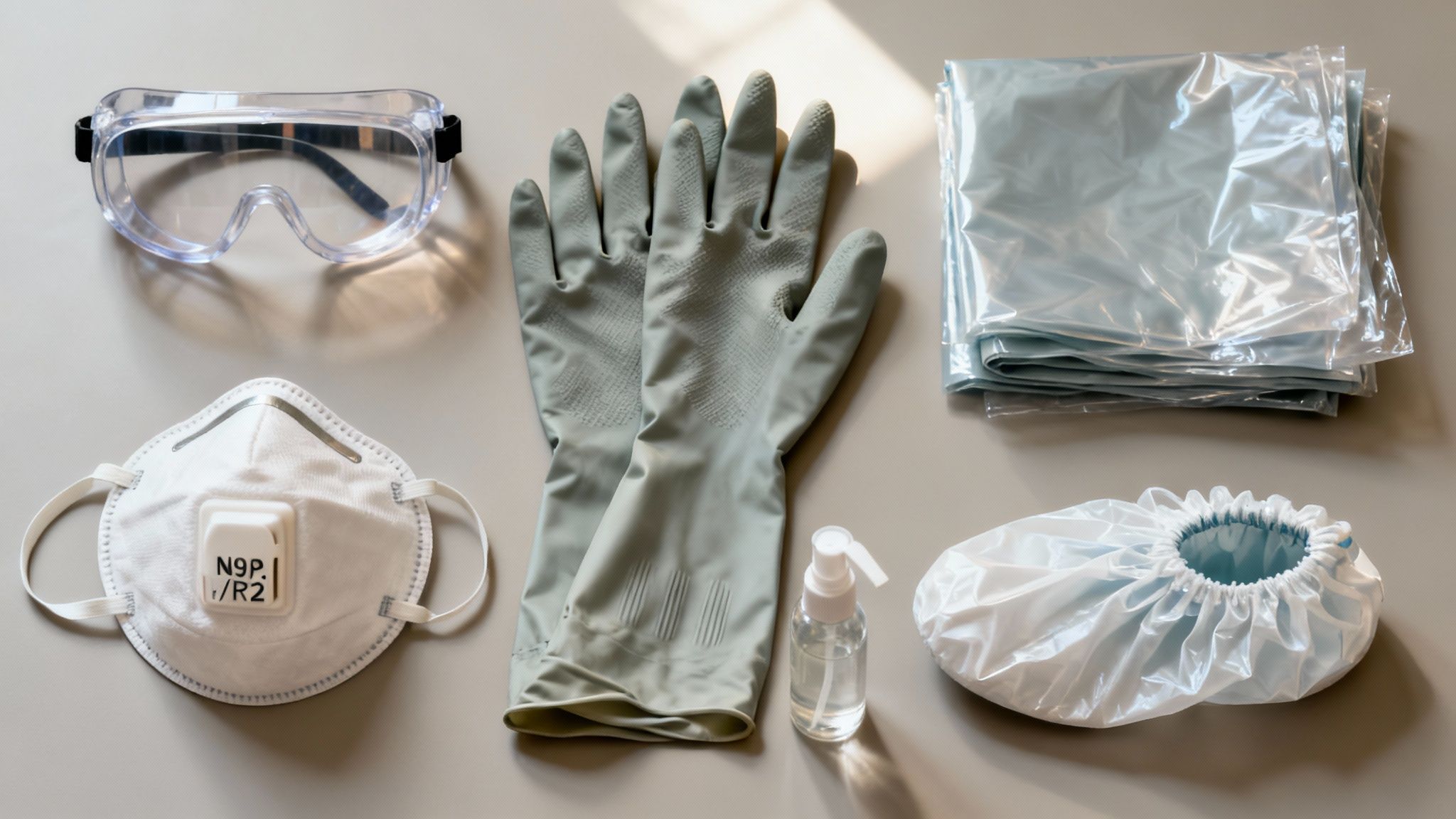
Before you even think about tackling a mouldy patch, you need to gear up. I can't stress this enough. Disturbing mould—whether you're scrubbing, vacuuming, or just moving things around—kicks a cloud of microscopic spores into the air. Inhaling these is exactly what you want to avoid, making personal protective equipment (PPE) completely non-negotiable.
Think of it as preparing for a messy job where the mess is invisible but can definitely affect your health. Skipping this step is a common mistake that can lead to anything from a scratchy throat and itchy eyes to more serious respiratory irritation. Your safety always comes first when you plan to remove mould from carpet.
Your Essential PPE Checklist
The right gear creates a solid barrier between you and the mould. You don't need a full-on hazmat suit for a small patch, but a few items are absolutely essential.
- P2 or N95 Respirator Mask: This is your most important line of defence. A simple dust mask or a surgical one just won’t cut it; they're not designed to filter out fine mould spores. You need a P2-rated mask (the Australian standard) or an N95 to get the right protection.
- Safety Goggles: Spores can irritate your eyes just as much as your lungs. Go for non-vented goggles that create a seal around your eyes. This stops spores from coming into contact with the sensitive mucous membranes.
- Heavy-Duty Gloves: Use rubber or nitrile gloves that extend well past your wrists. Disposable gloves are a great choice because you can just peel them off and throw them away immediately after cleaning, preventing you from accidentally spreading spores to other surfaces.
Remember, the goal of PPE isn't just to keep your clothes clean. It's to protect your respiratory system and skin from direct exposure to potentially harmful mould spores. This simple step is the foundation of a safe and effective cleaning process.
Preparing the Room for Containment
Protecting yourself is only half the battle. You also need to stop the mould from hitching a ride on air currents to other parts of your home while you clean. This is called containment, and it’s a critical part of the job that many people overlook.
First up, seal off the room. Close the door firmly and use plastic sheeting and tape to cover any vents or large gaps around the doorway.
If you can, place a fan in an open window, pointing it outwards to pull contaminated air out of the room. This simple trick helps create negative air pressure, making it much harder for spores to drift out into the rest of the house. This proactive approach ensures your efforts to remove mould from the carpet don’t inadvertently create a bigger problem elsewhere.
Practical DIY Methods for Small Mould Stains
When you spot a small patch of mould on your carpet, your first thought might be to grab the strongest chemical cleaner you can find. But hold on. For minor infestations (think anything smaller than the palm of your hand), you can often get the job done with a few common items you probably already have in your pantry.
These methods are surprisingly tough on mould but gentle on your carpet fibres, as long as you do it right. The trick is to act fast and always blot—never scrub. Aggressive scrubbing can push the mould spores deeper into the carpet's backing, making the problem worse and damaging the fibres.
Before you start, always test your cleaning mix on a small, out-of-the-way patch of carpet, like inside a wardrobe, just to make sure it doesn't cause any discolouration.
The White Vinegar Solution
White vinegar is a brilliant natural cleaner. Its mild acidity is incredibly effective at killing off many common types of household mould, making it a go-to for homeowners who want to avoid harsh chemicals. It’s safe for most carpets and gets the job done without any nasty fumes.
To make your cleaning solution, just mix equal parts white vinegar and warm water in a spray bottle. Give the mouldy area a light misting. You want to dampen the fibres, not completely soak the carpet backing.
Let the solution sit for at least 15 minutes. This gives the vinegar time to work its magic and break down the mould. Afterwards, use a stiff-bristled brush to gently agitate the area, which helps lift the mould away from the fibres. Finish up by blotting the spot with a clean, dry cloth until it’s nearly dry to the touch.
Using a Baking Soda Paste
Baking soda is another hero from the kitchen cupboard. Not only does it help kill mould, but it’s fantastic at absorbing moisture and getting rid of those musty odours mould leaves behind.
You can use it in a couple of ways:
- To absorb moisture: If the area is damp, sprinkle a generous layer of dry baking soda over the mouldy patch. Let it sit overnight to draw out moisture and smells, then vacuum it up thoroughly the next day (ideally with a HEPA filter vacuum).
- For active cleaning: Make a paste by mixing baking soda with a tiny bit of water. Apply this paste directly onto the mould stain, let it dry completely, and then scrub it away with a brush before vacuuming up all the residue.
This two-in-one action makes baking soda a really versatile tool for your cleaning kit.
Before we go any further, let's compare some of the most common DIY solutions you might be tempted to use. It's important to know what you're working with, as some can do more harm than good.
Comparing DIY Mould Cleaning Solutions
Here's a quick look at how common household ingredients stack up for treating light mould stains on carpets.
| Solution | Best For | How It Works | Cautionary Notes |
|---|---|---|---|
| White Vinegar | Light surface mould and mildew | Its mild acidity kills mould spores and helps prevent regrowth. | The smell can be strong initially but fades as it dries. Safe for most carpet types. |
| Baking Soda | Damp areas and odour removal | Absorbs moisture, neutralises odours, and has mild antifungal properties. | Best used as a paste for cleaning or dry for absorbing moisture. Very gentle. |
| Dish Soap & Water | Very fresh, minor spots | Helps lift surface dirt and light mould when agitated gently. | Not a mould killer. It only provides surface-level cleaning and won't stop regrowth. |
| Hydrogen Peroxide (3%) | Light-coloured synthetic carpets | Acts as a natural bleach and disinfectant to kill mould on contact. | High risk of bleaching! Always test on a hidden spot. Not suitable for wool or dark carpets. |
Ultimately, for a safe and effective approach, sticking with vinegar and baking soda is your best bet for most minor carpet mould issues. They tackle the problem without introducing harsh chemicals or risking permanent damage to your flooring.
A Critical Warning: Never Use Bleach on Your Carpet.
It might seem like the ultimate mould killer, but bleach can permanently discolour and weaken both synthetic and wool carpet fibres. Worse, it often only kills the mould on the surface, leaving the roots deep in the carpet backing untouched, which means the mould will likely grow back—and fast.
When to Look at Commercial Cleaners
If a natural solution just isn't cutting it, your next best option is a commercial anti-fungal carpet cleaner from the store. These products are specifically designed to kill mould spores without damaging common carpet materials. Just be sure to follow the manufacturer's instructions to the letter for the best results.
While simple DIY methods are great for small stains, more widespread mould might need something with a bit more power. Some homeowners invest in cleaning machines that use professional-grade carpet cleaning solution hoses for a deeper, more thorough clean. However, if you're facing a widespread issue, it’s usually a sign the problem has gone beyond a simple DIY fix.
No matter which method you choose, remember this: the final, most crucial step is making sure the area is 100% dry. Any leftover moisture is an open invitation for mould to come right back.
The Make-Or-Break Step: Thoroughly Drying Your Carpet
You’ve scrubbed away the last of the visible mould, and the carpet looks clean. Job done, right? Not quite.
Honestly, this next part is where most people go wrong. Getting the carpet completely, bone-dry is the most critical step of the entire process. Leaving it even slightly damp is like putting out a welcome mat for mould to come roaring back, often worse than before.
Any moisture left behind in the carpet fibres, the underlay, or even the subfloor is the perfect fuel for dormant mould spores to wake up and start spreading again. Getting this final step right is truly the make-or-break moment. You’re not just aiming for a clean carpet; you’re aiming for a completely dry one.
This little visual breaks down the basic DIY cleaning process using common household items.
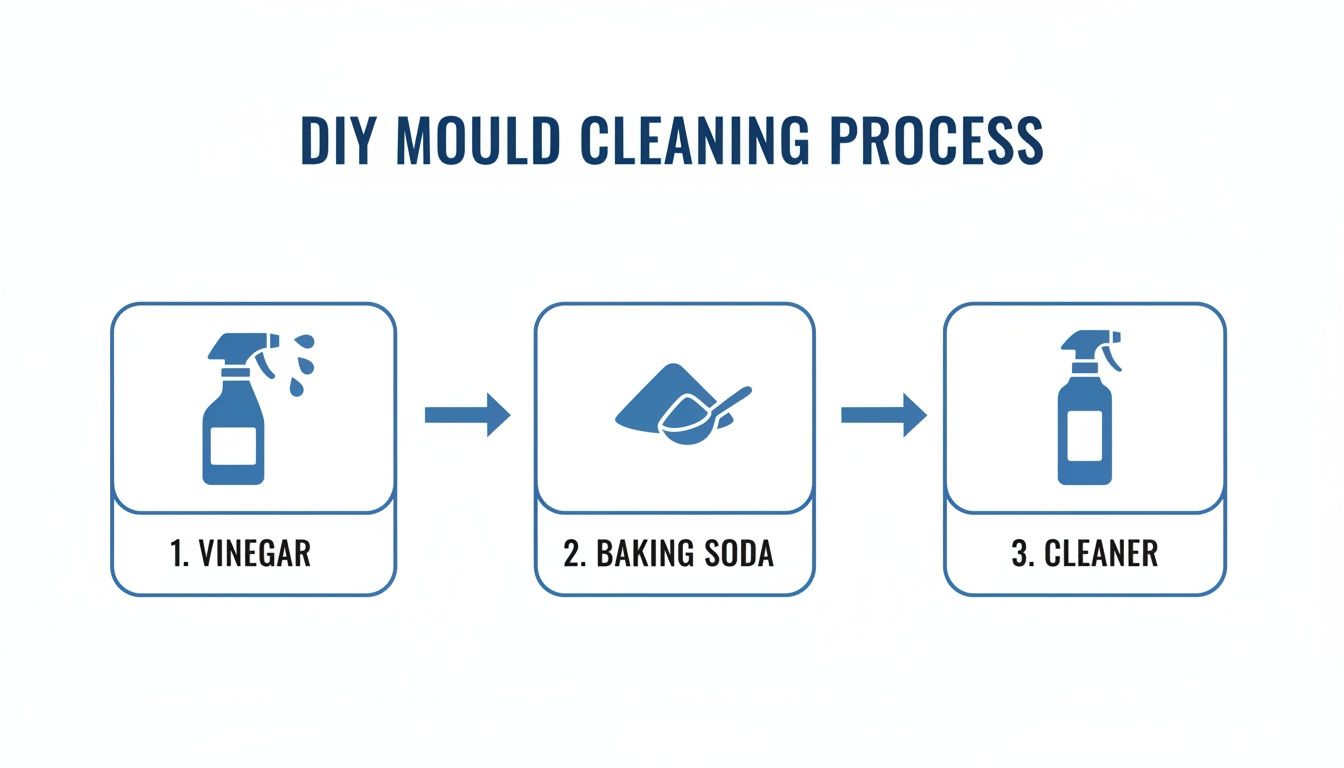
As you can see, no matter if you're using vinegar, bicarb soda, or a store-bought cleaner, the final, non-negotiable step is aggressive drying. It’s the key to stopping regrowth in its tracks.
Your Strategy for a Bone-Dry Carpet
Just letting the carpet "air out" isn't going to cut it. You need to be proactive and create an environment where moisture simply can't linger.
- Create Maximum Airflow: Get every window in the room open and set up a few fans. Point them so they blow air directly across the damp patch. This constant movement is essential for wicking moisture away quickly.
- Bring in a Dehumidifier: This is your secret weapon. A good dehumidifier will actively pull moisture out of the air, which in turn draws more moisture up and out of the carpet. Let it run non-stop until the job is done.
- Blot, Don't Rub: Right after cleaning, grab some thick, dry towels and press down hard on the damp area. The goal is to soak up as much water as you can. As soon as a towel feels saturated, swap it for a fresh, dry one.
The Critical 48-Hour Rule
When it comes to a wet carpet, the clock is ticking. Loudly. There’s an industry benchmark we call the '48-hour rule', and it's not just a suggestion.
If a carpet stays wet for more than 48 hours, the risk of mould penetrating deep into the underlay and subfloor skyrockets. At that point, a DIY fix is usually off the table, and you’ll almost certainly need professional help. In many cases, the carpet and underlay will be a lost cause and need to be ripped out and replaced.
This isn't just our opinion; it's backed by official guidelines. The advice for managing mould in your home from WorkSafe Queensland is pretty stark and often recommends disposal after 48 hours of saturation. This is especially true here in Melbourne, where a sudden summer storm can lead to flash flooding, giving you a very small window to act.
Expert Tip: Think the carpet feels dry? Do this one last check. Place a thick stack of paper towels over the spot and stand on it for a few seconds. If the towels pick up any hint of dampness, you’re not done yet. Keep those fans and the dehumidifier running until it passes the test.
Knowing When a DIY Fix Is Not Enough
A bit of vinegar and elbow grease can certainly handle a small, surface-level mould spot. But it’s critical to recognise when you’re facing a problem that’s far bigger than a simple DIY solution.
Trying to remove mould from carpet when the infestation is severe can be a waste of time. Worse, you could end up spreading spores even further, turning a contained issue into a whole-house headache. Knowing the red flags is the key to protecting your carpet and, more importantly, your health.
Sometimes, the signs are frustratingly obvious. If you've scrubbed a spot multiple times only for that ugly mould to reappear, it’s a clear signal the problem isn’t just on the surface. The roots are likely deep in the carpet backing or underlay, far beyond the reach of any spray bottle. You’re only cleaning the tip of the iceberg.
Another major warning is a persistent, musty smell that just won't go away, even after cleaning. That odour means active mould is still present and releasing microbial volatile organic compounds (MVOCs) into your air, even if you can’t see it.
Red Flags That Demand Professional Help
It’s tempting to try and save a few dollars, but some situations are just too risky to tackle on your own. You need to stop what you're doing and call in a professional if you run into any of these scenarios.
- The mould patch is larger than your hand. Any significant area of growth (think bigger than one square metre) points to a widespread moisture problem that needs professional equipment to fix safely and effectively.
- The carpet has been wet for more than 48 hours. After two days, mould has almost certainly penetrated the underlay and could even be in the subfloor. A simple surface clean at this point is completely pointless.
- Someone in your home has allergies, asthma, or a compromised immune system. For vulnerable people, the health risks of disturbing a large mould colony are just too high to take a chance with DIY methods.
Calling an expert isn't admitting defeat. It's making the smartest, safest choice for your home and family. Professionals have the right gear and the proper training to kill the problem at its source without trashing your indoor air quality.
The Power of Professional Steam Cleaning
This is where an expert service like Right Price Carpet Cleaning truly makes a difference. Our approach goes far beyond what you could ever achieve with a rental machine or a household cleaner. We use powerful, truck-mounted steam cleaning equipment designed to attack mould on multiple fronts.
First, our machines heat water to an incredibly high temperature, creating steam that blasts deep into the carpet fibres, the backing, and even the underlay. This intense heat doesn't just clean—it kills mould spores and bacteria on contact.
Immediately after, our industrial-strength vacuums extract nearly all the water, sucking out the dead mould, dirt, and allergens with it. This rapid, thorough extraction is absolutely vital. It prevents any moisture from being left behind, which is the number one reason DIY efforts so often fail and sometimes make things worse.
This is a particularly sharp issue in rental properties. Studies show that Australian homes can have a mould prevalence of 10-50%, and the problem is often amplified in Melbourne's rental market. A CSIRO analysis found that of the 55.2% of private renters surveyed—where Victoria made up 38.8% of the sample—carpets that absorb spills and aren’t properly dried within 24-48 hours become a major health risk. For situations like these, professional, NDIS-approved services are often the only way to guarantee complete mould removal and restore healthy indoor air quality. You can find more detailed insights on mould management from the WA Department of Health.
With our years of experience, eco-friendly options, and a 100% satisfaction guarantee, choosing a professional isn't just a quick fix—it's a smart investment in your home’s health and future.
Your Questions About Carpet Mould Answered
It's completely normal to have a few lingering questions after dealing with a mould problem. You've tackled the visible signs, but that nagging feeling of "what if it's not really gone?" can be hard to shake. This section is designed to clear up those common worries Melbourne homeowners and renters have when they remove mould from carpet.
Think of this as your go-to reference for those lingering concerns. We'll cut through the confusion and give you the confidence you need to keep your home healthy and mould-free.
Can I Just Use Bleach to Kill Mould on My Carpet?
Honestly, this is one of the biggest mistakes we see people make. Please, step away from the bleach. While it feels like a powerful disinfectant, bleach is a disaster for carpets. It will almost certainly cause permanent discolouration and chemically weaken the fibres, leaving you with a bigger problem than you started with.
Even worse, it’s not very effective on porous materials like carpet. Bleach might kill the surface mould, but it can't penetrate the dense carpet backing where the mould's roots are living. This means the problem is only hidden, not solved, and the mould will almost definitely grow back—often with a vengeance.
What Are My Rights as a Renter in Victoria?
If you're renting in Victoria, your landlord is generally responsible for making sure the property is in good repair. That includes fixing issues like mould that stem from structural problems, such as a roof leak, dodgy plumbing, or poor ventilation.
The responsibility might shift to you, however, if the mould was caused by something you did—like spilling a huge amount of water and not cleaning and drying it properly. The best first step is to document everything with clear photos, then notify your landlord or property agent in writing immediately. For the most current official advice, it's always a good idea to check the Consumer Affairs Victoria website to understand your exact rights and obligations.
How Can I Tell if Mould Is in the Carpet Underlay?
A persistent, musty smell that just won't go away, even after a thorough surface clean, is the number one red flag. That earthy odour is a dead giveaway that you have an active, hidden mould colony thriving underneath.
Other clues to watch out for include:
- The carpet feeling unusually spongy or damp in one spot.
- Discolouration on the carpet that seems to reappear no matter how many times you clean it.
- Visible mould creeping up from the baseboards at the edge of the carpet.
If you suspect the underlay is the culprit, you can try carefully lifting a corner of the carpet in a discreet area (like inside a wardrobe) to have a look. If you see any signs of mould on the padding or subfloor, a professional deep clean or even a full replacement is your only real solution.
A musty smell is your carpet’s way of telling you there's a deeper problem. Don't ignore it. That odour is a direct indicator of active mould growth that surface cleaning alone cannot fix.
How Much Does Professional Carpet Mould Removal Cost?
The cost for professional mould removal in Melbourne really depends on the size of the affected area and how severe the problem is. A small, contained patch is going to be much cheaper to treat than an entire room that's suffered significant water damage.
At Right Price Carpet Cleaning, we're big believers in honest, flat-rate pricing with no hidden surprises. You can get an instant, no-obligation quote right on our website to see exactly what the cost would be for your situation. When you weigh it up, investing in professional steam cleaning is often far more affordable than replacing an entire carpet, and it comes with the peace of mind that the job is done right the first time.
Ready to eliminate mould for good and bring back that fresh, healthy feeling to your home? The experts at Right Price Carpet Cleaning use powerful, truck-mounted steam cleaning technology to kill mould spores deep within the fibres and extract all moisture, ensuring a truly clean result. Get Your Instant Quote Online and book your service in under 60 seconds.
Recent Comments