



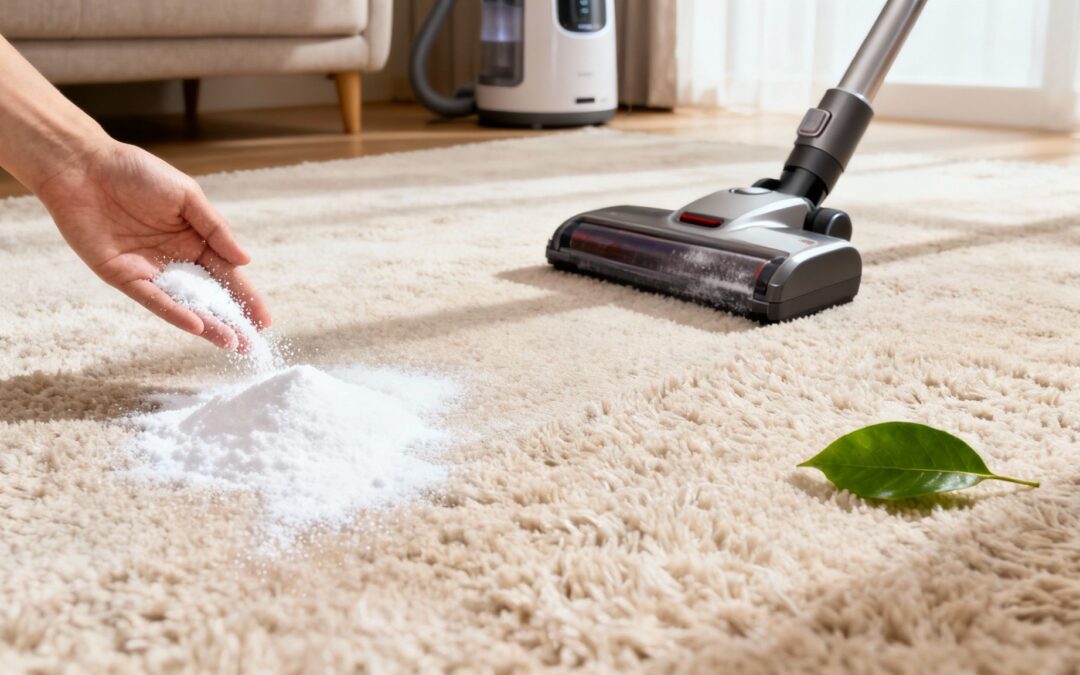
Before you can even think about getting rid of a carpet smell, you have to play detective. A lingering odour is just a symptom, and the real problem could be anything from a simple spill to a serious hidden moisture issue. Finding the root cause is the absolute first step—get this wrong, and you'll just be wasting your time.
Finding the Source of Your Carpet Smell
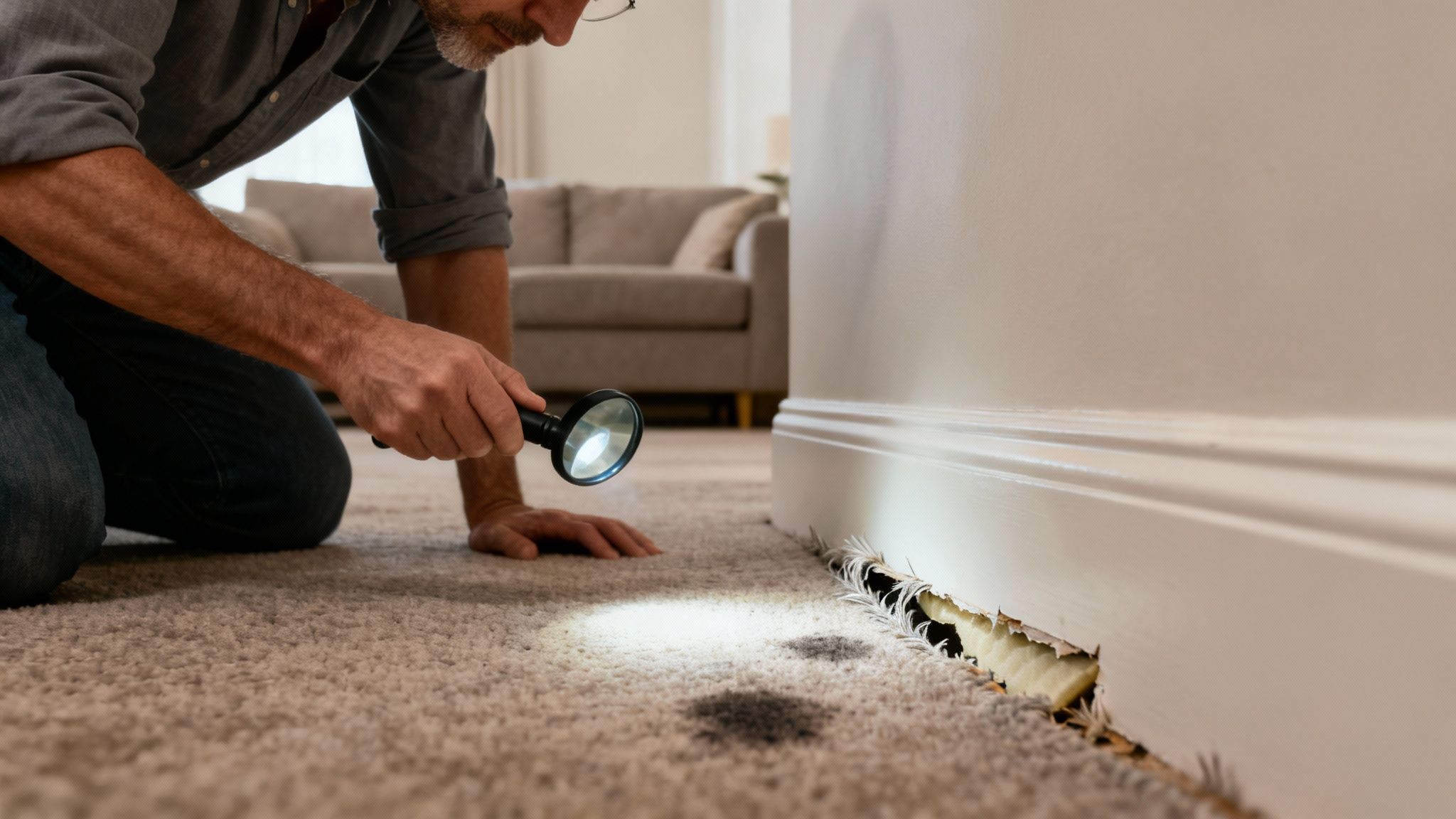
Resist the urge to grab the first cleaning product you see. A weird smell coming from your carpet is more than just an annoyance; it’s your carpet’s way of telling you something is wrong. Just spraying air freshener is like putting a bandage on a broken arm—it doesn’t fix the underlying issue and often makes things worse by creating a weird, chemical-floral funk.
Your investigation starts with a simple sensory check. Yep, it's time to get down on your hands and knees and give different sections of the carpet a good sniff. This "sniff test" might feel a bit silly, but it's genuinely the most effective way to zero in on the problem area.
Common Odour Culprits
Most carpet smells can be traced back to a handful of usual suspects. Figuring out which one you're up against is key to choosing the right cleaning approach.
- Pet Accidents: This is a big one. Even old, invisible urine stains can release a potent, ammonia-like smell, especially when the air is humid. The culprit is the uric acid crystals left behind, which keep reactivating.
- Food and Drink Spills: That forgotten splash of milk or juice can quickly turn sour as bacteria get to work. These spills have a nasty habit of seeping deep into the carpet padding, making the smell extra stubborn.
- Mould and Mildew: If you're dealing with a musty, earthy smell, you've likely got a moisture problem. It could be from high humidity, a past flood, or a sneaky hidden leak under the floorboards or in a wall.
- General Dirt and Grime: Over time, an accumulation of everyday dirt, dust, and skin oils can build up in the carpet fibres. This creates a general stale or dusty odour that makes the whole room feel tired.
Pinpointing the exact source is non-negotiable. Cleaning the wrong spot or using the wrong method for the type of odour is a waste of time and can sometimes set the stain and smell permanently.
Investigating Hidden Causes
What if the smell is musty but you can’t find an obvious spill? Moisture is almost certainly the villain. Feel around for damp spots near walls, under furniture, and tucked away in corners.
If the moisture source is a real mystery, you might need to call in the experts for professional water leak detection to find the root of the problem before it causes serious damage.
For finding old pet stains, a blacklight is a game-changer. Those old accidents will glow under the UV light, showing you exactly where to treat. Once you know the what and the where, you can finally move on to getting rid of that carpet smell for good.
Your First Line of Defence: Simple DIY Solutions
When a strange smell starts wafting up from your carpet, acting fast is your best move. For those minor odours—think lingering cooking smells, tracked-in dirt, or a small spill—simple things you already have in your pantry can be surprisingly effective. Getting on top of it straight away stops those smells from settling deep into the carpet fibres and underlay.
Think of these DIY solutions as your emergency response kit. They work best on fresh issues and general mustiness, often saving you from needing a much more intensive clean down the track.
The Power of Baking Soda
Baking soda, or sodium bicarbonate, is a brilliant natural odour absorber. Its alkaline properties are perfect for neutralising the acidic compounds that cause many common household smells. But just sprinkling it on and hoping for the best isn't enough; the right technique makes all the difference.
First, make sure the carpet is completely dry. Then, liberally sprinkle a generous layer of baking soda over the entire smelly area—don't be shy with it. Grab a soft brush and gently work it into the carpet pile. This simple step increases the surface area contact, helping the baking soda absorb far more of the odour-causing molecules.
The real key to success with baking soda is patience. Let it sit for at least a few hours, but for the best results, leave it overnight. This gives it plenty of time to fully absorb the odours before you vacuum it all up thoroughly.
A Simple Vinegar Solution
For a general stale or musty smell, a white vinegar spray can work wonders. Vinegar is a mild acid that neutralises alkaline odours, making it a simple, effective way to freshen up a room without reaching for harsh chemicals.
Here’s how to make your own deodorising spray:
- Mix the Solution: Grab a clean spray bottle and combine equal parts white vinegar and cool water.
- Lightly Mist: Spray a fine mist over the carpet. The goal is to dampen, not soak it. Too much moisture can lead to mildew, which is the very problem you're trying to fix.
- Let It Dry: Allow the area to air dry completely. The vinegar smell will be strong at first, but it disappears as it evaporates, taking the unpleasant odours with it.
It's clear that homeowners are increasingly turning to these hands-on methods. In fact, statistics show that odour problems are a major driver of the Australian carpet care market, especially in cities like Melbourne. Residential users make up the largest share of carpet cleaner usage, with the market forecast to grow from USD 13.28 million in 2024 to USD 21.5 million by 2033 as more households tackle smells themselves. You can find more details in this Australian carpet cleaner market analysis.
For a quick look at how these DIY methods stack up against each other, this table breaks down their strengths and weaknesses.
DIY Odour Removal Method Comparison
| Method | Best For | Effectiveness | Caution |
|---|---|---|---|
| Baking Soda | General mustiness, stale smells, absorbing fresh, dry spills. | High for absorbing surface odours. Works well when left overnight. | Must be vacuumed up thoroughly; can leave a residue if not. Not effective on deep, set-in odours. |
| White Vinegar Spray | Neutralising alkaline odours like pet urine (fresh), smoke, and mildew. | Moderate to High for surface-level neutralising. | Can damage natural fibres like wool or silk. The vinegar smell is strong initially but fades. |
| Enzymatic Cleaner | Organic odours: pet urine, vomit, blood, food spills. | Very High for breaking down specific proteins at the source. | Must choose a cleaner specific to the stain. May require multiple applications for old stains. |
While these DIY fixes are fantastic first-aid for your carpet, they do have their limits. For organic smells from things like pet accidents or food spills, vinegar and baking soda often just mask the problem.
This is where a store-bought enzymatic cleaner is your best bet. These cleaners contain enzymes that physically break down the specific proteins causing the odour, completely eliminating it at the source rather than just covering it up.
Deep Cleaning for Persistent Odours
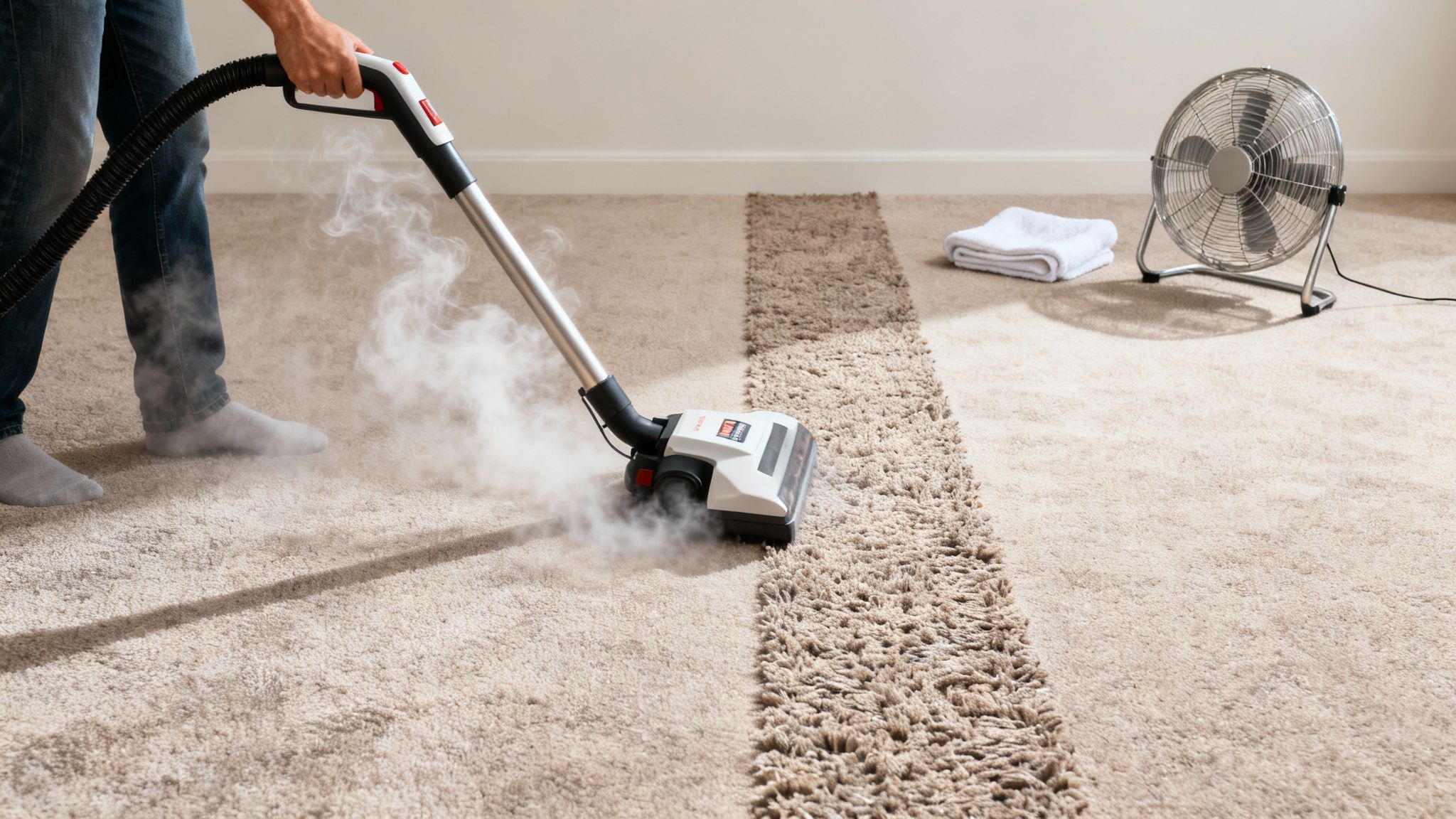
So, you’ve tried the baking soda and vinegar tricks, but that stubborn smell just won't budge. This is a classic sign that the problem isn't just on the surface—it has worked its way deep into the carpet fibres, and maybe even the underlay. When that happens, it's time to escalate your approach.
This is where deep-cleaning methods come in. These techniques are designed to get to the root of the problem, flushing out the odour-causing bacteria and sticky residues that basic DIY fixes can't touch. Whether you hire a machine or become a pro at spot-treating, the goal is to eliminate the source, not just mask it.
Mastering the Steam Cleaner
Hiring a steam cleaner, also known as a hot water extraction machine, from a local supermarket or hardware store is a fantastic way to achieve a professional-level clean. These machines are the workhorses of carpet cleaning. They inject a mix of hot water and cleaning solution deep into the carpet, and then their powerful suction pulls out all the dirty water, grime, and smelly particles.
To get the most bang for your buck, don't just jump straight in. First, give the room a thorough vacuum to get rid of all the loose dirt and debris. Skipping this step is a rookie mistake that just turns dry dirt into mud once you add water.
Work your way across the room in slow, overlapping strokes. The key here is patience. Don't rush it. You need to give the machine enough time to inject the solution properly and, just as importantly, suck up as much of that dirty water as possible on the return pass. Going too fast will leave your carpets waterlogged and can create a whole new set of problems.
The Science of Enzyme Cleaners
When you're dealing with organic smells from things like pet urine, spilt milk, or old food stains, enzyme cleaners are your secret weapon. These aren't your average detergents. They contain specialised proteins—enzymes—that are engineered to chemically break down the specific molecules causing the stench, like the uric acid in pet wee.
Think of enzymes as tiny, targeted Pac-Men, programmed to "eat" only the organic gunk that's causing the bad smell. They don’t just cover up the odour; they completely dismantle it at its source. This is exactly why they're so good at stopping pets from re-marking the same spot.
For an enzyme cleaner to work its magic, saturation is everything. You have to use enough of the product to soak right through the carpet fibres and reach every last bit of the original spill, which often includes the underlay. Once you've applied it, let it sit for the recommended time—sometimes for several hours—to give those enzymes a chance to do their job before you blot the area dry.
The Critical Importance of Proper Drying
A deep clean can go south very quickly if you don't get the drying process right. A damp carpet is the perfect breeding ground for mould and mildew, which will leave you with a musty, damp smell that's often far worse than the one you started with. Proper drying isn't just a suggestion; it’s an essential final step to get rid of carpet smell for good.
Here's how to speed up drying and stop new odours from forming:
- Maximise Airflow: Throw open the windows and doors to get some cross-ventilation going. Pointing a few fans directly at the wet areas will keep the air moving and make a huge difference.
- Use a Dehumidifier: If you're cleaning on a humid day, a dehumidifier is a game-changer. It will actively pull moisture out of the air, which dramatically cuts down the carpet's drying time.
- Avoid Walking on It: Keep everyone off the damp carpet until it's fully dry. Foot traffic can flatten the fibres and trap moisture underneath, slowing things down even more.
Making sure your carpet is bone dry before you move any furniture back is the final, crucial part of your deep-cleaning mission.
Tackling Tough Odours Like Pet Stains and Mould
Some smells are just plain stubborn. They dig into your carpet fibres and hang around long after a standard clean. Two of the biggest culprits are pet stains and mould, and they each demand a specific game plan. These aren’t your everyday odours; getting rid of them for good means going a little deeper than the surface.
For anyone with pets, that faint whiff of urine on a humid day is an all-too-familiar frustration. You're sure you cleaned that spot, but the smell is back. That's because pet urine contains uric acid crystals that latch onto carpet fibres and even soak into the underlay.
These little crystals aren't water-soluble, which is why a typical steam clean or a scrub with soap and water just won't cut it. Add a bit of moisture from the air, and those crystals reactivate, releasing that pungent ammonia smell all over again.
Neutralising Stubborn Pet Urine Odours
To truly kill a pet urine smell, you need something that can break down those uric acid crystals at a molecular level. This is where enzymatic cleaners become your best friend. The active enzymes in these formulas are designed to literally digest the proteins and acids in organic waste, destroying the source of the odour instead of just masking it.
But just spraying it on top won't work. Here's how to use them effectively for those deep-set smells:
- Saturate the Area: Don't be shy with it. You need to use enough cleaner to soak right through the carpet and reach the underlay, just like the original accident did.
- Give it Time: Patience is key here. Let the cleaner sit for several hours, or even overnight if the bottle says so. This "dwell time" gives the enzymes the chance to get to work and do their job properly.
- Blot, Don’t Rub: Once the time is up, grab some clean cloths and blot the area to soak up the excess liquid and lift the dissolved stain. Rubbing just pushes the problem deeper.
If you're dealing with regular accidents, especially with a new puppy, using preventative measures like reusable dog pee pads can save your carpets a lot of stress.
Identifying and Addressing Mould and Mildew
If you’re dealing with a persistent musty or earthy smell, you’re likely facing a mould or mildew problem. This isn't just about a bad smell—it's a potential health hazard. Mould loves damp, dark places and often appears after a leak, a flood, or even just a long spell of high humidity.
Keep an eye out for discolouration on the carpet or along the skirting boards. You might notice the smell is stronger in certain spots. In Australia, keeping carpets clean is a big part of maintaining healthy indoor air quality. With around 1 in 5 Australians living with asthma or other respiratory issues, indoor pollutants like mould are a serious concern. A professional clean can remove up to 98% of these common allergens. You can find more on these industry insights.
For a tiny patch of surface mildew, a simple solution of white vinegar and water can often do the trick. But if you're looking at a mouldy area larger than a square metre, or if the carpet backing is completely saturated, it’s time to call in the professionals. Trying to tackle a serious mould problem yourself can release spores into the air, making the situation much worse. A remediation service will safely remove the contaminated carpet and treat the subfloor to make sure it doesn’t come back.
When to Call a Professional Carpet Cleaner
Even the most determined DIYer has to know when to tap out. Sometimes, no matter how much elbow grease you put in, some carpet smells are just too stubborn for store-bought solutions and rental machines. Calling in a professional isn't admitting defeat—it’s actually the smartest move to protect your carpet and finally get the smell out for good.
There are a few tell-tale signs that you're out of your depth. Have you cleaned the same spot over and over, only for that musty smell to creep back on a humid day? That’s a huge red flag. It tells you the problem isn’t just in the carpet fibres; it's seeped down into the underlay or even the subfloor. Odours from major water leaks, sewage backups, or widespread pet contamination are also well beyond the scope of a weekend DIY project.
The Professional Advantage
Professional carpet cleaners bring an arsenal of equipment and expertise that you just can't replicate at home. The real game-changer is their truck-mounted steam cleaning system. These machines are in a completely different league from the portable units you can hire.
- Serious Heat: They heat water to much higher temperatures, which is incredibly effective at dissolving the grease, oils, and deep-set grime that trap bad odours.
- Powerful Suction: Their vacuums are immensely powerful. This means they can pull almost all the dirty water back out of your carpet, along with all the gunk it has loosened. This leads to dramatically faster drying times, which is critical for preventing mould.
- Specialised Treatments: The pros come equipped with commercial-grade cleaning agents and deodorisers that are formulated for specific problems, from neutralising stubborn pet urine enzymes to safely eliminating mould spores.
This chart can help you figure out if that tough smell from pets or mould has crossed the line into "call a professional" territory.
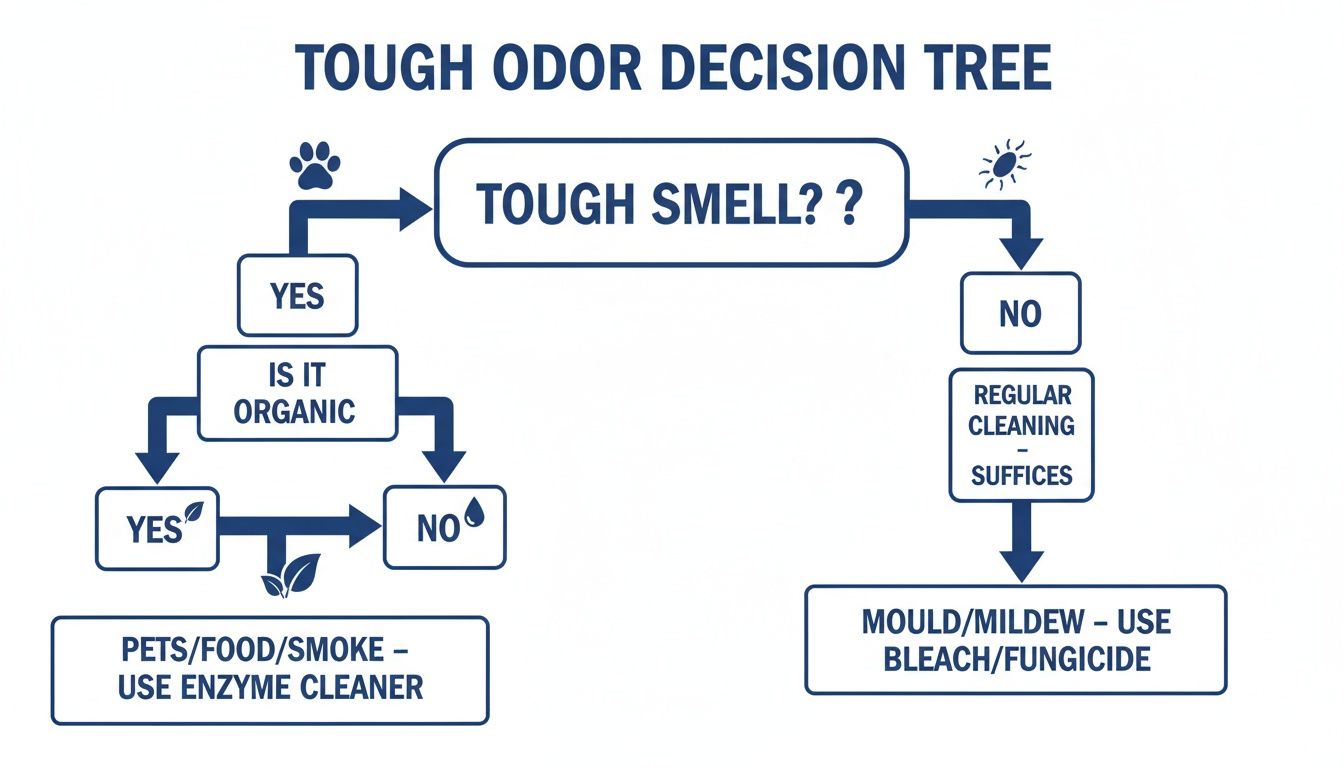
As the decision tree shows, while you can often handle surface-level issues yourself, deep contamination from pets or the presence of mould really needs professional-grade equipment and expertise to be sorted out safely and permanently.
When is Professional Cleaning the Right Call?
Deciding to hire a professional often comes down to the severity and source of the smell. You're not just paying for a cleaner carpet; you're investing in the health of your home and the lifespan of your flooring.
From a financial standpoint, it’s often a very practical choice. Think about it: replacing the carpet in a standard 3-bedroom Melbourne home can easily cost thousands of dollars. A comprehensive professional steam clean with targeted odour treatment, on the other hand, is just a small fraction of that cost—often less than 5–10% of a full replacement. You can get a better sense of the value by looking at the official benchmarks for cleaning services.
It's probably time to call a professional when:
- The smell is everywhere, but you have no idea where it's coming from.
- You're dealing with extensive pet soiling that has almost certainly soaked through to the underlay.
- The odour is a result of a flood or significant water damage.
- You suspect mould growth, which can be a health hazard if not handled correctly.
Ultimately, calling a professional service buys you peace of mind. They have the right tools and training to diagnose the problem correctly and apply the most effective solution, saving you the time, frustration, and potential for further damage that comes with a failed DIY attempt.
Keeping Your Carpets Smelling Fresh
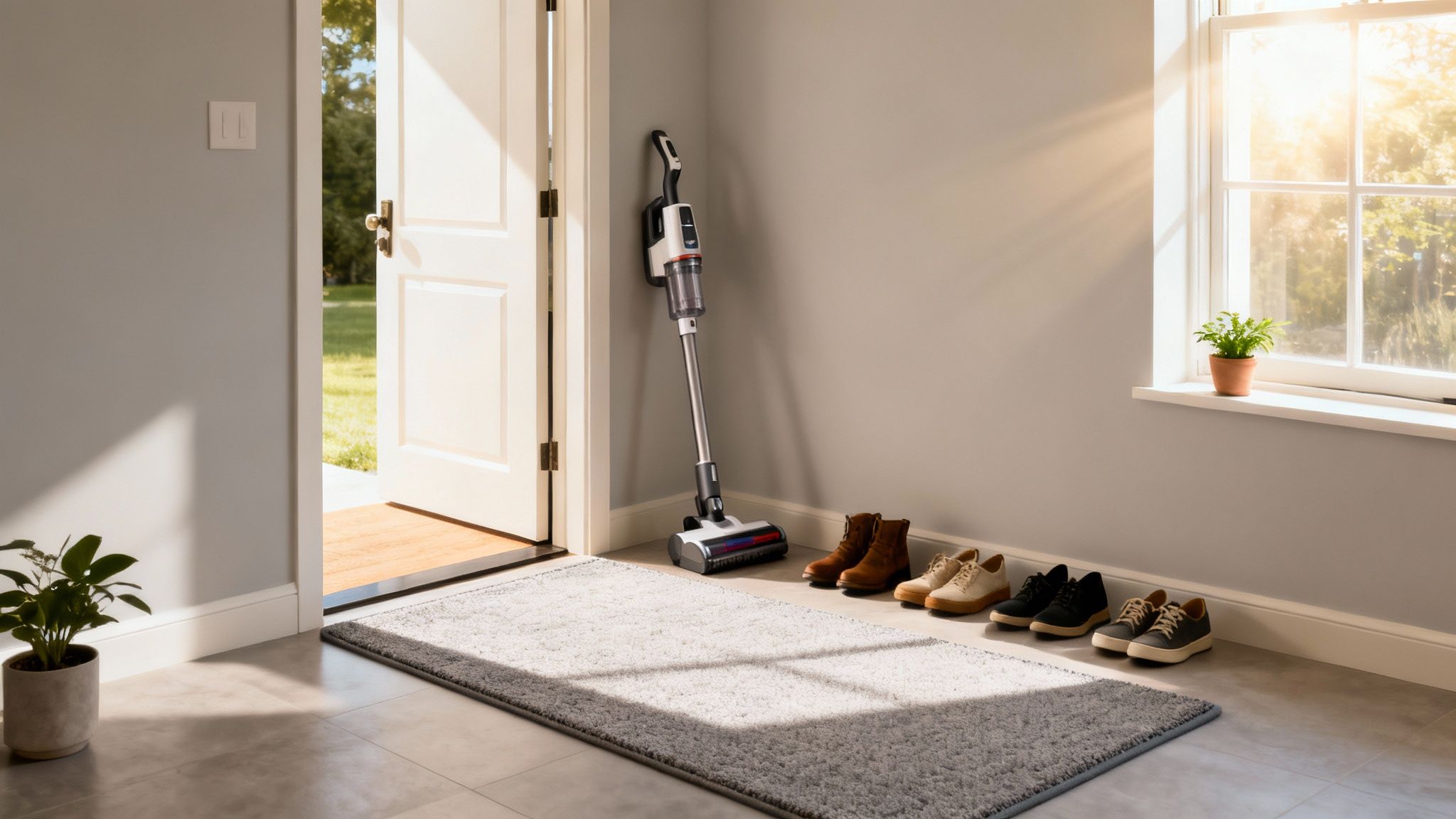
Finally getting rid of a stubborn carpet smell is a huge relief. The last thing you want is for it to creep back in. Now, the goal is to switch from emergency response to simple, routine maintenance.
Adopting a few proactive habits will keep your carpets smelling fresh and even extend their life. It's all about stopping odour-causing culprits before they get a chance to settle deep into the fibres. Trust me, it’s far easier to prevent a smell than it is to remove one that has seeped into the underlay. Small, consistent efforts make a massive difference.
Build a Strong Maintenance Routine
Regular maintenance is your best line of defence against returning odours. A consistent schedule pulls out dirt, dust, and microscopic food sources for bacteria before they can build up and cause problems.
Here are a few simple habits to fold into your cleaning schedule:
- Vacuum Thoroughly and Often: Try to vacuum high-traffic areas at least twice a week. It sounds simple, but this is one of the most effective ways to get rid of carpet smell triggers like dirt and dust before they get ground in.
- Embrace Doormats: A good quality mat at every entrance is a game-changer. It can trap a huge amount of dirt, moisture, and debris right at the door, stopping it from ever reaching your carpets in the first place.
- Deal with Spills Immediately: Don't let spills sit and soak. Blot them straight away with a clean, absorbent cloth to lift as much liquid as possible, preventing it from penetrating the padding.
Think of a professional steam clean not just as a solution, but as a preventative measure. Scheduling a deep clean every 12 to 18 months removes the deeply embedded grime that regular vacuuming can't reach, essentially resetting your carpet's freshness.
Control Your Home's Environment
The atmosphere inside your home plays a surprisingly big role in how your carpets smell. Musty odours, in particular, thrive in stagnant, humid air. If you can manage your home’s environment, you create a space where bad smells are far less likely to develop.
Improving your home’s ventilation is key. Whenever the weather allows, open up the windows and doors to create a cross-breeze. This helps air out your entire home and carries away stale odours that might be lingering.
For homes in humid climates, running a dehumidifier can make a world of difference. It actively pulls excess moisture from the air, making your carpet a much less hospitable place for mould and mildew to grow. These simple environmental controls are a powerful, passive way to maintain a fresh-smelling home.
Common Questions About Carpet Odours
Even after you've rolled up your sleeves and given it your best shot, some carpet smells can be incredibly persistent. It's only natural to have a few questions when you're deep in the trenches of odour removal. Here are some of the most common queries we hear from homeowners, along with some straight-to-the-point answers.
Can I Use a Steam Mop on My Carpet?
It’s a tempting thought, but you should definitely steer clear of using a steam mop on your carpet to get rid of smells. A proper carpet cleaner (a hot water extraction machine) injects a cleaning solution and then powerfully sucks the dirty water back out. A steam mop, on the other hand, just blasts hot vapour onto the surface.
This approach doesn't extract anything. All that steam can actually set protein-based stains like pet urine or red wine, making them permanent fixtures. Worse yet, the moisture sinks deep into the underlay without any way of being removed, creating a perfect breeding ground for mould and mildew.
Why Does My Carpet Smell Worse After I’ve Cleaned It?
This happens more often than you'd think, and it's usually down to one of two culprits.
First, the carpet probably didn't dry completely. If moisture gets trapped in the fibres or underlay, it’s a welcome mat for mildew, which brings its own signature musty smell.
Second, the cleaning process itself can "wake up" old smells. When you add moisture to dried-out uric acid crystals from old pet accidents, for instance, you're essentially reactivating the odour and bringing it right back to the surface. This is why thorough drying is non-negotiable and why enzyme cleaners are a must for pet-related smells.
A lingering smell after a DIY clean is often a sign that the odour source has penetrated the underlay. At this point, the problem has likely moved beyond what a rental machine can handle.
How Long Does It Take for Carpet Odours to Finally Go Away?
Honestly, it all depends on what's causing the smell and how you're treating it. A light, surface-level odour that you’ve treated with baking soda might be gone by the next morning.
But a deep-set pet urine stain? That could take a couple of thorough treatments with a quality enzyme cleaner over several days to fully break down. For really serious issues like mould or flood damage, the smell isn't going anywhere until the source of the moisture is fixed and the contaminated materials are professionally dealt with.
Patience is key here. Rushing the drying process or skipping steps will almost always lead to the smell coming back.
If you feel like you've tried everything and that stubborn smell is still hanging around, it’s probably time to call in the professionals. The team at Right Price Carpet Cleaning uses powerful, truck-mounted steam cleaning equipment that gets deep into the carpet fibres to permanently eliminate even the most challenging odours. Get your free, instant online quote today at https://rightpricecarpetcleaning.com.au.
Recent Comments