



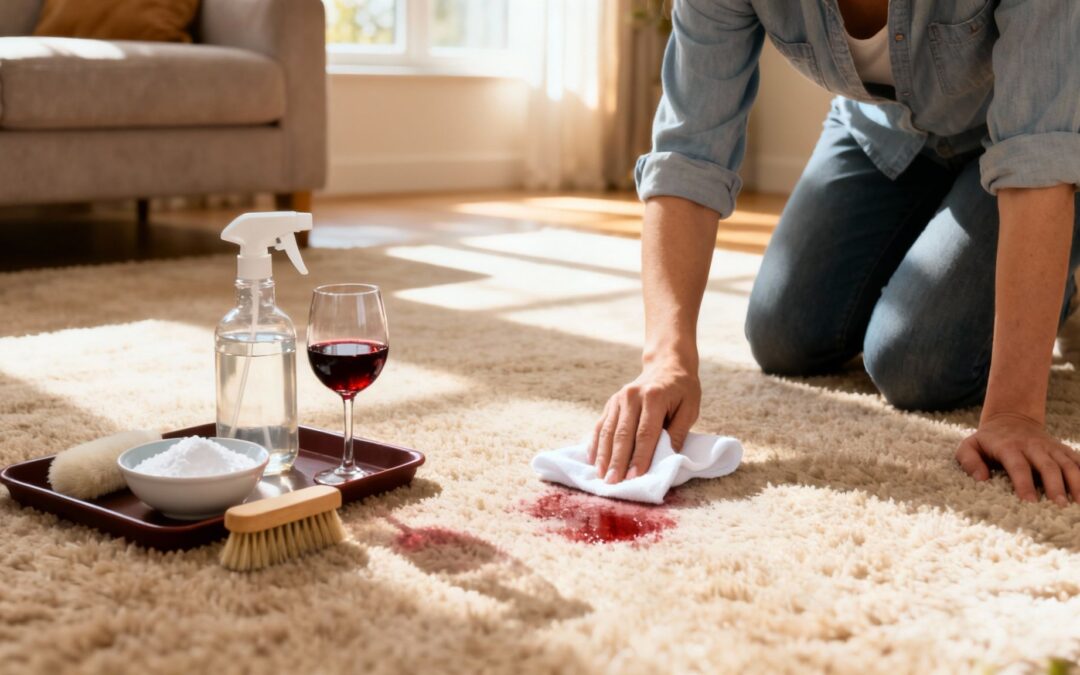
That heart-stopping moment a glass of red wine tips over or a plate of food slides off the coffee table is a familiar scene. Panic sets in, but what you do in those first few minutes is everything. Your immediate reaction can be the difference between a minor cleanup and a permanent stain.
Think of it as first aid for your carpet. The golden rule is simple: blot, don’t scrub.
The Right Way to Blot a Spill
Aggressively rubbing a fresh spill is one of the biggest mistakes you can make. It untwists and frays the delicate carpet fibres, creating a fuzzy, damaged patch that stands out even after the stain is gone. Worse, scrubbing drives the liquid deeper into the carpet backing and subfloor, making it much harder to remove later on.
Instead, grab a clean, white, absorbent cloth or a stack of plain paper towels. A white cloth is a must—coloured fabrics can transfer dye onto your carpet, leaving you with a second, more complicated stain to deal with.
Start blotting from the outside edge of the spill and work your way in. This simple trick contains the mess and stops it from spreading. Gently press down, lift, and move to a clean section of the cloth. Keep going until the cloth no longer picks up any moisture. This step is crucial and sets the stage for any further cleaning you need to do.
A swift response is your best defence against stubborn stains. The longer a spill sits, the more it bonds with the carpet fibres, making it exponentially harder to remove.
For pet owners, speed is even more vital. Pet messes, common in 40% of Australian homes, can set into carpet fibres and cause irreversible staining in just 48 hours. While professional steam cleaning with pretreatment can lift around 90% of these stains, a standard handheld cleaner might only manage 35%. An immediate, effective response makes all the difference. You can find out more about the effectiveness of various cleaning methods by exploring professional cleaning industry reports.
Your Carpet Stain First-Aid Kit
Being prepared can turn a potential disaster into a minor hiccup. Having a few essential items on hand means you can act fast without scrambling to find supplies. Here’s a quick guide to building a simple, effective stain removal kit.
| Item | Purpose | Pro Tip |
|---|---|---|
| Clean White Cloths | For blotting liquids without transferring colour. | Microfibre cloths are highly absorbent and work brilliantly. |
| Spray Bottle | To apply cleaning solutions evenly and lightly. | Always mist the area; never saturate the carpet. |
| White Vinegar | A versatile, natural acid for tackling many stains. | Mix a 50/50 solution with cool water for general use. |
| Bicarb Soda | Excellent for absorbing greasy stains and odours. | Create a paste with a little water for oily spots. |
| Spoon or Dull Knife | To gently scrape up solid or semi-solid messes. | Scrape towards the centre of the spill to avoid spreading it. |
With these items ready, you’ll be equipped to handle most common spills the moment they happen, giving you the best possible chance of keeping your carpets looking fresh and clean.
Tackling Common Stains with Confidence
Once you’ve blotted the initial spill, it’s time to play detective. Not all stains are created equal; a greasy pizza drop needs a completely different battle plan than a splash of red wine. Figuring out what you're up against is the first real step to winning the war.
Think of it like this: some stains are water-based (like coffee or juice), others are oil-based (salad dressing, butter), and then you have the protein-based culprits (blood or pet accidents). Each type reacts differently to cleaning agents, which is where pantry staples like white vinegar and bicarb soda really shine. They're the building blocks for some of the most effective—and safest—solutions for common household messes.
This simple decision tree nails your first move. Get this right, and you're already halfway to a clean carpet.
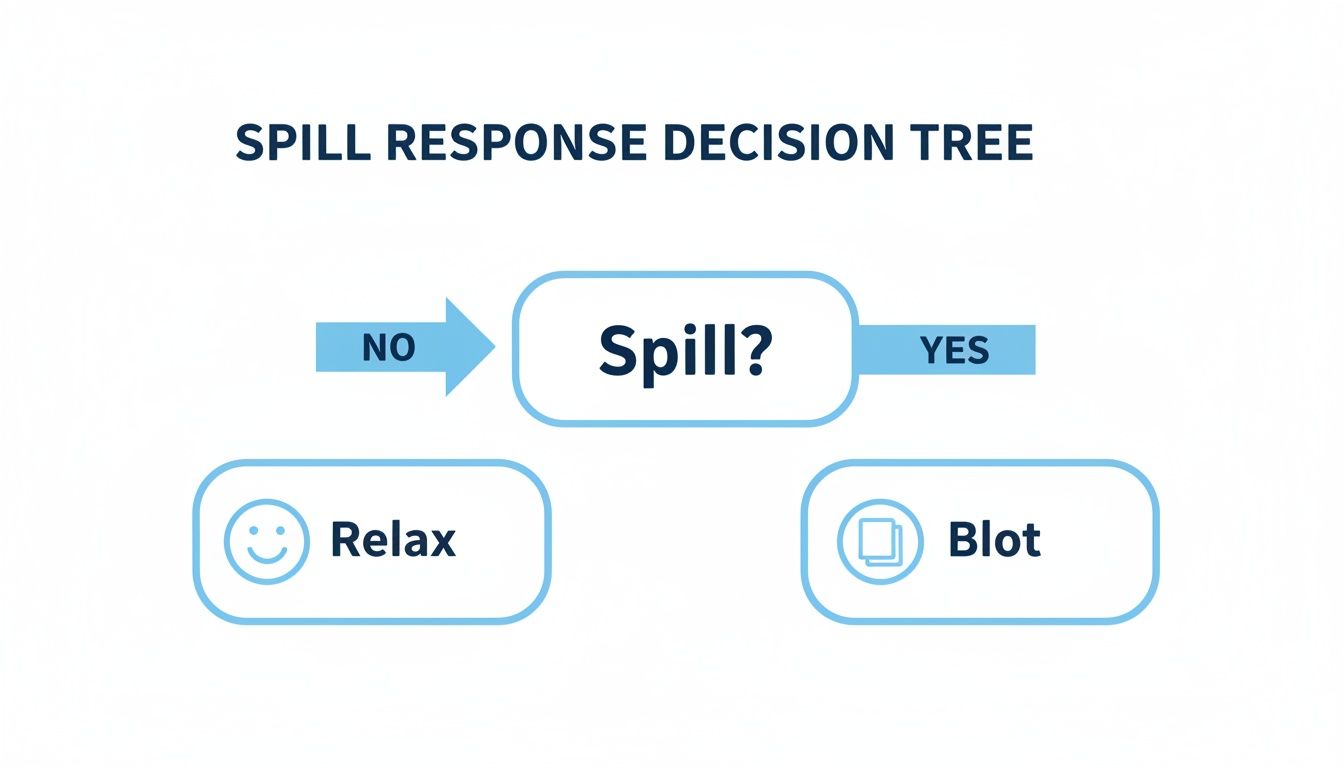
As the flowchart shows, immediate blotting is the single most important thing you can do to stop a spill from becoming a permanent stain.
How to Remove Red Wine Stains
A red wine spill can send you into a panic, but it doesn't have to be a carpet catastrophe. The trick is to act fast and neutralise the tannins that give the wine its deep, rich colour.
After you've blotted up as much of the wine as you can, smother the entire stain with salt or bicarb soda. Seriously, don't be shy with it. The granules will immediately start wicking the remaining liquid out of the carpet fibres. Let it sit for at least an hour—you'll actually see it turn pink as it soaks up the wine.
Next, vacuum up every last grain of the salt or bicarb. Whip up a simple solution of two cups of warm water, one tablespoon of white vinegar, and one tablespoon of dishwashing liquid. Gently dab this onto what’s left of the stain with a clean white cloth, working from the outside edges inward to prevent spreading. No scrubbing! Just blot until the stain lifts, then switch to a fresh cloth dampened with plain water to rinse.
Dealing with Coffee and Tea Spills
Coffee and tea stains are a daily hazard, and they can leave behind some truly ugly brown marks if you don't handle them correctly. Just like red wine, these are tannin-based stains.
The process is pretty similar. Blot the fresh spill right away. Then, mix a cleaning solution of one tablespoon of white vinegar and one tablespoon of dish soap into two cups of warm water. Apply it sparingly to the stain with a clean cloth.
Pro Tip: Never use hot water on coffee or tea spills. High heat can essentially 'cook' the stain right into the carpet fibres, making it almost impossible to remove. Stick to cool or lukewarm water for your cleaning solutions.
Gently blot the area until the stain disappears. Follow up by blotting with a cloth dampened with cool water to rinse away any soap residue, which can become a dirt magnet if left behind.
The Challenge of Pet Urine
Pet urine is more than just a stain; it’s a multi-layered problem. You’re fighting both the visible spot and the odour-causing uric acid that lingers long after. That smell is what encourages pets to return to the same spot again and again.
For fresh accidents, blot thoroughly to soak up as much liquid as you can. Then, mix equal parts white vinegar and cool water in a spray bottle. Lightly spray the affected area—you want to saturate the stained fibres, but not soak the carpet backing.
Let the vinegar solution sit for about five to ten minutes. Its acidity works to neutralise the ammonia in the urine. After it’s had time to work, blot the area dry with clean cloths. If you’re dealing with a particularly stubborn spot, especially from a pet, looking into more effective pet stain removal techniques can provide some extra firepower.
Once the area is almost dry, sprinkle a generous amount of bicarb soda over it. The bicarb will absorb any lingering odours as the carpet dries completely over the next 24 hours. When it’s bone dry, just vacuum it all up.
Erasing Grease and Oil Marks
Greasy stains from food like butter, oil, or mayonnaise are tricky because water alone won't touch them. Here, bicarb soda's amazing ability to absorb oil is your secret weapon.
First, gently scrape off any solid grease with a dull knife, being careful not to spread it around. Then, pour bicarb soda liberally over the entire stain and gently press it into the fibres.
Let the bicarb soda sit for at least a few hours, or even overnight. It acts like a sponge, pulling the grease right out of the carpet. Vacuum it up, and if a mark is still there, mix a few drops of grease-cutting dish soap with a bit of warm water. Blot gently, then do a final rinse-blot with a clean, damp cloth.
Conquering Mud and Dirt
When muddy shoes track across your carpet, the first instinct is to wipe it up immediately. Don't do it! Wiping wet mud only smears it and grinds the dirt deeper into the carpet pile.
The best approach here is to let the mud dry completely. It sounds counterintuitive, but trust me, it’s the most effective way.
Once the mud is totally dry and brittle, you can break up the bigger chunks with your fingers or a spoon and vacuum them away. You’ll be shocked by how much comes up with a good vacuuming. For any leftover discolouration, use that same simple solution of dish soap, white vinegar, and water, blotting gently until the last traces are gone.
DIY Solutions Versus Store-Bought Cleaners
When a fresh stain hits your carpet, your first instinct is probably to grab whatever’s under the sink. This kicks off a classic homeowner debate: do you whip up a simple homemade solution, or put your faith in a specialised store-bought cleaner? There’s no single right answer. The best approach really depends on the stain, your budget, and what you’re comfortable using around your family.
It’s all about balancing the gentle, trusted power of pantry staples against the targeted, scientific formulas of commercial products. One isn't always better than the other; they just solve different problems.
The Case for DIY Carpet Cleaners
Homemade solutions, usually based on white vinegar, bicarb soda, and a bit of dish soap, have some obvious draws. For starters, they’re incredibly cheap, using things you almost certainly already have in the kitchen. That makes them perfect for tackling a spill the moment it happens, no emergency trip to the shops required.
The biggest plus for many, though, is knowing exactly what’s in the mix. If you have young kids, pets, or anyone in the house with sensitivities to harsh chemicals or strong smells, going the DIY route gives you complete peace of mind. For a lot of simple, fresh spills like juice or muddy footprints, a gentle vinegar and water solution is often all you need to get the job done.
- Cost-Effective: Uses inexpensive, common household items you already own.
- Ingredient Control: No mystery chemicals or overpowering scents. You know exactly what’s in your cleaner.
- Always on Hand: The ingredients are usually waiting in your pantry, ready for immediate action.
- Gentle on Fibres: Natural solutions are often less aggressive on delicate carpet types like wool.
When to Trust a Store-Bought Product
As great as DIY remedies are, they do have their limits. This is where commercial cleaners really prove their worth. These formulas are the result of serious chemical research, engineered with potent ingredients to break down specific types of stains.
The most compelling reason to grab a commercial product is for old, set-in stains or tough organic messes like pet urine or blood. These situations call for enzymatic cleaners, which contain special proteins that literally break down and digest the molecules causing the stain and the odour. That’s a level of deep cleaning that vinegar and bicarb soda just can’t touch. An enzyme cleaner doesn't just cover up the smell of pet wee; it dismantles the uric acid so your pet won't be drawn back to the same spot.
An enzymatic cleaner is scientifically formulated to digest the proteins in organic stains like pet urine, vomit, or blood. This process not only removes the visual stain but also eliminates the source of the odour—a critical step that homemade solutions often miss.
Beyond that, many store-bought cleaners contain surfactants that are far better at lifting oily and greasy spills than dish soap alone. Others even include stain-blocking technology to help protect carpet fibres from future accidents, adding a preventative layer that DIY solutions simply don't offer.
Making the Right Choice for Your Stain
So, how do you decide what to use? Think of it like choosing the right tool for the job. You wouldn't use a sledgehammer to hang a photo, and the same logic applies here. Match the solution to the problem.
Go with a DIY solution when:
- The spill is fresh and water-based (like mud, juice, or soft drink).
- You’re cleaning a delicate natural fibre like wool, which can be damaged by harsh chemicals.
- You have kids or pets and want to avoid chemical exposure.
- The stain is minor and you just need a quick, cheap fix.
Reach for a store-bought cleaner when:
- You’re dealing with a pet urine stain, new or old.
- The stain is old, has set in, or you have no idea what it is.
- You're tackling tough organic messes like blood, vomit, or red wine.
- The stain is oil-based (think grease, salad dressing, or makeup).
- Your DIY attempts just haven’t managed to lift the spot completely.
Ultimately, the smartest approach is to have both options in your cleaning toolkit. Always start with the gentlest method first—usually a simple DIY solution—and only escalate to a more powerful, specialised product if you need to. This balanced strategy is the best way to protect your carpet, your family, and your budget.
Know Your Carpet Before You Clean
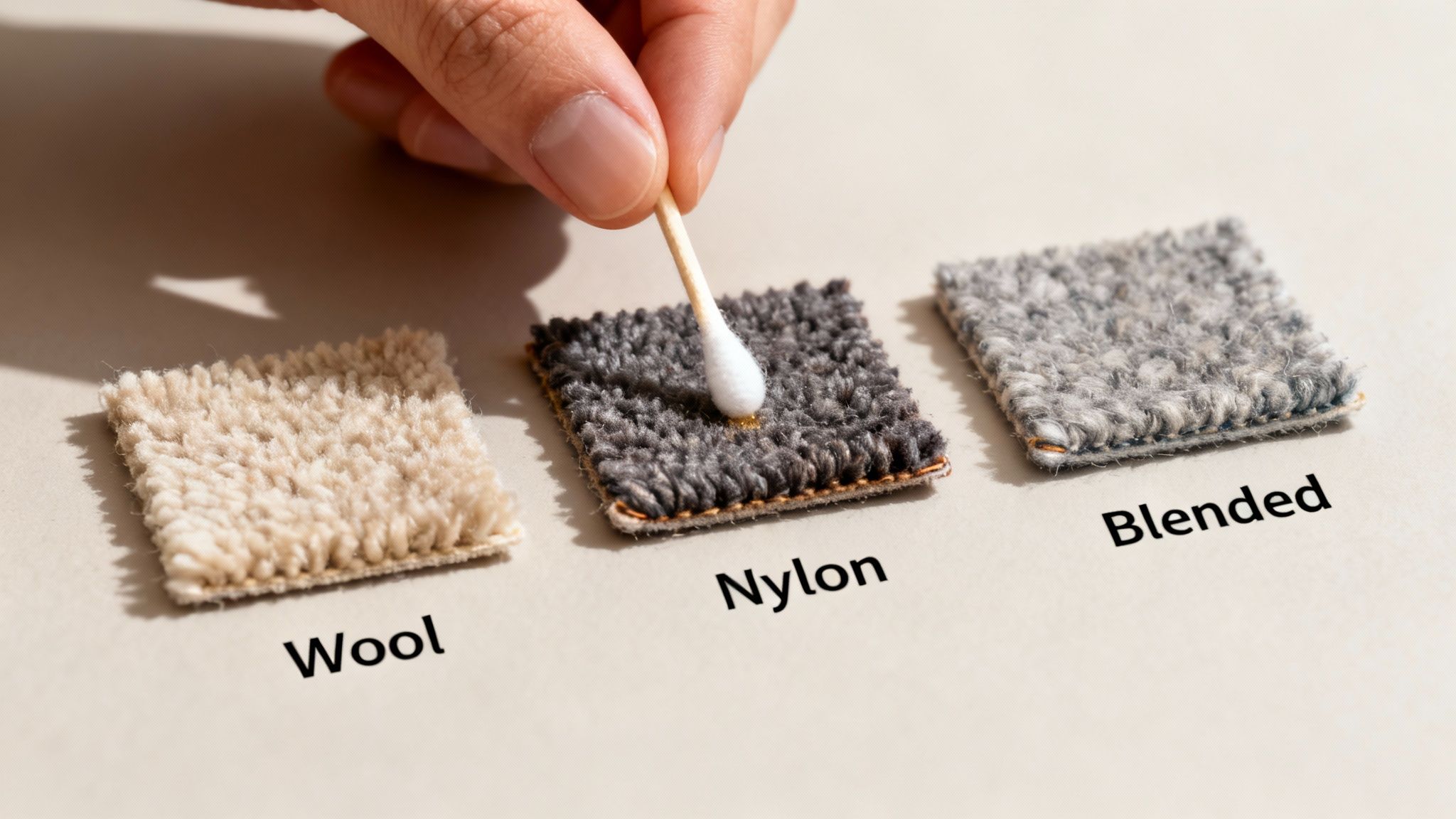
Before a single drop of cleaner touches that stain, hold on. Grabbing the first bottle you see under the sink is a classic mistake and a recipe for disaster. You absolutely have to know what your carpet is made of first.
Think of it this way: you wouldn't wash a delicate wool jumper on a hot cycle, right? The same logic applies here. Using the wrong product can cause irreversible damage like discolouration, fraying, or even melting the fibres together. Finding the best way to clean carpet stains always starts with this one simple step.
Most modern homes are fitted with synthetic carpets, which are built to be pretty durable and stain-resistant. But if you have natural fibres, you'll need to take a much gentler approach.
Identifying Your Carpet Material
Not sure what type of carpet you have? The easiest way to check is to look for a manufacturer's tag on an offcut, which is often left behind in a wardrobe or storage cupboard.
If you can't find a tag, you can do a quick burn test. Snip a few fibres from a hidden area (like inside a cupboard or under a permanent piece of furniture) and, holding them with tweezers over a sink, carefully bring a lighter to the tip. Always have water nearby for safety.
- Nylon & Polyester: These common synthetics will melt away from the flame and form a hard, black bead. They’re quite resilient and can handle most commercial cleaners.
- Olefin (Polypropylene): A waxy and durable fibre, olefin also melts and gives off a slightly sweet, asphalt-like smell. It’s fantastic against water-based stains but notoriously bad with oils.
- Wool: This natural fibre won't melt—it will char and smell distinctly like burning hair. It’s tough but extremely sensitive to the wrong chemicals.
Knowing your material is your roadmap. It stops you from turning a small spill into a permanent, costly problem.
The most important rule for any carpet type is to always perform a spot test. Apply a tiny amount of your cleaning solution to an inconspicuous area—under the sofa or inside a closet—and wait. If you see any colour bleeding or damage, stop immediately and find another solution.
Cleaning Cautions for Different Fibres
Every carpet type has its own set of rules, and ignoring them can be costly. For example, using a high-pH or ammonia-based cleaner on wool is a terrible idea. It can permanently yellow the fibres and strip the natural lanolin that protects them. Stick to pH-neutral, wool-safe products only.
With synthetic carpets like nylon or polyester, you have a lot more flexibility. They can withstand most water-based cleaners and even some mild solvents. The big no-no here is aggressive oil-based solvents or acetone, which can dissolve the latex backing holding the carpet together, causing it to delaminate over time.
And olefin? While it's brilliant against spills, it practically attracts and holds onto oily stains. You'll need a specialised cleaner that can break down grease without damaging the fibre itself.
Understanding these differences isn't just about getting one stain out. It’s about preserving the life and look of your entire carpet for years to come. This knowledge ensures you’re not just cleaning, but actually caring for your investment.
When to Call in a Professional Cleaner
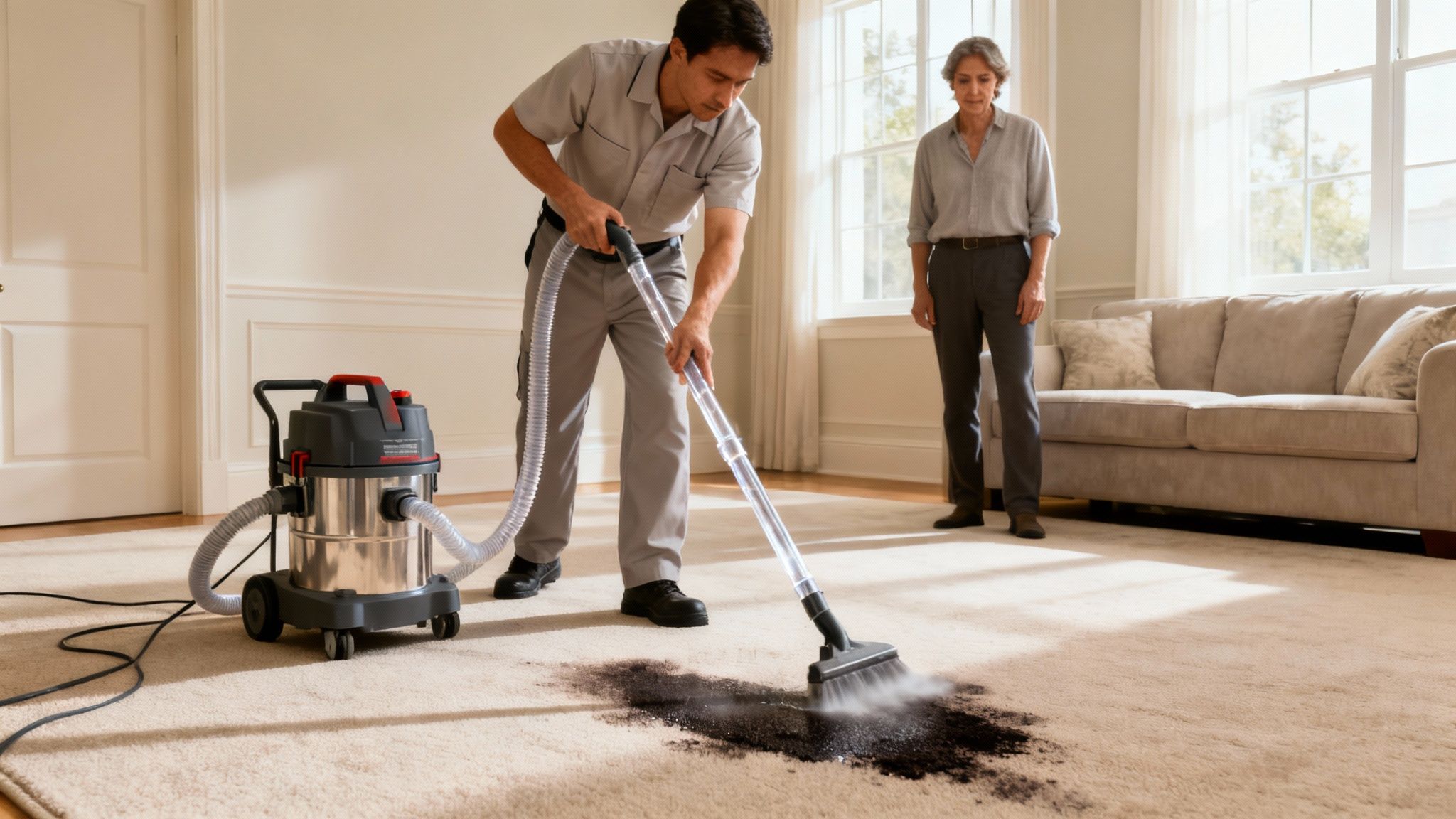
While DIY methods are fantastic for tackling fresh spills, there comes a point when you need to call for backup. Some stains are simply too stubborn, too large, or too deep for household solutions. This isn’t about admitting defeat; it’s about recognising when a job requires professional-grade equipment and expertise to get the best result.
Knowing the difference between a manageable spot and a genuine carpet crisis can save you time, frustration, and money in the long run. Sometimes, the best way to clean carpet stains is to pick up the phone.
Stains That Reappear After Cleaning
Have you ever cleaned a stain, only to watch it mysteriously reappear a day or two later? This frustrating phenomenon is called wicking. It happens when liquid soaks deep into the carpet backing and underlay.
Even if you clean the surface fibres, the moisture trapped below slowly wicks its way back up to the top, bringing the dissolved soil with it and recreating the stain. No amount of surface blotting can fix this.
Professional hot water extraction (steam cleaning) is the only real solution. These powerful truck-mounted machines inject hot water and cleaning agents deep into the carpet pile, then use incredibly powerful suction to pull all the dirty water out from the very base. This removes the deep-down residue that causes wicking.
If a stain keeps coming back, it’s a clear sign the problem is deeper than your equipment can reach. A professional clean addresses the entire carpet profile, from the tips of the fibres down to the backing.
Large Spills and Deep-Set Odours
A small coffee spill is one thing; an entire pot of coffee or a major pet accident is another challenge entirely. For large-volume spills, a DIY approach often just spreads the mess around and pushes moisture deeper into the padding. This can lead to mould, mildew, and structural damage to your subfloor.
Similarly, deep-set odours, particularly from pet urine, are notoriously difficult to eliminate. The uric acid crystals embed themselves deep in the carpet fibres and backing, and household cleaners can’t always break them down. Professional services use specialised enzymatic treatments that dismantle these odour-causing molecules at their source, providing a level of freshness you simply can’t achieve on your own.
The Power of Professional Equipment
Let's be honest: while many carpet stains can be tackled with elbow grease, knowing when to call in the experts is crucial for preserving your floors. Professionals offer a level of clean that goes beyond the surface, much like a trusted professional wood floor cleaning service does for timber.
While DIY rental machines are a popular choice, industry benchmarks show they often leave a significant amount of dirt behind. This isn't just about looks; it's about the health of your home and the longevity of your carpet.
Professional services using truck-mounted steam cleaning can remove up to 97% more soil than basic vacuums or rentals. This powerful clean not only restores your carpet's appearance but can also extend its life by 20-50% and significantly improve your home's indoor air quality.
To see just how different the two approaches are, let’s look at a side-by-side comparison.
DIY vs Professional Cleaning: A Head-to-Head Comparison
| Feature | DIY Method | Professional Steam Cleaning |
|---|---|---|
| Effectiveness | Best for fresh, surface-level stains. Struggles with set-in spots, wicking, and deep odours. | Highly effective on almost all stains, including old, deep-set ones. Eliminates wicking and odours. |
| Equipment | Store-bought cleaners or rental machines with limited power and suction. | Commercial-grade, truck-mounted hot water extraction units. Far superior heat, pressure, and suction. |
| Cost | Lower upfront cost for supplies or rental fees. | Higher initial investment, but often more cost-effective long-term by preventing permanent damage. |
| Time & Effort | Requires significant personal time for setup, cleaning, and drying. | Fast and efficient. Professionals handle all the work, often completing a room in a fraction of the time. |
| Expertise | Relies on general knowledge. Risk of using the wrong product and damaging carpet fibres. | Trained technicians who understand different carpet types and stain chemistry, ensuring safe and effective treatment. |
| Final Result | Can leave behind soap residue, attracting more dirt. May not fully extract moisture, risking mould. | No residue left behind. Powerful suction removes almost all moisture for faster drying and a healthier home. |
The takeaway is clear: while DIY cleaning has its place for minor spills, nothing beats the deep, restorative clean of a professional service for tackling serious stains and maintaining the overall health of your carpet.
Of course. Here is the rewritten section, crafted to sound like an experienced human expert, following all your specific instructions and style examples.
Proactive Tips to Prevent Stains
Knowing how to clean a stain is one thing, but preventing it from happening in the first place? That’s the real secret to keeping your carpets looking their best. A few simple, proactive habits can save you an enormous amount of stress and effort down the line.
It all starts at the front door. Placing a high-quality doormat at every entrance and making a strict ‘no shoes inside’ rule is the single most effective change you can make. You’d be amazed how much dirt, mud, and grime this simple habit stops from ever reaching your carpet fibres.
Creating Safe Zones in Your Home
Think about the high-risk areas of your home—the dining table, the coffee table where you enjoy your evening tea, or the kids' play area. These are the spill hotspots. Placing a stylish, easy-to-clean area rug under furniture in these zones acts as a sacrificial layer, catching accidents before they have a chance to stain your wall-to-wall carpet.
Regular, thorough vacuuming is another non-negotiable. It’s your first line of defence against the tiny, sharp particles of grit and dirt that act like sandpaper on your carpet fibres. Over time, this abrasion weakens the fibres, making them far more susceptible to permanent staining when a spill does happen.
After your next professional clean, seriously consider a stain-guard treatment. It creates an invisible shield around each fibre, causing liquids to bead up on the surface instead of soaking in immediately. This buys you precious extra minutes to blot the spill before it becomes a real problem.
Investing in professional maintenance is also a powerful long-term strategy. The demand for expert cleaning services in Victoria is on the rise, and for good reason. Professional hot water extraction doesn't just lift out tough stains; it also removes up to 95% of allergens—a massive benefit for the one in five Australian households with pets or allergies. It’s preventative care for your carpet and your family’s health. You can find more details on the Australian cleaning services market growth and see why it’s a worthwhile investment.
Got Questions? We’ve Got Answers
Even when you know the basics of tackling a stain, a few specific questions always pop up. It happens to everyone. Here are some of the most common queries we get from homeowners, along with our straightforward, practical advice.
How Long Does Carpet Take to Dry After Cleaning?
This is a big one. After a professional steam clean, you should generally wait 4 to 6 hours before walking on your carpet. However, it can take up to a full 24 hours for the fibres to dry out completely.
The final dry time really depends on your home’s humidity and how much air is moving through the room.
Want to speed things up? Here’s what you can do:
- Open up the windows to get a nice cross-breeze going.
- Flick on ceiling fans or set up a few portable ones.
- Run your air conditioner or heater to help circulate the air and manage humidity.
Can I Use Bleach on a White Carpet?
Please, don't do it. We can't stress this enough. Using bleach on any carpet, even a white or off-white one, is a recipe for disaster.
Bleach is incredibly harsh. It can literally dissolve wool fibres and will strip the colour right out of synthetic ones. You’ll almost always be left with a permanent yellow or brownish patch that looks far worse than the original stain ever did.
What If I Don’t Know What Caused the Stain?
When you’re dealing with a mystery stain, the golden rule is to start with the mildest cleaner first and work your way up. Kick things off with a simple solution of water and a few drops of dish soap. If that doesn't make a dent, your next best bet is a gentle mix of white vinegar and water.
If a mystery stain is still sticking around after these gentle attempts, it’s time to stop and call a professional. They have the experience to identify what they're dealing with and treat it correctly without ruining your carpet.
Guessing wrong and using a powerful chemical can react with the stain and set it permanently. It’s just not worth the risk.
Ready to tackle those tough stains without the guesswork? The team at Right Price Carpet Cleaning uses powerful, truck-mounted steam cleaning to safely remove embedded dirt and stubborn spots, leaving your carpets fresh and hygienic. Get your free, instant quote online today by visiting https://rightpricecarpetcleaning.com.au.
Recent Comments