



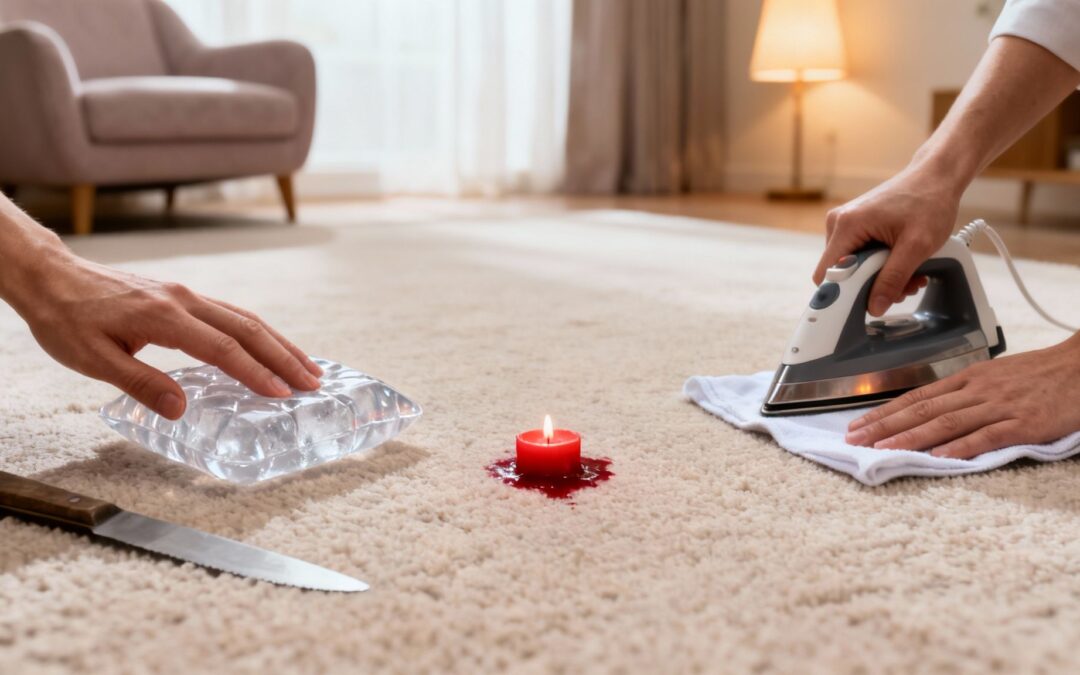
That heart-sinking moment when a candle tips over is a familiar feeling. But your first instinct might be your worst enemy. Whatever you do, resist the urge to wipe the hot wax.
Smearing liquid wax only grinds it deeper into the carpet fibres, turning a small accident into a major cleaning headache. The real secret here is patience. Just let it cool down and harden completely.
Once it's solid, you're in control. This sets you up perfectly to tackle the spill with one of two tried-and-true methods: freezing the wax to make it brittle or gently heating it to lift it out.
What to Do Immediately After a Wax Spill
For those thick, chunky spills, freezing is usually the best way to start. If the wax has already seeped into the pile, a little heat is often more effective.
Not sure where to begin? This flowchart breaks down your first move, making it simple to choose the right path for your specific spill.
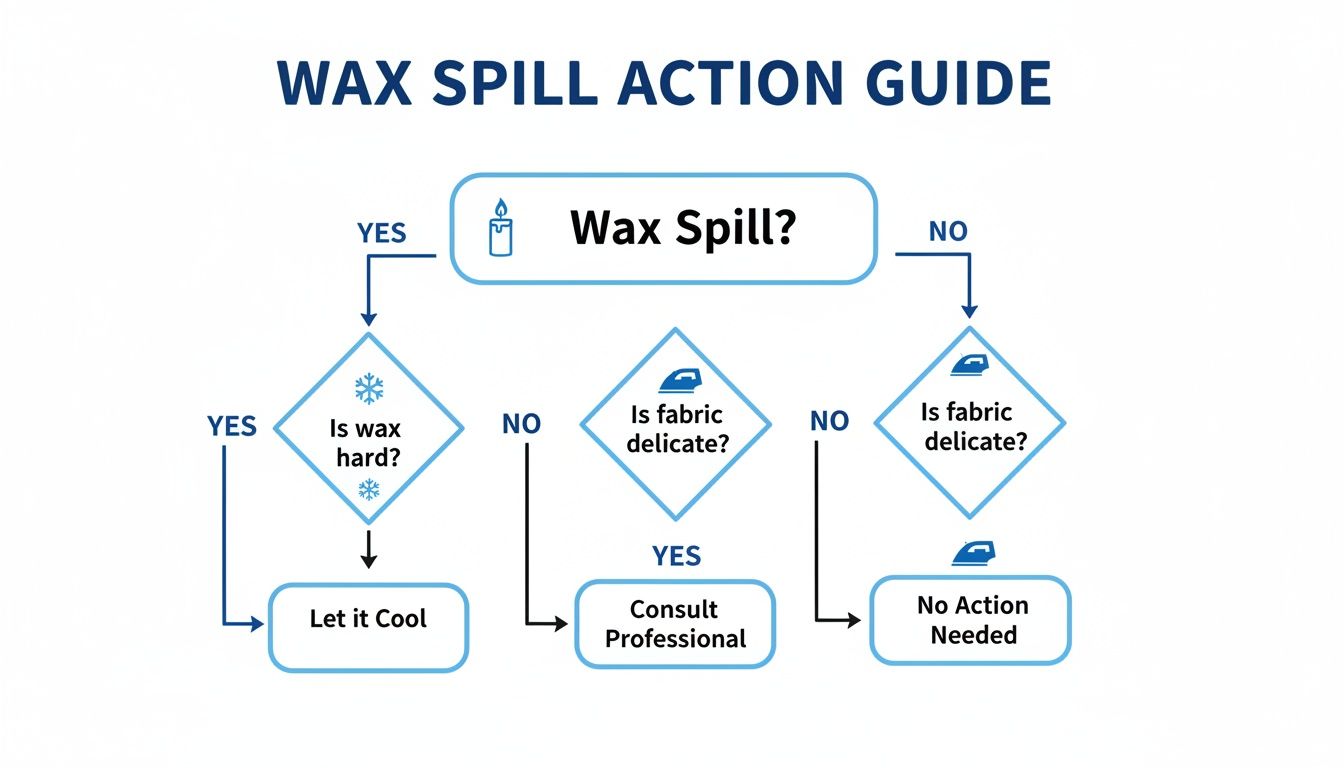
As you can see, the right technique depends entirely on whether the wax is still liquid or has already hardened. It's all about picking the method that will work with the wax, not against it.
DIY Wax Removal Methods At a Glance
Feeling a bit overwhelmed? Don't be. Choosing between freezing and heating is simpler than it sounds. This table breaks down the two main DIY methods to help you decide which one is right for your situation.
| Method | Best For | Risk Factor | Tools Needed |
|---|---|---|---|
| Freeze & Scrape | Thick, hardened wax on the surface | Low. Safe for most carpet types. | Ice pack, dull knife or spoon |
| Heat & Iron | Thin layers or wax deep in fibres | Moderate. Can damage synthetics if too hot. | Iron, brown paper bags or a clean cloth |
Ultimately, the freeze-and-scrape method is your safest bet, especially for delicate carpets. The iron technique is fantastic for stubborn, embedded wax but requires a bit more care.
Why Your First Move Matters So Much
Getting that first step right is critical, especially for local households. It turns out that candle wax spills affect roughly 22% of Australian households each year. In a climate like Melbourne's, the humidity can cause liquid wax to seep up to 30% deeper into carpet fibres, making it significantly harder to remove later on.
You can find more insights on managing high-risk spills on the InClean Magazine website. This is exactly why letting the wax harden first isn't just a suggestion—it's a non-negotiable step to prevent the wax from locking itself into your carpet.
Once it’s solid, you can take a breath, assess the damage, and choose your weapon. This isn't just about cleaning up a mess; it's about smart damage control from the very first minute to protect your carpet.
The Freeze and Scrape Method for Hardened Wax
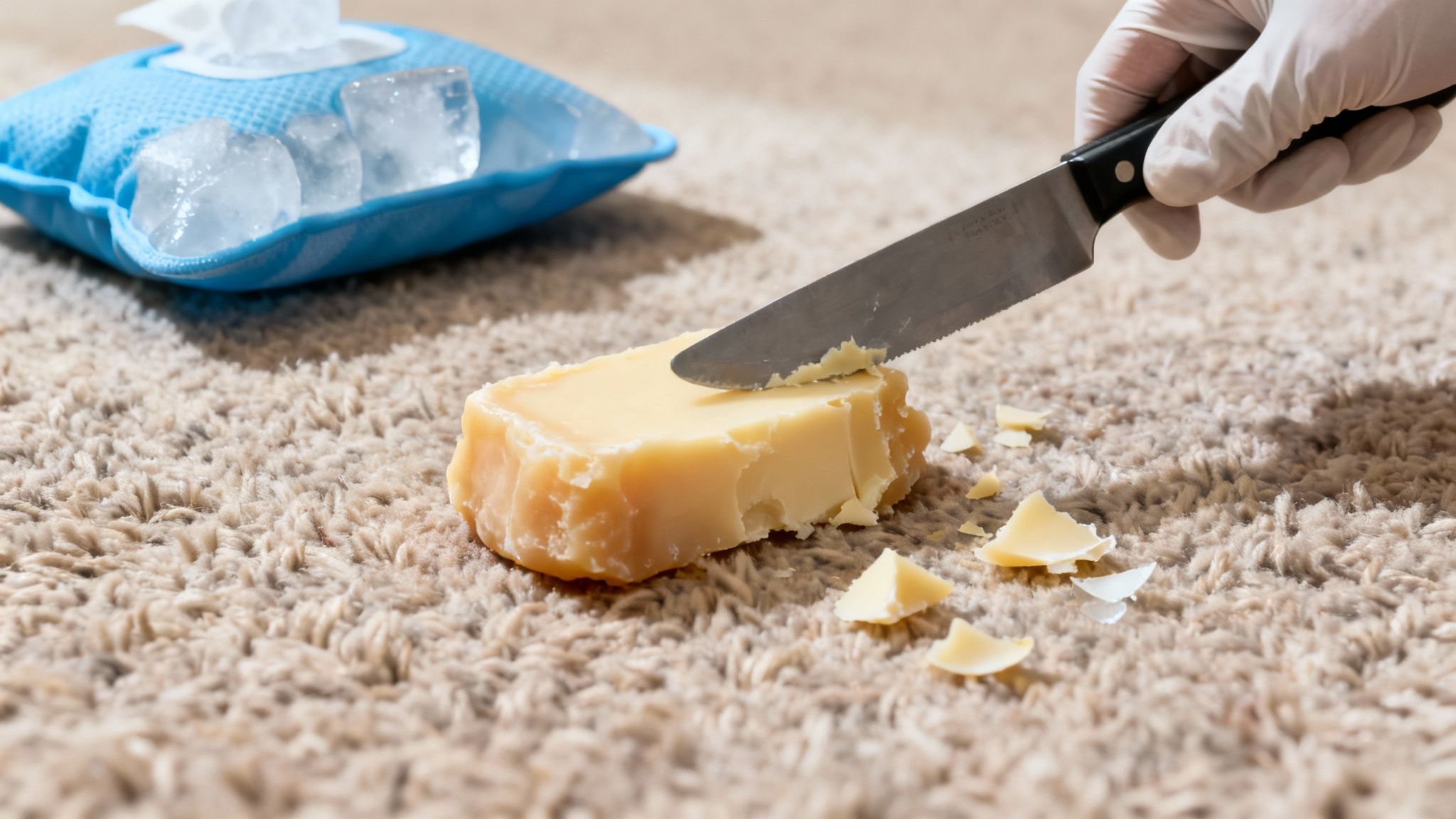
When you're staring at a big, solid lump of candle wax on your carpet, the first impulse might be to panic. But the best first move is actually to make it even harder. It sounds a bit odd, I know, but freezing the wax makes it super brittle, allowing you to literally break it away from the carpet fibres without yanking them out.
This is my go-to first approach for getting candle wax off carpet, particularly for those surface-level spills that haven't seeped too deep.
The aim is to apply intense cold directly onto the wax. Just grab a zip-top bag and fill it with ice cubes, or pull an ice pack from your freezer. In a pinch, a bag of frozen peas works just as well!
Place your cold pack right on top of the hardened wax. The trick here is patience—you need to leave it on for at least 10-15 minutes. Don't rush this step. It’s crucial for making sure the cold penetrates all the way through, turning the entire wax blob brittle.
Grab the Right Tools for the Job
While the wax is chilling, you can get your scraping tools ready. You don’t need anything fancy, just something with a dull edge that won’t shred your carpet pile.
- A butter knife: This is usually perfect. The rounded tip is much less likely to snag carpet loops than a sharper knife.
- A spoon: The curve of a spoon is surprisingly effective for chipping away at larger, frozen chunks.
- An old credit card: A sturdy plastic card gives you a good mix of firmness and flexibility, so you’re less likely to damage the fibres.
Whatever you do, stay away from sharp knives or razor blades. They can easily slice right through carpet fibres, especially on plush or wool carpets, leaving you with permanent damage that’s much worse than the original wax stain.
The Art of a Gentle Scrape
Once the wax feels rock-solid and brittle, it’s time to get to work. Take your chosen tool and start gently chipping and scraping. Hold it at a low angle and work from the outside edges of the spill in towards the centre.
You should hear a satisfying crackle as the brittle wax breaks up into little flakes and chunks. Take your time with this; aggressive gouging will only pull and fray the carpet.
After you’ve scraped off all the bigger pieces, bring out the vacuum cleaner. A hose attachment is ideal for sucking up all the small flakes and stubborn bits left behind.
Expert Tip: If your ice pack is a bit leaky, don't press it directly onto the carpet for too long—you'll just trade a wax stain for a water stain. Always use a sealed bag or wrap the ice pack in a thin tea towel to keep the carpet from getting soaked.
For really thick or stubborn wax spills, you might need to repeat the freezing and scraping process a couple of times. This method is brilliant for removing the bulk of the wax and sets you up perfectly for the next step if there’s any oily residue or colour stain left behind.
Using Gentle Heat to Lift Melted Wax Stains
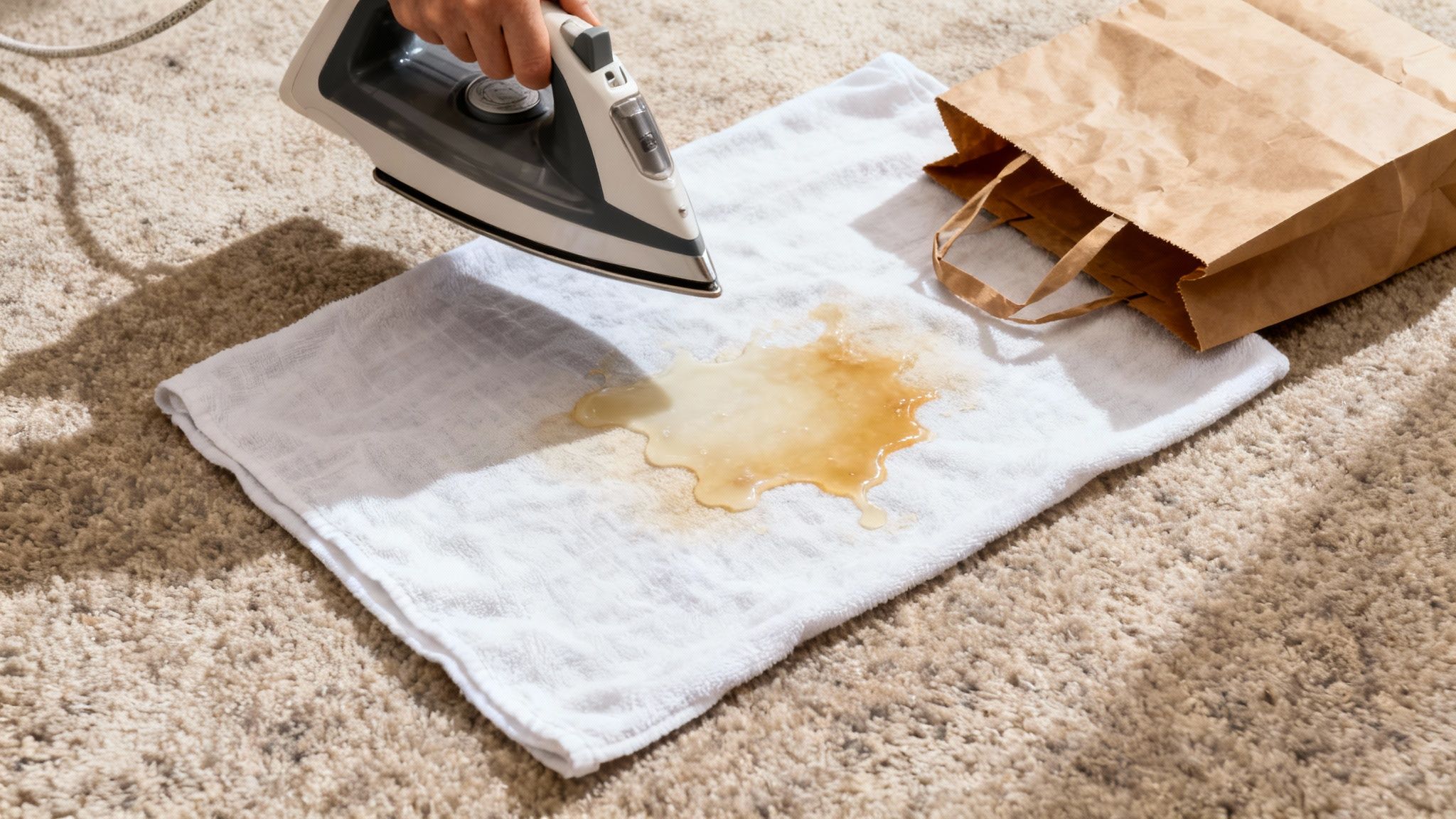
Sometimes, the freeze-and-scrape method only gets the surface stuff. What you're left with is a stubborn, oily patch where the wax has soaked deep into the carpet pile. When you're facing that, it's time to bring in a little gentle heat.
The whole idea is to carefully re-melt the wax just enough for it to transfer from your carpet fibres onto something absorbent. This technique is incredibly effective for getting that last bit of embedded candle wax off a carpet, but it requires a bit of finesse and a huge amount of caution, especially with modern carpet materials.
You won't need anything specialised, just a few simple household items.
- A household iron: Your standard clothes iron is perfect for this.
- An absorbent material: A clean, white terry cloth towel, a couple of brown paper bags, or even a stack of paper towels will do the trick.
- Patience: This is definitely not a process you can rush.
The golden rule here is to always use a clean, white cloth or plain brown paper. Using coloured or printed materials could lead to a dye transfer disaster when heat is applied, leaving you with a much bigger problem than the original wax stain.
The Gentle Art of Heat Transfer
First things first, set your iron to its lowest possible setting—think "synthetics" or "delicates." A high heat setting is the fastest way to melt or permanently scorch your carpet fibres, so start low and stay low. And it should go without saying, but never let the hot iron touch your carpet directly.
Place your chosen absorbent material, like a clean towel or paper bag, directly over the wax stain, making sure it's completely covered.
Now, gently press the warm iron onto the cloth for just a few seconds at a time. You'll quickly see the wax underneath begin to melt and wick up into the cloth. Lift the iron and check the cloth—you should see an oily patch where it has absorbed the melted wax.
Crucial Tip: Keep moving the cloth to a fresh, clean section with each pass of the iron. If you keep using the same waxy spot on the cloth, you'll stop absorbing the wax and risk just spreading it around underneath.
A Critical Warning for Synthetic Carpets
This method works wonders, but it comes with a serious warning, particularly for Melbourne renters. Many modern homes are fitted with synthetic carpets, like nylon or olefin, which are highly susceptible to melting.
DIY attempts using heat can be a real gamble. The hot iron method absorbs up to 85% of paraffin-based wax on low heat, but it also risks melting synthetic nylon carpets—which are common in 65% of Melbourne rentals—if the iron is even slightly too hot. This is backed by data from the Australian carpet cleaning industry, which has grown into a major sector. For a deeper look into these industry insights, you can explore the market research on IBISWorld.
This is precisely why a spot test is non-negotiable. Before you go anywhere near the stain in the middle of your living room, find an inconspicuous spot—under a sofa or inside a cupboard—and test the iron and cloth there first. Press it for a few seconds and check for any signs of melting, frizzing, or discolouration. If you see any damage, stop immediately.
How to Clean Leftover Oily Residue and Colour Stains
Getting the solid wax off the carpet is a huge win, but it often reveals a frustrating second problem. Now you might be left staring at a faint, greasy patch or a vibrant dye stain from that beautiful coloured candle. This is the oily residue that clings to carpet fibres, and it won't just vacuum away.
Dealing with this final stage is what separates a decent fix from a perfect one. It’s time to move from physical removal to spot-treating the stain itself. Don't worry, you won’t need to rush out for harsh chemicals—a few common household items can usually finish the job beautifully.
The goal is to dissolve the remaining oils and pigments without harming your carpet. This calls for a gentle but effective approach, and always remember the golden rule: blot, don't scrub. Rubbing aggressively can fray the carpet fibres and permanently mess with their texture.
Dealing with Oily Patches
For that greasy, shadowy stain the wax left behind, your new best friend is often a mild solvent like isopropyl alcohol (rubbing alcohol). It’s fantastic at breaking down oils without being too harsh on most types of carpet.
- Start by lightly dampening a clean, white cloth with a small amount of rubbing alcohol.
- Gently blot the oily spot. Always work from the outside of the stain inward to stop it from spreading.
- You should start to see the greasy residue transferring from the carpet to your cloth.
- Keep switching to a clean part of the cloth so you're lifting the oil, not just smearing it back on.
Remember, this isn't a race. Slow, patient blotting will always be more effective than frantic rubbing.
Conquering Stubborn Colour Stains
Those gorgeous coloured candles, especially deep reds or blues, can leave behind dye that has bonded directly with the carpet fibres. This needs a slightly different tactic. A simple solution of equal parts white vinegar and cool water often works wonders here.
The mild acidity in the vinegar helps to release the dye without bleaching your carpet. Just like the alcohol method, apply the solution with a clean cloth and blot patiently. When you're tackling these leftover stains, you might start thinking about what's actually in your cleaning products. For anyone interested in understanding the safety of dish soap and other common household solutions, it’s worth a read.
The Golden Rule of Spot-Treating: Always, always test your cleaning solution on a hidden spot first. A small patch inside a cupboard or under the sofa is perfect. This quick check ensures it won't cause any discolouration or damage to your specific carpet type.
While DIY methods are great, it's good to know where they stand. Professional data shows the DIY ironing method succeeds in 65% of small spills (under 10cm²), but that success rate drops to just 40% for larger ones. Worse, without pre-testing, ironing can spread the dye by about 20%. Interestingly, some guides suggest WD-40 can lift 82% of oily residues, but it has to be rinsed out completely to stop it from attracting more dirt later. This just goes to show why careful, pre-tested blotting is so important for getting it right the first time.
Of course. Here is the rewritten section, crafted to sound like a human expert while adhering to all your requirements.
Knowing When to Call a Melbourne Carpet Cleaner
Doing it yourself is great for small, manageable wax spills. There's a certain satisfaction in knowing how to get candle wax off your own carpet. But it's just as important to know when to step back and let a professional take over. Sometimes, trying to fix it yourself can create a much bigger, more permanent problem, and that’s a risk that just isn’t worth taking.
If you find yourself staring down one of the following situations, it’s a clear sign to put down the iron and pick up the phone.
Scenarios Demanding a Professional Touch
Not all wax spills are created equal. Some are just too big or too risky for standard household tools and cleaning solutions. Pushing ahead with a DIY fix in these cases could lead to melted fibres, permanent colour stains, or irreversible texture damage to your beautiful carpet.
It's probably time to call a professional Melbourne carpet cleaner if you're dealing with:
- A Massive Spill: Did a large, multi-wick candle tip over and create a wax puddle the size of a dinner plate? Home methods just won't cut it. The sheer volume of wax requires industrial-strength equipment to lift it out completely without just smearing the oily residue around.
- Brightly Coloured Wax on a Light Carpet: This is a high-stakes cleaning job. A deep red or vibrant blue wax on a cream or beige carpet can quickly become a permanent dye stain. DIY heat methods often make the colour bleed even deeper into the fibres, setting it for good. Professionals have specialised solvents that can break down the dye without spreading it.
- Delicate or Expensive Carpet Fibres: Materials like wool, silk, or viscose are incredibly sensitive to heat and cleaning agents. Wool can shrink or felt if you use the wrong temperature or too much moisture. Silk can be permanently damaged by the wrong pH level in a cleaner. An expert knows exactly how to handle these temperamental fibres without causing a disaster.
The Right Price Carpet Cleaning Advantage
This is where calling in a service like Right Price Carpet Cleaning makes all the difference. Their trained technicians aren't showing up with an iron and a paper towel. They come equipped with powerful, truck-mounted steam cleaning machines that use high-temperature water and intense suction to dissolve and extract wax that has seeped deep into the carpet's backing.
Their process goes way beyond just scraping the surface. They use commercial-grade solvents designed specifically to break down wax and pigments safely. This is followed by a hot water extraction rinse that flushes out every last trace of residue, ensuring there's no sticky patch left behind to attract more dirt.
For homeowners in Melbourne, this offers complete peace of mind. Instead of guessing which method might work (and hoping for the best), you get a guaranteed result from insured, police-checked technicians who understand carpet materials inside and out. They can tackle those deep-set wax puddles and stubborn colour stains that home remedies simply can't touch, restoring your carpet and protecting its lifespan.
Common Questions About Candle Wax Removal
Even after you think you’ve won the battle against a wax spill, a few lingering questions can pop up. It's one thing to get the bulk of it out, but what about tricky carpet types or that surprisingly strong candle scent that just won't quit?
Getting candle wax off a carpet isn't just about the initial cleanup; it's about handling the unique curveballs your specific situation might throw at you. We’ve gathered some of the most common queries we hear to give you that extra bit of confidence.
Can I Use These Methods on Wool or Shag Carpets?
This is where you need to be extra careful. Natural fibres like wool are notoriously sensitive to high heat, which can easily cause the fibres to shrink or felt. If you have a wool carpet, always start with the freeze-and-scrape method. If you feel you absolutely must use heat, keep your iron on its lowest possible setting and work in very short, quick bursts to minimise exposure.
With shag carpets, the biggest risk is accidentally yanking out or damaging those long, lovely fibres while scraping. Instead of a knife, try using the edge of a spoon or a credit card, and always pull upwards gently. The heat method can work well here too, but be prepared—you’ll likely go through several layers of paper towel to absorb all the wax hiding deep in that high pile.
Will the Candle Scent Linger in My Carpet?
Scented candles are great for atmosphere, but that fragrance can stick around long after the wax is gone. If the smell is bothering you, the solution is probably already in your pantry: bicarbonate of soda (baking soda).
Bicarb soda is a fantastic natural deodoriser. It works by absorbing odour molecules right out of the fibres. Just sprinkle a generous amount over the dry, clean area and let it sit for at least an hour. For really strong scents, leaving it overnight is even better. Then, just vacuum it up thoroughly. It’s a simple trick that usually neutralises any leftover fragrance without needing harsh chemicals.
What if I Don't Have an Iron?
No iron? No problem. A hairdryer is a great substitute for the heat-transfer method and actually gives you a bit more control.
Set it to a low or medium heat setting and hold it a few centimetres away from the paper towel covering the wax. Keep the hairdryer moving continuously to warm the wax gently until it starts wicking up into the paper. This slower, more controlled approach is particularly good for delicate synthetic carpets that might be prone to melting under the direct heat of an iron.
For those looking for a complete overview, especially when spills happen on other surfaces around the home, you can explore how to remove candle wax from any surface, including carpet. This resource provides additional tips that complement the techniques we've discussed. Each spill is different, and having more knowledge always helps you choose the best approach for a perfect finish.
When DIY isn't enough, Right Price Carpet Cleaning offers the professional power and expertise to handle any stubborn wax stain. Book your Melbourne carpet cleaning online in 60 seconds!
Recent Comments