



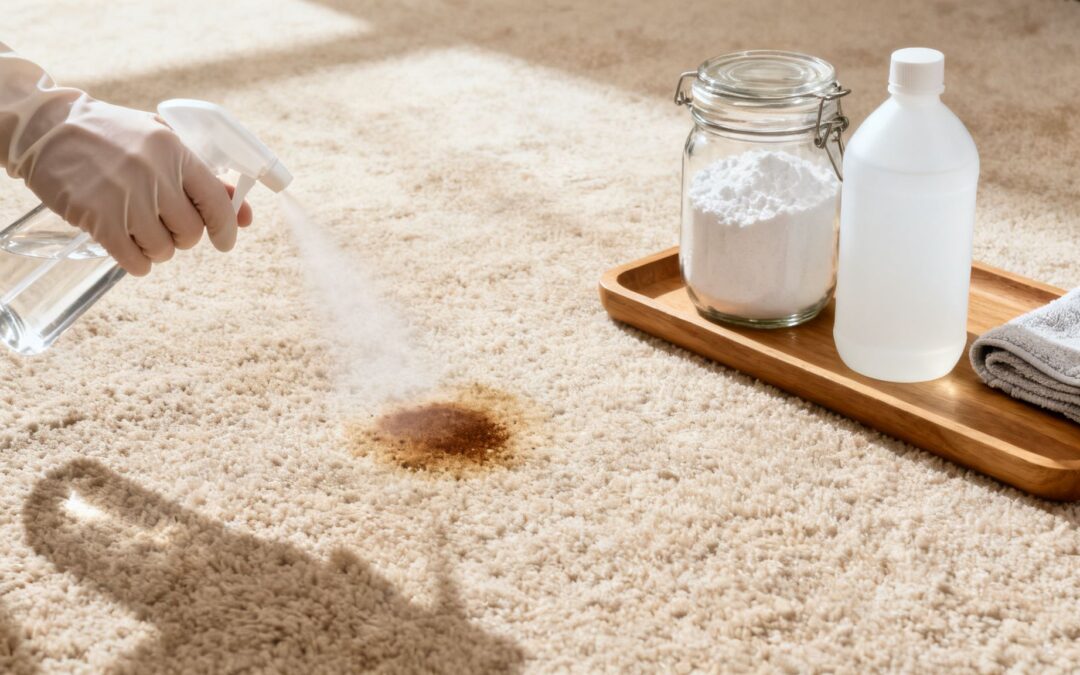
Chances are you’ve got everything you need to mix up a simple, effective homemade carpet cleaner solution right in your pantry. We're talking about the classics: white vinegar, baking soda, and a dash of dish soap mixed with a bit of water. This simple concoction is brilliant for tackling everyday grime and odours without the aggressive chemicals you find in store-bought products. It’s a safer, cheaper way to handle regular carpet maintenance.
Why a Homemade Carpet Cleaner Solution Makes Sense
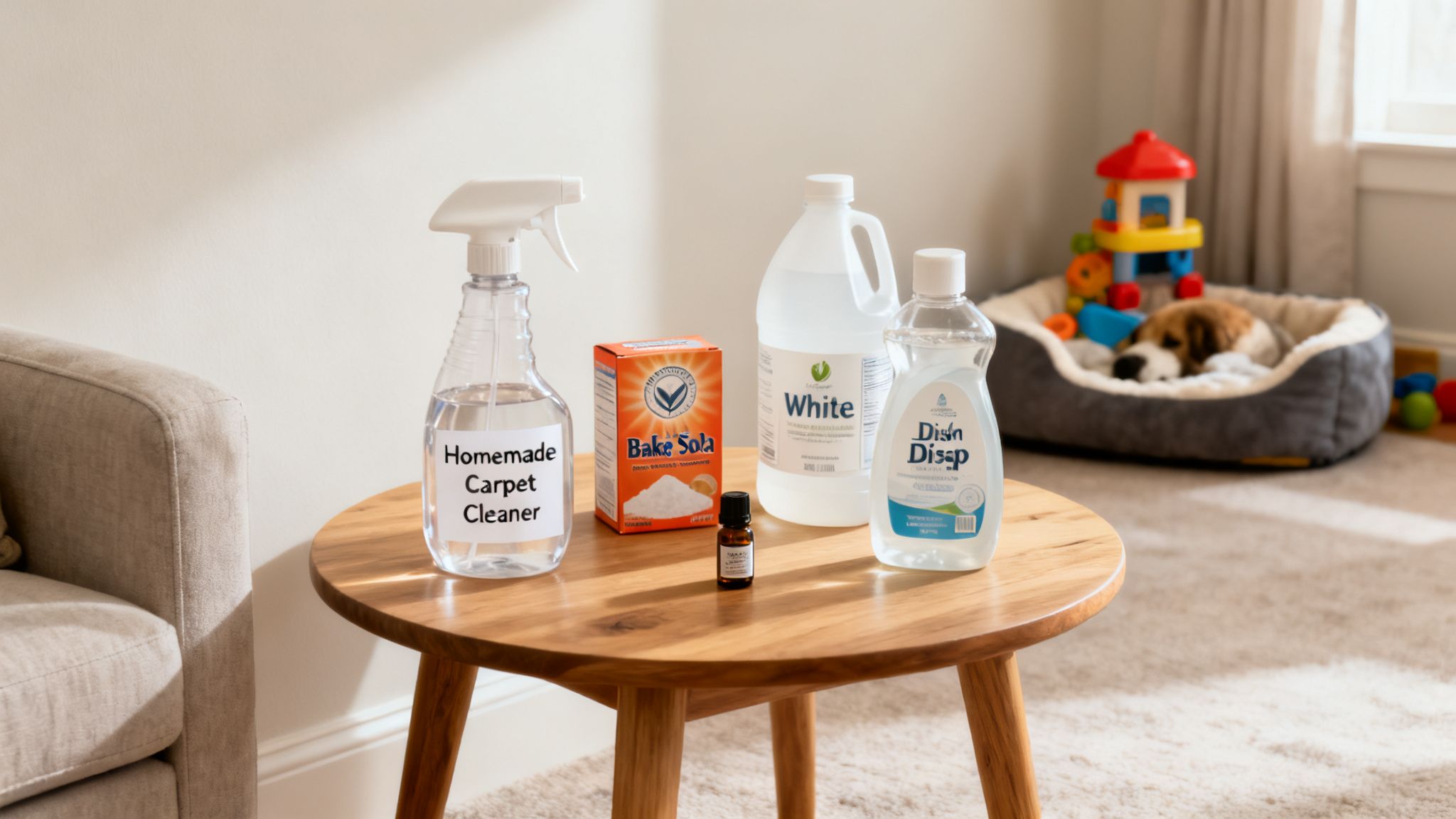
Let's be real, the cleaning aisle can be a bit much. Rows of bottles promising miracles, full of chemical names you can't pronounce, overpowering scents, and a price tag to match. It's no wonder so many people are ditching the commercial stuff and heading back to basics with DIY solutions they can trust.
The Real-World Benefits of DIY
Going the homemade route isn't just about cleaning; it’s a practical choice that benefits your bank account, your home’s air quality, and your peace of mind.
- Significant Cost Savings: The savings are impossible to ignore. In Australia, cleaning supplies can really add up in the weekly shopping budget. Whipping up your own cleaner for literal cents is a savvy move for any household looking to trim costs without cutting corners on cleanliness. You can see how this fits into the bigger picture by looking at recent studies on household budgets.
- A Safer Home Environment: Many commercial cleaners release volatile organic compounds (VOCs), which can hang around in the air long after you've packed the vacuum away. Using natural ingredients like vinegar and baking soda means you're not introducing those harsh chemicals, creating a healthier space for kids, pets, and anyone with allergies or sensitivities.
- Ingredient Transparency and Control: When you’re the one mixing the ingredients, you know exactly what’s going onto your floors. No mystery fragrances or hidden additives. You have total control, which is a great feeling.
Setting Realistic Expectations
While a homemade carpet cleaner is an absolute must-have in your cleaning kit, it's good to know where it shines—and what its limits are. DIY recipes are your best friend for fresh spills, keeping high-traffic areas in check, and general freshening up.
Think of your DIY cleaner as your first line of defence. It’s the go-to for the daily oops moments—the spilled coffee, the muddy paw prints, or the dropped snack.
These gentle solutions, however, aren't miracle workers for deep-seated grime. They aren't formulated to cut through years of embedded dirt, heavy grease, or stubborn, set-in stains that have become one with the carpet fibres. For that kind of heavy-duty restoration, you really can't beat the power of professional steam cleaning.
A balanced approach is always the smartest. Use your homemade cleaner for the day-to-day messes and call in the pros for that annual deep clean that truly revives your carpet and extends its life.
DIY vs Professional Cleaning at a Glance
Deciding whether to tackle a carpet issue yourself or to bring in an expert can be tricky. This table breaks down the key differences to help you make the right call for your situation.
| Feature | Homemade Solution | Professional Steam Cleaning |
|---|---|---|
| Best For | Fresh spills, light stains, regular freshening up, and pet odours. | Deep-seated dirt, old or stubborn stains, heavy traffic areas, and annual deep cleaning. |
| Cost | Extremely low. Uses common household ingredients you likely already own. | Higher upfront cost, but a valuable investment for carpet longevity and deep hygiene. |
| Effectiveness | Great for surface-level cleaning and maintenance. | Highly effective at removing embedded grime, allergens, and tough stains from deep down. |
| Equipment Needed | Spray bottle, clean cloths, and a vacuum. | Industrial-grade hot water extraction machines and specialised cleaning agents. |
| Time Commitment | Quick to mix and apply for spot treatments. | Involves scheduling, but the cleaning process is fast and efficient. |
| Safety & Environment | Excellent. Uses natural, non-toxic ingredients, making it safe for family and pets. | Professionals use powerful agents, but reputable services offer eco-friendly options. |
Ultimately, having a good homemade solution on hand is essential for immediate action, which can prevent a small accident from becoming a permanent problem. But for the health of your carpet and a truly deep clean, nothing replaces the expertise and equipment of a professional service.
Getting Your Natural Cleaning Toolkit Ready
Before you mix up your first batch of homemade carpet cleaner, let's get your gear in order. Think of these ingredients as the dream team for natural cleaning, each with its own special power to fight dirt, smells, and stains. Knowing what each one does will give you the confidence to handle any mess that comes your way.
The best part? Most of these items are probably already hiding in your pantry. This approach isn't just effective; it's easy on the wallet, too. You won't need any weird, hard-to-find chemicals—just a few simple, powerful staples.
Your Core Cleaning Ingredients
These four items are the foundation of nearly every DIY carpet cleaning recipe worth its salt. They’re safe, cheap, and incredibly versatile.
- Distilled White Vinegar: This is your cleaning powerhouse. The mild acetic acid in vinegar is brilliant for cutting through dirt and grime. It also neutralises alkaline odours (like pet urine) and acts as a gentle rinse agent, which means no sticky, soapy residue left behind.
- Baking Soda (Sodium Bicarbonate): Think of this as your go-to deodoriser and gentle scrubber. Sprinkled dry, it soaks up and traps nasty smells from deep within the carpet fibres. When you mix it into a paste or solution, it provides a light scrubbing action to help lift out stubborn stains.
- Clear, Gentle Dish Soap: Just a tiny amount of dish soap works as a surfactant. That's a fancy way of saying it helps water get into oily or greasy stains, lifting the gunk away from the carpet fibres so you can blot it up. Always grab a clear, dye-free version to avoid any chance of leaving colour behind.
- Hydrogen Peroxide (3% Solution): For those nightmare organic stains like blood, red wine, or pet accidents, hydrogen peroxide is a true lifesaver. It works by oxidising the stain, which breaks down its chemical bonds. But be warned: it can have a mild bleaching effect, so doing a spot test first isn't just a suggestion—it's essential.
Up Your Game with Essential Oils
While they aren't strictly for cleaning, a few drops of the right essential oil can really take your homemade solution to the next level. They add a lovely, natural fragrance and can even bring some extra cleaning muscle to the party.
For instance, tea tree and eucalyptus oils are famous for their natural antibacterial and antifungal properties, making them a fantastic choice for a really deep-down clean. If you just want a fresh, uplifting scent without the overpowering chemical smell of commercial products, lavender or lemon oils are perfect. Just stick to clear oils and only use a few drops to avoid any oily residue.
Remember, the goal is a fresh, clean scent, not an overpowering perfume. When it comes to essential oils, less is definitely more.
The Right Tools for the Job
You don't need a collection of fancy gadgets. A few simple tools are all it takes to apply your solutions properly and get the best results without wrecking your carpet fibres.
- Spray Bottles: Have at least two on hand—one for your main vinegar-and-water mix and a second one filled with plain water for rinsing.
- Microfibre Cloths: These are your best friends for blotting. They’re super absorbent, which means they lift moisture and stains out of the carpet instead of just pushing them deeper in.
- A Soft-Bristled Brush: Perfect for gently working your cleaning solution into stubborn spots without fraying the carpet. An old toothbrush works a treat for tiny areas.
Beyond these specific recipes, it helps to understand the wider world of cleaning products. Knowing about the best floor cleaners for every surface and other eco-friendly options can help you make smart choices for your whole home. Having your ingredients and tools ready to go means you can jump on spills the moment they happen—and that’s the real secret to stopping stains in their tracks.
The Ultimate All-Purpose Carpet Cleaning Recipe
This is the recipe I turn to time and time again. It’s the cornerstone of any DIY cleaning arsenal—a versatile, reliable, and surprisingly effective solution for tackling the most common household messes, from muddy footprints to everyday spills. Best of all, it uses simple ingredients you probably already have in your pantry.
The real magic, though, isn't just in the mixture but in how you use it. I'll give you the precise recipe and then walk you through the application techniques that deliver great results, whether you're spot-cleaning by hand or using a carpet cleaning machine.
This infographic breaks down the core components of your natural cleaning toolkit.
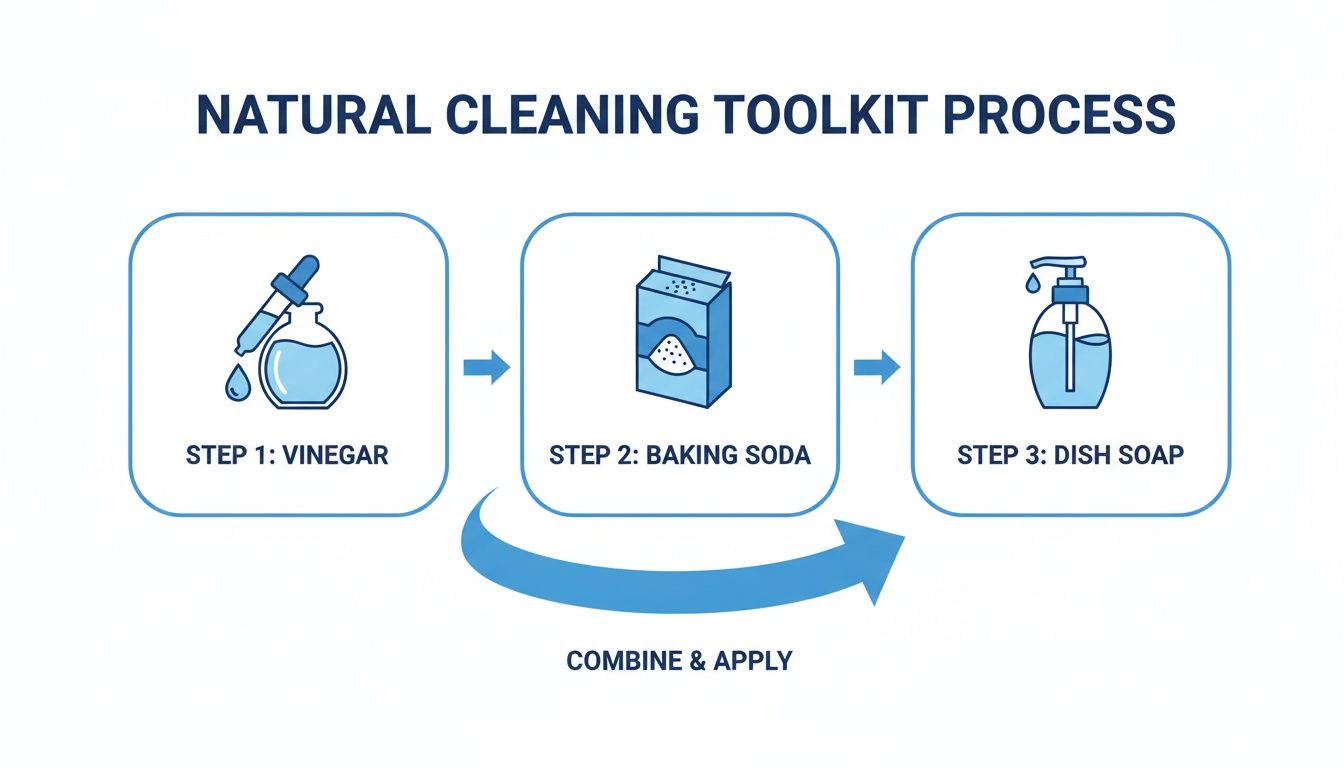
As you can see, the power comes from combining the acidic punch of vinegar, the gentle scrubbing action of baking soda, and the lifting power of dish soap.
Crafting Your Go-To Solution
Forget complicated ratios and hard-to-find chemicals. This all-purpose recipe is simple to mix and even easier to use.
Here’s what you’ll need:
- 2 cups of warm water (avoid hot water, as it can set some protein-based stains like milk or egg)
- 1 cup of distilled white vinegar
- 1 to 2 teaspoons of clear, gentle dish soap (it’s crucial not to overdo this)
Combine these ingredients in a clean spray bottle and give it a gentle swirl to mix. Try not to shake it vigorously, as this will create way too much foam from the dish soap. The warmth of the water just helps dissolve the soap and activate the vinegar.
A staple recipe like this—sometimes beefed up with a sprinkle of bicarb soda for extra fizz—is fantastic for lifting odours and dirt for just pennies. This is a huge saving, considering cleaning products can take up a fair chunk of a household's budget. It’s no wonder so many families in Greater Melbourne try DIY methods first for spot cleans. You can find more on the popularity of these methods by checking out these insights from Brisbane Commercial Cleaning and Pest Control.
Application for Hand Spot Cleaning
For fresh spills and small stained areas, applying your homemade solution by hand is the way to go. Quick action is your best weapon against a stain becoming a permanent feature.
First, grab a clean, dry microfibre cloth and blot the spill. Press firmly to absorb as much of the liquid as you can. Never rub! This is the golden rule. Rubbing will only push the stain deeper into the carpet fibres.
Next, lightly spray your solution onto the affected area. Don't saturate the carpet; a light mist is all you need. Let it sit for about 5-10 minutes to give the vinegar time to work its magic and break down the grime.
Once it has dwelled, gently blot the area again with a fresh, dry cloth. You should see the stain transferring from the carpet to your cloth. Finish by lightly misting the spot with plain water and blotting one last time to "rinse" away any residue.
Using the Solution in a Carpet Cleaning Machine
Good news—this recipe can also be adapted for most carpet cleaning machines, giving you an affordable way to freshen up an entire room. The trick here is proper dilution to avoid creating a foam monster that could damage your machine's motor.
For most standard carpet cleaners, a good starting ratio is one part homemade solution to two parts water. So, if your machine’s tank holds three litres, you’d use one litre of your cleaning mix and two litres of plain water.
Critical Tip: Always check your machine's manual before using any non-branded solution. Some manufacturers have specific guidelines, and following them will protect your warranty and your machine.
The Most Important Step: Spot Testing
Before you go spraying any cleaning solution on a visible part of your carpet, you absolutely must perform a spot test. I can't stress this enough. This non-negotiable step is the single best way to prevent accidental damage or discolouration.
Find a hidden spot, like the carpet inside a wardrobe, under the sofa, or on a leftover scrap if you have one. Apply a small amount of your homemade solution and let it sit for about 10 minutes.
Blot it with a clean white cloth and check the cloth for any colour transfer from the carpet fibres. Let the area dry completely, then inspect it in good light to make sure there's no fading or change in texture. If everything looks good, you're clear to tackle the main area. This simple test takes minutes but can save you from a very costly mistake.
Targeted Solutions for Tough Stains and Pet Messes
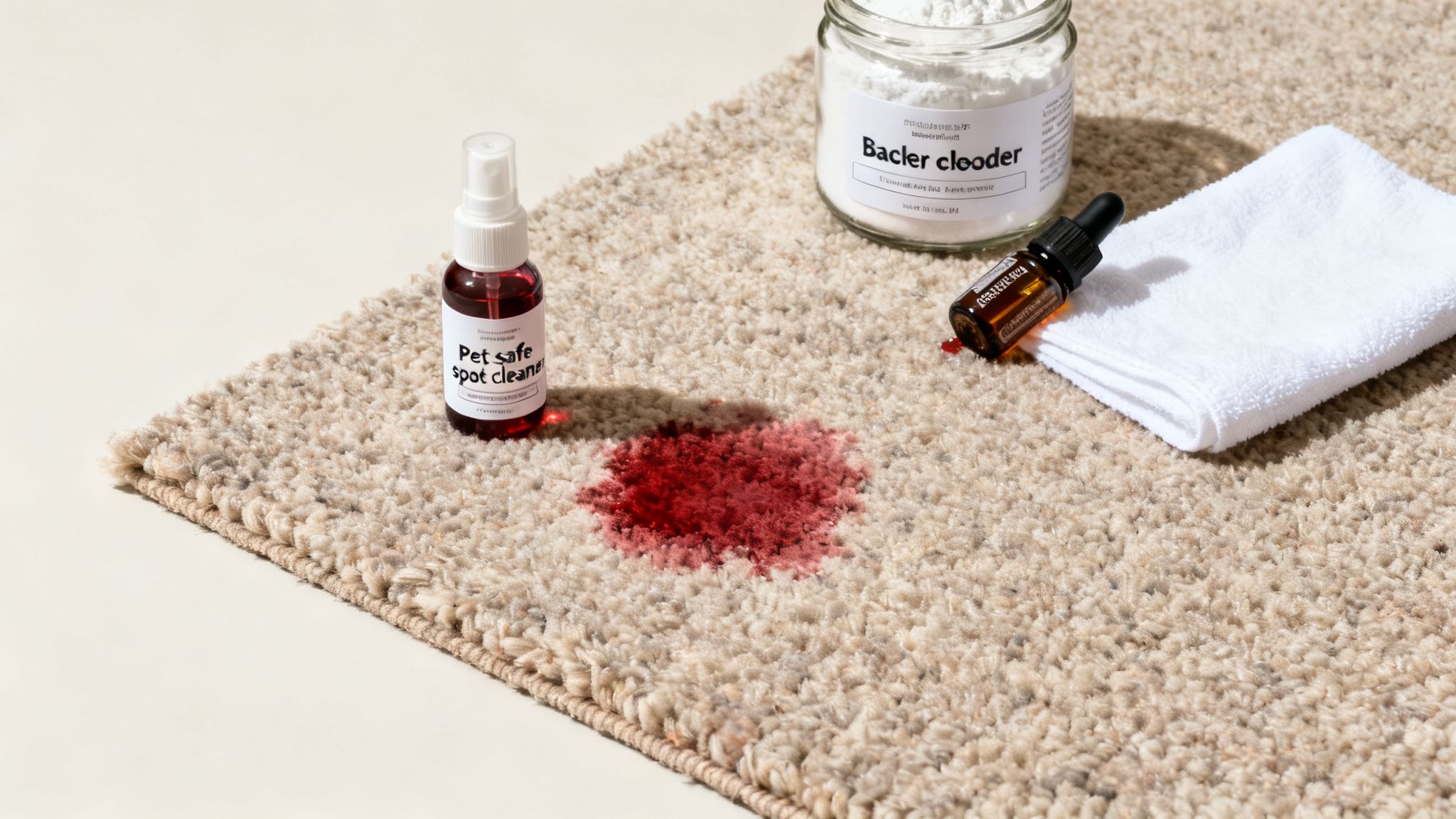
While our all-purpose recipe is a fantastic workhorse for everyday grime, life inevitably throws tougher challenges at our carpets. Pet accidents, greasy food spills, and the dreaded splash of red wine call for a more specialised battle plan.
This is where you graduate from a general cleaner and mix a solution designed for a specific enemy. Think of these recipes as your emergency response kit. Having the right ingredients ready means you can act fast—and speed is often the difference between a minor cleanup and a permanent mark.
A Gentle Yet Powerful Pet Stain and Odour Remover
When it comes to pet urine, you’re fighting two battles at once: the visible stain and the invisible, lingering odour. The smell comes from uric acid crystals, and if they aren't completely neutralised, your pet will be drawn back to the same spot. This recipe is designed to tackle both.
Here’s what you'll need:
- 1 cup of distilled white vinegar
- 1 cup of lukewarm water
- 2 teaspoons of baking soda
First, mix the vinegar and water in a spray bottle. If you’re dealing with a fresh accident, blot the area thoroughly with a thick towel first. I recommend standing on it to absorb as much moisture as you possibly can.
Lightly spray the vinegar-water solution onto the stain, making sure you cover the entire affected area without completely soaking the carpet backing. Let it sit for about five minutes. The vinegar will immediately start to neutralise the ammonia in the urine.
Next, sprinkle the baking soda directly over the damp spot. You’ll notice a gentle fizzing action—that’s the vinegar and bicarb working together to lift the uric acid right out of the carpet fibres. Cover it with a clean towel and let it dry completely, which could take a day or two. Once it's bone-dry, vacuum everything up. The stain, and most importantly the odour, should be gone.
Conquering Greasy Food Spills
Oil-based stains from things like salad dressing, butter, or takeaway meals are tricky because water alone just won't break them down. For these greasy messes, you need something that can cut through the oil before you clean it.
Pro Tip: Your first instinct with grease might be to use hot water, but this can actually cause the oil to spread. It's best to stick with warm or cool water for these types of stains.
This approach is a simple two-step process to first absorb the oil and then lift whatever is left.
- Absorb the Grease: First, sprinkle a generous amount of cornflour or baking soda directly onto the greasy stain. Pat it down gently and let it sit for at least 15-20 minutes. The powder acts like a sponge, drawing the oil out of the carpet.
- Clean the Residue: After vacuuming up the powder, mix a few drops of clear dish soap with a cup of warm water. Dab this soapy solution onto the remaining mark with a clean cloth. The key is to blot, not rub, until the stain vanishes. Then, "rinse" by dabbing with a cloth dampened with plain water to remove any soap.
The Ultimate Red Wine and Coffee Stain Fighter
Few things cause more panic than a tipped glass of red wine or a knocked-over morning coffee. The secret to defeating these dark, tannin-based stains is immediate action and the right oxidising agent. For this, we turn to a carefully applied dose of hydrogen peroxide.
This solution is potent, so a spot test in a hidden area is absolutely non-negotiable.
What you'll need:
- Hydrogen Peroxide (3% solution)
- A few drops of clear dish soap
First, blot the spill with a dry cloth immediately to soak up as much liquid as you can. Don't skip this step! Then, mix a tiny bit of dish soap with the hydrogen peroxide in a small bowl. Apply this mixture directly to the stain using a clean cloth or a cotton ball.
You should see the stain start to lighten almost instantly as the peroxide oxidises it. Let it work its magic for a few minutes, then blot gently with a water-dampened cloth to rinse the area. Repeat if needed until the stain is completely gone. This little trick is a true lifesaver for those heart-stopping moments.
Stain-Specific Solution Cheat Sheet
Sometimes you just need a quick answer without reading a full recipe. This table is your go-to reference for matching common stains with the right DIY ingredient.
| Stain Type | Primary DIY Ingredient | Application Tip |
|---|---|---|
| Coffee/Tea | Hydrogen Peroxide | Blot with a 1:1 mix of peroxide and water. Rinse with a damp cloth. |
| Red Wine | Salt & Hydrogen Peroxide | Cover with salt immediately, vacuum, then treat with peroxide if needed. |
| Grease/Oil | Cornflour or Dish Soap | Absorb with cornflour first, then blot with a diluted dish soap solution. |
| Pet Urine | Vinegar & Baking Soda | Spray with vinegar/water, sprinkle baking soda, let dry, then vacuum. |
| Ink | Rubbing Alcohol | Dab gently with a cloth soaked in alcohol. Do not rub, as it can spread. |
| Mud | Let It Dry | Let mud dry completely, then break it up and vacuum thoroughly. |
Keep this cheat sheet handy, and you'll be prepared to tackle almost any spill the moment it happens.
Finally, for a quick refresh between deep cleans, a simple dry deodoriser works wonders. Just mix one cup of baking soda with 10-15 drops of a clear essential oil like lavender or eucalyptus. Sprinkle it over your carpet, let it sit for about an hour, and vacuum it all up for an instant lift.
Common DIY Carpet Cleaning Mistakes to Avoid
Whipping up the perfect homemade carpet cleaner is a great start, but even the best recipe can end in disaster if your technique is off. The whole point is to clean your carpet, not accidentally ruin it. By steering clear of a few common pitfalls, you can make sure your DIY efforts leave your floors looking genuinely refreshed and protect your investment for years to come.
It’s a familiar story: you've mixed your solution, you’re pumped to tackle a stain, and in your enthusiasm, you go a little too hard. But getting a great result is often about what you don’t do. From using way too much soap to scrubbing when you should be blotting, these simple mistakes are easy to make—but thankfully, just as easy to avoid.
The Dangers of Over-Wetting Your Carpet
This is, without a doubt, the number one mistake in DIY carpet cleaning. It’s tempting to think that more water equals a deeper clean, but it’s actually the opposite. When you completely saturate a patch of carpet, the liquid soaks right through the fibres and into the backing and underlay.
All that excessive moisture creates the perfect breeding ground for mould and mildew. This can trigger allergies and leave behind a stubborn musty smell that’s nearly impossible to get rid of. It can also cause the carpet backing to separate or break down over time, permanently wrecking its structure.
While homemade cleaners are handy, Australian data highlights the risks. Some studies show that up to 70% of DIY efforts risk carpet damage or incomplete cleaning. Over-wetting from rented machines is a huge issue, affecting a staggering 55% of users. This can encourage mould growth, especially in Melbourne's typical 50-60% average humidity, and potentially slash a carpet's lifespan by 15-25%. You can learn more about the risks of improper DIY carpet cleaning techniques at A&A Spectrum.
Actionable Tip: Always apply your solution with a light mist from a spray bottle. You want to dampen the fibres, not soak the backing. When you're done, get the air flowing by opening windows or using a fan to speed up drying time.
Leaving a Soapy, Sticky Residue Behind
When it comes to adding dish soap to your cleaning mix, less is definitely more. A classic mistake is to add an extra "glug" of soap, thinking it'll give you more cleaning power. Unfortunately, this move tends to backfire spectacularly.
Too much soap is incredibly difficult to rinse out. Whatever is left behind creates a sticky, soapy film on your carpet fibres that acts like a magnet for dirt, dust, and grime. Before you know it, that "clean" spot becomes dirty all over again, sometimes looking even worse than it did to begin with.
- Stick to the Ratio: Follow the recipe exactly. Usually, just one or two teaspoons of soap per litre of water is all you need.
- Don't Skip the Rinse: Always finish by lightly misting the area with plain water and blotting it thoroughly with a clean, dry cloth to lift out any leftover solution.
Using the Wrong Ingredients on Natural Fibres
Not all carpets are made the same. Synthetics like nylon and polyester are pretty tough and can usually handle acidic cleaners like vinegar without a problem. Natural fibres, on the other hand, are a completely different ball game.
Materials like wool, silk, and sisal are far more delicate and can be permanently damaged if you use the wrong ingredients.
- Vinegar on Wool: The high acidity in vinegar can strip the natural lanolin oils from wool fibres, leaving them brittle and dull. It can also cause the colour to bleed or fade for good.
- Harsh Chemicals on Silk: Never let strong alkalis or acids near a silk rug. They can literally dissolve the delicate fibres.
Before you even think about applying a homemade cleaner, you have to know what your carpet is made of. If you’re not sure, do a spot test in a hidden area—like inside a wardrobe—to see how it reacts. When in doubt, it’s always safer to stick with a pH-neutral cleaner or just use water and gentle blotting, especially for natural-fibre carpets.
When to Call a Professional Carpet Cleaner
While a good homemade carpet cleaner is fantastic for everyday upkeep, it does have its limits. Knowing when to put down the spray bottle and call in the experts is just as crucial as knowing how to tackle a fresh spill.
Think of it this way: professional cleaning isn't a sign that your DIY efforts failed. It's actually a vital part of your carpet's long-term health and maintenance.
Sometimes, no matter what you try, certain problems just won't go away. These are clear signals that the issue is buried deeper than your homemade solution can ever hope to reach.
Signs You Need Professional Help
If you're nodding along to any of the points below, it's probably time to book in a professional steam clean.
- Persistent Odours: You’ve sprinkled baking soda and aired the room out, but a stubborn, musty smell just won't quit. This often means the problem is in the carpet underlay, a spot that only powerful, deep extraction can properly clean.
- Reappearing Stains: This one is incredibly frustrating. You clean a spot, it vanishes, but a few days later, it creeps back into view. This is a classic case of "wicking," where the stain is so deep in the carpet pile that it travels back up the fibres as the area dries.
- Dull, Dingy High-Traffic Areas: The main walkways through your home—from the couch to the kitchen, for example—look flat, tired, and grey, no matter how much you vacuum or spot-clean. This is caused by deeply embedded, abrasive dirt that is literally grinding down and wearing away the carpet fibres over time.
DIY cleaning is like brushing your teeth daily, while professional cleaning is your six-month visit to the dental hygienist. Both are absolutely essential for overall health and upkeep.
A professional service, like the ones we offer at Right Price Carpet Cleaning, uses powerful truck-mounted hot water extraction systems. This gear is in a completely different league. It heats water to much higher temperatures and uses incredible suction to pull out the deep-seated grime, allergens, and moisture that home methods inevitably leave behind.
This process doesn't just make your carpet look brand new; it also dramatically improves your home’s indoor air quality by removing all that trapped dust and bacteria.
Your Top Questions, Answered
Even with the best recipes, it's natural for questions to pop up. When you're dealing with your own carpets, you want to get it right. Here are a few of the most common queries I hear, with straight-up answers to help you get fantastic, safe, and effective results every single time.
Can I Use Any Essential Oil in My Cleaning Solution?
While it’s tempting to use your favourite essential oils like lavender or tea tree for their fresh scent and antibacterial punch, you need to be a bit careful with darker oils.
Some, like cinnamon or clove, can actually stain light-coloured carpets. It’s always best to stick with clear oils. And no matter what, always do a quick spot test on a hidden area—like inside a wardrobe or under the sofa—before you commit to cleaning a larger, more visible patch.
How Often Should I Use a Homemade Solution on My Carpets?
These DIY solutions are brilliant for tackling spills the moment they happen and for a light refresh every month or two. They keep things looking and smelling great on the surface.
For the long-term health of your carpet, though, you can't beat a professional deep clean at least once a year. A pro service removes the deep-down dirt, grime, and allergens that homemade methods simply can't reach, which genuinely extends the life of your carpet.
A homemade solution is for maintenance; a professional clean is for restoration. Think of it as the difference between a daily tidy-up and a thorough spring clean.
Is a Vinegar-Based Solution Safe for All Carpet Types?
This is a big one. Vinegar is acidic, and that's what makes it so effective on most synthetic carpets like nylon, polyester, and olefin. It cuts right through the grime.
However, you should never use it on natural fibres like wool, silk, or jute. The acid will strip the natural oils from these delicate fibres, causing permanent damage and discolouration. Always double-check what your carpet is made of and test your solution first. If you’re ever in doubt, it’s far safer to stick with plain water or give a professional a call.
When DIY isn't enough to bring your carpets back to life, Right Price Carpet Cleaning delivers a professional steam clean that removes the deep-seated dirt and allergens your vacuum leaves behind. Get your instant quote and book online today at https://rightpricecarpetcleaning.com.au.
Recent Comments