


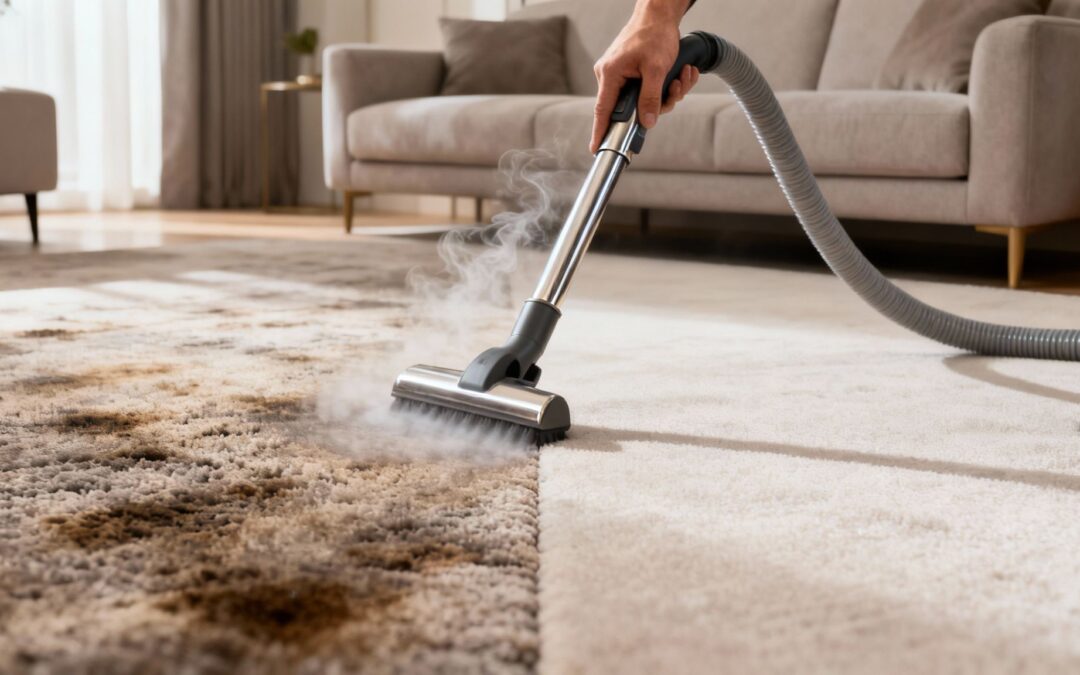
For the best, most thorough clean you can give your carpets, nothing beats professional hot water extraction. You’ll often hear it called steam cleaning, and it’s truly the industry’s gold standard for a reason. This method uses high-pressure hot water to get right down to the base of the carpet fibres, flushing out all the embedded dirt, allergens, and grime that a simple vacuum could never touch.
It’s hands-down the most thorough option for a genuinely hygienic result.
What Is the Best Method for Deep Cleaning Carpets?
When your carpets are looking a bit tired and a quick vacuum just isn't cutting it, you're faced with a few cleaning options. They all promise a fresh look, but not all cleaning methods are created equal.
To understand why hot water extraction is so much better, think of it like washing your clothes. You could just wipe them with a damp cloth (which is what some surface cleaning methods are like), or you could put them through a proper hot wash cycle that lifts out all the grime and rinses it all away. Steam cleaning works on that same, more effective principle.
It doesn’t just give the surface a scrub; it performs a deep, restorative cleanse that revives the entire carpet pile from the base up. This is exactly why most carpet manufacturers recommend it to maintain warranties and actually extend the life of your flooring.
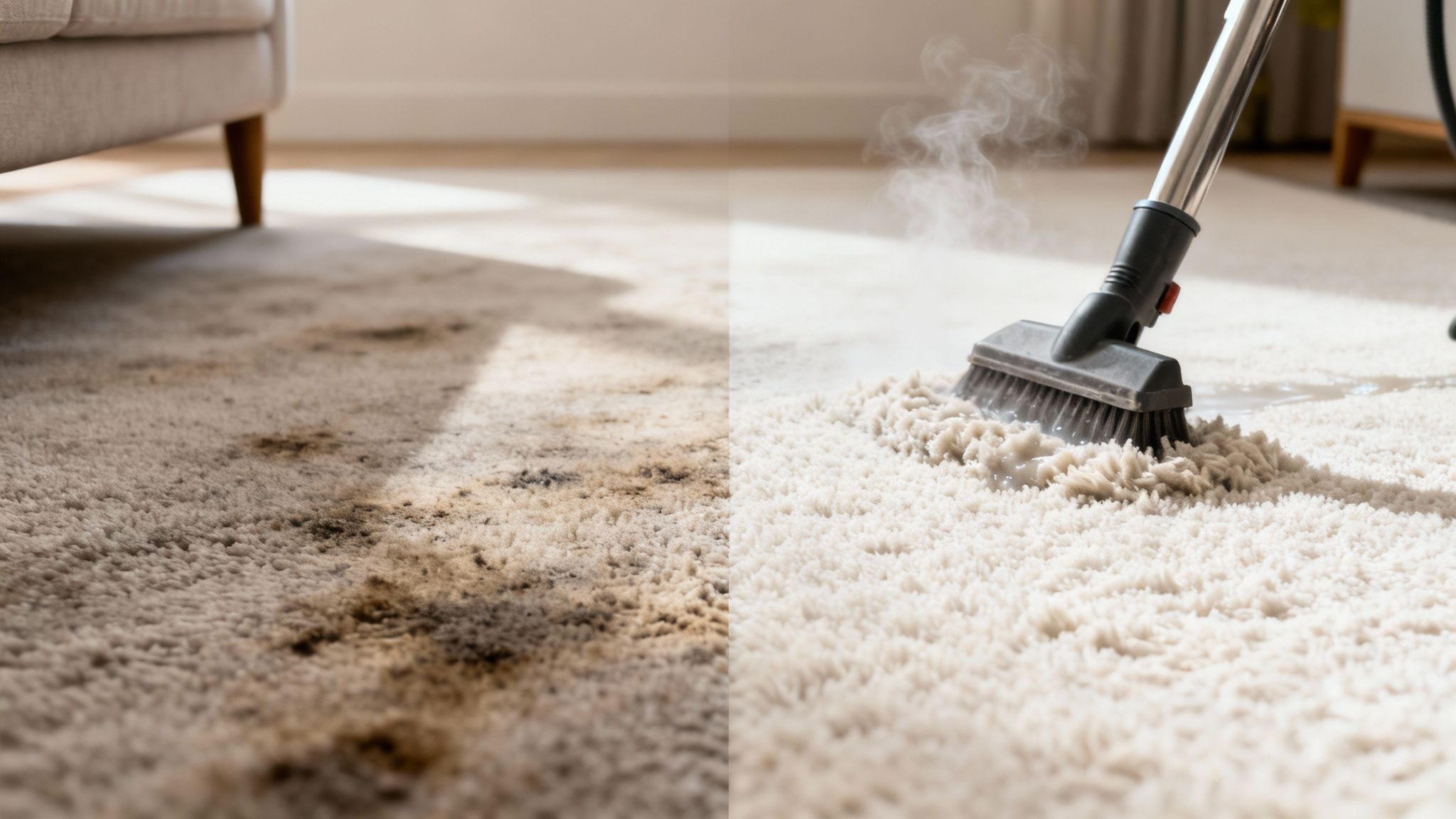
Why Other Methods Fall Short
To really appreciate why the best steam cleaning carpets give you such a great result, it helps to see what the alternatives are doing—or not doing. Methods like carpet shampooing or dry chemical cleaning can sometimes solve one problem while creating a whole new one.
- Carpet Shampooing: This is an older method that uses a thick, foamy shampoo that’s scrubbed into the carpet. The big problem here is that a sticky soap residue almost always gets left behind, which acts like a magnet for new dirt. Your carpets can end up looking grubby again surprisingly fast.
- Dry Chemical Cleaning: This one is tempting because it offers super-fast drying times. It works by using chemical powders with very little moisture. It’s fine for a quick touch-up, but it just doesn’t have the power to pull out heavy soiling and allergens from deep within the fibres.
The core difference really comes down to one word: extraction. Hot water extraction is the only common method that actively flushes out both the cleaning solution and all the loosened dirt, leaving absolutely nothing behind but clean, fresh fibres.
A Clear Comparison of Cleaning Methods
When you put the methods side-by-side, the choice becomes pretty obvious, especially when you focus on what really matters for a healthy home: deep cleaning power, allergen removal, and leftover residue.
For most homes in Melbourne, particularly those with kids, pets, or anyone who suffers from allergies, hot water extraction is the only method that properly ticks all the boxes. It’s not just about looking clean; it’s about being truly clean.
Comparing Carpet Cleaning Methods
A quick look at common carpet cleaning techniques to highlight why hot water extraction stands out.
| Feature | Steam Cleaning (Hot Water Extraction) | Carpet Shampooing | Dry Chemical Cleaning |
|---|---|---|---|
| Deep Dirt Removal | Excellent: Penetrates deep into fibres to remove embedded grime. | Fair: Cleans the surface well but can leave dirt trapped in residue. | Poor: Primarily a surface-level clean, ineffective for deep dirt. |
| Allergen Removal | Excellent: High heat and powerful extraction remove dust mites, pet dander, and pollen. | Fair: Removes some allergens but residue can trap others. | Poor: Does not effectively remove deep-seated allergens. |
| Chemical Residue | None: Thoroughly rinses and extracts all cleaning agents. | High: Often leaves behind a sticky, soap-based residue. | Moderate: Leaves behind chemical powders that need thorough vacuuming. |
| Drying Time | Good (4-8 hours): Professional equipment extracts most water. | Poor (24+ hours): High moisture usage with poor extraction leads to long dry times. | Excellent (Under 1 hour): Very low moisture method is ready almost immediately. |
As you can see, while other methods have their place for specific, quick-fix situations, they just can't compete with the deep, hygienic clean that hot water extraction provides for the long-term health and appearance of your carpets.
So, How Does Carpet Steam Cleaning Actually Work?
The term "steam cleaning" paints a picture of billowing, hot steam, but that’s not quite the full story. While heat is a huge part of the process, what professionals actually perform is called Hot Water Extraction (HWE). It’s a powerful, deep-cleaning method that gets results you simply can’t achieve on your own.
Think of it like a professional espresso machine. It doesn’t just pour hot water over coffee grounds; it forces pressurised hot water through them to pull out every last drop of flavour. Hot Water Extraction uses a similar, highly effective principle to flush dirt and grime out of your carpets.
This method is the gold standard for a reason. It’s not just a surface clean—it’s a process that revitalises your carpet fibres from the base up, getting rid of the contaminants that even the best household vacuum leaves behind.
The Science: Injection and Extraction
The magic of HWE lies in a two-part cycle that happens almost at the same time: injection and extraction. It all starts with a powerful, truck-mounted machine that heats water to the perfect temperature—hot enough to obliterate grime but completely safe for your carpet.
This superheated water is mixed with a specialised, eco-friendly cleaning solution. We then use a high-pressure cleaning wand to inject this mixture deep into the carpet pile. This powerful spray accomplishes two critical things:
- It blasts away stubborn dirt: The force of the water jets physically loosens all the dirt, dust, and grit that has been trodden down over time.
- It dissolves oils and allergens: The combination of heat and cleaning agents breaks down greasy residues, pet dander, dust mites, and other microscopic nasties.
This first step is like a deep-soaking power wash for your carpet, reaching right down to the backing where dirt loves to hide.
The Power of the Vacuum
Immediately after the hot water is injected, the second part of the process kicks in. This is where the real deep cleaning happens and what truly separates a professional job from a DIY attempt. The same cleaning wand is fitted with an incredibly powerful vacuum system.
This high-powered suction immediately pulls the hot water—along with all the dissolved dirt, oils, and allergens—straight back out of the carpet. The extraction force is massive, far beyond what any household vacuum or rental machine could ever hope to generate.
It’s a bit like washing your hair. The injection phase is like shampooing to loosen up all the dirt and oil. The extraction phase is the powerful rinse that makes sure every last bit of soap and grime is washed away, leaving nothing behind but clean, fresh hair.
This powerful extraction is precisely why professional steam cleaning delivers such amazing results. It doesn’t just push dirt around or leave a soapy film behind; it physically removes the contaminants from your home for good.
What’s Left Behind? (Hint: Not Much)
Once we’re done, the results are obvious. The powerful vacuum removes up to 95% of the moisture, along with all the gunk it pulled out. This means your carpets are left only slightly damp to the touch, not sopping wet.
This rapid moisture removal is the key to a fast drying time, which is usually only a few hours. More importantly, it ensures no dirty water or chemical residue is left lurking in the fibres.
You’re left with a carpet that isn’t just visibly cleaner, but hygienically clean. The deep-down soil is gone, allergens have been removed, and the pile is left fresh, soft, and sanitised—without any of that sticky residue that just attracts more dirt. This total removal of contaminants is what makes Hot Water Extraction the undisputed champion of deep carpet cleaning.
A Look Inside the Professional Steam Cleaning Process
It’s one thing to hear that hot water extraction is the best way to steam clean a carpet, but seeing the meticulous, multi-stage process in action gives you real confidence. This isn't just about a technician running a machine over your floors; it’s a systematic operation designed to restore, sanitise, and protect your investment. A certified professional follows a precise workflow that guarantees a deeper, longer-lasting clean every single time.
This detailed approach is what truly separates a professional job from a weekend DIY rental. It’s a craft that combines a genuine understanding of different carpet fibres, the right chemistry, and powerful machinery to get the best possible result for your home.
Step 1: Pre-Inspection and Preparation
The process always kicks off with a thorough walkthrough and assessment. A trained technician will inspect your carpets to identify the fibre type—whether it’s natural wool or a synthetic like nylon or polyester. This is a critical first step because different fibres react differently to heat and cleaning solutions.
During this inspection, they’ll also pinpoint any specific problem areas, like high-traffic lanes, pet stains, or food spills that need special attention. This lets them choose the perfect pre-treatment solution for the job. Finally, any furniture is carefully moved to ensure they can access the entire carpeted area.
Step 2: Dry Soil Removal
Before a single drop of water is introduced, the most crucial prep step is a deep, commercial-grade vacuuming. You might wonder why this is so important, but dry soil and dust can turn into a muddy residue when wet, making it much harder to extract properly.
A professional vacuum is far more powerful than your standard household model. It’s capable of pulling up fine particles, hair, and grit that are deeply embedded in the carpet pile. Removing up to 80% of dry soil at this stage makes the entire hot water extraction process significantly more effective.
Step 3: Targeted Pre-Treatment
With the dry dirt gone, the technician applies a specialised pre-treatment spray. This isn’t a one-size-fits-all product; it’s a solution carefully selected to break down the specific types of soil in your carpet. The spray is lightly applied, especially in those problem spots, and then given time to dwell.
This waiting period allows the active agents to start dissolving oils, loosening stains, and breaking the bonds between the grime and your carpet fibres. Think of it like soaking a greasy pan before you wash it—this step does the heavy lifting, preparing the dirt for easy removal.
The core of the process—injecting hot water and immediately extracting it—is a simple yet powerful action.
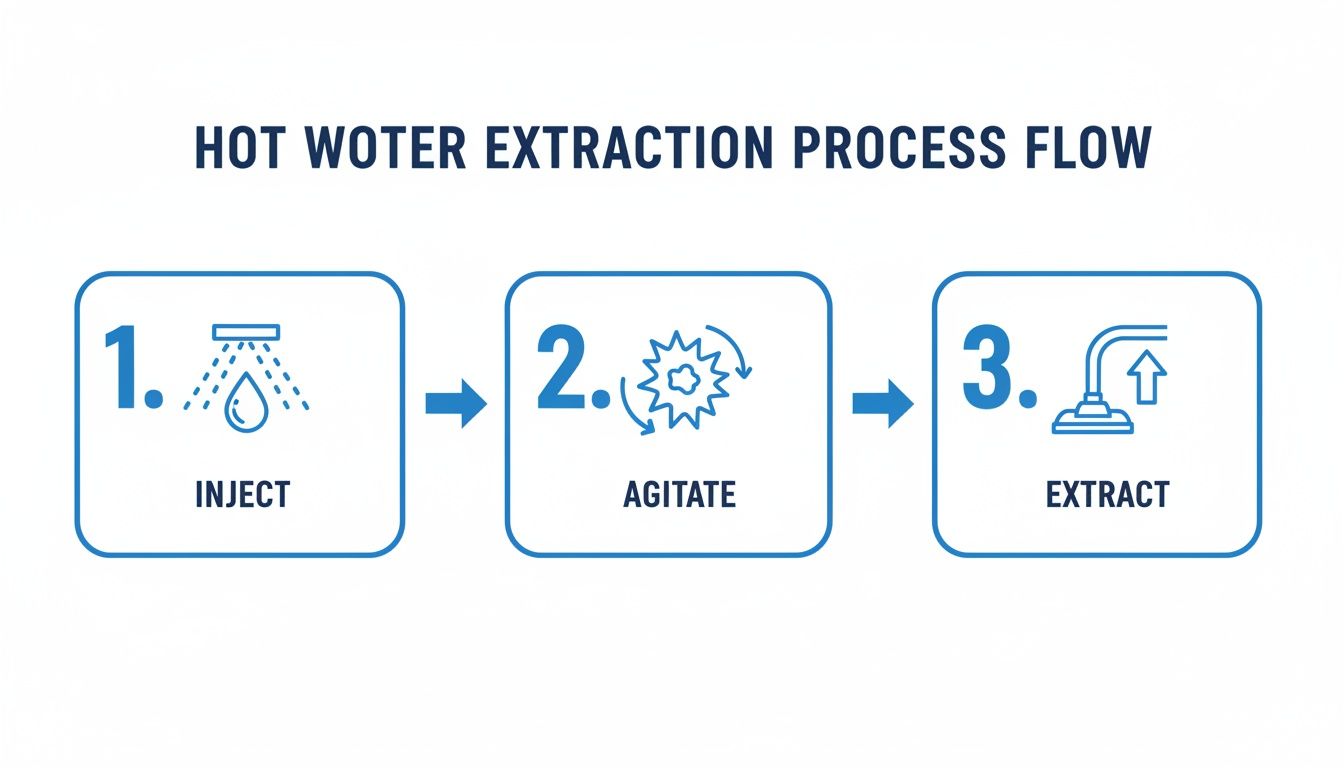
This diagram shows how the high-pressure injection dislodges dirt, which is then lifted away by the powerful vacuum in one seamless motion.
Step 4: The Hot Water Extraction
Now comes the main event. Using a powerful truck-mounted machine, the technician begins the hot water extraction. The machine pumps hot water mixed with a rinsing agent through the cleaning wand, flushing the carpet fibres and rinsing away the pre-treatment solution along with all that loosened dirt and grime.
The immense vacuum power of the truck-mount unit simultaneously sucks up the dirty water, leaving the carpet only slightly damp. The technician works methodically across the room in overlapping passes to make sure no spot is missed. This high-powered extraction is the key to a fast drying time and preventing issues like mould or mildew. It's also a significant investment for any professional outfit.
The Australian Taxation Office’s small-business benchmarks show that total expenses for carpet cleaning firms often range from 40% to 78% of turnover. The significant costs of powerful extraction machines, vehicles, and quality products underscore the commitment required to deliver a truly professional on-site service. Learn more about carpet cleaning business insights from the ATO.
Step 5: Post-Cleaning Final Touches
Even after the extraction is complete, the job isn’t quite done. The technician will do a final inspection to ensure all spots have been treated effectively. If any stubborn stains have held on, they might get some additional specialised spot treatment.
Finally, the technician will groom the carpet pile with a special rake. This final step helps the fibres stand up straight, which not only gives the carpet a uniform, brand-new look but also helps speed up the drying process. Once everything is perfect, they will move your furniture back into place, often using protective pads under the legs to prevent any marks.
DIY Carpet Cleaning vs. Hiring a Professional Service
Thinking about popping down to the local supermarket to rent a carpet cleaning machine? It's a tempting thought. Quick, cheap, and you can get it done this weekend. But while the low upfront cost of a DIY clean seems like a bargain, it's worth understanding the hidden trade-offs in power, results, and potential risks before you give up your Saturday.
The choice really boils down to value versus price. A rental machine offers a low initial cost, sure, but a professional service delivers a much deeper, safer, and longer-lasting clean. The key to making the right choice for your home is understanding what's actually happening inside the machines.
The Power Gap: Professional vs. Rental Machines
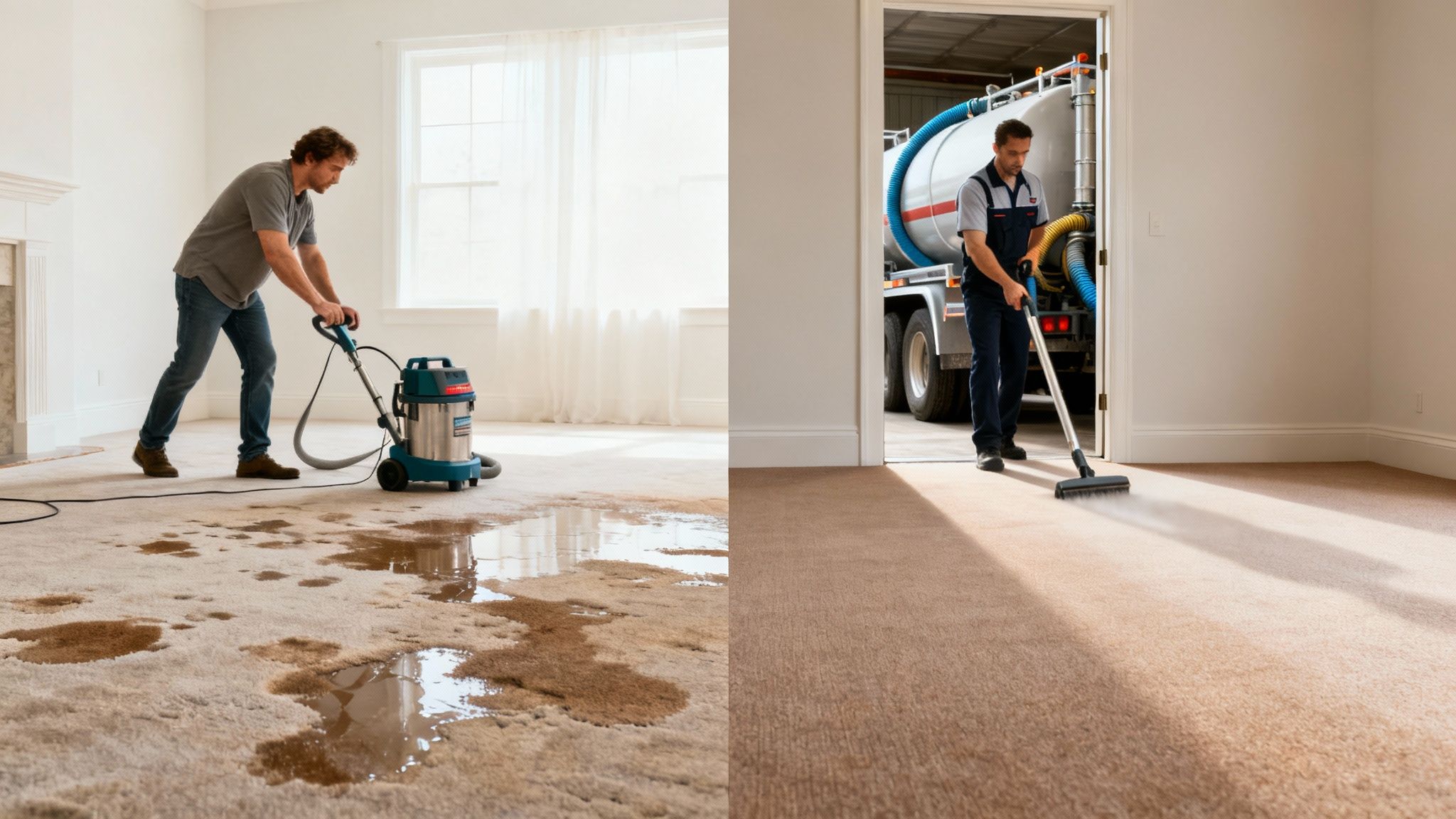
The biggest difference between a professional clean and a DIY attempt is the machinery. It's like comparing a high-pressure fire hose to your garden hose—they both use water, but the impact is worlds apart. A professional service uses a truck-mounted hot water extraction unit, which is basically a powerful, industrial-grade engine dedicated to one job: cleaning your carpets.
This professional setup gets far better results in three critical areas:
- Heat: Our truck-mounted units heat water to over 90°C, a temperature rental machines just can't touch. This extreme heat is crucial for breaking down greasy, oily soils and properly sanitising your carpet fibres by killing off bacteria and dust mites.
- Pressure: The high-pressure spray from a professional wand forces the hot water and cleaning solution deep into the carpet pile. This dislodges the embedded, ground-in dirt that rental units just skim over.
- Suction: This is probably the most important difference. The immense vacuum power of a truck-mount sucks out nearly all the water it puts in, along with all the dissolved grime. This means a much faster drying time, typically 4-8 hours, compared to the soggy 24 hours (or more) you often get with a weak rental machine.
A portable rental unit, while convenient, just plugs into a standard household power point. It simply doesn't have the grunt to generate enough heat, pressure, or suction, often leading to a surface-level clean that leaves behind both dirt and a whole lot of soapy water.
The Hidden Risks and Costs of DIY
Beyond the less-than-stellar results, DIY carpet cleaning comes with a few risks that can end up costing you more in the long run. Without the right training, it’s surprisingly easy to make mistakes that damage your carpets or even create health issues in your home.
One of the most common DIY blunders is over-saturating the carpet. When a rental machine’s weak vacuum fails to pull out enough water, the carpet backing and underlay can stay soaked for days. This creates the perfect breeding ground for mould and mildew, leading to that unmistakable musty smell and potential respiratory problems.
Another risk is using the wrong cleaning solutions. Store-bought chemicals can be harsh, leaving a sticky residue that actually attracts more dirt. Worse, they can cause permanent discolouration or damage to delicate fibres like wool. In contrast, a professional technician knows how to identify your carpet type and choose the correct, pH-balanced solution for a safe and effective clean.
When you add up the rental cost, the pricey chemicals, and your own valuable time and effort, the "savings" from DIY cleaning start to look a lot smaller.
In Australia, the carpet cleaning industry is massive. The market is estimated at AUD 602.3 million in 2024, with nearly 4,000 businesses competing for your attention. This intense competition means consumers have access to high-value professional services that use superior truck-mounted systems, making the professional choice an even smarter investment over a basic rental. You can find out more about the Australian carpet cleaning market and its growth.
How to Choose the Right Carpet Cleaning Company in Melbourne
Picking the right team to clean your carpets is the final, most important step to getting that deep, satisfying clean you're after. Melbourne is a big city with plenty of options, but let's be honest—not all cleaners deliver the same standard of care. Knowing what to look for, and what to run away from, is the key to getting fantastic results without any headaches.
Finding a reputable company isn’t just about getting a good price. It's about protecting your carpets, your health, and your home. A true professional service should give you peace of mind from the second they walk through your door, and that starts with finding a company that’s transparent, well-equipped, and has a solid reputation right here in our local community.
Your Essential Checklist for Vetting Providers
Think of hiring a carpet cleaner like you would any skilled tradie. A great place to start is with the gear they use. Always put companies that operate powerful truck-mounted hot water extraction machines at the top of your list. These units are the real deal, generating far more heat and suction than the portable electric models some companies use. What does that mean for you? A much deeper clean and carpets that dry in hours, not days.
Next, look for clear and honest pricing. A trustworthy company like Right Price Carpet Cleaning will give you a transparent, upfront quote with no hidden surprises. Be wary of those "too good to be true" per-room prices, as they often lead to sneaky extra charges for things like "deep cleaning" or "stain removal" once the technician is already in your home.
Your checklist should include these non-negotiables:
- Full Insurance and Vetting: Anyone entering your home must be fully insured and police-checked. It’s a matter of safety and security.
- Verifiable Customer Reviews: Don't just rely on testimonials from their own website. Look for consistent, positive feedback on independent sites like Google.
- Satisfaction Guarantee: A company that’s confident in its work will always stand behind it with a guarantee. They should be willing to come back and fix any issues if you're not completely happy.
While you're doing your research, it can also be helpful to get a general feel for industry standards by looking into professional carpet cleaning services.
Red Flags to Watch Out For
Knowing what to look for is half the battle; knowing the warning signs of a dodgy operator is the other half. The biggest red flag by far is bait-and-switch pricing. This is a classic tactic where a company lures you in with an impossibly low quote over the phone, only for the technician to arrive and pressure you into expensive add-ons.
You should also be cautious of vague promises. If a company can’t clearly explain their process or what kind of equipment they use, it’s usually because they’re working with underpowered, ineffective gear. A true professional is proud of their machinery and is more than happy to walk you through their multi-step cleaning method.
A professional technician brings more than just a machine; they bring expertise. They can accurately identify carpet fibres, diagnose stains, and select the correct, eco-friendly solutions to protect your investment while delivering a hygienic clean.
The cleaning industry here in Victoria is mature and experienced. In fact, Victorian professionals make up 20.0% of all carpet cleaner jobs nationwide, with a median age of 49. That points to a workforce with decades of real-world, hands-on experience in stain removal and steam extraction. You can discover more insights about the skilled professionals in the Australian cleaning industry on jobsandskills.gov.au. By choosing a reputable Melbourne company, you're tapping into a deep well of local expertise, ensuring the job gets done right the first time.
Got Questions? We've Got Answers
Even after you've decided steam cleaning is the way to go, it's totally normal to have a few practical questions. You'll want to know what to expect on the day, how long until you can get back to normal, and what kind of results you can realistically hope for.
We get these questions all the time from our customers across Melbourne. So, we’ve put together some clear, straightforward answers to help you feel confident and prepared for your service.
How Long Will My Carpets Take to Dry?
This is easily the most common question we hear, and the answer really shows the difference between a professional job and a DIY attempt. Drying time comes down to one thing: the power of the extraction equipment.
When a professional service like ours uses a high-powered, truck-mounted system, we're not just washing the carpet—we're pulling almost all of the water back out instantly. The sheer vacuum force leaves the carpet fibres only slightly damp to the touch, never saturated.
Under normal conditions, you can expect your carpets to be completely dry within 4 to 8 hours. A few things can nudge this timeframe one way or the other:
- Melbourne's Humidity: On a classic damp Melbourne day, drying might take a little longer.
- Airflow is Your Friend: Cracking a few windows or turning on a fan or the air-con can make a huge difference, speeding things up significantly.
- Carpet Pile: A thick, plush carpet will naturally hold a bit more moisture and take longer to dry than a low-pile, commercial-style carpet.
This is a world away from the soggy mess often left by underpowered rental machines. Those can leave carpets soaked, risking drying times of 24 hours or more. That isn't just an inconvenience; that prolonged dampness is the perfect breeding ground for mould and mildew. It’s a risk you should never have to take.
Can You Get Every Single Stain Out?
Hot water extraction is an absolute powerhouse on a huge range of common household stains—dirt, grease, food spills, and general grime don't stand a chance. It's the best method out there for stain removal, hands down.
However, any honest carpet cleaner will tell you that a 100% removal guarantee for every stain is impossible. Some substances can permanently dye or bleach carpet fibres, making them impossible to remove completely.
The usual culprits include:
- Permanent ink and markers
- Some red wines or cordials
- Old pet urine stains that were never treated properly
- Hair dye or bleach spills
This is where hiring a professional really pays off. A trained technician has the expertise and a whole arsenal of specialised spot treatments that are far more powerful than anything you can buy at the supermarket. They know how to identify the stain and match it with the right solution.
A true professional will always inspect your carpets first and give you an honest assessment of any stubborn stains. They’ll tell you what’s likely to come out and what might be permanent, so you have realistic expectations before any work begins.
At the end of the day, the single biggest factor is time. The sooner a stain is treated by a pro, the better the chance of complete removal. Letting a stain sit for weeks allows it to set deep into the fibres, making the job much tougher.
How Often Should I Get My Carpets Professionally Cleaned?
There’s no one-size-fits-all answer here; it really depends on your lifestyle. For an average home with regular foot traffic and no pets or smokers, most major carpet manufacturers recommend a professional deep clean every 12 to 18 months.
Following this schedule doesn't just keep your carpets looking fresh. It's often a requirement to keep your manufacturer's warranty valid.
But for many Melbourne homes, a bit more often is a good idea. You should seriously consider cleaning every 6 to 12 months if your home has:
- Pets: To manage dander, odours, and those inevitable little accidents.
- Young Children: To keep the floor a clean and hygienic place for them to play.
- Allergy Sufferers: To regularly remove dust mites, pollen, and other nasties that trigger symptoms and affect your indoor air quality.
Of course, busy commercial spaces like offices or retail shops are a different story. They might need a clean every 3 to 6 months to maintain a professional look and a healthy environment for staff and customers.
Is the Process Safe for My Kids and Pets?
Absolutely. The safety of your family—two-legged and four-legged members included—is the number one priority for any reputable cleaning service. We only use high-quality, eco-friendly, and non-toxic cleaning solutions that are completely safe for your home.
The real hero of our cleaning process is super-heated water, which provides a powerful, natural sanitising action without needing harsh or dangerous chemicals.
One of the most critical steps in the hot water extraction process is the final, thorough rinse. This ensures every last trace of the cleaning solution is flushed out and extracted from the carpet fibres.
What you're left with is a carpet that has zero sticky or harmful residues. This is a massive advantage over many store-bought shampoos, which can leave behind a chemical film that actually attracts more dirt and can irritate sensitive skin. Once our job is done and the carpet is dry, it’s perfectly safe for kids and pets to roll around and play on. It’s not just clean; it’s healthy-home clean.
Ready to experience the deepest, safest clean for your carpets? The team at Right Price Carpet Cleaning combines powerful truck-mounted equipment with years of local Melbourne expertise to deliver exceptional results. Get your instant, upfront quote and book online in minutes at https://rightpricecarpetcleaning.com.au.
Recent Comments