



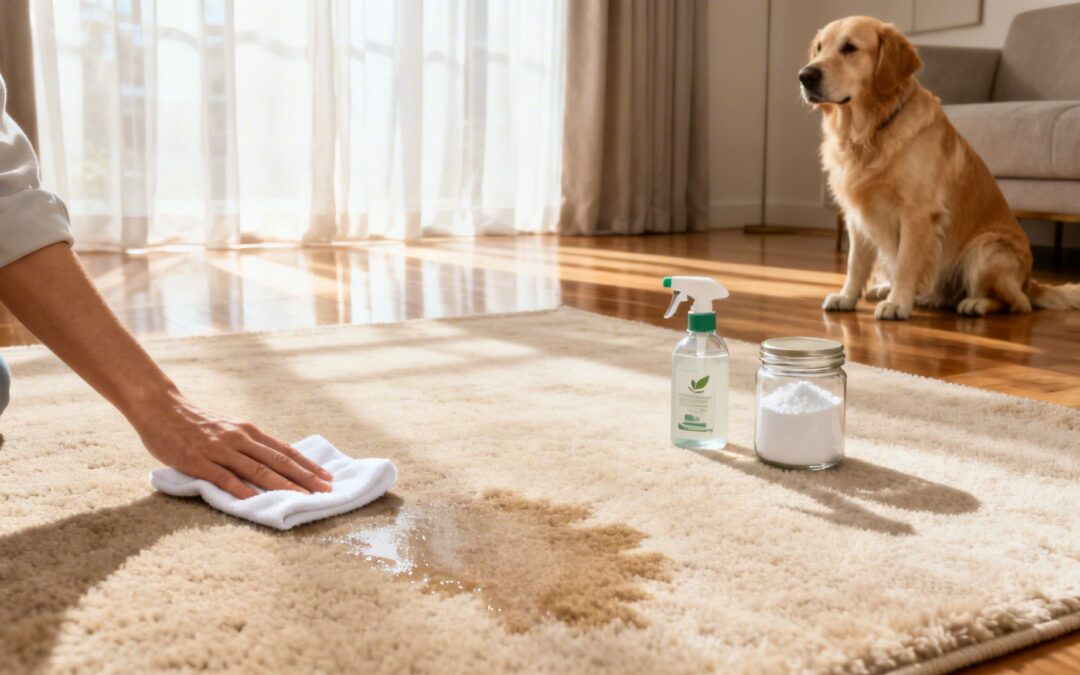
When you find a dog pee accident on your rug, the first and most critical step is to blot the area immediately with a thick layer of paper towels. Press down firmly to soak up as much as you can. Whatever you do, never scrub. Scrubbing only grinds the urine deeper into the delicate rug fibres, making your job a hundred times harder.
Your Immediate Action Plan for Dog Pee on a Rug
We’ve all been there. That sinking feeling when you spot a wet patch on your favourite rug. But what you do in the next 15 minutes is more important than anything else.
A fast, correct response can be the difference between a minor cleanup and a permanent, smelly stain that becomes a feature of your living room. The goal here is to get that urine out before it has a chance to soak through the rug fibres and into the backing, where it becomes a real nightmare to remove.
Forget reaching for harsh chemicals or a stiff-bristled brush. Your best friends in this moment are simple household items and a calm, methodical approach. Panicking and scrubbing frantically will only make things worse by embedding the stain and damaging the rug’s texture.
To make it simple, here's a quick checklist for what to do—and what not to do—in those first crucial minutes.
First 15 Minutes Checklist for a Urine Accident
| Action | Why It Matters | What to Avoid |
|---|---|---|
| Blot with paper towels | Physically removes the bulk of the urine before it can soak in. | Scrubbing or rubbing the area, which pushes urine deeper. |
| Apply firm, even pressure | Maximises absorption from the rug fibres and padding underneath. | Using heat or a steam cleaner at this stage, as it can set the stain. |
| Use white cloths or towels | Prevents any dye transfer from coloured cloths onto your rug. | Reaching for harsh chemicals like bleach or ammonia-based cleaners. |
| Work from the outside-in | Stops the wet spot from spreading and becoming a bigger problem. | Oversaturating the spot with water or cleaning solutions. |
Following these simple dos and don'ts will set you up for success and make the next steps far more effective.
Act Fast: Blot, Blot, and Blot Again
The absolute number one rule is to absorb, not rub.
Grab a thick stack of paper towels, a clean white cloth, or even a couple of nappies if you’re in a pinch (they’re designed for absorption, after all). Lay them over the wet spot and apply firm, even pressure. You can use your hands or even stand on the towels to really draw the liquid out.
You’ll be surprised just how much you can pull out of the rug. Keep swapping the wet towels for dry ones until they come away almost completely dry. This single action gets rid of the majority of the uric acid before it can start doing chemical damage.
Key Takeaway: The immediate goal is removal, not just cleaning. By blotting aggressively, you are physically pulling the urine out of the rug. This is far more effective than trying to "clean" a saturated area right away.

As this simple guide shows, the process always moves from physical removal (blotting) to chemical neutralisation before you even think about drying.
Create a Simple Neutralising Solution
Once you’ve blotted as much as possible, it’s time to deal with the ammonia and uric acid left behind.
Mix up a simple but powerful solution of 50% white vinegar and 50% cool water in a spray bottle. Vinegar is a mild acid, which makes it perfect for neutralising the alkaline salts in dog urine. This stops the chemical reaction that leads to permanent stains and that lingering odour.
Lightly spray the affected area—you want it damp, not soaking wet. Let the solution sit for about five to ten minutes. Then, it’s back to blotting with fresh, dry cloths to soak up the vinegar mixture. This pre-treatment is a crucial step for preventing that stubborn dog pee smell from making a comeback later on.
Why Is Dog Urine So Hard to Get Out of a Rug?
To win the battle against dog pee on a rug, you need to understand what you’re up against. It’s not just a simple spill; it's a complex chemical cocktail that nature designed to leave a strong, lasting message. This is precisely why your standard carpet cleaner often just doesn't cut it.

Dog urine contains several key components: urea, ammonia, proteins, and the real troublemaker, uric acid. While you can blot up the initial liquid, these heavier compounds immediately start seeping past the surface fibres. They work their way deep into the rug's backing and can even soak into the underlay beneath.
This is the classic "tip of the iceberg" problem. A stain might look like you've cleaned it on the surface, but it can still release a powerful odour because the real damage is hidden deep down.
The Real Culprit: Uric Acid Crystals
Here’s where things get tricky. As the liquid from the urine evaporates, the uric acid doesn't disappear with it. Instead, it solidifies into non-soluble crystals. Think of them as tiny, odour-releasing shards that get trapped and embedded within the rug fibres.
These crystals are the source of that infamous returning smell. They don't dissolve in water or traditional soap-based cleaners. So, when you try to clean the spot with a standard shampooer, you’re often just re-wetting the area without actually getting to the source of the problem.
The Humidity Connection: Ever notice how that dog pee smell comes back with a vengeance on a humid Melbourne day? That's because uric acid crystals are reactivated by moisture. They pull water from the humid air, re-releasing that pungent ammonia gas and making it smell like the accident just happened all over again.
This is exactly why just masking the smell never works. To permanently get rid of the odour, you have to chemically destroy these crystals.
Why Standard Cleaning Just Isn't Enough
Many common household cleaners can actually make the situation worse, not better. Ammonia-based products, for instance, can mimic the smell of urine, which might encourage your dog to re-mark the same spot. It's a frustrating cycle.
Even worse, the heat from a typical steam cleaner can bond the urine’s proteins to the rug fibres. This can permanently set the stain, making it almost impossible to remove later on.
The urine doesn’t just stain; it actively damages the rug itself. Its corrosive compounds can bleach the dyes, especially in lighter-coloured rugs, leaving behind permanent yellow or orange discolouration.
The only real fix is to use a cleaner that breaks down the uric acid at a molecular level. To dig deeper into eliminating those stubborn smells, you can discover strategies to neutralize dog urine smell in your rug for good. This scientific approach is what separates a temporary fix from a permanent solution.
Effective DIY Cleaning Methods That Actually Work
Right, you’ve blotted up the immediate mess. Now it’s time for a more targeted treatment. Forget all the confusing advice and old wives' tales you see online. For a fresh, minor accident on most synthetic rugs, a few simple things you already have in your cupboard can be surprisingly effective.

It really just comes down to a bit of basic chemistry. You’re not just trying to wash the spot; the real goal is to chemically neutralise the components in the urine that cause stains and smells to stick around. These two methods are classics for a reason—they work on a scientific level to break down the problem.
The Vinegar and Baking Soda Method
This combo is a go-to for a good reason. It’s a one-two punch that first neutralises the ammonia in the urine and then helps lift the remaining odour right out of the rug fibres.
After you've finished blotting, give the area a light spray with your 50/50 white vinegar and water solution. This first acidic hit goes to work on the alkaline salts in fresh urine, kicking off the neutralisation process. Don’t drench it; a light mist is all you need to get things started.
Next, sprinkle a generous layer of baking soda directly over the damp vinegar spot. You might see a little fizzing action—that’s a good sign! It means the vinegar and bicarb are reacting, which helps to break down the nasty uric acid. If you want to see just how versatile it is, there's a lot of great info on baking soda carpet cleaning for stains and odors.
Now, just leave the baking soda to do its job and dry completely. This can take a few hours, or even overnight. As it dries, it pulls up and absorbs those lingering smells. Once it's totally dry and crusty, vacuum it all up.
A Controlled Hydrogen Peroxide Solution
Got a more stubborn stain on a light-coloured synthetic rug? A carefully mixed hydrogen peroxide solution can be a game-changer. Peroxide is an oxidising agent, which means it chemically breaks down the molecules responsible for colour—the stain itself.
Crucial Warning: Never use this on wool, silk, or dark-coloured rugs without testing first. It’s a powerful oxidiser and can easily cause permanent bleaching or discolouration on the wrong material.
Here’s a safe mixture to try on appropriate rugs:
- Mix one teaspoon of 3% hydrogen peroxide with a bit of baking soda until you get a paste.
- Add a single drop of liquid dish soap. This helps break down any fatty lipids in the urine.
- Gently work the paste into the stained fibres with your fingers or a soft cloth. Don't scrub.
Let this sit for no more than an hour before gently blotting it away with a clean, damp cloth. The key here is control. A little goes a very long way.
Always Spot Test First
Before you put any cleaning solution on a visible part of your rug, you absolutely must test it somewhere hidden. Find a spot under a sofa or on a small corner. Apply your mixture, let it sit for 20-30 minutes, and then blot it clean. Check carefully for any colour change or fibre damage before you go any further. This step is non-negotiable.
Of course. Here is the rewritten section, following all the specified requirements.
Knowing When to Call a Professional Rug Cleaner
Even the most determined DIYer has to know when to call for backup. When it comes to dog pee on a rug, there are times when household remedies just won't cut it, and you risk doing more harm than good. Recognising these signs early is the key to saving your rug—and your sanity.
Have you ever cleaned a spot, felt proud of your work, only to see a faint, shadowy stain reappear a few days later? That’s a classic sign of "wicking." It happens when urine trapped deep in the rug’s backing and pad slowly works its way back to the surface as the top fibres dry. It’s a dead giveaway that the contamination is far deeper than your surface cleaning ever reached.
Another tell-tale sign is an odour that just won't quit, especially on those humid Melbourne days. If that sour smell keeps coming back, it means the uric acid crystals are still active. You haven’t actually eliminated the source, and no amount of baking soda can fix a problem that's soaked down to the foundation of your rug.
When the Rug Material Demands an Expert
Not all rugs are created equal. You might get away with a home remedy on a tough, synthetic polypropylene rug, but for some materials, DIY cleaning is a definite no-go zone.
- Wool Rugs: Wool is a natural protein fibre that’s incredibly absorbent and very sensitive to pH changes. Using the wrong cleaner, like vinegar (too acidic) or ammonia (too alkaline), can make the dyes bleed and permanently damage the delicate fibres.
- Silk and Viscose Rugs: These materials are notoriously delicate. They're prone to water staining (known as cellulose browning), and their fibres can weaken or yellow with the slightest chemical mistake. Trying to clean dog pee on a silk rug yourself is a recipe for a very expensive disaster.
- Antique or Hand-Knotted Rugs: These are often valuable investments with fragile, natural dyes. A professional understands the specific construction and will choose a cleaning method that protects the rug’s integrity and value.
Trying to clean these yourself is like performing surgery without a medical degree—the risk of causing irreversible, costly damage is just too high.
The Professional Advantage: Deep Cleaning You Can’t Replicate at Home
So, what does a professional cleaner bring to the table that you can't get from a bottle off the shelf? It all comes down to powerful equipment and specialised chemistry that attacks the problem at its core.
Professionals use truck-mounted hot water extraction systems. This isn't your average rental carpet shampooer; it's an industrial-grade machine that injects a cleaning solution deep into the rug's foundation. Then, it uses incredible suction to pull out the dissolved contaminants, urine crystals, and nearly all the moisture. The process literally flushes the rug from the inside out, removing what DIY efforts always leave behind.
Professional Takeaway: The real difference is extraction power. A home machine might remove 30-40% of the moisture it puts down, leaving a soupy, urine-filled mess behind. A professional truck-mounted unit can remove over 90%, ensuring a true deep clean and much faster drying times.
On top of that, professionals have access to commercial-grade enzymatic cleaners that are far more potent than anything you’ll find in stores. These aren't just masking agents; they contain specific enzymes that literally digest the proteins and uric acid in urine, breaking them down into harmless, odourless compounds. It’s a targeted, biological process that completely eliminates the source of the smell, which is crucial for stopping your dog from re-marking the same spot.
In documented cases across Australian rental properties, severe pet urine damage has led to full carpet replacement because the contamination was too widespread for spot treatments. For the beige carpets so common in Melbourne homes, urine can permanently bleach the dyes, leaving behind stubborn yellow or red stains that no amount of scrubbing will ever fix. This is why getting prompt professional help is so important. You can find more details on how deep this damage can go in discussions by Australian property owners on PropertyChat.
Of course. Here is the rewritten section, crafted to sound completely human-written and natural, following the style and tone of your examples.
How to Prevent Future Accidents and Protect Your Rugs
Cleaning up a dog pee accident is one thing, but stopping it from happening again is the real win. The first step to a long-term solution is figuring out why your dog is having accidents in the first place. It’s almost never about a dog being “bad”—it’s usually a breakdown in communication, a medical issue, or a bout of anxiety.
Once you’ve given a spot a thorough clean with a good enzyme cleaner, your main goal is to break the cycle of re-marking. A dog's sense of smell is incredibly powerful, and they can be drawn back to a previously soiled area even when you can’t detect any lingering odour. Real prevention means getting to the root of the problem, whether it's behavioural or something a vet needs to look at.
Sometimes, accidents are the first sign of an underlying health problem. If your dog has suddenly started having accidents, they’re happening frequently, or they seem involuntary, a trip to your local Melbourne vet is a must. Things like urinary tract infections (UTIs), kidney problems, or even diabetes can cause a dog to lose control of their bladder. Ruling these out is a non-negotiable first step.
Understanding the Root Cause
With medical issues off the table, you can start looking at what might be triggering the behaviour. Dogs don't have accidents out of spite; they’re often trying to tell you something.
- Anxiety or Stress: A new baby, a change in routine, or even loud noises from a nearby construction site can be enough to trigger anxiety-related urination.
- Incomplete House Training: Sometimes, especially with puppies or rescue dogs, their initial house training just wasn't quite solid enough to stick.
- Submissive or Excitement Urination: This is really common in younger dogs who haven't quite learned how to control their bladder when they get super excited or are greeting people.
Identifying the trigger helps you come up with a plan that's both compassionate and effective. For many new pet owners, this can be a steep learning curve. The Animal Medicines Australia Pet Ownership Report found that 45% of current Aussie pet owners are considered less experienced, which is a jump from 39% the previous year. You can dive deeper into these pet ownership trends in Australia.
Proactive Strategies for an Accident-Free Home
Prevention is all about creating a supportive environment and a clear routine for your dog. It’s about setting them up for success, not waiting for failure. Start by locking in a rock-solid potty routine with frequent trips outside—especially first thing in the morning, after meals, and right before bed.
When you take your dog out, give them plenty of praise or a small treat the second they do their business. This kind of positive reinforcement creates a really strong association in their mind: going to the toilet outside is a great thing.
Pro Tip: For a puppy or a dog you're retraining, keep them on a lead with you inside. This stops them from sneaking off to have an accident and gives you more chances to spot their signals and get them outside just in time.
It’s also worth thinking about how to proactively protect your investment. After a professional deep clean, ask about getting a professional-grade fabric protector applied. This creates an invisible shield on the rug fibres, making liquids bead up on the surface instead of soaking straight in. It buys you precious time to clean up spills and stops them from becoming deep-set stains.
For high-traffic or "high-risk" areas, a stylish, machine-washable throw rug can be an absolute lifesaver, protecting the bigger, more expensive rug underneath.
Have a Question About Dog Pee on Your Rug? We’ve Got Answers
Even with the best instructions, you're bound to have questions when you’re on your hands and knees dealing with a pet accident. To give you that extra bit of confidence, we’ve put together answers to the most common queries we hear from Melbourne pet owners.
Think of this as your go-to troubleshooting guide for those tricky situations. From wondering if your home shampooer is up to the job to figuring out why your dog keeps returning to the same spot, we've got you covered.
Can I Use a Home Carpet Shampooer for Dog Urine?
It’s tempting, I know, but using a standard home carpet shampooer for dog urine is almost always a mistake. Those machines just don't have the suction power to pull all that moisture from deep within the rug's backing and underlay. What happens instead? You end up pushing a soapy, urine-filled liquid even further down into the fibres.
Even worse, the heat from many of these units can actually "cook" the urine's proteins, bonding them to the rug fibres. This chemical reaction can permanently set the stain, making it impossible to remove later. A professional hot water extraction clean is a completely different ball game—it flushes the contaminants out and removes nearly all the liquid, which stops mould, mildew, and those dreaded recurring odours.
Will the Dog Urine Smell Ever Really Go Away?
Yes, absolutely—but only if you destroy what's causing it: the uric acid crystals. Many DIY solutions and off-the-shelf air fresheners just mask the smell with perfumes. The problem is, on the next humid Melbourne day, those crystals reactivate, and the smell comes roaring back.
The only way to get rid of the smell for good is to use a high-quality enzymatic cleaner. These products contain bio-enzymes that are specifically designed to break down and literally "eat" the uric acid crystals at a molecular level. It’s the only way to completely eradicate the smell, not just cover it up.
Why Does My Dog Keep Peeing in the Same Spot?
It's a frustrating cycle, isn't it? Dogs have an incredible sense of smell, far more powerful than ours. They are instinctively drawn to any spot that smells like their "toilet." So, even when you think you've cleaned the area and can't smell a thing, your dog definitely can.
To break this habit, you have to completely neutralise the spot with a professional-strength enzyme cleaner that eliminates every last trace of those odour molecules. Once you've done a thorough clean, it’s also a smart move to make the area inaccessible or unappealing for a while. A piece of furniture or a different-textured mat can help your dog form new, better habits. And, of course, it's always wise to rule out any underlying medical issues with your vet.
How Do I Know if Urine Soaked Through to the Floor?
A stubborn smell that keeps coming back, even after you've cleaned the rug, is the biggest red flag. It’s a sure sign the problem goes deeper than the surface fibres. If you can, try lifting the corner of the rug. You might see discolouration or feel dampness on the underlay or the floor itself.
This is where professionals have a huge advantage. We use specialised tools like UV black lights and moisture meters to see exactly how far the urine has spread. These tools reveal hidden urine deposits that are totally invisible to the naked eye, showing us the true extent of the problem, even if it has soaked right through to the subfloor.
If you're facing a stubborn stain or a lingering odour that just won't quit, it might be time to call in the experts. The team at Right Price Carpet Cleaning has the professional-grade equipment and specialised treatments to permanently remove dog urine from your rugs, protecting your investment and restoring freshness to your home. Get your instant online quote today.
Recent Comments