



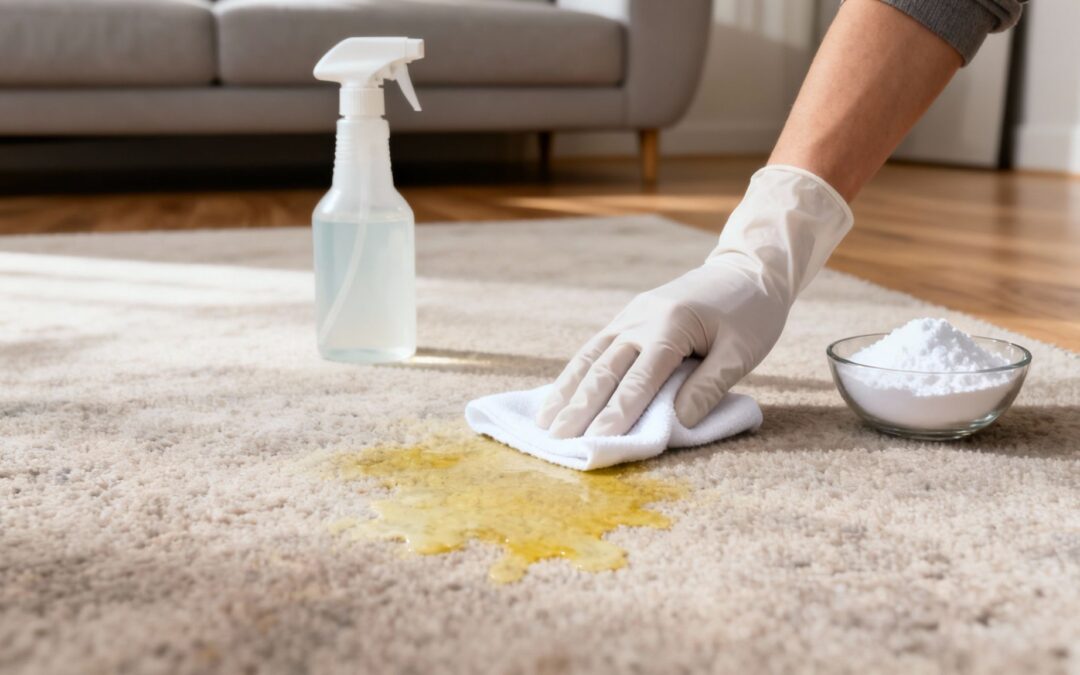
Cleaning vomit from a carpet is a race against time. To stop stains and odours from setting in, you have to act fast. The basics are pretty simple: get the solids up, blot the moisture out, and then treat what’s left. Quick containment is truly your best defence against permanent damage.
Your Immediate Response Plan for Carpet Vomit Stains
Let’s be honest, when you’re faced with vomit on your carpet, the first 30 minutes are make-or-break. Acting quickly is the difference between a minor cleanup and a permanent, smelly reminder.
Forget about aggressive scrubbing or reaching for harsh chemicals right away. Your first goal is damage control. The key is to contain the mess and get as much of the physical stuff off the carpet as possible without grinding it deeper into the fibres. A solid emergency response sets the stage for a successful deep clean later, stopping the acids and proteins from bonding with your carpet for good.
Before you get started, having the right tools on hand makes a world of difference. This quick checklist covers the essentials for your initial cleanup.
Emergency Vomit Cleanup Checklist
| Action Item | Tool or Material Needed | Why It Is Important |
|---|---|---|
| Scrape Solids | Dustpan, spatula, or stiff cardboard | Removes the bulk of the staining material without spreading it. |
| Blot Liquids | Clean white cloths or paper towels | Absorbs moisture and acid, preventing it from soaking into the padding. |
| Protect Hands | Disposable gloves | Prevents direct contact with germs and bacteria. |
| Dispose of Waste | Plastic bag and tie | Safely contains and seals away the mess to prevent odours. |
Having these items ready means you can tackle the problem methodically and hygienically, minimising the long-term impact on your carpet.
Scraping and Removing Solid Matter
First things first, grab something flat and firm—a dustpan, a spatula, or even a piece of cardboard will do the trick. Gently scrape up all the solid and semi-solid material.
Always work from the outside edge of the spill inward. This simple technique stops you from accidentally making the mess bigger. Tip everything into a plastic bag, seal it up tight, and get it out of the house straight away. This one step is crucial because it removes most of the staining agents before they have a chance to do real harm.
Blotting to Absorb Excess Liquid
Once the solids are gone, it's time to tackle the moisture. Get a clean, dry, white cloth or a thick stack of paper towels and start blotting the area. Use firm, downward pressure to soak up as much liquid as you can.
Important Takeaway: Whatever you do, never rub or scrub the stain. Scrubbing just grinds the acidic particles deeper into the carpet fibres. Not only does this damage their texture, but it also makes the stain a nightmare to remove later. Always blot.
Keep using fresh sections of the cloth until it comes away almost dry. This blotting motion lifts the liquid out of the carpet instead of pushing it down into the underlying padding.
This visual guide breaks down those essential first moves for an effective cleanup.
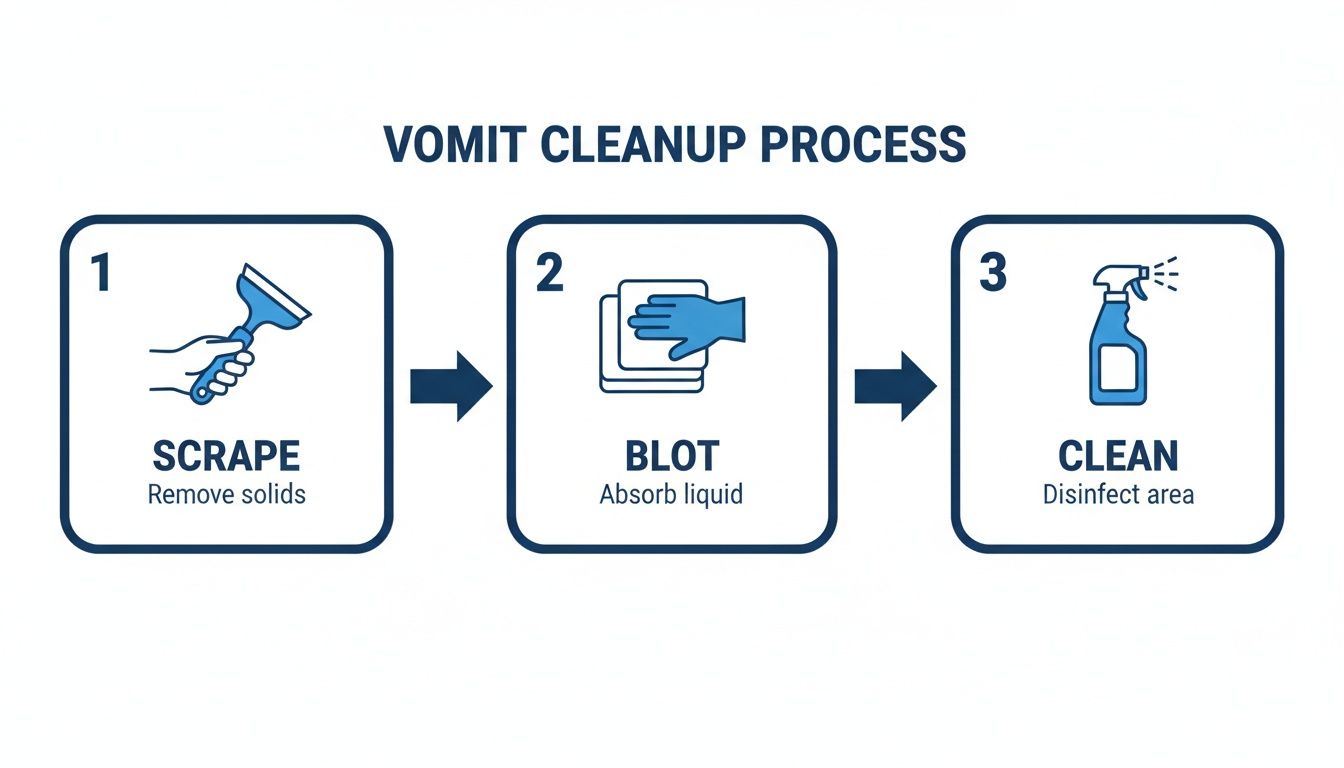
The process is methodical for a reason: scrape, blot, and then clean. Following this flow minimises the damage and preps the carpet for the deeper treatment it’s going to need.
In Australian homes, vomit stains are a serious challenge. Their protein-based composition makes them one of the toughest types of carpet stains to handle. Industry data shows that the multiple proteins in vomit bond deeply with carpet fibres, often requiring more than just standard household cleaners to fix. You can learn more about the science behind these tough carpet stains and see why they demand such specific removal methods.
Choosing Your Cleaning Solution: DIY vs. Enzymatic Cleaners
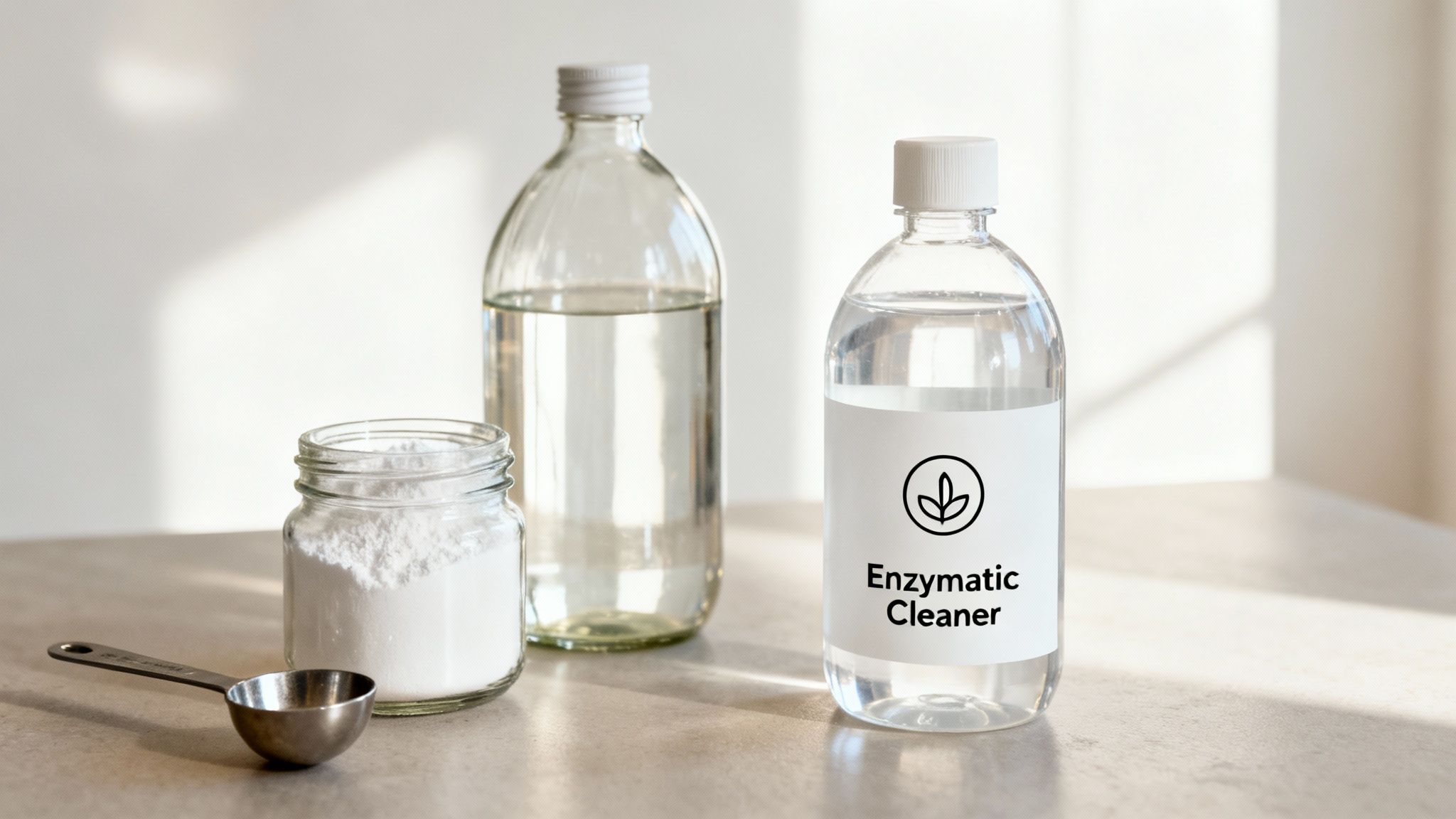
Once you’ve dealt with the immediate mess, you’re at a crossroads. What do you actually use to treat the stain and, more importantly, the smell? This is where many people reach for pantry staples, while others swear by specialised commercial products. Both paths can lead to a clean carpet, but knowing the pros and cons is crucial to avoid making things worse.
Most of us have been there—reaching for the bicarb soda and vinegar because it’s cheap, on-hand, and often gets the job done for minor spills. A simple paste of baking soda and water is great for absorbing odours, and a diluted vinegar solution can help cut through some of the grime.
But these home remedies come with a few warnings. Vinegar is acidic, which means it can be harsh on delicate fibres like wool, potentially causing colours to fade. And while bicarb soda is a fantastic deodoriser, any residue left behind after vacuuming can become a dirt magnet, leaving you with a dull, greyish patch over time.
The Power of Enzymatic Cleaners
This is where commercial enzymatic cleaners really shine. They're a completely different beast compared to standard cleaners. These products are packed with specific enzymes—think of them as biological catalysts—engineered to dismantle the complex organic compounds found in vomit.
Here’s a simple way to picture it: the proteins and acids in a vomit stain are like long, tangled chains. A DIY solution might just scrub the surface, but an enzymatic cleaner acts like a tiny set of keys, unlocking and breaking those chains into smaller, water-soluble bits that are a breeze to blot away.
This targeted approach gives them a serious edge:
- They Destroy Odours, Not Just Mask Them: Enzymes get to the root of the problem, breaking down the organic molecules that cause nasty smells in the first place.
- They Tackle the Stain Itself: These cleaners are brilliant at dissolving the protein-based stuff that leads to those stubborn, yellowing stains.
- They're Generally Safer for Your Carpet: Most are formulated to be pH-neutral, making them a safer bet for a wider range of carpet types, including wool and other natural fibres.
When you look at popular Australian remedies, enzyme-based products consistently outperform bicarb soda for odour removal. It’s important to remember, though, that both methods require a light touch to avoid overwetting the carpet. In fact, Australian carpet cleaning specialists report that around 25-35% of vomit stain jobs they attend are the result of failed DIY attempts, often from using the wrong product or technique. You can learn more about how to properly clean vomit from carpets and why sometimes a professional is your best bet.
Key Insight: A DIY solution might clean what you can see, but an enzymatic cleaner addresses the microscopic proteins and bacteria that cause long-term stains and smells to return.
So, what’s the final verdict? For a small, fresh incident on a sturdy synthetic carpet, a careful DIY approach will probably work just fine. But for bigger messes, stains on delicate materials, or if that smell just won’t quit, investing in a quality enzymatic cleaner is the smarter, safer choice to protect your carpet in the long run.
A Practical Guide to Removing Stains and Odours
Okay, you’ve dealt with the worst of the mess. Now it’s time to tackle the part that really matters: treating the stain left behind and knocking out that awful smell for good.
This is the make-or-break stage. Get it right, and your carpet will be back to normal. Rush it, and you'll be dealing with a phantom odour for weeks. The goal here is to clean deeply, getting past the surface fibres and down to the carpet backing where smells love to linger.
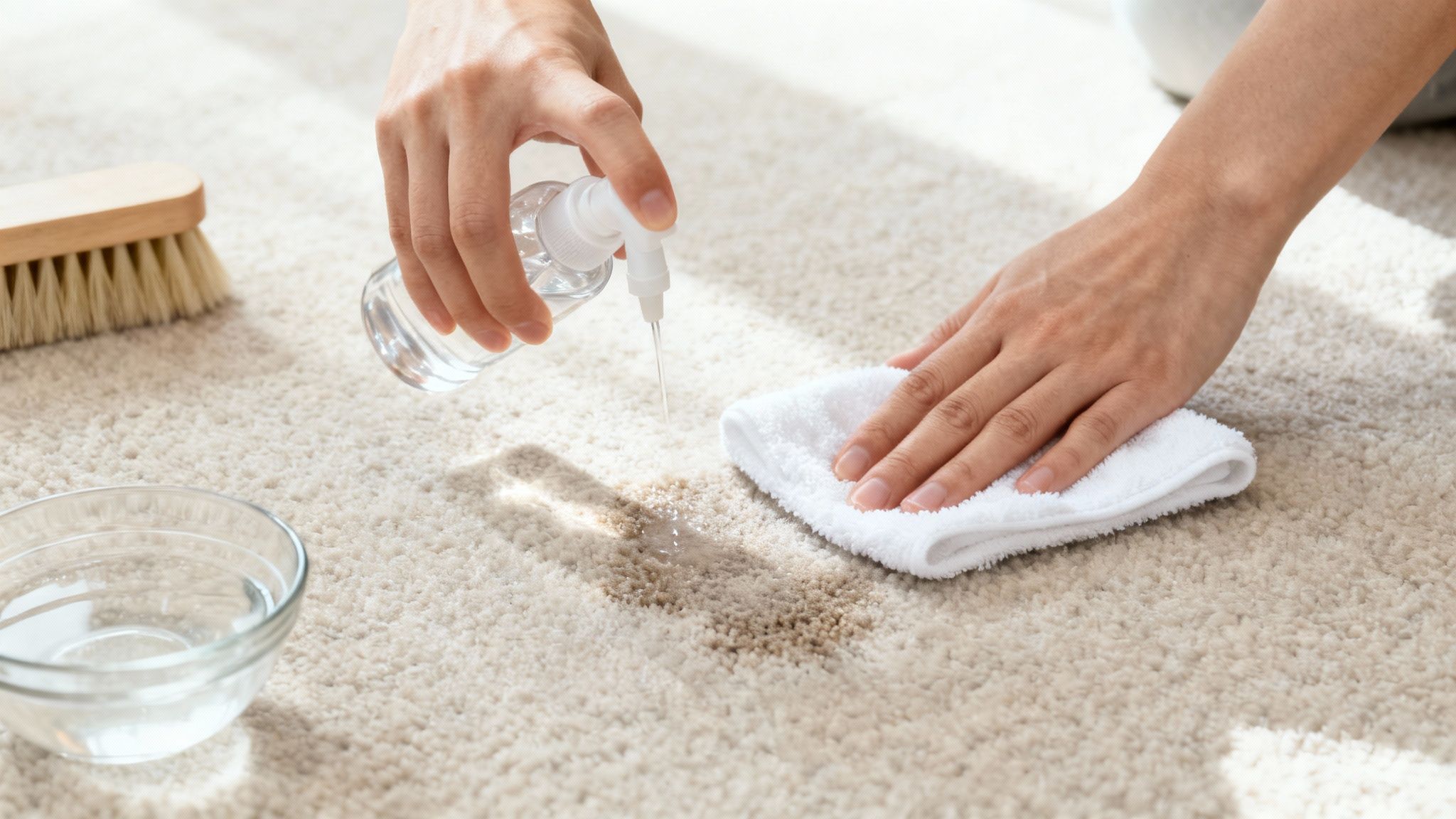
Whether you're reaching for a trusted commercial enzymatic cleaner or mixing up a home remedy, how you apply it is crucial. You want to lightly saturate the stained area, making it damp but not swimming in liquid. The key is to let your cleaning solution penetrate just as deeply as the vomit did.
The Importance of Dwell Time
Here’s the step most people get wrong: they don’t wait. You need to give your cleaner time to work its magic. This is called dwell time, and it’s non-negotiable if you want to dissolve the proteins and acids causing the stain and smell.
Simply spraying and scrubbing is a waste of time. The active ingredients need a chance to break everything down.
Australian professional carpet cleaning services always stress the importance of dwell time, recommending a minimum of 5 minutes for the solution to really get to work. Skipping this is the number one reason DIY attempts fail. You can get more professional insights into the science of vomit removal from carpets and see just how vital this waiting period is.
Rinsing and Blotting Correctly
Once the cleaner has had time to sit, you need to rinse and extract it along with all the gunk it has broken down. Grab a clean spray bottle filled with cool water and give the area a light misting. This helps dilute the cleaning solution and the dissolved mess, making it much easier to lift out.
Now, take a fresh, clean, white cloth and start blotting. Remember, press, don’t scrub. Work from the outside of the damp patch inwards to keep from spreading the stain. You'll likely need to repeat this mist-and-blot process a few times. Keep going until your cloth comes away clean and you don’t see any more suds.
Pro Tip: Once you've blotted as much as you can, place a thick stack of dry paper towels or a folded white towel over the damp spot. Weigh it down with something heavy—like a stack of books—and leave it for a few hours. This acts like a poultice, pulling moisture and any deep-down residue right out of the carpet backing and fibres.
Preventing Wick Back Stains
Ever cleaned a stain perfectly, only to watch it mysteriously reappear a day later as the carpet dries? That’s a frustrating phenomenon called wick back. It happens when leftover stain particles hidden deep in the carpet backing are wicked up to the surface as the moisture evaporates.
Your best defence against wick back is a thorough rinse. By flushing the area properly with clean water and blotting until it’s almost dry, you remove the residue that causes these ghost stains. That poultice trick I mentioned? It’s also incredibly effective at stopping wick back in its tracks.
DIY Cleaning vs Professional Steam Cleaning
When you're faced with a vomit stain, you have two main choices: tackle it yourself or call in the professionals. Both have their place, but the results can vary significantly depending on the severity of the stain and the tools at your disposal.
Here’s a look at how DIY methods stack up against professional steam cleaning.
| Feature | DIY Method | Professional Steam Cleaning |
|---|---|---|
| Tools Used | Sponges, cloths, paper towels, store-bought sprays, home remedies (vinegar). | High-pressure hot water extraction machines, commercial-grade enzymatic cleaners, heavy-duty vacuums. |
| Effectiveness | Good for fresh, surface-level stains. May struggle with older or larger messes. | Highly effective on both fresh and set-in stains. Removes residue from deep within the carpet backing. |
| Odour Removal | Often just masks smells. Home remedies may not fully neutralise bacteria. | Kills odour-causing bacteria at the source using high heat and powerful sanitising agents. |
| Drying Time | Can take 24-48 hours to air dry, increasing the risk of mould or wick back. | Typically dries within 4-6 hours due to powerful extraction vacuums that remove most of the water. |
| Stain Recurrence | High risk of wick back if not rinsed and dried properly. | Low risk. Thorough extraction removes deep-down residue, preventing stains from reappearing. |
| Overall Outcome | A good first-response solution, but may leave behind faint stains or odours. | A complete, deep clean that restores the carpet's appearance, texture, and hygiene. |
While DIY methods are great for immediate damage control, they often can't compete with the deep-cleaning power of professional equipment. For stubborn stains, lingering smells, or just the peace of mind that comes with a truly sanitised carpet, calling a pro is always the best bet.
Common Carpet Cleaning Mistakes You Must Avoid
Knowing what not to do when cleaning up vomit can save you from a world of frustration and potentially permanent carpet damage. In the heat of the moment, it’s all too easy to make a few critical errors that turn a manageable accident into a costly headache. Let’s walk through the most common pitfalls I've seen over the years and why avoiding them is so important.
The single biggest mistake is scrubbing the stain aggressively. Your first instinct might be to grab a brush and rub hard, but this is a disaster for carpet fibres. Scrubbing just forces the acidic liquid and staining agents deeper into the carpet pile and, even worse, into the underlay. This not only makes the stain a nightmare to remove but can also fray and permanently damage the carpet’s texture, leaving a fuzzy, worn-out patch.
Using Hot Water Can Set the Stain
Another common error is reaching for hot water. While heat is fantastic for many cleaning tasks, it’s the enemy of protein-based stains like vomit. The high temperature will essentially "cook" the proteins, causing them to chemically bond with the carpet fibres. Once that happens, the stain becomes incredibly difficult, if not impossible, to remove later on.
Crucial Reminder: Always use cool or lukewarm water when treating and rinsing a vomit stain. Heat is a one-way ticket to a permanent, set-in mark that even professionals may struggle to completely fix.
The Dangers of Harsh Chemicals and Coloured Cloths
In a panic, it’s tempting to grab the strongest cleaner under the sink, maybe something with bleach or ammonia. These chemicals are far too harsh for most carpets. They can strip the colour right out of your carpet fibres, leaving a permanent bleached spot that’s even more obvious than the original stain.
On a similar note, always use white cloths or paper towels for blotting. This small detail is more important than you might think:
- No Colour Transfer: Coloured towels or rags can bleed their dye when they come into contact with cleaning solutions. This transfers the dye to your carpet, creating a brand-new stain you have to deal with.
- Clear Feedback: A white cloth gives you a clear visual. You can easily see when you are no longer lifting any residue from the carpet. When the cloth comes away clean, you know you’re done.
Understanding how different rug materials react to cleaning agents is crucial, especially in homes with pets where accidents are common. For more detailed information, this guide on the Top 5 Pet Friendly Rug Materials is a helpful resource. By avoiding these common missteps, you give yourself the best possible chance of restoring your carpet without causing unintended, lasting damage.
You’ve followed all the steps—scraped, blotted, treated, and rinsed. But something’s still off. Maybe a faint, discoloured shadow remains where the accident happened, or a sour smell lingers in the air, especially on humid days. These are the tell-tale signs that your DIY efforts have hit a wall and it’s time to call in a professional.
Sometimes, the problem is just too big for home remedies. A large amount of vomit won't just sit on the surface; it seeps deep into the carpet fibres and settles into the porous underlay. Once it’s that deep, no amount of surface spraying will get it all out. The trapped moisture and organic material become a breeding ground for bacteria and mildew, leading to stubborn odours and genuine health concerns.
Situations That Demand Professional Help
Certain messes almost always need the heavy-duty equipment and expertise of a professional carpet cleaner. Trying to tackle these on your own can easily make things worse, turning a temporary problem into a permanent one. Calling in an expert is the smartest move if you're dealing with any of these situations:
- Delicate or Natural Carpet Fibres: Materials like wool, silk, or jute are incredibly fussy about pH levels. The wrong cleaning product—even something as simple as a vinegar solution—can cause irreversible colour stripping, fibre damage, or ugly brown stains.
- Vomit Due to Illness: When someone's been sick, vomit can be loaded with nasty viruses and bacteria. A professional deep clean using high-temperature steam extraction is the only reliable way to properly sanitise the area and make it safe for your family again.
- Persistent Odours After Cleaning: If a smell hangs around after your own clean-up attempt has completely dried, that’s a dead giveaway. It means the contamination has soaked into the carpet backing or underlay. Professionals have specialised tools that can flush these layers and neutralise the odour right at the source.
- Large, Saturated Stains: For a major accident that has soaked a large patch of carpet, only powerful, truck-mounted extraction gear can pull out enough moisture to prevent mould and stop potential damage to your subfloor.
Key Takeaway: If a stain seems to reappear as the carpet dries—a process called 'wicking'—or if the carpet feels stiff or sticky, it means cleaning residue was left behind. This sticky residue acts like a dirt magnet, creating a dark patch that's even tougher to clean down the line.
Beyond just an ugly stain, improper cleaning can lead to more serious issues. It's important to understand the serious health risks of DIY biohazard cleanup and what can happen if the problem isn't dealt with properly. Professional services don't just clean what you can see; they eliminate the bacteria you can't, making sure your home is truly clean and hygienic. When your best efforts aren’t enough, calling an expert isn’t giving up—it’s the smartest way to protect both your health and your investment in your home.
Got Questions? We’ve Got Answers.
Even after you’ve cleaned up the mess, it’s normal to have a few lingering questions. Getting the details right can make all the difference between a one-time cleanup and a recurring problem. Here are some of the most common queries we hear from homeowners dealing with this exact situation.
How Long Do I Have Before a Vomit Stain Becomes Permanent?
Honestly, time is your biggest enemy here. While it depends a little on your carpet’s material and how acidic the vomit is, the proteins and stomach acids start bonding with the fibres almost right away.
Your best shot at a complete, stain-free removal is to tackle it within the first 15-30 minutes. If you let it sit for over 24 hours, the chances of a permanent stain and a deep-set odour go way up. At that point, you’re almost certainly going to need professional help to fully get it out.
Is It a Good Idea to Use My Home Steam Cleaner on a Vomit Stain?
It might seem logical, but please don’t use a domestic steam cleaner or any other source of high heat on a fresh vomit stain. Think of it like trying to get a raw egg off a hot pan—the heat will essentially "cook" the proteins right into the carpet fibres, setting the stain permanently.
This is completely different from professional hot water extraction. Our truck-mounted machines use powerful, controlled suction and specialised pre-treatments to flush contaminants out of the carpet without cooking them in. Always, always stick to cool water for any DIY cleaning to avoid making a costly mistake.
A lingering odour almost always means the contamination has reached the carpet backing or underlay, where surface cleaning can't penetrate. This is a clear sign that the source of the smell is deeper than your home remedies can reach.
The Stain Is Gone, but the Smell Isn’t. What Now?
If you’re left with a sour, unpleasant smell after the carpet is dry, it’s a sure sign that odour-causing bacteria are still thriving deep in the fibres or, more likely, the underlay.
Your first move should be another round with a high-quality enzymatic cleaner. Don’t be shy with it—let it soak generously into the area so it can penetrate down to the source. If that smell is still hanging around after a second attempt, it’s time to call in the professionals. We have specialised tools that can inject deodorising agents directly into the underlay, neutralising the bacteria where they live.
Is It Safe to Clean Up Vomit Myself?
Yes, for the most part, it’s perfectly safe as long as you take a few simple precautions. Always wear rubber gloves, and it’s a good idea to wear a face mask to protect yourself from airborne bacteria or viruses, especially if someone is sick.
Make sure you have good ventilation in the room while you’re cleaning and as the carpet dries. Once the stain is gone, a final spritz with a carpet-safe disinfectant is a smart move. Of course, for incidents involving severe illness, professional biohazard cleaning is the safest bet to guarantee the area is completely sanitised.
When your best efforts just aren't enough to get your carpet truly clean and fresh, Right Price Carpet Cleaning has the professional power you need. Our truck-mounted steam cleaning systems are designed to reach deep into the carpet backing and underlay, eliminating stubborn stains and odours for good. Get your instant online quote and see the difference a real professional clean can make.
Recent Comments