



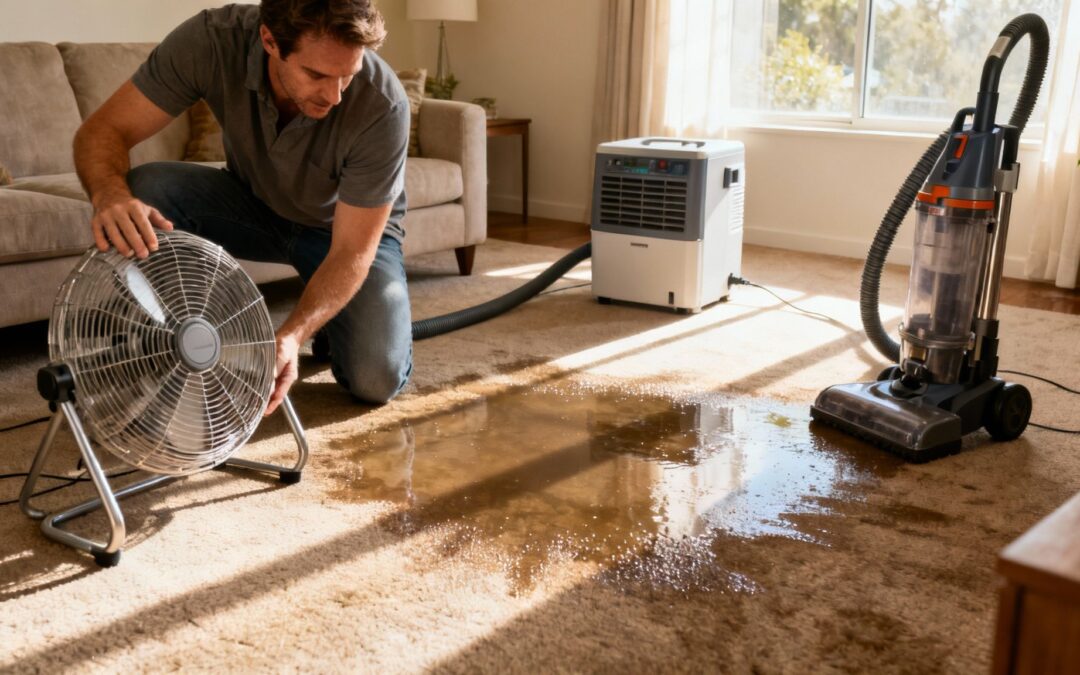
When you discover a wet patch on your floor, knowing how to dry it fast isn't just a good idea—it's critical. The best approach is a one-two punch: immediate water extraction with a wet-dry vacuum, followed by creating maximum airflow with fans and a dehumidifier. This combo is your strongest defence against mould and long-term damage.
Your Immediate Action Plan for a Wet Carpet
Discovering a wet carpet kicks off a race against time, where every minute really does count. Mould can start to grow in as little as 24 to 48 hours, which makes your initial response the most important part of the whole process. Acting fast doesn’t just save your carpet; it protects your subfloor from structural rot and your family’s health from nasty mould-related issues.
This infographic breaks down the simple, critical process for immediate water cleanup.
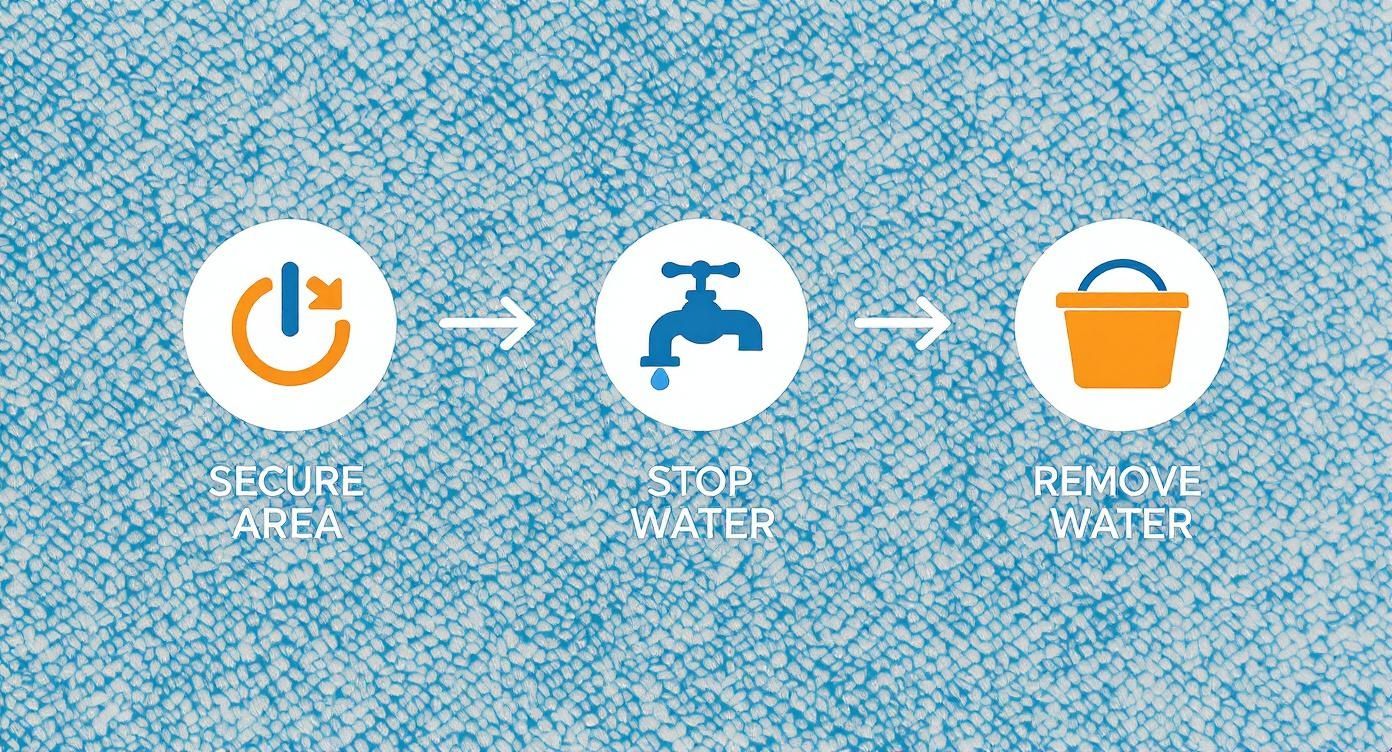
This visual guide splits the emergency response into three clear stages, putting safety and damage control first.
Secure the Area First
Before you even think about touching the water, think safety. Water and electricity are a lethal mix. Your first move should always be to shut off the power at the circuit breaker for that room. It’s a simple step that eliminates the risk of electric shock, especially if water has reached power points or is pooling near electrical cords.
Next, get any furniture, electronics, or other belongings off the wet carpet immediately. For heavy furniture you can’t move, slip some aluminium foil or plastic coasters under the legs. This will stop rust or wood stains from transferring to the carpet fibres.
Stop the Water Source
Once the area is safe, your next goal is to stop more water from coming in. You need to quickly identify the source of the leak—is it a burst pipe under the sink, an overflowing washing machine, or a leaky roof during a Melbourne downpour?
If it's a plumbing issue, find the main water valve to your home and shut it off to stop the flow instantly. For a misbehaving appliance, unplug it and stop its cycle. Getting the source under control prevents the problem from getting worse while you work on the cleanup.
A small, contained spill is a manageable DIY job. But if the water is contaminated (like sewage) or the flooding is widespread, you absolutely need to call a professional flood restoration service right away to avoid serious health risks and major structural damage.
Begin Initial Water Removal
With the area secure and the leak stopped, it’s time to start getting rid of the standing water. A wet-dry vacuum is the best tool for this, but don't wait if you don't have one. You can make a huge difference with things you already have at home.
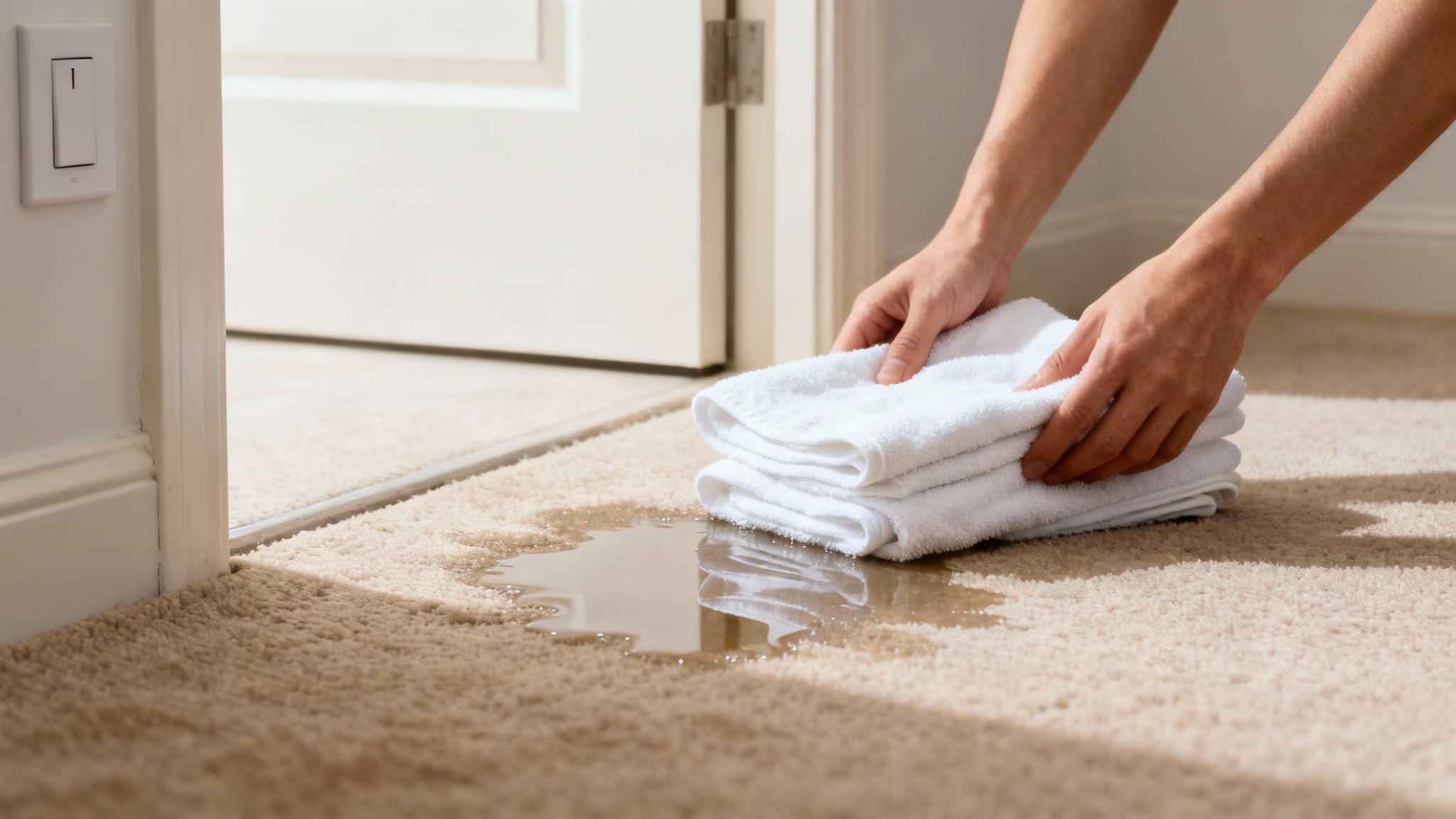
Grab old towels, blankets, or even a mop and bucket to soak up as much surface water as you can. For towels, press down firmly to absorb moisture from deep within the fibres. This first extraction step is vital—it will dramatically cut down the overall drying time.
Effective DIY Carpet Drying Tools and Techniques
Once you’ve dealt with the standing water, the real job of drying your carpet properly begins. This is where you move from damage control to a focused drying operation. Your goal is to pull every last bit of moisture from the carpet fibres and underlay before mould gets a foothold.
Your success boils down to three things: powerful extraction, constant airflow, and humidity control. Drop the ball on any one of these, and a job that could take 24 hours can easily turn into a week-long battle against dampness and that awful musty smell.
Harnessing the Power of Airflow with Fans
Creating a vortex of moving air is your best friend when it comes to drying a wet carpet quickly. Stagnant, humid air hovering over the carpet is useless. You need to actively shove that damp air out of the way and replace it with drier air to speed up evaporation.
Don't just stick a single fan in the middle of the room and hope for the best. You need a strategic setup.
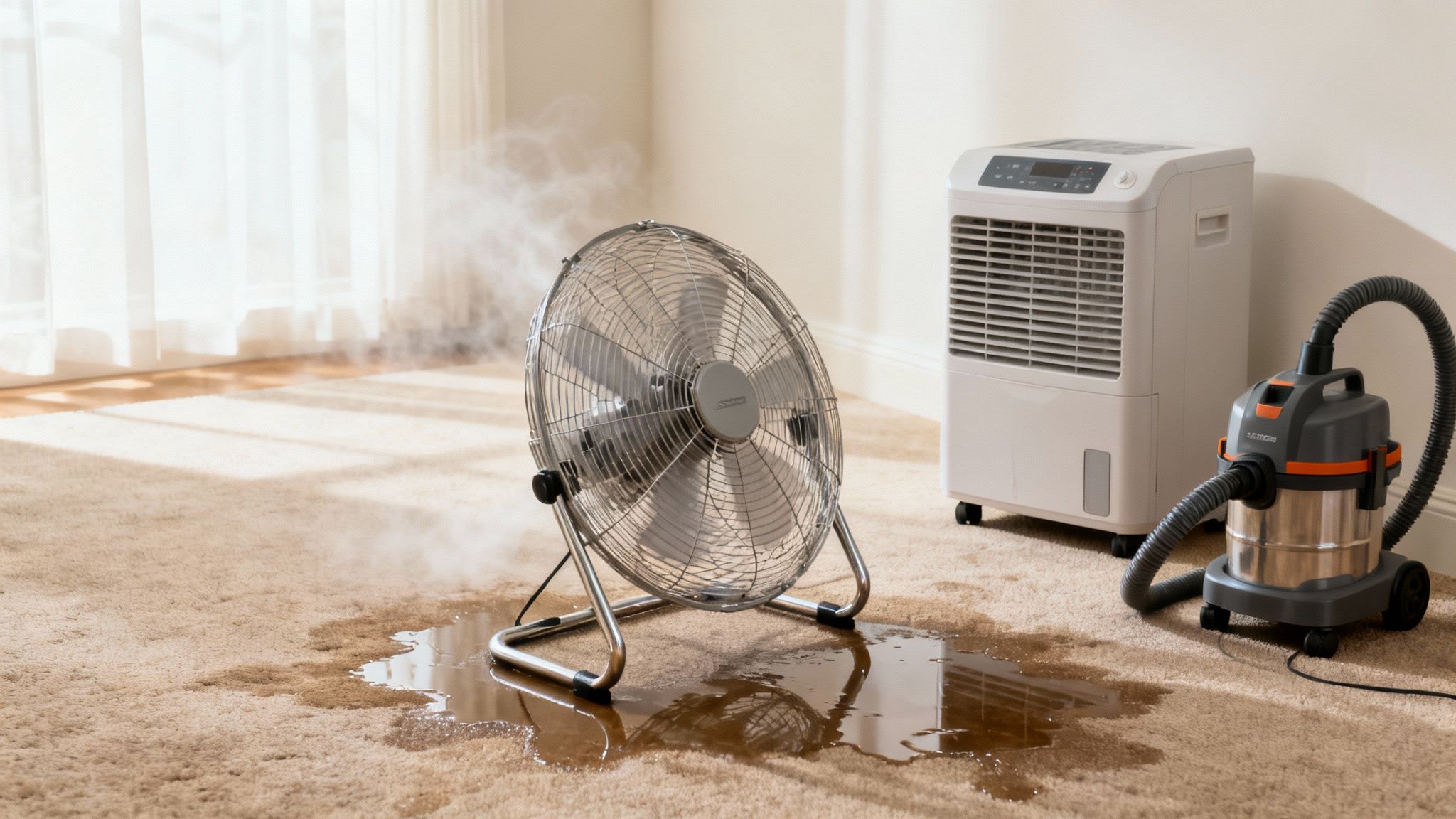
- Create a Cross-Breeze: Get a few fans going at opposite corners of the room. Have at least one aimed directly across the surface of the wet patch.
- Angle for Success: Point the fans downwards at about a 45-degree angle to the floor. This makes sure the air skims right across the wet surface, lifting the moisture out.
- Lift the Carpet: If you can, carefully pull up a corner of the carpet and prop it on a block of wood or a few books. Point another fan so it blows air directly underneath, which is crucial for drying the underlay and subfloor at the same time.
Think of it like creating a wind tunnel in your living room. Your goal is to get continuous air movement over, across, and even under the entire wet area. This relentless airflow is what will physically carry the moisture away from the carpet fibres.
The Unsung Hero: A Dehumidifier
Fans are great for moving moist air around, but a dehumidifier is what actually pulls that moisture out of the atmosphere. In humid Australian climates, especially in cities like Perth, this is a non-negotiable step. Just running fans in a humid room is like trying to dry laundry on a rainy day—it’s painfully slow and pretty much ineffective.
Put the dehumidifier right in the middle of the wettest area. For it to do its job properly, you have to close all the windows and doors to the room. This creates a sealed environment where the machine can efficiently drop the room's humidity level, which in turn encourages moisture to leave the carpet.
Keep a close eye on the dehumidifier’s collection tank. It will fill up surprisingly fast in a damp room, and once it's full, the machine stops working, bringing your progress to a halt.
The Essential Wet-Dry Vacuum
If you only have one tool for this job, make it a wet-dry vacuum (often called a Shop-Vac). Towels are fine for the initial surface water, but a wet-dry vac is built for extraction. It will physically suck water out of the carpet and padding that towels could never dream of reaching.
Work slowly and methodically across the entire wet patch, making several passes from different directions. Press the nozzle down firmly into the carpet pile to get the best possible suction. You’ll be shocked at how much water it pulls out, even from a carpet that only feels a bit damp to the touch.
This step alone can easily cut your total drying time by more than half. The time it takes to dry a wet carpet is heavily influenced by humidity and airflow, especially in places like Perth. Based on our experience, natural fibres like wool absorb far more moisture than synthetics, which can really extend the drying time in high-humidity conditions. You can discover more insights about the science behind this on carpetcleaningperth.com.au.
DIY Carpet Drying Method Comparison
When you're faced with a wet carpet, picking the right tools can make a world of difference. Here’s a quick comparison of the most common DIY drying methods available to Australian homeowners, so you can choose the best approach for your situation.
| Drying Method | Effectiveness | Best For | Average Cost (AU) |
|---|---|---|---|
| High-Velocity Fans | High | Creating essential airflow to speed up evaporation across large areas. | $50 – $150 to buy |
| Dehumidifier | High | Removing moisture from the air, especially in humid climates or enclosed spaces. | $200 – $500 to buy |
| Wet-Dry Vacuum | Very High | Physically extracting large amounts of water from carpet and underlay. | $100 – $300 to buy |
| Towels & Sponges | Low | Soaking up initial surface spills; not effective for deep moisture. | ~$20 for materials |
Ultimately, a combination of these tools will give you the fastest and most effective results. Using a wet-dry vac first, followed by a strategic setup of fans and a dehumidifier, is the gold standard for DIY carpet drying.
Setting Realistic Carpet Drying Timelines
So, how long is this actually going to take? It's the first question everyone asks, and the honest answer is: it depends. Knowing how to dry a wet carpet fast also means knowing when not to rush. Pushing the process too quickly can leave sneaky pockets of moisture behind, leading to much bigger problems down the line.
The real timeline is shaped by the extent of the water damage, the type of carpet you have, and even the weather outside.
A minor spill on a low-pile synthetic carpet might feel dry to the touch in just 12 hours with good airflow. But for something more serious, like a burst pipe soaking a plush, high-pile wool carpet? You could easily be looking at 48 to 72 hours of continuous, active drying. Remember, mould can start to grow in just 24 hours, so your main goal is to beat that clock.
Key Factors Influencing Your Timeline
Several variables will either speed up or slow down your progress. Getting a handle on these helps you create a drying strategy that actually works for your situation.
- Water Source and Volume: Clean water from a tap is one thing; a large-volume flood from a faulty appliance is another beast entirely. The more water you have to deal with, the longer it's going to take.
- Carpet Fibre Type: Synthetic fibres like nylon and polyester don't absorb much water and release it fairly quickly. Natural fibres, especially wool, are a different story—they act like a sponge and hold onto moisture for a long time.
- Humidity Levels: This is a massive one, particularly in coastal cities like Sydney or Brisbane where the air is already heavy with moisture. High humidity seriously slows down evaporation, making a dehumidifier an essential tool, not just an optional extra.
- Airflow: A single fan in the corner of a saturated room just won't cut it. One of the biggest reasons DIY drying attempts fail is a lack of powerful, consistent airflow.
It's not enough for the surface to feel dry. The real danger lies in the underlay and the subfloor beneath it. Lingering dampness here is a hidden invitation for mould and wood rot, creating problems long after you've put the fans away.
How to Check if It's Truly Dry
Don't trust your hands. The surface of the carpet almost always dries much faster than the layers underneath, which can trick you into stopping the process too early. To be certain the job is done, you need to check deeper.
Carefully pull back a corner of the carpet in the wettest area. What does the underlay feel like? If it's even slightly damp, cold, or squishy, you're not done. For a definitive test, press a dry paper towel firmly against the underlay and the subfloor. If it picks up any moisture at all, keep the fans and dehumidifier running.
You also need to give the subfloor a good look. Check for any dark patches or visible signs of moisture. A truly dry carpet means the surface, the underlay, and the subfloor are all completely free of dampness.
If you're still detecting moisture after 48 hours of aggressive drying, that's a strong sign it's time to call in professional backup to prevent serious long-term damage.
Stopping Mould Growth Before It Starts
Once you've wrestled the bulk of the water out, the real race begins. A damp carpet is the perfect breeding ground for mould and mildew, and they don't waste any time. You've got a critical window of only 24 to 48 hours before they can start to colonise your flooring. This is where you switch from damage control to active prevention, protecting not just your carpet but your family’s health.
Just letting a carpet "air dry" on its own is a massive gamble. There’s almost always hidden moisture trapped in the underlay and subfloor, creating a five-star resort for mould spores to thrive. That’s why drying a wet carpet fast involves more than just dealing with the surface; you need a targeted plan to stop mould before it even gets a foothold.
The Critical 24-48 Hour Window
Think of this timeframe as your non-negotiable deadline. Mould spores are everywhere, all the time, just waiting for moisture to activate. In that first day or two, they find what they need in your damp carpet and start to grow.
Often, the first sign isn't a visible spot but that distinct, musty smell that tells you something is wrong deep within the fibres. If you don't get the carpet bone-dry within this window, you’re not just risking ugly stains; you’re looking at permanent damage to the carpet backing and subfloor, not to mention the potential for respiratory issues.
Using Antimicrobial Treatments
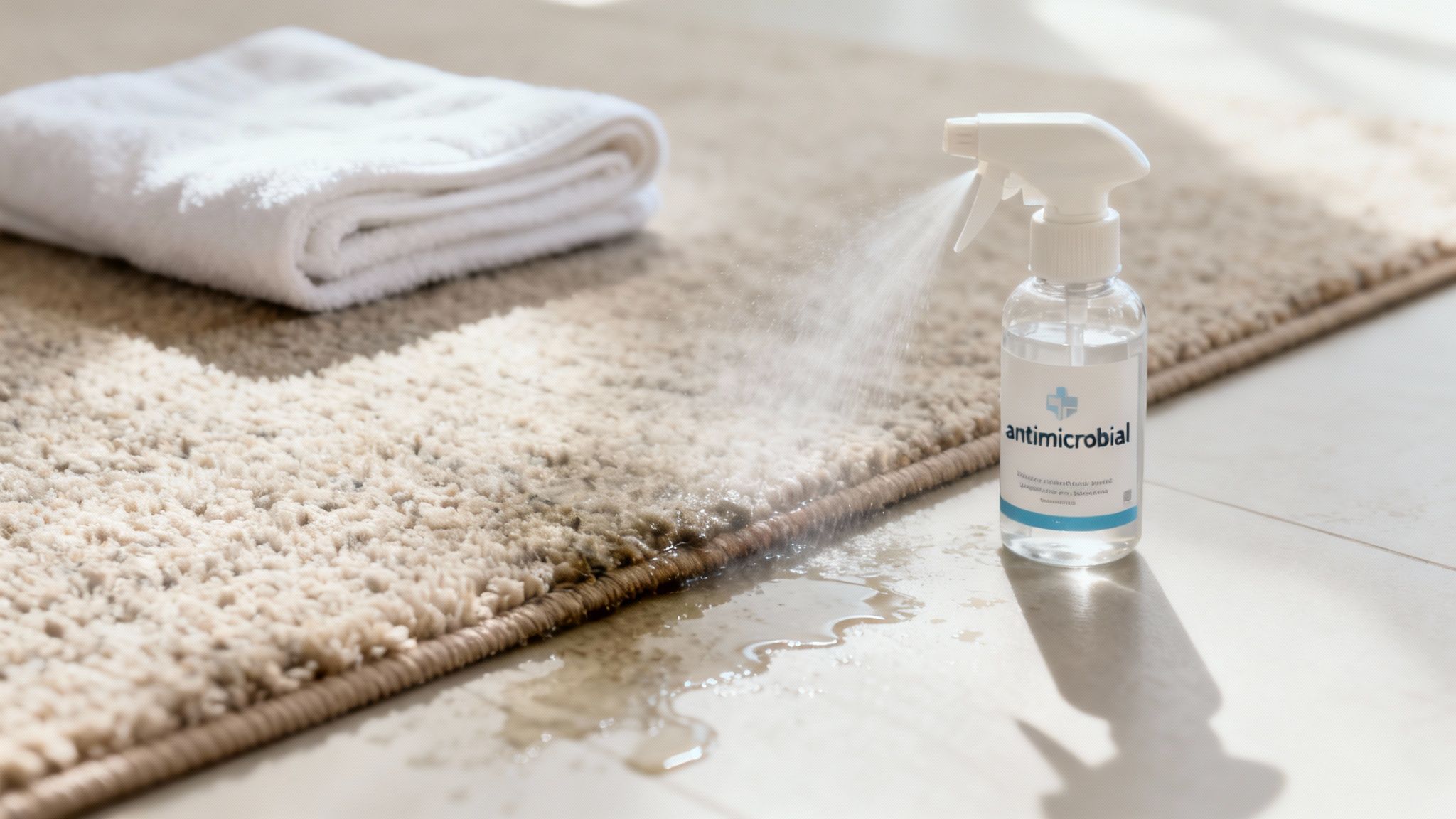
When the carpet is almost dry, hitting it with an antimicrobial solution is a brilliant final step. This is your insurance policy to kill off any stubborn spores that might be hanging around. You don't always need harsh chemicals, either—some of the best options are probably already in your cupboard.
- Commercial Antimicrobial Sprays: You can find these at most hardware stores. They're specifically designed to sanitise carpets and stop mould and bacteria from growing.
- White Vinegar Solution: For a more natural approach, mix one part white vinegar with one part water in a spray bottle. Give the entire affected area a light misting. The vinegar smell is temporary and will fade as it dries, leaving your carpet sanitised.
The key here is not to re-soak the carpet. A light, even mist is all you need to get the job done.
Controlling Humidity is Key
Even when your carpet feels dry to the touch, the air in the room can sabotage your efforts. High humidity can pump moisture right back into the fibres, undoing all your hard work and inviting mould to return.
Your goal is to keep the relative humidity in the room below 50%. A dehumidifier is your best friend here. It actively pulls moisture from the air, creating an environment where mould simply can't survive.
Beyond the immediate drying, you have to manage the room's atmosphere. For more on maintaining good indoor air quality, it’s worth looking into broader strategies. Think of consistent humidity control as your long-term defence against future mould problems.
Spotting the Early Warning Signs
In the days after the flood, stay vigilant. Your own senses are the best tools for catching a problem before it gets out of hand.
- Smell: A persistent musty or earthy odour is the number one red flag. It's the earliest and most common sign of mould or mildew.
- Discolouration: Keep an eye out for any new, unusual stains or dark spots. Pay close attention to corners and edges where airflow might be weaker.
- Feel: Run your hand over the carpet. If any part still feels cool or slightly damp after a few days, that’s a clear sign moisture is still trapped underneath.
If you notice any of these signs, don't wait. Get the fans and dehumidifier running again immediately. Catching it early can be the difference between a small damp patch and a full-blown, unhealthy mould infestation that requires a professional to fix.
When You Need to Call a Professional
While tackling a small spill yourself is one thing, it's absolutely crucial to know when a wet carpet has gone beyond a simple DIY fix. Knowing the difference between a manageable job and a brewing disaster can save you from costly long-term damage, serious health risks, and a lot of heartache.
Pushing your DIY efforts too far can seem productive, but it often just traps moisture deep in the underlay. That leads to problems you can't see until it’s far too late. In some cases, the sheer scale and nature of the water damage make calling in the pros non-negotiable.
Red Flags That Demand an Expert
Certain situations immediately escalate a wet carpet from an inconvenience to a genuine emergency. If you're facing any of these, your first and only call should be to a professional flood restoration service.
- Widespread Flooding: If an entire room or, even worse, multiple rooms are saturated, household fans and a small dehumidifier just won't cut it. They simply don’t have the power. Professionals roll in with industrial-grade air movers and dehumidifiers built to handle large-scale moisture removal effectively.
- Contaminated Water: This is a big one. Any water from a sewage backup, an overflowing toilet, or outdoor floodwaters is considered "black water." It’s teeming with dangerous bacteria and pathogens that pose a real health risk. This isn't a job for household cleaners; it requires specialised sanitisation protocols and protective gear.
- The 48-Hour Mark: Time is your enemy here. If your carpet has been wet for more than 48 hours, you're already losing the battle against mould. Professionals have the tools to rapidly dry the carpet and apply powerful antimicrobial treatments to stop an infestation in its tracks.
For major incidents like those caused by burst water pipes, getting a professional on the phone immediately is the only way to prevent serious structural damage and health hazards down the line.
The Professional Equipment Advantage
The real game-changer is the equipment. A professional service doesn’t just show up with a better vacuum; they arrive with an arsenal of tools designed for high-efficiency water extraction and drying.
A professional truck-mounted steam cleaning and extraction unit can pull hundreds of litres of water out of a carpet every hour. That's a feat completely impossible with a standard wet-dry vac. This immense suction power removes moisture not just from the carpet fibres but from the dense underlay and even the subfloor below.
This kind of power is especially vital in Australia's flood-prone regions. Industry data consistently shows a huge spike in demand for professional carpet drying services in states like Queensland and New South Wales after major flood events. Flooded carpets demand immediate, powerful intervention to prevent the kind of structural damage that can ruin a home.
Ultimately, making that call is about protecting your biggest investment. When you’re faced with overwhelming water damage, an expert service isn't a luxury—it's an essential step in ensuring a fast, safe, and truly complete recovery for your home.
Of course. Here is the rewritten section, crafted to sound like an experienced human expert, following all your specific instructions and style examples.
How Professionals Achieve a Perfect Dry
While your own efforts with fans and dehumidifiers are a great start, the pros play in a completely different league. They show up with industrial-strength equipment and proven techniques that can get a carpet bone-dry in a fraction of the time. It’s not just about speed, either—it’s about being thorough. Their goal is to pull every last drop of moisture from the underlay and subfloor, completely shutting the door on future problems like mould and rot.
One of the most powerful tools in their arsenal is hot water extraction, which you probably know as steam cleaning. Forget those little rental units you see at the supermarket. Professionals use heavy-duty, truck-mounted machines that blast heated water deep into the carpet fibres. This dislodges stubborn dirt and contaminants, and then a ridiculously powerful vacuum immediately sucks almost all of it straight back out. The process flushes the entire carpet while removing the vast bulk of the water right away.
The Power of Low-Moisture Cleaning
Lately, some of the best services in Australia have moved to even smarter methods designed for super-fast drying. You’ll hear terms like low-moisture or carbonation-based cleaning. These techniques are a huge leap forward because they deliver a deep clean without ever soaking the carpet in the first place.
Instead of flooding the fibres, this approach uses millions of tiny, fizzing bubbles to lift dirt to the surface where it’s easily whisked away. The main benefit? A massive reduction in water. According to Chem-Dry Australia, their carbonated cleaning process uses about 80% less water than old-school steam cleaning—a game-changer in Australia's humid climates. This means your carpet can be dry in just 1 to 4 hours, not the typical one or two days.
This isn't just a minor tweak; it's a completely different way of thinking about carpet cleaning. By using so little water from the get-go, professionals practically eliminate the risk of mould and mildew, which is always the biggest worry with a wet carpet.
Specialised Drying Equipment
Beyond the cleaning method, professionals bring out the heavy-duty drying gear. They use high-velocity "air movers" or "snail fans," which are far more powerful than any fan you have at home. These are placed strategically to create a swirling vortex of air that flows over, across, and even under the carpet.
They pair these with large-capacity dehumidifiers that can suck litres and litres of moisture out of the air every hour. But here's the real pro touch: they use moisture meters. These are handheld devices that give them an exact reading of dampness levels in the carpet, the underlay, and right down to the subfloor. It’s a data-driven process that ensures they don't pack up until every single layer is verifiably dry, guaranteeing a perfect result that lasts.
Your Wet Carpet Questions, Answered
When you're dealing with a soaked carpet, a million questions can run through your mind. It's a stressful situation, but having the right answers can make all the difference. Here are some of the most common queries we get from homeowners in Melbourne, with practical advice to help you navigate the chaos.
Can a Wet Carpet Cause Mould?
Yes, and it’s the biggest risk you face. Mould isn't just a bad smell; it's a health hazard waiting to happen.
Spores are always in the air, just waiting for the right conditions. A damp carpet is the perfect breeding ground. Growth can start in as little as 24 to 48 hours, which is why your immediate actions are so critical. Don't wait.
Is Heat or Air Conditioning Better for Drying?
This is a great question, and the answer depends on the weather.
Most of the time, gentle heat is your best friend. Cranking up your home’s heating to a moderate 22°C helps water evaporate much faster. It creates the perfect drying environment.
But if it’s a humid, sticky Melbourne summer day, your air conditioner is the better tool for the job. It actively pulls moisture from the air, acting like a powerful, whole-house dehumidifier.
How Long Does It Take a Carpet to Dry with a Fan?
If you’ve got good quality fans pointed directly at the carpet, a moderately damp patch should be dry within 12 to 24 hours. For a seriously saturated carpet, you’re looking at a longer timeline.
The secret is to never rely on just one thing.
A three-pronged attack is always the most effective strategy. Think of it like this: extraction (with a wet vac), evaporation (with fans), and humidity control (with a dehumidifier). Using them all together is how you beat the clock and stop mould in its tracks.
Will a Wet Carpet Dry on Its Own?
Sure, it will eventually dry. But letting a carpet "air dry" is probably the worst thing you can do.
Without your help, it will take far longer than that crucial 48-hour window. This pretty much guarantees you’ll end up with a musty odour, mould growth, and even damage to the underlay and subfloor beneath. You have to take active steps to get it dry, and fast.
When the water damage is too much for fans and towels, or you just want the job done right, don't risk it. The team at Right Price Carpet Cleaning uses powerful, truck-mounted equipment for rapid water extraction and professional drying across Melbourne. Protect your home and your health by calling in the experts. Get your instant quote today at https://rightpricecarpetcleaning.com.au.
Recent Comments