


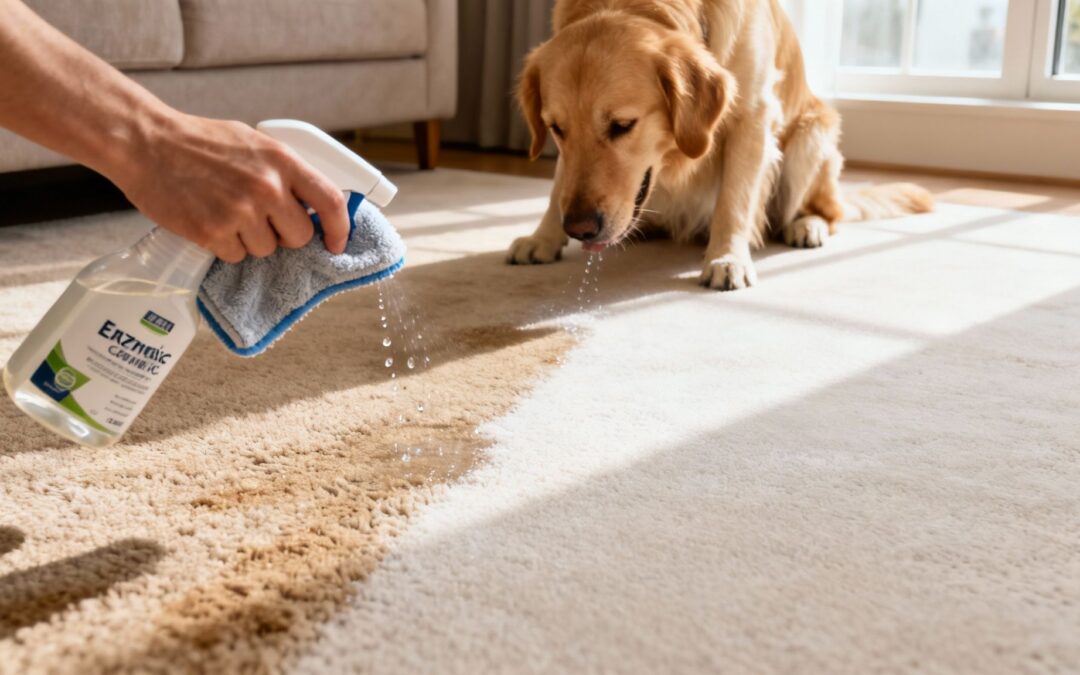
You know that frustrating moment when you've scrubbed a pet accident clean, only for that unmistakable dog urine smell to hit you again days later? It often happens on a damp or humid day, and no, you're not imagining it. This phantom odour is a common headache for pet owners, and it's all down to the unique chemistry of dog urine.
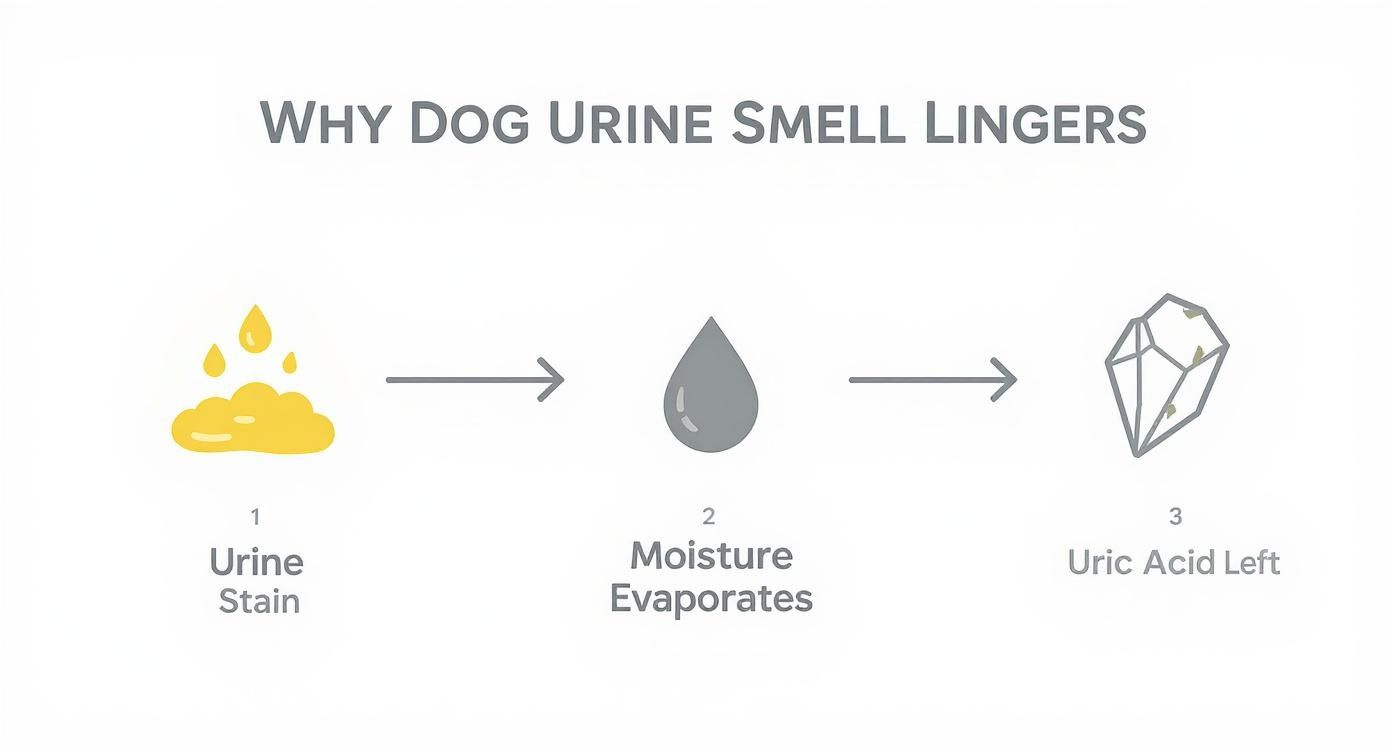
When your dog has an accident, they're leaving behind more than just a wet spot. Urine is a complex mix of urea, urochrome (the pigment that gives it that yellow colour), and, the real troublemaker, uric acid. While you can easily wash away the urea and urochrome with regular soap and water, the uric acid sticks around, forming non-soluble salt crystals.
Why That Dog Urine Smell Keeps Coming Back
These tiny uric acid crystals are the real culprits behind that stubborn, lingering smell. Think of them as microscopic, odour-packed time capsules. They burrow deep into porous surfaces—embedding themselves in carpet fibres, seeping into timber floorboards, clinging to tile grout, and even bonding with the concrete slab under your floors.
Because these crystals aren't water-soluble, your average household cleaner just slides right over them. So while your cleaning efforts might get rid of the visible stain and the immediate smell, those crystals are left behind, dormant and waiting.
Key Takeaway: Standard cleaners only tackle the easy stuff in dog urine. They leave behind the uric acid crystals, which are the true source of that recurring odour. This is precisely why the smell seems to disappear, only to mysteriously return with a vengeance.
The Science of the Lingering Scent
So, how do these dormant crystals spring back to life? It all comes down to moisture.
When the crystals are exposed to humidity—whether from a rainy day, a damp mop, or even a steam cleaner—they rehydrate. This process triggers a chemical reaction, releasing a concentrated burst of that potent, ammonia-like urine smell. It’s so strong it often seems like a fresh accident has just happened in the exact same spot.
This is why you'll often notice the smell is much stronger on humid or rainy days. The moisture in the air is literally reactivating the old urine spots. Understanding this cycle is the first step to truly solving the problem. You're not just cleaning a stain; you're fighting a chemical battle against resilient crystals that have chemically bonded with your floors and furniture.
When you spot that fresh puddle on the carpet, the clock starts ticking. Seriously. What you do in the next few minutes will make the difference between a simple clean-up and a phantom odour that haunts you for weeks. This is your best shot at tackling the dog urine smell before it even has a chance to settle in.
Think of it as damage control. Your one and only goal is to get as much of that liquid urine out of the carpet fibres as possible. You need to stop it before it soaks through the backing and into the underlay or, even worse, the subfloor. Once it hits those deeper layers, getting rid of the smell becomes a whole lot harder.
This is because as the moisture evaporates, it leaves behind highly concentrated uric acid crystals. Those crystals are the real source of that stubborn, lingering smell. The faster you act, the less chance they have to form.
Absorb as Much as Possible
Your gut instinct might be to grab a cloth and start scrubbing like mad, but please, don't do it. It's the worst thing you can do. Frantically rubbing a fresh urine stain only grinds the liquid deeper into the carpet and can permanently damage the fibres, leaving you with a fuzzy, frayed patch.
The key is simple: blot, don't rub.
Grab a thick stack of paper towels or an old, clean, light-coloured towel you don't mind sacrificing. Using a light colour is important because you can actually see the yellow urine being lifted out.
- Apply Firm Pressure: Lay your paper towels or cloth over the entire wet spot. Press down hard and evenly. For a big puddle, don't be afraid to stand on the towels—your body weight will provide the pressure needed for maximum absorption.
- Repeat with Dry Sections: Once the first lot of towels is soaked, get a fresh, dry stack. Keep blotting, moving to a dry section of your towel each time, until you can’t pull up any more moisture. You’ll honestly be amazed at how much liquid comes out this way.
Pro Tip: Never use a dark-coloured towel. Not only can you not see what you're absorbing, but some fabric dyes can bleed onto a light carpet when wet, leaving you with a brand new stain to deal with.
Dilute and Blot Again
Once you've blotted up every last drop of the original accident, it's time for a quick dilution. This step helps flush out the urine that has already started to soak into the individual fibres.
Get a small bowl of cool, clean water. Whatever you do, avoid hot water. Heat can actually set protein stains like urine, bonding them to the carpet fibres and making them almost impossible to remove later on.
Gently pour a small amount of cool water directly onto the stained area. You’re not trying to flood it, just re-wet it enough to dilute whatever urine is left. Let it sit for a minute, then repeat the exact same blotting process with fresh, dry towels until the area is as dry as you can get it.
By performing this immediate "first aid," you remove the vast majority of the odour-causing culprits before they get a foothold. This simple two-part process of blotting and diluting makes any deeper cleaning you do later far more effective and dramatically increases your chances of getting rid of that dog urine smell for good.
Choosing the Right Cleaner for the Job
Walking down the cleaning aisle can feel like a guessing game, with countless products all promising to be the one that finally works. But when you’re dealing with the stubborn, lingering smell of dog urine, only one type of cleaner truly gets to the heart of the problem.
Forget standard sprays and detergents. The undisputed champion in the fight against pet odours is the enzymatic cleaner.
Unlike traditional chemical cleaners that just mask smells with heavy perfumes, enzymatic formulas work on a completely different level. They don’t just cover up the odour—they literally dismantle and eliminate it. This is because they contain beneficial bacteria and enzymes that act as powerful biological catalysts.
The Science Behind Enzymatic Cleaners
So, how does it actually work? When you apply an enzymatic cleaner to a urine stain, you’re basically unleashing a microscopic clean-up crew. The helpful bacteria in the formula produce specific enzymes that are designed to target and break down the components of dog urine.
Think of it like this: the enzymes hunt down and "digest" the uric acid crystals, which are the real source of that persistent smell. They break these complex, insoluble crystals down into simple, odourless parts like carbon dioxide and ammonia, which then just evaporate away. The cleaner literally eats the source of the smell until nothing is left.
This biological process is why it's so important to follow the product's instructions, which nearly always advise keeping the area damp for a while. The bacteria need that moisture and time to get the job done right. It might seem slow, but it's the only way to be certain the uric acid is completely neutralised for good.
Key Takeaway: Using a standard cleaner is like painting over a stain on the wall—the problem is still lurking underneath. An enzymatic cleaner is like a surgical tool that dismantles the stain molecule by molecule, removing it permanently.
What to Look For on the Label
Not all enzymatic cleaners are created equal, and grabbing the wrong one can be a frustrating waste of money. When you’re choosing a product, here are a few things to look for to make sure you’re getting an effective solution.
- Enzyme-Specific Formula: The label should clearly state that it's an "enzymatic" or "bio-enzymatic" cleaner formulated specifically for pet urine. General-purpose enzyme cleaners might not be strong enough.
- Pheromone Neutralisers: Look for products that offer dual-action formulas. The best ones contain ingredients that also break down the pheromones dogs leave behind in their urine. These pheromones act as a "go here again" signal, so neutralising them is critical for preventing re-marking.
- Pet-Safe Ingredients: Always double-check that the product is non-toxic and safe to use around your pets and family once it has dried.
The shift towards enzymatic solutions in Australia has been huge, simply because they consistently outperform older cleaning methods. When you're tackling dried dog urine on carpet—a classic problem in so many Australian homes—enzyme-based products deliver far better results than old-school chemicals.
In fact, experts strongly advise against using ammonia or vinegar. Their strong scents can actually encourage a dog to reinforce its territory by urinating over the top again. Many popular Australian formulas now combine enzymatic and oxygen-based ingredients for superior odour and pheromone destruction. For a deeper dive, check out the professional pet odour control guidance from Budget Pet Products.
Choosing the right cleaner isn't just about cleaning up a mess; it's an investment in solving the problem for good. By understanding how enzymatic cleaners work and what to look for, you can confidently pick a product that will finally break the cycle of recurring odours and keep your home fresh and clean.
A Surface-by-Surface Guide to Odour Removal
Successfully eliminating dog urine smell isn't a one-size-fits-all job. A puddle on sealed hardwood is a completely different beast than a deep-set stain in a plush rug or porous concrete.
Using the wrong method won't just fail to get the smell out—it could permanently damage your floors or furniture. This is your playbook for tackling the most common surfaces around your home.
Tackling Carpets and Rugs
Carpet is easily the toughest battleground. Urine soaks right through the fibres, past the backing, and into the underlay and subfloor. It’s a multi-layered problem. For those stubborn smells that just won't quit, you’ll need specific techniques. You can find some excellent advice on effective carpet cleaning for pet odors to go along with these steps.
After you've blotted up a fresh accident, don't be shy with a high-quality enzymatic cleaner. You need to saturate the area, making sure the cleaner penetrates just as deeply as the urine did.
Once treated, cover the spot with a damp towel and leave it for at least 12-24 hours. This simple trick keeps the area moist, giving the beneficial bacteria in the cleaner the time they need to fully break down and digest the uric acid crystals causing the smell.
Critical Mistake to Avoid: Whatever you do, never use a steam cleaner on a urine stain. The intense heat will permanently set the stain by bonding the proteins to the carpet fibres. It makes the smell virtually impossible to remove later.
Cleaning Sealed Hardwood and Laminate
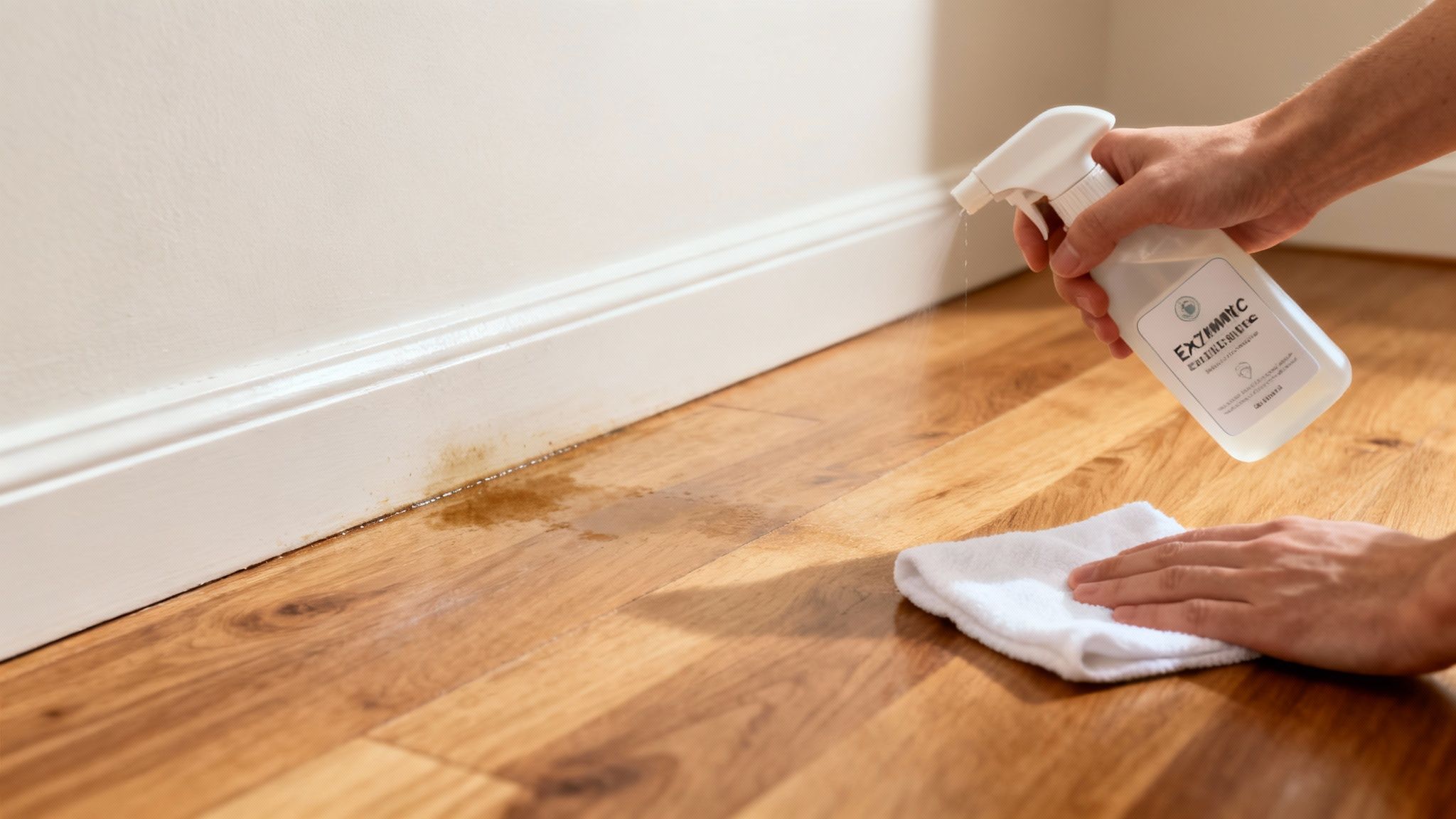
Sealed timber and laminate floors are much more forgiving, but speed is still your best friend. While the top sealant offers a layer of protection, urine can quickly seep into the seams between planks and cause damage to the wood underneath.
Wipe up any urine immediately. Follow up by spraying the area with an enzymatic cleaner designed for hard surfaces. Let it sit for the recommended time on the bottle, then wipe it clean with a damp microfibre cloth.
Make sure you dry the area completely when you're done. Any moisture left lingering in the seams can lead to the planks swelling, warping, or discolouring over time.
Upholstery and Fabrics
Dealing with a couch, mattress, or car seat is a lot like treating carpet, but it requires a more delicate approach. The first rule is to always do a spot test on a hidden area—like under a cushion or on the back—to ensure the cleaner won't cause any discolouration.
Gently saturate the stained area with your enzymatic cleaner. It's best to work from the outside of the stain inwards to stop it from spreading. Let the cleaner do its work for the instructed time, then blot the spot with a clean, dry cloth to lift out the excess liquid.
Good ventilation is crucial here. Open up the windows or point a fan at the spot to speed up the drying process. This helps prevent that musty, damp smell from developing in the thick padding.
Porous Surfaces Like Tile Grout and Concrete
Concrete and tile grout are sneakily porous. They act like sponges, trapping urine deep inside where the smell can become incredibly persistent. This is especially true for outdoor areas like patios or garages.
This is where the power of enzymatic cleaners really comes into play. The Australian pet enzyme cleaner market has boomed, and for good reason. One leading Australian family-owned company has sold over 20,000 bottles of its bio-enzymatic pet urine cleaner, proving how many pet owners rely on these formulas.
These cleaners contain beneficial bacteria that literally digest the uric acid crystals and odour-causing compounds at the source. Australian households are turning to them not just because they eliminate 99.9% of germs, but because they remove odours so completely that pets are less likely to re-mark the same spot.
To treat these tough surfaces, first give the area a good scrub with water and a stiff brush to clear away any surface dirt. Then, pour the enzymatic cleaner directly onto the grout lines or concrete stain, ensuring it’s fully saturated.
Let the cleaner sit for several hours—or even overnight for stubborn outdoor smells. If it starts to dry out, just reapply a bit more. Finally, rinse the area thoroughly with water and let it air dry completely.
Dog Urine Cleaning Methods by Surface Type
Navigating which cleaner to use on what surface can be confusing. Here’s a quick-reference table to help you choose the right approach every time.
| Surface Type | Recommended Cleaner | Application Method | Key Precaution |
|---|---|---|---|
| Carpet & Rugs | High-quality liquid enzymatic cleaner | Saturate, cover with a damp towel, let dwell for 12-24 hours, then blot and air dry. | Avoid steam cleaners; the heat sets the stain and odour permanently. |
| Sealed Hardwood & Laminate | Enzymatic cleaner for hard surfaces | Wipe up urine, spray cleaner, let sit per instructions, wipe clean, and dry thoroughly. | Don't let moisture sit in seams, as it can cause planks to swell or warp. |
| Upholstery & Fabrics | Fabric-safe enzymatic cleaner | Spot test first. Saturate from the outside in, let dwell, blot with a dry cloth. | Ensure excellent ventilation during drying to prevent musty smells in padding. |
| Tile Grout & Concrete | Concentrated enzymatic cleaner | Clean surface first, then pour cleaner to fully saturate. Let sit for hours, then rinse. | The surface is very porous; reapply cleaner if it dries out too quickly. |
This table should serve as a handy guide, but always remember to read the product label for specific instructions, especially when dealing with delicate materials.
How to Prevent Future Accidents and Re-Marking
Finally getting rid of that lingering dog urine smell is a massive win, but the job isn’t really done until you figure out how to stop it from happening again. Cleaning up is reactive; prevention is proactive. To break the cycle for good, you first need to understand why your dog is having accidents in the first place.
A sudden change in toilet habits should always start with a trip to the vet. It’s absolutely crucial to rule out underlying medical problems like urinary tract infections (UTIs), bladder stones, or even kidney disease. These conditions can make it painful or difficult for your dog to hold their bladder, leading to accidents that are completely out of their control.
If your vet gives your dog a clean bill of health, then it's time to look at behaviour. Dogs urinate indoors for a few common reasons, and pinpointing the trigger is your first step toward a real solution.
Uncovering Behavioural Triggers
Most behavioural urination falls into a few key categories. Figuring out which one applies to your dog helps you treat the root cause, not just the symptom.
- Submissive or Excitement Urination: This is really common in puppies and younger dogs. They might pee a little when they get overly excited (like when you walk in the door) or feel intimidated.
- Territorial Marking: Dogs use urine to claim their space. This is more frequent in unneutered males but can happen with any dog, especially if a new pet or person has joined the household.
- Separation Anxiety: Some dogs get incredibly stressed when they're left alone, and that anxiety can easily manifest as indoor urination.
Once you’ve got a better idea of the "why," you can start using strategies that directly address the behaviour and reinforce good habits.
Building Good Habits and a Fresh Start
Reinforcing positive toilet training is vital, even for older dogs. It all comes down to creating a clear, consistent routine that sets your dog up for success. This means frequent, scheduled potty breaks—especially first thing in the morning, last thing at night, and after meals or naps.
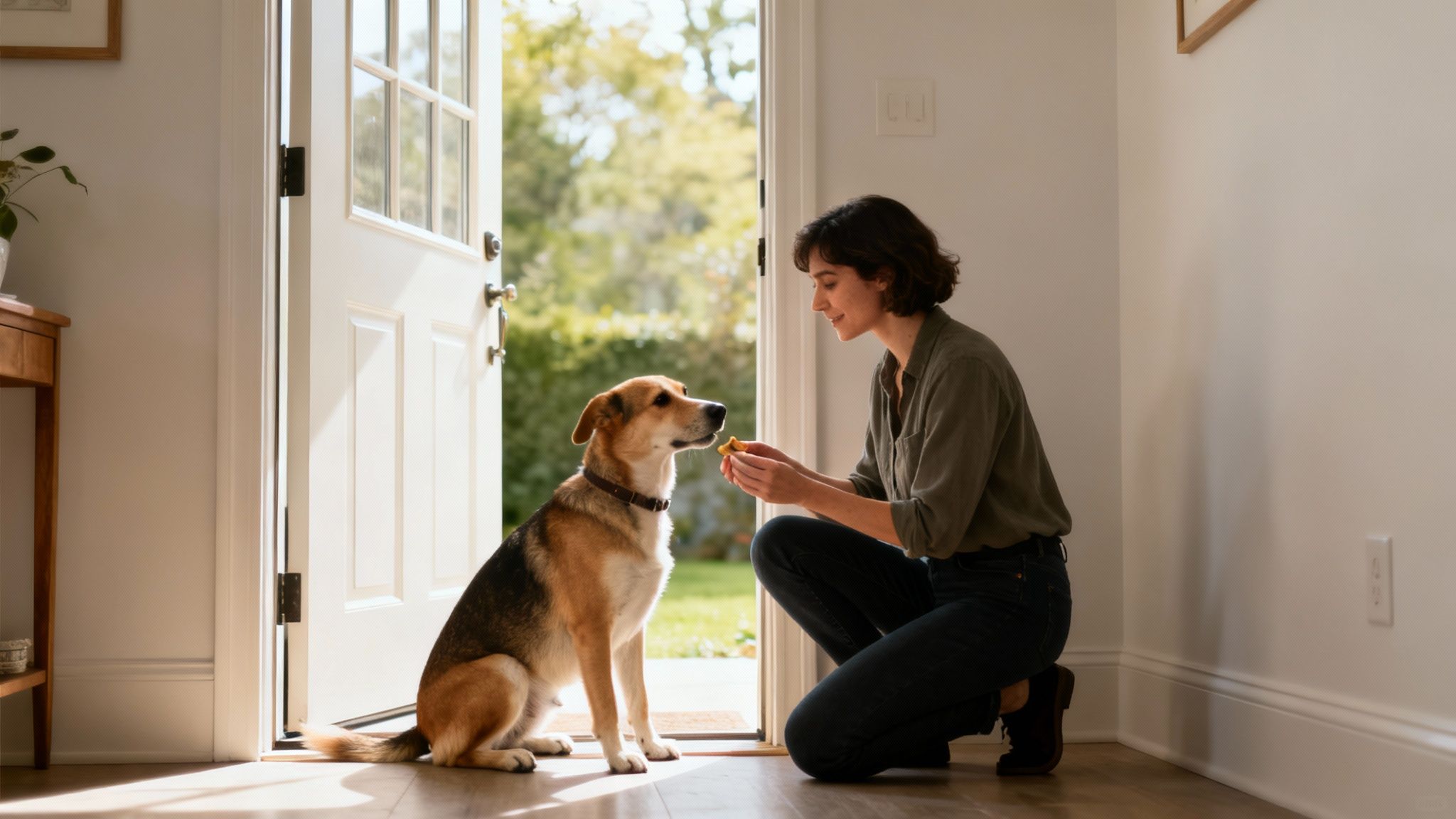
Every single time they go to the toilet outside, reward them with enthusiastic praise and a high-value treat. This positive reinforcement builds a powerful connection between going outside and getting something they love.
Pro Tip: Never, ever punish your dog for an accident. Scolding them or rubbing their nose in it only creates fear and anxiety, which can actually make the problem much worse. They won’t connect the punishment with the act of urinating—only with you being scary.
It's also essential to make previously soiled spots completely unappealing. After you’ve deep-cleaned with an enzymatic product, you can use scents that dogs naturally dislike to deter them from returning to the scene of the crime. Many dogs have a strong aversion to smells like:
- Citrus (lemon, orange)
- Vinegar
- Coffee grounds
A diluted citrus or vinegar spray on the cleaned spot can be a surprisingly powerful, natural deterrent. This approach is becoming more and more popular among health-conscious Australian pet owners who are trying to move away from harsh chemicals. In online communities, homeowners often swap tips for dealing with persistent urine smells, especially in tricky spots like pebbled yards where normal cleaning methods just don't work. You can find more discussions and see what others recommend for pet-safe odour solutions in Australia.
By combining a vet check-up, an understanding of your dog's behaviour, and consistent positive training, you can tackle the problem at its source. This proactive approach is the single best way to prevent future accidents and keep your home smelling fresh and clean.
Answering Your Top Questions About Dog Urine Odours
Even with the best cleaning plan, tricky questions always come up when you're knee-deep in a clean-up. Tackling dog urine odour can feel like a never-ending battle, and it's perfectly normal to have some lingering doubts. Here are the answers to the most common questions we get from frustrated pet owners.
Will the Dog Urine Smell Ever Go Away on Its Own?
It's a nice thought, but the answer is a definite no. The sharp, ammonia-like smell of a fresh accident might fade as the urine dries, but the real problem is just getting started.
What’s left behind are uric acid crystals. These microscopic crystals don't dissolve in water and will stay embedded in your carpet fibres, upholstery, or even floorboards forever. They lie dormant, waiting for moisture to reactivate them—which is why that awful smell suddenly reappears on humid days or after a light steam clean.
Without an enzymatic cleaner to physically break them down, those crystals will keep releasing that pungent odour every time they get damp.
The Bottom Line: You can't just wait out a dog urine smell. You have to actively remove the uric acid crystals with the right kind of cleaner to get rid of it for good. Ignoring it only lets the problem dig in deeper.
Why Can I Smell Urine but Can't Find the Source?
This is easily one of the most maddening situations for any pet owner. You know the smell is there, lurking somewhere, but you just can't pinpoint it. This usually happens for a few key reasons:
- Old, Faded Stains: The visible part of the stain might have vanished long ago, but the invisible uric acid crystals are still there, off-gassing that distinct odour.
- Multiple Small Spots: Your dog might not be leaving one big puddle. Instead, they could be "marking" with several smaller spots that are much harder to see on their own.
- Vertical Surfaces: Don't forget to look up! Male dogs, in particular, often urinate against furniture legs, walls, curtains, or door frames. These spots are easy to miss.
Your best friend in this scenario is a UV blacklight. In a darkened room, dried urine stains will glow, revealing every single hidden spot you’ve missed. This lets you target your cleaning efforts exactly where they're needed most, saving you a ton of time and frustration.
Are DIY Solutions Like Vinegar and Bicarb Soda Effective?
Vinegar and bicarb soda are hailed as household heroes, but they really fall short when it comes to dog urine. A vinegar solution might help neutralise the immediate ammonia smell, and bicarb soda is great for absorbing surface moisture and odour, but neither one can actually break down uric acid crystals.
At best, they’re a temporary fix. They mask the smell for a little while, but they don’t solve the underlying chemical problem. As soon as the area gets damp again, that smell will be back.
For true, permanent odour removal, you absolutely need an enzymatic cleaner designed specifically to dismantle the uric acid.
Is It Safe to Use Air Fresheners or Candles to Cover the Smell?
Trying to mask the smell of dog urine with strong fragrances is not only a losing battle but can also be a problem for your pet. A dog's sense of smell is incredibly sensitive—up to 100,000 times more powerful than ours. A scent that seems pleasant to you can be completely overwhelming and irritating for them.
Many pet owners also worry about the potential effects of scented candles on your dog, as certain essential oils and paraffin waxes can be harmful when inhaled.
Ultimately, covering up the odour doesn't fix the root cause and can make your home an unpleasant place for your four-legged friend. The goal should always be to completely eliminate the source of the smell, not just hide it.
Still struggling with deep-set odours that just won't budge? Sometimes, even the best DIY efforts aren't enough. For stubborn stains that have penetrated your carpet underlay, professional help is the most effective solution. The team at Right Price Carpet Cleaning uses powerful, truck-mounted steam cleaning equipment and professional-grade treatments to extract odours from the deepest layers of your carpet, ensuring a truly fresh and hygienic result. Get an instant quote online and let the experts restore your carpets for good. Find out more at https://rightpricecarpetcleaning.com.au.
Recent Comments