



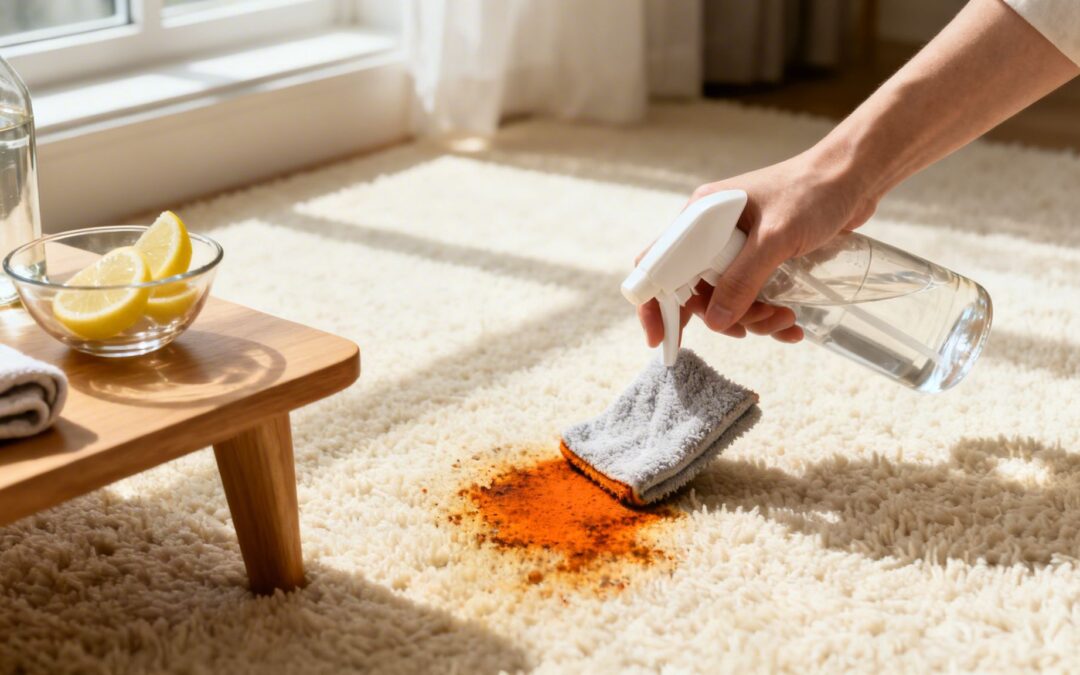
That little orange-brown rust stain on your carpet isn't just an ugly mark. It's the sign of a chemical reaction where iron oxide has literally bonded with your carpet fibres. That’s why it’s so tough to get out with standard household cleaners—you’re not just cleaning a spill, you’re fighting chemistry.
Why Rust Stains Are So Stubborn

Most people I talk to are shocked at how tenacious a rust stain can be. Unlike a food or drink spill that just sits on top of the pile, rust chemically alters the fibres themselves. This process, called oxidation, creates a deep-set discolouration that your usual detergents and spot treatments simply can't reverse.
Think of it this way: a food stain is something on your carpet, but a rust stain has become part of your carpet. The iron oxide particles have essentially dyed the fibres from the inside out. Aggressive scrubbing just makes it worse by fraying the carpet and spreading the stain around.
The Chemistry Behind the Stain
The problem always starts with three things: a piece of metal, a bit of moisture, and oxygen. It could be anything from a forgotten metal toy, the legs of an old lamp, or even a damp tool left on the rug for a few hours. The iron oxide that forms then latches onto anything porous, including:
- Synthetic carpet fibres like nylon and polyester
- Natural materials such as wool and cotton
- Porous hard surfaces like concrete and unsealed tile
This powerful chemical bond is why you need a proper rust stain remover. You need a product that can reverse the oxidation, not just clean the surface.
Key Takeaway: Ignoring a rust stain does more than just ruin your home’s look. Over time, that iron oxide will weaken and break down the carpet fibres, causing premature wear and even bald spots in high-traffic areas.
A Common and Costly Problem
Here in Australia, this is a massive issue, especially in humid coastal cities. The combination of iron-rich soils and damp air means rust can easily be tracked in from outside. According to industry data, an untreated rust stain can shorten a carpet's lifespan by 25-30%, potentially costing families hundreds in premature replacement costs.
This is where professional services, like ours at Right Price Carpet Cleaning, can make a real difference by restoring your carpet and preventing that costly damage. If you're interested in the broader market, you can find more information in the latest Australian stain remover industry reports.
Building Your DIY Rust Removal Toolkit
Before you even think about tackling that stubborn orange stain, let’s get your gear sorted. Having the right supplies on hand is half the battle won—it not only makes the job easier but also prevents you from turning a small problem into a big, costly one. The good news is, you probably have everything you need in your kitchen or laundry already.
The most effective DIY rust stain remover solutions are often gentle acids you'd find in your pantry. We're talking about simple white vinegar or fresh lemon juice. The acetic acid in vinegar and citric acid in lemons are brilliant at dissolving the iron oxide particles clinging to fabric fibres. It’s a simple, safe, and surprisingly powerful alternative to harsh commercial chemicals.
Your Household Essentials
To get started, you'll want a few basic items ready to go. These tools will help you apply your chosen solution without oversaturating the fabric and work the stain out safely.
- A Spray Bottle: Perfect for applying your vinegar or lemon juice solution evenly.
- White Microfibre Cloths: Always use white cloths to avoid any accidental colour transfer onto the stained area. Grab at least two—one for applying the solution and one for blotting.
- A Dull Knife or Spoon: The blunt edge is ideal for gently scraping away any loose, flaky rust particles before you add any liquid.
When you're putting your kit together, it’s worth knowing that some tiny metal fragments can get deeply embedded in surfaces, leading to future rust spots. For these situations, especially on cars or hard surfaces, professionals often turn to specialised products like an Iron Fallout Remover, which is formulated to target and dissolve those hidden metallic bits.
The Most Important First Step
Now for the one step you absolutely cannot skip: the spot test. Before a single drop of your solution touches that rust stain, you have to test it somewhere out of sight. Think about an inconspicuous area—the inside of a sofa skirt, a corner of the rug that lives under the couch, or the inner seam of a piece of clothing.
Apply a tiny amount of your cleaning solution to this hidden patch. Let it sit for a few minutes, then blot it dry with a clean cloth. Check carefully for any signs of colour bleeding or fibre damage. It’s much better to discover your solution is too strong on a hidden spot than right in the middle of your living room carpet.
This simple check takes just a couple of minutes but can save you from a permanent and expensive mistake. Once you’ve confirmed your chosen rust remover is safe for the material, you can get to work with confidence. Just remember to go slowly, blot gently, and never, ever scrub. Scrubbing only pushes the rust deeper and makes the problem worse.
How to Remove Rust Stains from Any Surface
The secret to getting rid of a rust stain isn’t just about the product you use; it’s about matching your technique to the surface. A method that works wonders on your concrete patio could easily spell disaster for your living room rug. Below, we’ll walk through the right way to tackle the most common rust-related headaches around your home.
Choosing your approach can feel a bit tricky. To help you out, here’s a simple guide to point you toward either a DIY solution or a commercial rust remover, depending on what kind of stain you're dealing with.

As you can see, small, fresh stains are often perfect candidates for a homemade fix. On the other hand, older, more embedded rust typically needs the muscle of a dedicated commercial product to get the job done right.
Tackling Rust on Carpets and Rugs
When you spot a rust stain on your carpet, your first instinct might be to grab a brush and scrub furiously. Don't do it. That’s the quickest way to damage the carpet fibres and push the stain deeper, making it a permanent fixture. The real key here is gentle blotting and a bit of patience.
Let's say you've found a rust mark left by the damp leg of a metal plant stand on your light-coloured berber carpet. First, gently scrape away any loose, flaky rust particles with a dull knife or the edge of a spoon. You have to be careful not to pull or snag the carpet loops.
Next, you'll want to mix a simple, gentle acid solution. A 50/50 mix of white vinegar and water is a great place to start.
- Apply the solution sparingly with a spray bottle or by dabbing it on with a clean white cloth. The goal is to dampen the stain, not soak the entire carpet backing.
- Let it sit for about 10-15 minutes. This gives the acid time to start dissolving the iron oxide.
- Using a separate, dry white cloth, gently blot the area. Press down firmly to lift the rust and moisture right out of the fibres. You should see the orange stain transferring onto your cloth.
- Keep repeating this process—a little solution, then blot—until the stain is gone.
This method does require patience, but it’s by far the safest way to treat delicate fibres without causing irreversible fraying or spreading the stain.
Pro Tip: Never use hot water or a hairdryer to try and speed up the drying process on carpets or clothing. Heat can chemically set a rust stain, making it permanent. Always let the area air-dry naturally.
Removing Rust from Clothing and Upholstery
For fabrics like clothing or sofa cushions, the strategy is similar but adds a crucial pre-treatment step before you even think about washing. Just throwing a rust-stained shirt into the washing machine can bake the stain in, making it nearly impossible to remove later on.
Imagine you’ve found a rust spot on a favourite cotton shirt from a faulty metal button. Lay the garment flat and apply lemon juice directly onto the stain. Then, sprinkle a generous layer of salt over the lemon juice. The salt acts as a mild abrasive that helps lift the dissolved rust particles away from the fabric.
Let this paste sit on the fabric for at least an hour. Placing it in direct sunlight can often speed things up, as the gentle heat helps the citric acid work more effectively. After an hour, just brush off the salt and rinse the area with cool water before washing it as you normally would.
Cleaning Rust from Hard Surfaces Like Tile and Concrete
Hard, non-porous surfaces like your bathroom tiles or a concrete driveway can handle a much more aggressive rust stain remover. These materials aren't nearly as delicate as fabric fibres, so you have more powerful options at your disposal.
For a scenario like rust streaks on patio pavers from a dripping outdoor tap, a powdered citric acid solution is incredibly effective. Start by clearing away any loose debris. If you're cleaning stains in a toilet bowl, turn off the water and use a cup to empty the bowl first. Sprinkle the citric acid powder directly onto the damp stain, let it sit for 15-20 minutes, then give it a good scrub with a stiff-bristled brush.
The acid reacts with the iron oxide, lifting it right off the surface. You can then rinse the area thoroughly with clean water. While you're tackling rust, you might also run into other persistent issues, especially around the pool area, so it can be helpful to know how to remove other stubborn stains like calcium buildup.
For deep-set or very old stains, especially on carpets, a DIY approach just might not be enough. This is where professional services have a significant advantage. At Right Price, our specialty pretreatments are designed to tackle rust head-on, achieving 95% success rates on even the most embedded stains. That figure far surpasses DIY acid removers, which can risk permanent fibre damage in up to 40% of cases. For families, this service not only removes visible rust but allergens as well, reducing asthma triggers by up to 50% after a deep clean.
Common Mistakes That Make Rust Stains Worse

When you find a bright orange stain on your carpet, the first instinct is often to panic. It’s easy to grab the wrong product or use the wrong technique, turning a small issue into a much bigger one. In our years of professional cleaning, we’ve seen countless well-intentioned attempts make rust stains permanent.
Knowing what not to do is just as crucial as knowing which rust stain remover to use. The biggest mistake we see? Reaching for chlorine bleach. While it seems like a powerful stain fighter, it’s the worst possible choice for rust. Bleach triggers a chemical reaction with the iron oxide, creating a new, dark yellow stain that bonds permanently with fabric fibres.
Applying Too Much Force
Another common pitfall is scrubbing the stain with too much enthusiasm. When you scrub a rust stain on a carpet or rug, you aren't lifting it out. Instead, you're grinding the iron oxide particles deeper into the fibres and spreading them outwards, making the stain much larger.
This aggressive action also causes irreversible damage to the carpet pile, leading to noticeable fraying and texture change. The correct method is always gentle blotting, which lifts the stain upwards and out of the fibres.
Using Heat to Dry the Area
After treating a stain, the temptation to speed up drying with a hairdryer or hot water is strong. Don't do it. Applying heat to a rust stain is a surefire way to "bake" it into the fabric for good.
Heat acts as a catalyst, chemically setting the iron oxide into the fibres of your carpet or clothing. This makes the stain nearly impossible to remove, even with professional treatments. Always allow the area to air-dry naturally.
By avoiding these critical errors, you give yourself the best chance of success. A patient and gentle approach will always be more effective than a rushed and forceful one. Remember the three main things to avoid:
- Chlorine Bleach: It chemically changes the rust into a new, permanent yellow stain.
- Aggressive Scrubbing: This frays carpet fibres and spreads the stain, making it larger and deeper.
- Heat Application: Using hairdryers or hot water will permanently set the stain into the fabric.
Steering clear of these mistakes will give you the best possible chance of removing the stain without causing collateral damage. If a stain persists despite your best efforts, it's a clear sign that it’s time to call in a professional to tackle it safely.
Sometimes, you’ve just got to know when to throw in the towel. While tackling household stains yourself is a great way to save money, there are moments when calling in a professional is the smarter move. When it comes to rust, pushing a DIY rust stain remover too far can easily turn a fixable spot into a permanent disaster.
Knowing your limits isn't a sign of defeat—it's about protecting your valuable carpets and furniture. If you find yourself in any of these situations, it's a clear signal that it’s time to pick up the phone.
The Stain Is Old or Very Large
A small, fresh rust spot is one thing. A giant orange patch that’s been sitting there for months? That’s a whole different battle. Over time, rust particles (iron oxide) chemically bond with carpet fibres, almost becoming a part of the fabric itself.
A forgotten metal bucket or the leg of an old plant stand can leave behind a huge stain that a simple lemon juice and vinegar mix just won’t touch. Professionals come armed with powerful, pH-neutralising agents and hot water extraction machines that can dissolve and lift deep-set rust without damaging the carpet underneath.
Expert Insight: At Right Price Carpet Cleaning, we often see large, old rust stains that have been unsuccessfully treated multiple times. Each failed attempt can lock the stain in further, making our job more difficult. Calling a professional first often yields the best and most cost-effective result.
You're Dealing with Delicate Materials
Not all carpets are built the same. A tough, synthetic berber can handle a bit of a scrub, but delicate natural fibres like wool or silk are a completely different story. They're incredibly sensitive to even mild acids and can be ruined in an instant.
- Wool: Can easily be discoloured or have its fibres weakened by acidic solutions if they aren't neutralised perfectly.
- Silk and Viscose: These are extremely reactive to moisture and agitation. The wrong cleaning method can cause permanent watermarks or ruin the texture.
- Antique Rugs: Often coloured with old vegetable dyes that will bleed or fade the second they're touched with a DIY cleaning solution.
With these high-value materials, the risk of causing irreversible damage is just too high. A professional technician can identify the fibre and choose a specific rust stain remover and method that’s both safe and effective for that material.
Your Own Attempts Have Failed
So, you’ve tried the vinegar, you’ve blotted patiently, and you’ve let it dry… but that orange stain is still staring back at you. Maybe it faded a little, but it’s definitely not gone. This is the time to stop.
If a gentle, first-aid approach doesn’t work, reaching for harsher chemicals or scrubbing harder is a recipe for disaster. That’s how you end up with bleached patches, frayed fibres, or a stain that’s now permanently set. When your best efforts fall short, it’s a sure sign the stain needs professional-grade equipment and solutions that you just can't buy off the shelf. A trained technician from a service like Right Price Carpet Cleaning can step in, assess what’s been done, and use a targeted treatment to finish the job safely.
Even with the best instructions, you're bound to have a few questions. We get it. Over the years, we've heard just about every rust-related query there is. To make things easier, we’ve put together answers to the most common questions our team gets asked.
Lots of people ask us about the classic lemon juice and salt trick. Does that old household remedy actually work? Yes, it can be surprisingly effective for the right kind of stain. The citric acid in the lemon helps dissolve the rust, while the salt acts as a gentle abrasive to lift it out of the fibres.
You just make a paste, pop it on the stain, and let it sit for about an hour. If you can, leaving it in the sun can give the process a bit of a boost before you rinse it off.
But a quick word of warning: the acid in lemon juice can sometimes lighten or bleach coloured fabrics. Always do a quick spot test on a hidden area, like an inside seam, to make sure it won’t cause any damage. For older, stubborn stains or delicate materials, calling a professional is always the safer bet.
Why Did My Rust Stain Turn Yellow After I Cleaned It?
This is a scenario we hear about all the time, and the culprit is almost always chlorine bleach. When bleach meets iron oxide (that's rust, chemically speaking), it triggers a reaction that creates a new, permanent yellow stain. This new stain chemically bonds to the fabric fibres, making it impossible to remove.
It’s a very common mistake, but unfortunately, it usually results in permanent discolouration. To stay on the safe side, stick to acidic cleaners like white vinegar or a proper rust stain remover. If the damage is already done, your best shot is to have a professional take a look.
How Can I Prevent Rust Stains in the Future?
Trust us, prevention is always easier than a cure. A few simple habits can save you a whole lot of scrubbing down the track.
- Pop waterproof saucers under all your indoor plant pots to stop any overflow from seeping out.
- Stick protective felt pads or coasters under the legs of any metal furniture, especially if it’s sitting on light-coloured carpet or rugs.
- Wipe up any spills or moisture near metal items straight away. It's also a good idea to regularly check for leaks or condensation around windows and pipes.
For outdoor areas like patios and walkways, just making sure rainwater drains away properly can make a huge difference. It stops rust from forming in the first place and then getting tracked inside your home.
If you’re staring down a rust stain that’s too old, too big, or on a fabric you don’t want to risk damaging, don’t make it worse. The expert team at Right Price Carpet Cleaning has the professional-grade tools and know-how to safely and effectively get rid of stubborn rust from carpets, upholstery, and more. Get an instant quote and book your service online today.
Recent Comments