



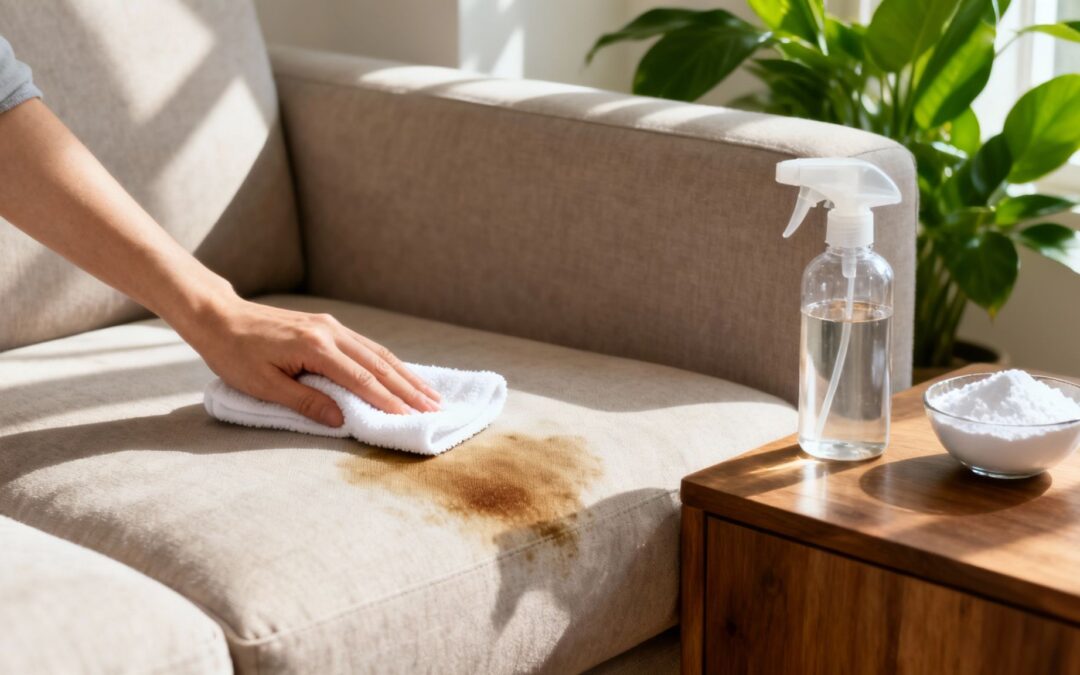
That sinking feeling when a glass of red wine tips over onto your brand-new sofa doesn't have to end in tears. Forget panic—it's the enemy of a clean couch. Your best friend in this situation is a calm, quick response. What you do in the first few seconds can mean the difference between a quick fix and a permanent stain.
Your Immediate Action Plan for Couch Spills
The most important rule? Blot, don't rub. Scrubbing a fresh spill only grinds the stain deeper into the upholstery fibres, making it a nightmare to get out later.
Instead, grab a clean, dry cloth or a few paper towels and press down gently on the spill. Let the towel do the work, absorbing as much of the liquid as you can. Always work from the outside of the stain inwards to stop it from spreading.
First-Aid Steps for Any Spill
If you’re dealing with something thicker, like mud, gravy, or a dropped piece of food, your first move is to gently scrape off any solids. The edge of a spoon or a dull knife works perfectly for this. Getting the solids off first means you won't accidentally push them deeper into the fabric when you start blotting the liquid part of the mess.
This simple flow is your go-to for any couch spill emergency.
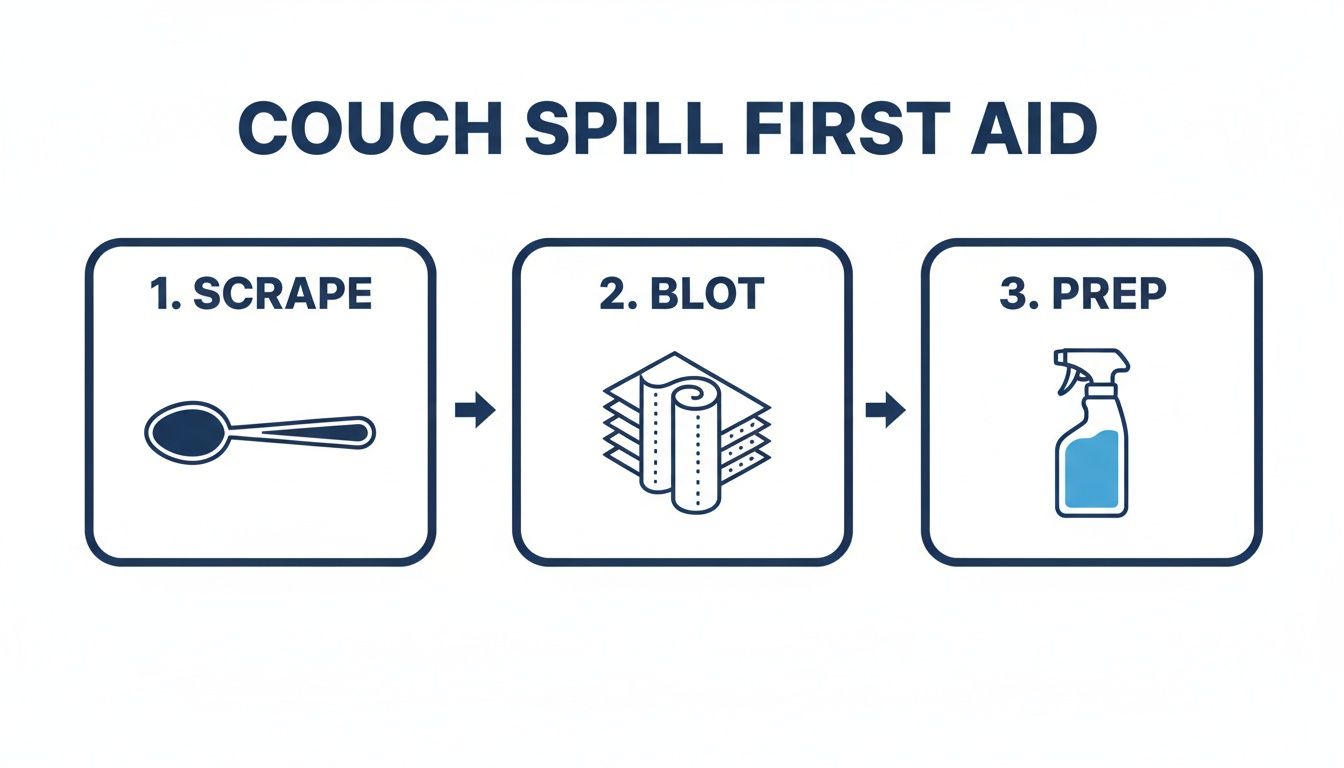
Nailing these first few actions—scraping, blotting, and prepping the area—is more than half the battle won. Once you've got the spill under control, you can move on to choosing the right stain remover for your couch's specific fabric type.
Remember: Speed is your secret weapon. Upholstery care experts agree that over 90% of common household spills can be completely removed if you treat them right away. Waiting even a few minutes allows the stain to start chemically bonding with the fabric, and that drastically lowers your chances of success.
Choosing the Right Cleaner for Your Couch Fabric
Picking the wrong cleaner for your couch is a bit like washing a wool jumper in hot water—you can cause irreversible damage like faded colour, a weird texture, or even weakened fibres. Before you reach for any stain remover, the most critical step is figuring out exactly what kind of material you're working with.
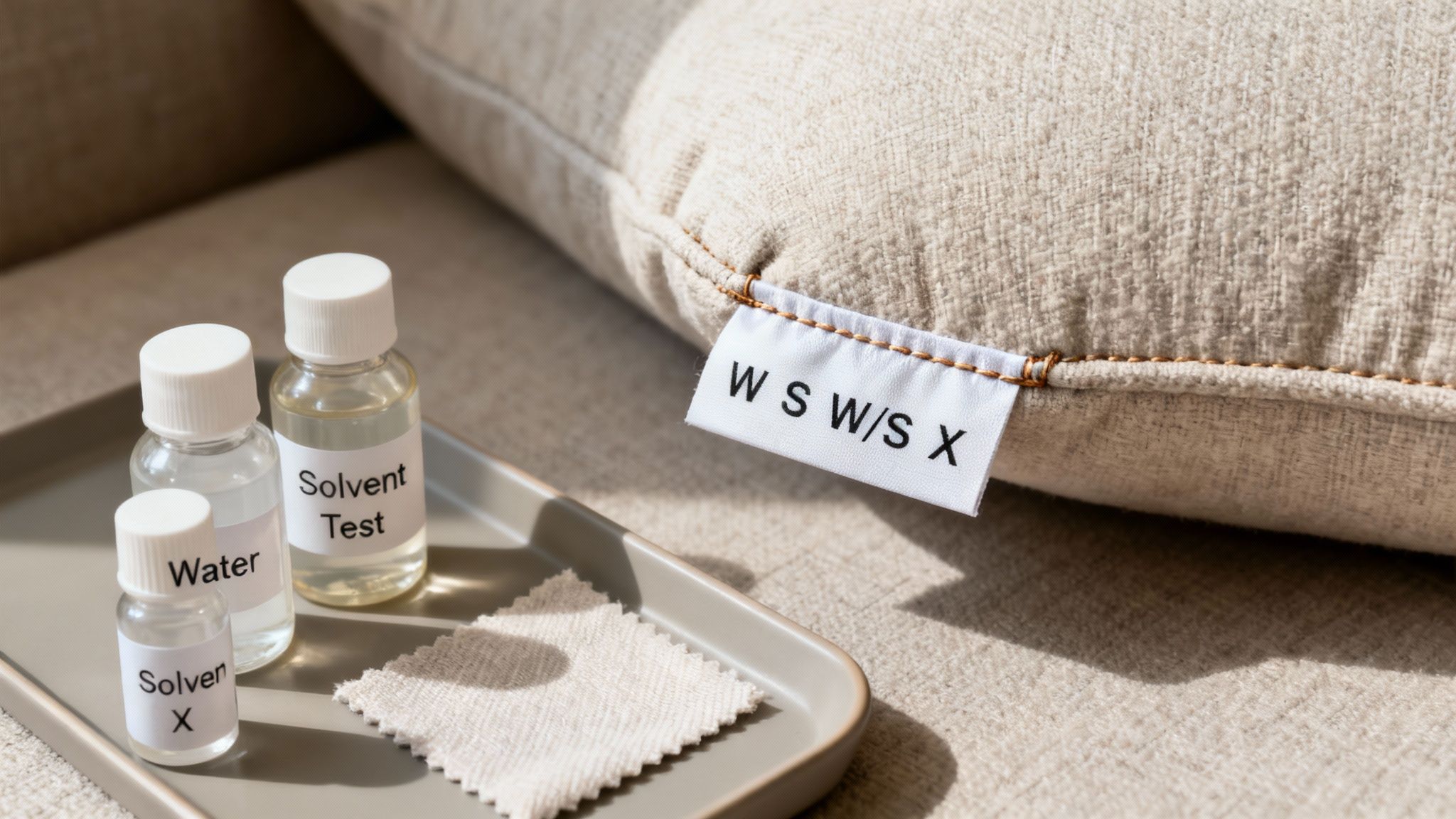
Luckily, you don't have to guess. Most sofas come with a cleaning tag that holds the secret, usually tucked away under the cushions or attached to the frame. This tag has a simple letter code that tells you exactly what kind of cleaner is safe to use.
Decoding Your Couch Cleaning Tag
Those letters you see—W, S, W/S, and X—are your roadmap to safe stain removal. Each one specifies the type of cleaning agent your upholstery can handle without you accidentally making a bigger mess. Grabbing the wrong one can be a costly mistake.
For instance, using a water-based cleaner on a couch labelled ‘S’ (Solvent Only) can leave a permanent water ring that’s far worse than the original stain. This is really common with delicate fabrics like certain velvets or silks that need a specialised approach.
Knowing your couch's material is paramount before you even think about cleaning products. There are some great guides on choosing upholstery fabric that can help you identify different types and their care needs. This knowledge is your first line of defence against accidental damage.
Matching Cleaners to Fabric Codes
To make things easy, we’ve put together a quick guide that explains what each code means and which stain remover you should be using. And remember, always spot-test your cleaner on an inconspicuous area first, like the back of the skirt or under a cushion.
Couch Fabric Cleaning Codes and Safe Stain Removers
This table is your quick-reference guide for deciphering your couch's cleaning tag. Using it will help you choose the right stain remover and avoid accidentally damaging your furniture.
| Cleaning Code | What It Means | Safe Stain Remover Type | Avoid |
|---|---|---|---|
| W | Water-Based Cleaning Only | Water, mild soap, upholstery shampoos | Solvents, bleach, ammonia, strong degreasers |
| S | Solvent-Based Cleaning Only | Dry cleaning solvents, rubbing alcohol | Water, soap, any water-based cleaning products |
| W/S | Water- or Solvent-Based Cleaning | Water-based or solvent-based products are safe | Harsh chemicals, bleach |
| X | Vacuum Only (No Liquids) | No cleaning agents—vacuuming and light brushing only | Any liquid cleaner, including water and solvents |
As you can see, a couch with an ‘X’ code is the most delicate of all. Any liquid, even just plain water, can cause shrinking or staining. For these types of materials, calling a professional is almost always the safest and most effective choice.
Pro Tip: If you can't find the tag, it's best to err on the side of caution. Try testing a pure solvent-based cleaner (like rubbing alcohol on a cotton bud) in a hidden spot. If that seems okay, proceed carefully. If not, try a water-based solution in a different hidden spot.
Think about it this way: a family-friendly couch made from a synthetic microfibre will probably have a ‘W’ or ‘W/S’ code, which is why it’s so resilient and easy to clean. Performance fabrics are popular for a reason! On the other hand, a designer linen sofa is more likely to have an ‘S’ code, demanding much more specialised care. Understanding this difference is the key to keeping your furniture looking great for years.
Proven Methods for Tackling Stubborn Stains
Alright, you’ve figured out what your couch is made of and you know speed is your best friend. Now for the main event: getting rid of the stain itself.
This is where a bit of strategy comes in. You wouldn't use the same tactics for a red wine spill as you would for a greasy pizza mark; in fact, doing so could make things a whole lot worse. The real secret is matching your cleaning method to the type of stain you're dealing with. Think of it as a little bit of couch-side chemistry. Some stains are water-based, others are oily, and some are protein-based. Each one needs a specific approach to break it down without damaging your upholstery.
Conquering Red Wine Spills
A red wine spill can feel like a complete disaster, but it's often more dramatic than it is permanent—if you move quickly. It’s the tannins in the wine that give it that deep, staining colour, and the goal is to pull them out of the fabric before they can truly settle in.
Once you’ve blotted up every last drop of excess wine, cover the entire stain with a generous layer of table salt. It sounds a bit strange, but the salt crystals will physically draw the remaining wine up and out of the fibres. Just let it sit until it starts to turn pink, then vacuum it all up. If a faint mark is left behind on a 'W' coded fabric, a bit of mild dish soap mixed with cool water, blotted gently, should take care of the rest.
Dealing with Coffee and Tea Stains
Coffee and tea stains are a lot like wine stains because they’re also tannin-based. That first blot is absolutely critical to soak up as much of the liquid as you can. After that, one of the simplest and most effective solutions is a mix of equal parts white vinegar and water.
Using a clean cloth, sparingly apply the vinegar solution, making sure to blot, never rub. The gentle acid in the vinegar is brilliant at breaking down those tannins. Once the stain is gone, follow up by blotting with a cloth dampened with plain water to rinse the area, then blot it dry.
A huge mistake people make is using hot water on coffee stains, especially if there's milk in it. The heat can literally cook the proteins from the milk right into the fabric, setting the stain for good. Always, always start with cool water for these spills.
Erasing Ink and Marker Stains
That accidental biro streak or a masterpiece from your toddler’s art session can be a jarring sight on a clean couch. For these solvent-based stains, you’ll need a solvent-based cleaner. On a couch with an 'S' or 'W/S' tag, something as simple as rubbing alcohol or even an alcohol-based hairspray can work wonders.
Just dab a small amount of the alcohol onto a cotton bud and gently work from the outside of the ink mark inwards to stop it from spreading. You’ll see the ink lift and transfer onto the cotton. Keep switching to fresh buds so you’re not just smearing the ink back onto the fabric. While this first-aid is great, knowing the full game plan for different materials is crucial. For a more complete guide, check out this excellent resource on how to clean a fabric sofa.
Lifting Grease and Oil Stains
Greasy stains from things like pizza, chips, or salad dressing are oil-based, which means plain water won’t do a thing. Your first move here is to absorb as much of that oil as you possibly can. Sprinkle the area liberally with cornflour or bicarbonate of soda.
Let the powder sit for at least 15-20 minutes to really soak up the grease, then vacuum it all away. To tackle what's left, a dry-cleaning solvent is your best bet for 'S' coded fabrics. For 'W' coded couches, a single drop of clear dishwashing liquid on a damp cloth can help break down the last of the oil.
This move toward targeted cleaning is something we're seeing across the board. The Australian fabric stain remover market was valued at AUD 111.84 million and is on the rise, proving that households are realising specific products deliver far better results than old all-purpose sprays.
Neutralising Pet Stains
Pet urine stains come with a double whammy: the visible stain and the lingering odour caused by uric acid crystals. For this, your only real solution is an enzymatic cleaner. These aren't just regular cleaners; they contain special enzymes that actually digest the proteins and acids in the urine, completely eliminating both the stain and the source of the smell.
After blotting the initial accident, saturate the area with the enzymatic cleaner and let it do its thing according to the product's directions. This isn't just a suggestion—it's the only truly effective way to deal with pet accidents on your couch, as it gets to the very root of the problem.
Effective DIY Stain Removers From Your Pantry
Commercial products are handy, but you'd be surprised what you can achieve with a few things already sitting in your kitchen. Before you head to the shops, remember that some of the best stain removers for your couch can be whipped up in minutes, saving you time and money.
These DIY solutions are fantastic for tackling those everyday spills without reaching for harsh chemicals. Plus, you know exactly what you’re putting on your furniture. While there's a huge market for store-bought cleaners—in fact, liquid removers are projected to grow by 5.3% annually between 2025 and 2035 because they're so easy to use—your homemade versions can be just as powerful. You can learn more about these market trends and consumer preferences for fabric care.
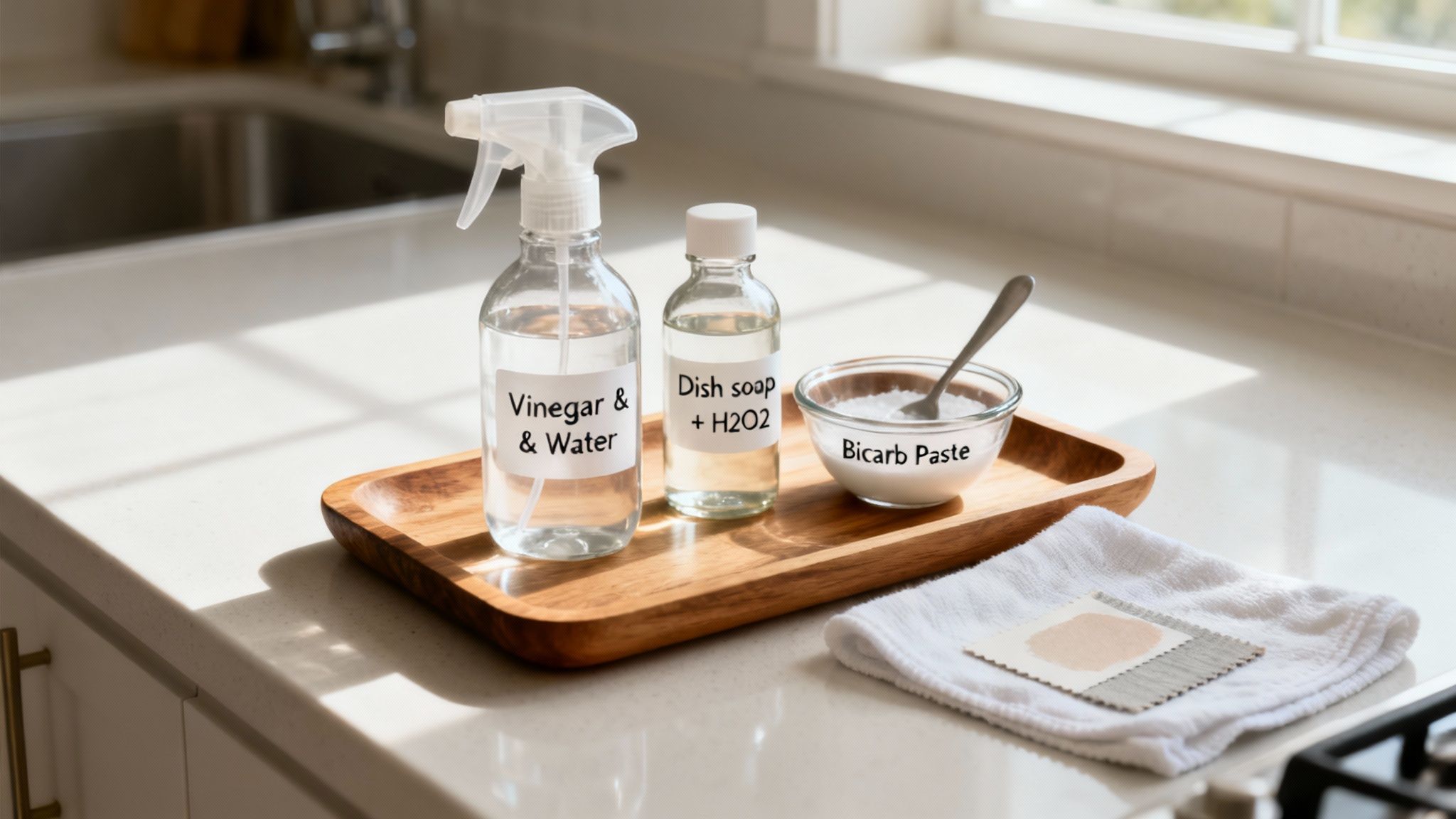
No matter what you're using, homemade or store-bought, there's one golden rule our technicians swear by: always patch test first. Find a hidden spot—think the underside of a cushion or a flap of fabric on the back of the frame—and apply a tiny amount. Let it dry to make sure it doesn't leave a mark or cause any discolouration.
The Gentle Vinegar and Water Solution
For many common water-based stains like soft drinks or light food spills, a simple vinegar solution is your best first move, especially on synthetic fabrics (couches with a 'W' code). Its mild acidity works wonders to break down the stain without being too aggressive.
- Recipe: Just mix equal parts white vinegar and cool water in a spray bottle.
- Best For: Synthetic fabrics like microfibre or polyester that have a 'W' cleaning code.
- How to Use: Give the stain a light mist; you don't want to soak it. Gently blot the area with a clean, white cloth, starting from the outside edge of the stain and working your way in. Keep dabbing until the stain lifts, then go over it with a fresh cloth dampened with plain water to rinse away the vinegar.
Dish Soap for Tougher Stains
Need a bit more oomph for a stubborn mark on a water-safe couch? A drop of dish soap can provide that extra cleaning muscle. The surfactants in dishwashing liquid are literally designed to break down grease and lift away grime.
Important Tip: Make sure you use a clear, uncoloured dish soap. The dyes in coloured soaps can transfer to your upholstery, leaving you with a brand new, even tougher stain to deal with. Seriously, one tiny drop is almost always enough.
Bicarb Soda Paste for Oily Marks
Greasy stains from culprits like pizza, butter, or salad dressing demand a completely different tactic. Bicarb soda (or baking soda) is a brilliant absorbent that can literally pull the oil out of fabric fibres before it has a chance to set.
- Recipe: Mix three parts bicarb soda with one part water until you get a thick paste.
- Best For: Fresh oil or grease stains on fabrics with a 'W' or 'W/S' cleaning code.
- How to Use: Dab the paste directly onto the greasy spot. Now, you just have to let it sit and dry completely, which might take a few hours. As it dries, it pulls the oil right up into the paste. Once it's hard and crumbly, just scrape it off and give the area a good vacuum.
Of course. Here is the rewritten section, crafted to sound like an experienced human expert, following all the provided style guides and examples.
Knowing When a Stain Needs Professional Help
While rolling up your sleeves and tackling a spill with a good DIY cleaner can work wonders, some situations are best left to the experts. Knowing when to put down the spray bottle and pick up the phone can be the difference between a clean couch and irreversible damage. Think of it as knowing the difference between a minor scrape and something that needs stitches; sometimes, a professional touch isn't just a luxury, it's a necessity.
You might be facing a stain that has well and truly set in. Perhaps it’s an old wine spill you just discovered behind a cushion, or a mark that your best efforts have only managed to fade slightly. These stubborn, deep-set stains often require specialised equipment that can penetrate far deeper into the upholstery fibres than any home remedy possibly could.
Signs You Should Call a Professional Cleaner
Delicate or unique fabrics are another major red flag. If your couch is made from silk, velvet, suede, or any material with an 'X' cleaning code, attempting to clean it yourself is a huge gamble. These materials can be easily ruined by water, the wrong type of solvent, or even too much friction from scrubbing. Our technicians are trained to identify these sensitive materials on sight and use precise, low-moisture cleaning techniques to lift stains safely.
Similarly, if you're dealing with a very large or widespread stain—or worse, a complete "mystery stain"—calling for help is the smartest move. Applying the wrong cleaner to an unknown substance can create a chemical reaction that permanently sets the stain or even bleaches the colour right out of your couch. Professionals have the tools and experience to identify the stain's origin and choose the correct treatment, taking all the dangerous guesswork out of the equation.
Key Takeaway: Deciding to hire a professional isn't about giving up; it’s about protecting your investment. For delicate fabrics, large-scale issues, or stubborn stains that defy your best efforts, expert intervention ensures the job is done right without causing further harm.
The Benefits of Expert Upholstery Cleaning
When you call in a team like Right Price Carpet Cleaning, you're getting so much more than just a spot treatment. Our powerful, truck-mounted steam cleaning equipment achieves a far deeper clean than any portable unit, using high heat and powerful suction to flush out dirt, allergens, bacteria, and grime from deep within the couch's padding. This not only removes the visible stain but also eliminates odours and dramatically improves your home's air quality.
This professional-grade approach is becoming more and more valued by homeowners. In fact, the household segment has been a major driving force in the global stain remover market, which shows a growing awareness of home hygiene and the need for specialised cleaning solutions for furniture. You can discover more about these international fabric care trends and see why an expert-level clean is so important.
Ultimately, we guarantee our work. We make sure your couch is not just clean on the surface, but hygienically refreshed, extending its life and restoring its look and feel.
Your Couch Stain Removal Questions Answered
Even with the best guide in hand, some questions always pop up when you're staring down a stubborn stain. We've pulled together some of the most common queries we get from customers, giving you clear, expert answers to help you handle those tricky cleaning moments.
Can I Use a Carpet Stain Remover on My Couch?
That’s a huge gamble. It might seem like a logical swap, but most carpet cleaners are made with harsh chemicals designed for tough, synthetic carpet fibres. Your couch upholstery is often far more delicate.
Using a carpet-specific formula could be a recipe for disaster, potentially causing colour fading, texture damage, or even weakening the fibres of your sofa. Always check the product label, but more importantly, stick to the cleaning code on your couch's tag. A dedicated upholstery stain remover is always the safer bet.
How Do I Get Rid of Smells After Cleaning a Stain?
If an odour is sticking around, it usually means the spill soaked deeper than the surface and got into the padding. Once the area is completely dry, a great first move is to sprinkle a generous layer of bicarbonate of soda over it.
Let the bicarb soda sit for at least a few hours—or even overnight if you can. It’s fantastic at absorbing and neutralising odour molecules. Afterwards, just vacuum it all up thoroughly.
Expert Tip: For really persistent smells, especially from pets or soured milk, a surface treatment just won't cut it. Professional deep cleaning is the most effective fix, as our equipment flushes the source of the odour from deep inside the couch's core.
Is Steam Cleaning Safe for Every Type of Couch?
Absolutely not, and this is a critical one to remember. While professional steam cleaning is a brilliant deep cleaning method, it’s only safe for certain materials.
It's generally an excellent choice for couches with a 'W' or 'W/S' cleaning code, which covers many durable synthetic fabrics like microfibre and polyester.
However, using steam on some natural fibres can cause them to shrink or develop water stains. It can permanently ruin fabrics that have an 'S' (solvents only) or 'X' (vacuum only) code. If you have any doubt about what your couch is made of, getting a professional assessment is the only way to avoid a costly and heartbreaking mistake.
When a stain is just too tough or your fabric is too delicate for a DIY attempt, it's time to call in the experts. The team at Right Price Carpet Cleaning has the professional-grade equipment and know-how to safely tackle stubborn stains and bring your furniture back to life. Don't risk damaging your couch—book your professional upholstery cleaning online today and let us handle the hard work for you.
Recent Comments