



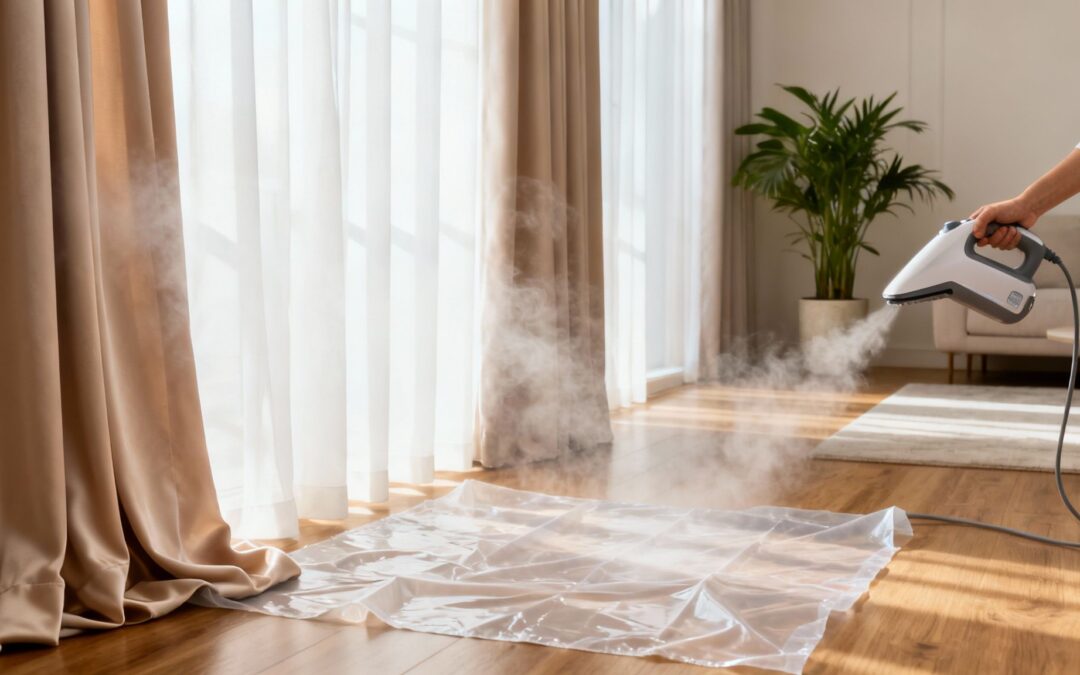
Your drapes might just be the most overlooked feature in your home, but they're working overtime. Think of them as giant, silent filters, constantly trapping dust, allergens, and lingering odours that can really drag down your home's air quality.
If you want to truly refresh and sanitise them, steam cleaning is your best bet. It uses high-temperature steam to get deep into the fabric, clearing out all the grime without needing a single harsh chemical.
Why Steam Cleaning Is a Game Changer for Your Drapes
Take a moment to consider what your drapes go through every day. They soak up cooking smells wafting from the kitchen, catch pet dander floating through the air, and collect a fine layer of dust from every corner of the room. A quick vacuum or a good shake might get the surface-level stuff off, but it leaves all the deeply embedded particles behind.
This is where the power of steam really shines. Unlike a simple surface clean, that superheated steam works its way deep into the fibres of the fabric. The process doesn't just clean; it properly sanitises.
- Eliminates Allergens: The high heat is brilliant at killing off dust mites, mould spores, and bacteria—the common culprits behind allergies and respiratory issues.
- Neutralises Odours: Instead of just masking smells with artificial fragrances, steam gets to the source, breaking down and removing the particles that cause the odour in the first place.
- Chemical-Free Solution: It’s all done with the power of hot water, which makes it a fantastic choice for homes with kids, pets, or anyone sensitive to strong chemicals.
The Impact on Your Home's Health
All that buildup in your curtains isn't just about looks; it directly affects the air you breathe. For households in Melbourne, especially during allergy season, having clean drapes can make a massive difference in creating a healthy living space.
It’s not just a feeling; the science backs it up. Un-steamed curtains can hold ten times more allergens than cleaned ones. That’s a huge deal for the one in five Melbourne households affected by allergies. Steam cleaning can slash these symptoms by up to 40% by getting deep into the fibres to remove grime that vacuums just can't touch.
This deep clean does more than just make your home healthier. It also restores up to 95% of your drape's original vibrancy and seriously extends their lifespan. Properly maintained drapes can last a good 7-10 years, a big jump from the 4-5 years you might get from untreated ones. That's a significant saving on replacement costs down the line. You can dive into the specifics of these benefits by checking out the full study on curtain cleaning factors.
Professional vs. Standard Methods
While a handheld steamer can be great for a light refresh, it just doesn't have the muscle of professional-grade equipment. The truck-mounted machines that specialists use generate much higher temperatures and far stronger suction.
This powerful combination guarantees a deeper, more thorough clean that pulls out more moisture. The result? Faster drying times and a superior, hygienic finish that truly revitalises your drapes and your home.
Your Practical Guide to DIY Drape Steaming
So, you're ready to tackle steam cleaning your drapes yourself? It's a genuinely satisfying job that can make a room feel brand new, but the real secret to success is all in the prep work and technique. A careful approach means you get that fresh, clean look without accidentally damaging your beautiful window treatments.
This visual breaks down how simple yet effective steam cleaning really is, taking your drapes from dusty and dull to completely revived.
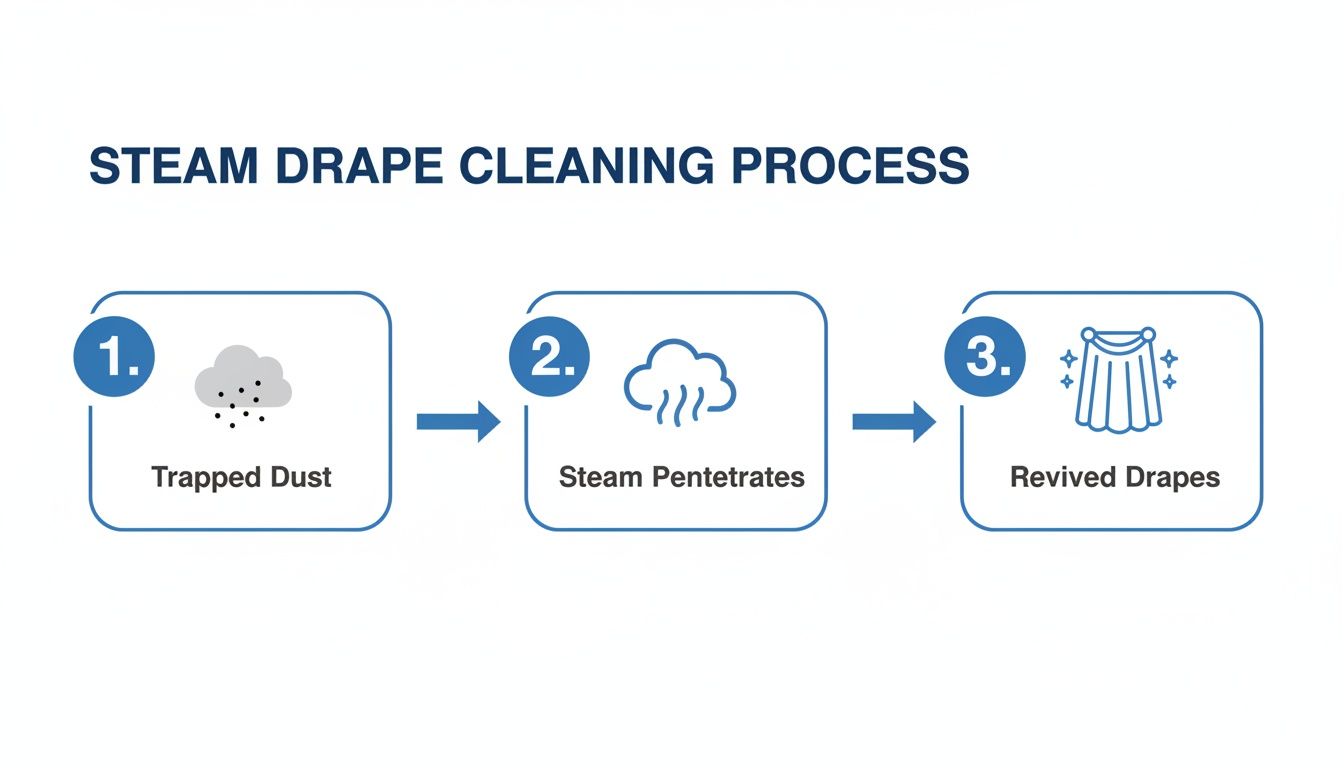
As the diagram shows, the high-temperature steam gets right into the fabric fibres, pushing out trapped dirt and allergens. The result is drapes that are properly sanitised and look incredible.
Setting Up Your Cleaning Space
Before you even think about plugging in that steamer, you need to prep the room. This isn't a step you can skip. Steam introduces moisture, and the odd drip is almost inevitable, so protecting your floors and furniture is key.
Start by shifting any furniture away from the windows. You'll want a clear, open space to move around in. If you have timber or laminate floors, lay down some old towels or a plastic drop sheet right at the base of the drapes. It’s a simple move, but it will catch any water and stop it from seeping into your floorboards.
Prepping the Drapes for Steaming
You wouldn't throw a muddy pair of jeans straight into the wash, right? The same logic applies here. Your drapes are probably holding onto a surprising amount of loose dust, pet hair, and other surface bits and pieces. If you just steam over that, you’ll turn all that dry dust into a damp, muddy film.
To get ahead of this, grab your vacuum cleaner and pop on the soft brush or upholstery attachment. Gently run it over the entire surface of the drapes, working from the top down. Give a little extra attention to the pleats and hems—that's where dust loves to hide. Getting this surface layer off first means the steam can do its real job: sanitising the fabric itself.
The All-Important Fabric Test
Okay, this is probably the most critical part of the whole process. Not all fabrics are created equal, and some don't react well to high heat and moisture. Skipping a quick spot test is a gamble you don't want to take, as it could lead to anything from discolouration and water spots to shrinkage.
Find a small, hidden spot on the drape to do your test. The very bottom corner or the back of a hem is perfect.
- Hold the steamer nozzle about 15 centimetres away from the fabric.
- Give it a quick burst of steam for a few seconds, using a gentle sweeping motion.
- Now, walk away. Let the area dry completely before you even look at it.
If the fabric looks exactly the same—no colour bleeding, no texture change, no water spots—you've got the green light to do the rest.
This is where a professional's perspective comes in handy. While DIY steaming is great for a refresh, experts often use specialised equipment for delicate materials like silk or velvet. Their machines have precise temperature controls that most home steamers just don't have, which seriously minimises the risk of damaging expensive or fragile fabrics.
Mastering the Steaming Technique
Prep work is done, and you're ready for the main act. Fill your steamer with distilled water (this helps prevent mineral buildup inside the machine) and let it get fully heated.
The trick to a flawless, streak-free finish is all about consistent, deliberate movement. Start at the very top of one drape panel and work your way down in vertical sections. With your free hand, gently pull the bottom of the fabric taut. This creates a smooth, flat surface for the steamer to glide over.
Keep the steamer moving at a steady pace. Never, ever let it sit in one spot for too long, as this is what causes oversaturation and leads to those dreaded watermarks. As you work your way down, you’ll literally see the wrinkles and creases melt away, leaving the fabric looking instantly fresher. Just be sure to let each panel air dry completely before you touch it, otherwise, you might leave new marks.
Common DIY Steam Cleaning Mistakes to Avoid
Embarking on a DIY project to steam clean your drapes can be incredibly satisfying. But a few common slip-ups can quickly turn a rewarding task into a frustrating one. Knowing these pitfalls ahead of time helps you sidestep potential damage and get that fresh, professional finish you’re aiming for.
One of the biggest mistakes I see is oversaturating the fabric. It’s easy to think that more steam equals a deeper clean, but lingering too long in one spot forces excess moisture deep into the fibres. This is a fast track to unsightly watermarks or even mildew if the drapes can’t dry properly. The key is to always keep the steamer moving at a steady, consistent pace.
Handling Delicate and Demanding Fabrics
Not all materials are created equal, especially when you introduce heat and moisture. Applying a standard steamer to delicate fabrics is a significant risk that can have irreversible consequences.
- Silk and Linen: These gorgeous natural fibres are notorious for water spotting and shrinking when hit with high temperatures.
- Velvet: Steam can easily crush the pile of velvet, leaving permanent marks and ruining its luxurious texture.
- Heavily Lined or Interlined Drapes: These can trap moisture between the layers, making them extremely difficult to dry and creating a perfect breeding ground for mildew.
For these types of materials, it’s often best to pause and reconsider a DIY approach. Professional services have specialised gear with precise temperature controls designed specifically for these sensitive textiles.
A crucial takeaway here is to recognise the limits of a household steamer. If your drape's care label explicitly says "dry clean only," it’s a warning, not a suggestion. Ignoring it can lead to discolouration or fabric damage that no amount of cleaning can fix.
Dealing with Stubborn Stains
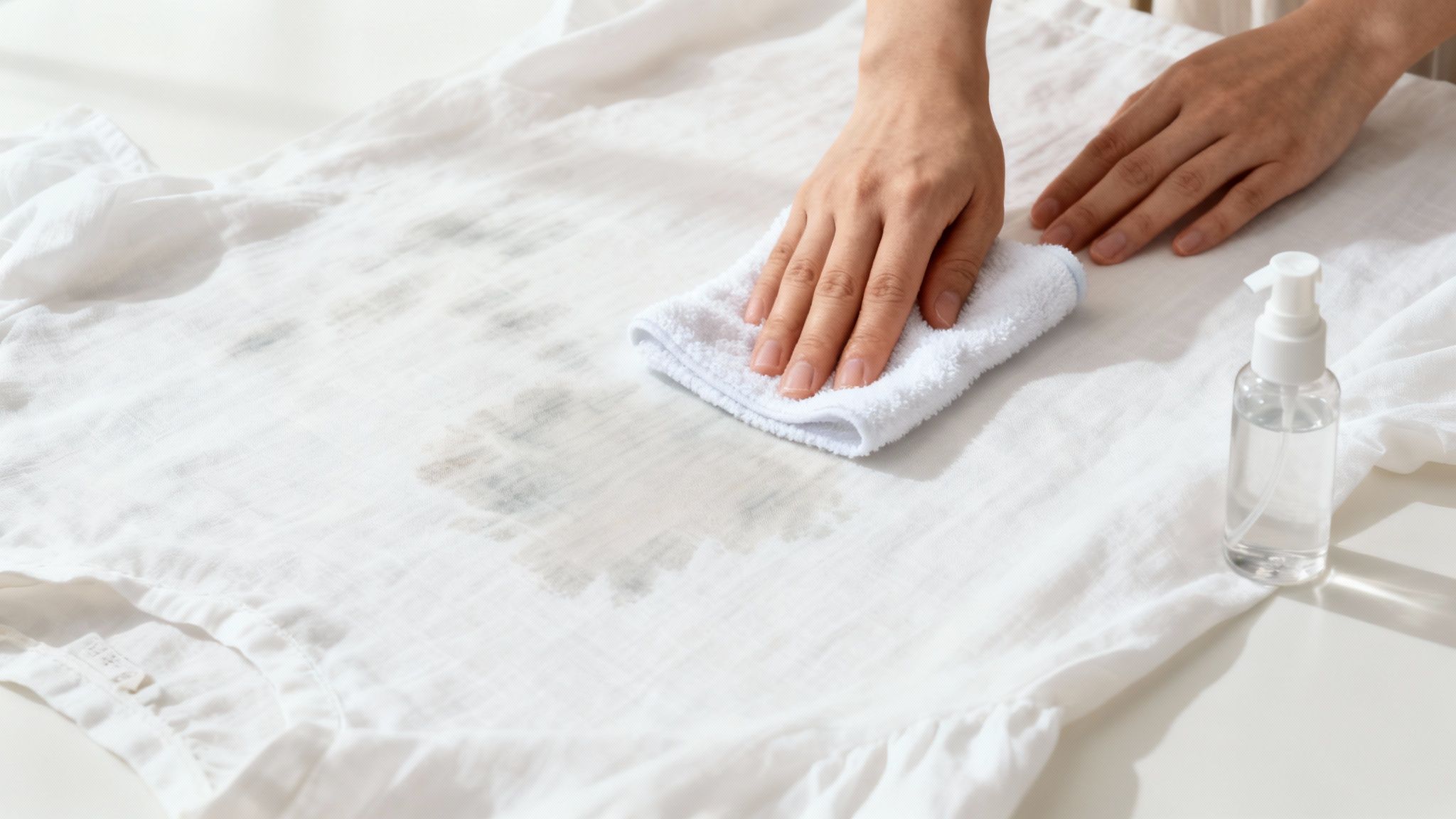
Another common misconception is that steam is a magic wand for every type of stain. While it’s fantastic for general sanitising and lifting light, water-soluble spots, steam alone often isn't enough for tougher marks like wine, ink, or oil-based stains.
In fact, applying heat can sometimes set these stains permanently into the fabric, making them impossible to remove later on.
The right way to tackle this is to address those stains before you even turn the steamer on. This involves using a targeted pre-treatment solution formulated for the specific type of stain and fabric. Always blot the stain gently with a clean, white cloth—never rub, as this can spread the mark and damage the fibres. By treating stubborn spots first, you give the steam cleaning process the best possible chance to succeed, resulting in uniformly clean and revitalised drapes.
DIY vs Professional Drape Steaming: Which Is Right for You?
Trying to decide whether to steam clean your drapes yourself or call in a professional? It’s a common crossroads for homeowners. The temptation is to look at it purely as a cost issue, but the best decision really comes down to balancing your budget against your time, the value of your drapes, and the kind of clean you're after.
Going the DIY route puts you in the driver’s seat. You can grab a decent handheld steamer and get the job done on your own schedule. For lighter fabrics or a quick seasonal refresh, this is often a perfectly good option, especially if you enjoy getting hands-on with home maintenance.
But let's be realistic—a home steamer just doesn't pack the same punch as professional equipment.
Breaking Down the Key Differences
When you hire a professional service, you’re not just paying for someone to do the work. You're investing in their specialised gear, their deep knowledge of different fabrics, and the assurance that the job will be done right. This becomes particularly important when you're dealing with delicate, expensive, or heavily soiled drapes.
The biggest difference is the equipment. Professionals use powerful, truck-mounted machines that generate far hotter steam and stronger suction than any home unit. This combination allows for a much deeper clean that lifts out embedded grime and allergens. Plus, it extracts most of the moisture, which means significantly faster drying times.
The real value of a professional service often lies in the peace of mind it brings. For busy households or those with high-end window treatments, knowing an expert is handling the job correctly—with no risk of shrinkage, watermarks, or fabric damage—is often worth the investment alone.
A Look at the Costs and Benefits
Let’s talk numbers. To give you a real-world example, professional services in Melbourne have a clear pricing structure that reflects the quality of their work. For instance, in Melbourne, where Right Price Carpet Cleaning has been serving families since 2007, the cost to steam clean drapes is typically between $15 and $30 per square metre. This method uses high-temperature steam from truck-mounted machines to remove up to 99.999% of bacteria without harsh chemicals, and your drapes are often dry in under two hours. To get a better feel for local pricing, you can find more details about curtain cleaning costs.
To help you weigh it all up, here’s a straightforward comparison table.
DIY vs. Professional Drape Steaming at a Glance
This table offers a direct comparison to help Melbourne homeowners choose the best option for their needs.
| Factor | DIY Steam Cleaning | Professional Service (e.g., Right Price Carpet Cleaning) |
|---|---|---|
| Initial Cost | One-time purchase of a steamer ($100 – $250) | Per-job fee based on drape size and fabric |
| Time Investment | Several hours of your own time | Zero time investment beyond booking the service |
| Equipment Quality | Basic handheld or canister steamer | High-powered, truck-mounted steam cleaners |
| Results | Good for a surface refresh and light sanitising | Deep, restorative clean; removes stubborn grime and allergens |
| Risk Factor | Potential for watermarks, shrinkage, or fabric damage if done incorrectly | Insured professionals with fabric expertise and guaranteed results |
| Best For | Routine maintenance, light fabrics, and smaller jobs | Heavily soiled, delicate, or expensive drapes; large-scale jobs |
Ultimately, the choice is yours. For a quick touch-up on sturdy curtains, a DIY approach might be all you need. But for those valuable, delicate, or deeply soiled drapes that really need a proper, restorative clean, bringing in the pros is almost always the better—and safer—bet.
Finding the Right Drape Cleaning Service in Melbourne
When it comes to steam cleaning drapes, especially delicate fabrics or those with heavy soiling, calling in a professional is often the smartest move. But in a big city like Melbourne, how do you find the right company? A bit of homework now can save you from the stress of a botched job, hidden costs, or worse, damaged curtains.
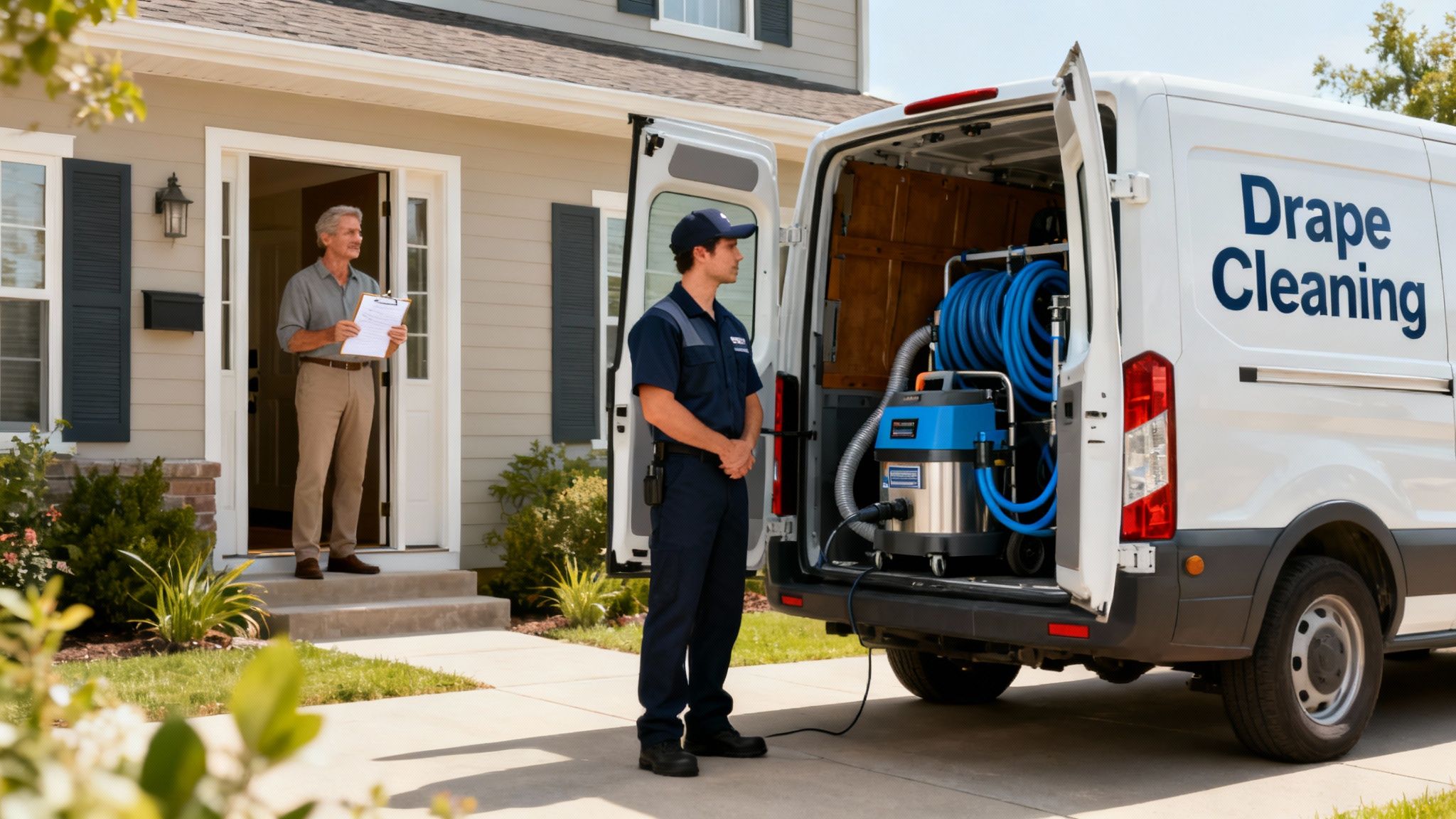
It’s no surprise that in-home steam cleaning has become so popular. In fact, over 70% of residential cleaning inquiries in Melbourne now ask for a drape refresh. It’s about more than just looks; powerful steam sanitises, killing the dust mites that can infest 80% of urban drapes in just six months and slashing allergens by up to 90%.
The real game-changer is the equipment. Professionals using truck-mounted units deliver a far deeper clean than any handheld steamer ever could. This is a key reason why re-clean requests have plummeted by 40% since this method became standard practice.
Key Questions to Ask Any Provider
Before you even think about booking, you need to vet the companies you're considering. Arm yourself with the right questions—their answers will tell you everything you need to know about their professionalism and the quality of their work.
- What type of equipment do you use? You're listening for one thing: truck-mounted machines. These are leagues ahead of portable units, offering more power, a deeper clean, and much faster drying times.
- Is your pricing transparent? Ask for a detailed, itemised quote upfront. Be wary of vague estimates and ask directly about extra charges for things like tough stains or specific fabric types. No surprises!
- Do you have a satisfaction guarantee? Any company worth its salt will stand by its work. A 100% satisfaction guarantee is a great sign that they’re confident in their results and will make things right if you’re not happy.
- Are your technicians insured and police-checked? This is an absolute must. You're letting them into your home, so this is non-negotiable.
Don’t be afraid to ask for specifics. A confident, professional service will be happy to explain their process, equipment, and pricing structure. Vague answers or pressure to book immediately are red flags.
Learning how to find reputable local cleaning services for your whole home is a valuable skill. The same principles apply whether you're hiring someone for your windows or your drapes: check reviews, ask for proof of insurance, and insist on clear quotes. Choosing the right provider means your home gets the care it deserves.
Your Top Drape Steaming Questions Answered
Even with a solid plan, it’s completely normal to have a few questions rattling around before you fire up the steamer. Let's tackle some of the most common ones I hear, so you can go into this with total confidence.
One of the biggest questions is about timing. How often should you really be steaming your drapes to keep your home fresh and hygienic? For most households, giving them a deep steam clean once every 12 to 18 months is a pretty solid rule of thumb.
Of course, if you've got pets leaving dander everywhere, smokers in the house, or family members with allergies, you’ll want to bump that up. Steaming every six months can make a huge difference in keeping dust and airborne irritants under control.
Can Steam Remove Mould and Mildew?
This is a big one, especially in a city like Melbourne where dampness can creep in. The good news is that the high temperature from a steamer is fantastic at killing surface-level mould spores and sanitising the fabric. The bad news? It might not shift the stubborn stains left behind.
If you’ve got visible mould spots, steaming is an excellent first step to kill the problem at its source. You’ll likely need a specialised pre-treatment afterward to fully lift the discolouration. Just remember to test any cleaning product on a hidden spot first.
The real power of regular steaming is actually in prevention. By keeping your drapes dry and free of the dust that traps moisture, you’re creating an environment where mould and mildew just can't get a foothold in the first place.
Is Steaming Safe for All Drape Fabrics?
This is where you need to be careful. While steam works wonders on durable fabrics like cotton, polyester, and most synthetic blends, it can be a disaster for more delicate materials.
- Velvet: The combination of heat and moisture can easily crush the pile, leaving you with permanent marks. It’s a definite no-go.
- Silk and some Linens: These beautiful natural fibres are notorious for water spotting and can shrink if you’re not careful.
- Drapes with "Dry Clean Only" tags: That label is there for a very good reason. Ignoring it is a gamble that could end up ruining your expensive curtains.
If you have drapes made from trickier fabrics, it helps to understand the general rules of caring for velvet upholstery, as the principles often apply to both furniture and window treatments. When it comes right down to it, if you have any doubt at all, it's always smarter to call a professional than to risk irreversible damage.
Ready to give your drapes the professional, deep clean they deserve without the risk? The expert team at Right Price Carpet Cleaning uses powerful, truck-mounted steam cleaning machines to safely sanitise and refresh your curtains. Get your instant online quote today at https://rightpricecarpetcleaning.com.au.
Recent Comments