



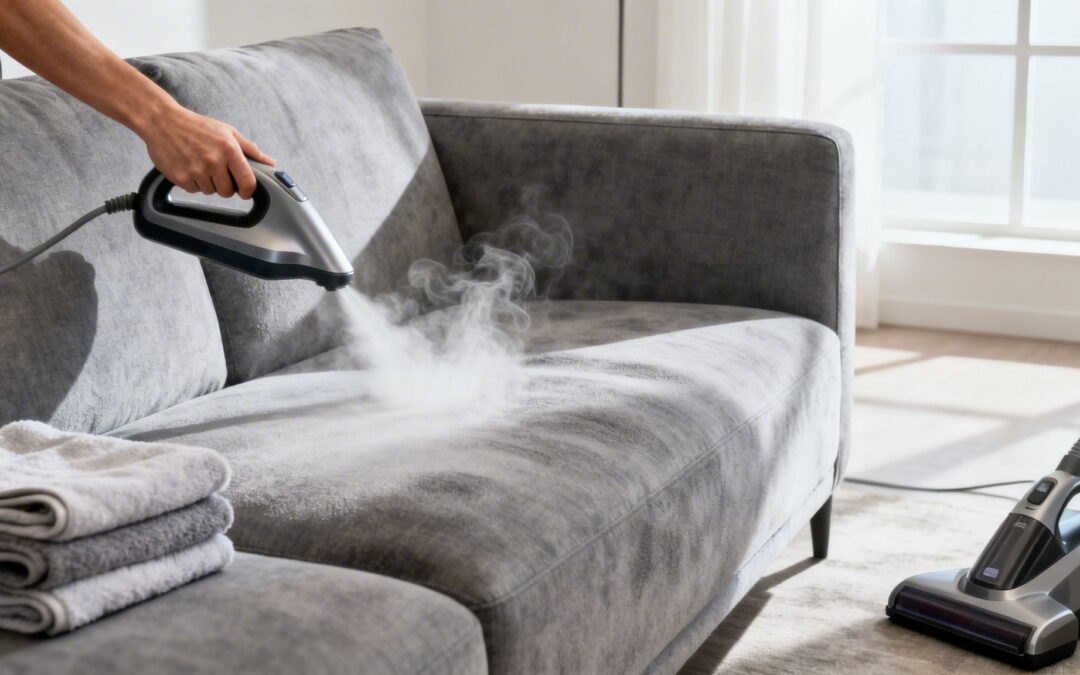
Yes, you can absolutely steam clean many couches, but this isn't a one-size-fits-all job. It all comes down to the fabric. While steam is fantastic for lifting out grime and sanitising, using it on the wrong material can be a one-way ticket to disaster.
Before you do anything else, a quick check of your couch's cleaning tag and a simple spot test are non-negotiable.
Is Steam Cleaning Safe for Your Couch?

Before you even think about hiring a machine, the single most important thing you can do is figure out what your couch is made of. Applying steam to the wrong fabric can cause permanent water spots, ugly shrinkage, or even strip the colour right out.
Think of it as a five-minute safety check that could save you from having to buy a new sofa.
Decode Your Couch's Cleaning Tag
Your couch has a secret language, and it’s written on a small tag. You’ll usually find it tucked away under a cushion or along the frame. This little tag holds the key to safe cleaning.
Before you start, it’s a good idea to know exactly what these cleaning codes mean. They’re the manufacturer’s instructions, and ignoring them is a recipe for a costly mistake. Here's a quick guide to help you figure out if steam cleaning is on the cards for your sofa.
Couch Fabric Cleaning Code Cheat Sheet
| Code | Meaning | Can I Steam Clean It? |
|---|---|---|
| W | Water-Based Cleaning | Yes, most likely. This is the green light for water-based methods, including steam. |
| S | Solvent-Based, Dry Clean Only | No, absolutely not. Water will damage this fabric, causing spots or rings. |
| W/S | Water or Solvent Cleaning | Maybe, with caution. A spot test is absolutely essential before you proceed. |
| X | Vacuum Only | No. Do not use any water, steam, or cleaning agents. Just the vacuum. |
These codes are your first line of defence against damaging your couch. A 'W' or 'W/S' tag means you can probably move forward, but there's one more crucial step.
The Essential Spot Test
Even with a 'W' tag glowing up at you, never, ever skip the spot test. Find a small, hidden patch of fabric to experiment on—think the area behind a skirt, on the back of the couch near the floor, or underneath a cushion that can be flipped.
Apply a tiny bit of steam to that spot. Let it air dry completely, which might take a few hours. Once it's dry, run your hand over it and inspect it closely. Are there any signs of colour bleed? Has the texture changed or gone stiff? Did the fabric shrink?
This simple test is your ultimate safety net. If the hidden spot reacts poorly, you’ve just saved the visible parts of your couch from permanent damage. It confirms your fabric is colourfast and can withstand the heat.
For households with furry friends, fabric choice is a big deal. Knowing the properties of the best fabric for pet hair can help guide your cleaning approach and even influence your next furniture purchase. Tougher fabrics tend to hold up better to both pet claws and steam cleaning.
While steam cleaning is a go-to for many Australian homes, some delicate fabrics just can't take the heat. Materials like silk, certain velvets, and suede need a much gentler approach. Keep this in mind when deciding if a DIY steam clean is the right move for your prized sofa.
Right, so you’ve decided to tackle that steam clean yourself. Before you even think about plugging in that machine, let’s talk prep. This is the part everyone tries to skip, and it’s exactly why most DIY jobs end up looking a bit… meh.
A truly effective clean starts long before the steam ever hits the fabric. Getting this foundation right is what separates a fresh, revitalised couch from a damp, slightly-less-dirty one. Think of it as the non-negotiable first step the pros swear by.

Start with a Thorough Vacuum
First things first: you need to get every last bit of loose debris off that couch. If you skip this, all that dust, pet hair, and forgotten biscuit crumbs will turn into a gritty, muddy paste the second the steam hits. Trust me, it makes the job ten times harder.
Pull off all the cushions, pillows, and throws. Grab your vacuum’s upholstery attachment and crevice tool and go over every single surface. Don’t be shy—get right into the seams, corners, and down into the couch deck under the cushions. This is where all the hidden gunk loves to hang out. A good vacuum clears the way so the steam can attack the deep-down grime.
Address Stains Before Steaming
Steam is powerful, but it's not a silver bullet for every stain. In fact, hitting certain spots with high heat without treating them first can be a disaster. Things like red wine or ink can be permanently baked into the fibres.
Here’s how to handle a couple of common culprits:
- Grease or oil: Don’t panic. Just sprinkle a liberal amount of baking soda or cornflour directly on the stain. Let it sit for 15-20 minutes to soak up the oil, then vacuum it up before you start steaming.
- Coffee or tea: Gently blot the area with a cloth dampened with a 1:1 mix of white vinegar and water. The key here is to blot, not scrub. Scrubbing will just spread the stain and push it deeper.
The most crucial part of preparation is removing the dry soil that has settled deep into the fibres. Your couch acts like a giant filter, trapping dust, pollen, and skin cells. This isn’t just an aesthetic issue; it can become a health concern.
It’s a bit gross to think about, but a significant amount of indoor dirt gets trapped in our furniture. Research highlights that around 80% of indoor dirt can get trapped within upholstery fabric, becoming a breeding ground for allergens and bacteria in Australian homes. This is exactly why a thorough pre-clean is so important, especially for Melbourne families with kids and pets. You can learn more about upholstery health findings and see why this deep-seated dirt needs more than just a quick once-over.
Protect Your Space
Finally, take a minute to protect the area around your couch. You’re about to introduce heat and moisture, which can be bad news for certain types of flooring.
Lay down some old towels or a plastic drop sheet underneath and around the couch, especially if you’ve got hardwood or laminate floors. It’s also a good idea to crack a window or switch on a fan to get some air moving. This not only safeguards your home but also gives the drying process a head start.
Mastering Your Steam Cleaning Technique

With a clean, prepped surface, you’re ready for the main event. This is where you’ll lift away months, or even years, of built-up grime, bringing your couch back to life. The difference between a patchy job and a professional finish comes down to one thing: a methodical approach, not random scrubbing.
Forget about cranking the machine to the highest setting straight away. It's a classic rookie mistake that almost always leads to a waterlogged couch and days of drying. Instead, always kick things off with the lowest effective steam setting. You can always dial up the pressure for a tough spot later, but you can’t undo oversaturation.
Adopt a Top-to-Bottom Workflow
To get that flawlessly uniform look and avoid the frustration of cleaning the same spot twice, you need to work strategically. We clean in a specific order for a reason—it stops dirty water from dripping onto areas you've just finished.
Always start with the main frame of the sofa, working from top to bottom and back to front. Think of it this way: begin with the top of the backrest, move down the back panel, and then handle the arms.
- First: Tackle the top and back of the sofa frame.
- Next: Clean the outside and inside of the armrests.
- Then: Work on one side of the cushions, let them dry, then flip to clean the other side.
- Finally: Clean the sofa deck (the area under the seat cushions).
This workflow ensures gravity is your friend, not your enemy. Any drips will fall onto an area you haven't touched yet, saving you from a world of rework.
Once the frame is done, focus on the cushions. If they're removable, it’s always best to clean them separately. Lay them on a protected surface like a clean tarp or some old towels, and do one side at a time. Let them dry before flipping to avoid trapping moisture inside, which is a recipe for mildew.
Use Slow and Overlapping Passes
Rushing the job is the fastest way to get a streaky, uneven result. The secret is to move the cleaning head in slow, deliberate passes—a bit like mowing a lawn. Each new stroke should slightly overlap the previous one by about 30%. This simple technique guarantees you don't miss a single spot and leaves you with a seamless finish.
Now, here’s the most important rule when you steam cleaning a couch: keep the machine moving. Don’t ever pause or let the steamer sit in one place, even for a few seconds.
Holding the steamer still concentrates an intense blast of heat and moisture on a single area. This is the number one cause of watermarks, fabric shrinkage, and even colour damage. Continuous, steady motion is your best friend.
Imagine you're painting a wall with a roller; you wouldn’t just stop mid-stroke. Apply that same logic here. If you hit a really grubby patch, it’s far better to go over it with a few quick, light passes than one slow, heavy-handed one. For a stubborn food spill, you might make two or three overlapping passes, giving the steam a moment to break down the grime before the suction pulls it away. It’s this patient, careful approach that truly revives your fabric without causing any harm.
The Right Way to Dry Your Couch After Cleaning
Your work isn’t over the moment you switch off the steamer. In fact, what you do next is just as crucial as the cleaning itself. If you get this part wrong, you could end up with musty odours, ugly watermarks on the fabric, and even mould or mildew growing deep within the padding.
Getting your couch dry quickly and thoroughly is the final, non-negotiable step. A damp couch is an invitation for problems, so your main goal is to get that moisture out as fast as you can. This is especially true on humid Melbourne days when just leaving it to "air dry" won't cut it.
Create Maximum Airflow
Your two best friends at this stage are air circulation and low humidity. Don’t just leave the couch to fend for itself; you need to actively create an environment that speeds up evaporation.
- Open the Windows: If it’s a dry, breezy day, throw open all the windows in the room. Getting a natural cross-breeze going is a huge help.
- Bring in the Fans: Grab any pedestal or box fans you have and position them around the couch. The trick isn't to point them directly at one spot. Instead, angle them to create a swirling vortex of air that moves around the entire piece of furniture.
- Use a Dehumidifier: On a damp, rainy day, a dehumidifier is your secret weapon. It will pull moisture straight out of the air, dramatically speeding up the drying time and stopping that dreaded musty smell from ever starting.
Pro Tip: As soon as you finish cleaning a section, grab a clean, thick, bone-dry white towel. Press it firmly into the fabric. You'll be amazed at how much excess water this blotting technique pulls out before it has a chance to soak in. It can seriously cut down your overall drying time.
Give It Time and Protect Your Hard Work
Patience is everything here. Your couch might feel dry to the touch after just a few hours, but don’t be fooled—moisture can linger deep inside the cushions and even the frame. Using it too soon can compact the damp fibres, trapping moisture and slowing down the final stages of drying.
As a rule of thumb, wait at least 6-8 hours before even thinking about sitting on it. If you can manage it, a full 12-24 hours is even better for a guaranteed deep-down dry.
Once you’re confident it's completely bone-dry, you can put all the cushions and pillows back. Now is also the perfect time to apply a fabric protector spray. These products create an invisible shield that helps repel future spills and stains, making your next clean-up job much easier. Think of it as a little insurance policy for all the hard work you just put in.
Knowing When to Call a Professional Cleaner
DIY steam cleaning is a fantastic skill to have in your back pocket. But even the most seasoned DIYer needs to know when to tag in the experts. Recognising the limits of your gear and know-how isn't admitting defeat—it's about making the smartest call for your valuable furniture and getting the best possible result.
Sometimes, the issue isn't just general grime. It's a specific, stubborn problem. Deep-set stains from things like red wine, ink, or old pet accidents often need specialised chemical treatments and techniques that go far beyond what a portable home steamer can do. Likewise, delicate or vintage fabrics—especially those with an ‘S’ or ‘X’ cleaning code—are a definite no-go zone for DIY steam.
The Power of Professional Equipment
The real game-changer between a DIY job and a professional one comes down to the machinery. While a portable home steamer does a respectable job on surface-level dirt, it’s simply no match for the truck-mounted hot water extraction systems the pros use.
These industrial-grade machines operate on a whole different level:
- Higher Heat: Professional gear generates much hotter steam. This is key for breaking down stubborn body oils and properly killing bacteria and allergens hiding deep within the fabric and padding.
- Stronger Suction: The vacuum power on a truck-mounted unit is incredibly strong. It pulls out far more dirt and, just as importantly, extracts more moisture. This means much faster drying times and a lower risk of that dreaded musty smell or mildew growth.
This professional-grade power is especially crucial for Melbourne homeowners dealing with persistent allergens or trying to get a rental property in top shape for an inspection.
A professional service isn't just about better machines; it's about expertise. Trained technicians can accurately identify fabric types, choose the correct pre-treatment solutions for specific stains, and adjust their equipment for optimal results without risking damage.
Weighing the Costs and Benefits
When you’re up against a tough cleaning challenge, looking into the general cost of cleaning services can help you figure out if hiring a pro fits the budget. Yes, there's an upfront cost, but it can easily save you money down the track by preventing irreversible damage to an expensive couch.
The operational costs for a professional service reflect the serious investment in their powerful equipment. For Australian cleaning businesses, the motor vehicle expenses tied to their truck-mounted units can eat up 6% to 9% of their annual turnover. That's a significant cost that ensures they can deliver superior results across Greater Melbourne. You can read more about these business benchmarks on ato.gov.au to get a better sense of the investment behind a truly professional clean.
This flowchart breaks down the immediate post-cleaning steps, helping you decide whether to focus on airflow or if your couch is ready to use.

The key takeaway is simple: if your couch isn't drying properly, you need to act fast. Improving air circulation immediately is your best defence against musty odours taking hold.
Got Questions About Steam Cleaning Your Couch?
Even with a solid plan, it's natural to have a few questions before you start a project like steam cleaning your own couch. Getting the right answers can make all the difference between a job well done and a frustrating afternoon. Let's run through some of the most common ones we hear from homeowners.
How Often Should I Actually Be Steam Cleaning My Couch?
For most households, giving your couch a good steam clean every 12 to 18 months is the sweet spot. This keeps it looking fresh and deals with the gradual build-up of dust and grime. But let's be realistic—this isn't a hard and fast rule.
You'll want to ramp that up to every 6 to 12 months if your couch sees a bit more action. This is especially true if you have:
- Pets who think the sofa is their personal kingdom.
- Young kids who are masters of the accidental spill.
- Anyone in the family who struggles with allergies or asthma.
Honestly, the best thing you can do between deep cleans is regular vacuuming. A quick once-over each week pulls up all that surface-level dust, pet hair, and allergens before they have a chance to get ground into the fabric.
Can I Just Use Tap Water in the Steamer?
It’s tempting to just fill up from the tap, but this is one shortcut you really want to avoid. You should only ever use distilled or demineralised water in your steam cleaner.
Why? Because your tap water is loaded with minerals like calcium and magnesium. Over time, these minerals create a crusty scale inside your machine, clogging it up and eventually killing its performance. Even worse, those same minerals can get sprayed onto your upholstery, leaving behind faint white marks or making the fabric feel stiff once it dries.
Think of distilled water as cheap insurance for your steam cleaner and your couch. It keeps the machine running smoothly and guarantees you won't be left with any unwanted mineral residue on your beautifully cleaned fabric.
Help! My Couch Feels Way Too Wet in One Spot.
Don't panic! This is a common one. It usually just means you lingered a little too long over that area. The fix is pretty straightforward.
First, go back over the soggy patch with the machine, but this time with the steam turned off. Use only the suction function to pull out as much of that excess water as you can.
Next, grab some clean, dry, white towels and press them firmly into the fabric to blot up even more moisture. Finally, aim a fan directly at the wet spot and let it run. Good airflow is your best friend here and will slash the drying time.
Will Steam Cleaning Get Rid of Every Stain and Smell?
Steam is a powerhouse for lifting away general dirt, sanitising the fabric, and knocking out a lot of everyday odours. It delivers a fantastic overall refresh. But it's important to keep expectations in check—it's not a magic wand.
Really stubborn, set-in stains from things like red wine, ink, or old pet accidents often need a targeted pre-treatment before you even think about steaming. Likewise, while steam definitely helps with smells, any odours that have soaked deep into the foam cushions might need the serious extraction power of professional truck-mounted equipment to be truly gone for good.
For those deep-set stains, lingering odours, or when you just want a perfect result without the DIY headache, Right Price Carpet Cleaning is ready to step in. Our powerful truck-mounted steam cleaning systems and experienced technicians provide a much deeper clean and significantly faster drying times for your upholstery. Get your instant quote and book online today.
Recent Comments