



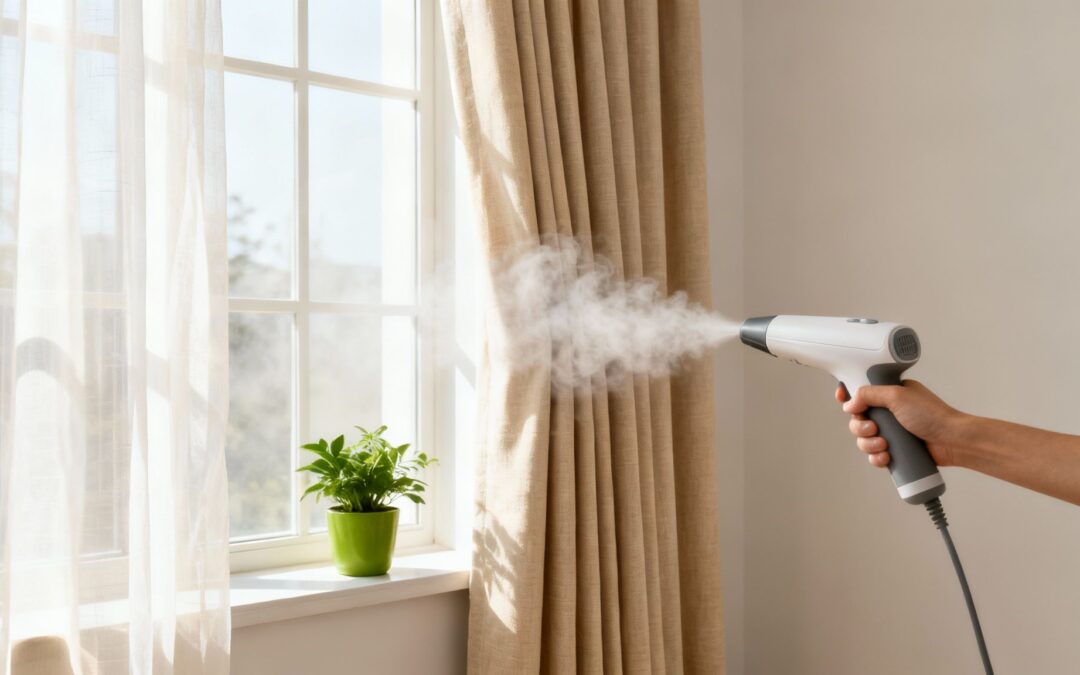
Steam cleaning is one of the most effective ways to sanitise, deodorise, and deep clean your curtains without relying on harsh chemicals. It uses hot vapour to get right into the fabric fibres, dissolving built-up grime and killing off nasties like dust mites. Honestly, it’s a brilliant choice for improving the air quality inside your home.
Why Steam Cleaning Is a Game Changer for Your Curtains
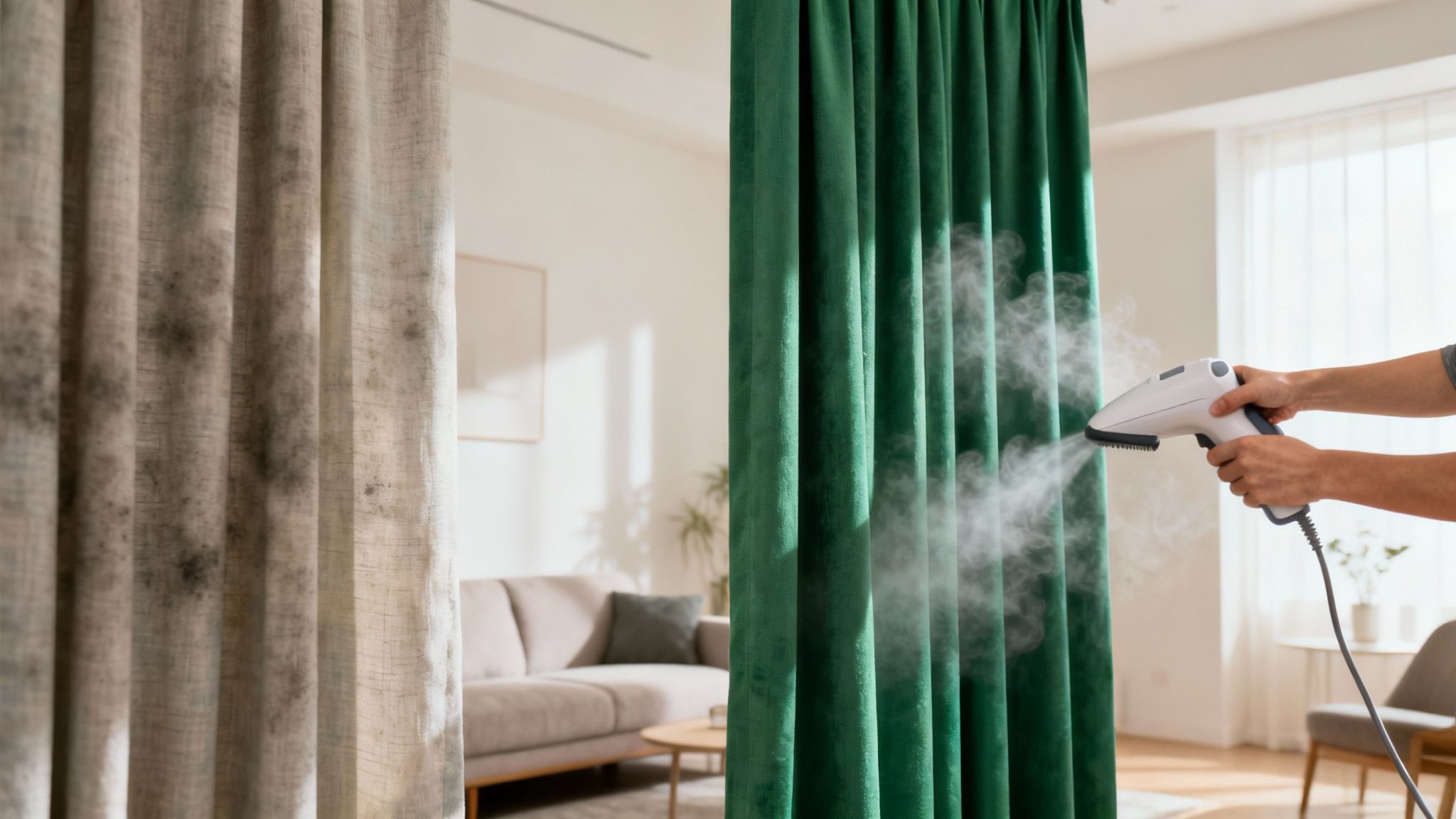
Let's be honest—curtains are often the unsung heroes of our home decor. They quietly filter light and frame our views, but they're also total magnets for dust, pollen, pet dander, and odours that get trapped deep in the fibres over time. A quick vacuum helps with the surface stuff, sure, but it does nothing for the ingrained grime or microscopic allergens that have made a home there.
This is where steam cleaning truly shines. Unlike a surface-level wipe-down, steam actually penetrates the fabric to loosen and lift away dirt from the inside out. The high temperature does all the sanitising work without needing any chemical detergents. That’s a massive plus for households with kids, pets, or anyone sensitive to strong fragrances and cleaning agents.
A Deeper, Healthier Clean
The real power of steam is its ability to transform your home’s environment. It’s not just about making your curtains look clean; it's about making them hygienically clean.
Here’s what this method really does:
- Eliminates Dust Mites and Allergens: The intense heat kills dust mites on contact, which are a major trigger for allergies and asthma.
- Neutralises Odours: Forget masking sprays. Steam breaks down the bacteria causing smells from cooking, smoke, or pets, leaving your fabrics genuinely fresh.
- Revives Fabric Appearance: By lifting out all that trapped dirt, steam can bring back the original colour and texture of your curtains, making them look brighter and feel much softer.
For many homeowners, the most noticeable difference is in the air quality. After a proper steam clean, the room often feels lighter and less stuffy because countless airborne irritants have been removed from one of the biggest fabric surfaces in your home.
Here in Melbourne, where dust and pollen can be a year-round battle, steam cleaning curtains has become a go-to for maintaining a healthy home. It's especially vital in busy households where curtains collect a lot of dust, which can trigger allergies for so many of us. Steam heated above 145°C is proven to kill 99.999% of bacteria and common viruses, creating a much safer living space.
If you’re curious about professional options, you can find out more about the cost of professional curtain cleaning from Service Tasker.
Understanding Which Curtain Fabrics You Can Safely Steam
Before you even think about plugging in that steamer, the most critical step is figuring out what your curtains are actually made of. Firing up the steam on the wrong material can be a disaster, leading to shrunken fabric, ugly water spots, or colours bleeding everywhere. It’s no different from doing laundry—you wouldn't throw a delicate silk blouse in the same hot wash as your cotton towels.
First thing's first: hunt for a care tag. They're usually tucked away along a side seam or at the very top. This little tag is your best friend, giving you the manufacturer’s exact cleaning instructions. If it’s been snipped off or has faded into oblivion, you’ll have to play detective to identify the fabric. It also helps to know the difference between drapes and curtains, as the terms are often mixed up but can hint at different fabric weights and types.
Fabrics That Welcome Steam
Good news—many of the most common curtain materials are tough enough to handle steam beautifully. These robust textiles can take the heat and moisture, making your steam cleaning curtains project a straightforward success.
You're generally in safe territory with:
- Heavy Cotton and Linen: These natural fibres are workhorses. They can withstand high temperatures, which is great for releasing those stubborn, deep-set wrinkles and musty odours.
- Polyester and Most Synthetics: Being man-made, fabrics like polyester are built for durability. They’re usually very receptive to steam, resisting shrinkage and holding their shape without any fuss.
- Microfibre: Known for its resilience, microfibre is another synthetic that cleans up like a dream with steam, easily releasing trapped dust and allergens.
Think about those thick, heavy cotton blockout curtains in the bedroom. They are the perfect candidate for a good, thorough steam clean. The steam won't just sanitise them; it will also smooth out every crease that’s settled in over time.
Here’s a pro tip: always, always use distilled water in your steamer. Tap water, especially in areas like Melbourne, is full of minerals that can leave behind chalky white marks on your fabric—a real eyesore on darker colours.
Handle These Fabrics With Extreme Care
Now for the delicate ones. Some materials demand a much gentler touch, and blasting them with steam is a surefire way to cause permanent damage. A simple cleaning job can quickly turn into a costly mistake.
Approach these with serious caution:
- Silk and Taffeta: These luxurious fabrics are notorious for water spotting. The heat can also strip them of their beautiful, natural sheen if you're not careful.
- Velvet: While some modern synthetic velvets are pretty tough, traditional velvet is easily crushed or marked by the direct heat and moisture from a steamer. You could be left with permanent imprints.
- Sheer Voiles and Organza: These are extremely lightweight and delicate. The heat and the weight of the water droplets can easily warp or ruin them for good.
If you even suspect your curtains might be one of these delicate types, the golden rule is to spot test first. Find a tiny, hidden area—like the very bottom of the hem or a section that’s always behind the couch. Give it a quick burst of steam and let it dry completely. Then, check for any changes in colour, texture, or any water marks. This simple five-minute test can save you from a major cleaning catastrophe.
To make things even clearer, here’s a quick guide to help you decide the best approach for your specific curtains.
Curtain Fabric Steam Cleaning Guide
This table is a handy reference to see at a glance whether your curtains are suited for a DIY steam clean or if it's safer to call in a professional.
| Fabric Type | DIY Steam Cleaning Suitability | Key Considerations & Tips |
|---|---|---|
| Cotton & Linen | Excellent | Very durable. Use a high heat setting to smooth out stubborn wrinkles. |
| Polyester & Synthetics | Excellent | Resists shrinking and water stains well. A medium heat setting is usually sufficient. |
| Microfibre | Excellent | Releases dust easily. Keep the steamer moving to avoid overheating one spot. |
| Sheer & Voile | Not Recommended | Very high risk of heat damage, stretching, or warping. Professional care is best. |
| Velvet (Traditional) | Not Recommended | Prone to crushing and permanent marks. Requires specialised professional techniques. |
| Silk & Taffeta | Not Recommended | Highly susceptible to water spots and losing its natural lustre. Leave it to the experts. |
| Blends (Cotton/Poly) | Good | Generally safe. Start with a lower heat setting and spot test in a hidden area first. |
Remember, when you're in doubt, testing an inconspicuous spot is non-negotiable. If that small test patch reacts poorly, it’s a clear sign to step away from the steamer and consider getting a professional opinion.
The Right Way to Steam Clean Hanging Curtains
Once you’re confident your curtain fabric can handle the heat, it’s time to get down to business. This isn't just about waving a steamer around and hoping for the best; there's a proper technique that ensures a beautiful, streak-free result without accidentally damaging your drapes. A methodical approach is what separates a quick refresh from a deep, restorative clean.
Before any steam even touches the fabric, a bit of prep work is essential. Start by giving your curtains a thorough vacuuming. Use the soft brush or upholstery attachment and gently run it over the entire surface, paying special attention to the pleats, hems, and tops where dust loves to settle. This clears away all the loose surface gunk, so the steam can get straight to work sanitising the fibres.
Next, get your steamer ready. This is a small step, but it’s a crucial one: always fill the reservoir with distilled water. Regular tap water is full of minerals that can clog your steamer or, even worse, leave behind chalky white deposits on your curtains. Trust me, you’ll definitely notice them on dark or vibrant colours.
Mastering the Steaming Technique
With your prep sorted, you're ready for the main event. Begin at the very top of one curtain panel. The golden rule here is to work from top to bottom in long, steady, vertical strokes. Gravity is your best friend in this process, as it helps pull the moisture and any loosened dirt downwards.
Hold the steamer nozzle about 15 centimetres away from the fabric. This distance is key—it lets the steam penetrate the fibres without oversaturating them, which is a fast track to water spots and long drying times. You want the fabric to feel slightly damp, not wet.
As you move down, overlap each stroke by a few centimetres. This is the secret to getting consistent coverage and avoiding any untreated "stripes." Think of it like painting a wall; you overlap your roller strokes for a seamless finish. The same logic applies here for a flawless result.
If you're not sure where to begin, this decision tree can help point you in the right direction.
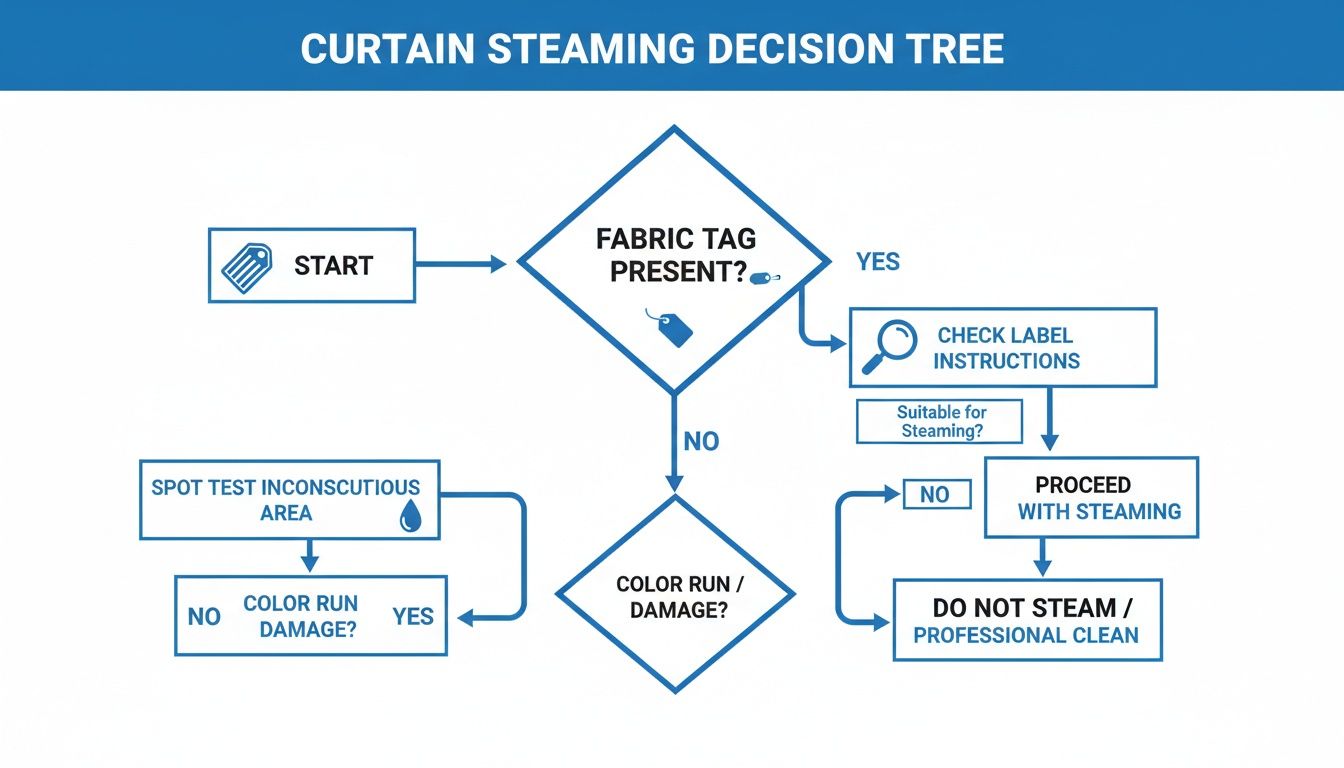
As the chart shows, your first move should always be to check for a care tag. It’s the safest source of cleaning instructions, straight from the manufacturer.
Focusing on Problem Areas and Aftercare
While you’re working your way down, give a little extra attention to the spots that tend to collect the most grime and allergens.
- Pleats and Gathers: Gently steam inside the folds. This is a favourite hiding spot for dust mites and pollen.
- Hems and Bottom Edges: The bottom of curtains often brushes against floors or windowsills, picking up extra dirt.
- High-Touch Areas: Don't forget the edges people frequently grab to open or close the curtains.
Don’t rush the process. Let the heat and moisture do their job. A slow, controlled pace allows the steam to dissolve dirt and kill bacteria far more effectively than quick, frantic passes ever will.
Once you’ve finished steaming all the panels, the aftercare is simple but important. Good ventilation is non-negotiable. Open up your windows and doors to create a cross-breeze, or switch on a ceiling fan. This airflow is vital for helping the curtains dry quickly and completely, which stops any musty smells from developing.
Within a few hours, your curtains should feel totally dry to the touch, leaving your room feeling fresher and looking a whole lot brighter.
Troubleshooting Common DIY Steaming Mishaps
Even when you do everything right, a DIY curtain steaming project can throw you a curveball. Don't panic if you see something unexpected. Most of these little hiccups are easy to sort out once you know what’s causing them, helping you get back on track without making things worse.
One of the most common issues people run into is water spots, especially on delicate fabrics like velvet or certain synthetics. This almost always happens for one of two reasons: you’re either holding the steamer nozzle way too close to the curtain, or you're moving too slowly. This oversaturates the fibres, and as the water evaporates, it leaves behind ugly mineral deposits.
The fix is simple. Just pull the steamer back so it's at least 15 centimetres away from the fabric and keep your movements smooth and steady. If spots have already appeared, let them dry completely, then try a very light, quick pass from a greater distance. Sometimes, that’s all it takes to help them fade.
Dealing With Stubborn Stains and Lingering Smells
So, what do you do when a greasy mark or a faint musty smell just won’t budge? Steam is fantastic for general freshening up and getting rid of dust, but it’s not a magic wand for every type of stain. It can really struggle with anything oil-based or marks that have been there for a while.
Before you get frustrated and keep blasting the same spot with steam—which can actually set the stain permanently—it's time to stop and think. For greasy food splatters or ink, you’ll probably need a specialised pre-treatment first. Be careful, though, as applying the wrong product can lead to discolouration.
Crucial Tip: Never apply intense, prolonged heat directly to a stain you can't identify. Heat can essentially 'cook' certain substances like protein or grease into the fabric, making them impossible to remove later. Your DIY effort could end up making a professional’s job much harder.
If a musty odour is still hanging around after the curtains are fully dry, it could be a sign they didn't dry quickly enough, allowing a bit of mildew to form. The solution here is better ventilation. Next time, crack open the windows and point a fan at the curtains to get the air moving. For a persistent smell, a light mist of a fabric-safe deodoriser after steaming can also work wonders.
Why Do My Curtains Feel Stiff After Cleaning?
Another frequent complaint is curtains that feel stiff or even crunchy once they're dry. This is almost always a dead giveaway that you've used tap water instead of distilled water in your steamer. That stiff feeling is just the residue from minerals like calcium and magnesium that get left behind after the water has evaporated.
Luckily, this one is incredibly easy to prevent next time. To fix curtains that are already stiff, you might need to go over them again with a very light steam using distilled water. This can help dissolve and break down some of that mineral buildup, restoring the fabric's soft, natural feel. It’s a simple switch, but it makes a world of difference to the final result.
Knowing When to Call a Professional Curtain Cleaner
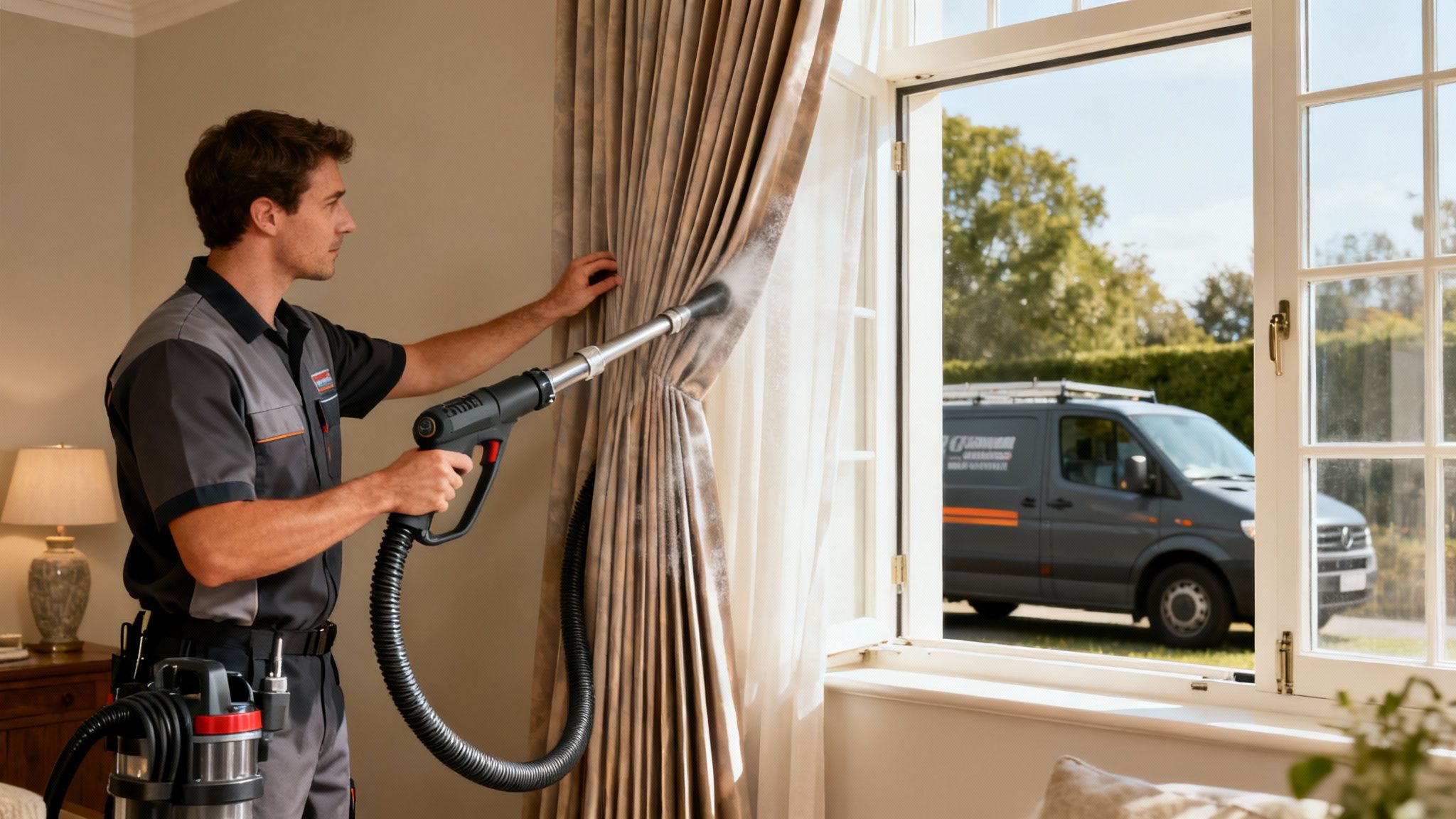
A handheld steamer is a fantastic tool for a quick refresh, but it’s important to be realistic about its limitations. Sometimes, a DIY approach isn't just less effective—it can actually be risky. Knowing when to put the home steamer away and call in a professional is key to protecting your investment and getting the deep clean your home deserves.
There are a few clear signs that it's time to let an expert take over. If your curtains are made from delicate, expensive, or unlabelled fabrics like silk, traditional velvet, or sheer voiles, the risk of causing irreversible damage is just too high. Professionals have the right gear and, more importantly, the experience to handle these materials safely.
Likewise, some jobs are simply too big for a small steamer. Think extensive water damage, visible mould or mildew, or deep-set odours from smoke or pets. These problems need a much more powerful and targeted approach to fully sort them out and get your home's air quality back on track.
The Professional Power Difference
The biggest gap between DIY and professional steam cleaning curtains comes down to the machinery. Your handheld unit is great for a surface-level spruce-up, but a professional truck-mounted system is in another league entirely. These machines deliver results a home steamer just can't touch.
It really boils down to three things:
- Higher Heat and Pressure: Professional systems generate steam at much hotter temperatures and higher pressures. This lets them blast deep into the fabric fibres, dislodging years of embedded grime and killing a much wider range of allergens.
- Powerful Extraction: This is the real game-changer. After the steam dissolves all that dirt, a truck-mounted unit uses incredible suction to pull the moisture, grime, and allergens straight out of the curtains and into a waste tank in the van. Nothing gets left behind.
- Faster Drying Times: Because so much moisture is extracted right away, your curtains dry in hours, not days. This massively reduces the risk of any musty smells or mildew setting in post-clean.
Choosing a professional isn't just about convenience; it's about achieving a certified level of clean. For homes with allergy sufferers, new babies, or anyone with respiratory sensitivities, a professional deep clean provides a level of sanitisation that offers genuine peace of mind.
When Health and Results Matter Most
In some situations, the guaranteed results from a professional service are non-negotiable. For instance, if you're preparing a property for sale or need to meet end-of-lease cleaning standards, a professional clean is often a requirement. The pros can provide the documentation to prove it was done right.
Beyond that, commercial-grade equipment makes a measurable difference to your indoor air quality. Professional truck-mounted systems use superheated dry steam at temperatures between 145-190°C, which is incredibly effective at removing dirt and allergens without causing shrinkage. This is a huge benefit for anyone looking to reduce dust mites, a primary trigger for indoor allergies. You can learn more about the benefits of professional steam cleaning and see how it truly revitalises fabrics.
Got Questions About Steam Cleaning Curtains?
To wrap things up, here are the real-world answers to the questions we hear most often from homeowners around Melbourne. This should help clear up any lingering doubts and give you the confidence to get those curtains looking their best.
How Often Should I Have My Curtains Cleaned?
For the average home, a professional deep clean every 12 to 18 months is a good rule of thumb. This schedule keeps the usual build-up of dust, pollen, and everyday grime in check.
But that’s not a hard and fast rule.
If you’ve got pets leaving dander behind, family members with asthma or allergies, or a smoker in the house, you’ll want to be a bit more proactive. In those cases, cleaning them every 6 months is a much better plan to maintain healthy indoor air quality. A light DIY steam every quarter can also keep them fresh between professional cleans.
Will Steam Cleaning Actually Get Rid of Stubborn Stains?
Steam is a powerhouse for lifting general dirt, dust, and odours, but it definitely has its limits when it comes to set-in stains. Marks from things like red wine, ink, or old grease splatters often need more firepower than just hot water vapour.
These types of stains require specialised pre-treatment formulas to break them down before the steam can lift them out of the fabric. A professional service uses targeted, fabric-safe spot treatments that have a much higher success rate without damaging your curtains.
DIY steaming is fantastic for a general refresh, but it’s no miracle cure for tough stains. In fact, hitting a stubborn spot too aggressively with a steamer can permanently lock the stain into the fibres, making it impossible to remove later on. Sometimes, knowing when to stop is the most important step.
Can Curtains Be Cleaned While They’re Still Hanging?
Absolutely. This is one of the biggest perks of steam cleaning curtains. The entire job can be done with the curtains right where they are. It’s a massive time and effort saver for you.
Forget the hassle of wrestling heavy drapes off the rod, hauling them somewhere to be cleaned, and then struggling to hang them back up perfectly. Our technicians clean them vertically right on the wall, which means minimal disruption to your home and your day.
Is Steam Cleaning Safe for My Blockout Curtains with Rubber Backing?
You need to be extremely careful here. The high temperatures from a steam cleaner can be disastrous for curtains with a rubber or acrylic backing. The heat can cause the lining to soften, get sticky, or even break down and flake off over time.
Before you do anything, check the care label. It’s your best guide. In most cases, it’s much safer to have these types of curtains professionally assessed. An expert can use low-temperature, low-moisture cleaning methods that are effective on the fabric but gentle enough to protect that delicate backing from heat damage.
Ready to see what a professional clean can do for your curtains? Right Price Carpet Cleaning offers expert on-site steam cleaning services across Melbourne. Get your instant quote and book online today at https://rightpricecarpetcleaning.com.au.
Recent Comments