



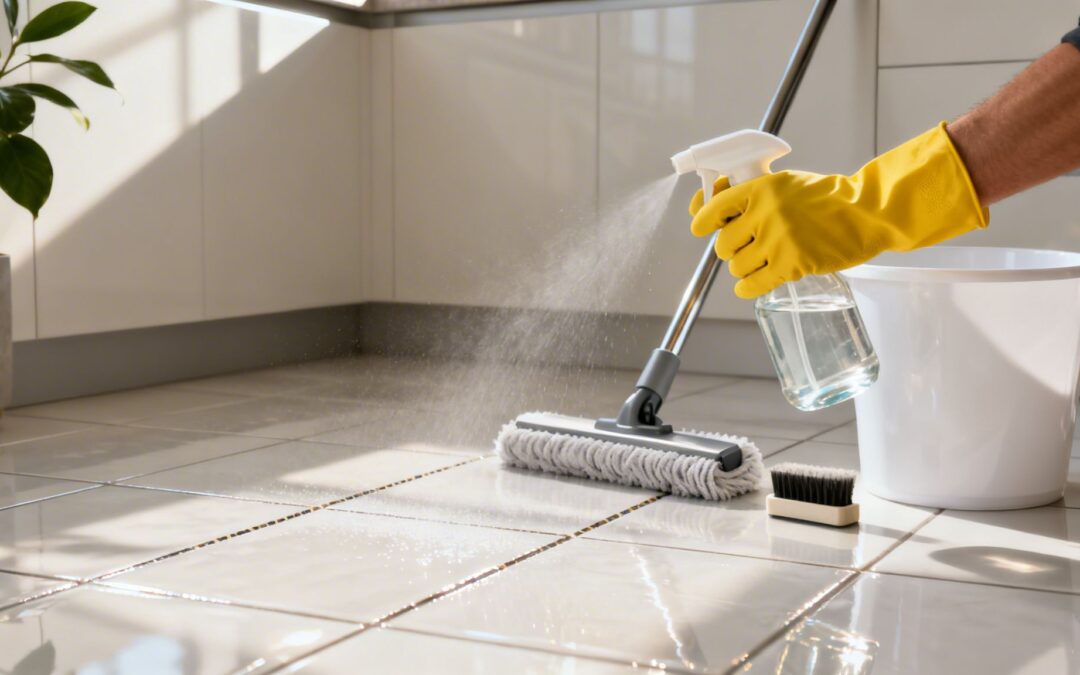
Finding the right tile floor cleaner is about more than just grabbing a bottle off the supermarket shelf. It’s about knowing your floor. A cleaner that makes porcelain sparkle might permanently damage natural stone, so the first step to a brilliant, lasting clean is understanding exactly what you're working with.
Choosing the Right Cleaner for Your Home

Forget the one-size-fits-all approach. That generic cleaner under your sink might not be doing your home any favours. The truth is, the tiles in your Melbourne kitchen are probably very different from the ones in your entryway or bathroom, and each surface has its own needs.
I'm here to give you practical, real-world strategies for getting that spotless finish—not just vague advice. We’ll cover everything from simple daily routines that stop grime in its tracks to the deep-cleaning techniques that restore your tile's original shine. My goal is to pass on what I've learned in the field, with actionable tips you can use right away.
Why Your Tile Type Matters
This is non-negotiable: you must know what your floor is made of. Different materials have vastly different reactions to cleaning products.
- Ceramic and Porcelain: These are the workhorses of the tile world. They're incredibly durable and, when glazed, non-porous. Most pH-neutral or slightly alkaline cleaners are perfectly fine for them.
- Natural Stone (Marble, Travertine, Slate): Think of these as the sensitive ones. They are porous and highly reactive to acids. Cleaners with vinegar or lemon will etch the surface, leaving a permanent dullness. You need a dedicated, pH-neutral tile floor cleaner. No exceptions.
- Terracotta and Quarry Tiles: These unglazed, earthy tiles are like sponges. If not properly sealed, they will soak up liquids and stains in a heartbeat. The wrong cleaner can easily cause discolouration.
Key Insight: The single biggest mistake I see homeowners make is using an acidic cleaner on natural stone. A simple pH-neutral solution is the safest bet for daily cleaning on almost any tile surface.
Beyond the Tile and Into the Grout
The cleaner you choose doesn't just touch the tile; it soaks into the grout lines that frame it. Grout is essentially porous cement, which makes it a magnet for dirt, spills, and bacteria. A good tile floor cleaner must be strong enough to lift grime from the grout without slowly eroding it.
The growth of the Australian ceramic tiles market shows just how much homeowners are investing in these beautiful, hygienic surfaces, especially with renovation activities spiking across Melbourne's suburbs. Research shows that proper maintenance with the right products can extend a tile's life by up to 50%, helping you avoid costly replacements down the line. You can dig into more data about Australia's ceramic tile market trends to see just how big this investment is.
This guide is designed to help you protect that investment. Let’s get your floors looking their absolute best.
Right, let's get your tiles ready for a proper deep clean.
Jumping straight into mopping a dirty floor is one of the quickest ways to make a mess. You’re essentially turning all that loose dust and grit into a muddy, abrasive slurry that gets pushed around your floor and, worse, deep into your grout lines.
Before a single drop of tile floor cleaner touches your tiles, a bit of prep work is non-negotiable. It’s what separates a professional, streak-free finish from a frustrating, smeary disaster.
First things first, you need a blank canvas. That means moving all your furniture, rugs, pot plants, and anything else sitting on the floor. Clearing the room completely ensures you can reach every single corner without having to awkwardly shuffle things around later, which is a surefire way to scuff your freshly cleaned surface.
Your First Line of Defence is a Dry Clean
With the room clear, it's time to get rid of all the loose debris. I’m talking about dust bunnies, pet hair, crumbs, and whatever else has found its way onto your floor. A broom and dustpan will do the job, but I always reach for a vacuum cleaner with a hard floor head attachment.
Here’s why a good vacuum is my go-to:
- It actually removes the dirt. A broom often just flicks fine dust into the air, only for it to settle back down later. It also loves to push bigger bits of debris straight into your grout lines, making your main cleaning job that much harder.
- It’s just more efficient. A vacuum with decent suction will capture all those tiny particles a broom leaves behind, especially stubborn pet hair that seems to cling on for dear life.
- It protects your tiles. By lifting away abrasive grit beforehand, you seriously reduce the risk of scratching your tiles when you eventually start scrubbing.
Think of it this way: any dirt left on the floor is just going to mix with your cleaning solution. You’ll end up pushing dirty water around the room. Taking a few extra minutes to vacuum thoroughly makes the entire wet cleaning process faster and far more effective.
Know Your Tile and Always Do a Spot Test
This might just be the most critical part of the whole prep phase. As we've covered, not all tiles are created equal. Sloshing an acidic cleaner on natural stone like marble can permanently etch the surface, while a harsh chemical might strip the protective glaze right off your ceramic tiles.
Before you even think about cleaning the whole floor, you absolutely must identify your tile type. Is it a durable, glazed porcelain, or something more delicate and porous like an unsealed terracotta? If you’re not sure, a simple water test can give you a clue. Just place a few drops of water on a tile in an out-of-the-way spot. If the water beads up, your tile is likely sealed or non-porous. If it soaks in and darkens the tile, you’re dealing with a porous surface that needs a gentle approach.
Once you’ve chosen a suitable tile floor cleaner, the next step is non-negotiable: perform a spot test. Find a hidden corner—maybe behind a door, under where the fridge usually sits, or inside a cupboard—and apply a small amount of your diluted cleaner. Let it sit for the recommended time, then give it a gentle scrub and rinse it off, just like you would for the main floor.
After it dries completely, check for any discolouration, dullness, or any other kind of adverse reaction. This simple check takes just a few minutes but can save you from a costly, heartbreaking disaster. It’s about protecting your investment and giving you the confidence to clean the rest of the floor, knowing your chosen product is both safe and effective for your specific surface.
Choosing Your Ideal Tile Floor Cleaner
Walking down the cleaning aisle at Bunnings or Coles can feel like a pop quiz you didn't study for. There are dozens of bottles, all promising a miracle shine. But here's a little secret from someone who's seen it all: there’s no single "best" cleaner. The real trick is matching the right cleaner to your specific tiles.
Getting this right isn't just about getting a better clean—it's about protecting your floors from accidental damage. Let's break down the options, from pantry staples to professional-grade solutions, so you can clean with confidence.
DIY Solutions: The Good, The Bad, and The Ugly
Lots of people swear by homemade cleaners like vinegar and baking soda. They’re cheap, accessible, and can work wonders in the right situation. But it's crucial to know where their limits are.
A mix of white vinegar and water is a classic for a reason. It's an acidic solution, which means it's brilliant at cutting through soap scum in the bathroom or hard water spots. The problem? That same acidity can be a total disaster on the wrong kind of tile.
Crucial Warning: Never, ever use vinegar or any acidic cleaner on natural stone like marble, travertine, or limestone. The acid will literally eat away at the surface, leaving dull, etched marks. This is permanent damage that only professional restoration can fix.
Baking soda, on the other hand, is alkaline. A simple paste made with bicarb and water is a fantastic, slightly abrasive scrubber for stubborn grime in grout lines or greasy kitchen spills. It’s generally much safer than vinegar, but be warned: if you don’t rinse it away completely, it can leave behind a dull, cloudy film.
Understanding Commercial Cleaners
When you buy a commercial cleaner, you're paying for a formula designed for a specific job. The secret to using them correctly lies in understanding the pH scale—a simple measure of acidity or alkalinity.
pH-Neutral Cleaners: Think of these as your everyday go-to. With a pH level around 7, they are the safest bet for nearly all tile surfaces, including delicate natural stone. They’re designed to gently lift daily dirt and grime without stripping sealants or damaging the tile itself.
Alkaline Cleaners (Degreasers): These powerhouse cleaners have a pH above 7. Their job is to break down organic stuff—think grease, oils, and caked-on food spills. They're perfect for a deep clean on a grimy kitchen floor but should be used sparingly and always rinsed thoroughly.
Acidic Cleaners: With a pH below 7, these are your heavy-hitters for dissolving mineral deposits (like limescale), rust stains, and tough soap scum. They're incredibly effective but must be handled with care and used only on appropriate surfaces like glazed ceramic or porcelain. Again, keep them far away from natural stone.
Before you even think about which cleaner to use, the prep work is what sets you up for success. This chart lays out the non-negotiable first steps.

As you can see, clearing the floor, giving it a good sweep or vacuum, and testing your chosen cleaner in a hidden spot are essential. Don't skip these!
Tile Cleaner Compatibility Chart
Most Melbourne homes feature a mix of ceramic, porcelain, and sometimes natural stone or terracotta tiles. Choosing the right cleaner for each is key to keeping them looking great without causing damage. This chart breaks it down simply.
| Tile Type | pH-Neutral Cleaner | Vinegar & Water (Acidic) | Baking Soda Paste (Alkaline) | Professional Steam Cleaning |
|---|---|---|---|---|
| Glazed Ceramic & Porcelain | ✅ Excellent (For daily use) | ✅ Good (For mineral buildup) | ✅ Good (For grout & tough spots) | ✅ Excellent (Deep cleaning) |
| Natural Stone (Marble, Travertine) | ✅ Essential (The only safe DIY option) | ❌ NEVER (Will cause etching) | ⚠️ Use with caution (Rinse well) | ✅ Excellent (Safest deep clean) |
| Slate & Terracotta (Unglazed) | ✅ Excellent (Safest choice) | ❌ Avoid (Can cause damage/discolouration) | ⚠️ Use with caution (Can leave residue) | ✅ Excellent (Restores appearance) |
This table makes it clear: when in doubt, a pH-neutral cleaner is your safest bet. But for a truly deep clean that gets into the pores of your tile and grout, nothing beats professional methods.
While having the right bottle of cleaner at home is great for everyday maintenance, it’s worth knowing its limitations. Professional steam extraction, for example, can remove up to 95% more dirt and bacteria from grout lines than mopping alone. It does this without relying on harsh chemicals, using high-pressure hot water to blast away grime that’s been building up for years.
When you start looking into more powerful cleaning methods, it’s helpful to understand the technology. Reading up on topics like professional rug cleaning vs. steam cleaning can offer surprising insights into how different deep-cleaning techniques work, helping you make a more informed choice for all the surfaces in your home. By understanding the tools and solutions available, you can build a cleaning routine that actually delivers the results you want.
Mastering Your Scrubbing and Grout Cleaning Technique

You’ve got your tile floor cleaner mixed and the floor is prepped. Now for the part where the real magic happens. This is where your effort truly pays off, and it's the technique that separates an average result from one that looks professionally done. It’s not about brute force, either; it’s about working smart to lift ingrained dirt without wearing yourself out or damaging your tiles.
Let’s get into the practical methods I’ve relied on for years. We’ll cover the must-have tools for manual scrubbing, a mopping method that actually works, and how to bring those sad, discoloured grout lines back from the dead.
The Right Tools for Manual Cleaning
For any hands-on scrubbing, your success really comes down to having the right gear. A tired old sponge or a tatty cloth just won’t have the grunt you need. You need equipment designed for the job.
- A Stiff-Bristled Nylon Brush: This is your absolute workhorse for the main tile surfaces. Find one with a comfortable handle that lets you apply firm, even pressure without cramping your hand.
- A Dedicated Grout Brush: These are smaller, but their bristles are tough and angled perfectly to get deep into the grout lines where grime loves to hide. Trust me, don't try using your main floor brush for this – it’s just not effective.
- Two Buckets: This is non-negotiable. You’ll need one bucket for your diluted tile floor cleaner and a second one filled with clean, fresh water for rinsing.
- A High-Quality Microfibre Mop: Ditch the traditional string mops. They tend to just slosh dirty water around. A good microfibre flat mop will grab and trap dirt far more effectively, leaving a cleaner finish.
Using the wrong tools doesn’t just make the job harder; it leads to disappointing results and a lot of wasted energy. A small investment in the right brushes will make a world of difference to your final outcome.
Mastering the Double Bucket Method
The single biggest mistake I see people make when mopping is using just one bucket. The moment you rinse your dirty mop back into the cleaning solution, the whole bucket is contaminated. From that point on, you’re just spreading a thin film of grime back over the floor you’re trying to clean.
The double bucket method completely solves this. You'll dip your mop into the cleaning solution, mop a small section, and then rinse the dirty mophead thoroughly in the bucket of clean water before dipping it back into the cleaner. It feels like an extra step, but it guarantees you're always working with a clean solution.
Pro Tip: Work in small, manageable grids—about one square metre at a time is perfect. Mop the area using a gentle 'S' motion, overlapping your strokes slightly. This ensures you get even coverage and prevents streaks or missed patches.
Transforming Your Grout Lines
Grout is porous, which means it soaks up stains like a sponge. For general maintenance, your grout brush and cleaner will usually do the trick. But for grout that has become seriously discoloured and dingy over the years, you need to be a bit more strategic.
A simple but incredibly effective trick is to make a baking soda paste. Just mix baking soda with a small amount of water until it forms a thick, spreadable consistency, almost like toothpaste. Smear this paste directly onto the grout lines and let it sit for about 15-20 minutes.
After it’s had time to work, spray the paste with a 50/50 solution of white vinegar and water. The mixture will start to bubble and fizz—that’s the chemical reaction doing the hard work, lifting all that deep-set grime. Now, grab your grout brush and give the lines a good scrub. Rinse the whole area thoroughly with a cloth and clean water. The result is so satisfying; it can make old grout look almost brand new.
When to Consider Mechanical Assistance
For larger tiled areas, like an open-plan living space or a big Melbourne kitchen, manual scrubbing can become an exhausting, back-breaking job. This is where mechanical tools are an absolute game-changer. A steam mop, for instance, is brilliant for sealed, non-porous tiles like ceramic and porcelain. The high-temperature steam helps sanitise the surface and loosen stubborn dirt without any chemicals.
Just be careful using steam on unsealed or natural stone tiles, as the intense moisture can penetrate the surface and cause damage. Another great option is a floor polisher or scrubber, which you can often hire locally. These machines use rotating brushes to do the hard work for you, delivering a deep, consistent clean across large spaces with minimal physical effort.
Even after your best cleaning efforts, some stains just refuse to budge. A dropped mug of coffee, a greasy splash from the frypan, or a mysterious rust mark near a metal plant stand can spoil the look of your beautiful tiles. This isn’t a sign of cleaning failure; it’s just part of life in a busy home.
The secret isn’t just cleaning harder—it’s cleaning smarter. Let's move beyond general mopping and into some targeted troubleshooting for those stubborn spots. We'll also cover the proactive steps you can take to make these deep cleans a rare event.
Targeting Troublesome Tile Stains
Different stains need different battle plans. Using the wrong product can be a waste of time or, worse, lock the stain in permanently. Here’s how to tackle some common culprits I see all the time in Melbourne homes.
Grease and Oil Stains: A classic kitchen problem. For a fresh spill, blot up as much as you can immediately with a paper towel. For older, set-in stains, an alkaline solution is your best friend. A great DIY trick is to make a poultice by mixing baking soda with a little water until it forms a thick paste. Slather it over the stain, let it dry completely (this might take a few hours), then gently scrape it off and wipe clean. The poultice literally pulls the oil out of the porous tile and grout.
Rust Stains: Often found in bathrooms, laundries, or on patios under metal furniture. Commercial rust removers are your most reliable option here, as they contain specific acids designed to dissolve iron oxide without damaging ceramic or porcelain. Always test on a hidden spot first! For a DIY fix on non-sensitive tiles, a paste of lemon juice and salt can sometimes do the trick, but never, ever use this on natural stone like marble or travertine.
Coffee, Tea, or Juice Stains: These organic stains usually lift with a bit of warm water and a good quality, pH-neutral tile floor cleaner. If a stain has been sitting for a while, especially on light-coloured grout, a diluted hydrogen peroxide solution can help bleach it out. Just be cautious and test it first.
The Power of Proactive Grout Sealing
Fighting stains after they happen is one thing, but preventing them in the first place is so much better. Your grout is the weak link in any tiled floor. It’s naturally porous and acts like a tiny sponge, soaking up dirt, spills, and grime.
This is why sealing your grout is one of the single most important things you can do for your floors.
A quality grout sealant creates an invisible shield, stopping moisture and staining agents from sinking in. This doesn't just keep your grout looking fresh and uniform; it makes your regular mopping far more effective because dirt sits on the surface instead of getting absorbed.
Is It Time to Reseal?
Unsure if your grout needs a top-up? There’s a simple way to check. Drip a few drops of water onto a grout line in a high-traffic area. If the water beads up nicely on the surface, your sealant is doing its job. If it soaks in and darkens the grout within a minute or two, it’s time to reseal.
Creating a Sustainable Cleaning Schedule
Pristine tiles don’t require hours of back-breaking labour every weekend. It’s all about consistency. A simple, manageable routine prevents heavy build-up and means you won't have to face a massive deep-cleaning job down the track.
A Simple Plan for Long-Lasting Floors
| Frequency | Task | Why It Matters |
|---|---|---|
| Daily (2-5 mins) | Sweep or vacuum high-traffic areas like the kitchen and entryway. | Removes the daily grit and dust that scratches tiles and gets ground into grout. |
| Weekly (15-30 mins) | Mop the floors using a pH-neutral tile floor cleaner. Spot-treat any new marks. | Lifts away the weekly accumulation of grime, keeping floors hygienic and looking their best. |
| Annually (1-2 hours) | Deep clean your grout lines and reseal the grout if the water test fails. | This is your big reset. It restores your grout's colour and protects it for the year ahead. |
This structured approach turns floor care from a daunting chore into a simple habit. It protects your investment and ensures your tile floors remain a point of pride, looking as good as the day they were laid.
When to Call a Professional Tile Cleaner in Melbourne

Look, a solid DIY routine with the right tile floor cleaner is a must, but let's be honest—sometimes, your best efforts just won't be enough. Knowing when to put down the scrubbing brush and call in a professional isn't admitting defeat. It's a smart move. It’s about recognising when you need a deeper, more powerful solution to truly restore and protect your floors.
There are a few tell-tale signs that it's time to get an expert involved. If your grout lines are still stubbornly dark and discoloured no matter how much elbow grease you put in, the grime has likely seeped deep into the porous material, far beyond what any topical cleaner can reach. Another obvious one? The sheer size of your tiled area has become too overwhelming to tackle by hand, especially for busy Melbourne families or anyone managing a property.
The Limits of DIY Cleaning
Even the most dedicated mopping session just can’t compete with professional-grade equipment. We often see homeowners battling efflorescence—that stubborn, chalky white residue that appears on tiles. It’s caused by salt deposits working their way to the surface and can be incredibly difficult to shift without specialised tools and know-how.
When you're up against these kinds of challenges, it pays to weigh your options. Understanding the nuances of weighing DIY versus hiring a professional cleaning company can bring some clarity. Bringing in an expert isn't just about getting things clean; it's a strategic investment in your home's health and overall value.
The Professional Advantage in Melbourne
This is exactly where a service like Right Price Carpet Cleaning becomes a game-changer. We bring in powerful, truck-mounted steam cleaning machines that deliver a level of clean that’s simply impossible to get with household gear. This method, known as hot water extraction, uses high-pressure hot water to blast away dirt, allergens, and bacteria from deep inside the pores of your tile and grout.
A professional clean is more than just cosmetic. It's a restorative process that removes deeply embedded contaminants that regular mopping simply spreads around, improving your home's hygiene and air quality.
The tiling services market in Australia was valued at a massive $6.6 billion in 2024, which shows just how important these surfaces are in our homes. While DIY is common, a professional clean can eliminate up to 99% of bacteria from grout and extend a tile’s lifespan to 20-30 years, compared to just 10 with poor care. For real estate agents and homeowners looking to sell, pristine tiles can even boost sale prices by 5-7%, making a professional service a high-return investment. You can learn more about tiling industry insights and see the economic impact for yourself.
Your Top Tile Cleaning Questions Answered
We get a lot of questions from Melbourne homeowners about keeping their tile floors looking their best. While our guide covers the A-to-Z of tile and grout care, a few common queries pop up time and time again. Here are the expert answers you’re looking for.
How Often Should I Professionally Clean My Tiles?
For most homes, booking a professional deep clean every 12-18 months is a great rule of thumb. It’s the perfect schedule to keep on top of things.
However, if your floors see a lot of action—think high-traffic hallways, kids, or pets—I’d suggest bringing that forward to every 6-12 months. This helps you stay ahead of grime build-up and stops stubborn grout stains from becoming a permanent feature.
Can I Use a Steam Mop on All Tile Types?
Steam mops can be a fantastic tool for sanitising sealed, non-porous surfaces like glazed ceramic and porcelain. They cut through grime beautifully.
But, you need to be very careful with unsealed or porous tiles like terracotta, slate, or some natural stones. The high-pressure moisture can force its way into the tile, leading to damage, discolouration, or ugly water marks that are tough to get rid of.
Expert Tip: Always check your tile manufacturer’s care guide before firing up a steam mop. If you’re ever in doubt, just stick to a pH-neutral cleaner and a good old microfibre mop.
Is Sealing My Grout Really That Important?
Yes, absolutely. Think of unsealed grout as a tiny, porous sponge. It will soak up every spill, track in dirt, and even harbour bacteria. It’s a magnet for mess.
Applying a quality sealant creates an invisible shield. This barrier repels stains and grime, making your day-to-day cleaning so much easier and more effective. Honestly, it's one of the best long-term investments you can make for your floor’s looks and longevity.
Why Does My Grout Still Look Dirty After Cleaning?
It's a common frustration. If you’ve scrubbed your grout lines with all your might and they still look grimy, it’s a clear sign of a deeper issue.
This usually means that stains have penetrated far into the grout's pores, or mildew has taken a serious hold. At this point, topical cleaners and elbow grease just can't reach the problem. This is the classic signal that it's time for a professional clean using high-pressure hot water extraction to blast out the deep-set dirt and restore its true colour.
For a deep clean that restores your tiles and grout beyond what DIY methods can achieve, trust the experts at Right Price Carpet Cleaning. Get your free, instant quote and book online today at https://rightpricecarpetcleaning.com.au.
Recent Comments