



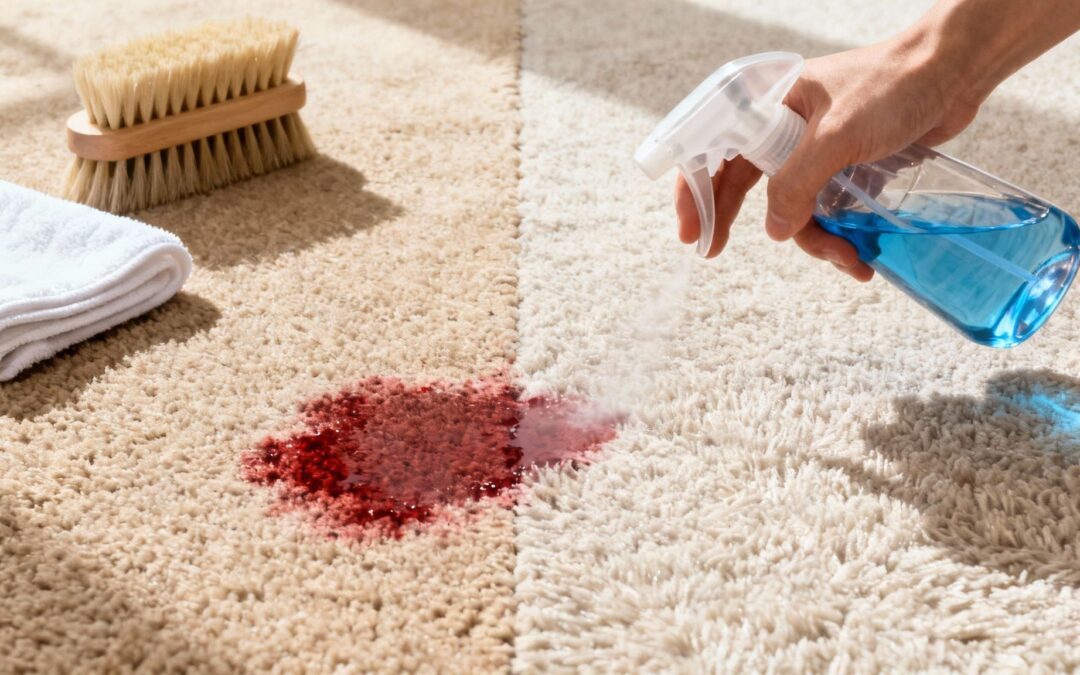
When you're faced with a stubborn carpet stain, it's easy to think there's a single magic potion that works on everything. But the real secret to success isn't finding one miracle bottle; it's about playing matchmaker between the stain and the solution.
For everyday organic messes like food spills or a classic pet accident, an enzymatic cleaner is your best friend. On the other hand, for those greasy, oily marks that seem impossible, you'll need a completely different approach with a solvent-based remover.
How to Choose the Right Carpet Stain Remover
Standing in the cleaning aisle, staring at a wall of products, can be daunting. The key isn't to find a single "best" product, but to understand what makes a remover effective for your specific problem.
Think of it like a toolkit. You wouldn't use a hammer to turn a screw, right? In the same way, the chemistry needed to lift a red wine spill is fundamentally different from what's required to dissolve a greasy footprint.
Your success will boil down to three things:
- What caused the stain? Is it organic like food or pet urine? Is it oil-based, like grease or ink? Or is it a tannin stain from coffee, tea, or wine? Each type needs a different chemical reaction to break it down.
- What is your carpet made of? Natural fibres like wool are delicate and can be damaged by harsh chemicals. Synthetic carpets made of nylon or polyester are much more resilient.
- What are the active ingredients? Getting your head around the difference between enzymatic, solvent-based, and oxidising cleaners is the game-changer. It empowers you to pick the right tool for the job, every time.
This guide will walk you through these elements, transforming you from a panicked homeowner into a confident stain-fighting pro. With the right know-how, you can protect your investment and tackle spills with ease.
And it's a growing need. With more and more Aussies welcoming pets into their homes, the demand for powerful cleaning solutions is on the rise. The Australian carpet cleaner market was valued at USD 13.28 million in 2024 and is projected to hit USD 21.50 million by 2033, largely driven by the need to clean up after our furry friends. You can explore more data on the Australian carpet cleaner market and its growth.
So, where do you begin? Start by playing detective.
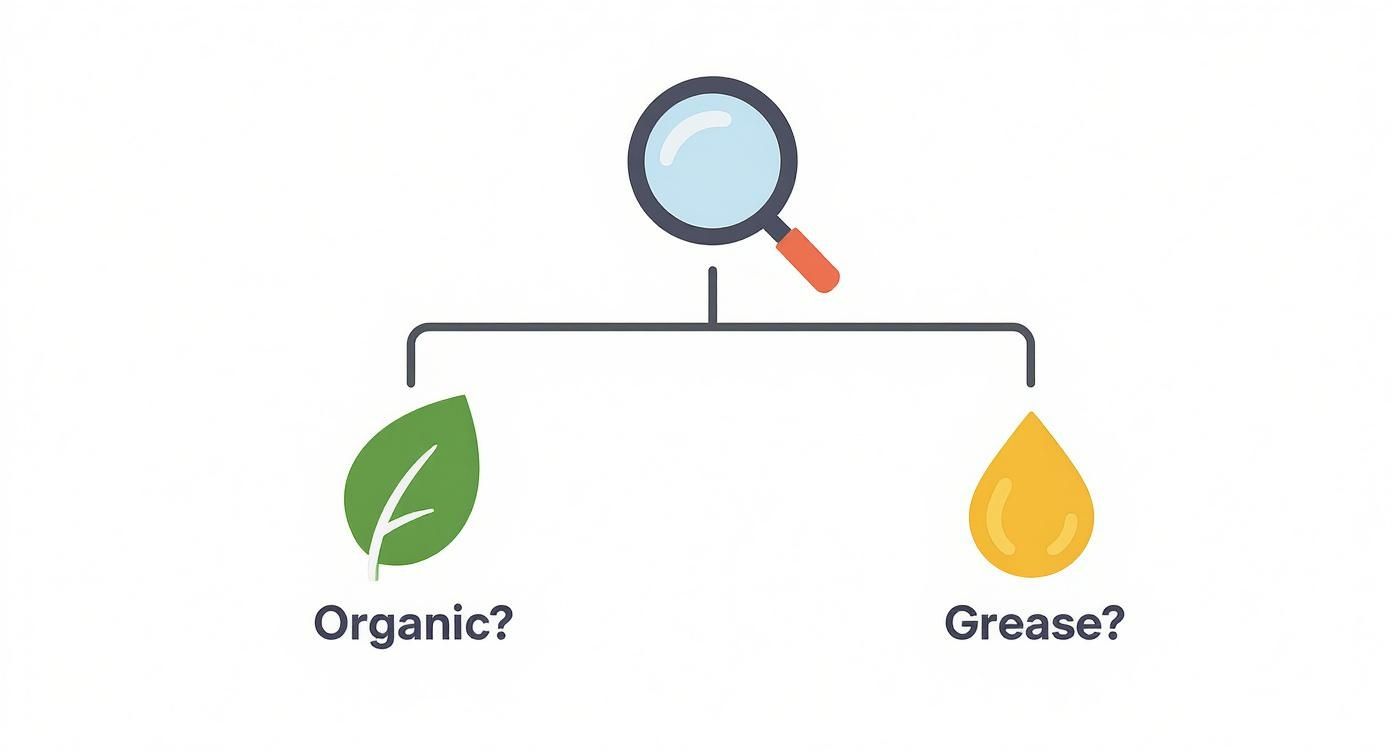
As you can see, the first crucial step is figuring out the stain's origin. Is it organic or oil-based? Answering that one question immediately points you in the right direction.
How Different Carpet Stain Removers Actually Work
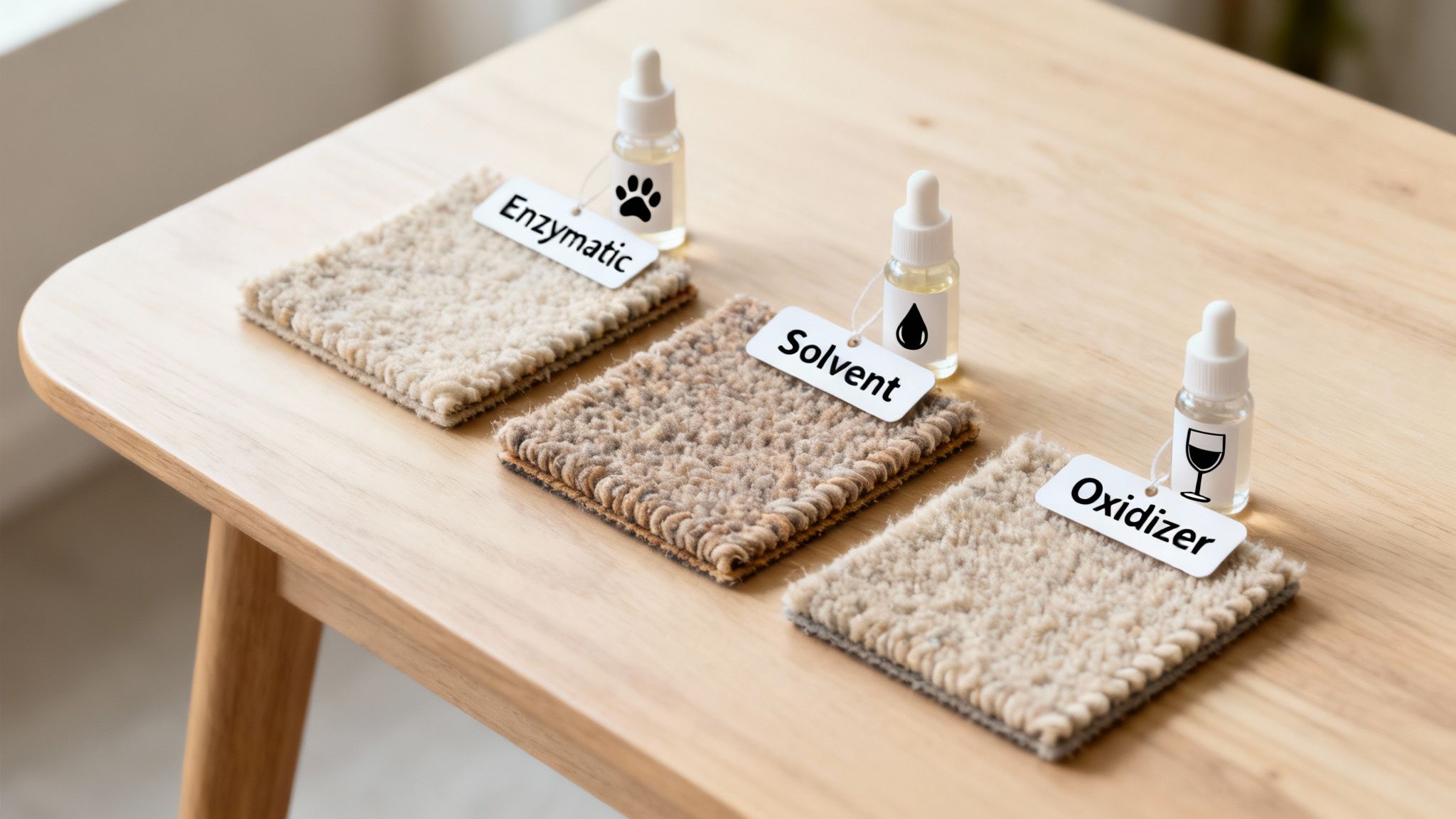
Ever wondered what’s actually going on inside that bottle of stain remover? Think of your cleaning cupboard as a specialised toolkit. You wouldn't use a hammer to turn a screw, and the same logic applies here. Picking the right cleaner isn't about finding one miracle spray; it’s about matching the science in the bottle to the specific mess on your floor.
Each type of remover uses a completely different strategy to attack stains and pull them out of your carpet fibres. Once you get a handle on how they work, you'll be able to read any product label and know instantly if it’s the right tool for the job.
Most products on the shelf will fall into one of three main categories, each a specialist for a certain kind of spill.
H3: Enzymatic Cleaners: The Biological Stain Breakers
Enzymatic cleaners are the biological workhorses of the cleaning world. The best way to think of them is like tiny, microscopic Pac-Men, programmed to hunt down and devour specific types of organic gunk. These cleaners are packed with enzymes—special proteins that act as catalysts to break down complex messes.
You’ll typically find three main types of enzymes in these formulas:
- Protease enzymes: These are your protein-eaters. They go after stains like blood, pet urine, vomit, and grass.
- Amylase enzymes: These are the starch-busters, perfect for digesting spills from pasta sauce, gravy, or baby food.
- Lipase enzymes: These target fats and oils, breaking down greasy food stains, butter, or even oily lotions.
In simple terms, the enzymes literally "eat" the stain. They convert the complex, sticky mess into simple molecules that dissolve in water, making them easy to blot away. This is exactly why they're the gold standard for pet accidents—they don’t just cover up the smell, they completely destroy the organic source causing it.
H3: Solvent-Based Cleaners: The Grease Dissolvers
Next up, we have solvent-based cleaners. These are the heavy hitters formulated to dissolve anything oily, greasy, or waxy. It’s the same basic principle as how dish soap cuts through grease on a frying pan, but it's been adapted for your carpet fibres.
These products contain chemical compounds that get in between the molecules of an oily stain, breaking the bonds that hold it together. This allows the stain to release its grip on the carpet so it can be lifted out. Solvents are your go-to for really stubborn marks, such as:
- Ink from a leaky pen
- Grease or oil tracked in from the garage
- Melted crayon, makeup, or wax spills
Because they dissolve the stain itself, solvents are incredibly effective. A word of caution, though: they can be quite potent. It's absolutely crucial to test them on a hidden spot first to make sure they won’t damage your carpet's colour or texture.
H3: Oxidising Cleaners: The Colour Neutralisers
Finally, there are oxidising cleaners. These guys work a bit differently. Instead of lifting or eating the stain, they perform a bit of chemistry magic to make it invisible. They work by releasing oxygen molecules that chemically alter the stain, essentially bleaching the colour out of it.
Key Takeaway: An oxidising agent doesn't really "remove" the stain in the traditional sense. It changes the stain's molecular structure so it can no longer reflect coloured light, effectively making it disappear from sight.
This process, called oxidation, is a lifesaver for stains with strong pigments like red wine, coffee, tea, and berry juice. Common active ingredients include hydrogen peroxide and sodium percarbonate. For a light-coloured carpet facing a colourful disaster, these are the powerful tools you need in your arsenal.
To make it easier to choose the right product, here’s a quick reference table.
Matching the Remover to the Stain
| Stain Type | Best Remover Type | How It Works |
|---|---|---|
| Pet Urine, Blood, Vomit, Food | Enzymatic | Uses proteins to "eat" and digest the organic matter in the stain. |
| Grease, Oil, Ink, Crayon, Makeup | Solvent-Based | Dissolves the oily or waxy substance, breaking its bond with carpet fibres. |
| Red Wine, Coffee, Tea, Fruit Juice | Oxidising | Chemically alters the stain's molecules to render them colourless. |
This table should give you a great starting point for tackling most common household spills.
The power and versatility of these removers, particularly liquid ones, are a big reason for their popularity. In fact, in 2024, liquid formats captured about 56.2% of the market, with Australian households preferring them for their ability to soak deep into carpet fibres. This trend is also being influenced by a growing desire for eco-friendly formulas. You can find out more about what's driving carpet spot remover market trends and consumer choices online.
A Tactical Guide for Tough Carpet Stains
Knowing the chemistry of a stain remover is one thing. Actually using it when a glass of red wine cartwheels onto your light-coloured carpet is another entirely. In those high-stress moments, a clear, practiced strategy is what saves the day.
The golden rule for any fresh spill is simple: act fast and blot, never rub. Rubbing just grinds the stain deeper into the carpet fibres, making your job ten times harder.
Always start by gently blotting the area with a clean, white cloth. Work from the outside of the stain inwards to stop it from spreading. Once you've soaked up as much of the spill as you can, it's time to get specific with your treatment plan.
Conquering Red Wine Spills
A red wine stain looks like a disaster, but it's usually very manageable if you have the right game plan. The deep red colour comes from compounds called tannins, and the only way to beat them is to break them down with an oxidising cleaner.
- Blot Immediately: Grab a dry, white cloth and press firmly to absorb as much of the wine as possible. Don't be shy; put some weight into it.
- Apply Cold Water: Lightly dampen the area with a bit of cold water. This helps dilute what's left. Keep blotting.
- Use an Oxidising Cleaner: Now, bring in the specialist. Apply a commercial oxidising stain remover made for wine, following the product's instructions to the letter. Give it time to work its magic.
- Blot, Rinse, and Dry: Gently blot the solution away with a fresh cloth. Give it a final, light rinse with a damp cloth, then lay a dry towel over the spot. A few heavy books on top will help pull out the last of the moisture.
For particularly stubborn messes like glue, you'll need a different set of tactics. You can learn how to remove glue from carpet and save your floors from a sticky situation.
Neutralising Pet Urine Odours
With pet accidents, you're fighting a war on two fronts: the visible stain and the invisible, lingering smell from uric acid crystals. This is where an enzymatic cleaner is your non-negotiable best friend.
Pro Tip: Whatever you do, don't use a steam cleaner or hot water on a fresh urine stain. The heat can literally cook the proteins in the urine, permanently setting the stain and the smell into your carpet fibres.
The key is to completely saturate the area, making sure the cleaner gets just as deep as the urine did. Then, you have to be patient. Let the enzymatic cleaner sit—sometimes for several hours—to give the "good" bacteria enough time to fully digest the source of the odour.
Tackling Grease and Oil Stains
Grease and oil are a different beast because they repel water. You can't just dilute them. You need a solvent-based cleaner that can dissolve the oily compounds and break their grip on your carpet.
Here’s a method that works wonders:
- Scrape Excess: If there’s any solid gunk (think butter or shoe polish), gently scrape it off with a dull knife first.
- Apply a Solvent: Use a commercial solvent-based spot remover. Always test it on a hidden spot first, like inside a cupboard, as solvents can be powerful.
- Work Gently: Apply the solvent to a clean cloth, not directly to the carpet. Dab at the stain. You'll see the solvent breaking down the grease, which you can then lift away with the cloth.
- Rinse Lightly: Once the stain is gone, blot the area with a cloth dampened with a little water to remove any leftover solvent.
Erasing Coffee and Tea Stains
Just like wine, coffee and tea are tannin stains. The good news is they often respond well to a gentle approach first, so you might not have to bring out the heavy-duty products.
Start by blotting up as much of the liquid as you can. Next, mix a simple solution of one part white vinegar to two parts water. Lightly spritz this onto the stain and blot gently. If the stain is still hanging around after that, it's time to call in an oxidising cleaner to finish the job. This "least aggressive first" tactic protects your carpet while still getting you that perfect, clean result.
DIY Carpet Stain Removers Versus Commercial Products
When a stain hits your carpet, what’s your first move? If you're like most people, you probably think about raiding the pantry for some bicarb soda or white vinegar. It makes sense – these solutions are cheap, you already have them on hand, and they feel a bit more natural. But can a kitchen remedy really go toe-to-toe with a product developed in a lab?
Honestly, it's not a simple yes or no. The right choice really hinges on what you’ve spilt, what your carpet is made of, and how much you're willing to risk. For a small, fresh coffee drip on a sturdy nylon carpet, a simple DIY mix might just be all you need.
The big catch with homemade removers, though, is their unpredictability. That trusty vinegar solution that worked wonders on a juice spill could actually lock in a protein-based stain like milk, making it permanent. And while bicarb soda is a brilliant deodoriser, its slightly gritty texture can wear down the delicate fibres of your carpet over time with repeated scrubbing.
The Power of Commercial Formulations
This is exactly where commercial products have the edge. The best carpet stain removers on the shelf aren’t just a random mix of chemicals; they're precisely engineered. Companies pour a ton of money into research to create formulas that zero in on specific types of stains—think enzymes that digest pet urine or solvents that dissolve greasy food—all while being gentle on your carpet.
These products go through a whole lot of testing to make sure they are:
- Colour-fast: They won't bleach or leave a pale patch on your carpet.
- pH-balanced: This is crucial for protecting delicate natural fibres like wool from damage.
- Effective: They're proven to actually work on the stains they claim to remove.
While a DIY fix seems handy in the moment, a good commercial product gives you reliability and peace of mind. You're using something tested and balanced to protect your carpet—a significant investment you don’t want to gamble on with an untested kitchen experiment.
To help you weigh your options, let's break down the pros and cons side-by-side.
DIY vs Commercial Carpet Stain Removers
This table gives you a clear look at where each approach shines and where it falls short, helping you decide what's best for your situation.
| Feature | DIY Solutions | Commercial Products |
|---|---|---|
| Cost | Very low cost, uses common household items. | Higher initial cost, but can be cost-effective. |
| Effectiveness | Variable. Can work on simple, fresh stains but often fails on complex or set-in ones. | High. Formulated for specific stain types and rigorously tested for performance. |
| Safety | Can be unpredictable. Risk of setting stains, discolouring carpet, or damaging fibres. | Generally safe when used as directed. Tested to be colour-fast and pH-balanced. |
| Convenience | High. Ingredients are usually already in your pantry. | Requires a trip to the store or an online order, but ready to use immediately. |
| Best For | Minor, fresh spills (e.g., mud, some food stains) on durable synthetic carpets. | Tough, old, or specific stains (e.g., red wine, pet urine, ink, grease). Ideal for delicate or expensive carpets. |
Ultimately, choosing between a homemade remedy and a store-bought product often comes down to balancing risk and reward.
Cost Versus Effectiveness
It's no secret that many of us in Australia are looking for ways to save money around the house. With the cost of living on the rise, grabbing a cheap homemade solution instead of buying a special product or calling in the pros seems like a savvy move. And for a little spill, it might be. You can even read more about Australian carpet cleaning industry trends on IBISWorld to see how economic pressures are shaping household choices.
But it really comes down to a trade-off. A DIY solution might save you a few dollars today, but it could cost you a fortune if it ruins your carpet. A quality commercial product costs more upfront, but it gives you a much higher chance of success with minimal risk. For a treasured wool rug or a stubborn, set-in stain, the reliability of a tested commercial cleaner is almost always the smarter long-term investment.
Carpet Care and Stain Prevention Best Practices
It’s great to know what the carpet stain remover best suited for a particular mess is, but let's be honest—the ultimate strategy is to stop stains from happening in the first place. A little proactive care goes a long way, keeping your carpet looking and feeling fresh for years, not just months.
I like to think of carpet fibres like the bristles on a brand-new paintbrush. When they're clean, they stand tall and feel soft underfoot. But as soon as dirt and grit get tracked in, they act like tiny pieces of sandpaper, grinding away at the fibres with every step. Over time, that friction wears them down, leaving your carpet looking flat, dull, and lifeless.
A consistent maintenance routine is your strongest defence against this wear and tear. It doesn't have to be a huge effort, either. Just a few simple, regular habits can make a world of difference.
Build Your Defence Strategy
The easiest stain to clean up is the one that never happened. By putting a few simple barriers and household rules in place, you can stop most dirt and spills before they even become a problem. This little bit of foresight will save you a ton of stress and scrubbing later on.
Here are the most effective tactics I recommend:
- Use High-Quality Mats: Place a good, sturdy doormat at every entrance to your home. A quality mat is designed to trap the bulk of the dirt, mud, and moisture from shoes before it gets a chance to get on your carpet.
- Adopt a No-Shoes Policy: This is a game-changer. Asking family and guests to take their shoes off at the door is probably the single best thing you can do for your carpets. It drastically cuts down on the amount of abrasive grit and grime being tracked inside.
- Act Immediately on Spills: The golden rule of stain removal! The second something spills, grab a clean, dry cloth and start blotting gently. Fast action can stop a minor mishap from setting into a permanent eyesore.
The Importance of Regular Vacuuming
Regular vacuuming is absolutely non-negotiable for keeping your carpets healthy. It's not just about making the room look tidy; it’s a critical maintenance task that removes those abrasive little particles that damage and weaken the carpet fibres. For high-traffic areas, try to give them a good vacuum at least twice a week.
Investing in a quality vacuum with a HEPA filter is well worth it. Not only does it suck up the visible dirt, but it also traps allergens like fine dust, pollen, and pet dander, which helps improve your home's overall air quality.
If pet accidents are a recurring issue, proactive measures are key to preventing future stains. Something as simple as putting down reusable dog pee pads in their favourite spots can safeguard your carpet and make clean-ups much less of a headache.
Alright, some stains just aren't going to budge with elbow grease and a bottle of spot cleaner. And that’s okay. Knowing when to wave the white flag and call in a professional isn't about giving up; it's about making a smart call to protect the expensive flooring under your feet.
Think of it like this: you might patch a tiny hole in the wall yourself, but you'd bring in a plasterer for major water damage. It's the same deal with your carpets. Certain jobs just need the specialised equipment and know-how that a team like Right Price Carpet Cleaning brings to the table.
Signs It's Time to Call in the Pros
Spotting these warning signs early can be the difference between a minor issue and a ruined carpet. If you find yourself nodding along to any of these, it’s probably time to pick up the phone.
- The Stain is Huge or Deeply Soaked: If a whole bottle of wine or a big pet accident has gone through to the underlay, a surface clean just won't cut it. You're only cleaning the tips of the fibres.
- You Have Delicate or Natural Fibres: Wool, silk, or jute carpets can be incredibly unforgiving. The wrong cleaning solution (especially the wrong pH) can cause permanent colour loss, bleeding, or fibre damage.
- That Smell Just Won't Go Away: Nasty odours that hang around, particularly from pet urine, are a dead giveaway that the problem has soaked deep into the backing, underlay, and sometimes even the subfloor.
- You Have No Idea What the Stain Is: Playing chemist with an unknown stain is a recipe for disaster. Using the wrong product can react with the mystery substance and set it forever.
Have you ever cleaned a stain perfectly, only to see it slowly reappear a day or two later? That infuriating phenomenon is called wicking. It happens when the spill soaked right through to the carpet backing and underlay. As the top of the carpet dries, moisture from below travels—or wicks—back up the fibres, bringing the stain right back to the surface. This is a classic sign that only the powerful suction from professional truck-mounted equipment will truly solve the problem.
Frequently Asked Questions
Even with the best game plan, some questions always seem to pop up when you're staring down a stubborn stain. Here are the answers to some of the most common ones we get asked.
Is There a Single Stain Remover That Works on Everything?
It's the dream, isn't it? A single magic spray for every spill. Unfortunately, the reality is a bit more complicated.
The chemistry needed to break down a protein stain (like pet urine or blood) is completely different from what you need to dissolve an oil-based grease stain. Because of this, it's smart to keep both an enzymatic cleaner and a solvent-based cleaner in your arsenal.
How Long Should I Leave the Stain Remover On For?
This really comes down to the product in your hand and the type of stain you're dealing with. The golden rule is to always read and follow the instructions on the label.
Enzymatic cleaners, for example, need time to work their magic—sometimes a few hours—so the enzymes can fully break down and "digest" the stain. On the flip side, a powerful solvent might only need a few minutes to do its job.
A Quick Word of Caution: Don't ever leave a product on longer than the instructions recommend. You could end up damaging the carpet fibres or the backing, especially with natural materials like wool.
Will a Carpet Stain Remover Change the Colour of My Carpet?
Most high-quality, reputable products are tested to be colour-fast, which means they shouldn't cause any bleaching or discolouration.
However, it is absolutely essential to test any new cleaner on a hidden spot first. Think inside a wardrobe, behind the sofa, or under a rug—anywhere a small change wouldn't be noticed. DIY solutions, especially acidic ones like straight vinegar, carry a much higher risk of altering your carpet's colour.
Is It Safe to Mix Different Cleaning Products Together?
Absolutely not. Please, never mix different cleaning products.
Combining chemicals can create dangerous toxic fumes or trigger a chemical reaction that could permanently set the stain or even melt your carpet fibres. Stick to one product at a time. If the first one doesn't work, rinse the area thoroughly with plain water and let it dry completely before you even think about trying something else.
When you're faced with a stain that's too big, too old, or just won't budge, it's often best to step away and call in the experts. Don't risk permanent damage! The professional team at Right Price Carpet Cleaning has the powerful truck-mounted equipment and industry know-how to get your floors looking their best. Get your instant quote online today!
Recent Comments