



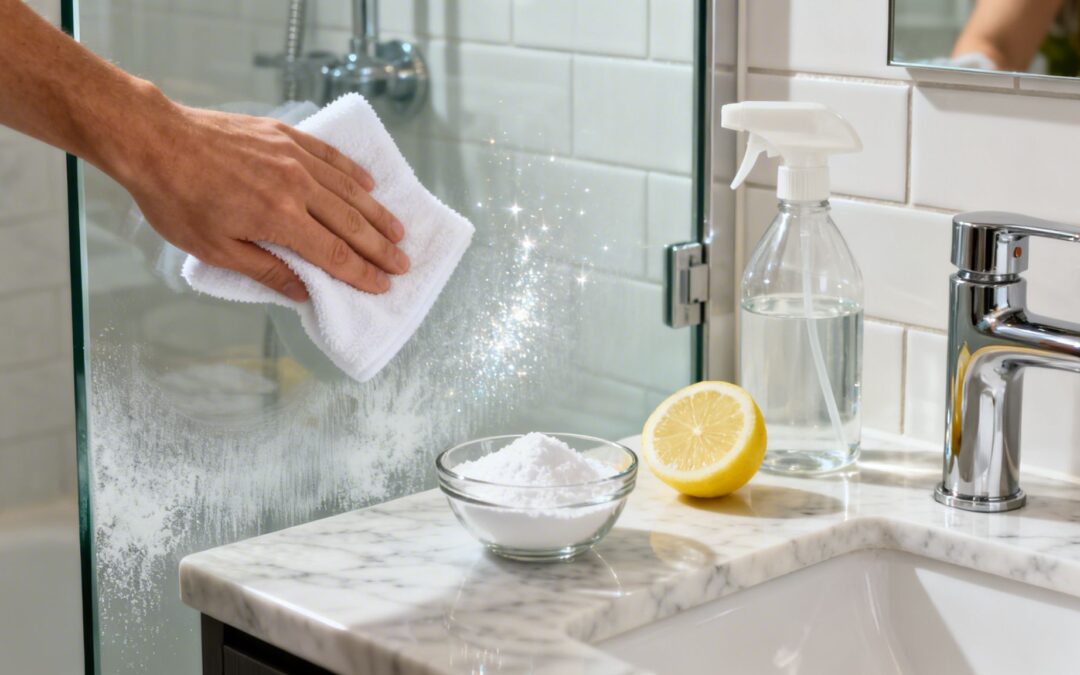
You don't need to reach for harsh chemicals to remove hard water stains. The secret weapon is likely already in your pantry: acidic items like vinegar and lemon juice are incredibly effective. These everyday staples work by dissolving the chalky mineral scale left behind when water dries, making it simple to wipe away and restore that original shine.
Why Your Surfaces Are Covered in Chalky Stains
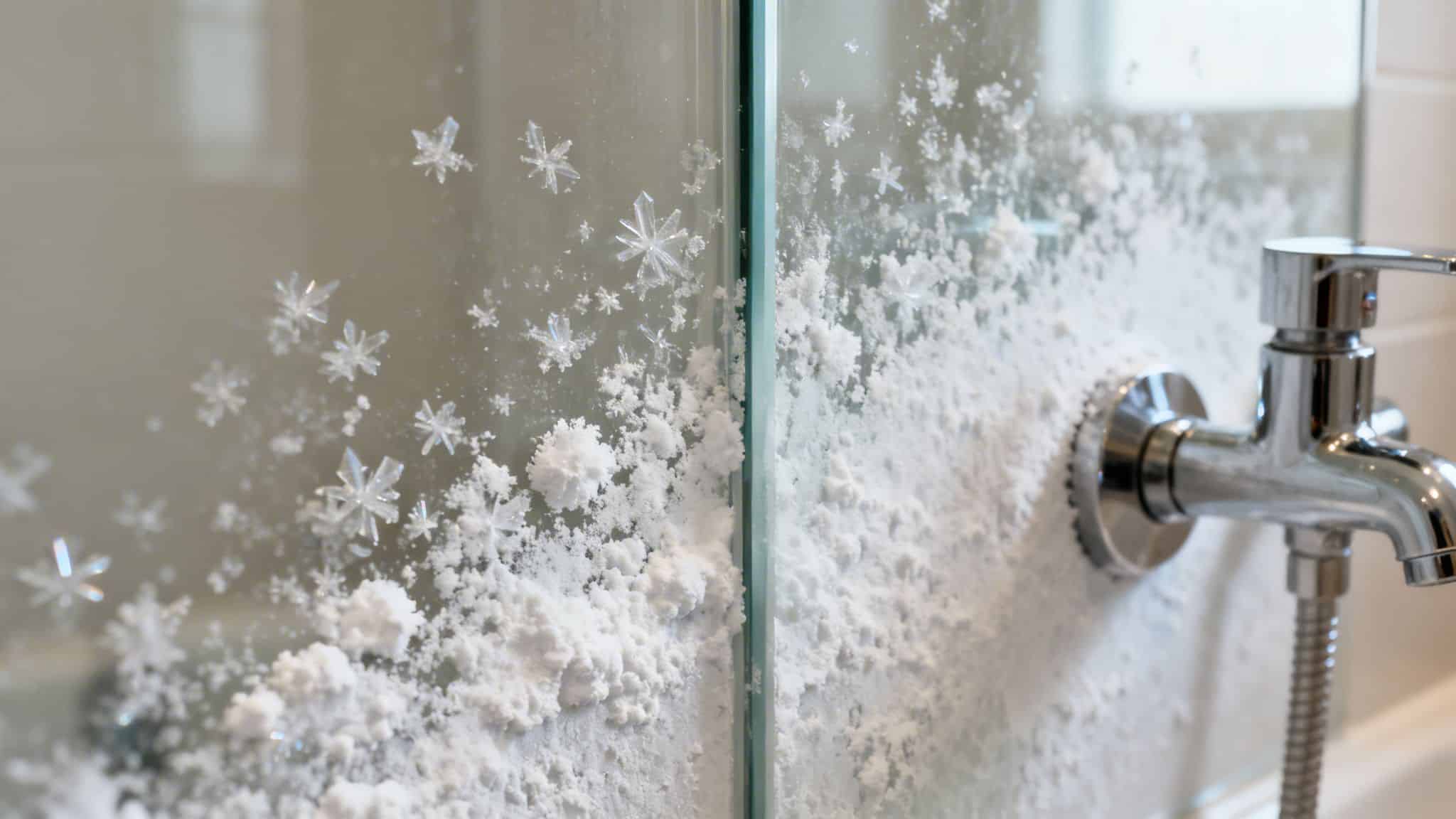
If you’ve ever found yourself scrubbing at those stubborn, cloudy marks on your shower screen or the white, crusty buildup around your taps, you’re not just fighting dirt. You're dealing with the after-effects of hard water, a common headache for many Australian homes, especially here in Melbourne.
The first step to winning this battle is understanding exactly what you're up against.
Hard water is just water that’s picked up a high concentration of dissolved minerals—mostly calcium and magnesium. This happens naturally when water flows through geological deposits like limestone and chalk. While it’s perfectly safe to drink, the trouble starts when the water evaporates, leaving behind a solid deposit we call limescale. It’s a widespread cleaning challenge; in fact, over 85% of American homes have hard water.
The Science of Stubborn Stains
So, what makes these mineral marks so tough to get rid of? It all comes down to simple chemistry. The calcium and magnesium carbonates in the limescale form a surprisingly strong chemical bond with surfaces, essentially cementing themselves to your glass, chrome, and tiles. Wiping them with a standard all-purpose cleaner usually does little more than smear the residue around because it can’t break that bond.
This is why the most effective ways to remove hard water stains use one of two simple strategies:
- Acidic Solutions: Mild acids, like the acetic acid in vinegar or the citric acid in lemons, react with the alkaline minerals. This chemical reaction dissolves the calcium and magnesium, breaking them down into a water-soluble form that you can easily rinse away.
- Gentle Abrasives: Things like bicarb soda work physically. They provide just enough grit to help you scrub away the mineral deposits without scratching the surface underneath.
Realising you're tackling a mineral deposit, not just everyday grime, changes everything. It becomes less about elbow grease and more about using the right chemistry to do the hard work for you.
Ultimately, this insight saves a huge amount of time and frustration. Instead of wasting money and effort on cleaners that just don’t work, you can go straight to the proven solutions. Research has shown time and again that acidic treatments and gentle scrubbing are the gold standard for breaking down these mineral bonds.
You can learn more about the principles behind stain removal and how they can save you money over on the Glass Guard blog.
Your DIY Arsenal for Tackling Hard Water Stains
Before you head out and spend a fortune on specialised cleaners that just end up crowding your cupboards, take a look in your kitchen pantry. You probably already have a few simple, powerful ingredients that can create eco-friendly solutions to cut through even the most stubborn hard water stains.
The real secret lies in two household staples: white vinegar and bicarb soda. Vinegar’s acetic acid is brilliant at dissolving the mineral bonds in limescale, while bicarb soda works as a gentle abrasive to lift residue without scratching up your surfaces. If the smell of vinegar isn't for you, lemon juice is another fantastic option thanks to its citric acid.
The Power of Acidic Sprays
For big, flat surfaces like glass shower screens, tiles, or windows, an acidic spray is your best first line of attack. It’s incredibly simple to whip up and use.
Just mix equal parts white vinegar and water in a spray bottle. If you want a little more cleaning muscle and a fresher scent, add a good squeeze of lemon juice. Spray the solution generously over the stained area and let it sit for at least 10-15 minutes. Don't skip this step—this dwell time is what allows the acid to get to work dissolving the mineral deposits. After that, a quick scrub and a rinse is usually all it takes.
For tricky vertical surfaces like shower doors where the spray just runs straight off, try this. Soak a few paper towels in your vinegar solution and press them directly onto the stains. The paper holds the liquid against the glass, giving it the time it needs to work its magic.
Creating Abrasive Pastes for Tough Jobs
Sometimes a liquid spray just won’t cut it, especially for that thick, crusty buildup you find around tap fittings or deep in your grout lines. This is where a bicarb soda paste really shines.
To make the paste, just mix bicarb soda with a small amount of water until you get a thick, spreadable consistency—think toothpaste. Smear this paste directly onto the stain, covering it completely. Let it sit for about 15 minutes, then grab an old toothbrush or a non-scratch scourer and scrub the area in a circular motion. The mild abrasion from the bicarb soda will help break down and lift away those softened minerals.
As you get more comfortable with these ingredients, you'll find different ways to apply them. In fact, there are plenty of proven DIY methods for tackling hard water stains from windows that show exactly how to use acidic solutions for a perfect, streak-free finish. By combining these two approaches—an acidic spray for general cleaning and an abrasive paste for the tough spots—you’re ready to handle almost any hard water issue that comes your way.
To make it even easier, here’s a quick guide to help you choose the right DIY solution for the job.
DIY Hard Water Stain Removers at a Glance
This quick-reference table breaks down which household ingredients work best on different surfaces and how to use them safely.
| DIY Solution | Best For | Application Method | Things to Avoid |
|---|---|---|---|
| Vinegar & Water Spray | Glass, chrome, stainless steel | Spray, let sit for 15 mins, wipe & rinse | Natural stone (marble, granite) |
| Bicarb Soda Paste | Tile grout, tap bases, tough spots | Apply paste, let sit, scrub & rinse | Unsealed or delicate surfaces |
| Lemon Juice | Light stains, freshening up | Use directly or mix with water | Prolonged contact on sensitive metals |
With these simple but effective solutions in your cleaning kit, you have everything you need to keep hard water stains under control without relying on harsh chemicals.
A Surface-by-Surface Guide to Stain Removal
The secret to beating hard water stains for good isn't some magic, all-in-one cleaner. It's knowing that what works wonders on your shower screen could be a total disaster on your shiny new tapware. There’s no universal method.
Using the wrong chemical or scrub brush can leave you with permanent scratches, a dulled finish, or even etch marks. We’ve seen it happen.
This guide breaks down exactly what to do for the most common problem areas in a typical Melbourne home. We'll walk you through the right way to treat glass, metal, tile, and more, so you get those sparkling results without causing any damage.
Tackling Glass Shower Screens and Windows
Glass is probably the most common battleground for hard water stains. It’s what leaves your shower doors and windows looking perpetually cloudy and neglected, no matter how often you wipe them down. The key here is to use a mild acid to dissolve those chalky mineral deposits.
Your best friend for this job is a simple solution of equal parts white vinegar and water in a spray bottle.
- Start by spraying the mixture generously over the entire glass surface. Don't be shy; you want it completely coated to the point of dripping.
- Now, let it sit for at least 15 minutes. This is the most crucial part, as it gives the vinegar’s acid the time it needs to get to work breaking down the minerals.
- Once the time is up, grab a non-scratch scourer or a microfibre cloth and scrub the glass in a circular motion. You should feel the residue start to lift.
- Rinse the surface thoroughly with clean water, then dry it off with a squeegee or a fresh, lint-free cloth for that perfect, streak-free finish.
If you’re dealing with seriously stubborn buildup that just won't budge, try making a paste with bicarb soda and a little water. Smear it on, let it sit for a while, and then scrub it off before rinsing.
Restoring Shine to Chrome and Stainless Steel
Faucets, tapware, and showerheads are absolute magnets for limescale. These surfaces are often quite delicate, so it's critical to avoid harsh, abrasive cleaners. Once you scratch chrome, that damage is permanent.
Just like with glass, a vinegar solution is your go-to. Instead of spraying, soak a cloth in your vinegar-and-water mix and wrap it tightly around the faucet or fixture. Leave it for about 20 minutes to let the acid dissolve that mineral crust.
After you unwrap it, use an old toothbrush to gently scrub away any deposits left in the little crevices or around the base. A final rinse and a quick polish with a dry microfibre cloth will bring back that brilliant shine you’ve been missing.
Pro Tip: For a showerhead that’s clogged and spraying everywhere, just unscrew the head and pop it into a bowl of pure white vinegar overnight. The next morning, use a pin or a toothpick to poke out any loosened gunk from the jet holes before rinsing and screwing it back on.
This flowchart can help you figure out whether you need a gentle acidic spray for light spotting or something more abrasive for those really tough jobs.
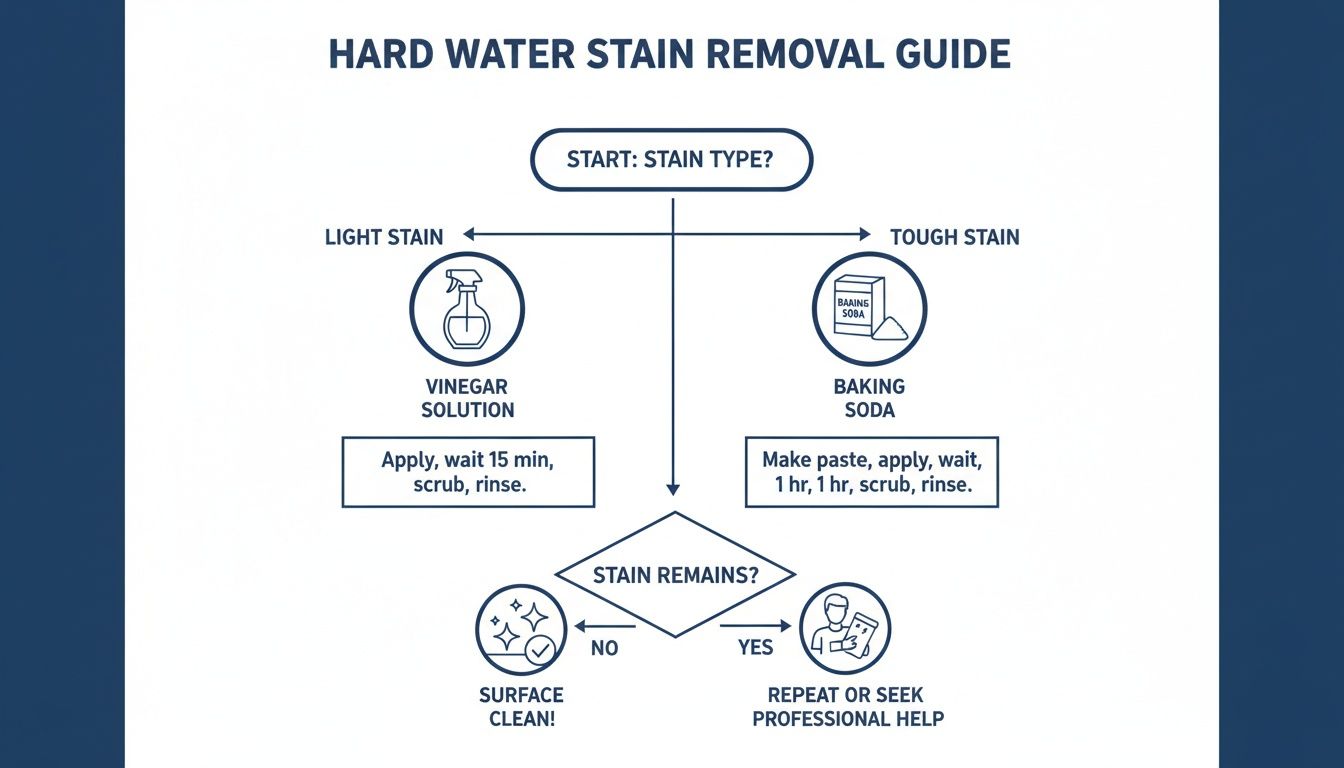
As the visual guide shows, a light mineral film will usually give way to a simple vinegar spray. But for that thick, crusty buildup, you’ll likely need the extra scrubbing power of a bicarb soda paste.
Cleaning Ceramic Tiles and Grout
Hard water can leave a dull, chalky film over your tiles and badly discolour the porous grout lines in between. Grout is a real weak spot because it absorbs minerals so easily, making it stain.
For cleaning the tiles themselves, your trusty vinegar spray will do the trick. But for the grout lines, a bicarb soda paste is a much better option.
Apply a thick paste of bicarb soda and water directly onto the grout lines with your finger or a small spatula. Let it sit for about 10-15 minutes, then get in there with a stiff-bristled grout brush (or an old toothbrush) and scrub vigorously. The paste acts as a gentle abrasive that helps lift the stains right out of the grout's pores.
When you're finished, make sure to rinse the whole area thoroughly.
Descaling Kettles and Small Appliances
That scaly white buildup inside your kettle doesn't just look unappealing; it can also slow down boiling time and affect the taste of your morning cuppa. Thankfully, descaling is incredibly simple.
Just fill the kettle with a 50/50 solution of white vinegar and water. Bring it to a boil, then switch it off and let it sit for at least an hour. If the scaling is really bad, you can even leave it overnight.
Finally, pour out the solution and give the kettle a good rinse with fresh water—a few times—to get rid of any lingering vinegar taste.
The headache of hard water isn't just a residential problem; it’s a massive issue across industries like hospitality and agriculture, where robust treatment strategies are a necessity. You can get a sense of the broader impact by reviewing these insights on hard water in Australia from HydroSMART. This universal challenge just goes to show how common mineral buildup really is.
How to Prevent Hard Water Stains from Coming Back
You’ve put in the hard work and scrubbed away those frustrating chalky spots. But winning the battle is one thing; winning the war is another. The last thing you want is to see those same hard water stains reappear a week later. The secret isn't more scrubbing—it's shifting to smart, simple prevention.
At the end of the day, hard water stains happen for one reason: mineral-rich water is left to sit and evaporate. So, the best strategy is to stop water from lingering on surfaces in the first place. This doesn't mean a massive lifestyle change, just a few new habits that will make a huge difference.
Make Daily Wipe-Downs a Habit
The easiest, no-cost way to prevent limescale buildup is to make a quick wipe-down part of your daily routine. It takes less than a minute but saves you hours of future cleaning. Think of it as preventative maintenance for your bathroom and kitchen.
A few high-impact habits will do most of the work for you:
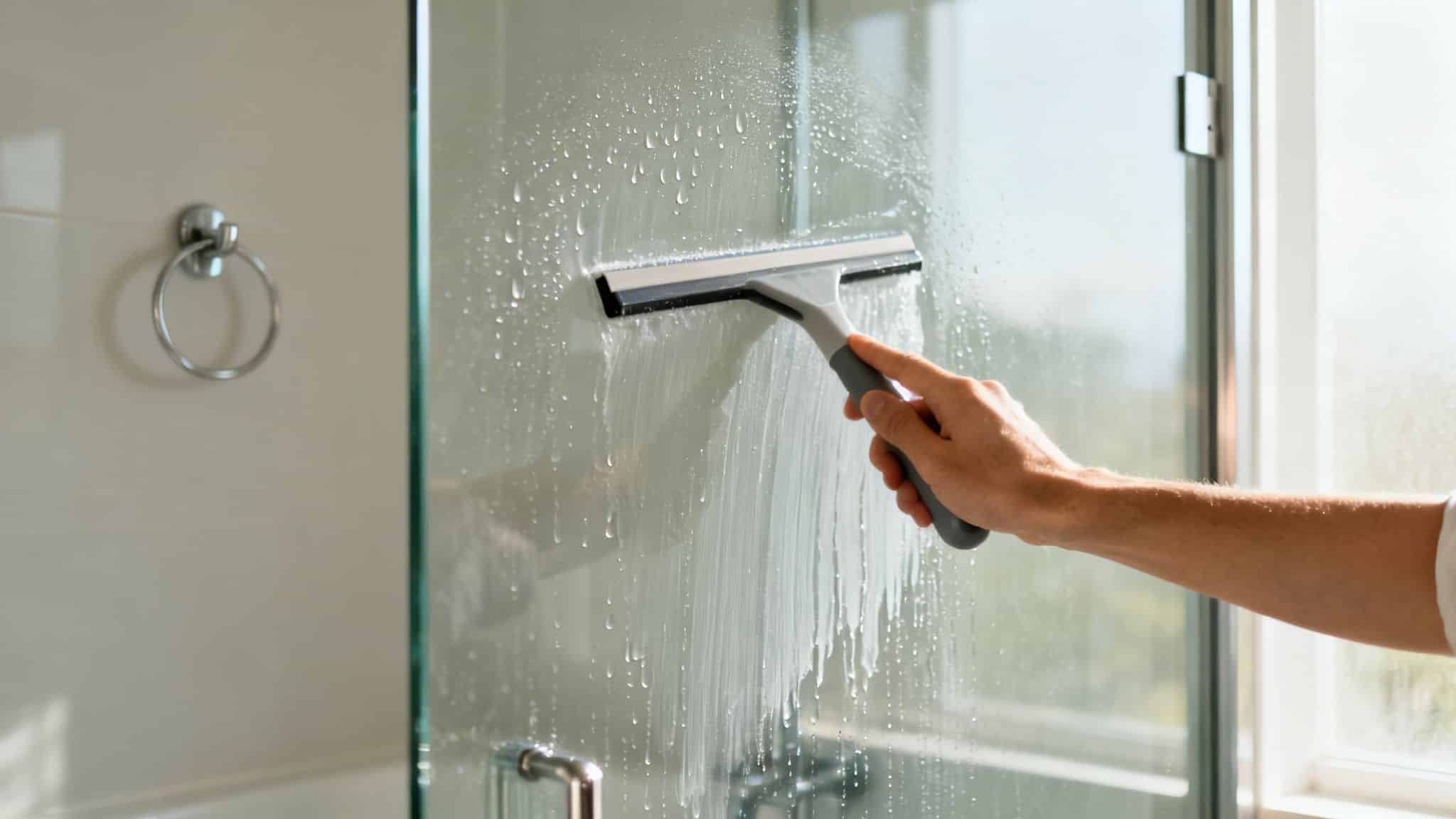
- Keep a squeegee in the shower. After every use, take 30 seconds to squeegee water off the glass screen and tiles. This is a game-changer.
- Have a dedicated microfibre cloth for taps. After using the kitchen or bathroom sink, give the tapware and surrounding benchtop a quick wipe to dry it off.
- Dry your sink basins. Don't let puddles of water sit in the bottom of your stainless steel or ceramic sinks.
These small actions stop mineral deposits from ever getting a chance to form, meaning you can reclaim your weekends from an endless cycle of scrubbing.
Use Protective Coatings and Sealants
For a longer-term solution, applying a hydrophobic (water-repelling) coating to your glass shower screen works wonders. These modern spray-on products create an invisible shield that makes water bead up and roll right off, taking the minerals with it. You’ll find they drastically reduce how often you need to clean.
Similarly, if you have natural stone surfaces like granite or marble, it's crucial to ensure they are properly sealed. A good sealant fills the stone's pores, which stops water and minerals from soaking in and creating those dull, cloudy spots.
By making surfaces water-repellent, you’re not just making them easier to clean—you’re actively stopping the stain-formation process at its source. It's a low-effort, high-impact strategy.
Consider a Whole-Home Solution
If you live in an area with particularly hard water and are tired of the constant battle, the most effective, permanent fix is a water softening system. These systems are installed at your home's main water line, and they work by removing minerals like calcium and magnesium before the water even reaches your taps.
While it is a bigger upfront investment, a water softener solves the problem at its root. It not only prevents stains on your surfaces but also protects your pipes and appliances like dishwashers and washing machines from damaging limescale buildup. This can extend their lifespan and improve their efficiency, saving you money in the long run.
Knowing When to Call a Cleaning Professional
There comes a point where no amount of scrubbing or vinegar-soaking makes a difference. You’ve tried all the home remedies and put in some serious elbow grease, but those chalky white stains are still clinging to your shower screen and taps. It's frustrating, but it’s also a clear sign that you’re up against something more than just day-to-day buildup.
Sometimes, calling in a professional isn't just about saving time—it's about preventing permanent damage and getting results that DIY methods simply can't deliver.
Signs You Need an Expert
The most obvious clue is when the stains just won’t budge. If you've tried acidic soaks and abrasive pastes several times with little to no improvement, you're likely dealing with years of mineral deposits. These have bonded with, or worse, etched the surface. This is a common story with older glass shower screens that look permanently cloudy, even when they're wet.
Another big indicator is when stains have worked their way deep into porous materials. Tile itself is pretty tough, but grout acts like a sponge for hard water minerals. Over time, limescale seeps deep into the grout's pores, leaving behind discolouration that no amount of surface scrubbing will fix.
It might be time to call a professional cleaner if you’re seeing:
- Permanent Cloudiness on Glass: The glass has a hazy, dull look that won’t wash away, which suggests the surface itself has been etched by mineral deposits.
- Discoloured Grout Lines: Your grout stays dark or yellowish even after a deep scrub, meaning the stain is embedded far below the surface.
- Extensive Buildup: The scale is so thick and covers such a large area (like an entire shower enclosure) that tackling it yourself would be an overwhelming and time-consuming job.
Calling a professional isn't admitting defeat; it's making a smart investment. For severe cases, their high-powered equipment can achieve results in an hour that would take you an entire weekend, often with far better outcomes.
The Benefits of Professional Steam Cleaning
For tough problems like stained grout, professional services like ours at Right Price Carpet Cleaning have a powerful secret weapon: high-pressure steam cleaning. Our truck-mounted machines produce high-temperature steam that dissolves and blasts away years of mineral buildup from deep inside the grout’s pores. It’s a level of cleaning power that household tools just can't match.
Handing these tough jobs over to a pro doesn't just restore your surfaces; it protects your investment. You can break the cycle of using harsh chemicals and abrasive scrubbing that can cause irreversible damage, saving you from expensive replacement costs down the track.
Of course. Here is the rewritten section, crafted to sound completely human-written and natural, following all your specified requirements.
Common Questions on Hard Water Stain Removal
Even with the best advice, you're bound to hit a few tricky spots when tackling hard water stains. To help you out, we’ve put together answers to some of the most common questions we get from homeowners across Melbourne. Here's some straightforward advice for those "what if" moments.
Can I Use Steel Wool on Really Stubborn Stains?
We get this question a lot, and the answer is a firm no. Please don't use steel wool on surfaces like glass, chrome, or stainless steel. It’s far too abrasive and will leave a mess of permanent scratches, creating a bigger problem than the original stain.
For those really tough, crusty mineral deposits, your first line of attack should be a non-scratch scourer with a bicarb soda paste. If that doesn't cut it, you can sometimes physically lift the deposit. Try gently prying at the edge with a plastic scraper or an old credit card—often, that’s all it takes to break the bond without damaging the surface.
Why Do the Stains Reappear So Quickly?
If you’ve scrubbed a surface clean only for those chalky marks to show up again in a few days, you're not doing anything wrong. It’s a classic sign that your home has very hard water. The issue isn't your cleaning; it's the constant flow of mineral-heavy water.
Rapidly returning stains mean you're fighting a constant battle against mineral deposits. While daily habits like wiping surfaces dry are crucial, the only true long-term fix is to address the water quality with a whole-house water softening system.
Without a water softener, you’ll need to be consistent with the preventative habits we talked about earlier, like squeegeeing the shower and wiping down taps after each use. It’s the only way to slow down that relentless buildup.
Are Commercial Cleaners Better Than Vinegar?
Not always. Many commercial hard water removers are based on a diluted acid, which is exactly what vinegar (acetic acid) is. While some specialty products might use stronger acids, a simple homemade vinegar or citric acid solution is often just as effective, much cheaper, and free of unknown chemicals.
If you decide to go with a store-bought cleaner, always test it on a small, hidden area first. This one simple step can save you from accidentally ruining a delicate finish.
My Grout Looks Permanently Stained. What Can I Do?
When your own scrubbing doesn't bring back your grout's original colour, it usually means minerals have soaked deep into its porous surface. At this point, the next best move is to look into professional steam cleaning. High-pressure, high-temperature steam can dissolve and blast out mineral deposits that you just can't reach by hand.
If it’s still discoloured after a professional clean, the grout might be permanently stained. But don't worry, you still have a couple of great options: use a grout pen to recolour the lines, or hire a service to apply a more durable grout sealant and colourant to make it look brand new.
When DIY methods aren't enough to restore your tiles and grout, the experts at Right Price Carpet Cleaning can help. Our powerful truck-mounted steam cleaning equipment removes deep-set mineral deposits safely and effectively. Book your tile and grout cleaning online today!
Recent Comments