


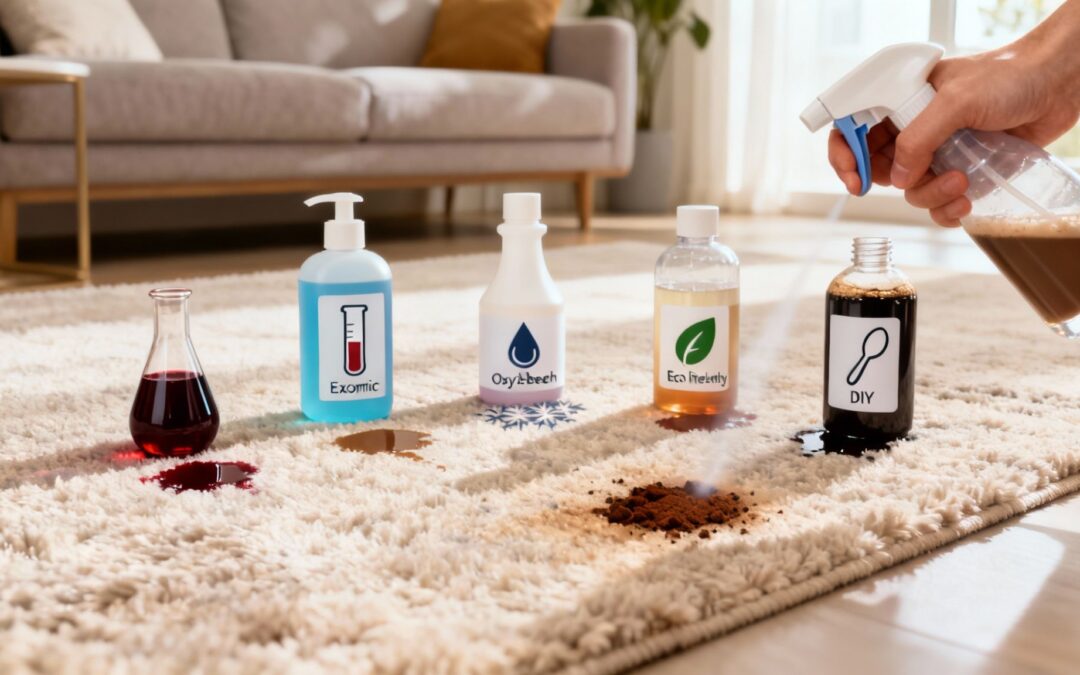
The best carpet stain remover isn’t one-size-fits-all; it’s the one that’s right for the specific stain and your carpet type. For common organic spills like wine or a pet accident, an enzymatic cleaner is usually your best bet. But for tough, greasy marks, you'll need a solvent-based solution. It all comes down to having the right tool for the job.
Your First Response to Common Carpet Stains
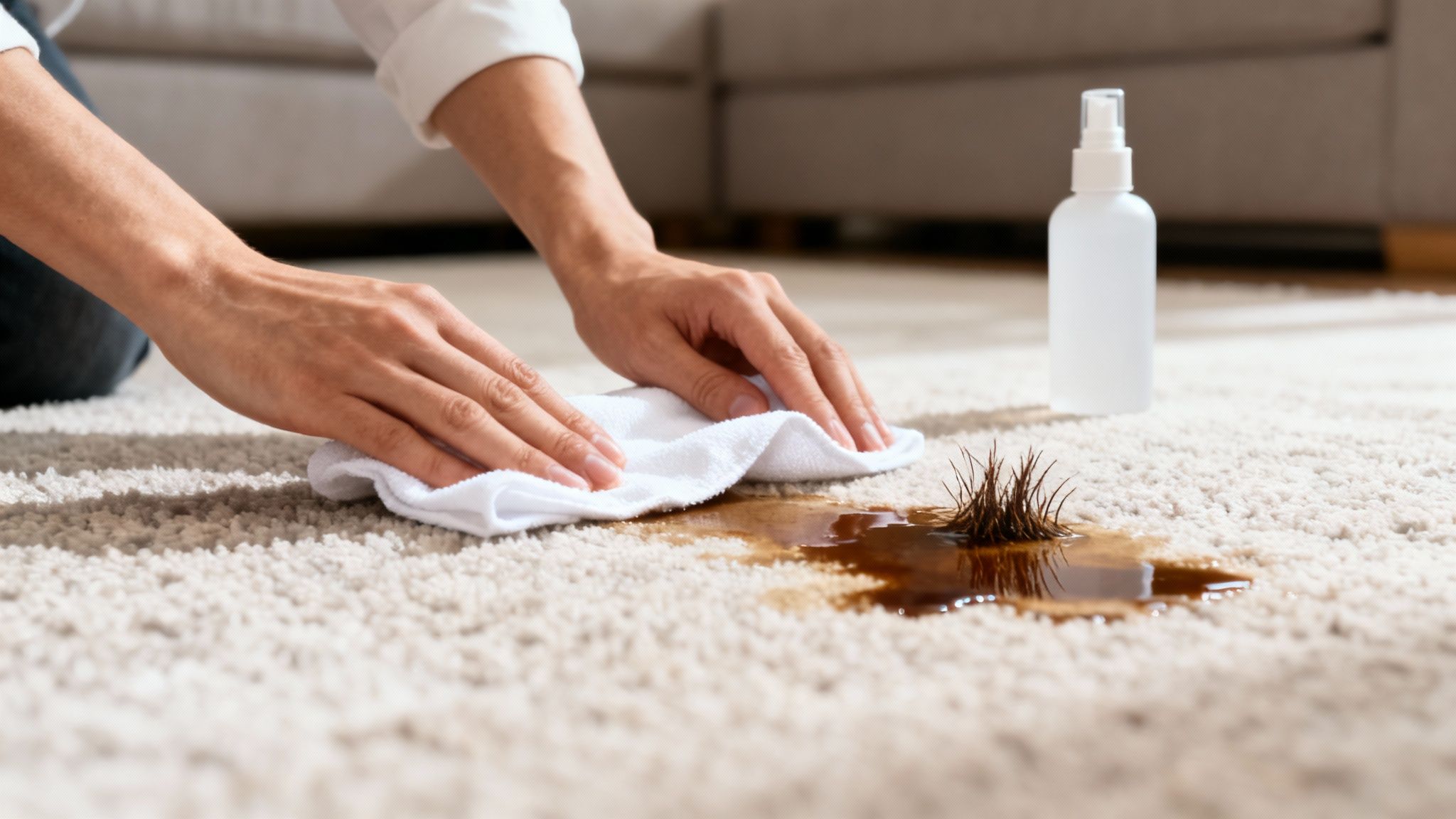
When a spill hits the floor, what you do in those first few moments is just as critical as the product you end up using. A fast response can stop a minor accident from becoming a permanent eyesore. The truth is, there's no single 'best' cleaner that works on everything. Its effectiveness really hinges on the stain's chemistry, your carpet's fibres, and how quickly you get to it. This guide will give you the know-how to tackle spills like a pro, starting with those crucial first steps.
Before you grab any old bottle from under the sink, it’s vital to know what you’re dealing with. The approach for a red wine spill is worlds apart from an oily food stain.
Initial Actions for Any Spill
The moment something spills, grab a clean, white cloth and gently blot the area. Always work from the outside in to stop the stain from spreading. Whatever you do, don't rub or scrub. That just pushes the stain deeper into the carpet fibres and can cause them to fray. Your only goal right now is to soak up as much liquid or lift as much solid debris as possible before applying any cleaning solution.
Key Insight: The most common mistake homeowners make is scrubbing a fresh stain like mad. This can permanently damage the carpet's texture and lock the stain into the fibres, making it much harder for even a professional to get it out later.
This initial blotting step is non-negotiable for almost every type of stain. From there, your choice of remover becomes critical.
To help you decide, here’s a quick rundown of what you need to consider when picking the best carpet stain remover for the situation.
| Consideration | Why It Matters | Example Scenario |
|---|---|---|
| Stain Type | Different removers are formulated to break down specific compounds. | Enzymatic cleaners digest the proteins in pet urine; solvents dissolve oil. |
| Carpet Material | Harsh chemicals can cause irreversible damage to natural fibres like wool. | A delicate wool rug needs a gentle, wool-safe product to avoid disaster. |
| Stain Age | Fresh spills are much easier to lift than stains that have set in. | A dried coffee stain will need a stronger solution and more time to work. |
Getting these basics right sets you up for success and helps you avoid costly mistakes. For those deep, old, or mysterious stains that just won't budge, it’s often smarter and more effective to call a professional. At Right Price Carpet Cleaning, we have specialised treatments that can handle the stubborn stains your store-bought remover can't.
Comparing Carpet Stain Remover Types
Walking down the cleaning aisle can feel overwhelming. You’re faced with a wall of carpet stain removers, and every single one claims to be the best. But here’s the secret the pros know: there’s no single magic bottle. Success comes from understanding how different cleaners work and matching the right one to your specific stain. The three main players are enzymatic, oxygen-based, and solvent-based removers, and each one tackles stains in a completely different way.
Choosing correctly is the difference between a stain that disappears without a trace and one that sets in for good. Using the wrong formula won’t just be ineffective; it can cause irreversible damage like bleaching, discolouration, or even eating away at the fibres, especially on delicate wool or silk carpets.
Enzymatic Cleaners: The Organic Stain Specialists
Think of enzymatic cleaners as your own microscopic cleanup crew. They use non-pathogenic, "good" bacteria that produce enzymes to literally break down and digest organic stains. This makes them the undisputed champions for tackling anything protein-based or that came from a living thing.
They are the absolute go-to for messes like:
- Pet urine and faeces
- Vomit, blood, and other bodily fluids
- Food spills like milk, eggs, or gravy
- Grass and mud stains
This biological approach is a game-changer for pet owners. With pet ownership on the rise in Australia, the demand for effective stain removers has skyrocketed, especially in the residential market. In Melbourne alone, where over 69% of households own pets, we've seen a 25% spike in stain-related service calls for stubborn issues like urine that sinks deep into carpet fibres. Professional enzymatic pretreatments can break down these organic stains 40% faster than the sprays you buy at the supermarket. You can dig into more data on the Australian carpet cleaner market to see the full picture.
Because they work by digesting the source of the stain, enzymatic cleaners are also brilliant at getting rid of the nasty odours that come with these accidents. They don’t just mask the smell—they destroy the molecules causing it.
Oxygen-Based Cleaners: The Brightening Powerhouses
Oxygen-based cleaners, often sold under an "Oxi" brand name, work through oxidation. When the main ingredient (usually sodium percarbonate) hits water, it fizzes up, releasing tiny oxygen bubbles. These bubbles get to work lifting and breaking apart colourful, dye-based stains from the carpet fibres. They’re incredibly effective on spills from plants and drinks.
Ideal Use Cases for Oxygen Cleaners:
- Red Wine: The oxidising agents specifically target the coloured pigments in the wine.
- Coffee and Tea: These cleaners are fantastic at lifting those stubborn tannin stains.
- Fruit Juice: They easily break down the colourful compounds in berry or grape juice.
While they’re powerful, you need to be careful using these on natural fibres like wool or silk. The same chemical reaction that lifts the stain can sometimes take the carpet's original dye with it. Always, always test it on a hidden spot first.
Critical Insight: Never use an oxygen-based cleaner on a protein stain like blood or urine without treating it with an enzymatic cleaner first. The oxidising reaction can actually "cook" the protein, setting it permanently into the fibres and making it nearly impossible to remove later.
Solvent-Based Cleaners: The Grease and Grime Solvers
When you’re dealing with oily, greasy, or synthetic stains, solvent-based spotters are the heavy hitters you need. Unlike the other types that break stains down, solvents work by dissolving them completely. They’re formulated with powerful chemicals that can cut through greasy, sticky, and artificial messes that water-based cleaners just can't handle.
Scenarios Where Solvents Shine:
- Grease and Oil: Perfect for anything from kitchen spills to oily footprints from the garage.
- Ink and Marker: Great at dissolving the pigments in pen or permanent marker.
- Adhesives and Gum: Works to break down that sticky, stubborn residue.
- Makeup: Effectively lifts away lipstick or foundation stains.
These are potent chemicals, so make sure you have good ventilation when you use them. Understanding how these carpet-specific removers fit into the bigger picture of home cleaning can help you make smarter choices for every surface. To learn more, check out a comprehensive guide to the best floor cleaners for various surfaces. Knowing your product families helps you protect all the floors in your home.
Stain Remover Match-Up Chart
To make things even clearer, here’s a quick-reference chart. Think of it as your cheat sheet for matching the right remover to the right stain and carpet type.
| Stain Type | Best Remover Type | How It Works | Ideal For Carpet Fibers |
|---|---|---|---|
| Pet Urine, Vomit, Blood | Enzymatic Cleaner | Uses enzymes to digest organic proteins and eliminate odours. | Synthetic and most natural fibres (always test). |
| Red Wine, Coffee, Juice | Oxygen-Based Cleaner | Releases oxygen bubbles to break down and lift coloured pigments. | Synthetic fibres. Use with caution on wool/silk. |
| Grease, Oil, Ink | Solvent-Based Spotter | Dissolves oily and synthetic stains that don't respond to water. | Synthetic fibres. Test carefully on natural fibres. |
| Mud, Grass Stains | Enzymatic Cleaner | Breaks down the organic components within the soil and plant matter. | Synthetic and most natural fibres. |
| Adhesive, Gum, Crayon | Solvent-Based Spotter | Dissolves sticky, waxy, or artificial substances. | Most synthetic fibres. Not recommended for delicate fibres. |
This chart should give you a solid starting point for most common household spills. Just remember to always follow the product instructions and test on an inconspicuous area before tackling the main stain.
How Carpet Fibre Affects Stain Removal
Choosing the right carpet stain remover is about more than just what you spilled. The very fibres of your carpet play a huge part in what will work and what could cause a disaster. Using a powerful cleaner that’s perfect for a tough synthetic rug might permanently ruin a natural one, so figuring out your carpet’s material is the first step to a flawless clean.
Most carpets in Aussie homes are synthetic—think nylon, polyester, and olefin. They’re popular for a reason. These materials are built for durability and can stand up to most water-based stains and cleaning products. Because their fibres aren't very porous, they don’t soak up spills instantly, which buys you a bit of time. This resilience means they can generally handle stronger oxygen-based or even solvent-based cleaners without you having to worry about colour loss or damage.
The Delicate Nature of Natural Fibres
Natural fibres like wool, cotton, and sisal need a much gentler touch. While they feel luxurious underfoot, they're far more delicate and absorbent than their synthetic cousins. Grabbing the wrong bottle to treat a stain on a wool carpet is a fast track to irreversible damage.
Professional Tip: Wool is extremely sensitive to high pH levels found in many off-the-shelf cleaners, which can cause ugly yellowing or browning. It's also easily bleached by aggressive oxygen-based removers, which can strip its colour for good.
For these carpet types, you should only ever use products specifically labelled as “wool-safe” or those with a neutral pH. It’s just not worth the risk otherwise.
Identifying Your Carpet Type
Not sure what your carpet is made of? If you don’t have the original paperwork, you can do a quick burn test. Carefully snip a few fibres from a hidden spot, like the back of a closet. Synthetic fibres will melt into a hard, plastic-like bead. In contrast, natural wool will char, turn to ash, and smell like burnt hair. Knowing the difference is crucial before you apply any cleaning solution.
This flowchart is a great starting point for figuring out your initial approach based on the stain itself, before you even factor in the fibre type.
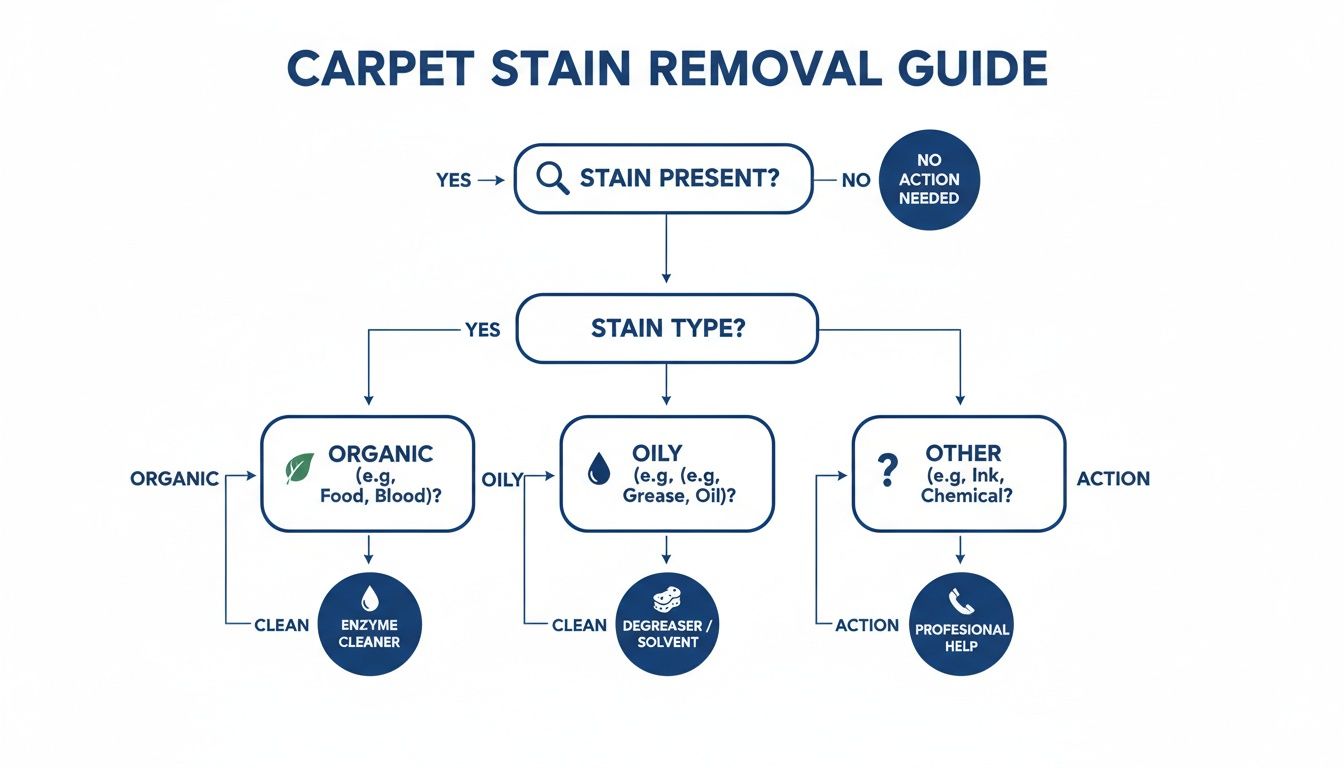
As the guide shows, different stain categories—like organic or oily—need different tactics from the get-go. There’s no such thing as a one-size-fits-all solution.
Ultimately, it’s the reaction between the cleaner and the fibre that determines whether you succeed or make things worse. Here’s a quick reference to help guide you.
| Carpet Fibre | Key Characteristics | Recommended Cleaner Type |
|---|---|---|
| Nylon/Polyester | Durable, resilient, stain-resistant | Most types (Enzymatic, Oxygen, Solvent) |
| Wool/Silk | Absorbent, delicate, prone to damage | pH-neutral, wool-safe formulas only |
| Sisal/Jute | Highly absorbent, prone to watermarks | Dry cleaning solvents or minimal moisture |
When in doubt, the safest and most effective move is to call in a professional. At Right Price Carpet Cleaning, our technicians are trained to identify fibre types on the spot. We then select the exact treatment needed to lift the stain while protecting your carpet’s integrity and beauty.
A Professional Method for Applying Stain Removers
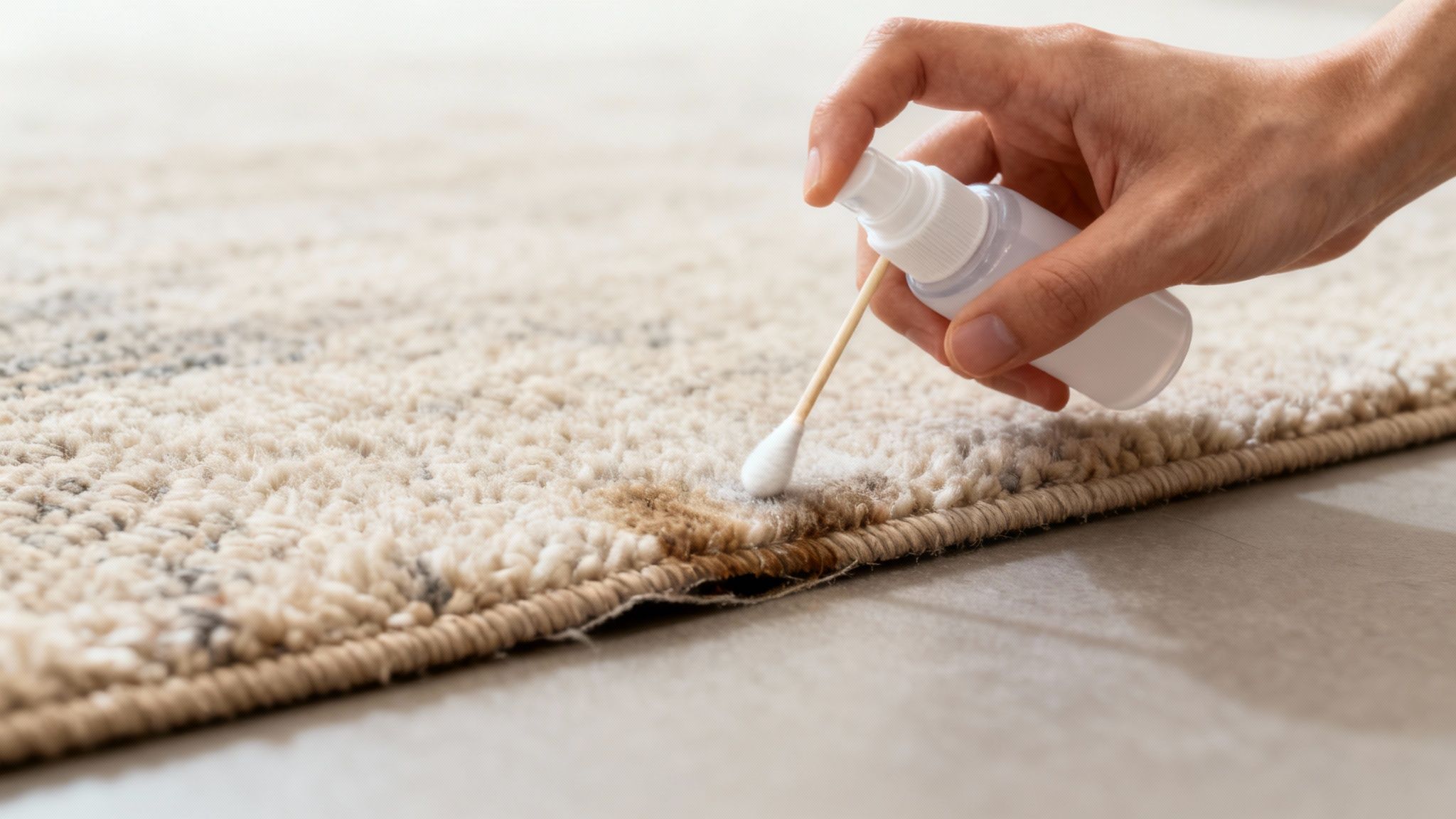
Here’s a truth we’ve learned from years in the business: even the best carpet stain remover on the shelf will fail if you don’t use it correctly. The real difference between a stain that vanishes and a permanent disaster often comes down to your technique, not the bottle you bought.
Following a methodical, professional-approved process gives your chosen cleaner the best shot at working without making things worse.
The single most important step is the one everyone wants to skip in a panic. Before that product touches the stain, you must pre-test it. Find a hidden spot—inside a wardrobe, under the sofa, or on a spare carpet scrap if you have one. Apply a small amount, follow the instructions, and look for any sign of colour bleeding or fibre damage. This five-minute check can save you from a very costly, irreversible mistake.
The Blot, Dwell, and Rinse Technique
Once you’ve confirmed the product is safe for your carpet, you can tackle the stain with confidence. The biggest mistake we see is people rushing the process. Patience really is the key to letting the product do its job.
Follow these proven steps for the best results:
- Blot First, Apply Second: Before you add any cleaner, grab a clean, white cloth and gently blot the stain to soak up any excess. Always work from the outside edge of the stain inward to stop it from spreading. Whatever you do, don't rub or scrub—that just grinds the stain deeper into the carpet fibres.
- Apply the Remover: Lightly spray or apply your chosen solution directly onto the stain itself. It’s tempting to drench it, but avoid oversaturating the area. Too much liquid can soak the underlay, leading to mould or watermarks down the track. You just want to dampen the fibres, not flood them.
- Allow for Dwell Time: This is a crucial, non-negotiable step. The remover needs time to get to work breaking down the stain’s chemical bonds. Most products need a dwell time of 5-10 minutes, but always double-check the label for the exact instructions.
- Blot Again: With a fresh, clean cloth, gently blot the treated area again. You should start to see the stain transferring from the carpet onto your cloth. Keep blotting with clean sections of the cloth until no more of the stain is lifting off.
- Rinse and Dry: Lightly mist the area with a bit of clean water and blot it with a dry cloth to rinse out any leftover cleaner. Any residue left behind can become sticky and attract more dirt over time. To finish, place a clean, dry towel over the spot, weigh it down with something heavy, and let it absorb the last of the moisture.
When to Call a Professional Carpet Cleaner
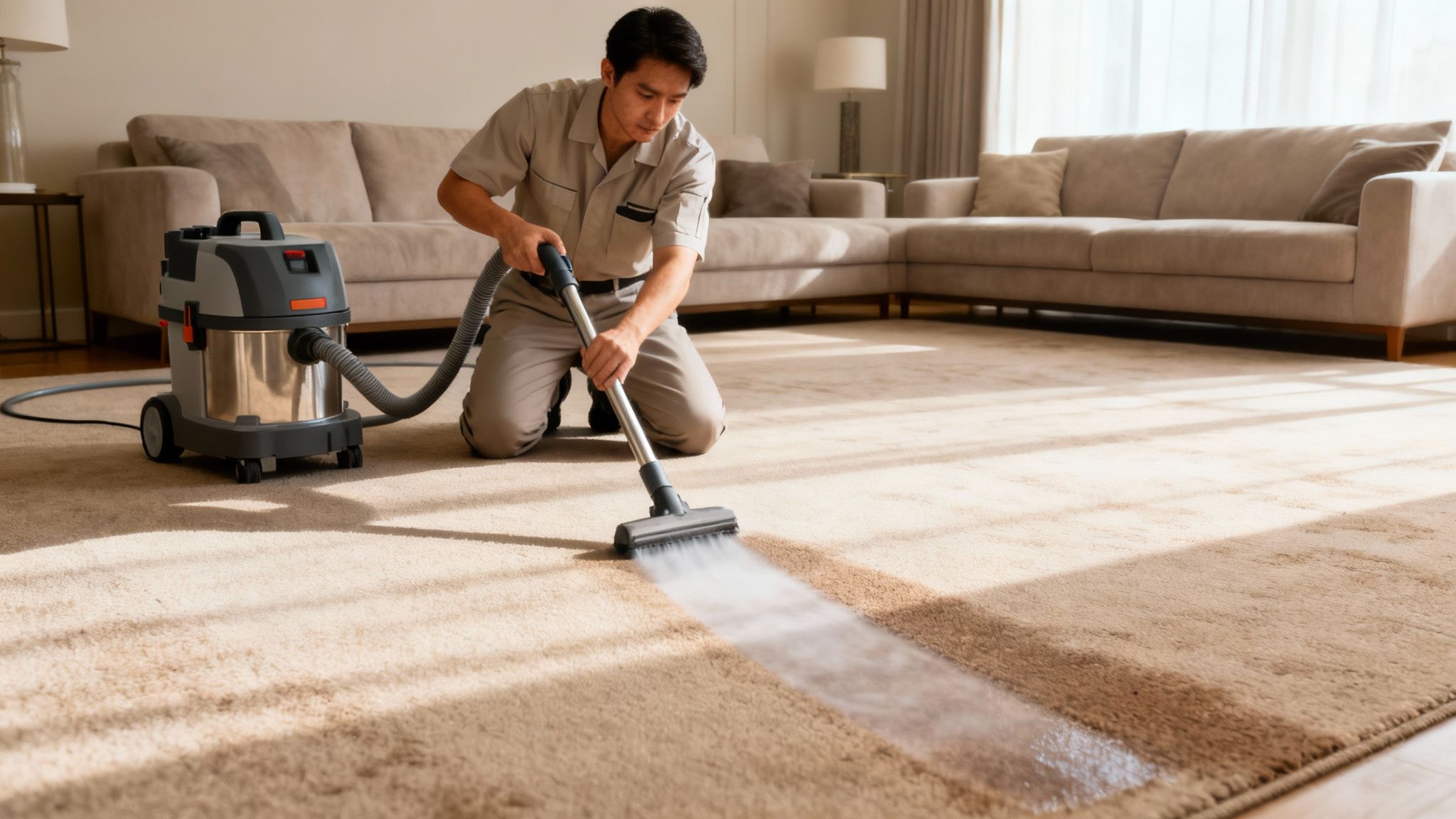
While many common carpet stains can be tackled with the right remover, there are times when it’s simply smarter to call in the professionals. Even the best DIY products have their limits, and knowing when to step back and let an expert take over can save you time, stress, and the cost of replacing a ruined carpet.
Calling for professional carpet cleaning services isn't admitting defeat; it's a strategic move to protect your investment. Some situations just demand more power and expertise than a spray bottle can deliver. Recognising these moments ensures your carpets get the care they need, preserving their look and feel for years to come.
When DIY Methods Fall Short
Store-bought solutions are great for fresh, minor spills. But some stains are in a completely different league and require professional-grade equipment and specialised treatments. If you're facing one of these scenarios, it's time to pick up the phone.
- Set-In or Recurring Stains: Stains that have been there for a while or keep wicking back to the surface have likely bonded with the carpet fibres and soaked deep into the underlay. A professional hot water extraction system is often the only way to flush them out for good.
- Large or Widespread Spills: When a whole bottle of wine or a full pot of coffee goes over, the sheer volume of liquid can saturate the carpet backing and even the subfloor. This creates a serious risk of mould and permanent damage if it’s not extracted quickly and thoroughly.
- Delicate or Expensive Carpets: For materials like wool, silk, or antique rugs, using the wrong chemical can be a very expensive mistake. Professionals are trained to identify different fibres and use pH-balanced, material-specific treatments that clean effectively without causing damage.
This is especially true for those nightmare stains that pop up in rental properties or busy family homes. Take a situation where a guest leaves a "big, nasty stain" that a standard housekeeper can’t shift. A professional cleaner was needed to resolve the issue, costing $199 for the service plus an extra $30 to replace the soiled underlay. It just goes to show how quickly a tough stain can become a significant, costly problem without the right intervention.
Expert Takeaway: Professional cleaning isn't just about removing the visible mark on the surface. It’s about extracting the entire spill from the carpet, padding, and subfloor to prevent permanent fibre damage, lingering odours, and recurring spots.
The Professional Advantage: Technology and Expertise
So, what makes a professional clean so different? It really comes down to two things: powerful technology and deep knowledge. At Right Price Carpet Cleaning, our technicians use truck-mounted hot water extraction (steam cleaning) machines. These systems generate far more heat, pressure, and suction than any portable unit you can rent or buy yourself.
This superior technology delivers several key benefits:
- Deeper Cleaning: High-pressure hot water gets right to the base of the carpet fibres, dislodging dirt and allergens that household vacuums leave behind.
- Powerful Extraction: Commercial-grade vacuums pull out almost all the moisture, along with the dissolved dirt and cleaning solution, leading to much faster drying times.
- Sanitisation: The high temperatures are incredibly effective at killing bacteria, dust mites, and other pathogens, which significantly improves your home's indoor air quality.
The growing demand in the Melbourne carpet cleaning market highlights the value of this professional approach. With the Australia-New Zealand region's carpet services market projected for a 4.8% CAGR through 2035, it’s clear that people recognise the benefits of expert care. Professionals can extend a carpet's lifespan by 25-50% and remove up to 99% of embedded dirt—a result that’s simply impossible with consumer-grade products.
Got Questions About Carpet Stains? We've Got Answers
Even with the best advice, a few questions always pop up when you're faced with a stubborn stain. Getting the right information can be the difference between a quick fix and a permanent problem. Here are some of the most common questions we hear from homeowners across Melbourne.
Can I Mix Different Stain Removers Together?
In a word: no. Please don't ever do this. It’s a critical safety rule that often gets overlooked in a moment of panic.
Mixing different cleaning chemicals isn't just ineffective; it can be incredibly dangerous. Certain combinations, like bleach and ammonia, can create toxic chloramine gas right in your living room. Beyond the serious health risks, you could create a chemical cocktail that causes a bizarre and unpredictable reaction on your carpet, leading to permanent bleaching, discolouration, or even melting the fibres themselves.
Always use one product at a time. If the first one doesn't do the trick, make sure you rinse the area thoroughly with plain water before even thinking about trying something else.
How Quickly Does a Stain Actually Become Permanent?
The honest answer is, it really depends. The clock starts ticking the second the spill happens, but some stains are in a much bigger hurry to set than others.
- Tannin Stains (like wine, coffee, or tea): These can start to dye your carpet fibres within minutes, especially on lighter-coloured carpets.
- Acidic Stains (think fruit juice or tomato sauce): Much like tannins, these can trigger a chemical reaction that permanently alters the carpet’s original dye.
- Oil-Based Stains (grease, makeup, ink): These don't "set" in the same way, but they sink deeper and deeper over time, grabbing onto the fibres and making them a nightmare to lift later.
The golden rule is to act as fast as you possibly can. An old stain has had time to form a chemical bond with the carpet fibres. That’s why they almost always need professional-grade equipment to break those bonds and pull the stain out completely.
Is a Professional Clean Really Worth It for Just One Stain?
It often is, and for reasons that go far beyond what you can see on the surface. Calling in a pro for a single small spot might feel like overkill, but you're paying for a guaranteed result and protecting the long-term health of your carpet.
For instance, we recently helped a client with a stubborn stain that just wouldn't budge. The $199 service not only removed the spot but also revealed that the spill had soaked through to the underlay, which needed replacing for an additional $30. A DIY approach would have completely missed that, leaving moisture trapped underneath.
Plus, while we're there, we can deep clean the entire room. This removes all the embedded dirt, dust, and allergens you can't see, which massively improves your home's air quality and makes the whole carpet look and feel brand new.
Are DIY Solutions as Good as Commercial Products?
Sometimes, yes! For fresh, simple spills on a tough synthetic carpet, DIY remedies like a vinegar solution or baking soda paste can work wonders. They’re a great, inexpensive first line of defence.
But it's crucial to know their limits. They just don't have the chemical muscle to break down complex or set-in stains. More importantly, using something acidic like vinegar on natural fibres such as wool or sisal can cause irreversible damage. DIY solutions can also leave behind a sticky residue that ends up attracting more dirt, creating a frustrating cycle where the spot keeps reappearing.
While they have their place for quick emergencies, the best and safest bet for a guaranteed clean is a professional-grade treatment applied by someone who knows exactly how different carpets will react.
For those stubborn stains that refuse to budge or for a deep, hygienic clean that revitalises your entire home, trust the experts. The team at Right Price Carpet Cleaning has the professional equipment and expertise to handle any challenge, protecting your investment and ensuring a flawless finish. Get your instant quote online today!
Recent Comments