



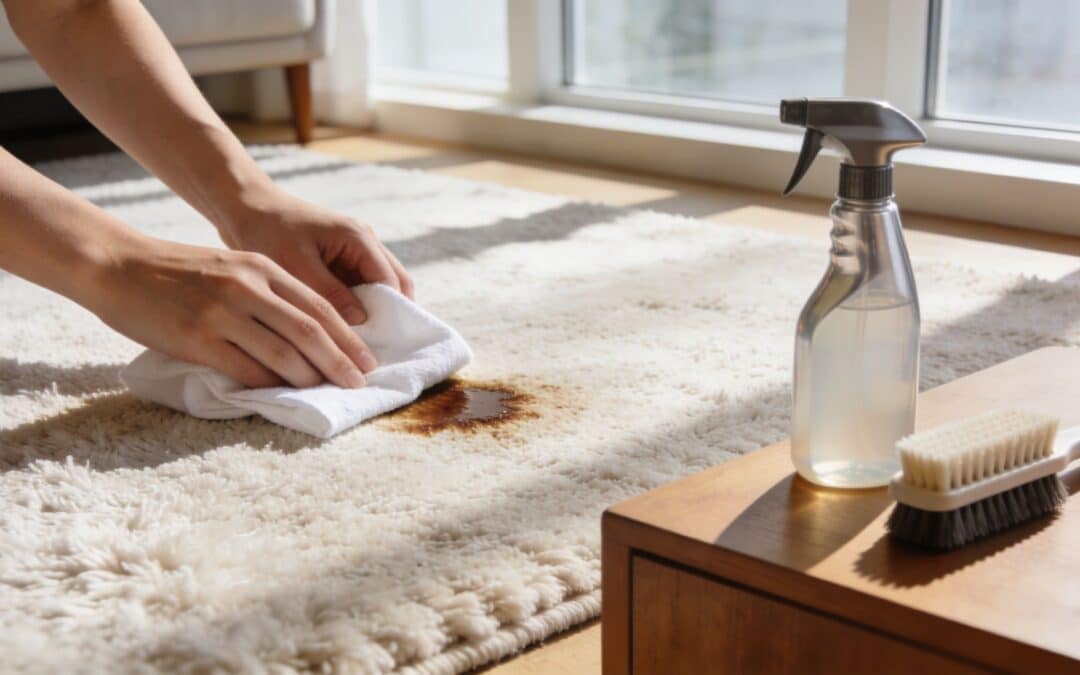
A glass of red goes over, the dog tracks in damp paws, or you roll back the coffee table and notice the rug looks dull even though you vacuum it every week. That’s usually the moment people realise a wool rug doesn’t behave like a cheap synthetic floor covering. It hides soil well, holds onto fine grit, and reacts badly when the wrong cleaner or too much water gets involved.
In Melbourne, there’s another layer to it. Our weather shifts fast, homes can feel dry one week and sticky the next, and pollen seasons from October to December can work their way deep into wool fibres. That local mix of humidity and airborne debris is one reason some homes need professional steam extraction every 6 to 12 months, especially where mould risk or asthma triggers are a concern, as noted by Ultimate Rug Spa’s wool rug cleaning guide. Generic overseas advice often misses that.
If you’re choosing or comparing rug materials before you even start cleaning, it helps to look at real flooring options from Flacks Flooring so you can understand how different wool constructions behave in daily use. And if you want a broader sense of why proper maintenance matters beyond appearance, the benefits of professional carpet cleaning are closely related to what happens inside a wool rug as it traps dust, oils, and allergens over time.
Your Wool Rug Is an Investment Worth Protecting
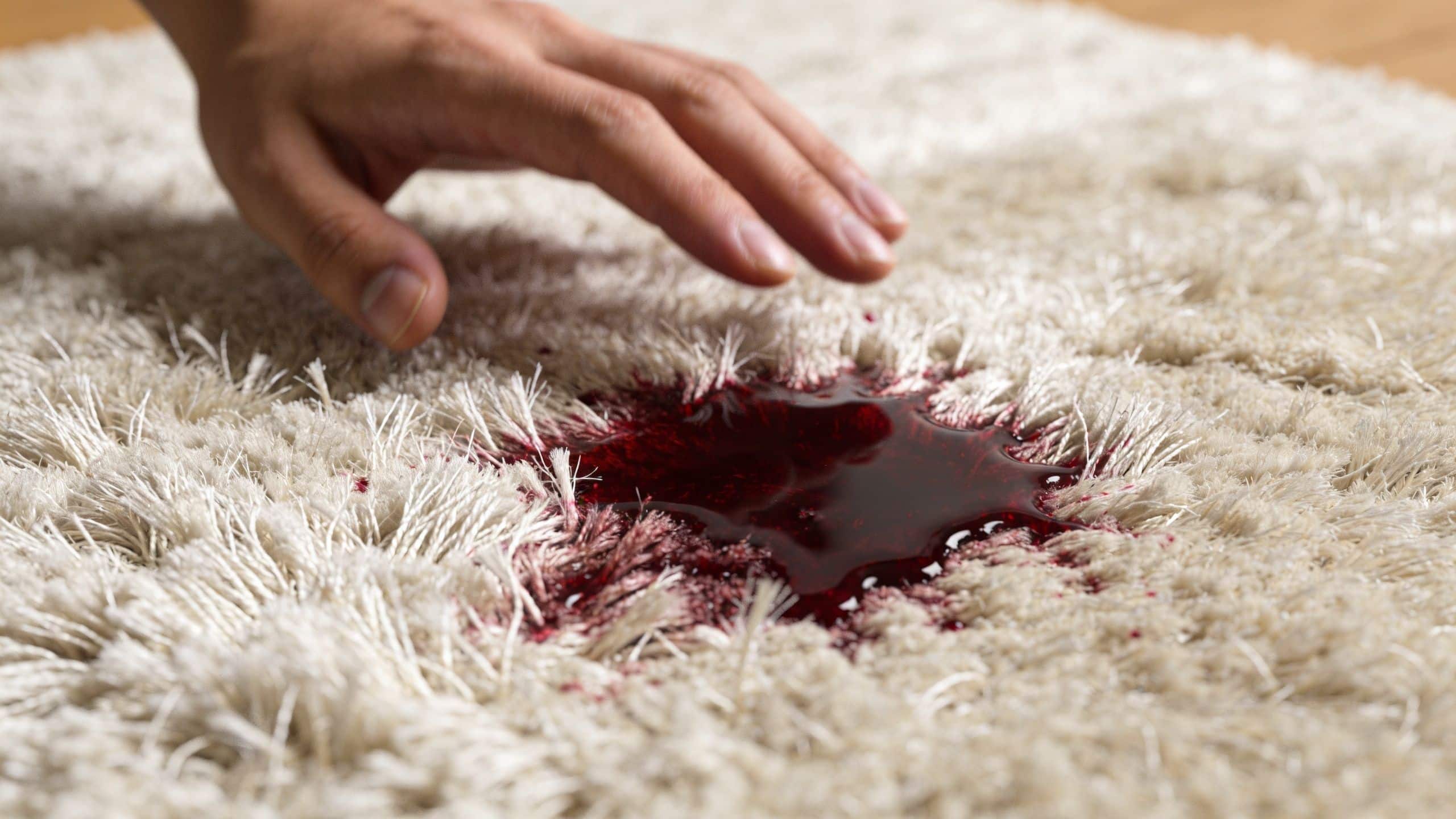
A good wool rug earns its keep. It softens a room, holds warmth, and can look better with age if it’s cared for properly. But wool is a natural fibre, and natural fibres reward the right method and punish the wrong one.
I often explain it this way to homeowners. The problem usually isn’t the obvious spill. It’s the quiet buildup you don’t notice. Wool carries a natural static charge, so it attracts airborne soils, smoke residue, cooking oils, and fine particles even in areas nobody walks on. On top of that, tiny grains of sand and dirt settle deep in the pile and act like microscopic glass against the fibres if they’re left there.
Why Melbourne homes need a local approach
A wool rug in a Melbourne hallway doesn’t face the same conditions as one in a dry inland climate. Open windows during spring, damp shoes in winter, and changing indoor humidity all affect how the rug holds moisture and debris. That’s why advice copied from a US blog can be a poor fit for a Brunswick terrace, a Southbank apartment, or a family home in Doncaster.
Here’s the practical reality:
- Pollen season matters: Melbourne’s heavy spring pollen doesn’t just sit on top. Wool grabs it.
- Humidity changes the drying game: A method that seems safe on paper can become risky if the rug stays damp too long.
- Low traffic doesn’t mean clean: Wool attracts airborne contamination, so even formal rooms can soil gradually.
Practical rule: If a wool rug still looks “pretty good” but feels flat, dusty, or slightly tacky underfoot, it’s usually carrying more contamination than the eye suggests.
The cost of getting it wrong
Harsh spot sprays, supermarket carpet shampoos, and aggressive scrubbing are where many rugs get into trouble. Once dyes bleed, the pile distorts, or the backing stays wet long enough to smell musty, the fix becomes harder and more expensive.
Professional wool rug cleaning is generally recommended every 1 to 3 years, with high-traffic areas often needing attention every 1 to 2 years, and some guidance leaning toward a deep clean every 12 to 18 months to maintain integrity, according to Carr’s Rug Cleaning’s wool rug maintenance guidance. The same source notes that low-moisture extraction typically ranges from $1.50 to $3 per square foot, while immersion washing for heavily soiled rugs ranges from $2 to $4 per square foot.
That doesn’t mean every rug needs the most intensive process. It means wool rug cleaning works best when you match the method to the rug, the soil load, and Melbourne’s drying conditions.
Before You Clean Essential First Steps
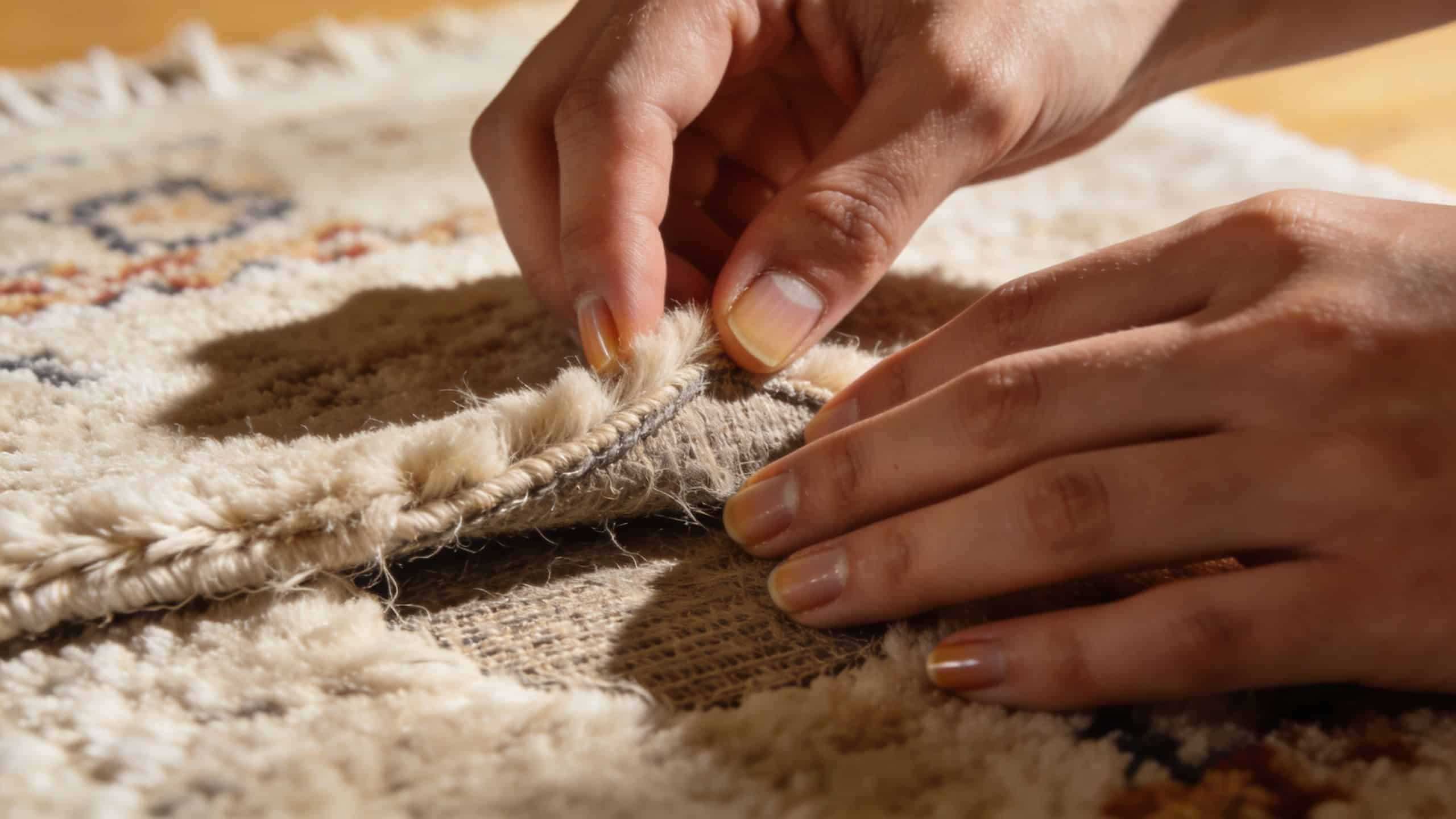
Most wool rug damage happens before actual cleaning even starts. People rush in with a spray bottle, too much water, or the wrong machine. A few minutes of prep can save the rug’s colour, texture, and shape.
Confirm what you’re working on
First, make sure it is indeed wool. Plenty of rugs are wool blends, and some synthetics are made to look convincing. If you still have the care label, use that. If not, check the feel and construction. Wool usually feels resilient rather than slick, and the pile tends to spring back when you press it.
If you’re unsure, the safest move is to avoid assumptions and treat it as delicate until proven otherwise.
A few signs that suggest wool:
- Soft but not shiny: Wool has a natural matte warmth rather than a plastic gloss.
- Slight lanolin smell when damp: Not always obvious, but sometimes noticeable.
- Dense, springy pile: Wool tends to bounce back instead of lying flat like some synthetics.
Vacuum the right way
Before any spot treatment or deep clean, remove dry soil first. This is imperative. If loose grit stays in the pile, any moisture and agitation turn it into an abrasive paste.
Use a suction-only vacuum if possible. Avoid a beater bar or rotating brush, especially on loop-pile rugs, fringes, or handwoven pieces. Work slowly in both directions and, if the rug is manageable, vacuum the back as well.
Dry soil removal changes everything. Once grit is out of the pile, you’re cleaning fibre, not grinding dirt deeper into it.
A simple vacuuming checklist helps:
| Area | Best approach | What to avoid |
|---|---|---|
| Main field | Suction-only passes in multiple directions | Fast passes with a turbo head |
| Edges | Hand tool or gentle suction | Dragging the vacuum hard along the binding |
| Fringes | Light hand cleaning only | Running fringes into the vacuum head |
Test for colourfastness before anything wet
This is the step people skip when they’re in a hurry, and it’s the one that prevents ugly surprises.
Take your chosen wool-safe cleaning solution and test it on a small hidden section, such as a back corner or under furniture. Lightly dampen a white cloth, press it onto the test spot, and hold for a short moment. Don’t scrub. Then check the cloth for dye transfer and let the area dry fully before judging the result.
If you see any colour coming off, stop there. Don’t keep “trying gently”. The rug needs a different method or professional handling.
Get your setup ready first
Before you touch the stain or start washing, organise the area.
- Clear furniture carefully: Lift, don’t drag.
- Lay out white towels: Coloured cloths can transfer dye.
- Open windows or set up airflow: Drying matters as much as cleaning.
- Keep water cool: Heat is where many DIY attempts go wrong.
A calm setup usually leads to a cleaner result. Panic cleaning rarely does.
Tackling Everyday Spills and Stains
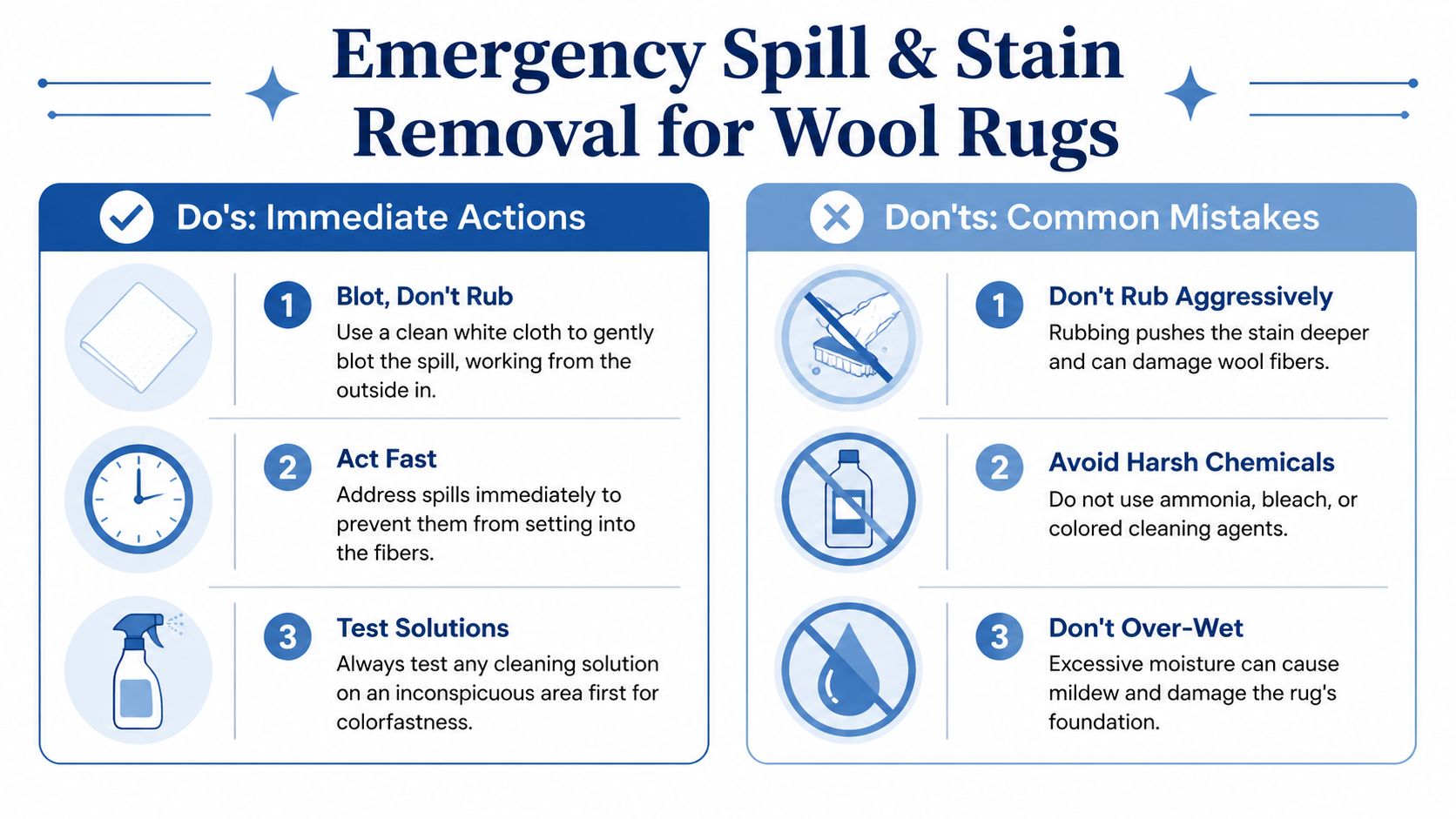
Fresh spills are where quick action makes the biggest difference. In professional low-moisture cleaning trials, fresh stains had 98% success when blotted within 5 minutes, with up to 90% removal for blood, according to Tufts & Knots’ wool rug cleaning maintenance guide. That tells you the first few minutes matter more than the fancy product you use afterward.
What to do in the first minute
Don’t scrub. Don’t pour water straight onto the spot. Don’t grab bleach, ammonia, or a strong kitchen spray.
Do this instead:
- Blot immediately: Use clean white towels or paper towel and press down firmly.
- Work from the outside in: That stops the stain spreading outward.
- Change to a clean section of cloth often: Otherwise you keep transferring the spill back into the pile.
For solids, lift them off gently with a spoon or dull edge first. For liquids, keep blotting until the towel stops picking up much moisture.
The best stain removal tool in most homes isn’t a chemical. It’s a dry white towel used quickly.
A safe DIY spot-cleaning mix
For many common spills, a mild wool-safe detergent in cool water is enough. If you need a bit more help, a small amount of white vinegar can assist with some food and drink spills, but keep the mix gentle and always test first as covered above.
A practical approach is:
- cool water
- a small amount of wool-safe detergent
- optional small amount of white vinegar for odour or food spill follow-up
Dampen the cloth, not the rug. Then blot, pause, and blot again. The aim is to lift contamination out in stages, not soak the backing.
How to handle common wool rug stains
Red wine and coffee
These spread fast and leave obvious colour. Blot first, then use your lightly dampened cloth with a wool-safe solution. Repeat with patience. If the colour remains but the area is no longer transferring onto the towel, stop and reassess once dry.
Pet accidents
Urine is less about the visible mark and more about how far it has travelled. If it has soaked through to the backing or underlay, surface treatment won’t fully solve the odour. Blot what you can, avoid over-wetting, and be realistic about whether the contamination has gone deeper.
Mud and tracked-in dirt
Let mud dry first. Wet mud spreads. Once dry, vacuum up the loose material, then lightly treat any residue.
What never works well on wool
Some mistakes are so common they’re worth listing plainly.
- Bleach: It strips colour and can weaken natural fibre.
- Ammonia: Too harsh for wool.
- Coloured cloths: Dye transfer is a real risk.
- Heavy rubbing: It roughens the pile and pushes the stain deeper.
- Too much water: This is how a simple spill turns into a drying problem.
If the stain has already set, if there’s an odour left after blotting, or if the rug looks darker underneath than on top, stop treating it like a surface spot. That usually means the issue has moved below the face fibres.
A Guide to Safe Wet and Dry Cleaning Methods
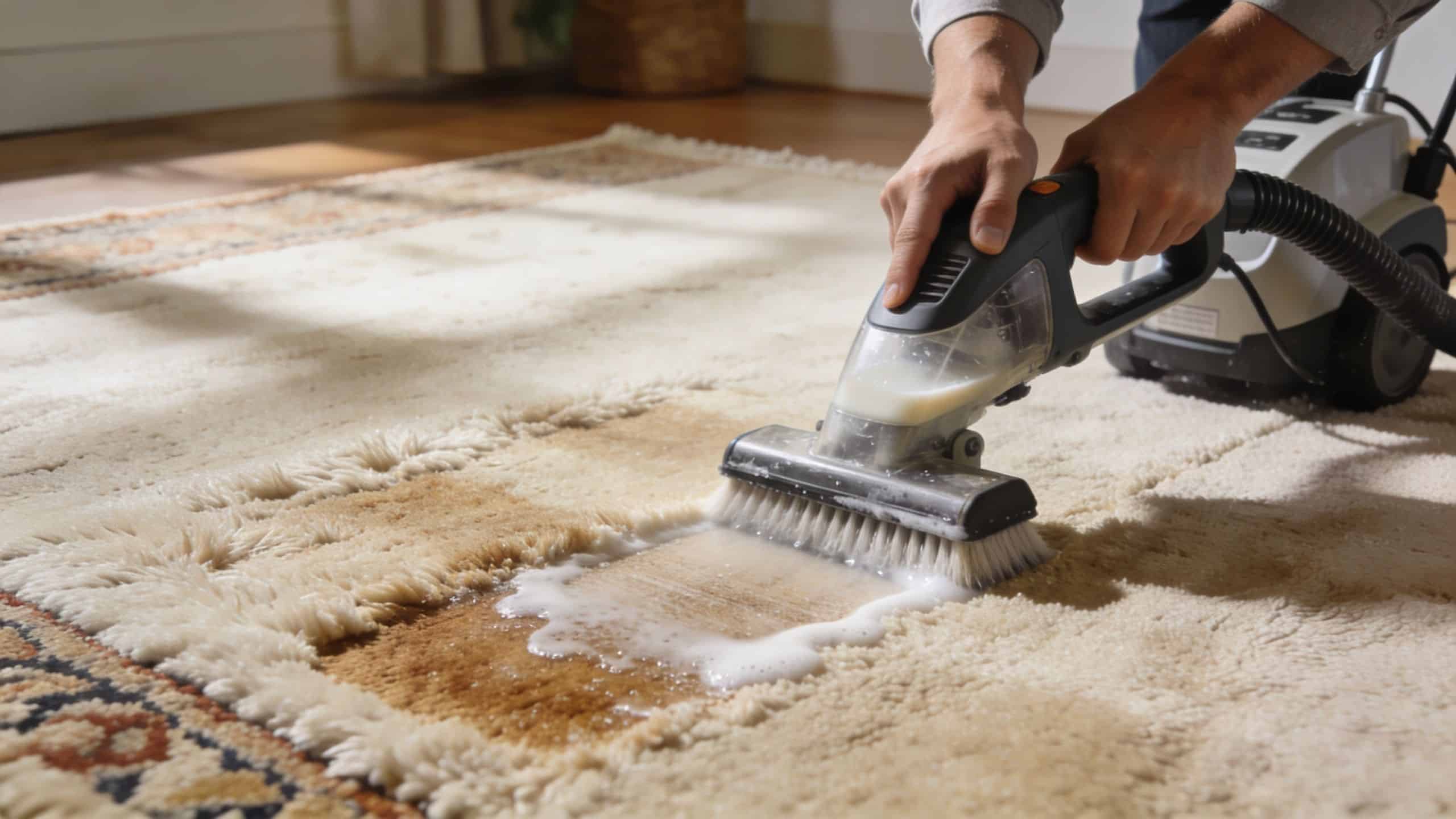
A lot of homeowners have heard the same warning for years: never get a wool rug wet. That’s not quite true. The problem is over-wetting, poor extraction, and heat that’s too high. Proper wet cleaning, done with controlled moisture and cool water, is safe for wool and remains the professional standard for deep cleaning, as explained in Enviro Clean’s article on wool carpet cleaning myths.
If you’re comparing methods more broadly, the difference between extraction and low-moisture approaches becomes clearer in this guide to steam cleaning vs dry carpet cleaning. For wool, the answer isn’t “wet” or “dry” on its own. It’s whether the method is controlled.
Method one for a careful low-moisture surface clean
This is the safest DIY path for routine wool rug cleaning when the rug is lightly to moderately soiled and you want to freshen the pile without saturating it.
What you need
- suction-only vacuum
- wool-safe cleaning solution
- white towels
- soft brush or microfibre pad
- fan or strong airflow
How to do it
Vacuum thoroughly first
Remove as much dry soil as possible before introducing moisture.Apply lightly to the surface
Mist the solution onto a cloth or pad rather than spraying the rug heavily. Focus on one section at a time.Agitate gently
Use a soft brush or cloth with light pressure. You’re loosening soil from the fibre tips, not scrubbing deep into the backing.Blot and extract as you go
Press dry towels into the area to remove lifted soil and moisture.Dry fast
Open windows, use fans, and keep the rug flat in a ventilated space away from direct harsh heat.
This method suits rugs that look dull or slightly grubby but aren’t carrying major stains or odours.
Method two for dry compound cleaning
For owners who are nervous about water, dry compound cleaning can be a lower-risk option on maintenance cleans. It won’t replace a true restorative clean, but it can be useful for surface soil.
The process is straightforward:
- vacuum first
- spread a wool-safe dry cleaning compound
- work it in gently with a soft brush
- allow it to sit as directed by the product
- vacuum it out thoroughly
Dry methods are best thought of as surface maintenance, not a rescue method for embedded contamination.
If a rug has body oils, food residues, tracked-in grime, or pet contamination, a dry powder can freshen the top but won’t always solve what’s lower in the pile.
What professionals do differently with wet extraction
In the Australian wool-care context, professional hot water extraction starts with a proper pre-vacuum and controlled pre-spray, then uses cool-to-lukewarm water with extraction strong enough to remove most of the moisture straight away. The WoolSafe guidance referenced in The Cleaning and Maintenance of Wool Carpets notes suction-only pre-vacuuming can remove 70 to 80% of dry soil, and that proper extraction with minimal over-wetting is central to safe wool care.
That’s why DIY machine hire can be hit and miss. Many people put down more water than they can recover.
Drying is where many DIY jobs fail
Cleaning doesn’t finish when the stain looks better. It finishes when the rug is dry all the way through.
Use this simple comparison:
| Method | Best for | Main risk |
|---|---|---|
| Low-moisture surface clean | General refresh, light soiling | Leaving residue if over-applied |
| Dry compound clean | Light maintenance, cautious owners | Limited effect on deep soil |
| Full wet extraction | Deep cleaning and embedded contamination | Problems if drying and extraction are poor |
A few drying rules matter:
- Keep air moving: Fans are your friend.
- Avoid strong direct heat: Don’t bake the rug.
- Lift if needed for airflow underneath: Especially on thicker pieces.
- Don’t put furniture back too soon: Trapped moisture causes trouble.
If the rug feels cool and slightly heavy hours later, it’s still damp inside.
When To Call In The Professionals
A common Melbourne call-out goes like this. A wool rug was spot-cleaned after a spill, it looked fine that night, then the next morning there’s a sour smell, a dull patch, or a faint tide mark near the edge. By that stage, the job is no longer about stain removal. It is about correcting moisture, residue, and contamination before the rug sets that damage in.
Plenty of day-to-day wool rug issues can be handled at home. Some cannot, and waiting usually makes them harder and dearer to fix. The biggest risks I see in Melbourne homes are slow drying in humid weather, pollen and fine dust settling deep into the pile, and pet or drink spills soaking through to the foundation.
Signs it is time to stop DIY cleaning
Call for professional help if any of these apply:
- Liquid has gone through the face fibres into the backing: This is common with urine, coffee, wine, and pot plant leaks.
- The rug smells musty, sour, or stale after cleaning: That usually means moisture or contamination remains below the surface.
- The pile still looks dark or grey after careful vacuuming: Deep soil is sitting where household methods do not reach well.
- Colour transfers onto your test cloth: Dye movement is a stop sign with wool.
- The rug has buckled, rippled, or feels heavier than usual: Moisture may be trapped inside.
- There is sentimental or financial value at stake: Hand-knotted, older, imported, or custom pieces deserve a lower-risk approach.
Shrinkage worries people, and fairly so. Wool itself is washable. Problems usually come from over-wetting, unstable dyes, poor drying, or jute and cotton foundations reacting badly. A trained technician manages those variables better than a hire machine and guesswork.
Jobs that usually need professional equipment
Pet accidents are high on the list. If urine has reached the backing, surface treatment rarely solves the odour for long.
Large area spills are another one. A litre of tea, a child’s vomit accident, or water from a leaking window can spread wider through the rug than the top surface suggests. In Melbourne’s cooler months, that hidden moisture can sit around far too long.
Heavy soil build-up also changes the equation. In family rooms, hallways, and under dining tables, wool traps dry grit low in the pile. That grit cuts at the fibre over time, flattens the rug, and leaves it looking tired even after regular vacuuming.
Melbourne situations where calling early makes sense
End-of-lease cleans are one. Property managers and entry condition reports tend to focus on odour, visible marks, and whether the rug has been left damp or poorly cleaned. If the rug is part of the property, or you need a clean documented properly for handover, book a technician before the final week rush.
NDIS and health-sensitive homes are another. In homes managing asthma, mobility limits, or care routines, the issue is often comfort and indoor air quality rather than appearance alone. Wool rugs can hold pollen, dust, and odours that a surface freshen-up will not remove.
I also suggest earlier professional help after Melbourne’s high pollen periods. Even clean-looking rugs can hang onto fine allergen load, especially in homes that keep windows open on dry, windy days.
Why a professional result is different
The difference is not just stronger equipment. It is inspection, fibre testing, moisture control, and drying management matched to wool.
A good technician checks for dye stability, foundation type, previous cleaning residue, and any weak areas before deciding on the method. Some rugs need controlled wet extraction. Others are better suited to low-moisture or off-site washing. If accidental over-wetting has already happened, this homeowner's guide to drying carpet gives a useful overview of the drying steps that matter most.
One blunt rule helps here. If the rug smells worse after your cleaning attempt, stop.
Choose a cleaner who knows wool
Not every carpet cleaner is a rug cleaner, and not every rug cleaner understands wool well. Ask what testing they do first, how they control moisture, whether they clean on-site or off-site, and how they dry the rug before it goes back into use. If you want a practical shortlist, this guide on how to choose a professional carpet cleaner is a sensible place to start.
The right professional clean should leave the rug properly washed, properly dried, and safe to live with again. If you are staring at a valuable wool rug and wondering whether one more DIY pass will fix it, that is often the moment to make the call.
Frequently Asked Wool Rug Cleaning Questions
Can I use a rental carpet cleaner on a wool rug
You can, but it’s risky. The main problem isn’t the idea of wet cleaning itself. It’s poor moisture control and weak extraction. Rental machines often leave rugs wetter than people realise, and wool doesn’t respond well to lingering dampness.
Is steam cleaning the same as hot water extraction
Not really in the way most homeowners use the term. Professional “steam cleaning” for carpets and rugs is usually hot water extraction, not clouds of high-heat steam blasted into the wool. For wool, controlled moisture and sensible temperature matter more than the label.
How should I clean fringes
Treat fringes more gently than the body of the rug. Don’t run them into a vacuum head, and don’t scrub hard. Light hand cleaning with a white cloth is the safer option. If they’re badly darkened or brittle, leave them alone and get advice.
What does a musty smell mean
A musty smell after cleaning usually means one of two things. The rug stayed damp too long, or contamination remains below the face fibres. Either way, it’s a warning sign, not something to mask with deodoriser.
How often should a wool rug be professionally cleaned
It depends on traffic and household conditions. Professional guidance puts wool rug cleaning at 1 to 3 years in general, with more frequent attention for busier homes and heavy-use areas, as noted earlier. In homes with children, pets, or constant foot traffic, the schedule should sit toward the more frequent end.
Can I use hot water to speed things up
No. Heat is where a lot of wool problems start. Stick with cool or lukewarm water when doing any spot treatment at home.
Why does my rug still look dirty after vacuuming
Because vacuuming only removes what the machine can reach easily. Fine grit, oils, and compacted debris can stay buried in the pile. A rug can look decent from standing height and still carry a lot of embedded soil.
What’s the safest thing to do right after a spill
Blot quickly with a white cloth, keep pressure gentle, and avoid flooding the area. Fast, simple action usually helps more than aggressive cleaning.
If your wool rug needs more than a careful spot clean, Right Price Carpet Cleaning can help with professional rug and carpet cleaning across Melbourne. Their family-owned team has been operating since 2007, using truck-mounted equipment, eco-friendly pretreatments, and fully insured, police-checked technicians. If you want a cleaner rug, faster drying, and straightforward booking without the guesswork, they’re a solid local option.
Recent Comments