



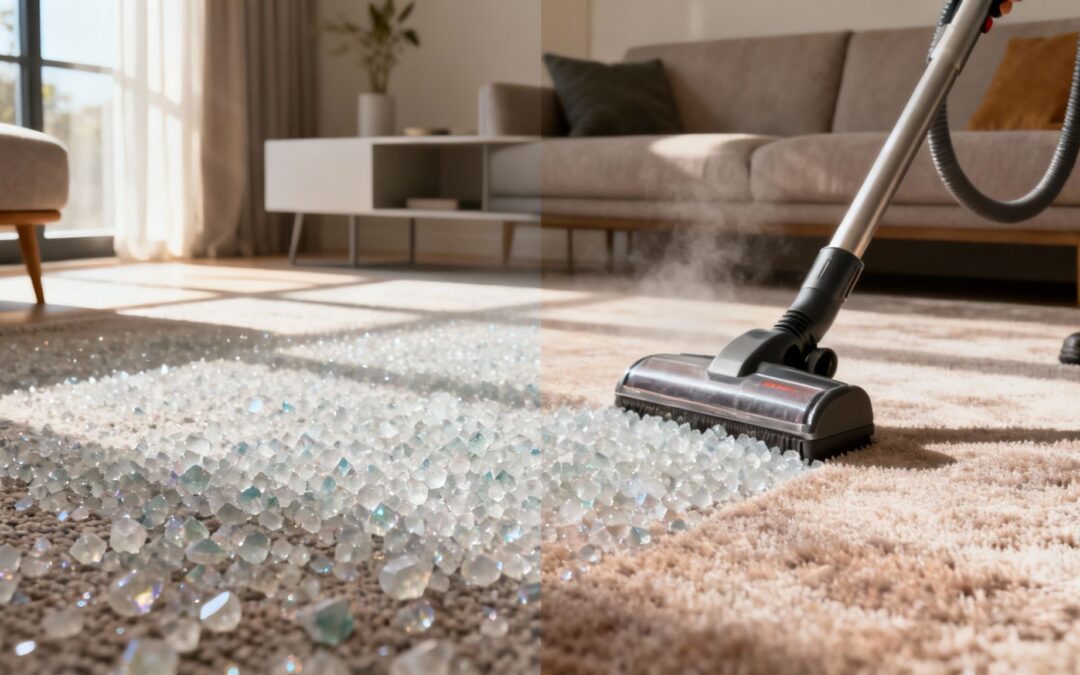
When you hear “dry carpet cleaning,” you’re probably picturing a process with zero water. It’s a common misconception. The term is a bit of a misnomer, because what it really means is very low moisture (VLM) cleaning.
Instead of soaking your carpets with hot water, this method uses specialised compounds and solutions to break down and absorb dirt. Think of it as a deep clean without the flood. The cleaning agents attract grime like a magnet, and once they’ve done their job, everything is vacuumed away. The best part? You can walk on your floors almost straight away.
The Secret Behind a Water-Wise Clean
Imagine you need to clean a delicate silk shirt. You wouldn’t just toss it into a hot wash cycle and hope for the best. You’d use a gentle method that protects the fabric. Dry carpet cleaning works on a similar principle, putting fabric care and convenience first, rather than relying on brute-force water saturation.
It’s not completely water-free, but it uses significantly less—often up to 90% less water than a traditional steam clean.
A great way to think about it is like using dry shampoo. It’s perfect for absorbing oils and refreshing your hair without the whole wash-and-blow-dry ordeal. Dry carpet cleaning offers that same kind of surface-level refresh for your floors, making it a fantastic option for maintenance and quick results.
How It Works: A Simple Breakdown
The idea behind it is brilliantly simple. A specialised cleaning compound, which often looks a bit like moist sawdust or tiny crystals, is spread evenly over the carpet. These little particles are engineered to act like thousands of tiny sponges.
- Application: The cleaning agent is distributed across the carpet fibres.
- Agitation: A machine with counter-rotating brushes gently works the compound deep into the pile, making sure it reaches all the embedded dirt and grime.
- Absorption: As the compound is brushed in, it breaks down and soaks up soil, spots, and oily residues, trapping them inside its structure.
- Extraction: After a short dwell time, a high-powered vacuum lifts the compound—and all the trapped dirt—right out of the carpet.
The end result is a carpet that’s not just clean, but also dry enough to walk on in under an hour. This quick turnaround is a huge reason why it’s become so popular, especially in busy households.
In Australia, the demand for faster, more convenient cleaning solutions is growing. The professional carpet cleaning industry is a big market here, and industry analysis projects the sector will generate around AUD 611.5 million in revenue in 2025. A big driver for that growth is the appeal of methods that don’t put your home out of action for a whole day. You can learn more about the Australian carpet cleaning market trends from IBISWorld's detailed report.
This process completely avoids the long drying times that come with wet methods, which can take anywhere from six to 24 hours. By getting rid of all that excess moisture, dry cleaning also helps prevent common problems like mould, mildew, and wicking—that annoying thing where stains reappear as the carpet dries. It’s a practical, effective way to keep your carpets looking great without the long wait.
Exploring the Three Main Dry Cleaning Methods
While the core idea is always to use as little moisture as possible, "dry carpet cleaning" isn't just one single technique. It’s more like a family of methods, each with a unique way of lifting dirt from your carpet fibres. Think of them as different tools in a professional cleaner’s kit, chosen based on your carpet type, how soiled it is, and what you’re trying to achieve.
Getting to know these three main approaches—dry compound, encapsulation, and bonnet cleaning—helps you understand the clever science behind the clean and make a better choice for your home. Each one tackles dirt with minimal water and maximum efficiency.
This flowchart breaks down the basic principle they all share.
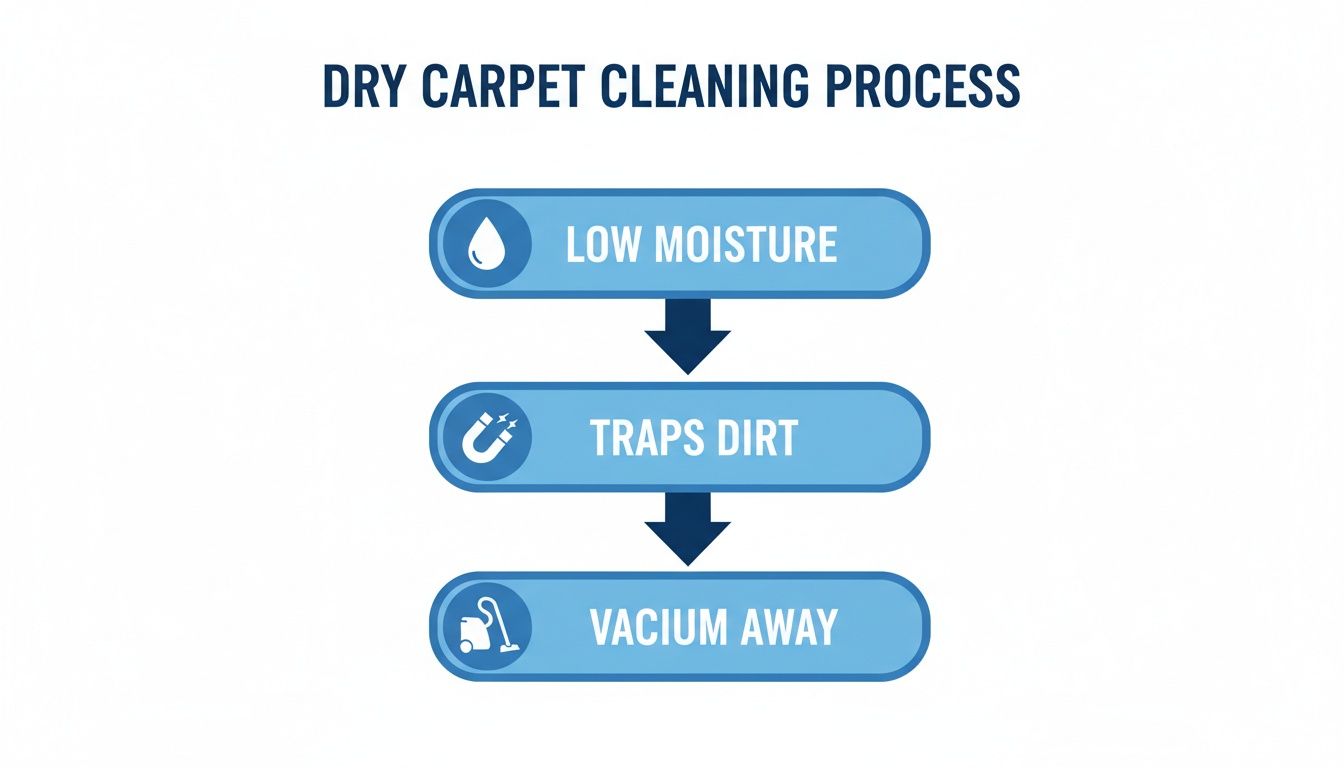
At its heart, the process always relies on a low-moisture agent to trap dirt, which is then vacuumed away for a fast-drying finish.
Dry Compound Cleaning
Imagine you've made a pencil mark on paper. You wouldn't use water to get it off; you’d use an eraser to gently lift the graphite away. Dry compound cleaning works on a very similar principle.
This method uses a slightly moist, biodegradable powder that looks a bit like sawdust. This absorbent compound gets sprinkled evenly across the carpet. Then, a specialised machine with counter-rotating brushes works the powder deep into the pile where it can get to work on embedded soil, spots, and oily grime.
The tiny particles act like microscopic sponges, breaking down and soaking up the dirt. After a short dwell time, usually just 10-15 minutes, a powerful commercial vacuum is used to pull the compound—and all the trapped dirt—straight out of the carpet.
- Best For: Natural fibres like wool and sisal that hate getting wet, and for regular maintenance in both homes and businesses.
- Equipment Used: A mechanical brush agitator and a high-powered commercial vacuum.
Encapsulation Cleaning
If the dry compound method is an eraser, then encapsulation cleaning is like a magnet. This technique uses a special crystallising polymer detergent that’s sprayed onto the carpet.
First, the solution is worked into the fibres with a rotary brush machine. As it starts to dry, something clever happens. The polymers surround, or "encapsulate," the dirt particles, forming brittle little crystals around them. This process effectively isolates the dirt from the carpet fibre.
Once the solution is totally dry, these tiny crystals are no longer sticky and can be easily shattered and removed with a good vacuuming. The real beauty here is that it not only cleans but also helps stop the carpet from getting dirty again so quickly. Any leftover polymers continue to trap new dirt, which then gets removed the next time you vacuum.
This method is a game-changer for commercial spaces with heavy foot traffic. It delivers a deep clean with almost no downtime and helps carpets stay looking fresh for much longer between professional visits.
Bonnet Cleaning
Think about wiping down a kitchen bench with a damp cloth. The cloth absorbs the spills and grime, leaving a clean surface behind. Bonnet cleaning operates on a similar surface-level concept.
In this method, a cleaning solution is lightly sprayed onto the carpet. A rotary floor machine fitted with a large, absorbent pad—the "bonnet"—is then passed over the top. The pad spins and buffs the carpet fibres, lifting soil and dirt from the upper layer of the pile.
Because it mainly cleans the top third of the carpet fibre, bonnet cleaning is often seen as more of an interim maintenance clean rather than a deep, restorative one. It’s fantastic for quickly refreshing high-traffic areas and improving the carpet's appearance.
To help you see the differences at a glance, here’s a quick comparison of the three methods.
Comparing Dry Carpet Cleaning Methods
This table offers a side-by-side look at the three primary dry cleaning methods to help you decide which one might be right for your home.
| Method | How It Works | Best For | Drying Time |
|---|---|---|---|
| Dry Compound | Absorbent powder is brushed in to act like tiny sponges, then vacuumed out. | Delicate natural fibres (wool, sisal) and regular maintenance. | Immediate. Walk-on dry. |
| Encapsulation | A polymer solution crystallises around dirt, which is then vacuumed away. | High-traffic commercial areas and synthetic carpets. | 20-30 minutes. |
| Bonnet Cleaning | An absorbent pad on a rotary machine buffs the surface to lift dirt. | Quick surface-level cleaning and appearance touch-ups. | About 30 minutes. |
Each technique has its place, and a good professional will know exactly which one to recommend based on your specific carpet and cleaning needs.
The growing interest in these low-moisture methods is reflected in consumer trends, too. The Australian market for carpet cleaner machines is estimated at USD 13.276 million in 2024, and it's projected to climb to USD 21.50 million by 2033. Upright units dominate this market, heavily promoted on their promise of quick drying times—a core benefit borrowed directly from professional dry carpet cleaning systems. You can find more details in this carpet cleaner market report.
Dry Cleaning vs Steam Cleaning: A Practical Comparison
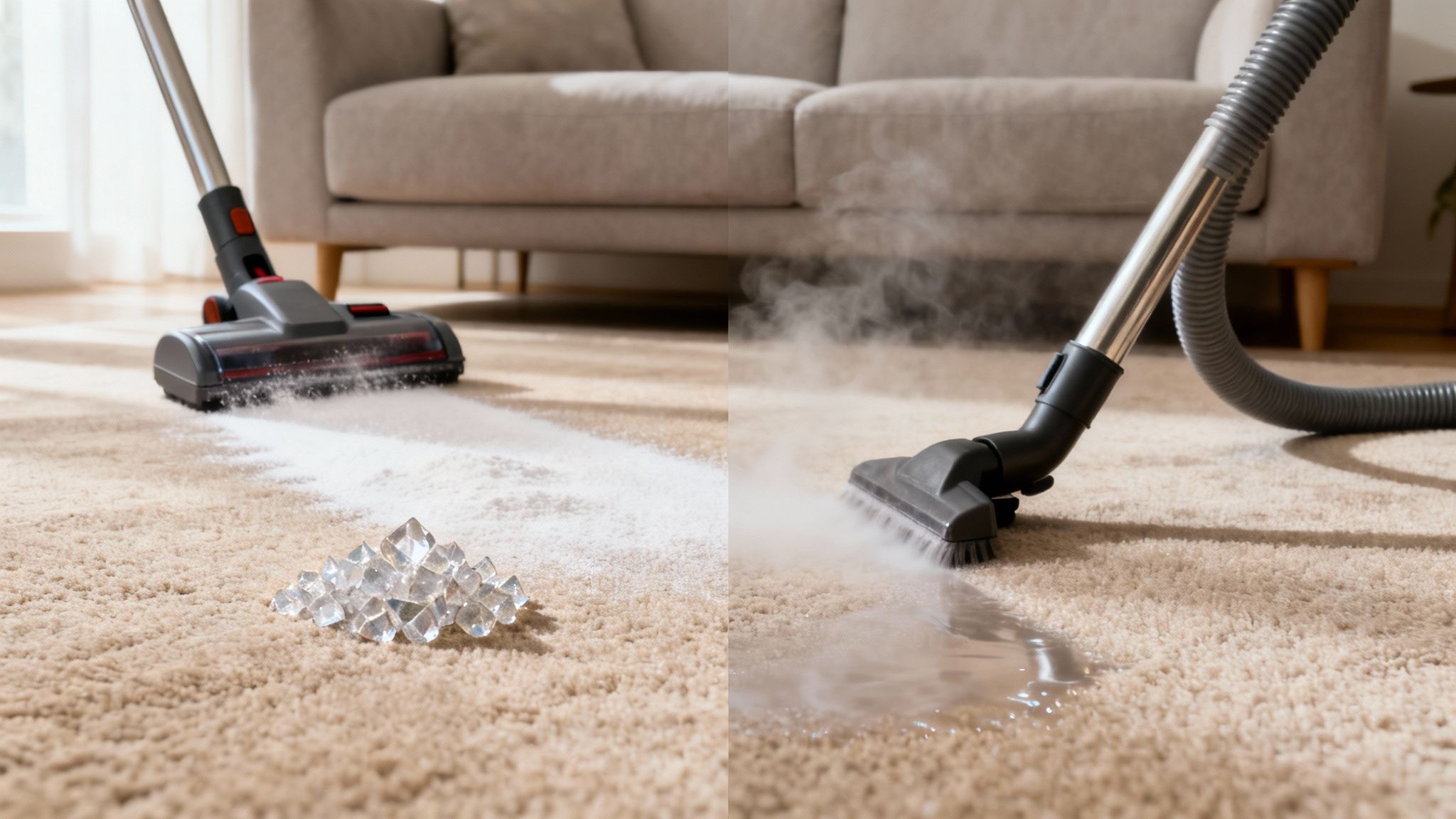
When you're looking to get your carpets professionally cleaned, the conversation almost always lands on two main contenders: dry carpet cleaning and traditional steam cleaning. Both will leave you with fresher, cleaner carpets, but they take completely different roads to get there. It’s not about which one is better overall, but which one is the right tool for your specific job.
Think of it like washing a car. Sometimes, a quick waterless spray and a good polish are all you need to get rid of surface dust and bring back the shine. Other times, nothing short of a high-pressure wash will do to blast away caked-on mud. Both methods work, but they’re built for different levels of grime.
The same logic applies to your carpets. Getting to know the strengths of each method helps you make a smart choice based on your carpet’s material, how dirty it is, and how quickly you need to use the room again.
The Battle for Deep Cleaning Power
When it comes to a truly deep, restorative clean, steam cleaning—or hot water extraction, as it’s known in the industry—is the undisputed champ. It works by shooting high-pressure hot water deep into the carpet pile, which dissolves stubborn dirt, grease, and trapped allergens. A powerful, truck-mounted vacuum then sucks all that dirty water back out, pulling the contaminants with it.
This process is incredible for flushing out soil that’s been ground into your carpet for months or even years. If your carpets are heavily soiled or it's been a long time since their last professional clean, steam cleaning delivers that satisfying, deep-down cleanse.
On the other hand, dry carpet cleaning is the star of surface and maintenance cleaning. Methods like encapsulation or dry compound cleaning are brilliant for lifting away that top layer of daily dirt and reviving high-traffic areas. They might not go as deep as steam, but they're incredibly effective for regular upkeep.
The All-Important Drying Time
This is where dry carpet cleaning has a massive, undeniable advantage. Because it uses very low moisture (VLM) systems, carpets are often dry and ready to walk on in as little as 30 to 60 minutes. For a busy household, office, or anyone who can’t have a room out of action for a whole day, that’s a game-changer.
Steam cleaning, with the sheer volume of water it uses, needs a lot more time to dry.
Depending on the humidity, airflow in your home, and how thick your carpet is, a steam-cleaned carpet can take anywhere from 6 to 24 hours to dry out completely. That extended dampness isn't just inconvenient; it can create a humid environment if you don't have good ventilation.
Tackling Stains and Allergens
Both methods are good at removing stains, but they approach it differently. Steam cleaning's hot water and specialised cleaning solutions are fantastic against a whole host of water-based and tough stains. It’s also excellent at flushing out allergens like dust mites, pet dander, and pollen that get buried deep in the fibres.
Dry carpet cleaning holds its own, especially with oily or greasy stains. The absorbent compounds are specifically designed to break down and lift these types of spills. For people with allergies, the low-moisture approach is a huge plus, as it minimises any risk of mould or mildew growth that can be triggered in damp carpets.
Dry Cleaning vs Steam Cleaning At A Glance
Still weighing your options? This table breaks down the key differences to help you decide which service is the right fit for you.
| Feature | Dry Carpet Cleaning | Truck-Mounted Steam Cleaning |
|---|---|---|
| Drying Time | 30-60 minutes | 6-24 hours |
| Deep Cleaning | Excellent for maintenance and surface dirt | Superior for deep, restorative cleaning |
| Water Usage | Very Low | High |
| Best For | Regular upkeep, delicate fibres (wool), quick turnaround | Heavily soiled carpets, annual deep cleans, allergy removal |
| Disruption | Minimal | Significant due to long drying time |
Ultimately, the best method really depends on your goal. If you're after a fast, effective refresh that lets life get back to normal quickly, dry carpet cleaning is an outstanding choice. But for that once-a-year, deep restorative clean that pulls out years of dirt, steam cleaning is tough to beat.
Right, so you understand the "what" and the "how" of dry carpet cleaning. But the real expertise comes from knowing when it’s the best tool for the job. This isn't just a simple alternative to steam cleaning; it’s a specialist solution for times when speed, safety, and fabric care are non-negotiable.
Think of it as the go-to method when life simply can’t be put on hold waiting for soggy carpets to dry. For many homes and businesses, it’s a purely practical decision—a way to protect a valuable asset while keeping disruptions to an absolute minimum. Let's look at the real-world situations where this low-moisture approach really proves its worth.
For High-Traffic Commercial Spaces
Picture a busy hotel lobby, an open-plan office, or a retail store on a Saturday. These places can't afford to rope off entire sections for hours, forcing customers or staff to navigate wet floors. Every minute of downtime is a minute of lost productivity or a poor customer experience.
This is exactly where dry carpet cleaning shines. Because it dries in under an hour, businesses can schedule a clean during a quiet period—or even in the middle of a workday—with hardly anyone noticing.
- Offices and Call Centres: Cleaning can roll from one section to the next without grinding work to a halt.
- Hotels and Function Centres: Rooms can be turned around and ready for the next guest on the very same day.
- Retail Stores: Aisles stay open and safe, so customers can keep shopping without interruption.
The demand for this kind of efficiency is booming. The Australian cleaning services market is a massive economic player, and experts predict it will grow from AUD 18.97 billion in 2025 to AUD 31.20 billion by 2035. A huge chunk of that demand comes from commercial hubs like Melbourne, which explains why time-saving methods are so popular in properties that can’t tolerate long drying times. You can find more insights into the Australian cleaning services market on expertmarketresearch.com.au.
For Homes with Delicate Natural Fibres
Not all carpets are made the same. Materials like wool, silk, sisal, and jute add a touch of luxury to a home, but they have a complicated relationship with water. Drenching these natural fibres with traditional hot water extraction can open a Pandora's box of problems.
Excessive moisture can cause wool to shrink, sisal to buckle and warp, and natural dyes to bleed into a muddy mess. Worse still, the long drying time creates the perfect conditions for cellulosic browning—those ugly yellow or brown stains that appear when natural fibres stay damp for too long.
Dry carpet cleaning neatly sidesteps these risks. By using a tiny amount of liquid, it lifts away dirt without oversaturating the fibres. This protects their texture, vibrant colour, and structural integrity, making it the safest professional cleaning method for these beautiful, high-end materials.
For Allergy Sufferers and Healthy Homes
For anyone dealing with allergies, asthma, or chemical sensitivities, the quality of your indoor air is everything. While steam cleaning does a great job of pulling out allergens, the dampness it leaves behind can invite a whole new set of unwanted guests to the party.
A damp carpet, especially in a room with poor airflow, is a five-star resort for mould, mildew, and dust mites—all major triggers for respiratory problems.
Dry carpet cleaning avoids this issue completely by keeping humidity levels in check. The carpets are dry so quickly that there's simply no time for mould or mildew to get a foothold. This makes it a fantastic choice for maintaining a healthier home, particularly for families with young children or anyone prone to allergies. It cleans deeply without trading one problem for another.
A Step-by-Step Look at the Professional Dry Cleaning Process
Knowing what to expect can make any professional service a smoother experience. When a technician arrives to dry clean your carpets, it’s not just about running a machine over your floors. It's a careful, multi-stage process designed to get the best results safely and efficiently. Understanding these steps helps you see exactly where the value is.
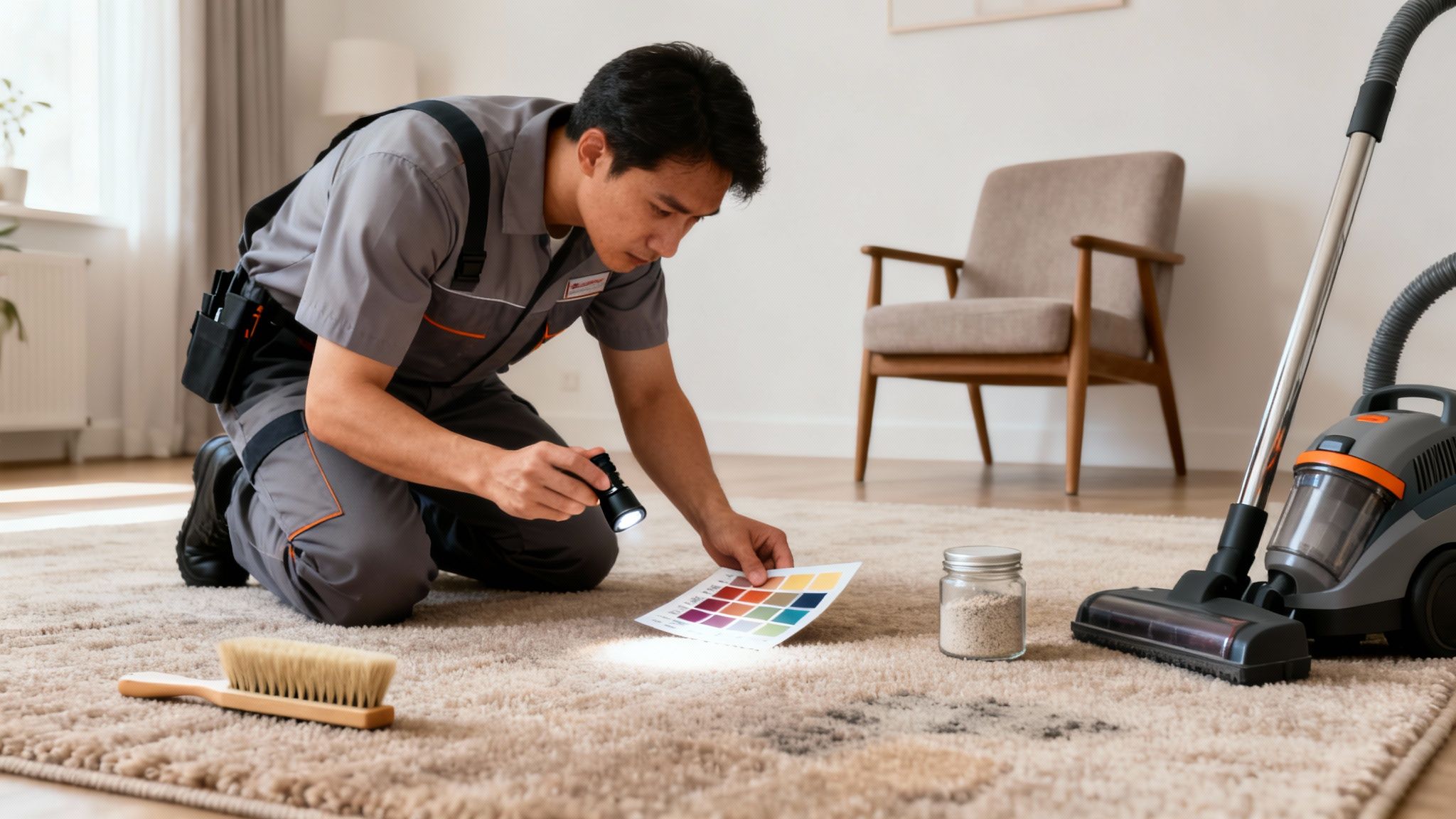
The entire service breaks down into a few key phases, each one playing a crucial part in reviving your carpets without the long drying times of wet methods.
Stage 1: Carpet Inspection and Preparation
The moment your technician arrives, their first job is to become a bit of a carpet detective. They’ll walk through the rooms, figuring out your carpet’s fibre type—is it a hardy synthetic nylon or a more delicate natural wool? This is critical, as different materials need different cleaning compounds to be effective without causing damage.
During this inspection, they’ll also pinpoint problem areas like high-traffic lanes, specific stains, and any existing wear and tear. This helps them choose the right approach and give you realistic expectations about what the final result will look like.
Before they start, you can help speed things up. Simply moving smaller items like pot plants, floor lamps, and kids' toys out of the way gives your technician clear access to the entire floor. Most pros can work around large furniture, but clearing the clutter always ensures a more thorough clean.
Stage 2: Pre-Vacuuming and Compound Application
Once the area is clear, the real work begins with a deep, professional pre-vacuum. This isn't your quick weekly once-over; it involves a high-powered commercial vacuum designed to pull out as much dry soil, dust, and grit as possible from deep within the pile. Removing this loose stuff is essential because it lets the cleaning compound focus on the oily, stuck-on grime.
A thorough pre-vacuum can remove up to 80% of the dry soil in a carpet. Skipping this is like trying to mop a dusty floor without sweeping first—you just end up turning dirt into mud, which compromises the whole clean.
With the loose debris gone, the technician applies the chosen dry carpet cleaning agent. This could be a slightly moist absorbent powder or a crystallising encapsulation spray, which is spread evenly across the surface.
Stage 3: Agitation and Final Extraction
This is where the magic really happens. A specialised machine with counter-rotating brushes gently works the cleaning compound deep into the carpet pile. This mechanical action makes sure the cleaning agents touch all sides of each fibre, breaking down and absorbing the trapped soil and grime.
After letting the compound sit for a short time to do its job, the final and most important step begins: extraction. The same powerful vacuum is used again to meticulously lift the cleaning compound—and all the dirt it has absorbed—right out of the carpet. What’s left behind is a fresh, deodorised carpet that’s almost completely dry.
Finding and Budgeting for a Melbourne Provider
So, you’ve decided that dry carpet cleaning is the right move for your home. Fantastic. The next step is finding a reliable professional in Melbourne who can get the job done right. This part can feel a bit overwhelming with all the different quotes and services out there, but knowing what to look for makes all the difference.
Most cleaners in Melbourne price their work in one of two ways: a flat rate per room or by the square metre. The per-room rate is simple and usually covers a standard-sized room (think up to 12 square metres). For larger homes or rooms with odd shapes, a per-square-metre price is often more accurate and fair.
What Influences Your Final Quote
The final cost isn't just about the size of your rooms; it’s a reflection of the actual work involved. A few key things can nudge the price up or down, and it helps to understand what technicians are looking at when they prepare a quote.
Here’s what really matters:
- Carpet Condition: Is your carpet just in need of a light refresh, or is it hiding a few years of heavy foot traffic and stubborn stains? Heavily soiled carpets naturally take more time, effort, and specialised products to clean properly.
- Total Area: The more carpet you need cleaned, the higher the total cost will be. That said, many companies offer a better rate or a package deal if you’re getting the whole house done at once.
- Specific Method: Not all dry cleaning is the same. The technique used—whether it’s encapsulation or a dry compound method—can affect the price due to different material and equipment costs.
- Accessibility: Getting equipment into a high-rise apartment or navigating multiple flights of stairs can add a bit of time and effort, which might be reflected in the quote as a small surcharge.
While prices vary across Melbourne, you should expect to see quotes fall within a fairly consistent range. If you get a quote that seems too good to be true, it probably is. Super-low prices can sometimes mean cut corners, hidden fees, or inexperienced operators.
Essential Questions to Ask Any Provider
Before you lock anything in, a quick chat on the phone can tell you everything you need to know about a company’s professionalism and honesty. Arm yourself with the right questions to make sure there are no nasty surprises on cleaning day. This isn't just about ticking boxes; it's about finding someone you can trust in your home.
Choosing a provider isn't just about finding the lowest price. It's about finding an insured, experienced, and transparent professional who stands behind their work and respects your home. A satisfaction guarantee is a clear sign of a company confident in its results.
Here are the crucial questions to ask:
- Are you fully insured? This is non-negotiable. Always confirm they have public liability insurance to cover any accidental bumps, spills, or damage.
- What is included in the quote? Get specific. Ask if the price includes pre-vacuuming, pre-treating stains, and moving light furniture like coffee tables and chairs.
- Do you have experience with my carpet type? This is vital if you have delicate natural fibres like wool, sisal, or jute that can be damaged by the wrong method or products.
- What is your satisfaction guarantee? A reputable company will always offer to come back and fix any issues if you’re not 100% happy with the initial result. It shows they care about their reputation and your satisfaction.
Got Questions About Dry Carpet Cleaning? We’ve Got Answers.
Even after weighing up the pros and cons, it’s completely normal to have a few lingering questions about dry carpet cleaning. Choosing the right method is all about feeling confident in the details, so let's clear up some of the most common queries.
This section tackles the big concerns around safety, stain removal, and maintenance, giving you the straightforward answers you need.
Is Dry Carpet Cleaning Safe for Pets and Children?
Absolutely. This is honestly one of the biggest draws of any low-moisture cleaning method. Reputable professionals use non-toxic, eco-friendly cleaning compounds that are perfectly safe for everyone in your family, including your furry friends.
Because so little water is used, there’s no long, drawn-out drying time where damp carpets could become a breeding ground for mould and mildew. The quick turnaround—often under an hour—means your kids and pets can get back to playing on the floor almost straight away, without being exposed to any harsh chemical residues or a soggy environment.
Can It Really Get Rid of Tough Stains Like Red Wine?
This is where it’s important to have realistic expectations. Dry carpet cleaning is brilliant for tackling general, everyday grime, oily spots, and surface-level spills. For most common household accidents, it does a fantastic job.
However, when it comes to deeply set, dye-based stains—think red wine, cordial, or old pet urine—its effectiveness can be a bit hit-or-miss. The absorbent compounds are designed to lift and trap soil, but they can struggle to fully break down stubborn, aged stains that have chemically bonded with the carpet fibres.
While many stains will look much better or disappear completely, a specialist stain treatment or a hot water extraction clean might be needed for the really challenging spots. Always point out specific stains to your technician when they first arrive so they can give you their honest, expert opinion.
How Often Should I Get My Carpets Dry Cleaned?
The best cleaning schedule really comes down to how much action your carpets see. For homeowners and landlords looking for a complete guide on keeping a property spotless, this an ultimate rental property cleaning checklist offers some great insights that go beyond just carpets.
As a general rule of thumb, here’s a good schedule to follow:
- Low-Traffic Homes: If it’s just one or two adults and no pets, a yearly dry clean is usually plenty to keep your carpets looking fresh and feeling great.
- Family Homes with Pets: In a busier home with kids and pets running around, getting a professional clean every 6 to 9 months is a smart move to keep on top of dirt, pet dander, and allergens.
- High-Traffic Zones: For areas like hallways, stairs, and main living rooms, a targeted clean every six months can stop dirt from getting ground in deep, which helps your carpet last a lot longer.
Think of regular dry cleaning as a smart investment. It doesn’t just keep your home looking its best; it also protects your carpets from premature wear and tear, ensuring you get years more life out of them.
At Right Price Carpet Cleaning, we believe in giving our customers honest advice and incredible results. While we specialise in deep steam cleaning, we want you to be fully informed about all your options. If you're ready for a thorough, restorative clean that flushes out deep-seated dirt and allergens, get your instant quote today. Visit us at https://rightpricecarpetcleaning.com.au to see how we can bring your carpets back to life.
Recent Comments