



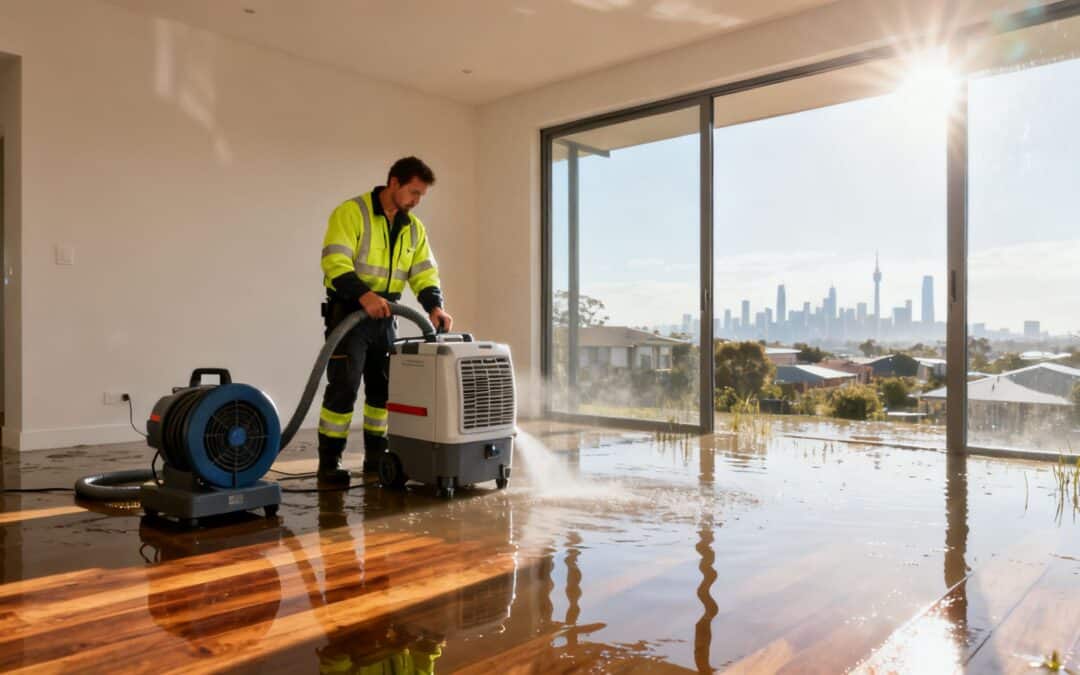
When your Melbourne home is flooded, every single minute counts. The first 24-48 hours are absolutely crucial—this is the small window you have to stop a manageable water issue from spiralling into major structural damage and a full-blown mould outbreak. What you do right now directly impacts the safety of your family and what this whole ordeal will end up costing.
What To Do Immediately After a Flood
Walking into a water-damaged home is shocking and overwhelming. It's easy to panic. But having a clear, step-by-step plan will help you protect your safety, minimise the damage, and make the insurance process a whole lot smoother. Think of this as your emergency action plan for navigating the critical first day.
Your first priority, without question, is safety. Water and electricity are a deadly mix. Don’t even think about stepping into standing water until you are 100% certain the power has been switched off. If you can safely get to your switchboard, turn off the main breaker. If you have any doubt at all, leave it and wait for a qualified electrician. Same goes for gas—if you smell gas or suspect a leak, shut off the supply at the meter immediately.
When faced with a flood, knowing what to do first can feel impossible. This quick checklist breaks down the most critical actions to take in the first few hours to protect your family and your property.
Emergency Flood Response Checklist
| Priority | Action | Why It's Critical |
|---|---|---|
| 1: Safety First | Turn off electricity and gas mains. | Prevents electrocution and gas leaks, which are the most immediate dangers in a flooded home. |
| 2: Document Everything | Take extensive photos and videos of the damage before touching anything. | This is your non-negotiable proof for your insurance claim. Without it, you risk a disputed or denied claim. |
| 3: Call a Professional | Contact a reputable flood damage restoration company in Melbourne. | Their industrial-grade equipment removes water far more effectively than any DIY method, preventing hidden moisture and mould. |
| 4: Remove Valuables | Move important documents, electronics, and sentimental items to a dry, safe location. | Protects irreplaceable items from further water damage and high humidity. |
| 5: Notify Your Insurer | Call your insurance company to start the claims process. | The sooner they know, the faster they can assign an assessor and get your claim moving. |
Following these steps in order will set you up for the smoothest possible recovery process.
Secure and Document the Scene
Once it's safe to go inside, your next job is to document everything. I mean everything. Do not move, clean, or throw away a single thing until you have proof. This step is absolutely vital for your insurance claim.
Grab your phone and take more photos and videos than you think you need.
- Show the scale: Get shots of the high-water marks on the walls, furniture, and cabinetry.
- Capture the specifics: Take close-ups of damaged electronics, soaked carpets, warped floorboards, and personal belongings.
- Get every angle: A comprehensive view of each room from different corners gives the full picture.
This visual evidence is undeniable proof of your loss. It makes the entire claims process run smoother and helps avoid frustrating back-and-forth disputes with the insurance assessor.
Your Most Important First Call
After you've handled immediate safety and documented the mess, your next call should be to a professional flood damage restoration Melbourne company. It’s tempting to grab a bucket and start bailing water yourself, but professionals bring in the heavy-duty equipment that can extract water far more quickly and thoroughly than you ever could.
A huge mistake homeowners make is underestimating how much water is hiding where they can't see it—trapped in subfloors, inside wall cavities, and soaked into insulation. Professionals use thermal imaging cameras and moisture meters to hunt down and eliminate this hidden water, which is the primary fuel for mould growth in Melbourne's humid climate.
Getting experts on-site quickly is the single best thing you can do to prevent secondary damage like rotting timber, delaminating cabinetry, and the dangerous mould infestations that can take hold in as little as 24 hours. They kickstart the drying process immediately, stabilising your home's environment and paving the way for a successful recovery. They also provide the detailed reports and moisture readings your insurer will demand to approve your claim, making them your most important ally from day one.
A Look Inside the Professional Restoration Process
When flood damage restoration professionals arrive at your Melbourne home, they don’t just show up with a few fans. They operate like a specialised emergency response team for your property, following a systematic, science-backed process designed to stabilise the environment, remove threats, and bring your home back to life.
Understanding their methods helps cut through the chaos and shows why calling in the experts is so critical after a flood.
The first step is always a thorough damage assessment, which includes figuring out what kind of water we're dealing with. Think of it as a diagnosis. The source of the water determines its category, and that category dictates the entire restoration strategy.
- Category 1 (Clean Water): This is the least harmful, coming from a sanitary source like a burst pipe or an overflowing sink. It poses minimal health risks at first, but if left to sit, it can quickly degrade and become contaminated.
- Category 2 (Grey Water): Now we're in contaminated territory. This water contains bacteria from sources like washing machine overflows or dishwasher leaks. It’s not something you want to handle, as it can cause illness if ingested.
- Category 3 (Black Water): This is the most dangerous. It’s grossly unsanitary water from sources like sewage backflow or overland flooding that has mixed with all sorts of contaminants. It contains nasty bacteria, viruses, and fungi and requires extreme caution and specialised gear.
The Stages of Professional Restoration
Once the water is categorised and the scope of the damage is clear, the hands-on work begins. This isn’t a random free-for-all; it follows a clear, multi-stage approach to make sure nothing gets missed.
Water Extraction: The immediate goal is to get the standing water out—fast. Professionals use powerful, truck-mounted vacuums and submersible pumps that are leagues beyond a standard shop vac. This rapid removal is crucial to stop water from seeping deeper into walls, subfloors, and structural cavities.
Removal of Damaged Materials: After the bulk of the water is gone, technicians inspect everything. Materials that are too far gone to be saved, like soaked plasterboard, saturated insulation, and contaminated carpets, are carefully removed. This helps the drying process and gets rid of potential breeding grounds for mould.
Drying and Dehumidification: This is where the heavy-duty science kicks in. Industrial-grade air movers are strategically placed to create a vortex of airflow across wet surfaces, which speeds up evaporation. At the same time, large commercial dehumidifiers are brought in to pull all that moisture out of the air, preventing it from settling back into other materials.
This one-two punch of air movers and dehumidifiers creates a controlled drying environment. It's not just about blowing air around; it’s a calculated process to lower the humidity in your home to specific, targeted levels. This ensures even hidden moisture trapped in timber framing and concrete is drawn out and eliminated.
This phase is especially critical for any flood damage restoration Melbourne project. Melbourne’s history is filled with reminders of how quickly our urban areas can be swamped. The 1987-88 Melbourne flooding, for example, was a declared catastrophe that resulted in $12 million in commercial damages in the CBD alone from severe storms. That event was part of a larger pattern of flash floods hitting suburbs like Footscray and Kensington, where intense rainfall has a history of inundating homes. You can dig into more historical flood data in this detailed flood management survey report from the Victorian government.
Cleaning, Sanitising, and Final Checks
With the structure now thoroughly dry, the focus shifts from drying to cleaning and safety. All affected surfaces are cleaned with specialised agents. Depending on the water category, this will likely include applying anti-microbial treatments to kill off any lingering bacteria and stop mould spores from taking hold.
The flowchart below shows the crucial first steps you should take before the professionals even arrive.
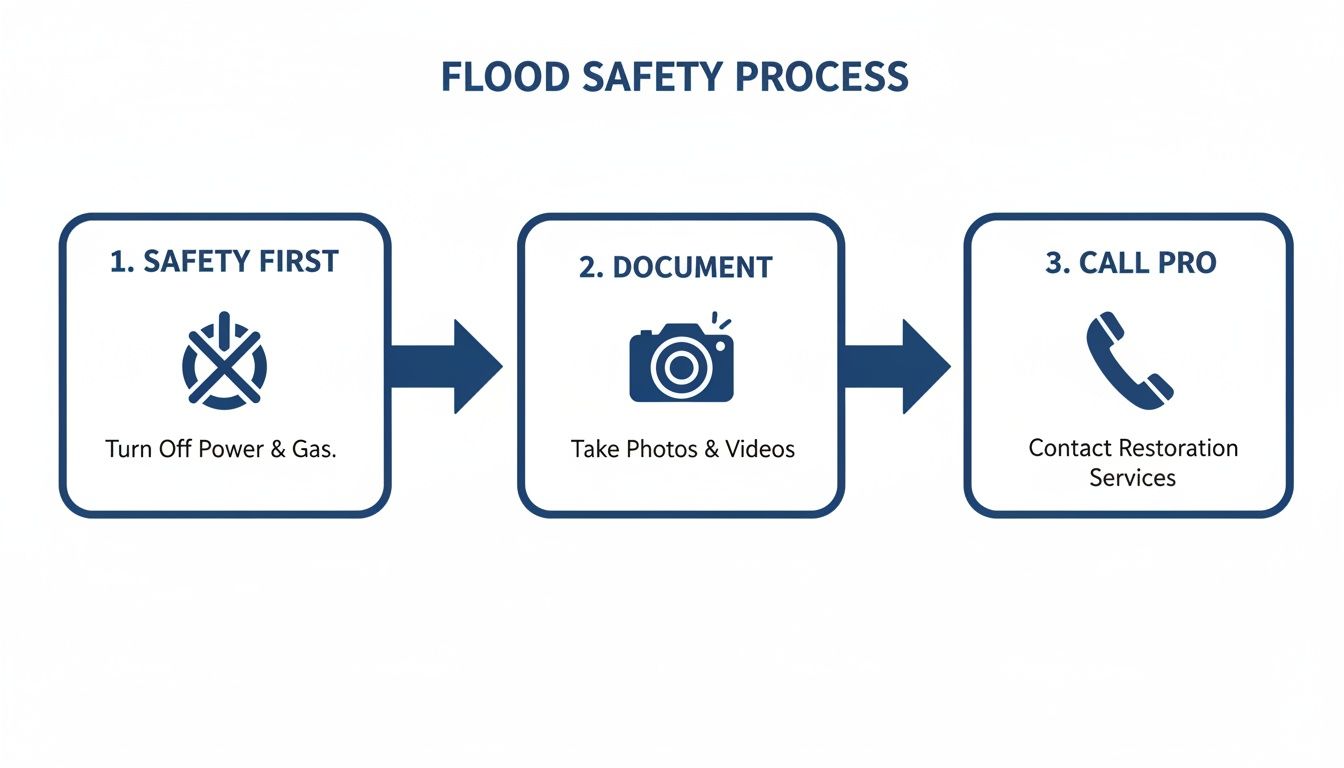
Following this simple process—putting safety first, documenting the damage, and calling for help—sets the stage for a much smoother and more effective professional restoration.
Finally, the team conducts a final inspection. They don't just guess if it's dry; they use moisture meters and sometimes thermal imaging cameras to verify that every part of the property has returned to its normal, pre-flood moisture levels. The job is only truly done when these scientific readings give the all-clear, leaving you with a safe, dry, and clean home.
Stopping Mould Before It Starts
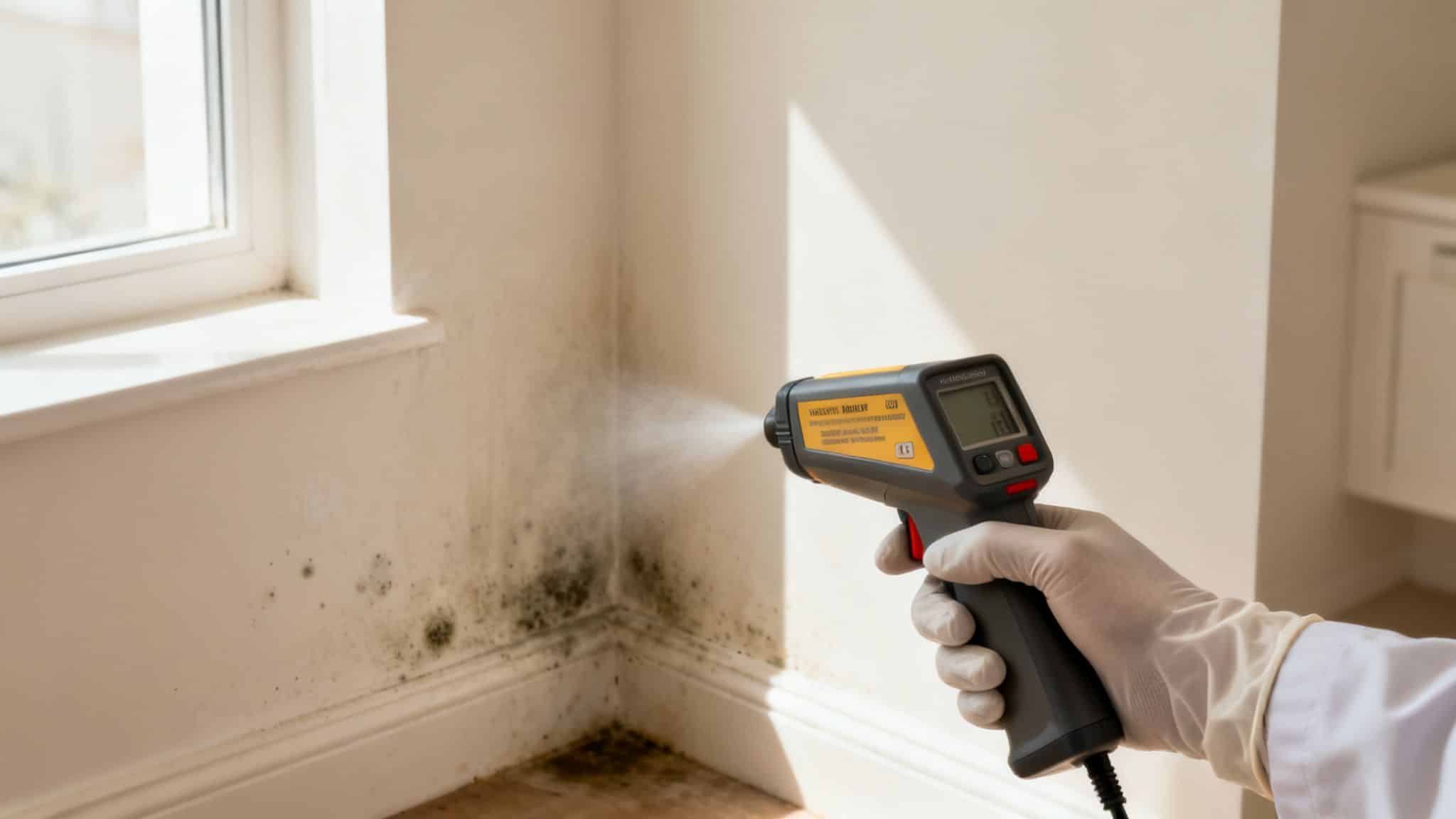
Once the floodwaters are gone, the real fight often begins. Water might recede, but it leaves behind the perfect conditions for a silent, persistent invader: mould. In Melbourne's climate, where humidity can be a constant battle, mould doesn't need much of an invitation to take hold. Spores can colonise damp plasterboard, timber framing, and carpet underlay in as little as 24 to 48 hours.
This isn't just about ugly black spots on the wall. Mould is an organism that actively feeds on organic materials, which means it can slowly weaken the structural integrity of your home. Worse still, it pumps microscopic spores into the air you breathe, triggering everything from asthma and allergies to serious respiratory infections.
The Enemy Within Your Walls
Not all mould is the same, but several common types love setting up shop in water-damaged Melbourne homes. You might run into Aspergillus, Penicillium, or the one everyone’s heard of, Stachybotrys chartarum—the infamous "black mould." While they all pose different risks, none of them are welcome.
Here's the most important thing to remember: any visible mould after a flood is just the tip of the iceberg. It signals a much deeper moisture problem that needs a professional solution. Just wiping the surface with bleach is like pulling the leaves off a weed; the roots are still there, and it will absolutely grow back.
Professional flood damage restoration isn't just about drying things out. It's about creating an environment so hostile to mould that its spores have nothing to eat and nowhere to grow.
Professional Strategies for Mould Prevention
Stopping mould before it even gets a chance is a science, and it all comes down to speed and precision. Technicians handling flood damage restoration Melbourne jobs don't just guess when a room is dry. They use advanced gear and proven methods to hunt down and eliminate every last bit of excess moisture.
The game plan involves a few key steps:
Rapid Drying: This is priority number one, no question. Industrial-grade air movers and dehumidifiers are set up to create a powerful drying vortex, pulling moisture from deep inside walls, floors, and structural timbers.
Hitting Dry Standards: A technician will use a moisture meter to get a reading from an unaffected, dry part of your house. This becomes the "dry standard." The job isn't done until every single water-affected area meets or beats that target.
Applying Anti-Microbial Treatments: Especially when dealing with contaminated water (Category 2 or 3), professionals will apply specialised anti-microbial agents. Think of it as an insurance policy—it neutralises any existing spores and stops new ones from growing, adding a vital layer of protection.
Getting a professional mould assessment in Melbourne is a smart first step if you're worried about hidden contamination. It helps map out the true extent of the problem.
Why You Need a Certified Technician
Trying to tackle a significant mould problem on your own is not just a bad idea—it can be downright dangerous. If you disturb a large mould colony without the right safety measures, you could release millions of spores into your home, spreading the contamination and putting your family's health at risk.
Certified professionals follow strict industry standards for a good reason. They know exactly how to:
- Establish Containment: They’ll use heavy plastic sheeting and negative air pressure machines to completely seal off the contaminated area. This prevents spores from escaping and spreading to other parts of your home.
- Use Proper PPE: You’ll see technicians in full personal protective equipment (PPE), including respirators, goggles, and gloves. This is non-negotiable for protecting them from inhaling harmful spores.
- Safely Remove Materials: Porous materials like plasterboard and insulation are often impossible to salvage once mould has taken root. Professionals know how to safely cut out, bag, and dispose of these materials according to regulations.
- Perform HEPA Filtration: High-Efficiency Particulate Air (HEPA) vacuums and air scrubbers are used to capture microscopic spores from the air and surfaces, leaving the area truly clean.
At the end of the day, effective mould prevention is one of the most critical parts of any flood restoration project. It’s what turns your home from a damp, hazardous space back into a safe, healthy place to live.
Navigating Your Flood Damage Insurance Claim
After the initial shock of a flood subsides, a whole new challenge surfaces: dealing with your insurance company. It’s a process that can feel confusing and downright overwhelming, but getting your head around the steps and knowing your rights is the key to a successful claim.
First things first, dig out your insurance policy. You need to know exactly what you’re covered for. In Australia, the standard definition of a "flood" usually means water escaping from a natural source like a river or lake. But what if the damage came from a burst pipe, a blocked stormwater drain, or runoff from a massive downpour? These are often classified differently, and your coverage can change in a big way.
Flood Water vs Storm Water: Unpacking Your Policy
It sounds like a tiny detail, but the language your insurer uses is critical. The difference between “flood damage” and “stormwater damage” can be the reason a claim gets paid or denied.
- Flood Damage: This is the big one. It typically refers to water that has overflowed from a natural source like a river, dam, or creek, covering land that’s normally dry.
- Stormwater Damage: This is usually defined as damage from heavy rainfall and runoff that the local drainage systems just can’t cope with.
- Escape of Liquid: This is another common clause that covers damage from internal sources—think a burst plumbing pipe or a hot water system that’s given up the ghost.
Grab your Product Disclosure Statement (PDS) and read it carefully. If you’re stuck on the terminology, don’t guess. Ask your insurer for a clear explanation in writing. Knowing what your policy covers from day one will save you major headaches later on.
Your Role in a Successful Claim
While your insurer has a process to follow, you play a massive part in making sure your claim is handled fairly and quickly. Your most powerful tool? Meticulous documentation. Those photos and videos you took right after the flood are your primary evidence, but it doesn’t stop there.
Keep a detailed communication log. Every single time you speak to someone from the insurance company—an adjuster, a claims manager, anyone—take notes.
Record the date, time, the name of the person you spoke with, and a summary of what was discussed. This creates a clear timeline of your interactions and can be invaluable if disputes or delays arise. An organised record shows you are serious and helps hold everyone accountable.
Effectively navigating your insurance claim for flood damage is essential to securing the settlement you deserve. Detailed evidence and clear communication are your best strategies for a positive outcome.
How a Restoration Company Becomes Your Best Ally
This is where a professional flood damage restoration Melbourne company becomes so much more than a cleanup crew. They become a vital partner in your insurance claim. A reputable restoration company knows exactly how to document damage in a way that insurers understand and accept.
They provide the hard, data-driven reports that validate every part of your claim.
- Initial Damage Assessment: They’ll create a detailed report outlining how far the water has spread, the category of water involved (clean, grey, or black), and the immediate scope of work needed.
- Moisture Mapping: Using advanced gear like thermal imaging cameras and moisture meters, they create a map of all affected areas. This proves which materials are wet—even if they look dry to the naked eye—and justifies the need for professional drying or removal.
- Drying Logs: They keep daily records of temperature, humidity, and moisture content readings. This scientific data proves the structure is being dried to industry standards, which is non-negotiable for preventing mould and satisfying your insurer.
- Itemised Invoicing: Their final bill will clearly list every service performed, from water extraction and removing damaged materials to drying equipment rental and sanitisation.
This level of professional documentation takes all the guesswork out of the equation. It gives your insurer the independent, third-party validation they need to process your claim efficiently, helping you sidestep the common pitfalls that lead to frustrating delays or unfair denials.
How To Choose the Right Restoration Company
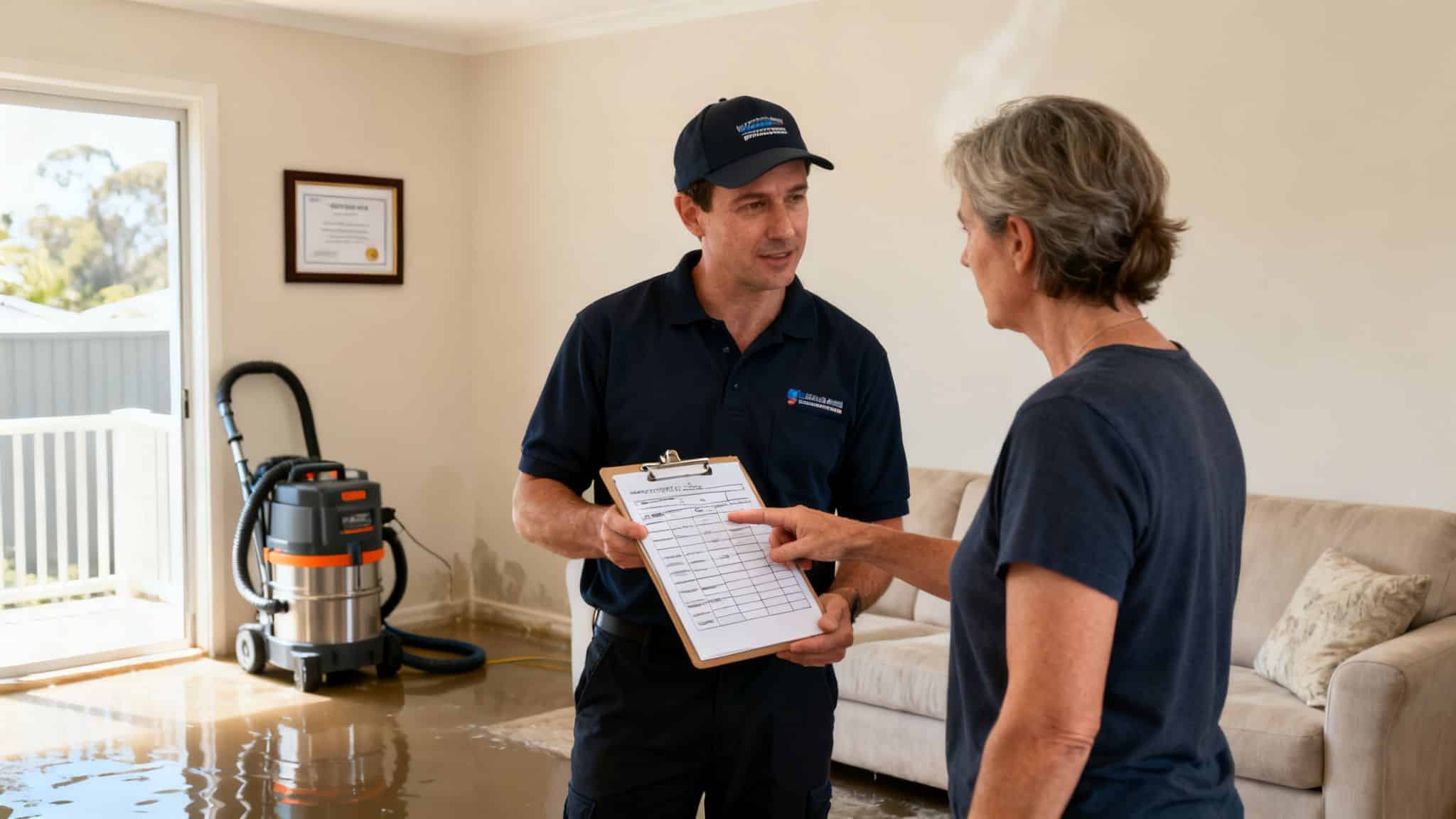
When your home is flooded, the pressure to act fast is immense. But in that chaos, the decision you make about which company to hire for your flood damage restoration Melbourne project is one of the most critical you'll face. The difference between a certified, professional team and a cut-rate operator is huge—it’s the difference between a safe recovery and a future plagued by hidden moisture, structural rot, and dangerous mould.
Making a confident choice starts with knowing what to look for. Think of it like hiring a specialist surgeon for your home; you wouldn't pick just anyone. You need a qualified expert with the right tools, a proven track record, and a transparent approach. Rushing this decision can cost you thousands more down the track when the initial job isn't done right.
Look for IICRC Certification
First things first: check for IICRC certification. This is the gold standard. The Institute of Inspection, Cleaning and Restoration Certification is the global, independent body that sets the industry standards. When you see that IICRC badge, it means the firm and its technicians have gone through rigorous training and passed exams on the science of water damage restoration.
This certification is your guarantee that the company knows the proper procedures for:
- Water extraction and drying science: They understand how to create a controlled drying environment, not just blow air around and hope for the best.
- Mould remediation protocols: They follow strict safety standards to contain and remove mould without cross-contaminating your home.
- Health and safety standards: They’re trained to handle contaminated water (Category 2 and 3) safely and effectively.
Hiring an uncertified team is a massive gamble. They might miss hidden moisture, leading to severe secondary damage that your insurance likely won’t cover if proper industry standards weren't followed.
Verify Their Insurance and Licencing
This one is completely non-negotiable. Any reputable restoration company must have comprehensive public liability insurance. This is what protects you and your property in the unlikely event that something goes wrong during the restoration. Don't just take their word for it—ask to see a current Certificate of Currency.
A professional outfit will have zero problems showing you this documentation. If a company hesitates, makes excuses, or gets defensive, consider it a giant red flag and walk away. This simple check ensures you aren't left holding the bill for any accidents or further damage.
Ask About Their Equipment
The quality of a company’s gear directly impacts how quickly and effectively they can get your home dry. A professional team will show up with modern, industrial-grade equipment, not just a few fans they picked up from the local hardware store.
Ask them straight up what equipment they use. You should hear them talk about truck-mounted water extractors, commercial-grade dehumidifiers, high-velocity air movers, moisture meters, and thermal imaging cameras. This advanced tech is essential for pulling out the maximum amount of water and finding those hidden moisture pockets the naked eye just can't see.
This is especially critical given Melbourne's history with severe weather. The devastating flood of 1934 saw the Yarra River swell into a massive lake, damaging around 400 buildings and leaving 6,000 people homeless after torrential rains and hurricane-force winds. That disaster underscores the sheer power of water and why modern, powerful equipment is so vital for effective recovery today. You can read about Melbourne's 1934 flood to get a sense of its impact.
Red Flags to Watch Out For
Just as important as knowing what to look for is knowing what to avoid. Unscrupulous operators often prey on homeowners during a crisis. Keep an eye out for these warning signs:
- Vague Quotes and High-Pressure Sales: A pro will give you a detailed, itemised quote after a thorough on-site inspection. Be wary of anyone giving you a vague price over the phone or pressuring you to sign a contract on the spot.
- "Too Good to Be True" Pricing: If a quote comes in dramatically lower than others, be suspicious. It often means they're cutting corners, using subpar equipment, or aren't properly insured.
- Lack of Online Presence or Reviews: A legitimate business will have a professional website, clear contact details, and a history of customer reviews. A non-existent digital footprint is a major warning sign in this day and age.
By taking a moment to vet your options and ask the right questions, you can confidently choose a trustworthy flood damage restoration Melbourne company. It's a decision that will ensure your property is restored safely and effectively to the highest industry standards, giving you much-needed peace of mind during a stressful time.
Your Top Questions About Flood Restoration, Answered
When your home is underwater, it’s natural to feel overwhelmed by questions and uncertainty. Getting clear, straightforward answers is the first step toward making smart decisions under pressure. Let's tackle some of the most common questions we hear from Melbourne residents dealing with the aftermath of a flood.
How Long Does Flood Restoration Take?
This is usually the first thing on everyone's mind, but the timeline for a professional flood damage restoration Melbourne project really depends on the scale of the damage. There's no one-size-fits-all answer.
A minor leak that’s contained to a single room might be sorted in 3 to 5 days. On the other hand, a severe flood that’s worked its way through multiple levels of your home could take several weeks to resolve properly.
Several key factors will shape the timeline:
- The extent of the damage: How many rooms are affected? How high did the water get?
- The type of water: Clean water from a burst pipe (Category 1) is a much quicker job than dealing with contaminated black water from a sewage backup (Category 3), which needs serious decontamination.
- The materials involved: Porous materials like plasterboard, carpet, and insulation are like sponges—they soak up a lot of water and take much longer to dry, if they don't need to be ripped out completely.
- Local weather: Melbourne’s humidity plays a big part. A damp, humid week will slow down evaporation, while a dry, breezy one can speed things up.
Once a professional team is on-site, they’ll be able to give you a much more accurate estimate after assessing the situation firsthand.
Can My Flooded Carpets Be Saved?
Whether or not your carpets can be salvaged comes down to one critical factor: the source of the floodwater. It's a matter of hygiene and safety, plain and simple.
Here’s how to think about it:
- If the flood came from a clean water source—like a burst pipe inside your home or an overflowing bathtub—there's a very good chance the carpet can be saved. Professionals can extract the water, deep clean and sanitise the carpet, and use specialised drying gear to bring it back to life.
- If the flood involved grey or black water, it's a different story. Water from a sewage backflow or overland flooding that’s mixed with dirt and ground contaminants means the carpet is almost always a lost cause. This water is loaded with dangerous bacteria that can't be safely removed from porous carpet fibres and underlay. For your health, it must be discarded and replaced.
Is It Safe for Me to Stay in My House During Restoration?
Your family's safety is always the number one priority. The decision to stay put or find temporary accommodation really hinges on the severity and nature of the flood damage.
For minor water damage that’s isolated to a small area, you might be able to stay in an unaffected part of the house. However, for anything significant—especially floods involving contaminated water or those requiring heavy-duty drying equipment—it’s generally best to relocate for a while.
The professional drying process uses industrial-grade air movers and dehumidifiers. They’re loud and create a huge amount of air movement. More importantly, if the water is contaminated, staying in the house could expose you to harmful bacteria. Always follow the advice of your restoration project manager—they’ll guide you on what’s safest.
Why Is Professional Equipment So Important?
It’s easy to think a few fans from Bunnings and a shop vac will get the job done, but professional restoration equipment is on another level entirely. The difference is all about power and precision.
Industrial-grade dehumidifiers can pull dozens of litres of moisture out of the air every single day. High-velocity air movers create a powerful, controlled airflow that forces evaporation from deep within materials like timber frames and concrete slabs.
This kind of performance is absolutely essential in a city like Melbourne, which is no stranger to extreme weather. The storms in June 2021, for example, dumped over 270mm of rain on the Dandenong Ranges, leading to severe flooding that damaged nearly 400 houses. With Melbourne Water identifying 894,000 properties in flood-prone areas and regional flood damages hitting an estimated $735.4 million, you can see why powerful, fast-acting equipment is non-negotiable for a real recovery. You can learn more about Melbourne's history with extreme weather events to understand the local risks.
Without this specialised gear, moisture gets trapped. That hidden dampness becomes the perfect breeding ground for mould and can lead to long-term structural rot. It’s the scientific approach that guarantees your home is returned to a safe, truly dry state.
When floodwaters strike, you need a team you can trust to act fast and get the job done right. At Right Price Carpet Cleaning, we provide rapid, professional flood damage restoration services across Melbourne. Our certified technicians use state-of-the-art equipment to extract water, dry your property, and prevent mould growth, helping you get back on your feet sooner. For a reliable response and a 100% satisfaction guarantee, get in touch with our team today at https://rightpricecarpetcleaning.com.au.
Recent Comments