



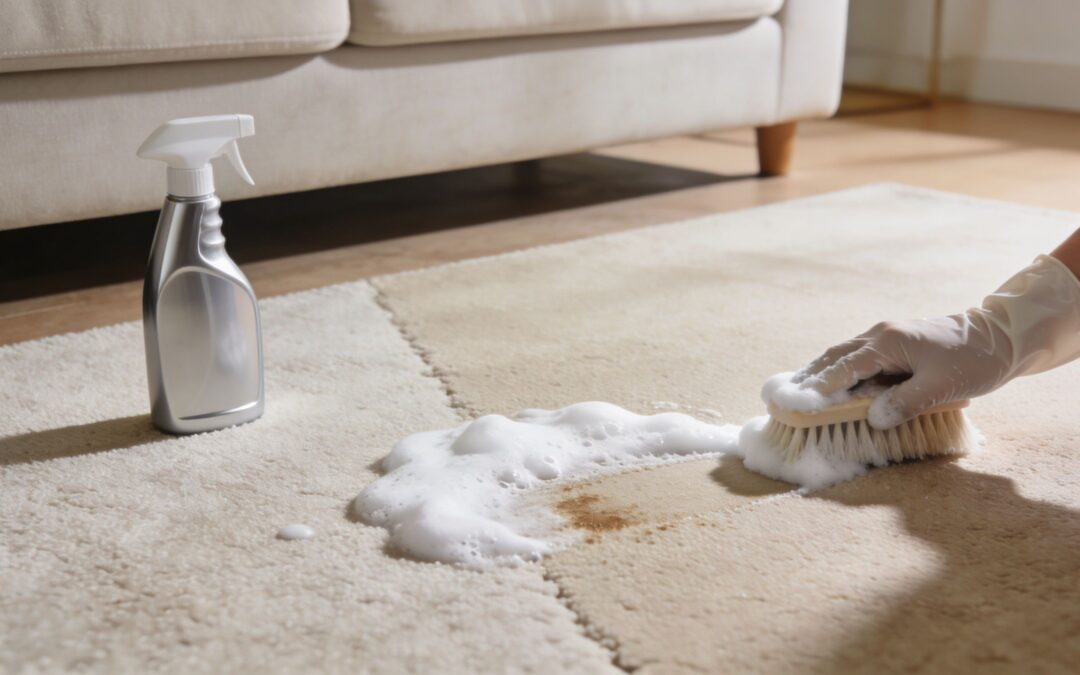
Carpet foam cleaning is a low-moisture, surface-level method that uses foam to trap dirt so it can be vacuumed away. It’s best for light, interim cleaning, but it doesn’t have the deep extraction power of professional steam cleaning for embedded grime, allergens, or heavy soiling.
If you’re staring at a can of carpet foam in the supermarket aisle, that’s usually the core question. Will this freshen the carpet, or will it leave you with sticky fibres and the same stain still staring back at you?
The honest answer sits somewhere in the middle. Foam cleaning has a place. It can help with small touch-ups, recent marks, and in-between maintenance when you don’t want to soak the carpet. But it’s often oversold. A lot of homeowners expect a deep clean from a product that’s really designed for the top layer of the pile.
What Is Carpet Foam Cleaning Anyway
You see a spray can or aerosol bottle marked “carpet cleaner”, and the promise sounds simple. Spray, scrub, dry, vacuum. Clean carpet. That simplicity is why carpet foam cleaning appeals to renters, busy households, and anyone trying to improve a room quickly before guests arrive.
In practical terms, foam cleaning is a low-moisture cleaning method. The product creates a light foam that sits on and around the upper carpet fibres. You work it in with a cloth, brush, or applicator head, let it dry, and then vacuum out the dried residue along with some of the loosened soil.
What it is good at
Foam works best when the problem is limited and close to the surface. Think of:
- Fresh minor spills that haven’t sunk deep into the backing
- Small traffic marks near a doorway or beside a sofa
- Interim freshening between proper professional cleans
- Spot treatment when dragging out bigger equipment doesn’t make sense
That’s the right lane for foam. It’s a touch-up method, not a reset button for the whole carpet.
Why people get confused about it
Part of the problem is that clear guidance on this topic is hard to find. As noted in this discussion of the information gap around foam cleaning versus truck-mounted steam cleaning, homeowners and property managers in Melbourne often lack region-specific comparisons on cost-benefit, drying times, and whether foam deals with allergens and embedded dirt as effectively as hot water extraction.
That gap matters because marketing tends to blur two very different outcomes. A carpet can look better after foam cleaning without being thoroughly clean. The top fibres brighten up, the room smells fresher, and the obvious mark may fade. But the fine grit, tracked-in soil, oils, and residue lower in the pile can still be there.
Practical rule: If the carpet only needs a cosmetic lift in one small area, foam can be useful. If you want hygienic deep cleaning, it’s the wrong tool.
Think of it as maintenance, not restoration
A simple analogy helps. Foam cleaning is like wiping the kitchen bench after cooking. It improves the surface straight away. It doesn’t mean you’ve deep-cleaned the oven.
That distinction matters for family homes, rentals, and properties with pets. If the carpet feels stiff, smells musty, looks grey in walkways, or has old staining, foam usually won’t solve the actual problem. It may only soften the appearance for a short time.
How Foam Lifts Dirt from Carpet Fibres
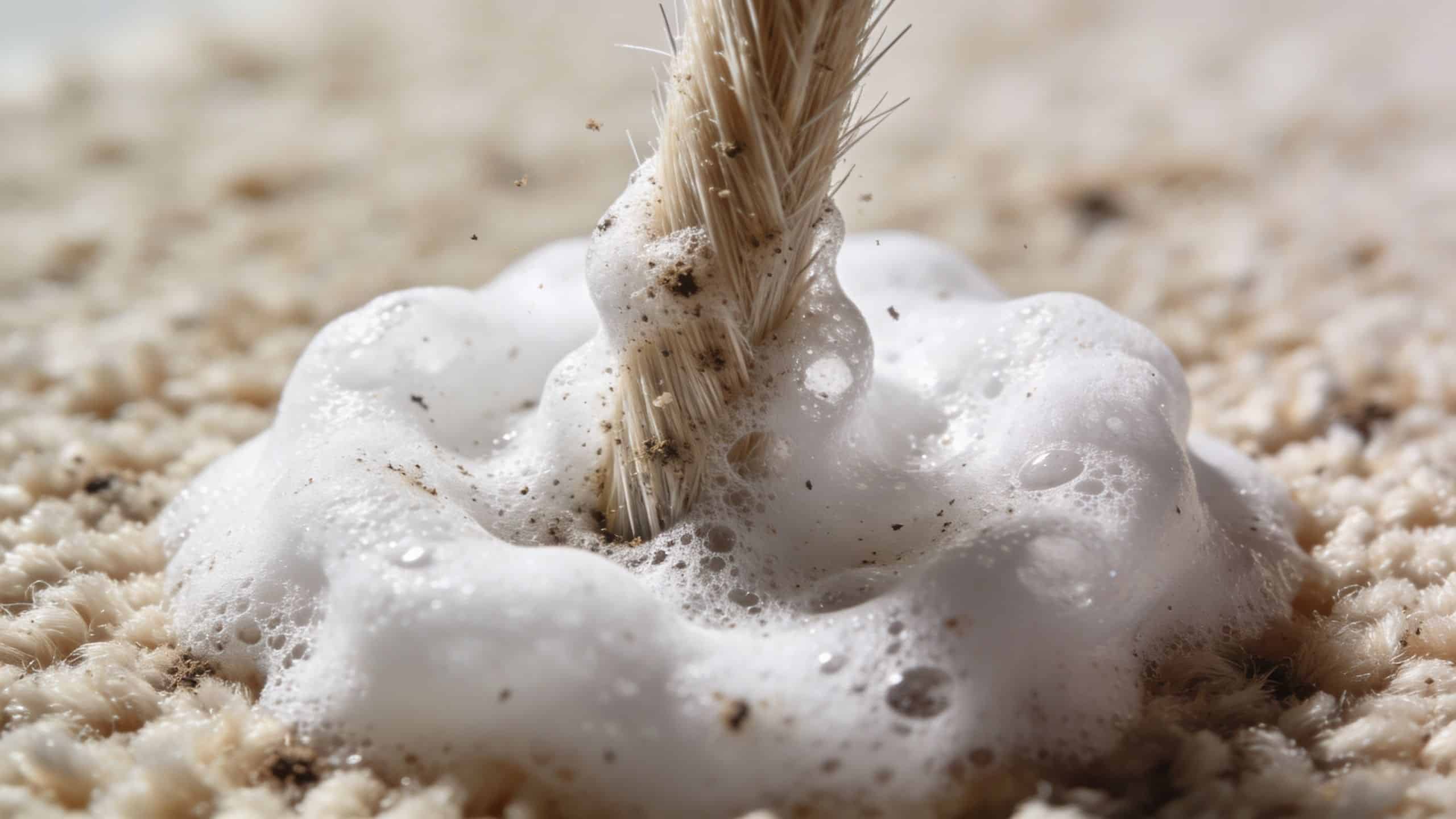
Foam cleaning makes more sense once you stop thinking of it as “soap” and start thinking of it as a temporary dirt carrier. The easiest comparison is shaving cream. It sits on the surface, spreads easily, and gives you contact without flooding everything underneath.
Stage one application
You apply the foam to the affected area, usually by spray can, pump bottle, or a built-in brush applicator. The foam spreads across the top of the pile and lightly wets the fibre surface without saturating the carpet backing.
This is one reason people like it. There’s less moisture to manage than with a wet wash. On suitable carpets, that can mean less risk of over-wetting from DIY use.
Stage two soil capture
As you gently brush or work the product in, the foam surrounds loose soil and oily grime sitting on the outer part of the fibre. That doesn’t mean it reaches ingrained dirt. It means it helps separate and hold what’s near enough to be lifted.
If you’re choosing products, it also helps to understand why a gentler formulation matters. A pH-neutral cleaner for carpet care is generally easier on fibres than harsh solutions that leave the carpet feeling rough or chemically loaded.
Foam does its best work when the soil is light, recent, and near the surface.
Stage three drying and vacuum removal
Once the product has done its job, it needs to dry fully. As it dries, the residue becomes brittle enough to be vacuumed away. Along with that residue goes some of the trapped dirt.
Here’s the part many people miss. If you don’t vacuum thoroughly after drying, you may leave residue behind. That residue can make the carpet feel tacky or crunchy, and it can attract fresh dirt faster than a properly rinsed carpet would.
A simple view of the process looks like this:
| Step | What you see | What’s happening |
|---|---|---|
| Apply | White foam on the carpet | Foam coats the upper fibres |
| Agitate | Light brushing or scrubbing | Soil loosens from the fibre surface |
| Dry and vacuum | Foam disappears after vacuuming | Residue and some captured dirt are removed |
That final stage is why foam cleaning is primarily a surface treatment. There’s no powerful rinse and extraction step pulling contamination out from deeper in the pile.
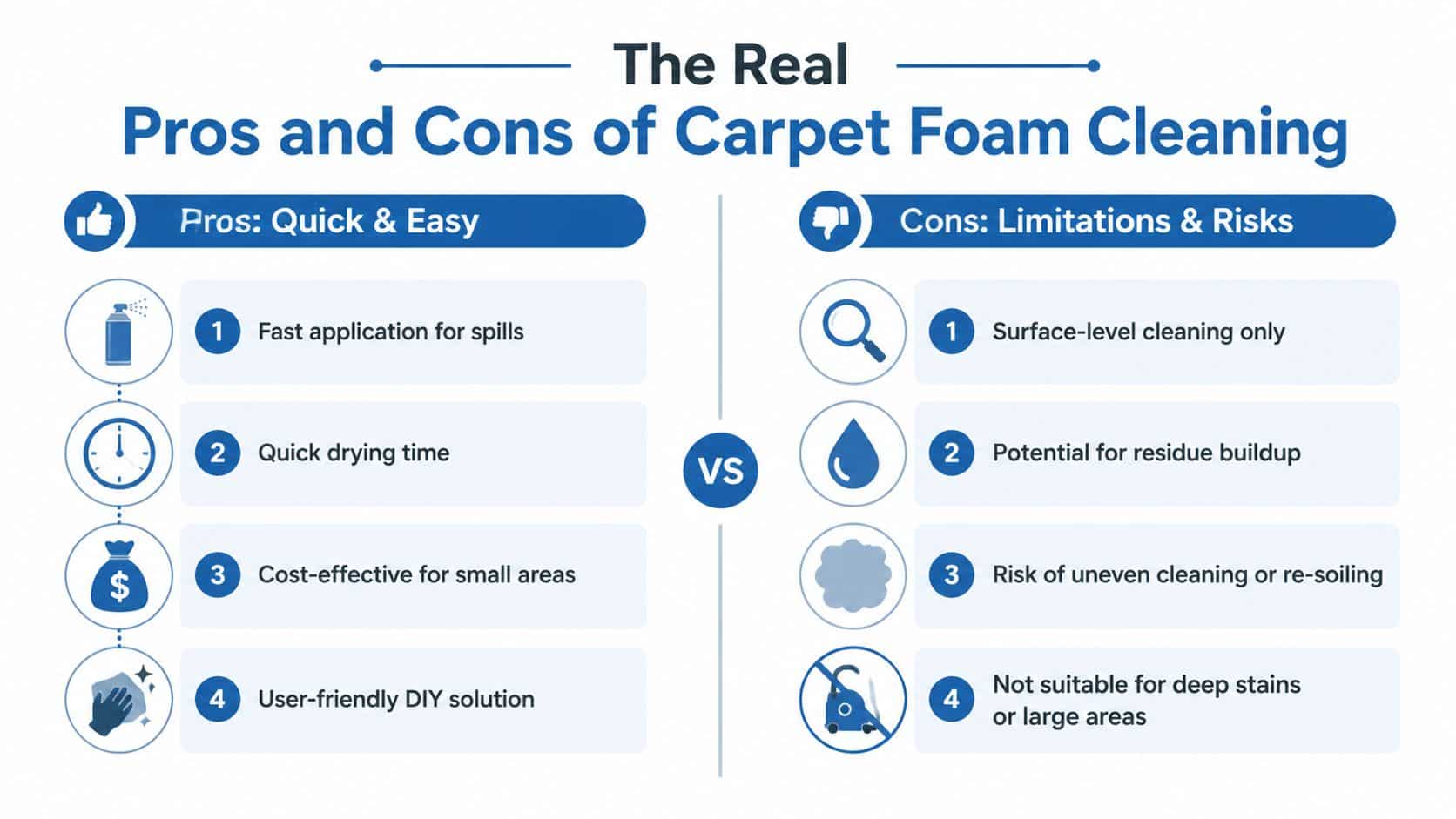
The Real Pros and Cons of Foam Cleaning
Foam cleaning has real advantages. It also has hard limits that professionals run into all the time when a DIY touch-up didn’t go far enough.
Where foam cleaning makes sense
For the right job, foam is convenient.
- Small areas only. If someone drips coffee beside the sofa or tracks in a bit of dirt near the entry, foam can help tidy that section without treating the whole room.
- Low-moisture approach. Some people want a method that doesn’t leave the carpet noticeably wet.
- Easy DIY handling. Most products are simple to buy and simple to use.
- Quick cosmetic improvement. The carpet can look fresher fast, especially if the soiling is light.
Those are all valid reasons to keep a foam product on hand. Used properly, it can be part of a sensible maintenance routine.
Where it falls short
The problems start when people ask it to do the work of a deep-cleaning system.
- It doesn’t flush out deep soil. Sand, fine grit, old spills, and compacted grime lower in the pile usually stay where they are.
- Residue can become the next problem. Too much product, poor vacuuming, or repeated use can leave a film behind.
- Heavy stains often remain. Old drink stains, pet contamination, food oils, and mystery marks generally need more than surface action.
- Large areas turn patchy. You can end up with cleaner spots surrounded by duller carpet, especially in walkways.
The trade-off in plain terms
Foam gives you convenience. It doesn’t give you full extraction. That’s the deal.
What works: a light mark in a bedroom corner, a quick freshen-up before visitors, or an interim clean between professional visits.
What doesn’t: widespread traffic lanes, recurring odours, end-of-lease carpet presentation, or anything that has soaked through.
Another issue is false confidence. A carpet that smells perfumed after foam cleaning can still hold old residue underneath. That matters in homes with kids crawling on the floor, pets re-soiling the same area, or anyone sensitive to dust and stale odours.
So the best way to view foam is this. It’s useful when your goal is appearance improvement on a minor issue. It’s weak when your goal is a thorough clean.
Foam Cleaning vs Professional Steam Cleaning
If you want to judge both methods fairly, compare them by what they’re built to do. Foam cleaning is a surface maintenance method. Truck-mounted steam cleaning is a deep extraction method.
That difference changes everything from soil removal to how the carpet feels afterwards.
Foam Cleaning vs Professional Steam Cleaning at a Glance
| Feature | Carpet Foam Cleaning (DIY) | Professional Steam Cleaning (Truck-Mounted) |
|---|---|---|
| Cleaning depth | Mainly upper fibres and surface soil | Reaches deeper into the pile and extracts suspended soil |
| Allergen and bacteria removal | Limited, because there’s no deep rinse and extraction stage | Better suited to flushing out contaminants through hot water extraction |
| Stain removal efficacy | Best on light, recent, localised marks | Better for heavier staining, traffic areas, and broader restoration |
| Drying time | Usually faster because it uses less moisture | Slower than foam, but professional airflow and extraction improve the result |
| Risk of residue | Higher if over-applied or poorly vacuumed | Lower when the carpet is properly rinsed and extracted |
| Long-term carpet health | Repeated residue and surface-only cleaning can be counterproductive | Better for removing abrasive grit that wears fibres down |
Why the results are so different
Steam cleaning, more accurately called hot water extraction, does two things foam doesn’t do well. It pushes cleaning solution and hot water through the fibre, then pulls that suspended soil back out with strong vacuum recovery.
That extraction step is the heart of the process. Without it, loosened dirt doesn’t necessarily leave the carpet fully. Some of it shifts. Some of it stays. Some of it dries back into the pile.
A truck-mounted system also has another practical advantage. It’s designed for sustained power across whole rooms, not just a small patch. That matters in family homes where hallways, living rooms, and bedroom entries all carry the same wear pattern.
Where foam still has a role
Foam isn’t useless because steam cleaning exists. It’s just a different category of tool.
Use foam when:
- The area is small
- The mark is fresh
- You need a stopgap measure
- You understand the goal is improvement, not deep recovery
Call for extraction cleaning when the carpet has reached the point where appearance, feel, and hygiene all need attention.
What professionals notice straight away
A foam-cleaned carpet often improves visually before it improves physically. That means the fibres may still feel loaded, especially in high-traffic zones. By contrast, after proper extraction, the pile usually feels lighter, less sticky, and less compressed because soil has been removed rather than disguised.
If you want a fuller breakdown of how the professional method works, this guide to truck-mounted professional carpet steam cleaning explains the process in more detail.
The simplest test is under your feet. If the carpet still feels heavy, crunchy, greasy, or flat after cleaning, the soil load probably hasn’t been removed deeply enough.
That’s why foam rarely wins on neglected carpets. It can tidy the surface. It can’t compete with deep extraction when the problem sits further down.
A Guide to DIY Foam Cleaning for Light Touch-Ups
If you’re going to use carpet foam cleaning, use it in the narrow lane where it works. Small area. Mild soiling. Careful application. Good vacuuming afterwards.
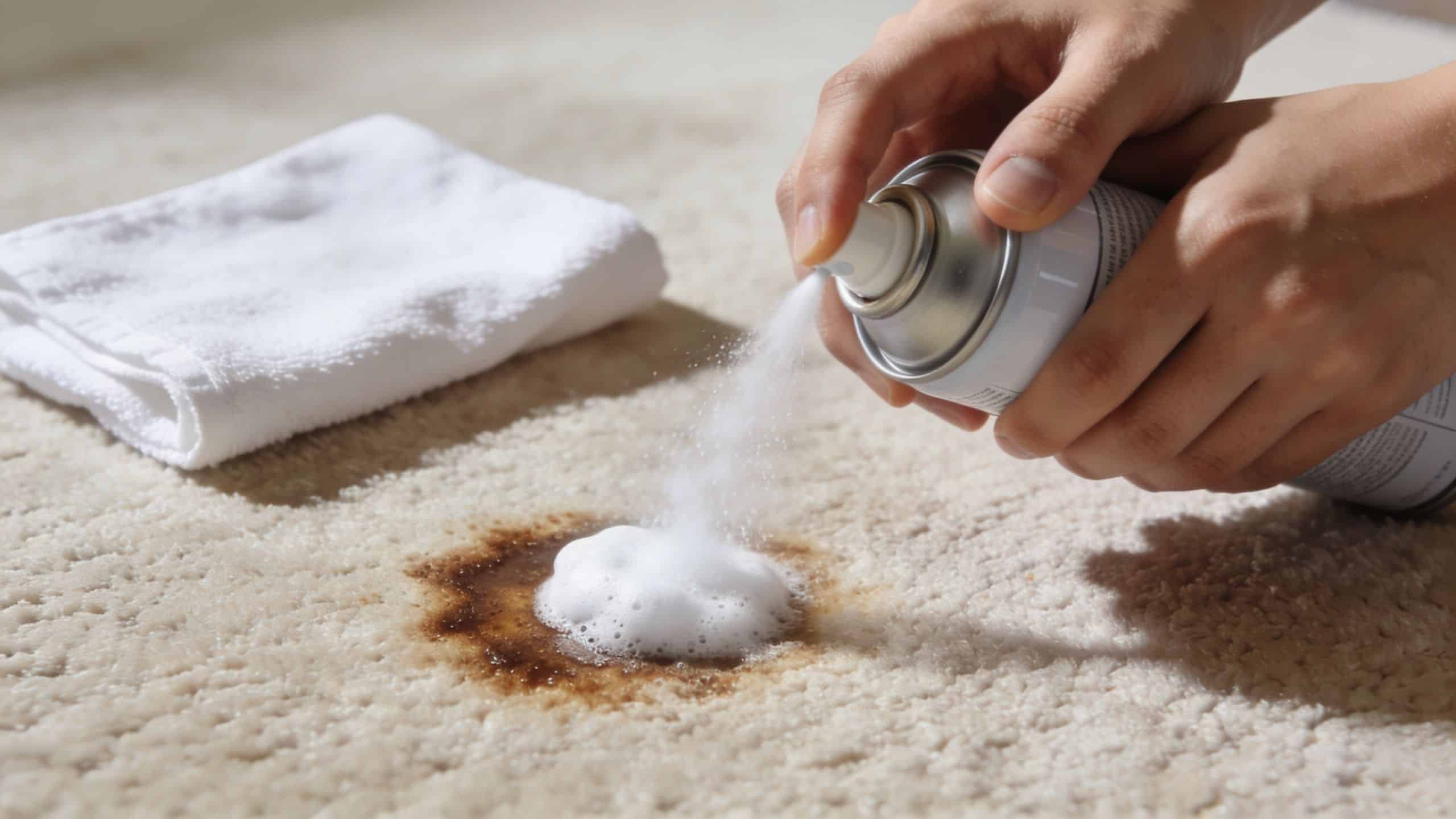
Safe method for minor spots
Vacuum first
Remove loose grit and dust before adding any product. If you skip this step, you can grind dry soil further into the fibres while brushing.Test in a hidden spot
Try the product inside a wardrobe, behind a door, or on an off-cut if you have one. Watch for colour change, texture shift, or ring marks after drying.Apply lightly
Less is better than more. You want enough foam to treat the surface, not enough to soak the carpet.Work it gently
Use a soft brush or clean cloth. Aggressive scrubbing can fuzz the pile, distort the texture, or spread the stain outward.Let it dry fully
Don’t rush the vacuuming stage. If the foam is still damp, you’ll smear residue rather than remove it.Vacuum thoroughly
Go over the area more than once, from different directions if needed.
For extra practical advice on safe at-home methods, this guide to DIY carpet cleaning is a useful reference.
When not to use foam
Some situations need a different method from the start.
- Delicate fibres like wool, silk, or specialty rugs
- Large carpeted areas where patchiness is likely
- Pet urine or any contamination that has soaked below the surface
- Unknown stains that could set, spread, or react badly
- Heavily soiled walkways with dull grey traffic lanes
A DIY foam clean should leave the carpet looking better without changing the texture. If it feels stiff or sticky after drying, too much product stayed behind.
A simple mistake to avoid
Don’t keep reapplying foam to the same mark in one session. That usually adds more residue than cleaning power. If the stain isn’t shifting after a careful first attempt, there’s a reason. It may be older, oil-based, or already sitting in the underlay or backing.
At that point, stop before you create a bigger problem than the original spot.
When to Skip the Foam and Hire a Professional
Some carpets are asking for touch-up cleaning. Others are asking for rescue work. The trick is knowing which is which before you waste time and product.
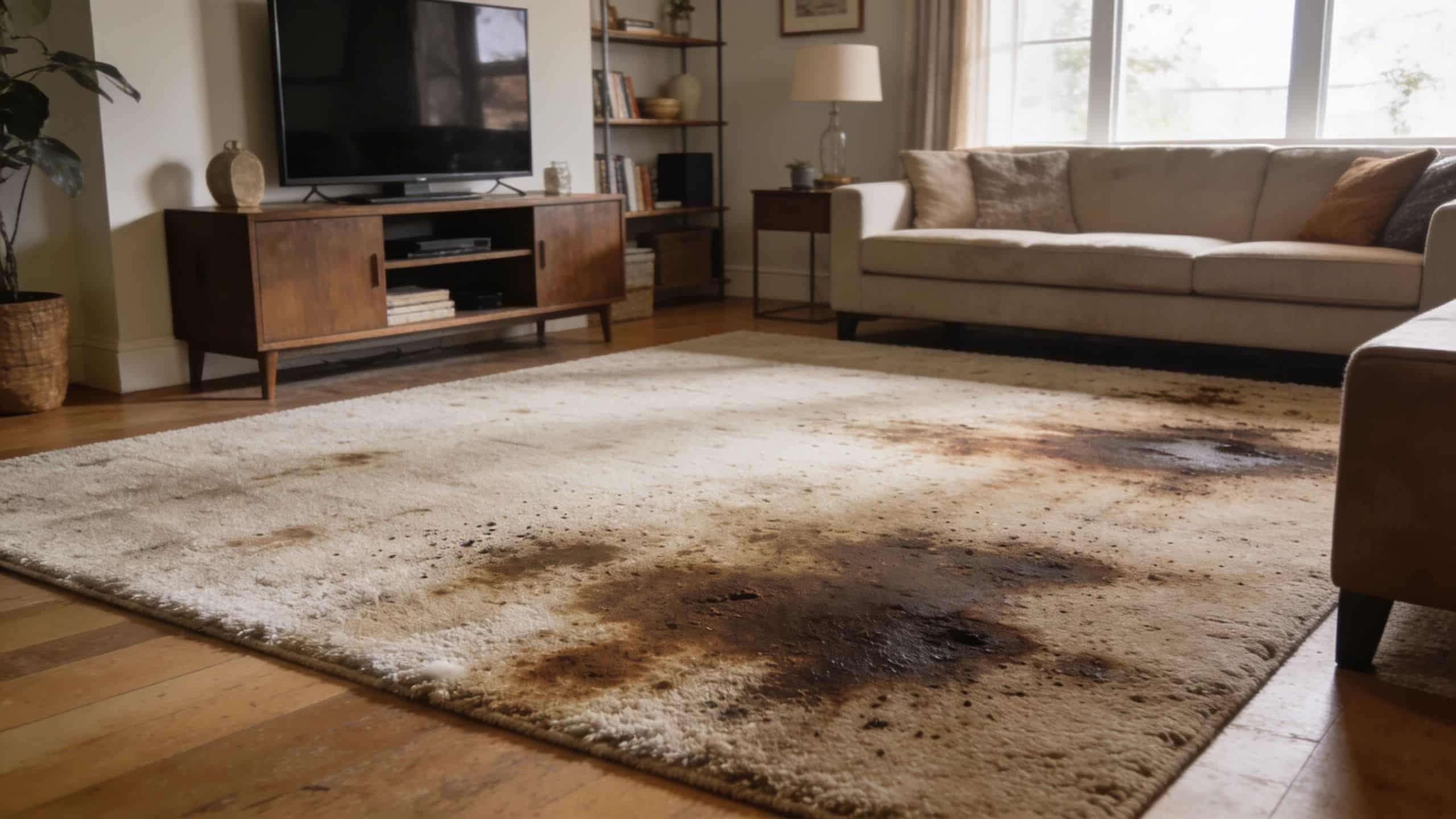
Clear signs foam isn’t enough
Foam is the wrong choice when the issue is bigger than a fresh surface mark.
- End-of-lease presentation. Patch cleaning won’t give a room the even finish property managers usually expect.
- Post-winter mustiness. Surface products can mask odour without removing what’s holding it.
- A newly purchased home. If you’ve just moved in, a proper reset, not a cosmetic once-over, is generally preferred.
- Visible traffic lanes. Those dark pathways need extraction, not just brightening on top.
- Allergy concerns. If the goal is to remove embedded dust and contamination, foam is too limited.
Fibre type matters too
This is especially true for rugs and natural fibres. Some materials don’t respond well to heavy DIY product use or repeated scrubbing. If you’ve got a natural-fibre rug rather than wall-to-wall synthetic carpet, Lewis and Sheron Textiles' rug cleaning tips are a sensible read before you try any off-the-shelf cleaner.
That kind of caution saves a lot of people from creating colour bleed, texture distortion, or tide marks.
Why professional cleaning changes the outcome
A proper professional clean isn’t just “stronger foam” or “more detergent”. The method is different. Deep hot water extraction removes suspended soil, lifts residue, and leaves the carpet in a more reset condition.
That matters for longevity too. Fine grit acts like sandpaper inside carpet fibres. If it stays there, every footstep keeps grinding it in. Removing that abrasive soil is one of the best things you can do for how the carpet looks and how long it lasts.
For Melbourne homes, renters, and commercial spaces, the practical choice is usually simple. Use foam for the occasional minor touch-up if the carpet is otherwise in good shape. Bring in a professional when the carpet needs even results, odour treatment, deeper soil removal, or a proper fresh start.
Foam has a place. It’s just not the place many product labels imply.
If your carpet needs more than a surface tidy-up, Right Price Carpet Cleaning offers truck-mounted steam cleaning across Melbourne for homes, rentals, offices, and high-traffic spaces. It’s a straightforward option when you want a deeper clean, better stain and odour removal, and a result that feels clean underfoot.
Recent Comments