



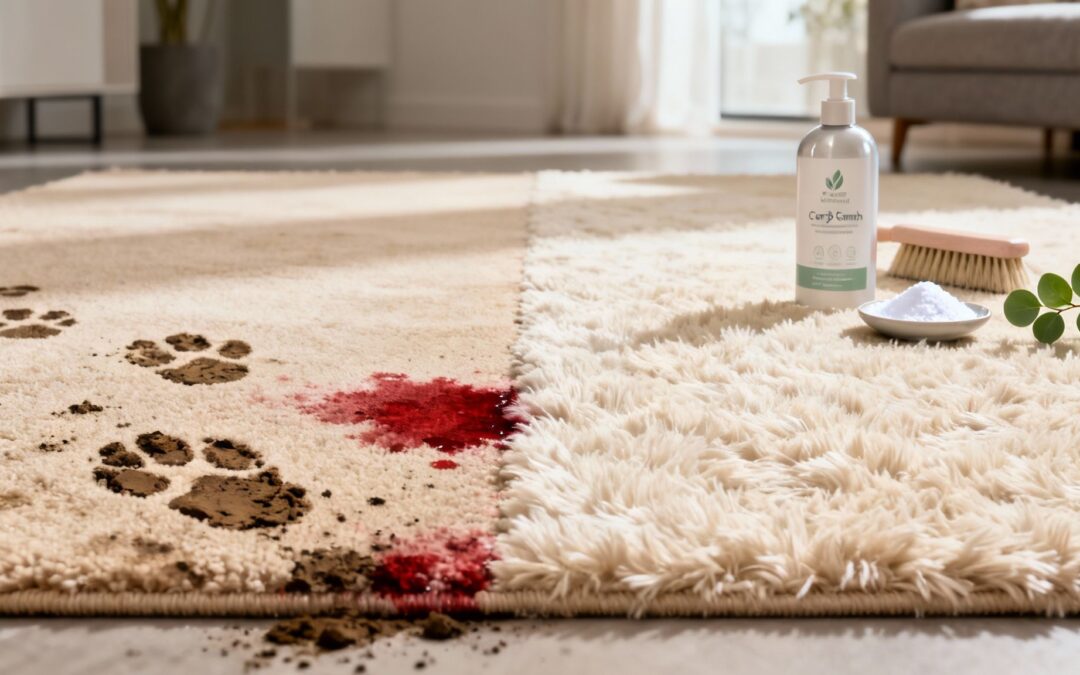
That sinking feeling when a glass of red wine tips over or a mug of coffee slips from your grasp is universal. One minute your carpet is perfect, the next, a stubborn stain is staring back at you.
Whether it's muddy paws, a dropped plate of food, or an unfortunate pet accident, carpet stains are a frustrating part of life. But winning the battle against them is easier than you think. This guide is your complete roadmap, moving beyond generic advice to dive deep into what really works.
We’ll show you how to choose the right carpet shampoo for any spill imaginable. That means breaking down how different ingredients target specific messes, matching the right formula to your carpet’s fibres, and walking you through the exact techniques professionals use for flawless results.
Think of this as your playbook for restoring your carpet's original beauty.
Tackling Stains with Confidence
Dealing with stains quickly and correctly is the secret. In busy Melbourne homes, spills from coffee, ink, or pets affect 62% of households every year. But here’s the good news: using a specialised shampoo designed for Aussie carpets can remove up to 90% of fresh stains if you get to it within the first hour. You can discover more insights about effective carpet cleaning on TradeHeroes.com.au.
This guide is here to give you that confidence, breaking down the science without the confusing jargon. We’ll cover:
- Understanding the Ingredients: Learn what makes a shampoo effective, from dirt-lifting surfactants to stain-destroying enzymes that literally eat away at organic messes.
- Matching Shampoo to Stain: Find out why a greasy food spill needs a completely different approach than a coffee stain.
- Step-by-Step Techniques: Follow a proven process for application, dwell time, and rinsing to avoid the common mistakes that can make stains worse.
- Safe and Eco-Friendly Options: Discover formulas that are tough on stains but gentle on your family, pets, and the environment.
By the end, you’ll be armed with expert knowledge to handle any spill like a pro and keep your floors looking pristine. Let’s get started.
Of course. Here is the rewritten section, crafted to sound completely human-written and natural, following all your specific instructions and matching the provided examples.
What’s Actually in a Carpet Shampoo?
Ever grabbed a bottle of carpet cleaner, looked at the ingredients, and wondered what any of it actually means? An effective carpet shampoo isn't just soapy water; it's a specialised formula where each component has a specific job. Think of it less like magic and more like a carefully assembled team designed to dismantle, lift, and escort stains right out of your carpet.
Just scrubbing a stain with a wet cloth often just pushes it deeper or spreads it around. The right shampoo, however, gets to work on a chemical level. Once you understand what the key players are—surfactants, enzymes, and solvents—you can glance at any product label and know instantly whether it’s the right tool for the job. It puts you in the driver's seat, letting you choose based on science, not just marketing hype.
The Power Lifters: Surfactants
At the core of almost any cleaning product, you'll find surfactants. It’s short for "surface active agents," and their main role is to make water… well, wetter. They break down water's natural surface tension, letting it penetrate stains and fibres far more effectively.
Imagine a greasy food stain clinging stubbornly to a carpet strand. A surfactant molecule has a clever two-part structure: one end loves water (hydrophilic), while the other is drawn to oil and dirt (hydrophobic). This allows them to swarm around grime, pry it loose from the carpet fibre, and suspend it in the water so it can be easily washed away. They are the essential heavy lifters in any shampoo.
The Demolition Crew: Enzymes
For those all-too-common organic stains—think pet urine, red wine, food spills, or blood—surfactants often need backup. This is where enzymatic cleaners really come into their own. Enzymes are basically proteins that speed up chemical reactions, breaking down complex messes into smaller, simpler bits.
Think of enzymes as a microscopic demolition crew, each with its own specialisation. Protease enzymes are engineered to tackle protein-based stains like pet accidents, while amylase enzymes go after starches from spilt food. This targeted breakdown makes the stain much easier for the surfactants to grab and remove.
This biological action is the secret behind a truly great pet stain remover. It doesn't just clean what you can see; it neutralises the underlying organic matter that causes those lingering odours to return.
The Grease Cutters: Solvents
Then you have the really tough customers: oil-based stains. Things like ink, grease, tar, or makeup just laugh at water. Since they don't mix, a standard water-based cleaner won't make a dent. That’s where solvents step in.
Solvents are designed to dissolve other substances. In a carpet shampoo, they are specifically chosen to break down oily and greasy compounds, turning them into a liquid form that can finally be cleaned away. It's why a formula meant for a high-traffic hallway or a garage will often have a strong solvent to deal with all the tracked-in grime.
To make it even clearer, here’s a quick guide to what each of these key ingredients does.
Key Carpet Shampoo Ingredients and Their Functions
This table breaks down the main active components in carpet shampoos, so you can quickly see what they do and which stains they work best on.
| Ingredient Type | Primary Function | Best For Stains Like |
|---|---|---|
| Surfactants | Reduce surface tension, lift and suspend dirt. | General dirt, light grime, and most common water-based spills. |
| Enzymes | Break down complex organic molecules. | Pet urine, vomit, blood, food, grass, and other organic matter. |
| Solvents | Dissolve oils, greases, and other non-water-soluble substances. | Ink, oil, tar, lipstick, grease, and other stubborn oily stains. |
By checking the label for these components, you can find the perfect carpet shampoo for whatever mess you're facing. A formula loaded with enzymes is your best bet for pet accidents, while one with powerful solvents is what you need for those greasy workshop stains. A little bit of knowledge goes a long way in picking the right product every single time.
How to Match the Right Shampoo to Your Stain
Trying to tackle a stubborn stain with the wrong carpet shampoo is like using a screwdriver to hammer in a nail—you might make some progress, but you’ll probably just make a bigger mess. A cleaner that works miracles on a coffee spill could be completely useless against a greasy footprint. The real secret to getting rid of stains for good is matching the right formula to both the stain and your carpet.
This isn’t about guesswork; it's about understanding what you're up against. Most household spills fall into a few key categories, and each one needs a different chemical approach to break it down. Once you know what kind of stain you have, you can pick a shampoo that will actually work, without the risk of damaging your carpet fibres.
Decoding Different Stain Types
Almost every stain you'll come across fits into one of three main groups. Figuring out which category your stain belongs to is the first step toward choosing the right weapon for the job.
- Tannin Stains: These are the colourful, plant-based spills. Think coffee, tea, red wine, fruit juice, and even some soft drinks. While they’re water-soluble, they can act like a dye and permanently colour your carpet fibres if you don’t treat them correctly.
- Protein Stains: These come from organic or biological sources. This group covers everything from pet accidents (urine, vomit) and blood to milk, eggs, and most food spills. You have to be careful with these, as applying heat can actually "cook" the protein, setting the stain forever.
- Oil-Based Stains: This category is all about greasy, waxy substances that naturally repel water. Common culprits include cooking oil, salad dressing, ink, makeup like lipstick or foundation, and grease tracked in from the garage.
Choosing the right cleaner starts right here. A tannin stain from a spilt glass of wine needs a product that can break down those pigments. On the other hand, a protein stain from a pet accident calls for an enzymatic formula to completely dismantle the organic material and get rid of the lingering smell.
This flowchart gives you a simple way to visualise which key ingredient to look for depending on what you need the cleaner to do.
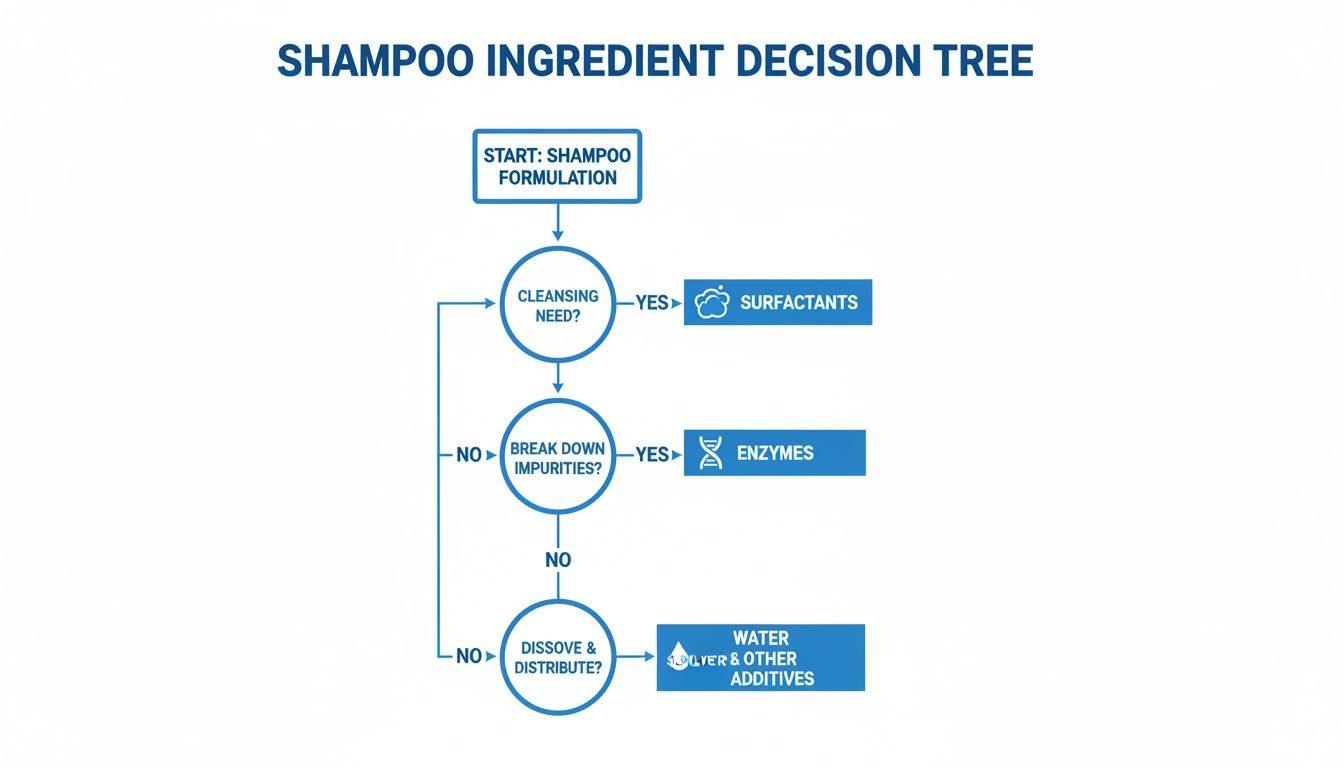
As you can see, surfactants are your go-to for general dirt, enzymes are a must for breaking down organic messes, and solvents are what you need to dissolve anything greasy.
Matching the Shampoo to Your Carpet Fibres
It’s not just about the stain—your carpet’s material is a huge factor in what shampoo you can safely use. Slapping a harsh, alkaline cleaner on a delicate natural fibre is a recipe for disaster.
Key Takeaway: The pH level of a cleaner is critical. Natural fibres like wool are sensitive to high pH levels (alkaline), which can cause yellowing, fibre damage, or colour bleeding. Synthetic fibres are generally more resilient and can handle stronger solutions.
Let’s break down the most common carpet types and what they need:
- Wool Carpets: Wool is a natural, luxurious, and delicate fibre. It demands a gentle, pH-neutral shampoo that is specifically labelled "wool-safe." Stay away from anything with strong alkaline agents or harsh chemicals, as they can strip the natural oils (lanolin) right out of the fibres, leaving them dry and brittle.
- Synthetic Carpets (Nylon, Polyester, Olefin): These are the workhorses of the carpet world and what you’ll find in most Australian homes. They’re built to be durable and stain-resistant, so you can generally use a more powerful, slightly alkaline shampoo to really get after those tough, greasy stains.
Picture this: you've spilt pasta sauce on your durable polyester carpet. That’s a combination stain—you’ve got tannins from the tomatoes and oil from the sauce. For this, you’d grab a versatile cleaner with both surfactants and enzymes to break down all the food components without a second thought. But if that exact same spill happened on a wool rug, you'd need to be much more careful, reaching only for a wool-safe enzymatic cleaner.
While this article is all about carpet care, the principles of stain removal often apply elsewhere; for instance, you can learn about removing specific types of stains on other household surfaces, which also requires matching the right agent to the material. Always, always test a new product on a hidden spot first—think inside a cupboard or under the sofa—to make sure it doesn’t cause any colour loss or damage. This simple step can save you from a very costly mistake.
A Step-by-Step Guide to Flawless Stain Removal
Knowing which shampoo to grab is half the battle, but your technique is what really wins the war against stains. A brilliant product in the wrong hands can easily make a small spill a much bigger problem.
Think of this as your go-to checklist for turning a potential carpet disaster into a minor hiccup. Follow these five critical steps the next time a spill happens, and you’ll be treating stains like a pro.
Step 1: Act Fast and Blot Gently
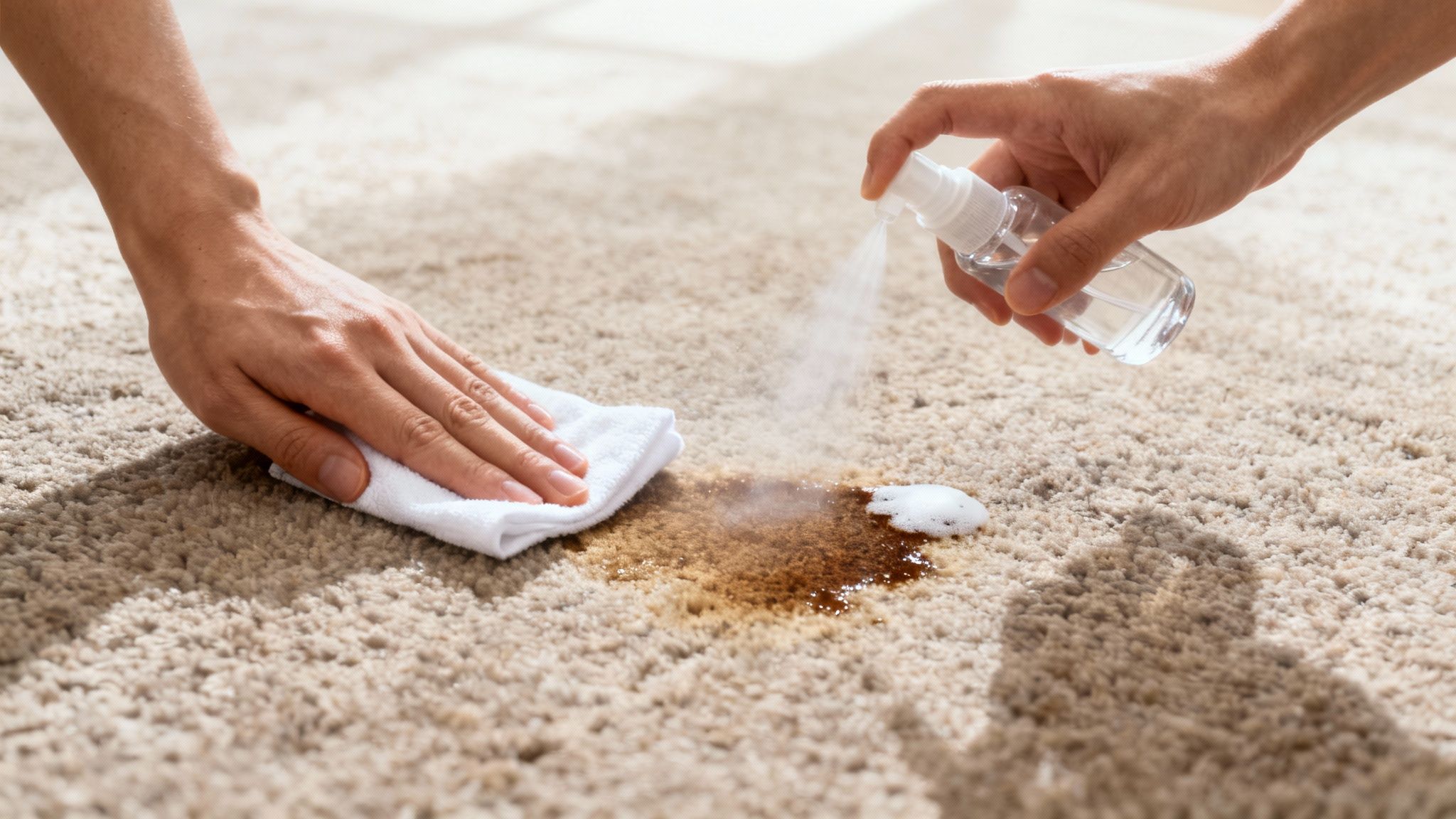
The second a spill hits the floor, the clock is ticking. Your first move, always, is to grab a clean, white, absorbent cloth and start blotting. Work from the outside edge of the stain inward—this stops it from spreading.
Crucially, never rub or scrub. We’ve all been tempted to, but rubbing just grinds the liquid deeper into the carpet fibres and the padding underneath. It can also fray the fibres themselves, leaving a permanent fuzzy patch. Gentle, patient blotting is the only way to go.
Step 2: Always Test Your Cleaner
Before you unleash any cleaner on a visible part of your carpet, you absolutely must do a spot test. Find a small, hidden area—think inside a cupboard, under the sofa, or behind a door. Apply a tiny amount of your shampoo, follow the instructions, and let it dry.
Once it's completely dry, check for any colour bleed, fading, or texture changes. This simple five-minute check is the one thing that can save you from a catastrophic mistake.
Remember, every carpet and dye lot is different. Even a shampoo you’ve used before on another carpet should be tested again. Skipping this step is one of the biggest gambles you can take with your flooring.
Step 3: Apply the Shampoo Correctly
When it comes to application, less is definitely more. Over-saturating your carpet is a classic mistake. It soaks the backing and underlay, which can lead to mould, mildew, and a smell you’ll never get rid of.
Follow the product’s directions and use just enough to cover the stained area. With a soft-bristled brush or a clean cloth, gently work the cleaner into the fibres. Don't be aggressive; let the chemistry do the heavy lifting for you.
Step 4: Let the Product Dwell
Patience is a virtue, especially in stain removal. Most carpet shampoos need a bit of time to work their magic and break down the stain's chemical bonds. This "dwell time" is when the surfactants get to work lifting grime and the enzymes start digesting the mess.
Most products suggest a dwell time of 5-10 minutes, but always defer to the label's instructions. Rinsing too early is a common error that stops the cleaner from finishing its job, leading to disappointing results.
Step 5: Rinse and Dry Thoroughly
This is the final—and arguably most important—step. If you leave shampoo residue behind, it creates a sticky patch that acts like a dirt magnet. Before you know it, the spot reappears, but this time it’s darker and dirtier than before.
To rinse, lightly dampen a clean white cloth with plain water and blot the area over and over. This lifts out the shampoo and the dissolved stain. Then, switch to a dry cloth and keep blotting until the area feels as dry as possible. For a final pro touch, place a thick stack of paper towels over the spot and weigh it down with something heavy for a few hours. This will wick up any last traces of moisture.
While this guide focuses on carpets, these core principles hold true for other fabrics too. In fact, you can find many proven upholstery tips for fabric stain removal that echo the importance of proper technique for sofas and other soft furnishings in your home.
Common Stain Removal Mistakes and How to Avoid Them
We've seen countless homeowners make simple mistakes that turned a small spot into a permanent problem. To help you avoid these pitfalls, here’s a quick rundown of what not to do, and the correct approach professionals take.
| Common Mistake | Why It's a Problem | What to Do Instead |
|---|---|---|
| Scrubbing Vigorously | Fraying and untwisting carpet fibres, causing permanent texture damage and pushing the stain deeper into the padding. | Gently blot the stain from the outside in with a clean, absorbent cloth to lift the liquid without spreading it. |
| Using Hot Water on Protein Stains | "Cooking" the proteins (like in blood, egg, or milk) into the fibres, making them nearly impossible to remove. | Always use cold water for protein-based or unknown stains to dissolve them without setting them. |
| Skipping the Spot Test | Risking colour bleeding, fading, or chemical damage on a visible area of your expensive carpet. | Test every cleaner on a small, hidden spot (like inside a cupboard) before applying it to the main stain. |
| Over-Saturating the Carpet | Soaking the carpet backing and underlay, which can lead to mould, mildew, and structural damage to the flooring. | Apply the cleaner sparingly—just enough to cover the stain. You can always add more if needed. |
| Not Rinsing Thoroughly | Leaving behind a sticky soap residue that attracts new dirt and causes the spot to reappear over time. | Rinse by blotting with a water-dampened cloth, then dry completely by blotting with a dry towel or paper towels. |
Avoiding these common blunders is just as important as following the right steps. By being patient and methodical, you can tackle almost any household spill with confidence.
Choosing Eco-Friendly and Pet-Safe Formulas
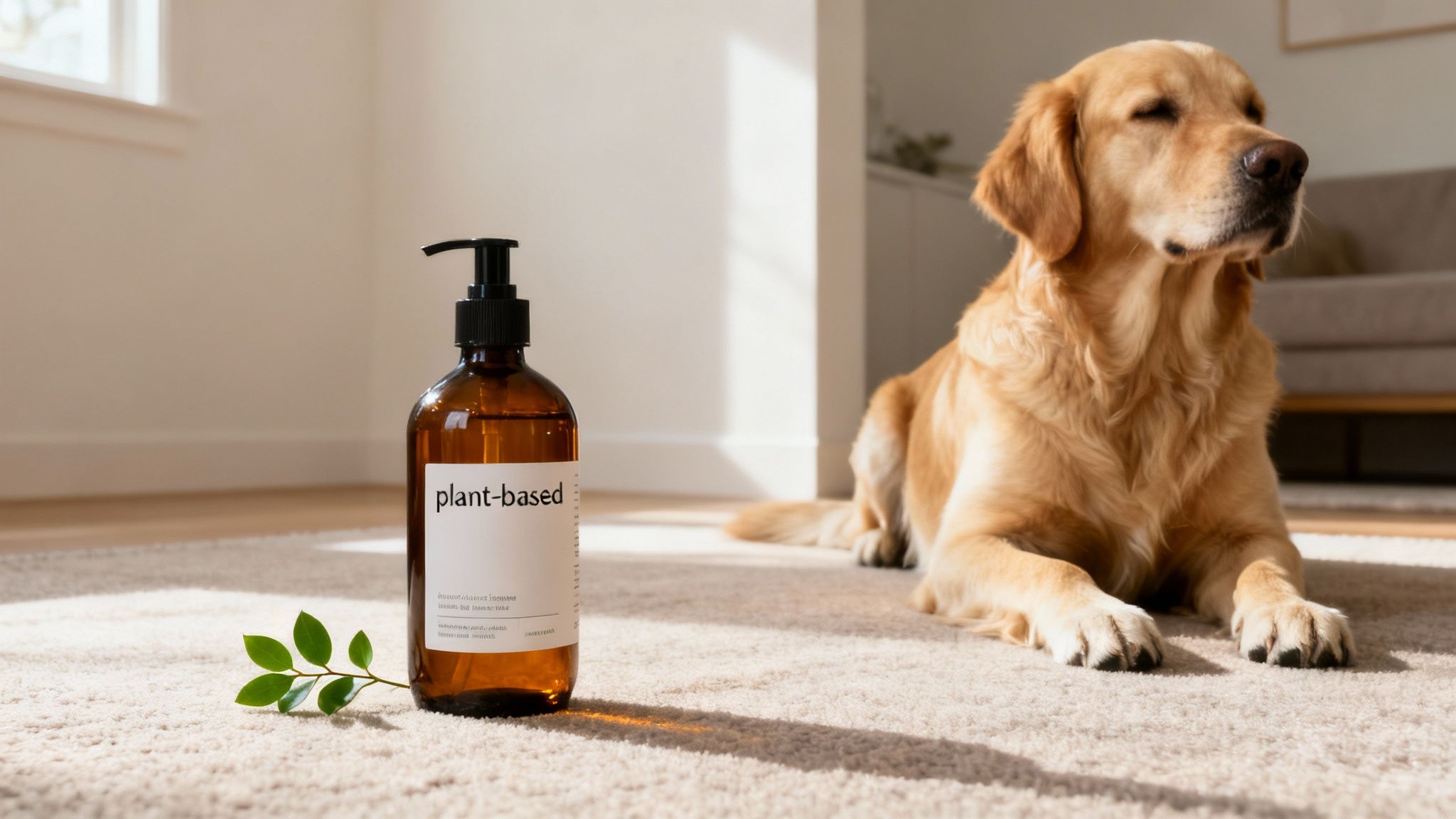
A spotless carpet is fantastic, but not if it comes at the cost of your family’s health or the environment. For households with curious pets, crawling toddlers, or anyone with sensitivities, picking a safe cleaning solution isn’t just a preference—it's non-negotiable. The great news is you no longer have to choose between a powerful cleaner and a safe one.
The growing demand for greener cleaning solutions has brought a new generation of effective, plant-powered formulas to the market. These products use nature-derived ingredients to deliver professional-level results without the harsh chemicals. Let’s walk through what to look for on the label and even how to whip up a simple, effective cleaner right from your pantry.
What Makes a Carpet Shampoo Safe
When you’re on the hunt for the best carpet shampoo for stains in a home with pets, the ingredient list is your best friend. Traditional cleaners often lean on harsh chemicals like ammonia, chlorine, or phosphates. These can leave behind fumes and residues that are harmful when inhaled or touched.
Eco-friendly and pet-safe formulas take a completely different route, swapping out those aggressive chemicals for gentler, yet surprisingly effective, alternatives. Knowing what these are helps you make a smart choice that protects your loved ones.
Look for these key signs on the label:
- Plant-Based Surfactants: Instead of petroleum-derived surfactants, look for those made from corn, coconut, or other botanicals. They lift dirt just as well without the harsh footprint.
- Biodegradable Ingredients: This simply means the components will naturally break down over time, so they won't build up in the environment.
- Free from Harsh Chemicals: A safe formula will proudly state it’s free from phosphates, chlorine, ammonia, and artificial dyes.
- pH Neutral: A neutral pH is much gentler on carpet fibres and sensitive skin (and paws), which lowers the risk of any irritation.
A huge bonus of choosing these formulas is better indoor air quality. Harsh chemical cleaners can release volatile organic compounds (VOCs) into your home, which can cause respiratory irritation. Plant-based cleaners help keep the air healthier for everyone.
Simple and Effective DIY Carpet Cleaning Recipes
Sometimes, the best solution for a minor spill is already sitting in your pantry. For fresh, simple stains, a homemade cleaner can be incredibly powerful. It’s also cost-effective and completely transparent—you know exactly what’s in it.
But a quick word of caution: always test your DIY mix on a hidden spot first. Even gentle, natural ingredients can sometimes affect certain dyes and fibres, especially on delicate wool or antique rugs.
A Basic DIY All-Purpose Stain Remover
For common spills like dirt or light-coloured drinks on synthetic carpets, this simple recipe works wonders.
- Mix the Solution: Grab a spray bottle and combine one part white vinegar with two parts water. Vinegar is a fantastic natural cleaner and deodoriser.
- Apply and Dwell: Lightly spray the stained area—you don't need to soak it. Let the solution sit for about 5-10 minutes so it can get to work breaking down the stain.
- Blot and Dry: Gently blot the area with a clean, dry cloth until the stain disappears and the spot is almost dry.
For a bit more oomph on a tougher stain, you can create a baking soda paste. First, sprinkle baking soda over the stain, then give it a spritz with your vinegar and water solution. You'll see it fizz as it works to lift the stain out of the carpet fibres. Let it dry completely, then just vacuum up the residue. This trick is brilliant for neutralising pet odours, too.
When It's Time to Call in the Pros
Even with the best carpet shampoo on hand and a bit of elbow grease, some stains are just in a different league. DIY cleaning is brilliant for fresh spills and keeping things tidy, but there are times when going it alone can fall short—or worse, accidentally make things permanent. Knowing when to put down the spray bottle and pick up the phone can save you a world of frustration, and your carpet.
Think of it this way: your store-bought shampoo is like a first-aid kit, perfect for dealing with minor scrapes. A professional carpet cleaner, on the other hand, is the fully-equipped emergency room, ready to handle serious issues that need specialised equipment and years of expertise. Spotting the difference is the secret to keeping your carpets looking great for the long haul.
Signs You Need an Expert
Sometimes, a stain will flat-out tell you it’s out of your league. If you run into any of these situations, it’s a clear signal that calling a professional is the smartest move. Pushing on with a DIY attempt could lock the stain in forever or damage delicate fibres beyond repair.
- Large-Scale Spills: A single glass of red wine is one thing; a whole bottle is another. When you’re dealing with a large pot of soup or a major spill, the liquid can soak deep into the carpet backing and underlay. This creates the perfect breeding ground for mould and mildew that your home equipment just can't touch.
- Mysterious or Old Stains: Just found a mystery spot that’s clearly been there for a while? Old, set-in stains have had plenty of time to chemically bond with the carpet fibres, making them incredibly tough to shift without professional-grade solvents and techniques.
- Delicate or Speciality Fibres: If your carpet is made from natural fibres like wool, silk, or jute, using the wrong product is a recipe for disaster. Professionals know how to identify fibre types on sight and use specific, pH-balanced solutions that clean effectively without causing shrinkage, browning, or colour loss.
The Professional Power Difference
The biggest gap between DIY and professional cleaning isn’t just the shampoo—it’s the machinery. That handheld cleaner or rental machine you're using simply can't compete with the industrial-strength equipment the experts bring to your door.
The gold standard in professional cleaning is hot water extraction, which you might know as steam cleaning. This method uses high-pressure jets to blast a solution of hot water and cleaning agents deep into the carpet pile, dislodging dirt, allergens, and bacteria. Almost instantly, a powerful vacuum sucks out the water, grime, and residue, leaving carpets cleaner and drier than any home method could ever achieve.
This process doesn't just clean; it removes the deep-set, abrasive grit that grinds down fibres and shortens the life of your carpet. Many companies also use specialised, eco-friendly pre-treatments for particularly stubborn spots. For example, some Australian professionals use solutions that target tough local stains like eucalyptus sap or grease from the barbie, while also improving indoor air quality by removing up to 95% of common allergens. This is a huge win for families with allergies or those needing NDIS-approved cleaning services. You can get a better sense of new trends in the Australian carpet cleaning industry.
At the end of the day, while having the best carpet shampoo for stains is a vital tool in your cleaning kit, a professional cleaner delivers a deep, restorative clean that truly maintains your carpet's health and appearance. When you're up against a truly stubborn stain or a delicate material, calling in an expert is always the safest and most effective choice.
Got Questions About Carpet Stains? We’ve Got Answers.
Alright, let's wrap things up by tackling a few of the most common questions that pop up when you're dealing with stubborn carpet stains. Think of this as your quick-reference guide to handle those lingering doubts and get the best possible results.
Can I Use the Same Shampoo on My Rug and My Carpet?
Not always, and getting this wrong can be a costly mistake. Many area rugs, especially those beautiful wool ones, are far more delicate than the synthetic wall-to-wall carpet in most Aussie homes. Wool needs a gentle, pH-neutral cleaner that's specifically marked as "wool-safe" to stop colours from bleeding or fibres from getting damaged.
Your average synthetic carpet, on the other hand, is built tough and can usually handle a more powerful, slightly alkaline formula. The golden rule? Always check the care label on both the rug and the cleaning product. And if you’re ever in doubt, a spot test in a hidden area isn’t just a suggestion—it’s non-negotiable.
Will Shampooing My Carpet Make It Get Dirty Faster?
This is a classic myth, but it’s rooted in a bit of truth. The problem isn’t the shampoo itself; it's the sticky residue left behind when you don't rinse it out properly. That leftover soap acts like a dirt magnet, making the freshly cleaned spot attract new grime and look dirty again in no time.
The fix is simple: be meticulous with your rinsing. Keep blotting the area with a clean cloth dampened with plain water until you’re sure all the suds are gone. This is where the pros have an edge—our powerful hot water extraction machines flush out every last bit of shampoo and dirt, which is why a professional clean lasts so much longer.
Expert Insight: That reappearing spot isn't a sign of a bad product. It’s a dead giveaway of incomplete rinsing. If a stain comes back, it's almost always because of sticky residue attracting new dirt. A thorough rinse is the secret to a clean that truly lasts.
What Should I Do If a Stain Reappears After Cleaning?
Ever cleaned a spot perfectly, only for it to mysteriously reappear a day or two later? You're not going crazy—you're dealing with wicking. This happens when a spill has soaked deep down into the carpet's padding. As the surface fibres dry, moisture from the soggy padding wicks its way back up to the top, bringing the old stain along for the ride.
To beat wicking, you’ll need to repeat the cleaning process, but this time, put all your effort into the extraction and drying steps. After you’ve blotted with your cleaning solution and rinsed with a damp cloth, place a thick stack of dry paper towels over the area. Weigh it down with something heavy (like a stack of books). This little trick encourages the deep-down moisture to wick up into the towels instead of back into your carpet fibres. If that stubborn stain still comes back, it’s a clear sign the spill is trapped in the padding, and you’ll need a professional to extract it properly.
When your best DIY efforts just aren't cutting it against deep-set stains or delicate fibres, Right Price Carpet Cleaning is ready to step in. Our professional-grade steam cleaning and expert technicians can bring your carpets, rugs, and upholstery back to life. Get an instant online quote and see the incredible difference a professional clean can make.
Recent Comments