



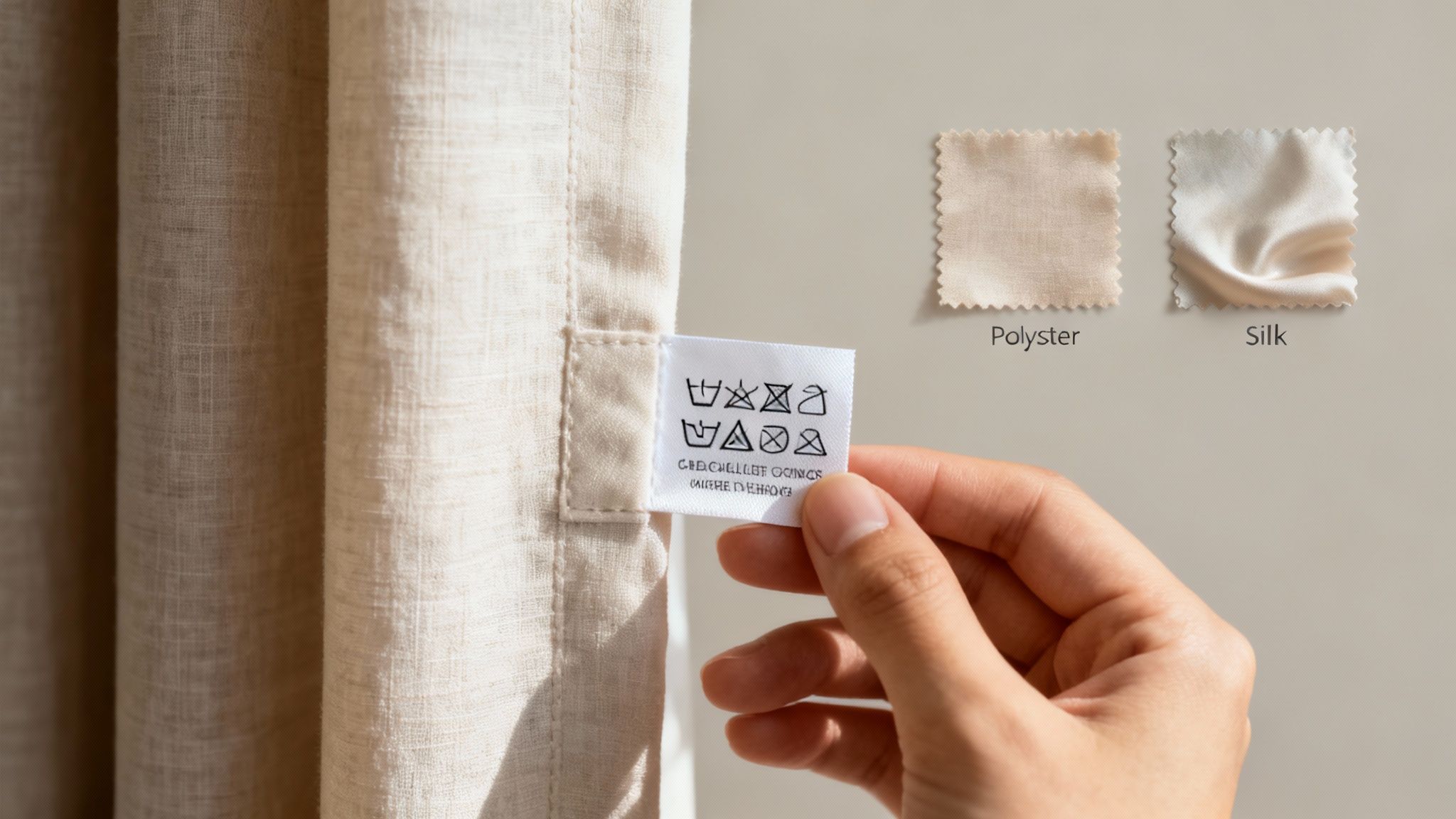
Before you even think about pulling down your curtains for a wash, the first move you make is the most important one. It all starts with that little fabric care label. This small tag is your cleaning bible, telling you exactly what you can and can't do to avoid a costly disaster like shrinkage or colour fading.
Your First Step to Flawless Curtain Cleaning
The journey to sparkling clean curtains doesn’t start with a washing machine or a bottle of stain remover. It begins with a bit of detective work. Taking a few moments to understand the material you're working with is what separates a beautifully refreshed window treatment from a crumpled, ruined mess.
Honestly, this initial assessment is everything. It’s where you figure out what you’re up against—are you dealing with a tough, easy-care fabric or something delicate that needs a much gentler touch?
Decoding the Care Label
Your curtain’s care label is packed with crucial information, all disguised as tiny symbols. Getting to know them is non-negotiable for any DIY cleaning attempt.
Here’s a quick rundown of the common symbols you'll see:
- A tub icon: This is all about washing. A number inside tells you the max water temperature, a hand means "hand wash only," and a cross through it means do not wash. Simple.
- A triangle: This one's for bleaching. An empty triangle means any bleach is fine. Diagonal lines inside mean stick to non-chlorine bleach. A solid, crossed-out triangle is a hard no-bleach warning.
- A square: This is your guide to drying. A circle inside the square means it's safe for the tumble dryer, with dots telling you the heat level (one for low, two for medium). A cross means keep it out of the tumble dryer.
- An iron icon: This tells you how to iron. The dots correspond to temperature settings—one for cool, three for hot.
Understanding these little symbols takes all the guesswork out of the process and sets you up for a successful clean.
When the Tag Is Missing
So, what happens if your curtains are vintage, custom-made, or the tag was snipped off years ago? Don’t panic. You can still make a pretty good guess about the fabric. The very first step to flawless curtain cleaning is understanding your curtain's material, so refer to this definitive guide to choosing curtain fabric material for some great in-depth insights.
As a general rule, you can perform a simple "feel test." Does the fabric feel smooth and a bit synthetic, like polyester? Is it light and slightly textured like cotton or linen? Or is it incredibly smooth and delicate with a noticeable sheen, like silk?
Pro Tip: If you're even slightly unsure, always play it safe. Treat the fabric as if it's delicate. That means opting for a cold water hand wash or, even better, just taking it to a professional. It’s a lot cheaper than buying new curtains.
For instance, most polyester and cotton blends are quite hardy and can usually handle a gentle machine wash just fine. But materials like silk, velvet, or heavy wool nearly always need professional dry cleaning to keep their texture and shape. Making the right call here protects your investment and keeps your curtains looking fantastic for years.
Getting Your Curtains Ready for a Deep Clean
Before your curtains even think about touching water or a cleaning solution, a bit of prep work will make all the difference. If you skip this part, you're essentially just turning dry dust into mud and washing it deeper into the fabric. This is the secret to getting a genuinely fresh result.
The first, and honestly most satisfying, step is to give your curtains a proper vacuum. Over time, they act like giant air filters, trapping dust, pet hair, and all the allergens that float in from outside, especially here in Melbourne. A quick once-over lifts this entire top layer of grime away.
Start With a Good Vacuum
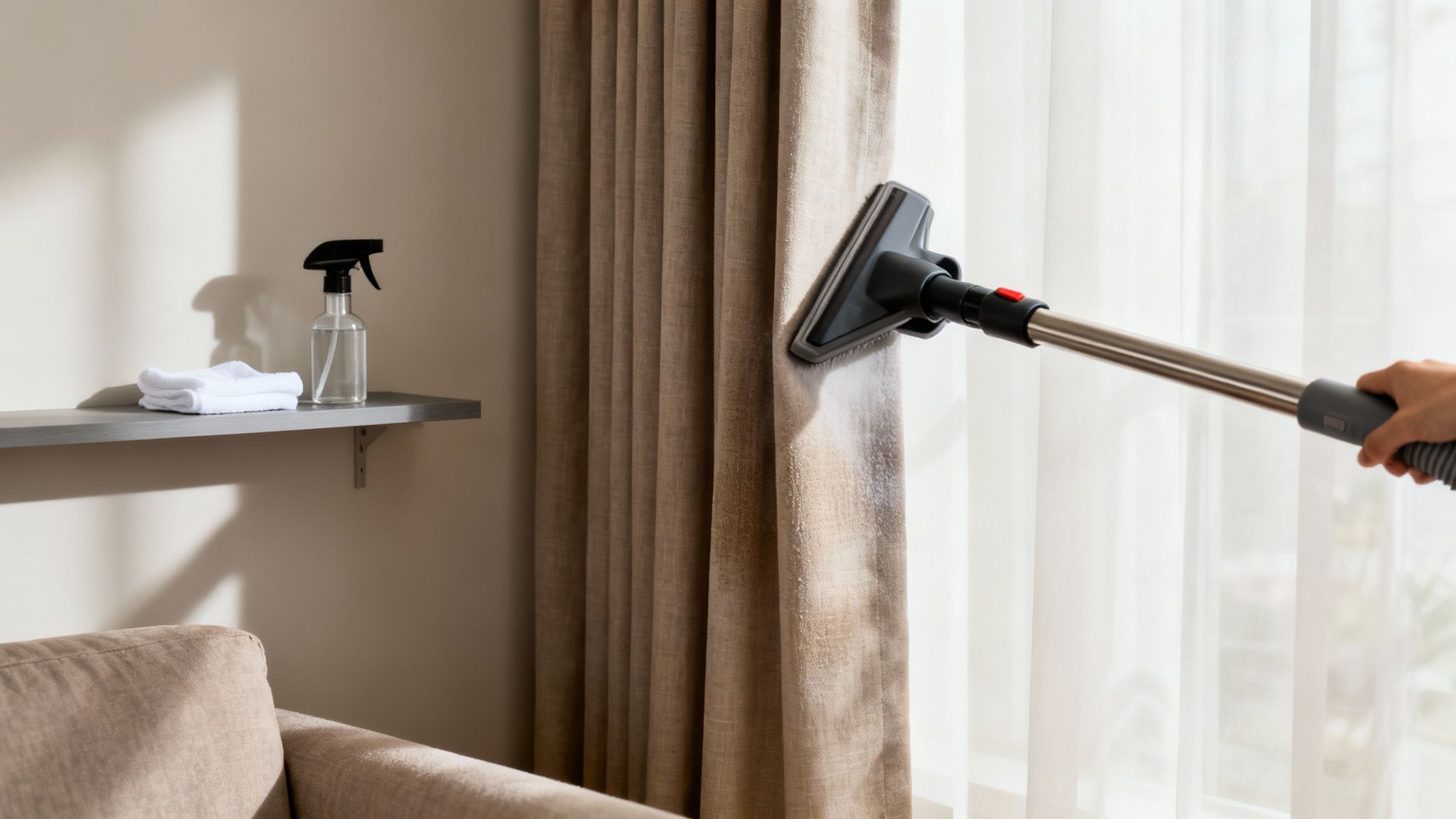
For the best results, I always recommend taking the curtains down and laying them flat on a clean floor or your bed. Grab the upholstery brush attachment for your vacuum—its soft bristles are designed to gently coax dust out of the fibres without causing any pulls or damage.
Work your way from the top to the bottom in slightly overlapping strokes. Pay a little extra attention to the hems and pleats, as this is where dust loves to hide. You'll be surprised how much dirt this one step removes, making any washing that follows so much more effective.
Dealing With Stubborn Stains First
Next up, give the fabric a once-over for any specific spots or stains. Did a bit of morning coffee go astray? Are there greasy fingerprints from opening and closing them? Hitting these marks before the main wash is the key to preventing them from setting in for good.
You don't always have to reach for a harsh chemical cleaner. For many common household stains, a simple DIY mix does the trick beautifully.
- Make your solution: Mix one part clear dishwashing liquid with ten parts cool water in a small bowl.
- Apply it: Dip a clean, white microfibre cloth into the mix, then wring it out so it’s just damp, not sopping wet.
- Use the blotting technique: Gently blot the stain, working from the outside edge toward the centre. Never, ever rub, as that just pushes the stain further into the fibres and can make it spread.
Here's a pro tip: be patient. Let the pre-treatment solution sit on the stain for about five to ten minutes. This little pause gives it time to work its magic and break down the mark before you move on to the full wash.
This targeted approach means your deep clean can focus on refreshing the entire curtain instead of fighting a losing battle against set-in spots. With this prep work sorted, you’re ready for the main event.
Choosing Your Method: DIY vs. Professional Curtain Cleaning
Alright, once your curtains are prepped, you’ve reached the main crossroad: do you roll up your sleeves and tackle this yourself, or is it time to call in the professionals? Honestly, there’s no single right answer. The best choice really hinges on your curtain fabric, how much time you've got, and the level of clean you're after.
A DIY approach can be a lifesaver for durable, machine-washable fabrics or for a quick refresh between deeper cleans. It’s convenient and gives you immediate results for lighter issues like dust build-up or faint odours.
But let's be realistic—professional services offer a depth of cleaning that’s tough to replicate at home. This is especially true for delicate materials, heavy drapes, or curtains that haven't seen a good clean in years.
The DIY Curtain Cleaning Toolkit
If the care label has given you the green light for a home clean, you've got a few solid options. Each method is suited to different needs and fabric types.
- Gentle Machine Washing: This is your best bet for sturdy fabrics like cotton or polyester. Always use a cold, gentle cycle with a mild detergent. I can't stress this enough: wash them on their own to avoid snagging or damage.
- Careful Hand Washing: The go-to method for semi-delicate fabrics, like sheer panels or linen blends. Use a large tub with cool water and a mild soap, gently swishing the fabric. Avoid any harsh scrubbing or wringing.
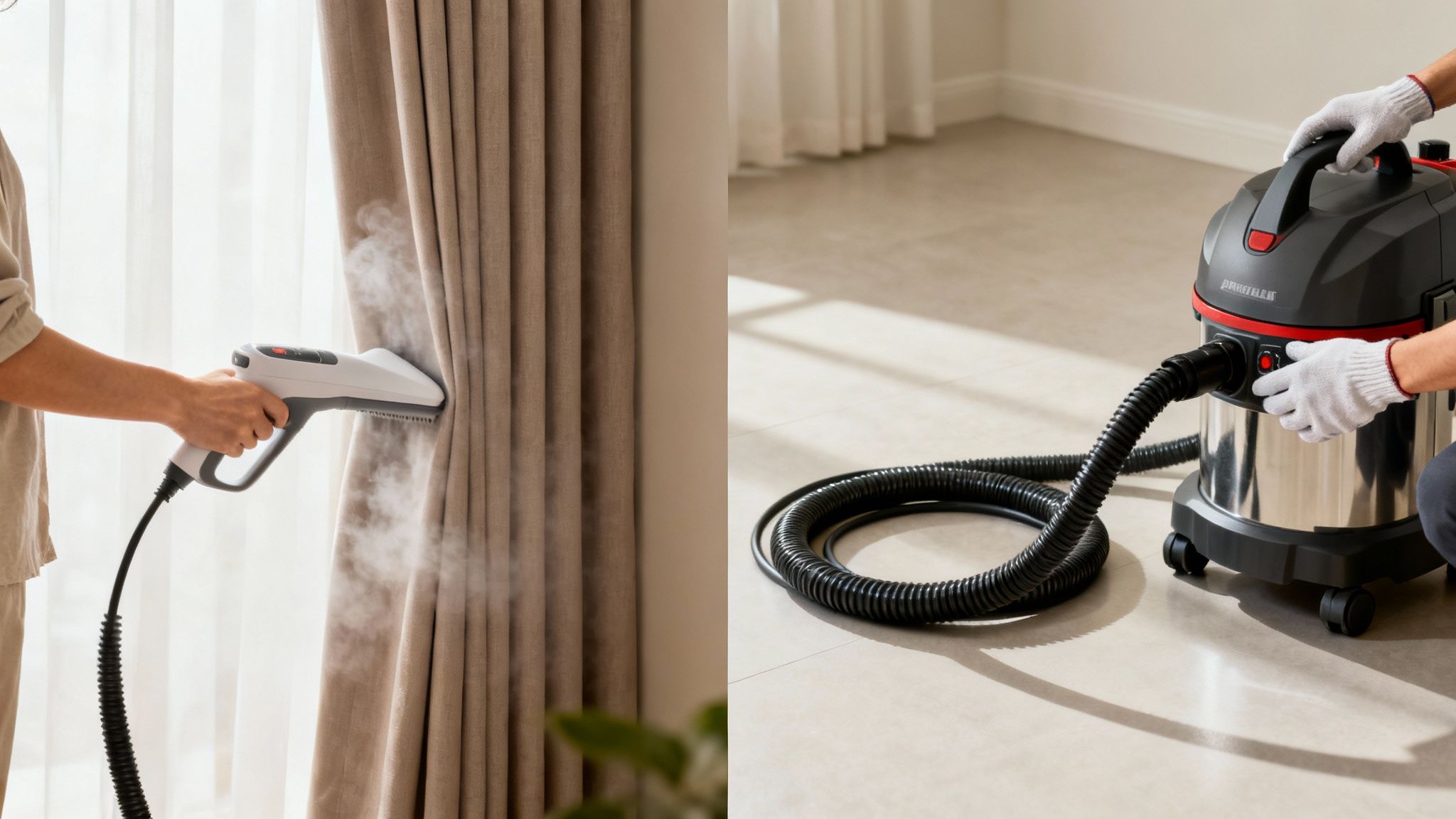
- Handheld Steaming: A fantastic way to quickly freshen up curtains without the hassle of taking them down. A good steamer can kill dust mites, neutralise odours, and release minor wrinkles, making it an excellent maintenance tool between washes.
Here's a crucial tip I've learned over the years for any DIY wash: never overload your machine or tub. Curtains need plenty of room to move freely in the water to get properly clean and to prevent a mess of deep-set creases.
When to Call a Professional
Sometimes, a DIY job just won’t cut it. For certain fabrics and situations, professional expertise isn’t a luxury—it’s a necessity. It’s what stands between you and irreversible damage like shrinkage, colour loss, or a complete change in the fabric's texture.
In busy Melbourne households, professional curtain cleaning can be a real game-changer. While around 60-70% of common polyester curtains are machine-washable, materials like delicate lace, wool, or velvet demand special care to avoid disaster. A DIY attempt on these fabrics can easily lead to shrinkage or colour fade. If you're curious, you can get more insights on the cost and benefits of professional curtain cleaning.
Understanding Professional Services
When you hire a professional, you're not just paying for a clean; you're investing in specialised equipment and years of expertise. Here’s what the pros bring to the table:
- Dry Cleaning: This is non-negotiable for fabrics labelled "dry clean only," such as silk, velvet, or heavy wool. The process uses solvents instead of water to lift dirt without warping or damaging the fabric's structure.
- Truck-Mounted Steam Cleaning: This is the gold standard for a truly deep, hygienic clean. This powerful method injects hot water and a cleaning solution deep into the fibres, then extracts it all with incredible suction. It's incredibly effective at removing embedded dirt, stubborn stains, and allergens for a restorative result you can see and feel.
Choosing a service like truck-mounted steam cleaning delivers a far superior clean, especially for families dealing with allergies or homes with pets. It removes that deep-seated grime and significantly shortens the drying time, getting your curtains back up and looking their best much faster than any DIY method ever could.
Curtain Cleaning Method Comparison
Deciding on the right cleaning method can feel overwhelming. To make it a bit easier, here’s a quick comparison of the most common options, looking at what they’re best for, along with their pros and cons.
| Cleaning Method | Best For | Pros | Cons |
|---|---|---|---|
| Machine Washing | Durable fabrics like cotton and polyester. | Cost-effective, convenient for washable curtains. | Risk of shrinkage or damage if done incorrectly. |
| Hand Washing | Sheers, lace, and delicate synthetics. | Gentle on fabric, gives you full control. | Time-consuming and requires physical effort. |
| Steam Cleaning | Quick refreshes, killing dust mites, removing odours. | No need to take curtains down, great for maintenance. | Not effective for deep stains or heavy soiling. |
| Dry Cleaning | Silk, velvet, wool, linen, and lined curtains. | Safest for delicate and non-water-safe fabrics. | Higher cost, requires professional service. |
| Hot Water Extraction | Heavily soiled, durable fabrics; allergy sufferers. | Deepest clean possible, removes allergens and grime. | Requires professional equipment and expertise. |
Ultimately, the right choice comes down to balancing your fabric's needs with your budget and time. For everyday upkeep and sturdy materials, DIY is often enough. But for your delicate, expensive, or heavily soiled curtains, investing in a professional service is the surest way to get them looking fantastic without the risk.
Mastering the Art of Drying and Rehanging
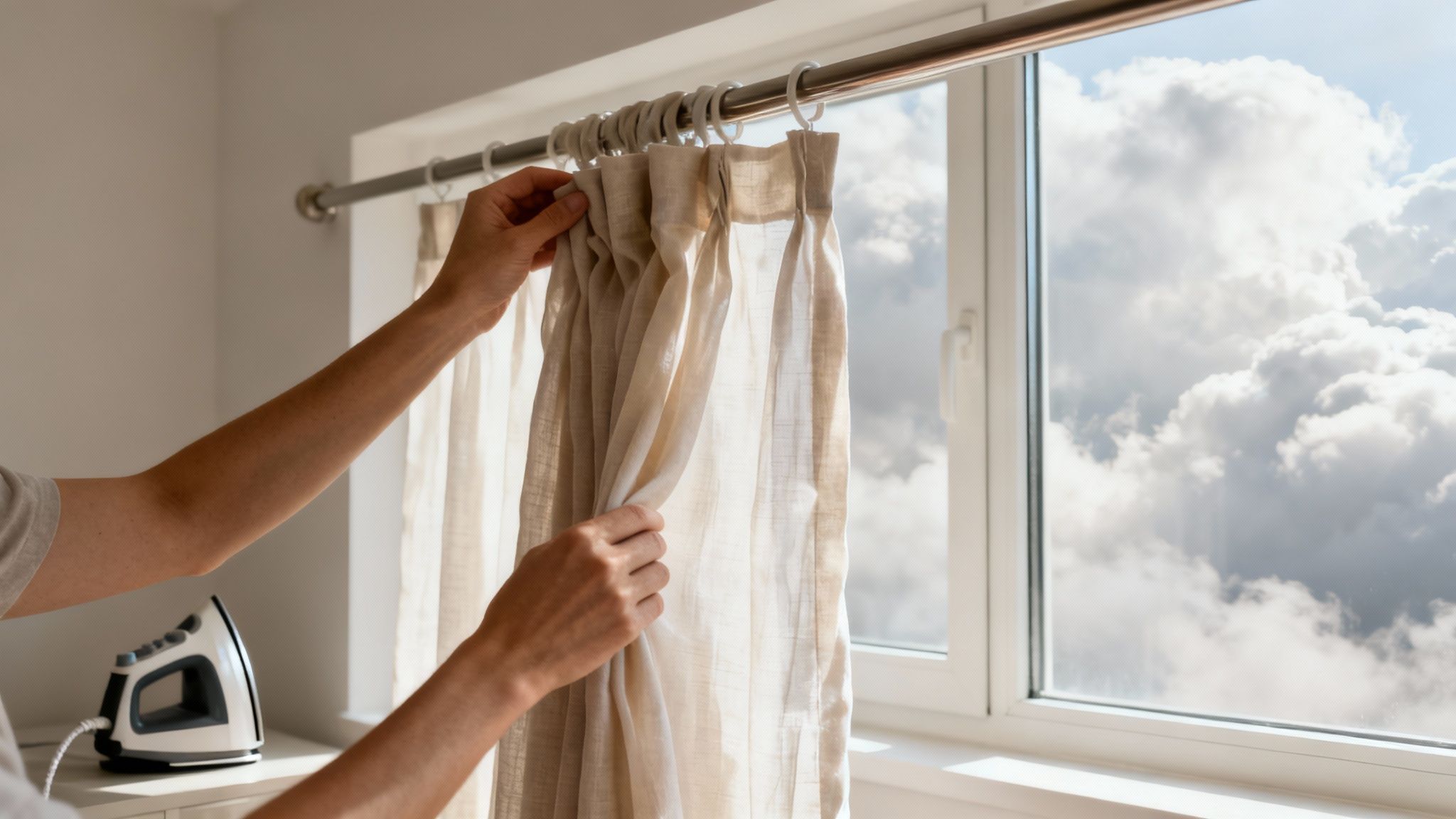
You’ve made it through the wash, but the job isn't quite finished. How you dry your curtains is just as important as how you clean them. Get this final step wrong, and you can end up with a whole new set of problems—from stubborn wrinkles and shrinkage to a musty, damp smell that's impossible to ignore.
Getting this right is what makes all that effort worth it, leaving you with curtains that hang beautifully and smell fantastic. The trick is to match your drying method to the fabric you're working with.
The Best Drying Techniques for Curtains
Your first move should always be to check the care label. But if you’re flying blind without one, remember that gentle is always the safest route. High heat is the number one enemy for most curtain fabrics, as it can cause irreversible shrinkage and damage the fibres.
For a classic, energy-saving approach, you can't beat line drying, especially on an overcast Melbourne day. It might sound counterintuitive, but harsh, direct sunlight can fade colours, so a bit of cloud cover is actually a good thing.
- Line Drying: Hang your curtains evenly over the line to avoid stretching or distorting the shape. This is a brilliant method for cotton, linen, and most synthetics because it allows fresh air to circulate freely.
- Tumble Drying: If the label gives you the green light, use the lowest possible heat setting. I like to toss in a few dryer balls (or even clean tennis balls) to stop the curtains from twisting into a giant, wrinkled knot. Crucially, pull them out while they are still slightly damp.
One of the biggest mistakes I see is people over-drying curtains until they’re bone-dry. This essentially bakes the wrinkles in, making them a nightmare to iron out later. Taking them out while they’re still a little damp is the secret to a much smoother finish.
Rehanging and Finishing Touches
For many fabrics, the easiest way to get a crease-free look is to rehang them while they're still slightly damp. It sounds simple, but it works. The natural weight of the fabric will gently pull out most of the wrinkles as they finish air-drying right where they hang, letting gravity do the heavy lifting for you.
Once they're up and completely dry, you can add that final, professional touch. A handheld steamer is a fantastic tool for releasing any last stubborn creases. Just run it lightly down the length of the fabric, making sure to keep it moving and at a safe distance.
If you don't have a steamer, a quick pass with an iron on the correct heat setting will work just as well. A pro tip is to always iron on the reverse side of the fabric—this helps protect the colour and finish from direct heat. It’s this final step that gives your freshly cleaned curtains that crisp, polished look and truly refreshes the whole room.
How Often Should You Clean Your Curtains in Melbourne?
Knowing how to clean curtains is one thing, but knowing how often is the real secret to a fresh, healthy home. Here in Melbourne, there’s no one-size-fits-all answer. Our city’s unique environment, from the salty air along the coast to the pollen drifting in from the bush, has a huge say in how fast your curtains get grimy.
As a general rule of thumb, a deep clean every one to two years works for most Melbourne homes. But honestly, that’s just a starting point. Several factors can shrink that timeframe pretty quickly, turning your beautiful curtains into giant dust traps that mess with your indoor air quality.
Factors That Will Change Your Cleaning Schedule
Your home’s specific environment and your family's lifestyle are what really dictate how often you need to clean. If any of these situations sound familiar, you’ll probably want to clean your curtains a lot more frequently.
Here are the big things to think about:
- Homes with Allergy Sufferers: If anyone in your house struggles with asthma or allergies, more frequent cleaning is non-negotiable. Curtains are magnets for pollen, dust mites, and pet dander, so cleaning them every six months can make a world of difference.
- Households with Pets or Children: Fur, dander, and those inevitable sticky fingerprints always seem to end up on curtains. A good clean every 6 to 12 months will help keep everything hygienic and looking fresh.
- Homes with Smokers: Smoke particles love to cling to fabric, leading to discolouration and a smell that just won't quit. In this case, a deep clean every three to six months is essential to stop that odour from setting in for good.
- Living Near the Coast or Bushland: If you're near Port Phillip Bay, that salty air can degrade fabric over time. Likewise, homes surrounded by eucalyptus trees have to deal with much higher pollen counts. Both are good reasons to clean more often.
A Few Simple Tricks Between Deep Cleans
To stretch the time between professional deep cleans and keep your curtains looking their best, a little regular maintenance goes a long way. You don’t need to do a full wash every month, but a few simple habits will stop dust and odours from building up.
Running a vacuum over them with the upholstery brush attachment every few weeks is incredibly effective. Make sure you get the top and bottom hems, as that’s where most of the dust settles. You can also find more expert guidance on how often you should wash your curtains to maintain optimal hygiene.
Even just giving your curtains a good shake when you open the windows helps dislodge surface dust. For a quick refresh, a light mist with a fabric-safe deodoriser or a quick pass with a handheld steamer can neutralise odours and kill off dust mites. These small steps protect your curtains and your family’s health, making your deep cleaning efforts that much more effective when the time comes.
Of course, even with a step-by-step guide, you’re bound to have a few questions when it’s time to clean the curtains. Dealing with a surprise stain or wondering if professional cleaning is worth the money are common dilemmas. To give you a bit more confidence, here are the answers to some of the most frequent questions we get from homeowners around Melbourne.
Can I Steam Clean Any Type of Curtain?
Steam cleaning is a fantastic way to give your curtains a quick refresh, but it’s definitely not a one-size-fits-all solution.
It works wonders on durable fabrics like cotton, polyester, and many common blends. The hot steam is brilliant for killing dust mites, getting rid of lingering odours from cooking or pets, and smoothing out minor wrinkles without needing a full-on wash.
However, you should never take a steamer to delicate materials. Fabrics like silk, velvet, or certain rayons just can't handle it. The intense heat and moisture can leave behind permanent water spots, cause shrinkage, or completely ruin the fabric's texture. Always, always check the care label before you even think about plugging in the steamer.
Is Professional Curtain Cleaning a Good Investment?
This is a big one, and the answer is almost always a resounding yes—especially if you've invested in high-quality or delicate curtains.
While your own cleaning efforts are great for regular upkeep, professional services offer a deep, restorative clean that’s just not possible to achieve at home. They have specialised equipment and fabric-specific solutions that guarantee a safe and thorough job.
Since the post-COVID hygiene boom, Melbourne's demand for residential cleaning services has shot up, with the industry expanding by 2.6% annually. For context, a professional clean for a standard set of polyester curtains might cost around $65-$90, while something delicate like lace could range from $150-$350.
But here's the kicker: experts confirm that regular professional cleaning can extend the life of your curtains by up to 50%. It also dramatically improves your home's indoor air quality by 35-50%. You can dig into more data about the growth of residential cleaning services in Australia if you're curious.
Investing in a professional clean every couple of years doesn't just make your curtains look new again; it protects your health and your initial purchase. It’s the only way to truly remove embedded allergens, deep-set grime, and stubborn odours that home methods can't touch.
What About Those Stubborn, Tricky Stains?
What if you find a small patch of mould or mildew, a common headache during Melbourne's more humid months? For curtains you can't just toss in the wash, a mix of rubbing alcohol and water gently blotted onto the spot can often work. Just be sure to test it on a hidden area first.
When it comes to spills like ink or wine, speed is your best friend. The goal is to absorb, not spread. Blot, don't rub, with a clean, dry cloth to lift as much of the spill as you can before figuring out the next step.
What Is the Best Way to Remove Wrinkles?
The best way to get wrinkles out really depends on whether your curtains are wet or dry.
If you’ve just washed them, the easiest trick in the book is to rehang them while they're still a little damp. Let gravity do the work for you. The weight of the fabric will naturally pull out most of the creases as they finish drying. Simple but effective.
For stubborn wrinkles on already-dry curtains, a handheld steamer is usually your best bet (for suitable fabrics, of course). If you have to use an iron, check the care label for the right heat setting and always iron on the reverse side. This helps protect the colour and finish from direct heat.
At Right Price Carpet Cleaning, we know your curtains are a major investment in your home's comfort and style. Our professional truck-mounted steam cleaning services deliver a deep, hygienic clean that restores vibrancy and removes allergens, all with faster drying times. Get an instant quote online today!
Recent Comments