


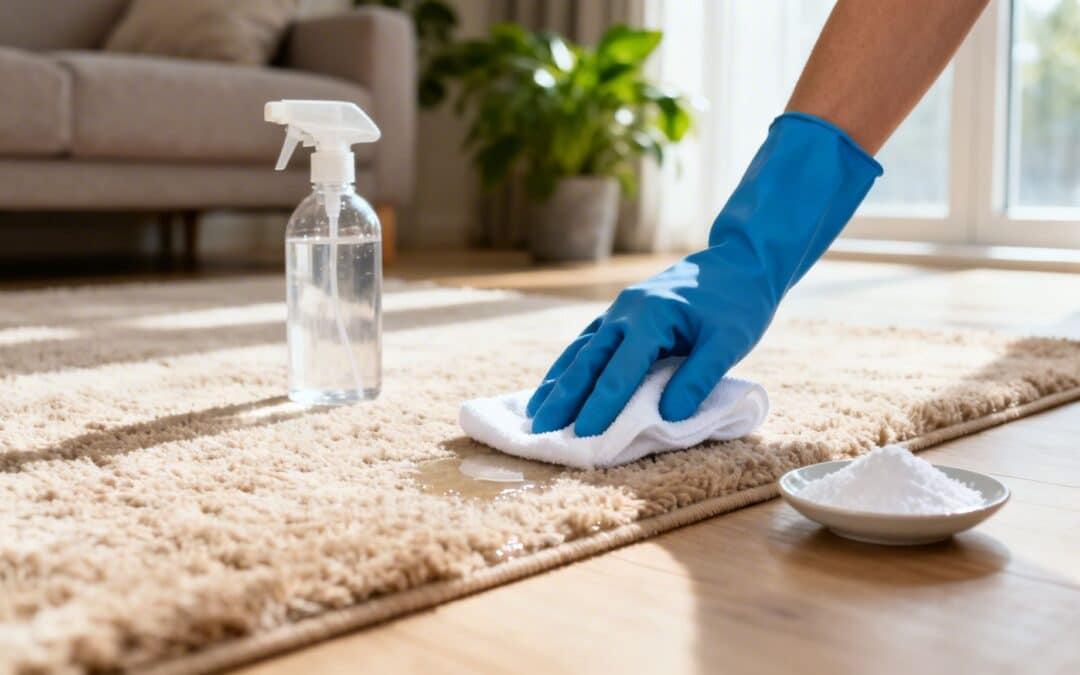
That stubborn pee smell isn't just unpleasant—it's a sign of a much deeper problem locked away in your rug's fibres. The secret is knowing that urine contains uric acid crystals that don't dissolve in water, which is exactly why so many standard cleaners fail to get the job done. These stubborn crystals cling to rug fibres and reactivate with any hint of humidity, which explains why that awful smell keeps coming back.
Why That Pee Smell Keeps Coming Back
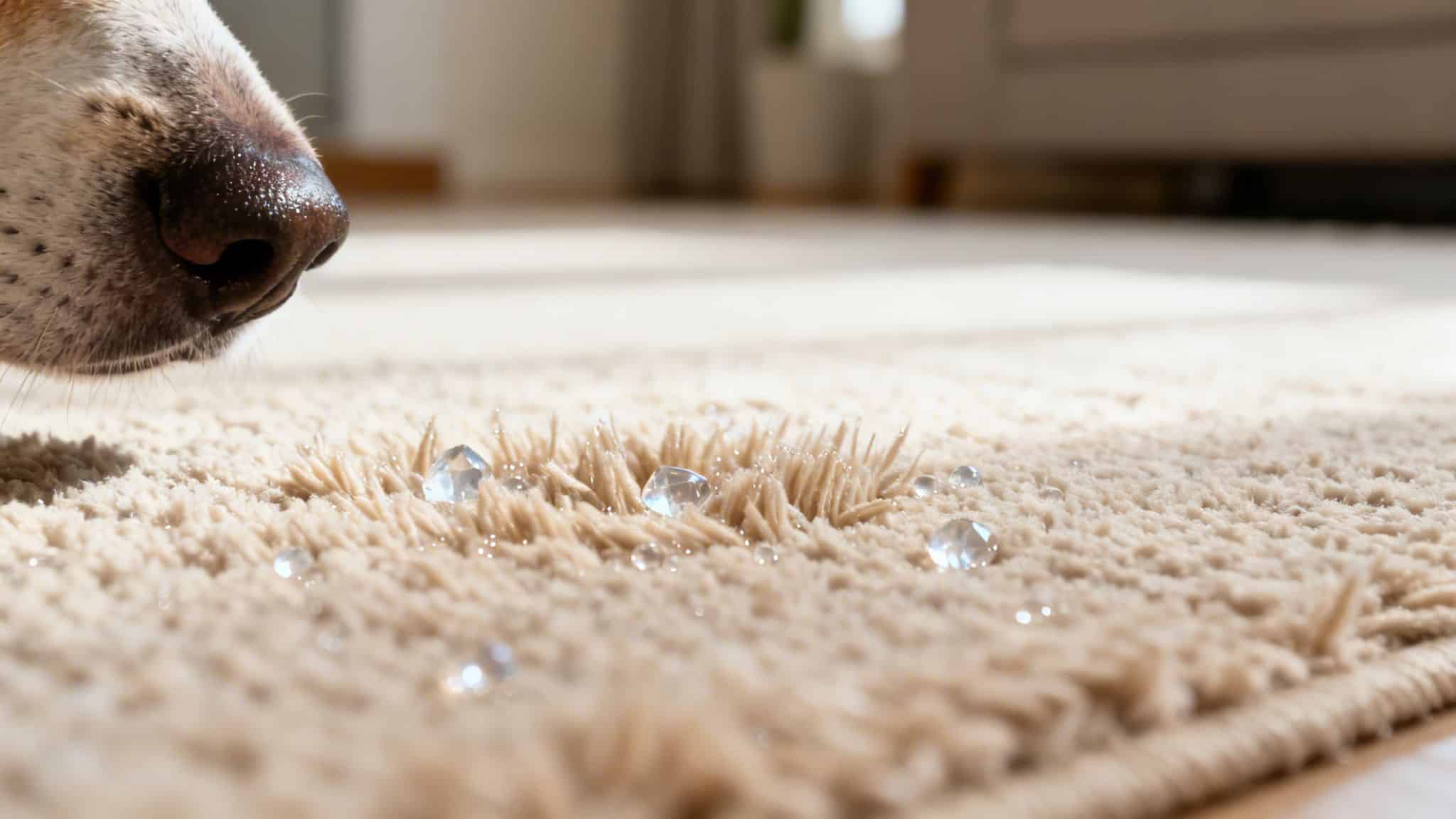
Have you ever cleaned up a pet accident, thinking you've conquered it, only to have that foul odour return on a humid Melbourne day? You're not imagining things. The science behind why you can’t get the pee smell out of your rug is surprisingly simple, yet incredibly frustrating.
Urine is more than just water. It’s a complex cocktail of urea, urochrome, and the biggest troublemaker of all: uric acid. While regular soap and water might wash away the visible stain and some components, they leave the uric acid crystals behind.
These non-soluble crystals embed themselves deep within your rug’s fibres, just waiting. When they get exposed to moisture—whether from humidity, a spill, or even another misguided cleaning attempt—they recrystallise and release that familiar, pungent ammonia smell all over again.
The real challenge isn't the stain you can see; it's the invisible uric acid crystals left behind. Common household cleaners merely mask the scent, but the odour-causing source remains embedded in the fibres, ready to return.
This is precisely why a spot you thought was perfectly clean suddenly starts to stink weeks or even months later. The reactivation of uric acid is the main reason why learning how to get pee smell out of a rug for good requires a very specific approach.
The Problem with Partial Cleaning
Unfortunately, many standard carpet shampoos and household cleaners just aren't designed to tackle uric acid. In fact, some common methods can actually make the situation worse. Using steam from a regular home unit, for example, can thermally bond the urine proteins to the rug fibres, permanently setting both the stain and the smell.
This is also why your pets seem drawn back to the same spot to do their business again. Their powerful sense of smell, which is far more sensitive than ours, easily detects the leftover uric acid. To them, it’s a clear sign that this spot is an approved toilet, trapping you in a frustrating cycle of repeat accidents.
To permanently get rid of the odour, you have to completely destroy the uric acid crystals. This means using specialised enzymatic cleaners or professional techniques that break down the crystals at a molecular level, rather than just covering up the smell. Understanding this science is the first and most critical step toward reclaiming your rug and your home's freshness.
Your First Response to a Fresh Accident
That sinking feeling hits the second you see it: a fresh pet accident on your favourite rug. When it comes to pet urine, every second counts. Your immediate goal is to get as much of that liquid out as fast as you possibly can, before it has a chance to sink into the rug’s backing and underlay.
Your first instinct might be to grab a cloth and scrub furiously, but fight that urge. Scrubbing is one of the worst things you can do—it frays the delicate rug fibres and grinds the urine even deeper, turning a manageable problem into a nightmare. Instead, you need to blot.
The Blotting Technique
Grab a thick stack of old towels or a hefty roll of paper towels. Lay them over the wet spot and apply firm, direct pressure. Don't be afraid to stand on the towels; your body weight is the best tool you have for forcing the liquid up and out of the carpet pile.
Keep swapping out the soaked towels for fresh, dry ones. You’ll be surprised just how much liquid comes out. Continue this process until the new towel comes away almost completely dry. As you work, always blot from the outside edge of the stain inwards to stop it from spreading.
This single step is the most important thing you can do to tackle a fresh accident.
A Quick Neutralising Rinse
Once you’ve blotted everything you can, a quick rinse will help dilute what’s left and start neutralising that sharp ammonia smell. This isn't the final clean, but it makes the next steps far more effective.
First, mix a simple solution of one part plain white vinegar to three parts cool water. Never use hot or even warm water, as the heat can actually "cook" the proteins in the urine, binding them to the rug fibres permanently.
Gently spray or pour a small amount of your vinegar solution onto the spot. You only want to dampen it, not soak it all over again.
Let it sit for about five minutes, then get back to blotting with clean, dry towels until the area is as dry as you can get it. This immediate action is your best defence and buys you crucial time before you move on to a deeper clean.
DIY Remedies vs. Enzymatic Cleaners
After you’ve dealt with the immediate cleanup of a pet accident, you’re faced with a choice. Do you grab the vinegar and bicarb soda from the pantry, or do you invest in a proper enzymatic cleaner? This is a common crossroad, and honestly, the path you take will decide whether you just cover up the smell or get rid of it for good.
It’s completely understandable to reach for household staples first. They're cheap, you already have them, and they have a reputation for cleaning almost anything. Vinegar, with its acidic properties, can help counteract the alkaline ammonia in fresh urine, which gives you some initial relief from the smell.
Then comes the bicarb soda, sprinkled on to absorb any leftover moisture and odour. Once it's dry, you just vacuum it up. While this can sometimes work on a very fresh, minor spot that hasn't soaked in, it’s really just a temporary fix. It does nothing to tackle the real culprit: the uric acid crystals that have already bonded with your rug’s fibres.
This is why those first few moments are so critical. Getting the basics right sets you up for success, no matter which deeper cleaning method you choose.
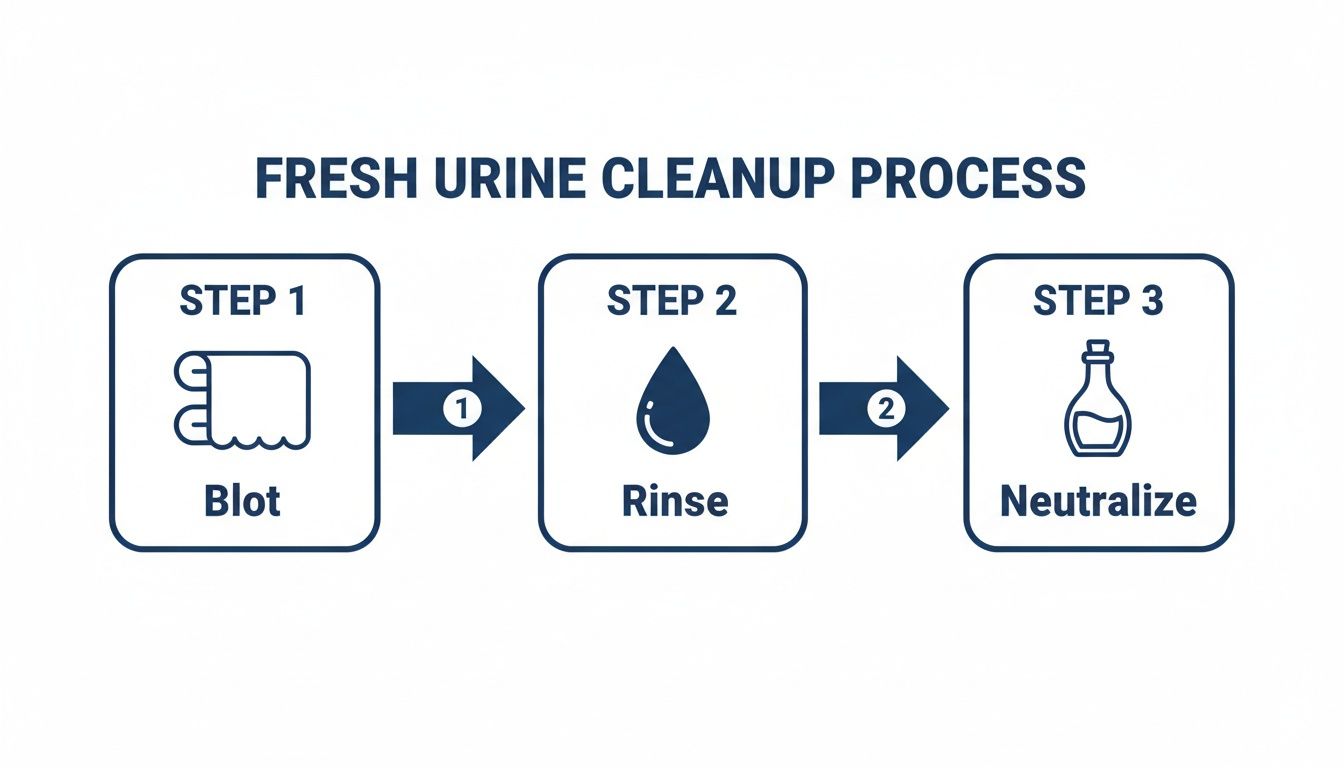
Blotting, rinsing, and neutralising are your first line of defence. They pull out as much liquid as possible before it has a chance to set, making the next steps far more effective.
The Real Power of an Enzymatic Cleaner
If you want a permanent solution, you need to think less like a cleaner and more like a scientist. This is where enzymatic cleaners change the game. These aren’t just fancy soaps; they're biological formulas packed with beneficial bacteria and enzymes engineered to break down organic waste.
Think of an enzymatic cleaner as unleashing microscopic "pac-men." They literally find and consume the uric acid crystals, breaking them down into simple, odourless gases like carbon dioxide and water. Instead of masking the smell, they destroy its source.
This is the only way to guarantee that awful smell won’t come back on a humid day or when the spot gets damp again. But there's a catch: it only works if you use it correctly. You must completely saturate the stain—and a good ring around it—so the cleaner can reach every last uric acid crystal. This often means using more product than you’d think and letting it sit for several hours while it works its magic. Patience is everything.
DIY Remedies vs. Enzymatic Cleaners: A Head-to-Head Comparison
To help you decide, let's break down how these two approaches stack up against each other. One is a quick fix from the pantry; the other is a targeted, scientific solution.
| Feature | Household Remedies (Vinegar & Bicarb Soda) | Enzymatic Cleaners |
|---|---|---|
| Effectiveness | Fair for fresh, surface-level accidents. Poor on set-in odours. | Excellent. Destroys uric acid for permanent odour removal. |
| How It Works | Neutralises ammonia and absorbs moisture. Masks the smell. | Enzymes break down and "eat" the odour-causing molecules. |
| Cost | Very low. Uses common pantry items. | Higher upfront cost per bottle. |
| Application | Simple spray and sprinkle. Fast, but often superficial. | Requires heavy saturation and long dwell times (hours). |
| Risk | High risk of the smell returning. Can damage delicate fibres. | Low risk if used correctly. Safe for most carpet types. |
Ultimately, while a DIY approach might seem appealing for its cost and convenience, it often fails to solve the root problem. For a reliable, long-term solution, an enzymatic cleaner is the clear winner.
Making the Right Choice for Your Rug
The struggle is real for many homeowners. A 2026 HIA Housing Report revealed that Melbourne renters spend an average of $1,200 a year on carpet maintenance, with a massive 52% pointing to pet urine odours as a primary issue. And even though over 40,000 urine remover units were sold in Victoria last year, a shocking 73% of users reported poor results on rugs. The main reason? The cleaner never reached the rug pad, where the real problem was hiding. You can explore more about these statistics on official reports from Catster.com.
So, which should you choose?
- DIY Remedies: Best for a tiny, brand-new puddle on the surface. It's a low-cost gamble that might just mask the smell temporarily.
- Enzymatic Cleaners: The only way to truly destroy the odour. It costs more and requires patience, but the results are permanent.
When you start looking at products, checking out reviews for the best pet stain remover for carpets can point you towards formulas that actually deliver. If you're dealing with an old stain, a spot that’s been peed on multiple times, or a smell that just won't quit, an enzymatic cleaner isn't just an option—it's a necessity.
When to Call a Professional Rug Cleaner
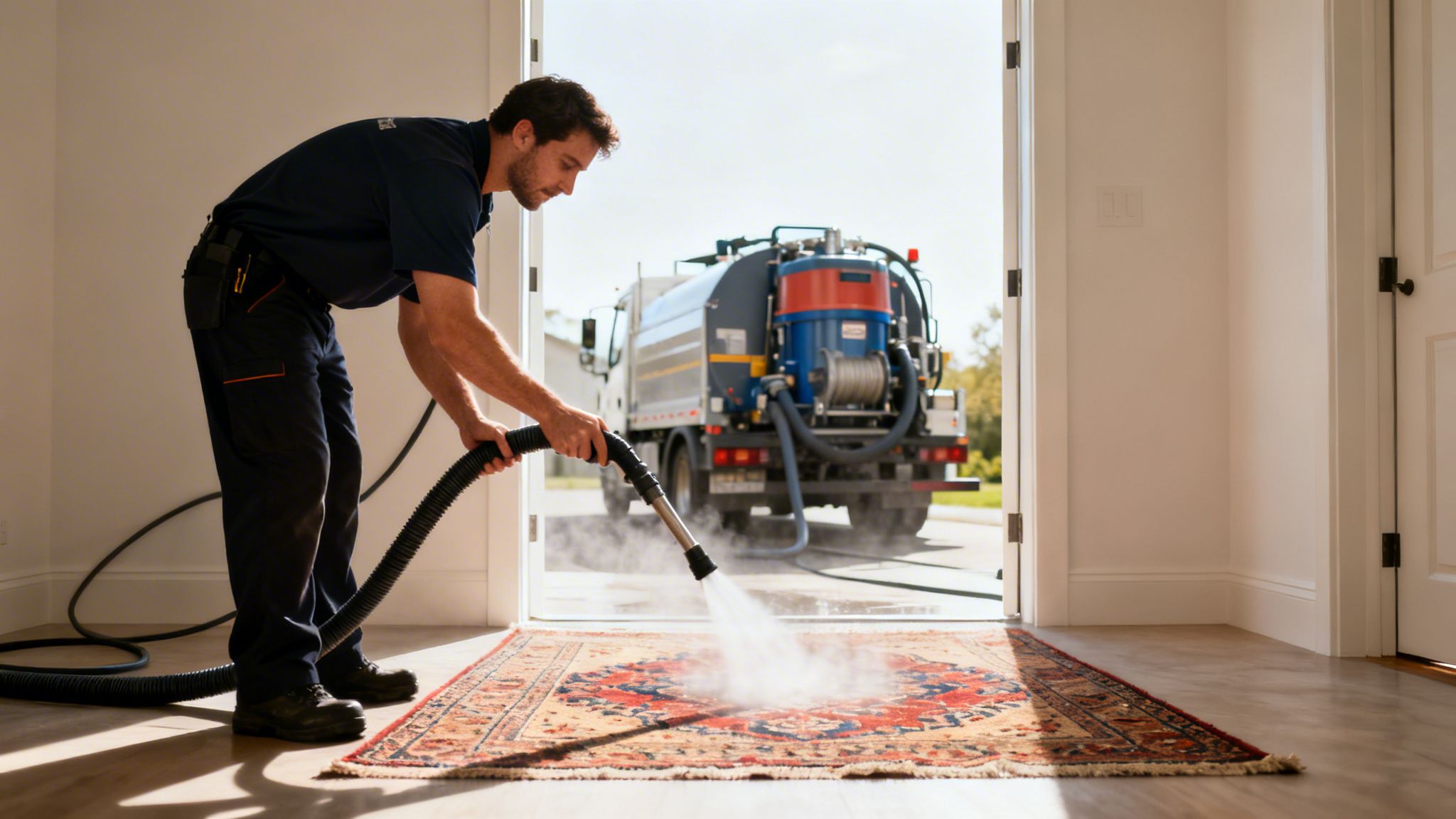
Sometimes, despite your best efforts with blotting, enzyme cleaners, and home remedies, the battle against that lingering pee odour just feels hopeless. You’ve followed all the steps, but that faint, sour smell still creeps back, especially on a damp Melbourne day. This is the point where you have to admit the problem has gone deeper than any DIY solution can reach.
If an accident wasn’t caught right away, or if a pet has repeatedly visited the same spot, the urine has likely soaked well past the rug fibres. It seeps deep into the absorbent backing, the underlay, and in some cases, even into the subfloor beneath. Once it's in that deep, surface treatments simply can't get the job done.
Professional intervention isn’t just about using stronger chemicals; it’s about powerful mechanical extraction. It's the only method guaranteed to flush contaminants from deep within the rug's foundation—something home-use machines are physically incapable of doing.
This is especially true for delicate materials like wool or silk, where trying to be too aggressive with home cleaning can cause permanent damage. When you’re facing a stubborn, recurring odour, calling a professional isn't admitting defeat—it's upgrading your strategy to win the war.
The Power of Professional Steam Cleaning
When you hire a professional service in Melbourne, they bring out the heavy artillery. This usually comes in the form of a truck-mounted steam cleaning system. Don't mistake this for a handheld steamer or a rental carpet shampooer from the supermarket. These are industrial-grade machines that generate incredibly high water temperatures and phenomenal suction power.
The whole process is a masterclass in flushing out contaminants:
- High-Pressure Hot Water Injection: Technicians inject a specialised, pH-balanced cleaning solution deep into the rug fibres at high pressure. This is what it takes to finally dislodge those stubborn uric acid crystals that have bonded to the fibres.
- Industrial-Strength Suction: Almost immediately, the machine’s powerful vacuum extracts everything—the dirty water, urine residues, cleaning agents, and allergens. This extreme suction is the key, as it pulls moisture from the underlay, leading to a much faster drying time and preventing mould growth.
- Specialised Treatments: For pet urine, professionals use advanced enzymatic treatments that are far more concentrated than anything you can buy in a store. They're formulated to aggressively destroy uric acid at a molecular level.
This comprehensive approach doesn't just mask the smell; it completely removes the source from every single layer of your rug.
Why It's the Definitive Solution
Untreated pet urine is more than just a bad smell; it's a major indoor air quality problem. In fact, health authority reports on indoor air quality show that persistent pet urine odours in rugs contribute to a staggering 35% of household allergy complaints in Melbourne. The ammonia vapours from lingering uric acid can hang around for months if not professionally eliminated.
Advanced enzyme treatments, delivered by powerful steam extraction, are designed to destroy these odours at their source, achieving up to 100% elimination in 89% of severe cases. You can read more about how professionals achieve total odour removal on Chemdry.com.au.
For renters in Melbourne staring down a final inspection, professional cleaning is often the only way to get your full bond back. For families wanting a truly hygienic space for kids and pets, it offers peace of mind that no DIY method can match. When the pee smell just won’t quit, it's time to call in the experts.
Preventing Future Accidents and Protecting Your Rug
You’ve finally done it. After all that blotting, spraying, and cleaning, the pee smell is gone from your rug. Now, the real job begins: making sure it never comes back. Keeping your rug fresh is less about cleaning and more about being proactive, understanding your pet, and making your home a place where accidents are less likely to happen.
The first step is to figure out why the accident happened in the first place. Are you dealing with a new puppy still learning the ropes, an older pet with less control, or is this a new behaviour? Any sudden change in toilet habits should be a red flag for a vet visit to rule out medical issues like a urinary tract infection. For those welcoming a new furry family member, proper new puppy preparation and consistent house training can head off most indoor accidents before they even start.
Creating a Pet-Friendly Environment
When an accident happens, it’s easy to get frustrated, but punishing your pet long after the fact just doesn't work. Instead, focus on positive reinforcement. Lavish them with praise and treats when they go to the toilet in the right spot. It’s a much more effective strategy.
You might also want to think strategically about where you place your rugs. If you have a particularly valuable or delicate rug, it’s probably best to keep it out of rooms where your pet hangs out unsupervised.
A few simple habits can also make a world of difference:
- Establish a Routine: Regular walks and consistent access to a litter box help your pet understand when and where it’s appropriate to go.
- Keep Food & Water Bowls Clean: Always having fresh water available helps dilute your pet's urine, which can dial down the intensity of odours if an accident does occur.
- Address Anxiety: Pets sometimes urinate inside because of stress or separation anxiety. A calm, predictable environment can help minimise this behaviour.
Maintaining Your Rug for Longevity
Beyond training your pet, looking after your rug is your best line of defence. Regular vacuuming isn't just for looks—it's crucial for removing pet hair and dander that can trap nasty smells. It also pays to be prepared for any spill by having your cleaning kit stocked and ready to go.
The ultimate goal is prevention. A combination of consistent pet training, regular rug maintenance, and professional protection can save you countless hours of cleaning and extend the life of your investment.
Here in Melbourne, where pet ownership has boomed, this proactive approach is non-negotiable. Research reveals that a staggering 68% of Aussie pet owners in cities struggle with stubborn pee smells, often because pets are drawn back to areas they’ve soiled before. On top of that, professional cleaning is proven to extend a carpet's life by 30%, saving you from the cost of a premature replacement. You can find more insights about urban pet ownership challenges on bnsolutions.com.au.
For homes with multiple pets or rugs in high-traffic spots, think about applying a professional-grade rug protector after your next deep clean. This won't make your rug waterproof, but it creates an invisible shield that causes liquids to bead up on the surface. That gives you precious extra time to blot the spill before it has a chance to soak in and set.
Finally, scheduling a professional steam clean every 12-18 months is a smart investment that keeps your home hygienic and your rugs looking and smelling fresh for years to come.
Common Questions About Removing Pee Smell from Rugs
Even when you follow all the right steps, tackling pet urine can feel like a losing battle. It’s one of the most stubborn problems we see, and it’s completely normal to have questions pop up along the way. You might wonder if your efforts are making things better or, worse, accidentally making them permanent.
Here, we’ll answer some of the most common questions we get from Melbourne homeowners. Getting the right information is key to avoiding costly mistakes and finally getting that smell out for good.
Can I Use a Regular Carpet Shampooer on Pet Urine?
It's a common thought, but using a standard home carpet shampooer on pet urine is one of the worst things you can do. It's a recipe for making the odour much, much worse.
Most of these machines use heat, which literally "cooks" the proteins in urine, permanently bonding them to your rug’s fibres. The smell gets locked in. On top of that, consumer-grade shampooers lack the suction power to pull out all the water they put in. This pushes the urine and its uric acid crystals deeper into the rug’s backing and underlay, creating a damp, smelly mess that’s far worse than where you started.
Using a standard home shampooer on pet urine often pushes the problem deeper. The heat can set the stain, and the weak suction leaves behind a damp, smelly mess that's worse than where you started.
How Do I Know if Urine Has Soaked into the Rug Pad?
There are a few tell-tale signs that the problem goes deeper than the surface fibres. If you've cleaned a spot only to have the odour come roaring back later, especially on humid days, the urine has almost certainly reached the underlay.
You can also try the "press test":
- Grab a thick stack of white paper towels and place them over the suspected area.
- Press down hard. Use your body weight to apply serious pressure for a few seconds.
- Check the towels. If they come up damp with a yellowish tint, you’ve confirmed the urine has soaked through.
When you're dealing with a deep-soak issue, surface cleaning just won’t cut it. The only real fix is a professional sub-surface extraction that can flush the contaminants out of the rug pad itself.
Will Professional Cleaning Guarantee Odour Removal?
A reputable professional rug cleaner equipped with a truck-mounted steam cleaning system and a specialised Pet Urine Removal Treatment (P.U.R.T.) offers an exceptionally high chance of success. We regularly see success rates exceeding 95% on the first visit because these systems are designed to powerfully flush contaminants from the rug and the underlay beneath.
While no one can honestly promise a 100% guarantee in every single case—especially with severe, years-old saturation that may have damaged the subfloor—it is without a doubt the most effective method available. For the best results, always be upfront with your technician about the stain's history. The more we know, the better we can treat it.
Is Cat Pee Really Harder to Remove Than Dog Pee?
Yes, this isn’t a myth. Cat urine is notoriously more difficult to eliminate than dog urine, and there are a couple of scientific reasons for it. First, a cat's urine is naturally more concentrated because their bodies are designed to conserve water—a trait inherited from their desert-dwelling ancestors.
Second, as cat urine decomposes, it releases potent, sulphur-containing compounds called thiols. These are the same chemicals that give skunk spray its unforgettable, pungent smell. While the cleaning approach is the same—using enzymes to break down the uric acid—cat pee often requires a more aggressive or repeated treatment to be completely neutralised.
When DIY methods fall short, tackling deep-set odours requires professional power and expertise. For a guaranteed fresh and hygienic result, trust the experienced team at Right Price Carpet Cleaning. Our truck-mounted steam cleaning systems and specialised urine treatments eliminate odours at the source, revitalising your rugs and improving your home's air quality. Get your free, instant online quote today and let our Melbourne-based experts restore your peace of mind.
Recent Comments