




You know that little metal or plastic strip that runs across the doorway between two carpeted rooms? That’s a carpet to carpet trim, and it’s one of those small details that does a surprisingly big job.
Think of it as the unsung hero of your flooring. It’s designed to create a clean, safe, and durable join between two separate pieces of carpet. Without it, you’re left with a raw, exposed edge that’s just asking for trouble.
The Secret to Seamless Floors
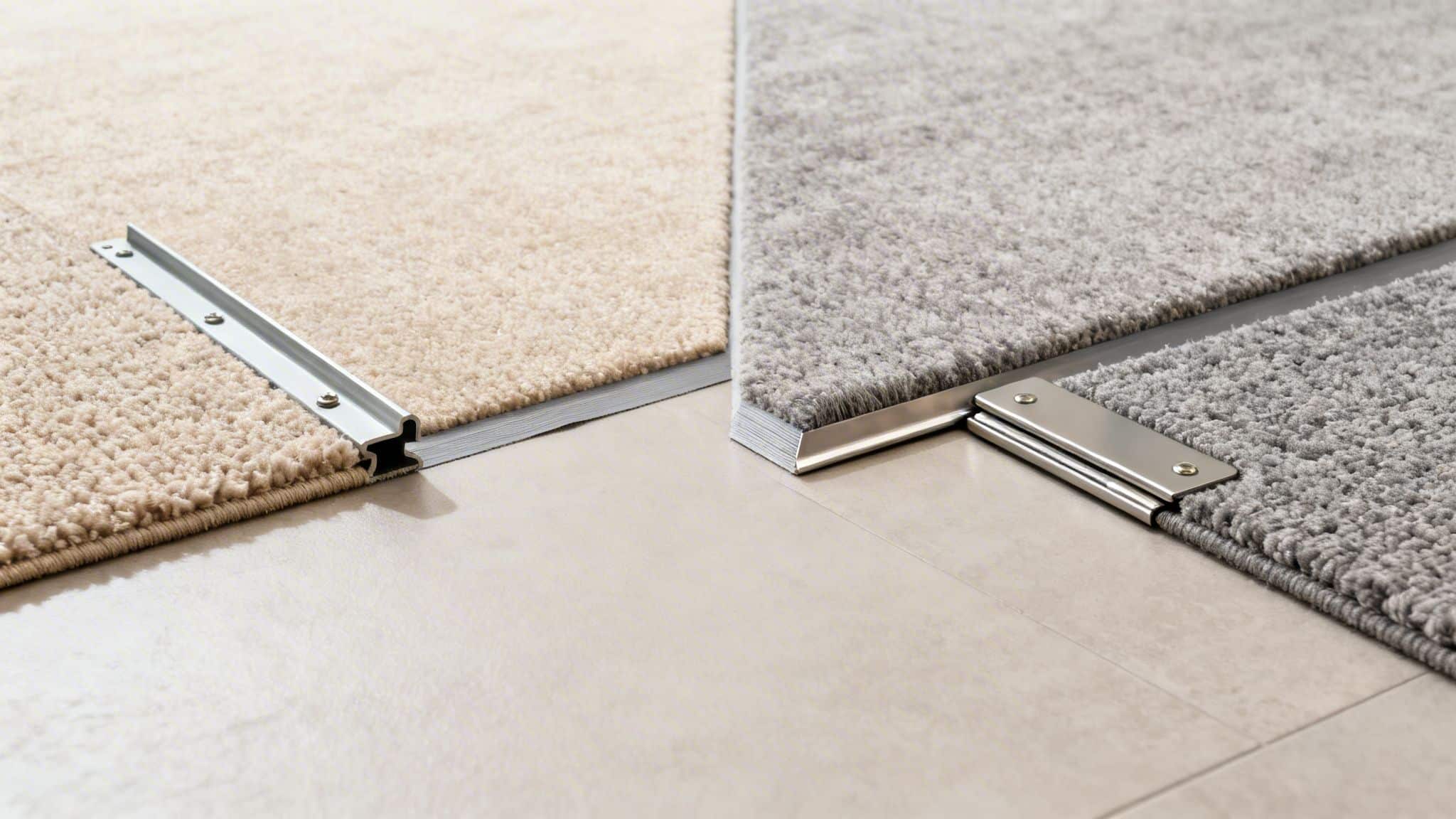
This simple component is far more important than it looks, especially for Melbourne homeowners dealing with high-traffic areas or strata managers preparing properties for handover. Left exposed, carpet edges will quickly start to fray, unravel, and lift. This not only looks messy but can drastically shorten the life of your flooring investment.
A properly installed carpet to carpet trim isn't just about aesthetics; it's a crucial element for home safety. It creates a smooth, low-profile transition that gets rid of a common tripping hazard. For families with young kids, elderly residents, or anyone just walking through the house at night, this small detail makes a world of difference.
Why Trim Matters for Durability and Cleanliness
Beyond safety, these transition strips are the first line of defence for your carpet's integrity. All the foot traffic funnelling through a doorway puts immense stress on the carpet edges. A secure trim pins those edges down, stopping the premature wear and tear that leads to expensive repairs or even a full replacement.
And let’s talk about cleaning. A seamless transition makes vacuuming much more effective. It closes the gap where dirt, dust, and allergens love to hide, creating a healthier indoor environment—a major plus for any Melbourne home.
In high-traffic Melbourne homes, professional truck-mounted cleaning achieves faster drying—often under 2 hours—and removes stains that DIY methods miss, extending carpet lifespan by years and cutting replacement costs, which average $50-$100 per square metre.
This professional approach makes sure that even the grime hiding along the trim lines gets completely removed. As a major hub for Australia's cleaning industry, Melbourne gives homeowners access to top-tier services that can keep their carpets in prime condition. You can learn more by exploring the market insights for carpet cleaning in Australia.
So whether you’re renovating, getting ready for an end-of-lease inspection, or just want your home to look its best, understanding your trim options is a small step that delivers a huge impact.
Exploring Your Trim Options
When you're joining two pieces of carpet, getting the transition right is everything. It's not just about hiding a seam; it’s about creating a join that won't fray, lift, or become a trip hazard down the line. Think of it as the finishing touch that pulls the whole room together.
For Melbourne homeowners, choosing the right carpet to carpet trim depends on where the join is and the look you're after. Do you want something totally invisible, or a clean, durable border for a high-traffic doorway? Let’s walk through the main options you’ll come across.
Gripper Strips or Z-Bars
If you want a join that’s practically invisible, a gripper strip, often called a Z-Bar, is the classic choice. It's a clever metal strip with angled teeth on both sides that grip the underside of each carpet piece. When installed, it pulls the two carpets together under tension, forcing the carpet pile to mesh and completely hide the metal strip underneath.
The end result is a smooth, continuous flow of carpet from one room to another. This makes it a fantastic solution for doorways where you want the flooring to feel like a single, uninterrupted surface.
Seam Tape
For the ultimate invisible finish in large, open-plan spaces, nothing beats professional seam tape. This isn't your everyday hardware store tape. It's a special tape with a powerful, heat-activated adhesive on it.
Installers use a specialised seaming iron to melt the glue, which then fuses the two carpet edges together from the back. Because the join happens underneath, there’s no trim or strip visible on the surface at all. It’s the secret to making two separate carpet sections look like one giant, seamless piece.
Single and Double Naplock Trims
Sometimes, you need a visible trim for extra durability and a clean, defined edge. This is where naplock trims come in. They are metal strips that are designed to sit on the surface and protect the carpet edges.
- Single-Naplock: This trim has gripper teeth on one side and a flat, smooth edge on the other. It’s often used to finish a carpet edge against a different floor type, but it can also be used in carpet-to-carpet joins to neatly tuck and secure one edge.
- Double-Naplock (Cover Plate): This is essentially a visible metal plate that sits over the top of the seam, covering both carpet edges. It’s a workhorse solution, perfect for busy doorways, bridging carpets of slightly different heights, or as a repair for a join that has started to fail.
To help you decide, let's compare these common trim types at a glance.
Comparing Carpet to Carpet Trim Types
| Trim Type | Appearance | Best For | Durability |
|---|---|---|---|
| Z-Bar (Gripper) | Nearly invisible once installed | Seamless transitions in doorways | Good |
| Seam Tape | Completely invisible | Large open-plan areas and repairs | Excellent (when done professionally) |
| Double-Naplock | Visible metal cover strip | High-traffic areas, different carpet heights | Very High |
| Single-Naplock | Visible metal edge on one side | Joining carpet to another flooring type | High |
Each option serves a different purpose, balancing looks with long-term performance.
This decision tree can help you picture where these choices fit into the bigger picture of a flooring project in your home.
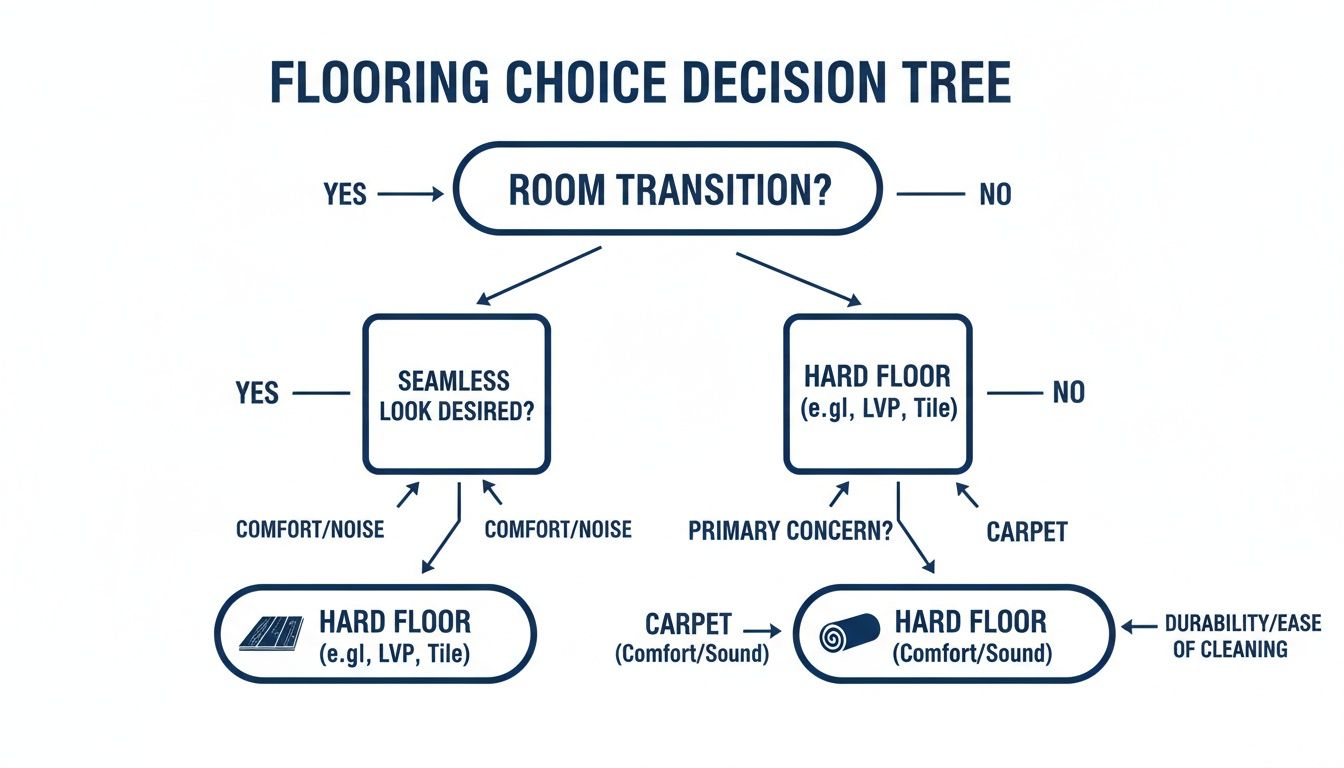
As the flowchart shows, once you've settled on carpet, figuring out the right transition is the next critical step.
Choosing the right carpet to carpet trim is about balancing function and aesthetics. A seamless join prevents fraying and tripping, while a visible strip can provide a durable, clean border in busy areas.
When looking at trim options, don't forget to consider related accessories that protect your investment, like stair rods for carpet protectors. These not only hold stair runners securely in place but also add a touch of classic style. Ultimately, selecting the right join ensures your carpet looks great and holds up to daily life for years to come.
Choosing the Right Material for Your Home
The material you pick for your carpet to carpet trim isn't just a minor detail—it’s a choice that directly impacts the durability, look, and feel of the join for years to come. Just like you wouldn't put the same carpet in a quiet bedroom as you would in a busy hallway, your trim needs to be up to the job. For Melbourne homeowners, this is always a balance between style and pure practicality.
Think of it like choosing shoes for a night out. You might wear sleek dress shoes for a dinner party but switch to sturdy boots for a long walk. A trim in a low-traffic guest room can afford to be more decorative than one in a bustling family living area that sees constant foot traffic.
Aluminium for Modern Durability
When you need something that just works and will last, aluminium is the go-to. It's the workhorse of transition strips, loved for its strength and clean, contemporary finish. Its knack for resisting dents, scratches, and corrosion makes it a no-brainer for high-traffic zones like entryways, corridors, and doorways between main living areas.
Aluminium is a tough, set-and-forget solution. It holds its own against daily vacuuming, kids playing, and pets running around without getting bent out of shape. While some might find it a bit industrial, its sleek lines fit perfectly with the modern aesthetic of many Melbourne homes.
For a rental property or an end-of-lease handover, a well-installed aluminium trim is a brilliant move. It shows you've taken care of the property and helps you secure your bond by preventing the kind of carpet fraying that property managers always notice.
PVC and Vinyl for Flexibility and Budget
If you're working with a tight budget or need a trim that disappears into your flooring, PVC (vinyl) trim is an excellent choice. These strips are flexible, affordable, and come in a huge range of colours and faux-wood finishes, making it easy to find a close match for your carpet.
Their flexibility is also a major plus, as it allows them to sit nicely over slightly uneven subfloors where a rigid metal strip might not. While they aren't as bulletproof as aluminium, they provide a soft, safe edge that’s perfect for kids’ bedrooms, playrooms, or other less-used parts of the home.
Wood for Classic and Cohesive Style
For a truly premium and traditional finish, nothing beats the warmth of real wood. A wooden carpet to carpet trim introduces a touch of elegance that metal or plastic simply can't match. It’s the ideal option when you want the transition itself to be a deliberate part of your home’s design.
You can stain or paint wood trim to perfectly coordinate with your skirting boards, door frames, or even your furniture, creating a polished, unified look. Just keep in mind that wood is more vulnerable to scratches and moisture, so it’s best reserved for low-humidity rooms with moderate foot traffic, like a master bedroom or a formal dining area.
DIY Installation vs Professional Fitting
It’s the classic weekend warrior dilemma: should you fit that carpet to carpet trim yourself or call in the pros? For the hands-on Melbourne homeowner, going the DIY route seems like an easy way to save a few dollars. And to be fair, for a simple surface-mounted trim, it sometimes can be. But getting that seamless, professional-looking join often takes more than just a bit of weekend enthusiasm.
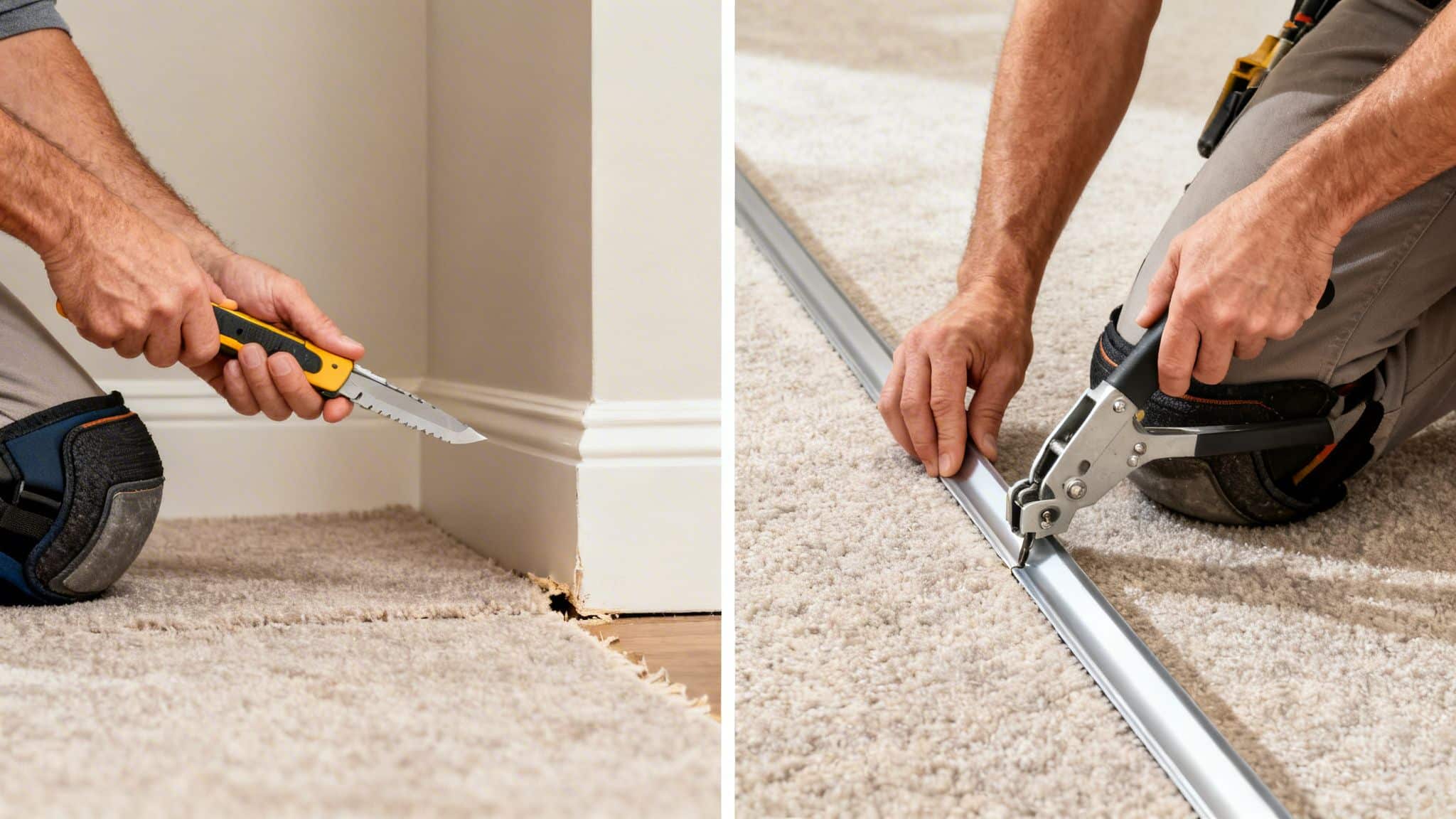
A proper DIY job hinges on having the right gear, and we’re not talking about your standard toolbox. You'll need a sharp utility knife, a tape measure, and the one non-negotiable tool: a carpet knee kicker. This specialised device is what allows you to stretch the carpet tight against the trim, creating a secure finish that won't give up.
Without that tension, the carpet will eventually work its way loose, creating ugly ripples and a seam that’s destined to fail.
Common DIY Pitfalls
The biggest mistake we see from DIY attempts is failing to get the carpet tight enough. A loose fit isn't just unprofessional; it’s a serious tripping hazard. You could also easily cut the carpet too short or chew up the pile with the wrong tools, leaving you with frayed, messy edges that are impossible to hide.
These little mistakes can quickly turn a simple project into a costly repair. The hundred dollars you were trying to save can easily become a much larger bill to have a professional come out and re-stretch or patch the entire section.
A professional fitting guarantees a flawless, tight finish that protects your carpet from premature wear. This is a critical factor for protecting your flooring investment, particularly in rental properties or high-traffic homes.
The Value of a Professional Fitter
Hiring a professional carpet layer brings expertise, speed, and most importantly, peace of mind. They’ve seen it all—from uneven subfloors to awkward angles—and know exactly how to install your carpet to carpet trim perfectly the first time. They come equipped with power stretchers and other industry tools that create a drum-tight finish you simply can’t achieve on your own.
This professional tensioning is what prevents buckling down the road and ultimately extends the life of your carpet. A properly secured trim protects the vulnerable edges from fraying, which is a detail strata managers and real estate agents look for when preparing a property for handover. A clean, secure transition quietly signals that a home has been well looked after.
Think of professional installation as an investment in your floor’s long-term health and appearance. And just like the installation, ongoing care matters. To keep your carpets and their seams looking brand new, it’s worth exploring what professional carpet cleaners in Melbourne can do. They can deep clean right to the edge without ever compromising the trim.
Budgeting and Maintenance in Melbourne
When you're planning for carpet to carpet trim, it’s smart to look beyond the initial price tag. The real cost includes both the materials and the long-term upkeep needed to keep your floors looking sharp. In Melbourne, prices can shift depending on what material you pick and whether you bring in a professional to fit it. Let's break down the numbers so you know exactly what to expect.
For materials alone, you can find basic PVC or vinyl strips for about $5 to $15 per linear metre. They’re a solid choice for a quick, budget-friendly update. If you’re after something a bit more robust and modern, mid-range aluminium trims will set you back between $15 and $30 per metre. For a truly seamless look, premium wood trims that can be stained to match your decor can start at $30 and go up to over $60 per metre.
Estimating Installation and Long-Term Care Costs
Having your trim professionally installed will add to the final bill. Most Melbourne fitters charge somewhere between $70 to $120 per hour or offer a fixed price for each room. While going the DIY route can save you cash on labour, a pro installation guarantees the trim is secure, which protects your carpet from fraying and ultimately makes it last longer.
Once your trim is in, maintenance is key. The seam where your carpets meet is a magnet for dust, dirt, and allergens. You’ll want to get in there regularly with a vacuum’s crevice tool to stop grime from building up and working its way deep into the fibres along the join.
But vacuuming can only do so much.
For a deep clean that truly revitalises your carpet and sanitises that tricky seam line, nothing beats professional steam cleaning. Powerful truck-mounted machines can flush out years of built-up grime without causing any damage to the trim or the carpet itself.
This level of cleaning is a game-changer for maintaining a healthy home, especially in Melbourne’s competitive rental market. The city is a major hub for cleaning services; in fact, the Australian carpet cleaning market is a huge industry with thousands of local operators offering specialist services. You can dig into more data on the growth of Australia's carpet cleaning sector on IBISWorld.
Why Professional Cleaning Protects Your Investment
Investing in an annual steam clean isn't just about keeping things looking fresh—it’s about protecting your flooring for the long haul. By removing the tiny, abrasive dirt particles from the base of the carpet fibres along the trim, you prevent premature wear and fraying that can ruin the look of your join. If you're curious about the specifics, our guide can help you figure out how much carpet cleaning costs in Melbourne.
For homeowners, real-estate agents, and strata managers, a clean, perfectly maintained join is a clear sign of a well-cared-for property. It's a small detail that makes a huge difference.
Of all the little details that finish a home, the trim that joins two carpets together is one that often gets overlooked—until it starts causing problems. We get a lot of questions from Melbourne homeowners about these transitions, so let's clear up some of the common ones.
Getting these details right helps you look after your floors, make smart choices when repairs are needed, and keep your home safe and looking its best.
Can You Join Two Different Carpets?
Absolutely. In fact, that’s one of the main jobs of a transition strip. It’s very common to have a plush, high-pile carpet in a bedroom meeting a tough, low-pile one in the hallway, and a trim piece is what makes that join look deliberate and clean.
A double-naplock trim is usually the go-to for this job. Its cover plate is designed to bridge small differences in height and texture between the two carpets. It neatly tucks away the raw edges of both, giving you a tidy border instead of an awkward, frayed meeting point.
How Do You Clean Under a Carpet Transition Strip?
It’s no secret that dirt and dust love to build up along the edges of a seam. For your regular clean, just grab the crevice tool on your vacuum and run it along the edge of the trim. It only takes a second, but it stops that gradual buildup of grime that can get ground into the carpet fibres over time.
For a proper deep clean, though, vacuuming alone won't cut it. Professional steam cleaning uses high-pressure hot water to blast out all the embedded grit right from the base of the carpet to the edge of the trim, all without causing any damage. Our guide on how often you should clean your carpet has some great tips for creating a schedule to keep these high-traffic areas spotless.
A loose or lifted trim isn't just an eyesore; it's a significant tripping hazard. Addressing it quickly is crucial for household safety, especially in high-traffic doorways.
Can You Fix a Loose Carpet Trim?
You might be able to. If it’s a simple metal strip held down with screws, sometimes they just need tightening. If the screw holes are worn out, using slightly larger screws can often give it a fresh grip. If the trim itself is badly bent or broken, swapping it out for a new one is a pretty simple DIY job.
But if the carpet is pulling away from the trim, that’s a whole different ball game. It’s a classic sign that the carpet has lost tension and needs to be re-stretched. A professional carpet layer will use a power stretcher to pull the carpet taut again before locking it back into the trim. This isn’t a quick fix—it’s the proper, permanent solution that makes the floor safe again.
For a truly deep clean that revitalises your carpet seams without causing damage, trust the experts at Right Price Carpet Cleaning. Get your instant online quote today!
Recent Comments