



A spill always seems to happen at the worst time. Guests are over, the kids are running through the lounge, the dog barrels in from the yard, or you are already halfway out the door. Then you look down and see it. Red wine. Coffee. Grease. Something sticky and bright that absolutely does not belong in the carpet.
That first minute matters more than many realize. Good carpet stain removal melbourne advice is not about grabbing the strongest spray you can find and scrubbing until your arm hurts. It is about doing the right thing, in the right order, before the stain settles deeper and turns a simple cleanup into a permanent mark.
That Heart-Stopping Moment A Stain Hits Your Carpet
The worst move is panic cleaning.
Most carpet damage I see after a spill is not caused by the original stain. It is caused by rubbing, soaking, bleaching, or layering five different supermarket products on top of each other. A carpet is a bit like skin. If you attack it too hard, you can make the problem spread, fade, or set.
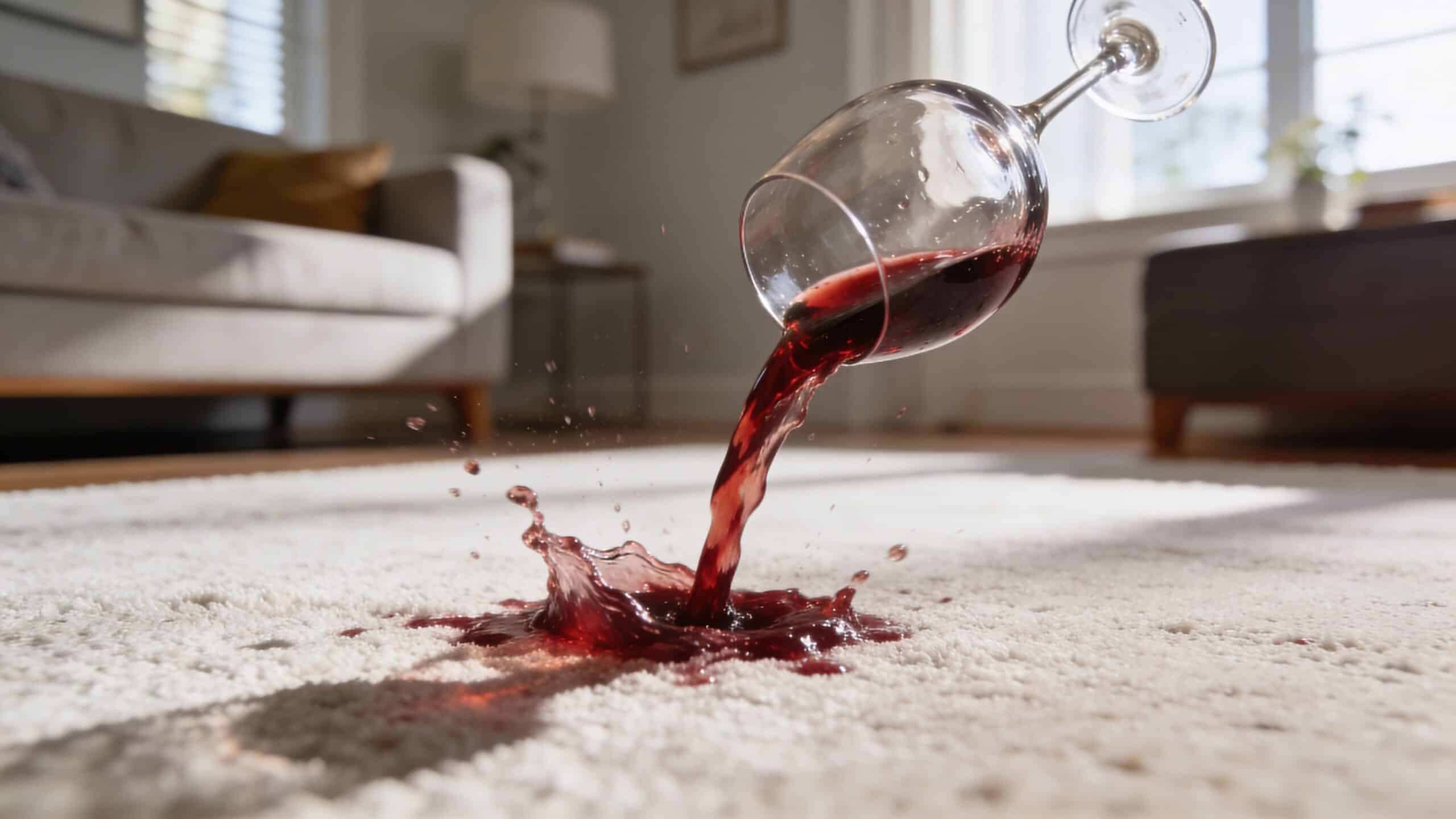
Do this first
When a stain lands, keep the response simple.
- Stop the source: Pick up the glass, plate, pet mess, or leaking container.
- Remove solids gently: If there is food, mud, or vomit, lift it off with a spoon or dull edge. Do not push it down.
- Blot, do not scrub: Press with a clean white cloth or paper towel.
- Work from the outside in: That keeps the stain from growing.
- Test before applying anything: Especially on wool, patterned carpet, or older carpet.
The aim is containment. You are trying to pull contamination out of the fibres, not grind it sideways.
Why speed changes the result
Fresh stains are always easier than old ones. According to this Australian guide on how to get stains out of carpets, organic stains such as food or urine can set within 24 hours, and Australian removers show 90% success on fresh stains versus 60% on stains older than a week. The same source notes they can bond up to 70% stronger to natural fibres like wool, and the blot-dwell-rinse-dry sequence improves results.
Tip: If you only remember one rule, remember this one. Blotting lifts. Scrubbing spreads.
Some stains respond well to careful DIY first aid. Others need proper equipment, heat control, fibre knowledge, and strong extraction. The trick is knowing the difference early, before a small spot becomes a bigger job.
Your DIY First Aid Kit For Common Carpet Stains
The first few minutes after a spill are about chemistry and restraint.
Not every stain behaves the same way. A greasy takeaway spill acts differently from black coffee. Pet urine is different again because it is not just a colour problem. It can become an odour problem and, if it reaches the underlay, a repeat problem.
Know what you are dealing with
Think of stains in three practical groups.
- Water-based stains: Coffee, tea, juice, soft drink, muddy marks.
- Oil-based stains: Makeup, greasy food, some lotions.
- Protein-based stains: Blood, milk, urine, vomit.
Heat, detergent strength, and moisture all affect these differently. Protein stains in particular can become harder to remove if handled the wrong way. For day-to-day guidance on pet accidents, this roundup of the best pet stain remover for carpets is useful because it focuses on enzyme-based options rather than perfumed cover-ups.
Your basic home kit
Keep these items handy:
- White cloths or paper towel: White avoids dye transfer.
- Cold water: Safe starting point for many fresh spills.
- White vinegar: Useful in a mild diluted mix.
- Baking soda: Good for absorbing moisture and odour.
- Clear dish soap: A tiny amount goes a long way.
- Spray bottle: Helps apply lightly instead of flooding the area.
- Spoon or dull scraper: For lifting solids.
Avoid coloured cloths, bleach, and anything with strong dye, ammonia, or heavy perfume unless you know exactly how it reacts with your carpet.
Immediate DIY Treatment for Common Stains
| Stain Type | Immediate Action | DIY Cleaning Solution |
|---|---|---|
| Coffee or tea | Blot straight away. Do not rub. | Cold water first, then a small amount of diluted white vinegar solution if colour remains |
| Red wine | Blot repeatedly with clean white cloths | Light application of cold water, then blot again. Avoid over-wetting |
| Pet urine | Blot as much liquid as possible, then press dry towels firmly into the spot | Baking soda after blotting for moisture and odour control, followed by a careful vinegar-water rinse |
| Ink | Dab gently. Do not scrub or spread it | Best left minimal at home. Test any product first on a hidden area |
| Greasy food | Lift solids first, then blot | A tiny amount of clear dish soap in water, applied lightly and blotted out |
| Vomit or food protein | Remove solids carefully and blot | Cold water only to start, then a gentle rinse and thorough drying |
The right sequence matters
A lot of DIY failures come from doing the right product in the wrong order.
Use this sequence:
- Blot
- Let the solution dwell briefly
- Rinse lightly
- Dry thoroughly
If you keep adding product without rinsing and drying, you can leave sticky residue behind. That residue acts like flypaper for dust and foot traffic. The stain may look gone for a day, then reappear as a dark patch.
Key takeaway: Wet is not clean. A carpet can look flushed out while still holding soil, product, or odour underneath.
What usually makes things worse
Some common mistakes are almost guaranteed to reduce your chances.
- Hard scrubbing: This roughs up the pile and pushes the stain wider.
- Too much water: Overwetting can drive contamination into the backing or underlay.
- Mystery sprays: Mixing products can lock in a stain or bleach the fibre.
- Waiting overnight: Fresh spills nearly always give you a better chance than delayed treatment.
If you want more household-specific examples, this guide on top common carpet stains and how to remove them is a solid reference point for matching the stain to the right first response.
The Science of a Professional Deep Clean
DIY work can improve a fresh surface spill. It cannot match extraction power.
Professional hot water extraction, often called steam cleaning, works because it does two jobs at once. It breaks soil and stain material loose with heat and solution, then removes it with powerful vacuum recovery before that loosened mess can settle back into the carpet.
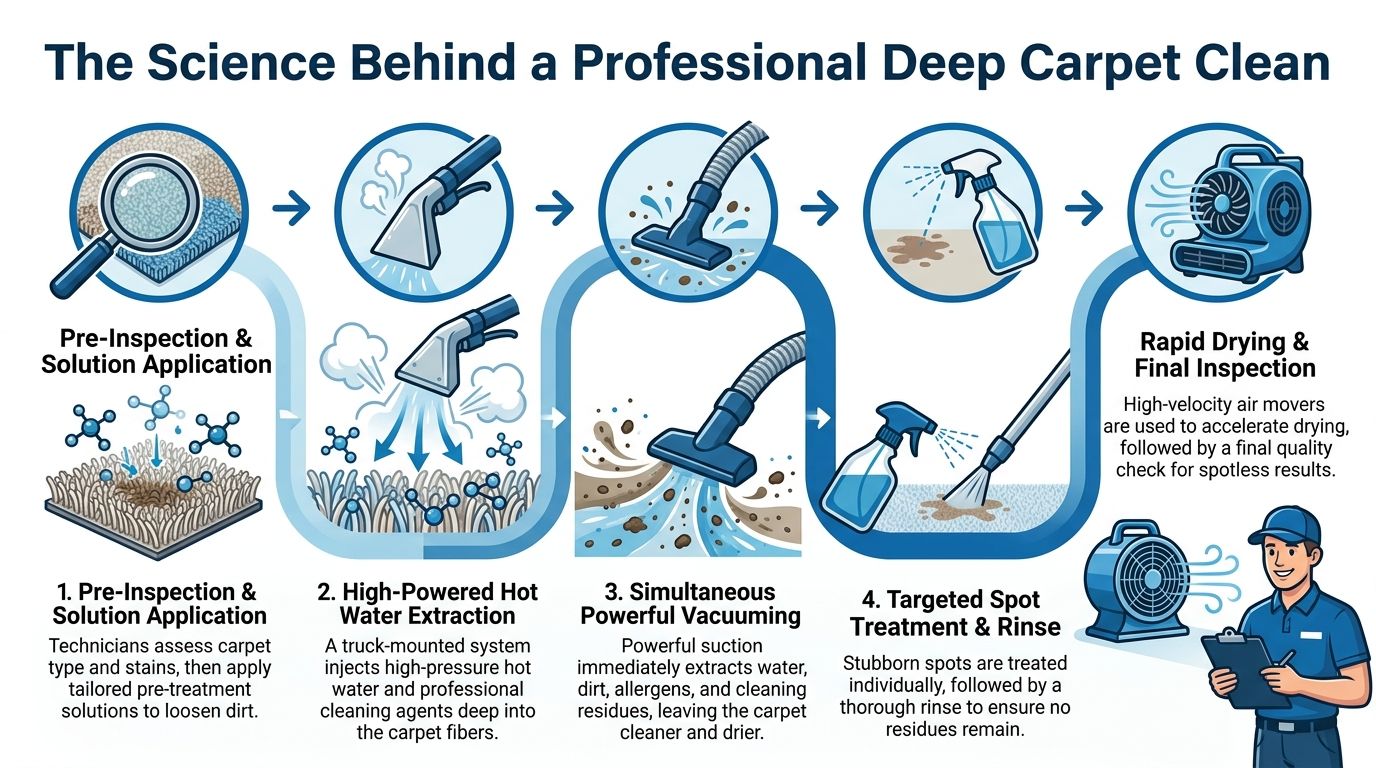
Why heat and extraction work together
Think of greasy residue in a frying pan. Cold water shifts very little. Add heat, the residue softens, and it becomes easier to lift away. Carpet fibres behave similarly when oily soil, tracked-in grime, and stain residue build up through the pile.
An Australian article on which carpet cleaning method is best states that hot water extraction uses water over 93°C, removes up to 85% of bacteria, allergens, and dust mites, and can achieve drying times of 1 to 2 hours with truck-mounted systems.
What happens during a proper clean
A professional deep clean is not just one pass with a wand.
- Inspection and fibre check: The technician identifies the carpet type and stain behaviour first.
- Pre-treatment: The cleaning agent is chosen to suit the soil load and stain type.
- Hot water extraction: Heated solution is injected and extracted in the same working motion.
- Spot treatment: Any stubborn area gets individual attention.
- Final rinse and dry setup: The cleaner checks for residue and supports even drying.
One option in Melbourne is professional carpet steam cleaning, which explains how truck-mounted extraction differs from lighter surface methods.
Why surface cleaning has limits
Dry methods and bonnet-style cleaning can be useful in some maintenance settings, but for stain removal they often leave more behind than people expect. Surface cleaning can freshen appearance, but it may not fully pull out what sits deep in the pile, backing, or traffic lanes.
That is why professional carpet stain removal melbourne jobs often come down to extraction quality, not just detergent choice. The machine matters. So does the operator.
Tip: The best clean is not the one with the strongest smell. It is the one that removes soil and residue without leaving the carpet crunchy, sticky, or soaked.
When To Call A Professional Carpet Cleaner in Melbourne
Some stains are home jobs. Some are not.
The fastest way to tell is to stop asking, “Can I clean this?” and start asking, “What happens if I get this wrong?” That shift saves carpets.
Call early if any of these apply
- The stain is old: A stain that has sat for days is already a different job from a fresh spill.
- The carpet is wool or delicate: Natural fibres react differently from standard synthetics.
- The stain is unknown: If you do not know what caused it, random treatment is risky.
- It keeps coming back: Wicking from the backing or underlay is common after DIY over-wetting.
- It is a pet accident: Odour and bacteria can sit below the visible patch.
- It is a dye-heavy stain: Ink, makeup, cordial, and some food colourings can set fast.
- The area is large: Big spills need controlled moisture and proper extraction.
DIY has a ceiling
A shop-bought spray bottle and a rental machine can help in simple situations. They can also create bigger problems.
Overwetting is one. The carpet may feel clean on top while the underlay stays damp below. Wrong chemistry is another. I have seen bleach marks, yellowing, and stubborn browning caused by well-meaning DIY work.
The pile can also suffer. Aggressive brushing makes some carpets go fuzzy, patchy, or flat. Once the texture changes, no stain removal process can restore the original fibre shape.
A simple decision test
If you answer yes to any of these, stop and book a professional.
- Would replacing this carpet cost far more than cleaning it?
- Would a failed DIY attempt make the stain more obvious?
- Is this in a rental, office, hallway, or visible living area where appearance matters?
- Is there odour, not just colour?
A proper technician can usually tell you whether the issue is likely to improve, stabilise, or remain visible before treatment starts. That is better than gambling with the wrong product and hoping for the best.
Hiring a Melbourne Pro What To Expect and What To Pay
Price matters. So does what sits behind the price.
A cheap carpet clean can be fine for a basic refresh. It can also mean lighter equipment, rushed work, no real stain assessment, and plenty of upselling once the technician is in your home. On the other hand, the highest quote is not automatically the smartest one either. You want a clear process, realistic expectations, and proper extraction.
Current Melbourne price ranges
A recent Melbourne pricing guide on carpet cleaning costs in Melbourne says professional carpet cleaning for a standard room now sits between $35 and $75, and a typical three-bedroom house averages $180 to $240. The same source notes prices are up 40 to 50% from around a decade ago.
That increase makes sense from a trade point of view. Labour costs have risen. Chemicals cost more. Equipment is better and more expensive. Customers also expect faster drying, cleaner finishes, and safer products than they did years ago.
What should be included
Do not focus only on the room rate. Ask what that rate buys.
A worthwhile service should spell out:
- What cleaning method is used
- Whether stain treatment is included or separate
- Whether the quote is flat-rate or likely to change onsite
- What drying time you should expect
- Whether technicians are insured and vetted
- Whether there is a satisfaction policy
For readers wanting a local benchmark, this page on carpet cleaning cost Melbourne gives a practical look at how pricing is usually structured.
Set realistic expectations
No honest technician should promise that every stain disappears completely. Old dye stains, bleach damage, heat-set marks, and previous DIY mistakes can leave permanent change even after the soil is removed.
What a good operator should do is give you a realistic read before starting. That means saying whether they expect full removal, partial improvement, or mainly odour reduction with some visual shadow remaining.
Key takeaway: Pay for clarity, not just cleaning. A straight answer before the job starts is often worth more than a low quote.
Questions worth asking before you book
Ask these on the phone or in writing:
- What method do you use for stain removal?
- Have you worked on this fibre type before?
- What might stop the stain coming out fully?
- How wet will the carpet be after cleaning?
- Do you treat pet odour below the surface if needed?
Those questions quickly separate a proper service from a vague one.
The Best Defence Proactive Carpet Care and Stain Prevention
Many think about carpet after the damage is done.
That is the backwards version of carpet care. The easier, cheaper, and less stressful approach is to make spills less likely to become permanent in the first place. Melbourne stain advice often leans heavily on emergency cleanup, but there is a clear gap around prevention, maintenance, and protection, as noted in this discussion of stain removal guidance in Melbourne.
Prevention buys you time
A protection treatment does not make carpet stain-proof. What it can do is slow absorption, so liquid sits higher on the fibre for longer. That extra time matters. It means you have a better chance to blot before the spill works its way down.
Regular vacuuming matters too. Fine dry soil acts like sandpaper under shoes. As fibres wear, they lose some of their resilience and can hold onto stains more readily.
Practical habits that reduce trouble
- Vacuum traffic areas often: Entry points, hallways, lounge paths, and around dining areas wear first.
- Rotate how rooms are used: Repeated wear in the same strip causes flattening and uneven soiling.
- Keep a clean cloth kit nearby: Fast access beats hunting for supplies after the spill lands.
- Use mats where mess starts: Doors, meal areas, pet stations, and kids’ craft spots are the obvious ones.
If your hallway takes constant abuse from shoes, prams, school bags, and pets, a washable hall runner is a practical way to catch dirt before it reaches the main carpet.
Why renters and property managers should care
Bond issues often come down to visible wear and avoidable staining. A little prevention is easier than arguing later over whether a mark is fair wear or damage. In rental properties, common-sense protection in high-risk zones can save both tenants and managers a lot of grief.
The same logic applies in family homes. Emergency stain removal is always more stressful than a setup that makes accidents easier to control.
Tip: The cheapest stain removal job is often the one you never need because the spill stayed on the surface long enough to blot out.
Stain Removal Advice for Your Melbourne Lifestyle
The right approach changes with the people using the space.
A quiet adult household has different carpet risks from a family home, a pet-heavy house, a rental turnover property, or an office with a busy lunchroom. Carpet stain removal melbourne jobs make more sense when you think in scenarios, not generic rules.
Homes with young children
A toddler drops puree. A school-age child walks off after craft time with marker on their hands. Someone tips Milo, yoghurt, or juice into the lounge rug and keeps playing.
In family homes, speed beats sophistication. Keep cloths, a spray bottle, and a spoon in one easy spot. Do not store your cleanup kit in the shed or top cupboard of the laundry. By the time you fetch it, the stain has had time to spread and settle.
For kids’ mess, the biggest mistake is overcorrecting. Parents often scrub hard because the spill feels urgent. Gentle blotting usually gives a cleaner result and leaves the pile looking normal.
Pet owners dealing with repeat accidents
Pet stains are two jobs at once. One is visible. The other sits below the surface.
If urine reaches the underlay, the carpet can smell fine for a few hours, then release odour again as humidity changes or the room warms up. Pets can also return to the same area if the scent remains, even when people can no longer notice it clearly.
That is why repeat pet accidents are rarely solved by fragrance sprays. The source has to be treated, not masked.
Property managers and end-of-lease situations
A rental inspection puts every mark under a spotlight. Small spots that homeowners would ignore suddenly matter because they sit in the middle of a room and look like “damage” in photos.
For property managers, the useful habit is regular maintenance before problems pile up. It is much easier to treat isolated issues than inherit months of traffic soil, drink spills, and furniture staining all at once. Clear records also help when deciding what is cleaning, what is wear, and what may require repair or replacement.
Commercial and high-traffic spaces
Office carpets do not usually suffer one dramatic stain. They collect a hundred small ones. Coffee at a desk. Food near a breakout area. Dirt from the footpath. Chairs grinding soil into the same track every day.
Commercial spaces benefit from planned maintenance instead of waiting for the carpet to “look bad enough.” Once traffic lanes are heavily loaded, appearance drops fast and spot treatment becomes less predictable.
NDIS households and support settings
Reliability matters as much as cleaning skill in these environments. People need punctual service, low disruption, clear communication, and safe handling in homes where health, mobility, or routine are especially important.
That means choosing cleaners who can work carefully around furniture, support equipment, and individual household needs. Clean carpet is not just about appearance in these homes. It is about comfort, hygiene, and making daily life easier.
Frequently Asked Questions About Carpet Stains
Some questions come up in almost every booking call. The answers are usually simple once you know what affects the result.
Quick Answers to Common Questions
| Question | Answer |
|---|---|
| Should I scrub a fresh stain hard to lift it faster? | No. Scrubbing usually spreads the stain and roughs up the carpet pile. Blot instead. |
| Is hot water always safe for a stain? | Not always. Some stains respond badly to the wrong heat approach, especially if you are guessing at the stain type. |
| Why did the stain come back after I cleaned it? | It may be residue left in the fibre, or soil and moisture may be wicking back up from deeper in the carpet. |
| Can old stains still improve? | Yes, sometimes. But older stains are less predictable and may leave some permanent change. |
| Is odour removal the same as stain removal? | No. You can remove the colour and still have odour below the surface, especially with pet accidents. |
| Should I use every stain product I have until something works? | No. Layering products often makes a stain harder to assess and harder to remove professionally later. |
Two final rules worth remembering
First, act quickly but calmly. Fast action helps. Frantic action hurts.
Second, if the carpet is valuable, delicate, or already reacting badly, stop experimenting. The right professional treatment costs less than replacing a damaged carpet or losing part of a bond over a stain that got worse.
Right Price Carpet Cleaning provides carpet, rug, upholstery, mattress, and tile-and-grout cleaning across Greater Melbourne using truck-mounted steam cleaning equipment, with flat-rate pricing, online quotes, and fully insured, police-checked staff. If you need help with a fresh spill, an old mark, end-of-lease carpet issues, or routine maintenance, visit Right Price Carpet Cleaning to check service options and book a suitable time.
Recent Comments