


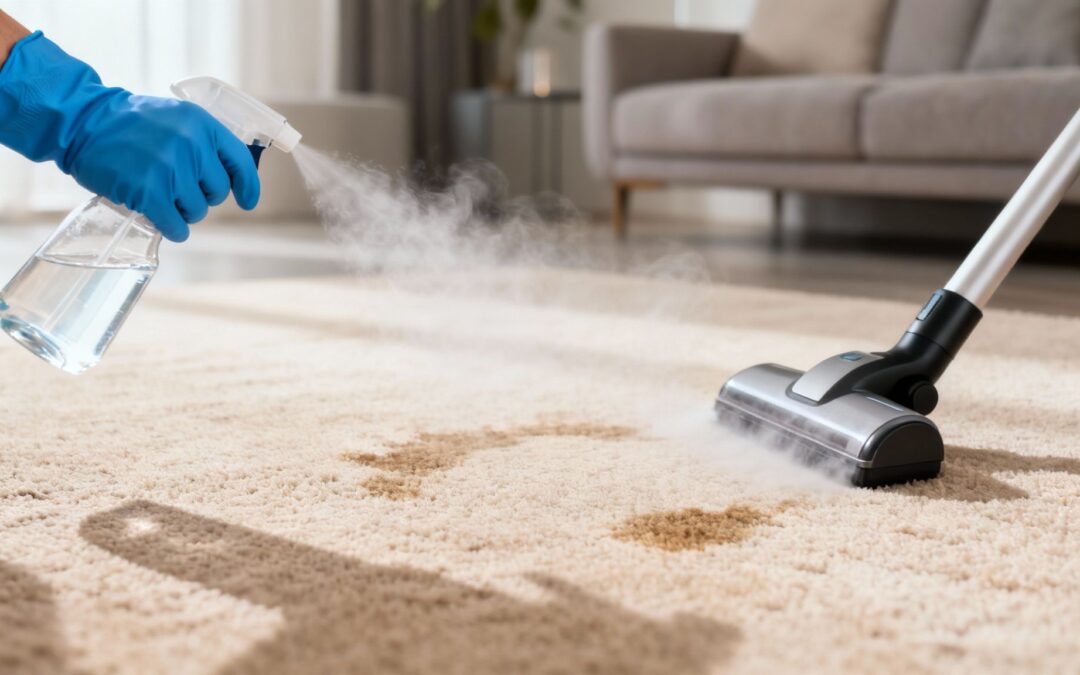
That stubborn dog urine smell isn’t just an unpleasant annoyance—it’s a science problem happening deep within your carpet fibres. When a dog has an accident, they leave behind much more than just a wet patch. The real culprit for that lingering, can't-get-rid-of-it odour is uric acid, which forms into salt-like crystals as the urine dries out.
These tiny crystals are the reason the smell keeps coming back. They aren’t water-soluble, which means your standard soap and water clean-up won't touch them. You might think you've solved the problem, but on the next humid day, the moisture in the air reactivates the crystals, releasing that all-too-familiar pungent smell all over again.
The Anatomy of a Urine Stain
A fresh urine stain is a ticking clock. The longer it sits, the deeper the problem gets. Initially, the warm, acidic urine seeps through the carpet fibres and soaks into the underlay, creating a perfect breeding ground for bacteria. Leave it long enough, and it can even cause damage to the subfloor.
To really tackle the issue, it helps to know what you're up against. Dog urine is made up of a few key components:
- Urea: A sticky substance that is the primary waste product.
- Urochrome: The pigment that gives urine its distinct yellow colour.
- Uric Acid: The stubborn, non-soluble crystals that are the source of that long-term, recurring odour.
Common Cleaning Mistakes to Avoid
In the rush to clean up a fresh accident, it’s all too easy to reach for the wrong product and accidentally make things worse. Many common household cleaners are a bad idea. Ammonia-based products, for example, have a chemical signature that smells a lot like urine to a dog. Using them can basically send a signal to your pet that this is an approved toilet spot, encouraging them to go there again.
Key Takeaway: Your goal should never be to just cover up the smell with air fresheners or strong fragrances. To truly get rid of it, you need to completely destroy the uric acid crystals at a molecular level. Standard cleaners just aren't built for that job, which is where specialised enzymatic cleaners become your best friend.
This is a challenge almost every dog owner knows well. Here in Melbourne, where over 38% of households have a dog, families are constantly battling pet odours. As professionals, we've seen it all, and experience has shown what truly works. Companies like Right Price Carpet Cleaning report a 95% success rate in completely knocking out these tough smells using powerful truck-mounted systems on thousands of jobs. You can find out more about how professionals tackle pet urine odours effectively.
Building Your DIY Pet Odour Removal Toolkit
Having the right supplies ready to go before an accident happens can be the difference between a quick clean-up and a lingering odour problem. Think of it as a first-aid kit for your floors and furniture. A well-stocked toolkit means you can act fast, tackling the urine before it has a chance to soak deep into your carpet padding or upholstery.
The goal here is to be prepared, not just reactive. You don’t need a cupboard full of expensive products, just a few key items that are affordable, simple, and incredibly effective when you use them correctly.
Your Essential Cleaning Arsenal
Before you can get to work, you need to gather your supplies. Most of these are common household items you might already have, but one is an absolute non-negotiable for getting the job done right.
- High-Absorbency Paper Towels: This is your first line of defence. You need something that can blot up as much liquid as possible without falling apart. Don't skimp here; cheap, flimsy towels just won't cut it.
- Enzymatic Cleaner: This is the hero of your toolkit. A high-quality enzymatic cleaner contains beneficial bacteria and enzymes that physically break down and consume the uric acid crystals in urine. This is the only way to truly eliminate the source of the smell for good.
- White Vinegar: An excellent first-response neutraliser. The acidity in vinegar helps counteract the ammonia in fresh urine, which cuts down that immediate, pungent smell.
- Baking Soda: A fantastic natural deodoriser. Once the area is clean and almost dry, a light sprinkle of baking soda can help absorb any lingering moisture and odours from the air and carpet fibres.
A common mistake is thinking vinegar and baking soda are a complete solution. While they’re great for fresh messes and neutralising that initial smell, they do not destroy the uric acid crystals. This means the odour is almost guaranteed to return, especially on humid days—a common problem in many parts of Australia.
Immediate Action for Fresh Stains
When you find a fresh accident, speed is everything. The simple process below shows the critical first steps to minimise the damage and stop the smell from setting in.
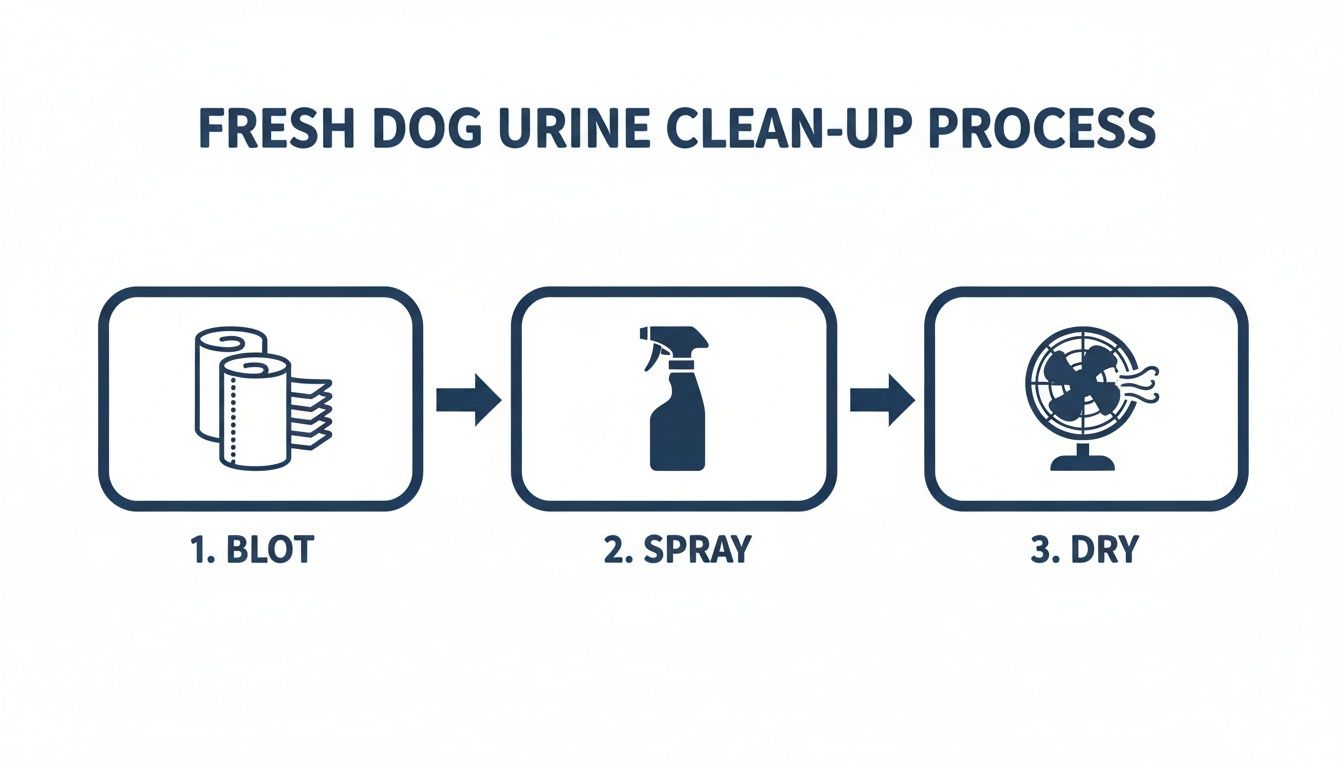
The key thing to remember is the sequence: remove the excess liquid first, then treat what’s left behind. Never, ever spray a cleaning solution directly onto a puddle of urine. Doing that just dilutes the mess and spreads it over a much larger area. Blotting first removes the bulk of the problem, allowing your cleaner to get to work on the residue that has soaked deep into the fibres.
Putting Your Toolkit into Practice
Let’s say you walk into the living room and find a fresh yellow spot on your favourite rug. First, grab your paper towels and blot the area firmly. Don’t be afraid to stand on the towels to apply more pressure and soak up as much as possible. Always work from the outside of the stain inwards to avoid making it bigger.
Next, lightly spray the spot with your enzymatic cleaner. You want to saturate it just enough to reach as deep as the urine did. Follow the instructions on the bottle, as most products need a bit of "dwell time" to let the enzymes do their job.
For tricky surfaces like mattresses, prevention is always your best strategy. While you're focused on cleaning up existing stains, proactively investing in a high-quality mattress protector can save you from future deep-set odours and costly damage.
Tackling Set-In Odours in Carpets and Upholstery
When you’ve cleaned a spot over and over, but that unmistakable dog urine smell keeps coming back, you’re no longer dealing with a surface-level problem. This is the classic sign of a deep-set issue.
That lingering odour means urine has soaked right through the carpet fibres, saturated the underlay, and possibly even seeped into the subfloor. At this point, a simple spray and blot just won’t cut it anymore. You’re fighting embedded uric acid crystals that reactivate with any hint of moisture, whether from humidity or your own cleaning efforts.
To win this battle, the first step isn't cleaning—it's detective work. You need to find every single spot, not just the ones you think you know about.
Uncovering Hidden Urine Stains
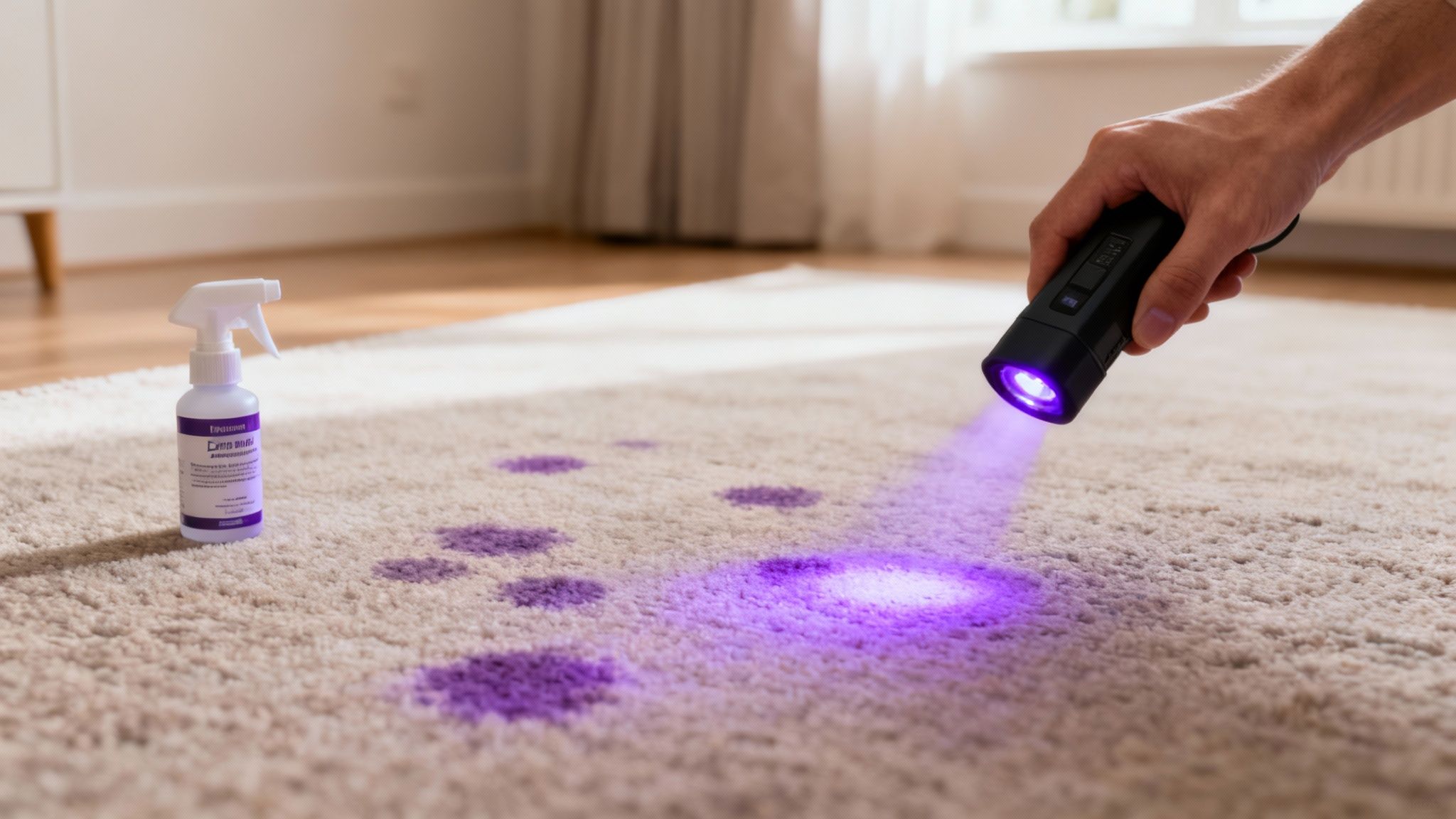
Old urine stains are masters of disguise, often invisible once they’ve dried. This is where a UV black light becomes your secret weapon. Grab one, turn off the lights, and scan your floors, furniture, and even the lower parts of your walls. The salts in dried urine glow under the UV light, revealing the true extent of the problem.
Using a black light helps you:
- Pinpoint every single affected area, including sneaky splatters on furniture legs or walls.
- Gauge the true scale of the problem, which is crucial for choosing the right cleaning approach.
- Focus your efforts exactly where they’re needed, saving you time and frustration.
Be prepared for a shock. What looks like a small, single spot on the surface can often reveal a huge, sprawling patch in the underlay. This is a non-negotiable step if you want to get rid of that dog urine smell for good.
Advanced Methods for Deep-Set Odours
Once you’ve mapped out the crime scene, it’s time to bring out the big guns. For those older, concentrated stains, a deep enzymatic soak is your best bet. This involves completely saturating the area with a high-quality enzymatic cleaner and letting it dwell for hours—sometimes even overnight. This gives the enzymes enough time to work their way deep into the padding and break down every last uric acid crystal.
But a word of caution: this method isn’t without risks. Overwetting a carpet can lead to mould, mildew, or even damage to the subfloor if it isn’t dried properly. The material also matters. If you have a delicate wool rug, you absolutely must use a pH-neutral, wool-safe enzymatic cleaner to prevent permanent damage. Your choice of floor covering can make a huge difference, so it’s worth looking into guides on choosing pet-friendly rug materials for future-proofing your home.
This is a widespread headache for pet owners. A 2023 report from the Pet Industry Association of Australia revealed that 62% of Victorian dog owners struggle with recurring urine odours. The same report found that 40% of them correctly identified saturated carpet underlay as the primary culprit. In response, professional cleaners have honed their techniques, now achieving incredible results against smells that once seemed permanent.
Comparing DIY and Professional Odour Removal Methods
Trying to decide whether to tackle it yourself or call in the pros? It really depends on the severity of the stain. A fresh accident is often manageable with a good home remedy, but a deep-set, recurring odour usually needs a more powerful approach.
Here’s a quick breakdown to help you choose the right method for your situation.
| Method | Best For | Effectiveness on Old Stains | Risk Factor |
|---|---|---|---|
| DIY Enzymatic Soak | Minor, fresh accidents or small, isolated spots. | Low to Moderate. Often fails to penetrate deep enough to fully neutralise old, layered urine deposits in the underlay. | High. Risk of over-wetting, leading to mould, mildew, fibre damage, or subfloor issues if not dried properly. |
| Portable Carpet Cleaner | Surface-level stains and general freshening up. | Low. Lacks the heat and suction power to extract contaminants from the underlay and subfloor. | Moderate. Can leave soapy residue behind, attracting more dirt. May push urine deeper into the padding if used incorrectly. |
| Professional Hot Water Extraction | Deep-set, old, or large-scale urine contamination. | High. Uses high-pressure hot water and powerful suction to flush out and extract contaminants from the carpet, underlay, and even subfloor. | Low. Professionals use pH-balanced solutions and control moisture levels to ensure fast, safe drying, preventing secondary issues. |
Ultimately, while DIY methods are great for immediate clean-ups, they rarely solve a deep-seated odour problem. When you're dealing with urine that has soaked through to the underlay, professional hot water extraction is almost always the more effective and safer long-term solution.
You’ve deep-cleaned the carpets and washed the lounge suite, but there’s still a stubborn, lingering smell you can’t quite place. Before you start questioning your cleaning skills, take a look down. Sometimes, the real culprit isn’t in your soft furnishings at all—it's locked away in your hard floors.
Tiled areas in laundries, bathrooms, and entryways are prime spots for accidents, but the tile itself isn’t usually the issue. The real problem is the grout in between. Grout is incredibly porous; it acts like a tiny, hard sponge. When urine soaks into these lines, the uric acid crystals get trapped deep inside, making them impossible to remove with a simple mop and bucket.
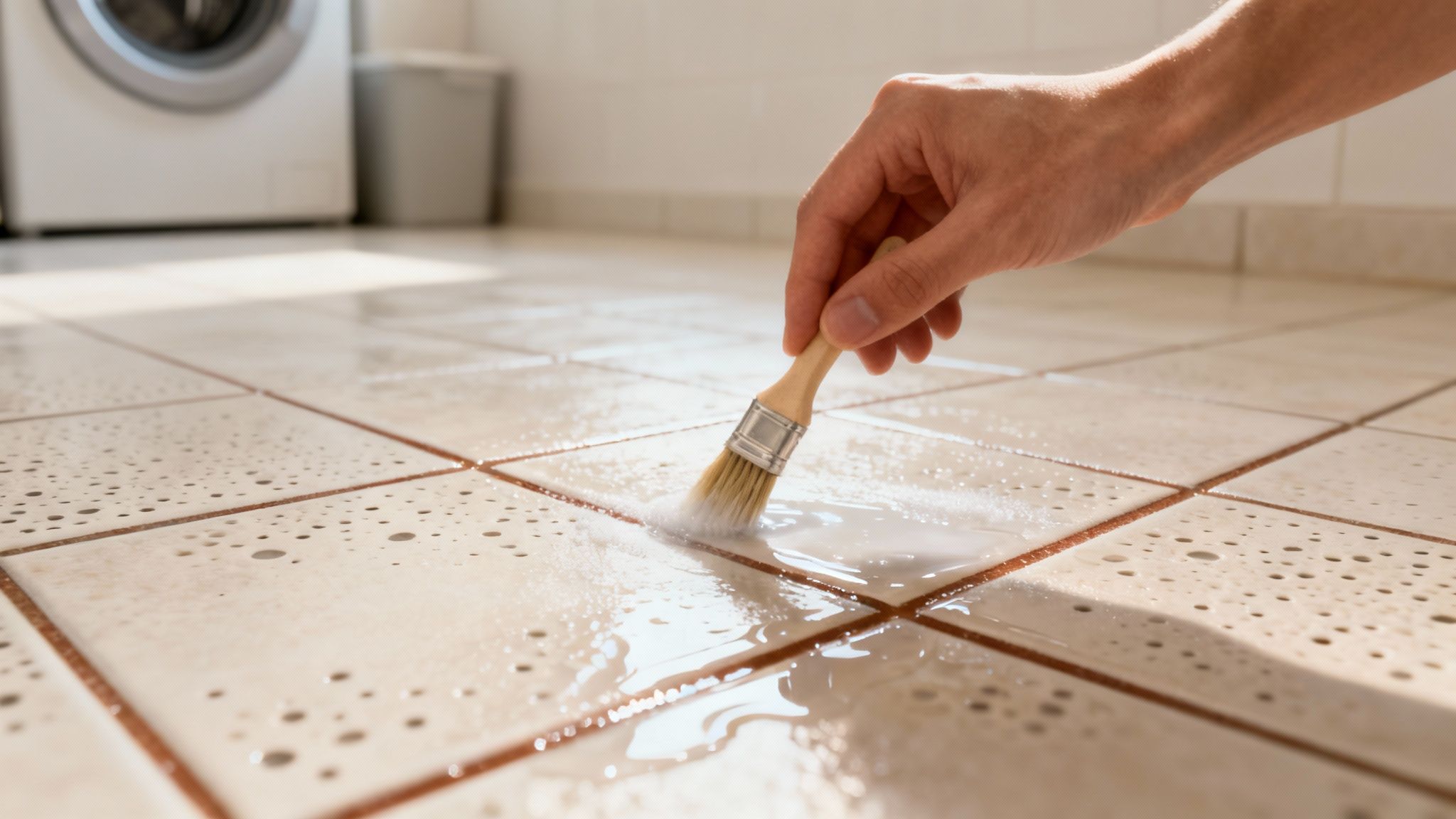
In fact, mopping often makes the situation worse. It just spreads the urine residue across a wider area, pushing it deeper into even more grout lines. You’re essentially just giving those smelly uric acid crystals more places to hide.
How to Properly Clean and Protect Your Grout
To properly tackle urine trapped in grout, you need a completely different approach that goes way beyond surface wiping. The goal is to get a cleaning solution deep into the pores to break down and neutralise the source of the smell for good.
Here’s a practical method that works for DIY grout cleaning:
- Create a Cleaning Paste: Mix bicarb soda with a small amount of hydrogen peroxide until it forms a thick paste. The bicarb soda acts as a gentle abrasive, while the peroxide helps to lift stains and kill bacteria.
- Apply and Scrub: Spread the paste directly onto the affected grout lines and let it sit for at least 15-20 minutes. Then, grab a stiff-bristled brush (an old toothbrush is perfect for this) and scrub the area vigorously.
- Rinse Thoroughly: Wipe away all the paste with a clean, damp cloth. You'll likely need to rinse the cloth and wipe the area several times to make sure no residue is left behind.
Once your grout is completely clean and dry, don't skip this final step: apply a high-quality grout sealer. This creates a non-porous barrier that stops future accidents from soaking in, which makes clean-ups a breeze and prevents odours before they even start.
The problem isn't just confined to indoor surfaces, either. A 2024 analysis of discussions among Australian homeowners found that 72% of people with pebbled outdoor areas struggle with pet smells that get much worse in humid weather. Often, urine from these adjacent outdoor areas can seep indoors. You can find more insights on how homeowners are tackling tough outdoor pet odours on workshop.bunnings.com.au.
For really severe or widespread contamination, nothing beats a professional high-pressure tile and grout clean. This service uses specialised equipment to blast hot water and powerful cleaning solutions deep into the grout lines, then immediately extracts all the dirty water. It pulls out every last embedded urine crystal, giving your floors a complete reset.
Why You Might Need to Call in the Pros
You’ve tried everything. You’ve soaked the spot with enzyme cleaners, scrubbed it with vinegar, and covered it in bicarb soda, yet that faint, musty smell still creeps back on humid days. Sound familiar?
Sometimes, no matter how hard you try, DIY solutions just can't get to the root of the problem. This is the point where calling a professional isn’t giving up—it’s making a smart, strategic move to protect your home and your sanity.
There are a few scenarios where getting an expert in is pretty much non-negotiable. If you’re dealing with multiple large urine patches, an odour that’s taken over an entire room, or stains that have been setting in for months (or even years), the problem has likely soaked through to the carpet underlay. It’s also a must-do when you’re moving out of a rental and need to pass that final inspection to get your bond back.
The Power of Truck-Mounted Steam Cleaning
Let's be clear: not all professional cleaning is the same. The real difference between a hired DIY machine and a genuine professional service comes down to the machinery. A truck-mounted hot water extraction system—often called steam cleaning—is the industry gold standard for a very good reason.
These machines are absolute powerhouses and offer some serious advantages:
- Serious Heat: The water temperatures can get well above boiling point. This doesn't just deep-clean the fibres; it helps annihilate the odour-causing bacteria that have been happily multiplying in your carpet.
- Incredible Suction: The vacuum power on a truck-mounted unit is immense. It’s strong enough to pull water, dirt, and dissolved urine crystals out from the carpet, the underlay, and sometimes even the subfloor. This means a much deeper clean and way faster drying times.
- Deeper Clean: High-pressure jets blast the cleaning solution deep into the carpet pile, flushing out all those stubborn uric acid crystals that most home remedies simply leave behind.
What to Expect When You Book a Professional
Hiring a professional cleaner for the first time can feel like a big step, but a good company will make the whole process simple and transparent. Knowing what’s coming can give you the confidence that you’re making the right call.
Typically, the process kicks off with a detailed pre-inspection. A trained technician will come in and properly assess the damage, often using tools like a moisture meter or a UV light to find every single affected area—not just the ones you can see. They’ll then walk you through their recommended plan and give you a clear quote before they start any work.
The true value of a professional clean isn't just about what you see on the day; it's about the long-term results. By completely removing the source of the smell, you’re not just masking an odour. You’re improving your home’s air quality and creating a genuinely healthier space for your family and pets.
Once the job is done, the technician should show you the results and give you some after-care tips, like making sure you have good airflow to help the carpet dry quickly. A quality service, like the one we offer at Right Price Carpet Cleaning, will usually include a satisfaction guarantee, giving you that extra peace of mind.
Think of it as an investment that pays for itself by restoring your carpet, protecting your family’s health, and finally putting an end to that frustrating battle with dog urine odours.
Common Questions About Dog Urine Odour Removal
Even with the best game plan, you're bound to run into a few tricky situations. When it comes to pet stains, there's a lot of confusing advice out there, so let's clear up some of the most common questions we hear from Aussie pet owners.
Getting straight answers helps you avoid costly mistakes and ensures you're using the right tools to protect your carpet and furniture.
Can I Use Bleach or Ammonia on Pet Stains?
Absolutely not. This is one of the most common—and dangerous—mistakes people make. The chemical scent in ammonia is incredibly similar to a component in urine, which can actually encourage your dog to mark the same spot again. You’re essentially sending them a signal that this is an approved toilet area.
Bleach is even worse. It’s far too harsh for most carpets and upholstery and will cause permanent colour damage. You'll be left with a faded, discoloured patch that’s a lot more noticeable than the original stain. Your best bet is to always stick with products specifically designed for pet urine.
The Smell Is Gone but a Yellow Stain Remains
That stubborn yellow mark is caused by urochrome, the pigment in urine. If you catch it fresh, a simple mix of one part white vinegar to one part water might be enough to lift a very light stain. But let's be realistic—this rarely works on older, set-in stains that have had time to bond with the carpet fibres.
For these tough yellow patches, professional help is the way to go. A pro carpet cleaner has access to specialised spotting agents that can safely break down and remove these pigments without damaging your carpet. Grabbing a random stain remover from the supermarket is a gamble, as many can set the stain permanently if used incorrectly.
A lingering yellow stain isn't just a visual problem. It’s a red flag that some of the urine is still there. If any uric acid crystals are left behind, that musty smell is guaranteed to come back during humid weather, even if you can’t smell it right now.
Is Professional Cleaning a Guaranteed Solution?
A reputable professional service using powerful, truck-mounted equipment gives you the absolute best chance of getting rid of the odour for good. These machines are powerful enough to extract urine from deep within the carpet, the underlay, and sometimes even the subfloor—something DIY methods just can't do.
Top-tier companies have an extremely high success rate and will often back their work with a satisfaction guarantee. Keep in mind, though, that cleaning only solves the existing problem. If your dog has another accident in the same spot, the smell will return. The real key to a permanently fresh home is combining that initial professional deep clean with good training and preventative habits.
If you're stuck in a battle with a stubborn odour that just won't quit, it might be time to call in the experts. The team at Right Price Carpet Cleaning uses powerful truck-mounted steam cleaning to completely flush out and remove the source of pet smells for good. Get your instant online quote and restore freshness to your home today at https://rightpricecarpetcleaning.com.au.
Recent Comments