



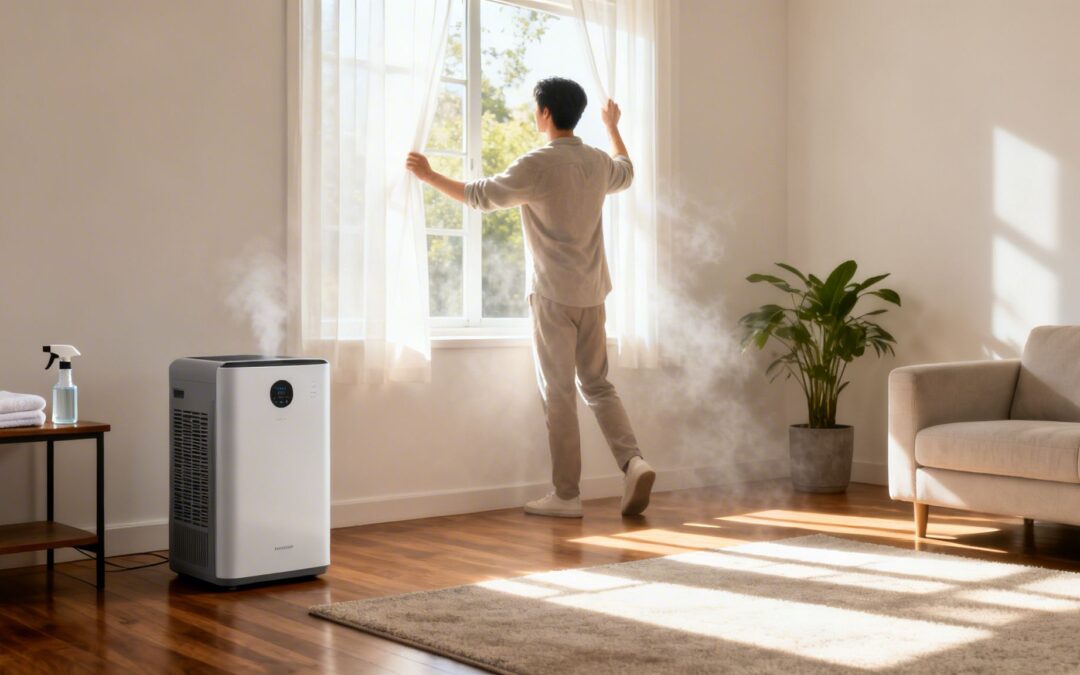
Before you can ever win the fight against a musty smell, you have to play detective. That stale, earthy odour is almost always a huge red flag for excess moisture, which usually means mould or mildew growth isn't far behind. Trust me, pinpointing where it's coming from is the most important thing you can do. It's the only way to get rid of that musty smell for good, instead of just covering it up with air fresheners.
Finding the Source of That Musty Smell
A musty odour that just won't go away isn't just annoying; it's your home's way of telling you something’s wrong. The smell itself is from microbial volatile organic compounds (mVOCs)—basically, gasses released by mould as it grows in damp, stuffy spots. Your first job is to follow your nose and check the usual suspects.
Think like water. Where would it pool up and go unnoticed? It's almost always in the dark, quiet corners of your house.
- Basements and Crawl Spaces: These spots are notorious for being damp and having poor airflow, making them prime real estate for mould and mildew.
- Bathrooms and Laundries: The constant humidity from showers and dryers creates a perfect breeding ground. Don't forget to check under sinks for slow drips or inspect the grout and shower curtains.
- Kitchens: A sneaky leak under the sink or a faulty dishwasher can slowly soak your cabinetry and flooring without you even realising it.
- Closets: Stuffy, poorly ventilated closets, especially those against an outside wall, can easily trap moisture, leaving your clothes and the walls smelling musty.
This simple flow chart breaks down the basic process for tracking down that stubborn odour.
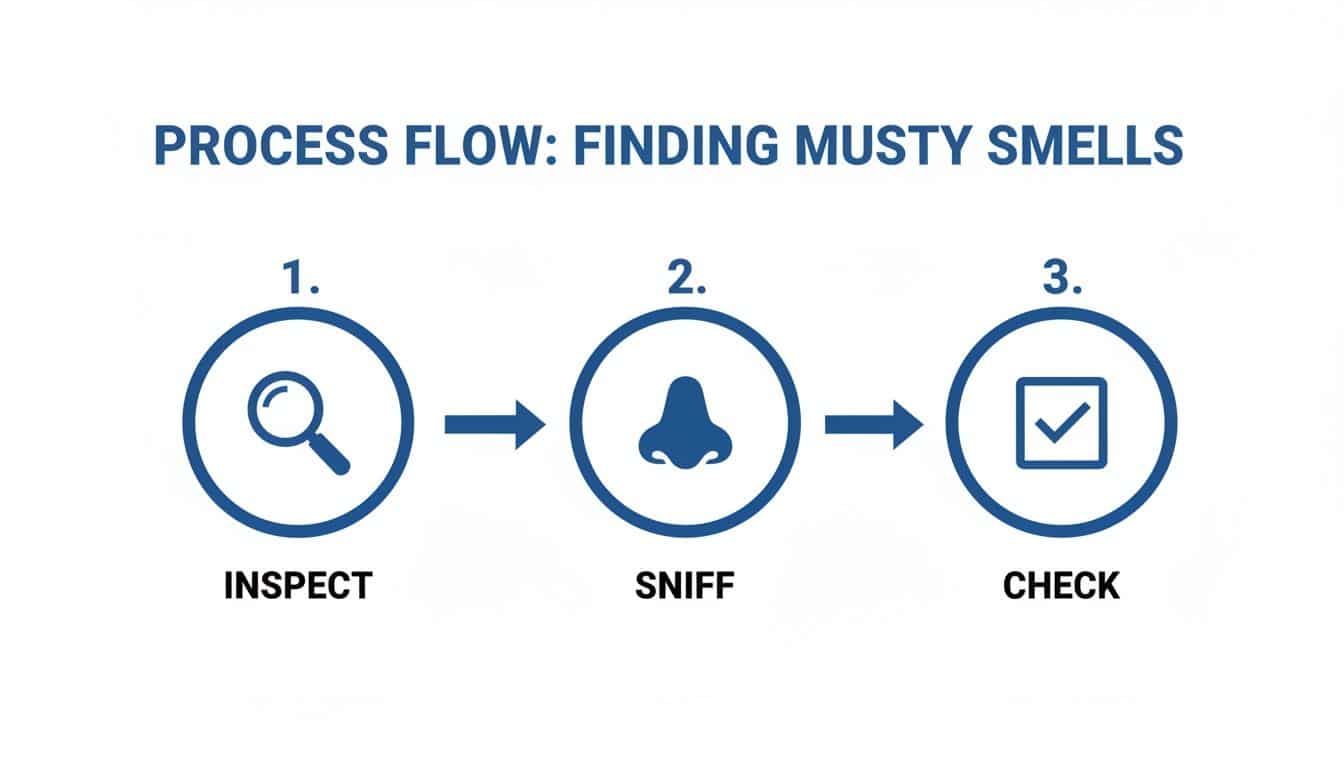
The real key is to be methodical. Work through the potential problem areas, using both your eyes and nose to zero in on the source.
Digging Deeper for Hidden Sources
Sometimes, the source of the smell isn't obvious at all. If you notice the odour gets stronger whenever the heating or air con kicks on, the problem might be lurking in your HVAC system. Condensation can build up inside the ducts or drain pan, creating a hidden mould factory.
Another massive culprit for trapping musty odours is soft furnishings. Your carpets and upholstery can soak up moisture from spills, high humidity, or even pet accidents. If they aren't dried out properly and quickly (within 24-48 hours), mould can start growing deep within the fibres and underlay. If you think this might be happening at your place, our guide on https://rightpricecarpetcleaning.com.au/how-to-get-rid-of-mold-in-carpet/ is a great next step.
If your detective work turns up actual visible growth, our comprehensive guide on identifying black mold on walls can help you figure out what to do next. Seeing it with your own eyes is a clear sign you’ve found a big piece of the puzzle.
Immediate Fixes for Quick Odor Relief
When that unmistakable musty smell hits, you want it gone—fast. While you get to the bottom of what’s causing it, you can take immediate action to freshen things up. These aren't permanent solutions, but they’re brilliant for getting some quick relief using things you probably already have at home.
The very first thing to do is get some air moving. Throw open the windows and doors to create a cross-breeze. This simple act starts diluting the stale, smelly air and helps moisture escape. To really get things moving, I like to place a box fan in a window, facing out, to actively pull the musty air out of the room.
Using Natural Deodorisers
Once the air is circulating, it's time to deal with the smells trapped in your fabrics and lingering in the room. Forget those chemical air fresheners that just cover up one smell with another; you need something that actually absorbs the odour.
Two of the best natural deodorisers are probably sitting in your pantry right now: baking soda and white vinegar. They work by neutralising the pH of the acidic molecules that cause bad smells, effectively cancelling them out.
- For Carpets and Rugs: Sprinkle a generous layer of baking soda over the entire surface. Don't be shy with it—a light dusting won't cut it. Let it sit for at least a few hours, or even overnight if you can, to give it time to work its magic. Afterwards, just vacuum it up thoroughly.
- For Upholstery and Fabrics: You can use the same baking soda trick on your sofa or mattress. For a spray solution, mix equal parts white vinegar and water in a spray bottle. Lightly mist it over your curtains, cushions, and other fabrics. The vinegar smell might seem strong at first, but it disappears completely as it dries, taking the musty odour with it.
Sunlight is another powerful—and free—deodoriser. Its ultraviolet rays are fantastic for killing off the bacteria and mould that create smells. If you have smelly cushions, rugs, or clothes, letting them sit in direct sunlight for a few hours can make a world of difference.
DIY Odor Absorbers vs Professional Solutions
While pantry staples are great for a quick fix, it's helpful to know how they stack up against professional services, especially when the smell just won't quit.
| Method | Effectiveness | Best For | Cost |
|---|---|---|---|
| Baking Soda | Low to Moderate | Surface odours on carpets and upholstery | Low (under $5) |
| White Vinegar | Moderate | Fabric odours, neutralising mildew smells | Low (under $5) |
| Activated Charcoal | Moderate to High | Absorbing airborne odours in enclosed spaces | Low to Moderate ($10-$30) |
| Professional Steam Cleaning | High | Deep-set odours in carpets and upholstery | Moderate to High ($100+) |
| Professional Mould Remediation | Very High | Persistent odours caused by mould growth | High ($500+) |
DIY methods are perfect for tackling minor, surface-level smells and buying yourself some time. However, for smells that are deeply embedded in carpets or caused by a serious underlying issue like mould, a professional service is the only way to guarantee the odour is gone for good.
Absorbing Airborne Odours
Even after you've aired out the room and treated the fabrics, some smells just seem to hang in the air. This is where placing bowls of odour-absorbing materials around the room comes in handy as a passive strategy.
For that stubborn musty smell, especially common in damp spaces, exploring quick fixes for a musty basement smell can give you some great ideas for immediate relief. Many of those tricks, like using activated charcoal, work well in any room. Activated charcoal is incredibly porous, making it excellent at trapping odour-causing particles from the air. You can buy ready-made charcoal bags or just place a few briquettes in a bowl.
Remember, these quick fixes are your first line of defence. They provide much-needed relief from the smell, but they don't solve the root cause—which is almost always a moisture problem. Think of them as buying you time to find and fix the real issue for a permanently fresh-smelling home.
Deep Cleaning for Lasting Freshness
When the quick fixes just aren't cutting it anymore, it’s a sign that the musty smell has gone from a surface problem to something deeper. Sure, airing out the house or a quick spray might make things feel fresh for a day, but that stubborn odour always creeps back. It’s frustrating, but it means the source is embedded in the very fabric of your home.
Think of your carpets, lounges, mattresses, and even curtains as giant sponges. They’re brilliant at absorbing everything—from spills and pet messes to the simple humidity in the air. This trapped moisture creates the perfect, cosy environment for mould and mildew to grow, releasing those stale, earthy odours that are so hard to get rid of. A proper deep clean isn't just about making things look nice; it’s about getting to the root of the problem.
Tackling Carpets and Soft Furnishings
Your carpets are almost always the main suspect. The dense fibres and thick underlay can hold onto dampness for weeks, turning your floor into a breeding ground for odour-causing bacteria. It's tempting to grab one of those rental steam cleaners from the supermarket, but I've seen firsthand how they can sometimes make the problem worse.
There are a couple of big issues with most DIY rental units:
- They Lack Power: The suction on these machines often isn't strong enough to pull out all the water they pump in. This can leave your carpet even wetter than before, feeding the mould and mildew.
- The Water Isn't Hot Enough: They just don't reach the high temperatures needed to properly kill mould spores and sanitise the fibres deep down.
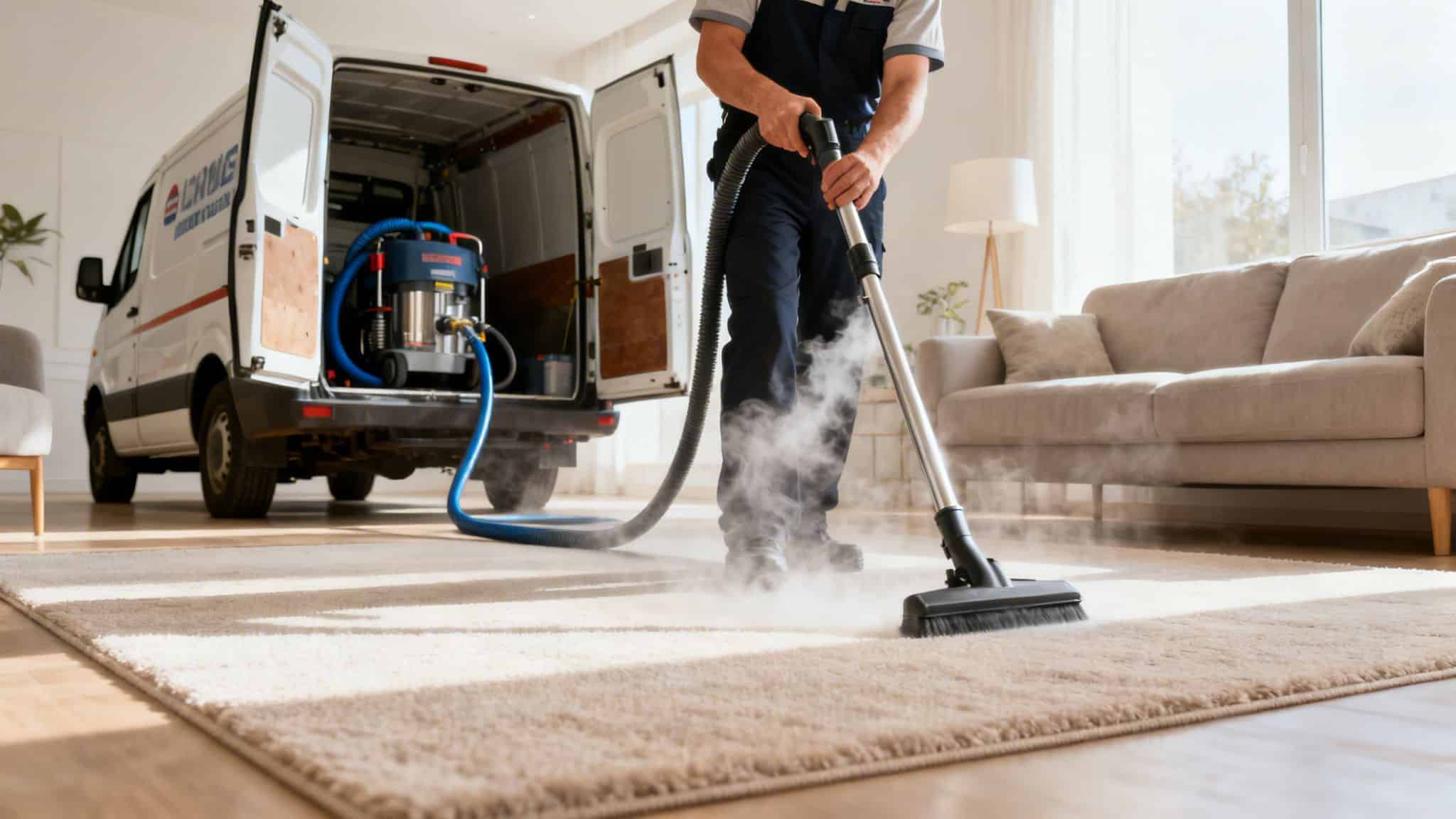
This is a huge deal in damper areas. In Melbourne's humid climate, for example, musty odours from damp carpets are a complaint in over 60% of households during the winter months. In contrast, a professional truck-mounted machine, like the ones we use at Right Price Carpet Cleaning, can blast away grime and remove 95% of embedded moisture and odours in one go. Our eco-friendly pretreatments break down the actual odour molecules instead of just masking them, and carpets are usually dry in under 2 hours. You can read more about what causes musty smells on homemadesimple.com.
DIY vs Professional Steam Cleaning
So, when can you get away with a DIY job? If you’re dealing with a very small, fresh spill, a rental unit might do the trick. But for a persistent, house-wide musty smell that just won't quit, the difference in results between DIY and professional is night and day.
Professional truck-mounted systems operate at much higher pressure and temperature. This power allows them to blast away deep-seated dirt, kill allergens and mould spores, and then extract nearly all the moisture, leaving your carpets cleaner, healthier, and truly free from odours.
And don't stop at the carpets. Your mattresses and sofas can hold onto those same musty smells. A professional upholstery cleaning service uses specialised tools designed for these more delicate items, giving them a deep clean without the risk of damage or oversaturation. For a complete rundown on this, take a look at our guide on how to effectively remove stubborn carpet odours.
Ultimately, a professional deep clean isn’t just about cleaning—it’s about hitting the reset button on your home’s environment. It eliminates the core source of that musty smell and gives you a genuinely fresh start.
Mastering Moisture to Prevent Musty Smells
Getting that musty smell out of your house is a great feeling, but the real victory is making sure it never comes back. True prevention means tackling the one thing mould and mildew absolutely need to survive: moisture.
This is where you shift from cleaning up a mess to creating an environment where mould simply can’t get a foothold. It’s all about being strategic and turning your home into an unwelcome place for dampness.
Regulate Your Home's Humidity
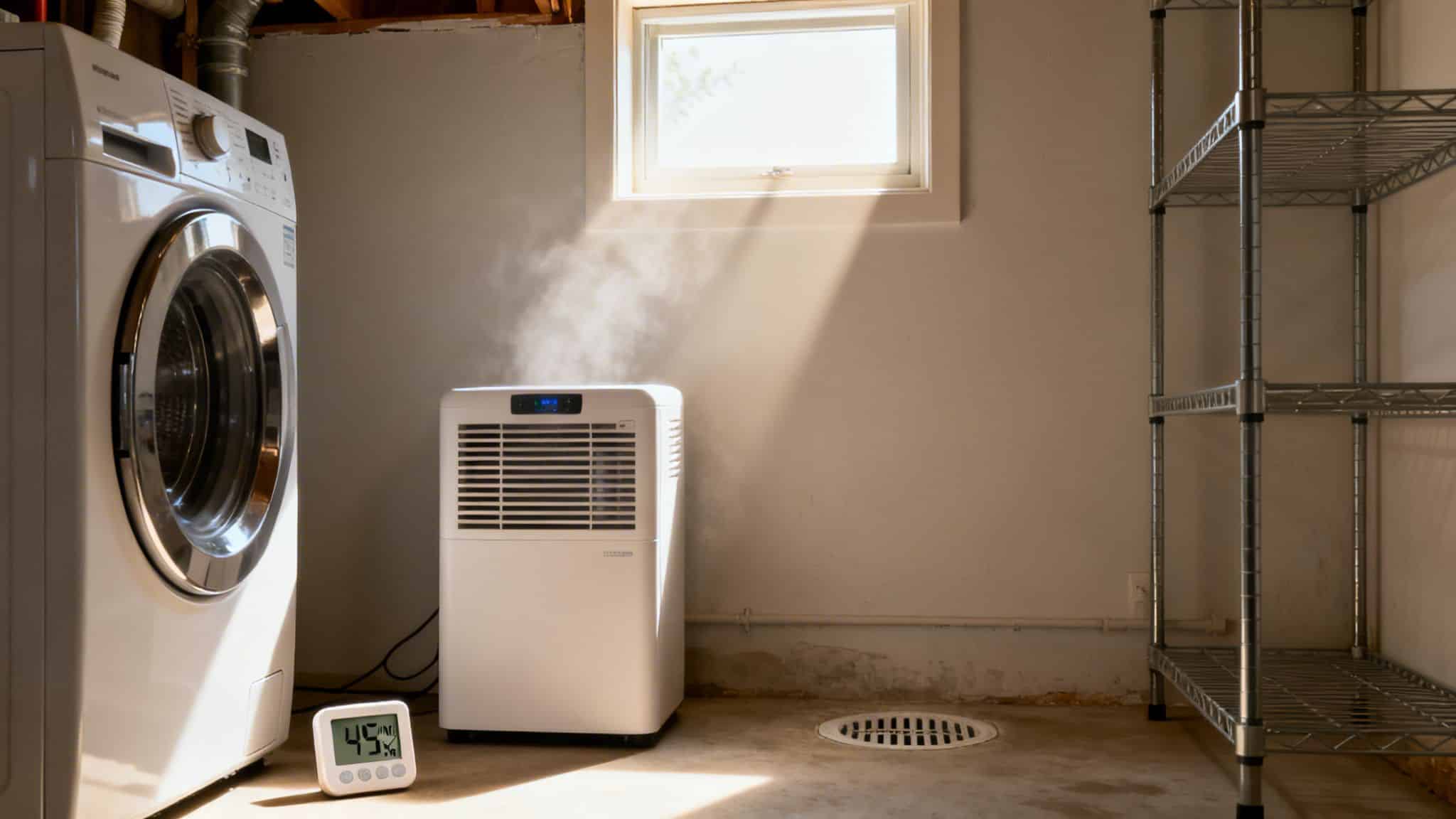
The air inside your home holds a surprising amount of water vapour. When humidity gets too high, it’s an open invitation for musty smells to move in. Your goal should be to keep your home’s relative humidity below 50-60%. A simple, inexpensive device called a hygrometer will give you an accurate reading.
Areas prone to dampness need special attention. Think about running a dehumidifier in naturally humid spots like basements, crawl spaces, and even walk-in robes that lack good airflow. Modern dehumidifiers are fantastic because you can set your target humidity, and they’ll automatically switch on and off to maintain it.
Don't underestimate the power of good ventilation, either. A few simple habits can make a world of difference:
- Run exhaust fans: Always use the exhaust fan in your bathroom during and after a shower, and in the kitchen when you’re cooking. Let it run for at least 15-20 minutes afterwards to pull all that steamy air outside.
- Vent your laundry: Make sure your clothes dryer is properly vented to the outdoors. A poorly vented dryer pumps litres of warm, moist air directly into your home.
- Promote airflow: Even just opening closet doors or using a small fan to circulate air can prevent stale, damp pockets from forming.
Conduct Routine Home Maintenance Checks
So many moisture problems start with small, unnoticed issues that grow over time. Making a habit of regular home inspections can help you catch these problems before they lead to a musty-smelling crisis.
Start with the most common culprits. Once a season, grab a torch and look under every sink in your house—kitchen, bathroom, laundry—for any signs of a slow drip or water stains on the cabinetry. A tiny, slow leak is often all it takes to saturate the wood and create a hidden mould colony.
Don't just look for active leaks; check for evidence of past ones. Water stains, peeling paint, or warped floorboards are all red flags that moisture has been present, even if the area feels dry now.
It’s also critical to inspect the exterior of your home. Check that your roof is in good repair and that your gutters are clear and directing water away from the foundation. Poor drainage can cause water to seep into your basement or crawl space, creating a constant source of dampness that is a nightmare to resolve.
This preventative approach is crucial, especially after extreme weather. For instance, flooded carpets from Melbourne's frequent summer storms can leave musty odours in 55% of affected homes. Professionals offering emergency drying services can restore carpets within 24 hours, preventing the mould that thrives above 60% humidity. Data shows that 92% of professionally managed jobs eliminate musty smells completely, a stark contrast to the 40% success rate for DIY drying attempts.
If you're dealing with a water emergency, knowing how to dry wet carpet fast can make all the difference in preventing long-term damage and odours.
Sometimes, you’ve done everything right. You’ve aired out the house, scrubbed every surface, and strategically placed bowls of baking soda in every corner. But that stubborn, musty smell just won’t quit. This is the point where you have to know when to throw in the towel on DIY methods.
That persistent odour is your home's way of telling you there's a deeper issue that a simple clean can't fix. If the smell comes roaring back days after you’ve cleaned, or if it’s not just in one room but seems to be everywhere, it’s a clear sign the source is hiding somewhere you can’t reach.
Recognising the Red Flags
Certain situations are immediate red flags that need an expert. Trying to tackle these on your own isn't just a waste of time; it can make the problem worse or even create health risks for your family.
You should get a professional in if you find:
- Widespread Mould Growth: If you uncover a patch of mould bigger than a dinner plate or see it on porous surfaces like drywall, it’s not a DIY job. Professionals have the right safety gear and containment methods to remove it without spreading spores all over your home.
- Smells Coming from Your HVAC System: Does a musty smell blast out of your vents every time the air con or heating clicks on? The issue is buried deep inside your ductwork and needs specialised equipment to clean and sanitise it properly.
- Lingering Odours After Water Damage: After a leak, flood, or burst pipe, moisture gets trapped deep in carpet, underlay, and wall cavities. The surface might feel dry, but that smell is a dead giveaway that things are still damp underneath—a perfect breeding ground for mould.
Think of it like this: you wouldn't use a butter knife to perform surgery. In the same way, you shouldn't tackle deep-seated moisture and mould with household cleaners. Professionals have the specialised tools for a complex job.
The Professional Advantage in Odour Removal
When it comes to musty smells in carpets and upholstery, the difference between DIY and professional results is night and day. This is especially true for renters hoping to get their bond back. In fact, a 2026 survey revealed that 72% of Melbourne property managers listed musty carpets as a key reason for withholding bond returns. It's a financial risk that highlights how important it is to get it right. You can find more practical tips and solutions online for tackling these household smells.
Companies like Right Price Carpet Cleaning have an arsenal of equipment that you just can’t rent at the local shops. Their truck-mounted steam cleaners use extremely high pressure (over 100 psi) and high temperatures to blast away hidden grime and kill the bacteria causing the smell.
But the real game-changer is the powerful vacuum extraction. It pulls almost all the moisture back out, which is absolutely critical for preventing the smell from returning. This is exactly how they achieve such a high success rate with end-of-lease cleans.
Calling in a professional isn’t about giving up. It's about making a smart, strategic move to protect your property and your family’s health. When you’re up against a musty smell that won’t budge, investing in expert help is the quickest, most effective path back to a fresh, clean home.
Answering Your Lingering Questions About Musty Smells
Even after you’ve aired out the house and scrubbed the floors, that stubborn musty smell can sometimes hang around. It’s a frustrating problem, and it often leaves you with more questions than answers. Let's clear the air on some of the most common concerns we hear from homeowners.
Can a Musty Smell Actually Make You Sick?
The short answer is a definite yes. That signature musty odour isn’t just unpleasant—it’s a warning sign. The smell comes from microbial volatile organic compounds (mVOCs), which are gases given off by active mould and mildew.
Breathing these in can cause a whole host of issues, especially for those who are sensitive. You might experience:
- Nagging headaches or dizziness
- A constantly stuffy or irritated nose
- A sore throat or a dry cough you can't shake
- Unexplained fatigue or brain fog
- Skin irritation or rashes
For anyone with asthma, allergies, or a weaker immune system, mould exposure is no joke. It can trigger serious respiratory problems. Think of the smell as your home’s alarm system telling you there’s a moisture issue that needs to be fixed for your family's health.
How Long Does It Take to Finally Get Rid of the Smell?
This is the million-dollar question, and the honest answer is: it depends entirely on the source. If the problem is just a forgotten damp towel, you can solve it in an afternoon. But if the odour has permeated your entire home, the timeline can stretch out.
A quick DIY fix, like opening the windows and sprinkling baking soda on the carpet, might give you some relief in 24-48 hours. But if that smell is coming from deep within the carpet padding or a hidden leak, it’s just a temporary mask. A professional deep clean is often the only way to kill the odour at its source, usually resolving it for good in a single day.
Why Does My House Still Smell Musty After I’ve Cleaned?
It’s one of the most maddening experiences: you spend a whole weekend cleaning, and yet that stale, damp smell comes right back. When this happens, it’s almost always a sign that you’ve missed the real source of the problem.
The usual suspect is a hidden moisture issue. It could be a slow, sneaky leak inside a wall, condensation building up under the floorboards, or just chronic high humidity in a basement you rarely use.
Another possibility is that your cleaning methods just weren't enough. For example, a standard rental carpet cleaner might get the surface dirt, but it often lacks the power to pull all the water back out. This can leave the carpet underlay damp, making the mildew problem even worse. If you've cleaned everything in sight and the musty smell returns, take it as a clear signal to call in a professional for an expert look.
When you’ve tried it all and that musty smell just won’t quit, it's a sign you need a more powerful solution. Right Price Carpet Cleaning uses high-powered, truck-mounted steam cleaning to completely eliminate deep-seated odours and the moisture that feeds them. Get an instant quote online and finally get your home smelling fresh and clean again.
Recent Comments