



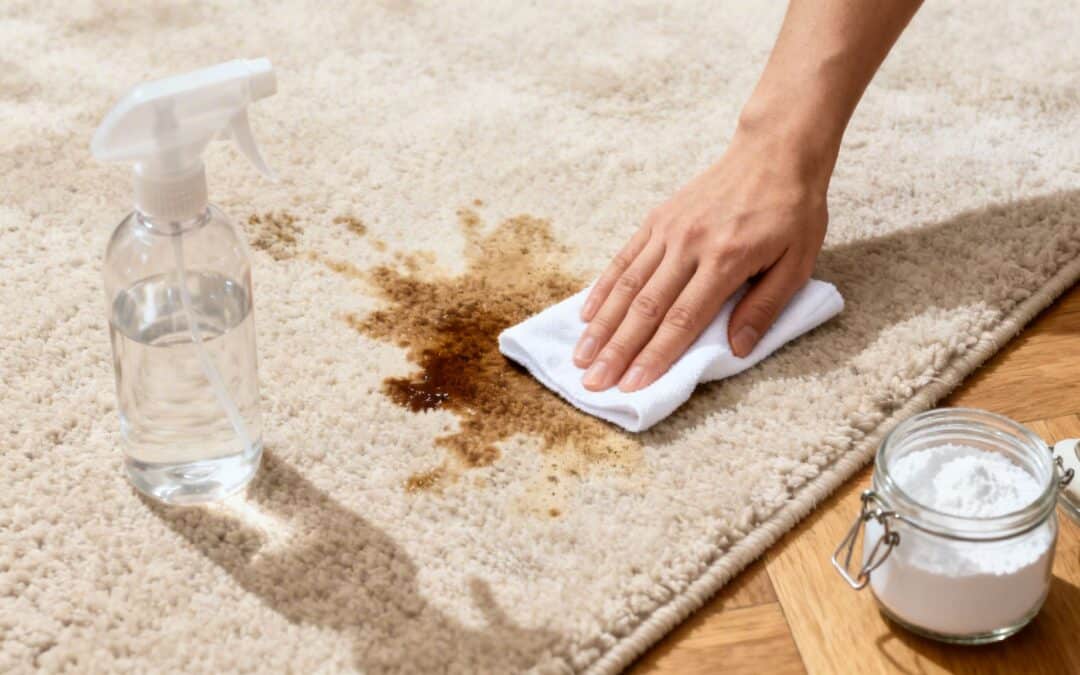
It happens in a flash: one wrong move and your morning brew goes tumbling, leaving a dark, dreaded mark. When you're faced with a coffee stain, you need to act quickly by blotting the spill with a clean cloth—never rub—and then treating it with cold water and a mild cleaning solution. This immediate action is your best chance to stop the stain from setting permanently.
That Heart-Stopping Moment of a Coffee Spill

It’s a universal scene played out in Melbourne homes and offices every day. The slow-motion horror as a coffee mug tips, followed by that heart-stopping moment when the dark liquid splatters across a light-coloured carpet or your favourite armchair. The instant panic is real. You’re left staring at a fresh, rapidly expanding blemish, wondering how to get rid of it before it becomes a permanent fixture.
This guide is born from that exact moment of panic. We’re here to turn that feeling of dread into a calm, confident plan of action.
Why Coffee Stains Are So Stubborn
Coffee’s staining power comes from natural compounds called tannins. These are the same polyphenols that give coffee its rich colour and slightly bitter taste, but they are also notorious for binding to fibres like wool, cotton, and synthetics, effectively dyeing them.
With a staggering 75% of Australians enjoying at least one cup daily, spills are a matter of when, not if. This love for coffee has an environmental side effect, too. Did you know that in Australia, a whopping 1 billion takeaway coffee cups are thrown away each year? A significant number of these contribute to spills that embed stubborn tannins deep into carpet fibres across Melbourne. You can find more about coffee cup waste statistics and their impact in Australia.
This guide will give you immediate first aid for those fresh spills, giving you the best chance to stop a stain in its tracks. We’ll cover practical, surface-specific DIY methods using safe, household ingredients that actually work.
However, it's just as important to know when a stain is beyond a home remedy. Sometimes, the most effective solution is to call for professional help.
When to Trust the Professionals
While DIY cleaning is perfect for minor spills, some situations demand a more powerful approach. Old, set-in stains or large spills that have soaked through to the carpet underlay often require more than just elbow grease.
This is where the expertise and equipment of a professional service like Right Price Carpet Cleaning make all the difference. Our powerful truck-mounted steam cleaners, which we've used to tackle these exact stains since 2007, deliver a level of heat and suction that portable units simply cannot match. This technology ensures we can:
- Remove over 95% of embedded coffee residues in a single pass.
- Protect your investment and extend carpet life by up to 50%.
- Extract the stain from the very base of the fibres without leaving behind any sticky residue.
Our goal is to give you the confidence to tackle coffee stains yourself, while also providing clear guidance on when calling in the experts is the smartest move for a guaranteed, flawless result.
Your Immediate First Aid for Fresh Coffee Spills
The moment that mug of coffee tips over, time is against you. Those first few minutes are your golden window, where what you do next determines whether you’re dealing with a quick cleanup or a permanent, ugly stain. This is your game plan for what to do right now to stop that coffee spill in its tracks.
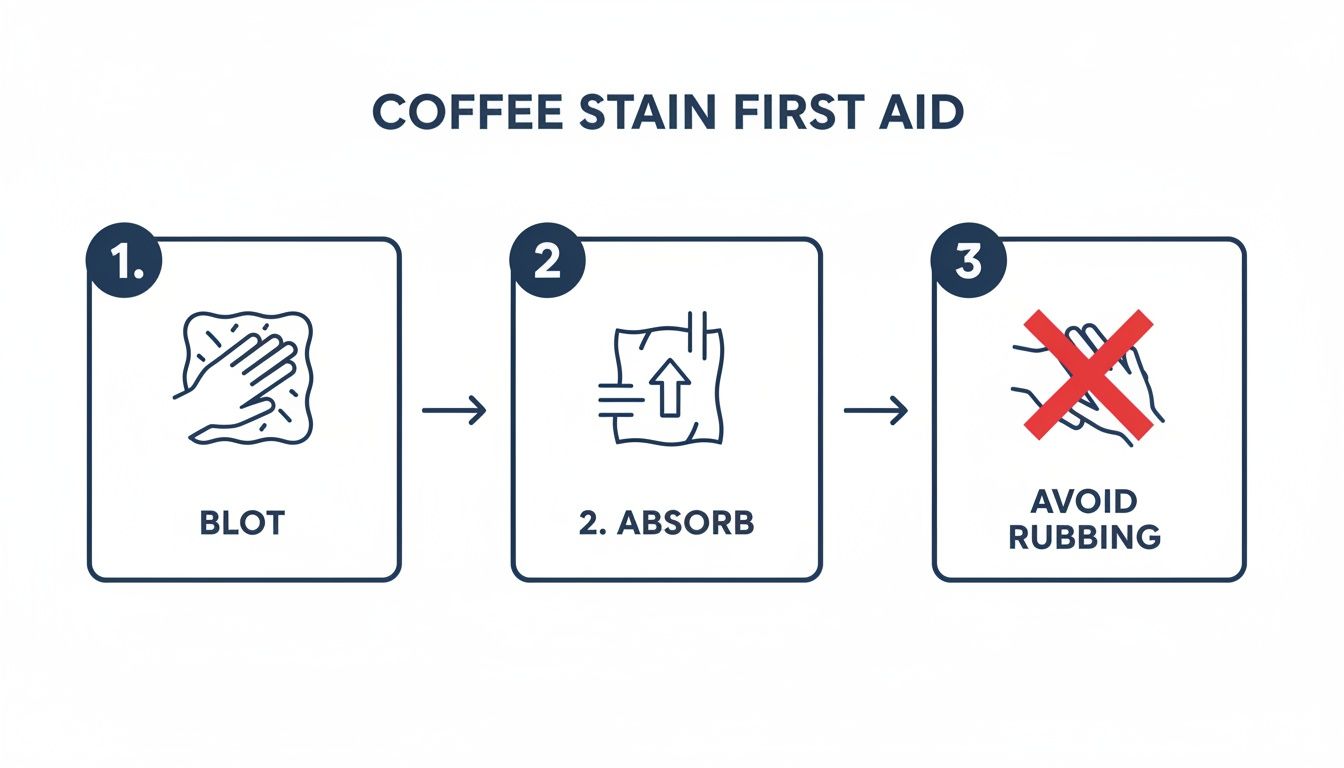
The single most important rule is this: blot, don’t rub. Your first instinct might be to grab a cloth and start scrubbing furiously, but that’s the worst thing you can do. Rubbing doesn’t lift the stain; it just grinds the coffee’s tannins deeper into the carpet or fabric fibres, making your job ten times harder.
Instead, your mission is to absorb. Reach for a clean, dry—and most importantly—white cloth or a stack of plain paper towels. Why white? Because a coloured towel can bleed its own dye onto your carpet, leaving you with a brand new stain to deal with.
The Art of Blotting
The goal here is to lift the liquid straight up and out of the fibres. Always start at the outer edges of the spill and work your way in. This little containment strategy stops the stain from spreading and becoming an even bigger problem.
Press your white cloth firmly onto the spill, letting it soak up the coffee. You’ll see the brown stain transfer from your carpet to the cloth. Lift it, find a clean, dry section, and press down again. Keep doing this until your cloth comes away dry.
Think of this as damage control. Blotting won’t make the stain vanish, but it dramatically reduces the amount of coffee that can set into the fibres. This makes all the next steps in the cleaning process far more effective.
What to Do and What to Avoid
In the heat of the moment, it’s easy to make a wrong move. Here’s a quick guide for those first five minutes to make sure you’re helping, not hurting.
Here’s a quick summary of the do's and don'ts for tackling a fresh coffee spill.
Immediate Spill Response At a Glance
| Action (Do This) | Mistake (Avoid This) |
|---|---|
| ✓ Blot immediately with a clean, white cloth. | ✗ Never rub or scrub the stain. |
| ✓ Work from the outside of the stain inwards. | ✗ Avoid using coloured or patterned towels. |
| ✓ Use firm, steady pressure to absorb liquid. | ✗ Don't pour cleaning solutions directly onto the stain. |
| ✓ Switch to a clean section of the cloth frequently. | ✗ Refrain from using hot water on a fresh spill. |
Stick to these simple rules, and you'll give yourself the best possible chance of getting that stain out completely.
Once you’ve blotted up as much liquid as you can, you've won half the battle. You’ve stopped the spill from soaking through to the underlay and have set yourself up for success with the targeted cleaning methods that come next. Your quick thinking has already made a huge difference.
Proven DIY Solutions for Different Surfaces
Alright, you’ve blotted the spill and stopped the immediate panic. Now it’s time to deal with what’s left behind. A coffee stain on a tough synthetic carpet is a whole different beast compared to a spill on your delicate wool rug or the family sofa. Each surface has its own rules, and getting it wrong can make things worse.
The good news is you don’t need a cupboard full of harsh chemicals. Some of the best stain removers can be mixed up using simple, eco-friendly things you probably already have in the kitchen. We’ll walk through the right recipe for each material, so you know exactly how to get that mark out for good.
But before you put anything on that stain—whether it's homemade or from a bottle—you absolutely must do a patch test. Find a hidden spot, like a bit of carpet inside a closet or behind a sofa cushion. Apply a small amount of your cleaning solution, wait a few minutes, blot it, and let it dry. This one small step can save you from turning a small stain into a giant, discoloured disaster.
This is the golden rule for any fresh spill: lift the liquid out, don't push it in.
Cleaning Coffee Stains from Synthetic Carpets
Most carpets in modern Australian homes are made from synthetic fibres like nylon, polyester, or olefin. These materials are built to be durable, making them pretty forgiving when it comes to stains—if you treat them correctly.
For these common carpets, a simple vinegar-based solution is your best bet. Here’s my go-to recipe:
- One tablespoon of clear, unscented liquid dish soap
- One tablespoon of white vinegar
- Two cups of cool water
This mix works so well because the dish soap breaks down the oils in the coffee, while the acid in the vinegar gets to work on the tannins (the compounds that cause the brown colour).
Dip a clean, white cloth in the solution, wring it out so it’s just damp, and gently dab the stain. Always work from the outside in to stop the stain from spreading. You’ll see the coffee transfer to your cloth; just be sure to keep switching to a clean section so you’re not dabbing the coffee right back on.
Once the stain is gone, you need to "rinse" the spot. This is a step people often forget. Just dampen a new cloth with plain cold water and blot the area to lift out any soapy residue. If you leave soap behind, it creates a sticky patch that will attract dirt over time. Finish by placing a thick, dry towel over the damp spot and pressing down firmly to soak up the last of the moisture.
Tackling Stains on Delicate Wool Rugs
Wool is a natural fibre, and it needs a much gentler touch. Harsh chemicals, alkaline cleaners, and even hot water can cause irreversible damage like colour bleeding or shrinking. When you’re dealing with a coffee stain on a wool rug, you have to be extra cautious.
Your safest option is a pH-neutral approach. A mild, wool-safe detergent, heavily diluted in cool water, is the way to go. And I mean a tiny amount—just a few drops in a cup of water will do.
The method is similar to synthetics, but requires even more care:
- Lightly dampen a clean cloth with your diluted mix.
- Blot the stain with extreme gentleness. No rubbing, no pressing hard.
- Use a separate dry cloth to immediately blot the moisture out.
For wool, less is always more. You want to use the absolute minimum amount of liquid and cleaner needed to lift the stain. Soaking a wool rug can damage not only the fibres but the backing as well. If the stain is still there after a couple of gentle tries, it’s time to stop and call a professional.
Removing Coffee from Upholstery
Upholstery is tricky because of the huge variety of fabrics out there, from tough microfibre to delicate linen. Before you do anything, check the furniture’s care tag. You’ll see a cleaning code:
- W: Safe to clean with water-based solutions.
- S: Needs a solvent-based cleaner (do not use water).
- W/S: You can use either water or solvent-based cleaners.
- X: Vacuum only. Don’t use any liquid on it at all.
If your sofa has a "W" or "W/S" code, you can use the same vinegar and dish soap solution we used for synthetic carpets. When you're tackling furniture, it can also be helpful to look up specific guides on how to remove stains from a sofa for tips tailored to your fabric type.
Whatever you do, never pour a cleaning solution directly onto the upholstery. Always apply it with a cloth. This gives you control and stops you from soaking the cushion foam underneath, which is a recipe for mildew. To speed up drying, aim a fan at the damp spot when you’re done.
What About Old, Set-In Coffee Stains?
Found a coffee stain that’s been sitting there for a while? By now, the tannins have had time to bond with the fibres, making the mark much tougher to get out. For these stubborn stains on light-coloured synthetic carpets or upholstery, you might need to step up your game.
A solution of 3% hydrogen peroxide can work wonders, but you have to be careful. Mix a small amount with a single drop of dish soap. It is absolutely critical that you test this on a hidden spot first, as peroxide has a mild bleaching effect and can easily discolour some materials. If your test patch looks fine, dab the solution onto the old stain, let it sit for about 10 minutes, and then blot it away with a damp cloth.
It’s also important to be realistic about what DIY methods can achieve on old stains. With Australia's well-documented coffee habit leading to 1.84 billion single-use cups being thrown out each year, these kinds of spills are incredibly common. Home remedies like baking soda might only remove 20-30% of a set-in stain. In contrast, professional steam cleaning can lift up to 98% of coffee stains from most surfaces. For old or large stains, calling in the experts is often the smartest move.
Common Mistakes That Can Make Coffee Stains Permanent
That heart-sinking moment when your coffee cup tips over is often followed by a panicked rush to clean it up. But in that moment, your instincts can lead you astray. I’ve seen countless DIY cleaning attempts go wrong, and more often than not, it's a few common blunders that turn a simple spill into a permanent eyesore.
Knowing what not to do is just as crucial as knowing the right steps. Avoiding these pitfalls is the key to getting that coffee out for good.
Using Hot Water to Clean
Your first instinct might be to grab the hottest water you can, thinking heat equals a better clean. For a coffee spill, this is the single worst thing you can do. It’s the fastest way to set the stain permanently.
Coffee is full of natural compounds called tannins. When you blast them with hot water, you’re essentially "cooking" those tannins right into the fibres of your carpet or upholstery. It’s a bit like dyeing the fabric; the heat creates a chemical bond that’s almost impossible to break. Always, always start with cool or lukewarm water to flush the coffee out without locking it in.
Scrubbing the Stain Aggressively
The next common reaction is to grab a cloth and scrub for dear life. It feels productive, but you’re actually making things much worse. Frantically scrubbing doesn't lift the stain—it just grinds the coffee particles deeper into the carpet pile or fabric weave.
Worse still, all that friction can fray and damage the fibres, leaving behind a fuzzy, worn patch that looks just as bad as the original spill. The correct method is always to blot gently. Use a clean, white cloth and press down firmly to lift the liquid straight up and out. This contains the spill instead of spreading it.
Applying Too Much Soap or Detergent
When you’re desperate to get a stain out, it’s easy to think more cleaner is better. Dousing a coffee spot with a huge glug of dish soap or detergent might seem like a power move, but it almost always creates a bigger problem down the line.
Using excessive soap leaves behind a sticky, soapy residue. This residue acts like a magnet for dirt, dust, and grime. Over time, the "clean" spot will become a dark, soiled patch that is much harder to remove than the original coffee stain.
A tiny amount is all you need. Always use a diluted cleaning solution and, most importantly, "rinse" the spot afterwards by blotting it with a new cloth dampened with plain water. This step removes that dirt-attracting residue.
Using the Wrong Cleaning Agents
Not all cleaning products are safe for all surfaces, and reaching for the wrong one can cause irreversible damage far worse than the original brown spot.
- Chlorine Bleach: Unless you're cleaning a solid white, bleach-safe fabric, just don't. Bleach will permanently strip the colour from your carpet or upholstery, leaving a glaring white or yellowish patch that stands out even more than the coffee.
- Ammonia-Based Cleaners: Many all-purpose sprays and window cleaners contain ammonia. It’s too alkaline for natural fibres like wool, often causing yellowing and weakening the material.
- Coloured Soaps: That blue dish soap might be great for dishes, but its dye can easily transfer to light-coloured fabrics, leaving you with a brand-new stain to deal with.
Sometimes, the problem isn’t just the spill itself, but the source. Old coffee residue can make stains more stubborn, so knowing how to properly clean a coffee machine is a smart preventative step. When in doubt, stick to clear, mild detergents or trusted household staples like white vinegar.
Knowing When to Call a Professional Cleaner

While a can-do attitude is fantastic for tackling fresh spills, there comes a point where even the most determined DIY effort falls short. Knowing when to step back and call a professional isn’t admitting defeat; it’s making a smart decision to protect your investment and get a perfect result. Some coffee stains are simply beyond what household remedies can handle.
Recognising these red flags can save you from accidentally making things worse and turning a treatable spot into a permanent blemish. If you find yourself in one of these situations, it’s time to put down the spray bottle and pick up the phone.
The Stain Is Old or Has Reappeared
You tried your best on a spill weeks ago, or you’ve just found an old, forgotten coffee mark behind the couch. These aged stains are a different beast entirely. Over time, the tannins in coffee have had the chance to chemically bond with the carpet or fabric fibres, essentially dyeing them from the inside out.
Similarly, if you cleaned a stain and it vanished, only to reappear a few days later, you're likely dealing with "wicking." This happens when the spill soaked deep into the carpet backing or cushion foam. Your surface cleaning pulled the coffee away from the tips of the fibres, but as the area dries, the deeply embedded residue wicks its way back up to the surface, bringing the stain right back with it.
This is a clear sign that a surface-level clean just won't cut it. Professional hot water extraction is the only way to flush out residue from deep within the carpet pile and backing, preventing the stain from ever coming back.
The Spill Is on a Delicate Material
If your morning latte landed on a delicate or expensive surface, stepping away is your safest bet. Materials like silk, wool, velvet, or natural fibre rugs like jute and sisal react unpredictably to DIY cleaning solutions and moisture.
Using the wrong product can cause a cascade of problems:
- Wool Rugs: High pH cleaners or too much water can cause irreversible yellowing, colour bleed, and even damage the fibres themselves.
- Silk or Velvet: These fabrics can be left with permanent water spots, texture changes, or colour loss if not handled with specialised solvents.
- Jute or Sisal: Natural plant fibres are highly absorbent and prone to browning or water stains when they get too wet.
Professionals have access to a range of pH-neutral and solvent-based cleaners designed specifically for these materials. They know how to identify the fibre and apply the right chemistry to safely lift the coffee stain without harming the item.
The Real Power of Professional Equipment
The difference between a home-use machine and a professional setup is immense. A portable rental unit simply can't compete with the power of a truck-mounted steam cleaner, which delivers a winning combination of extreme heat and incredible suction.
This professional-grade equipment heats water to a much higher temperature, which is essential for breaking down stubborn, set-in tannins and oily residues from milk or cream. The powerful vacuum then pulls all the dislodged coffee, cleaning solution, and dirty water out from the very base of the fibres. This leaves behind no sticky residue that could attract future dirt—a critical advantage for a truly deep clean.
With Australians discarding between 1-2 billion coffee cups annually, spills are an unavoidable part of daily life. While a DIY hack with dish soap might seem to work, its success rate can be as low as 40%. In contrast, powerful truck-mounted machines can erase up to 99.5% of coffee odours and stains. For settings like NDIS homes or commercial offices where hygiene is non-negotiable, this level of thoroughness is essential. You can discover more about Australia's coffee cup waste and its impact.
Ultimately, calling a professional is about achieving a flawless finish with zero risk. It ensures faster drying times, uses eco-friendly solutions that are safe for your family, and restores your carpet or furniture to its best possible condition.
Your Questions About Coffee Stain Removal Answered
Even with the best tips, some spills leave you scratching your head. We get it. To wrap things up, here are the answers to the most common coffee stain questions we hear from our Melbourne clients, helping you tackle those tricky spots with a bit more confidence.
Can You Get an Old Coffee Stain Out of a Carpet?
Yes, but it’s a much tougher fight. An old coffee stain has had days, weeks, or even months to set. The tannins in the coffee chemically bond with the carpet fibres, essentially dyeing them from the inside out.
While the DIY methods we’ve covered might lighten an old stain, getting it out completely usually needs a professional touch. It takes a combination of professional-grade solvents, high heat, and the powerful suction of steam cleaning to break down that set-in discolouration. Our technicians use special pre-treatments designed specifically for aged tannin stains to get the best possible result.
Does Baking Soda and Vinegar Really Work on Coffee Stains?
This popular home remedy can definitely work on fresh, black coffee spills, especially on durable synthetic carpets. The acetic acid in the vinegar helps break down the coffee’s tannins, while the baking soda acts as a natural absorbent and a gentle abrasive to lift the gunk out.
But it’s not a magic wand for every situation. This method is far less effective on older, set-in stains and can be a real risk for natural fibres.
Be careful with vinegar on delicate materials. Its acidity can permanently damage wool or silk carpets, causing discolouration or fibre damage. For these precious materials, or for a guaranteed result, professional cleaning is always the safer bet.
How Do You Remove a Coffee Stain with Milk and Sugar?
Once you add milk, cream, or sugar to the mix, you’re dealing with what we call a "combination stain." It’s a lot more complex because you’re not just fighting coffee tannins anymore. You’re up against three things at once:
- Tannins from the coffee itself.
- Proteins and fats from the milk or cream.
- Sticky residue from the sugar, which is basically a magnet for dirt.
Start by blotting the spot with a solution of cool water and a mild detergent to tackle the coffee. Whatever you do, don't use hot water. Heat can “cook” the milk proteins, causing them to bind to the fibres and making the stain nearly impossible to remove. Because these spills are so tricky, they’re often best left to professionals who have targeted treatments for each separate component.
How Much Does Professional Coffee Stain Removal Cost in Melbourne?
We believe in honest, upfront pricing with no nasty surprises. At Right Price Carpet Cleaning, we include the cost of most standard stain removal work directly in our flat-rate, per-room steam cleaning packages. We want you to know exactly what you’re paying for right from the start.
You can get an instant, no-obligation quote on our website to see the full cost for your specific job. If you’re dealing with an unusually large or severe stain that needs intensive, specialised treatment, our technicians will always give you a clear price for your approval before they start any work.
Are stubborn coffee stains ruining the look of your carpets or furniture? Don't let a spill become a permanent problem. The expert team at Right Price Carpet Cleaning uses powerful, truck-mounted steam cleaning to safely and effectively remove even the toughest coffee stains from any surface. Get your instant, obligation-free quote online today and see the difference a professional clean can make. Learn more and book your service at https://rightpricecarpetcleaning.com.au.
Recent Comments