



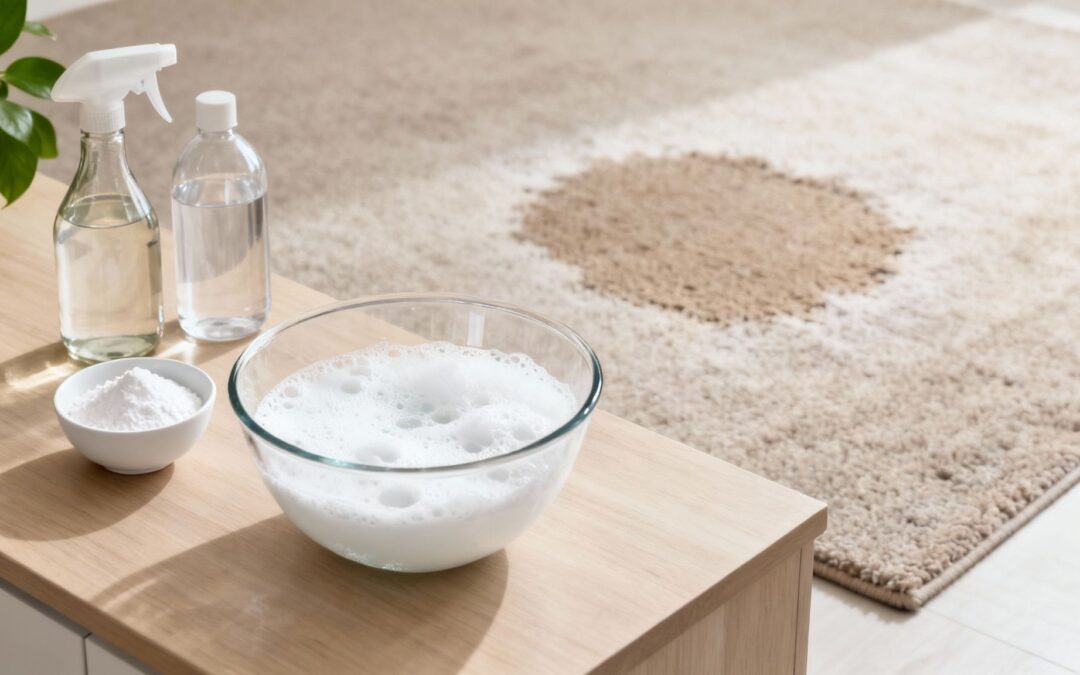
You've probably seen a dozen recipes online for a homemade carpet cleaning solution. Most of them boil down to a simple mix of white vinegar, water, and a drop of dish soap. It’s a popular go-to for tackling spots and spills because the ingredients are cheap, already in your kitchen, and feel a lot safer than spraying harsh chemicals around the house.
Why DIY Carpet Cleaning Is So Appealing
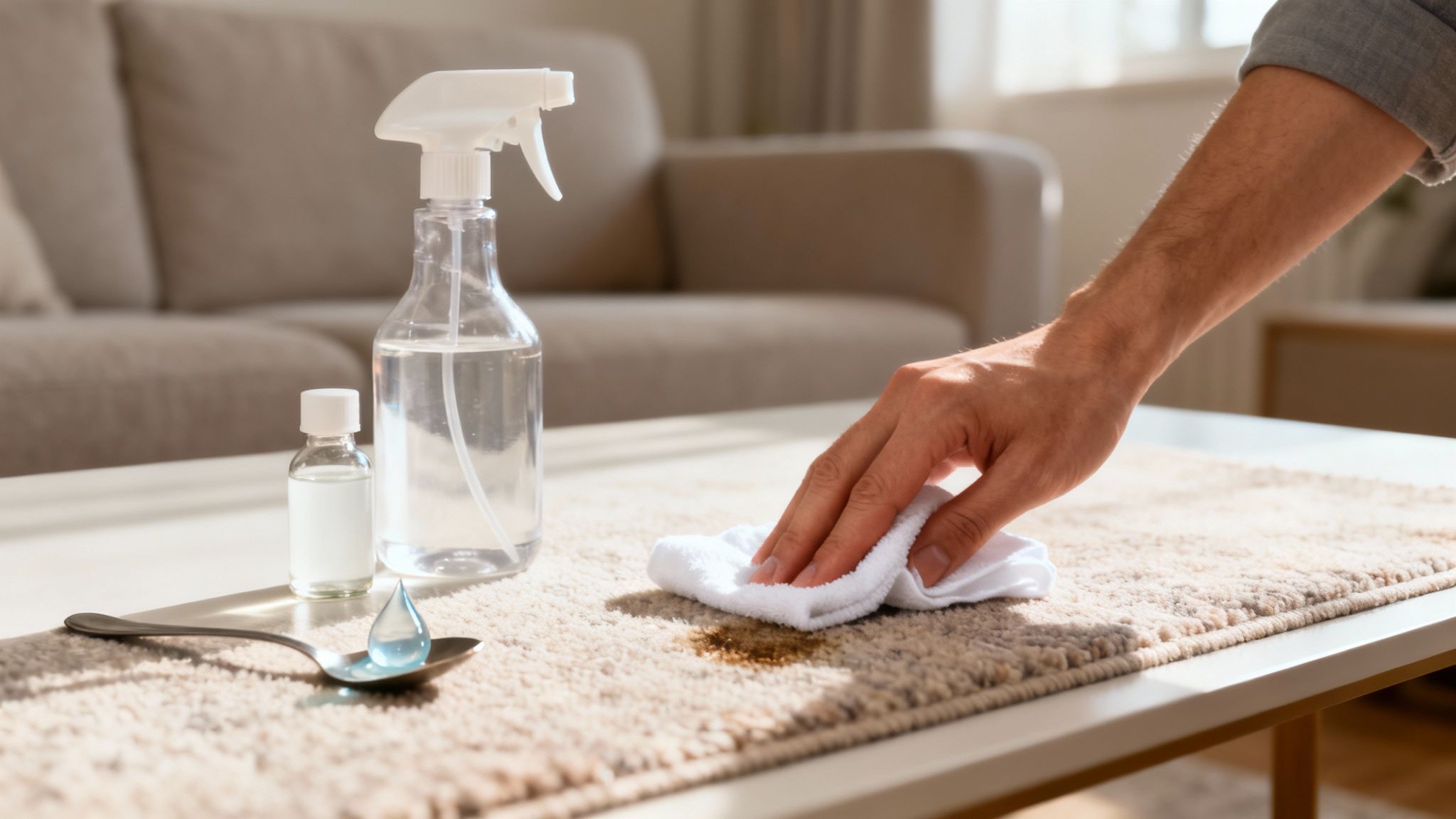
The attraction of a DIY carpet cleaner is easy to understand. Imagine you’ve just spilled red wine on the rug, and guests are walking through the door in ten minutes. The convenience of whipping up a quick fix from pantry staples is a lifesaver for any busy home.
Instead of a mad dash to the shops, you can mix a simple solution and get to work right away. That immediate response is often what stops a small mishap from turning into a permanent, ugly stain.
The Appeal of Cost and Simplicity
Let's be honest, a big part of the appeal is the price tag. A professional clean is a planned expense, and when you look at the average UK end of tenancy clean prices, you can see why a homemade option feels much gentler on the wallet. A DIY solution costs next to nothing to make.
This is a huge driver for most people, making it a fantastic first line of defence against everyday spills. The ingredients are not only affordable but versatile, so you aren't buying a special product that will sit in the cupboard for months.
Beyond the savings, there's a real sense of control. You know exactly what’s in your cleaning mix, which brings peace of mind, especially if you have young kids, pets, or anyone in the family who's sensitive to strong chemical smells.
Setting Realistic Expectations for DIY Cleaning
It’s really important to be realistic about what these homemade concoctions can actually do. They are brilliant for fresh, surface-level stains and giving your carpet a bit of a freshen-up. Think of it like wiping down your kitchen bench—it’s great for daily maintenance.
For example, a small coffee splash or a few muddy footprints can often be handled perfectly well with a vinegar and water spray.
But when you're dealing with deep-set grime, stubborn odours, or large areas of discolouration, a DIY approach just won't cut it. Those problems live deep down in the carpet fibres and underlay, far beyond what a spray bottle and cloth can reach.
Key Takeaway: A homemade carpet cleaner is your best friend for immediate spot treatment and minor refreshers. It is not, however, a substitute for the deep extraction and sanitation only professional-grade equipment can provide for a whole-room clean.
While DIY solutions are tempting, they can backfire if you're not careful. The Australian carpet cleaner market hit USD 13.276 million in 2024, showing just how much we care about home hygiene. Yet, a 2023 Consumer Affairs Victoria survey found that 68% of Aussie renters in Greater Melbourne who tried DIY carpet cleaning actually made things worse. They reported a sticky residue buildup that caused their carpets to get dirty again even faster.
This happens because homemade recipes can't be rinsed out properly without the powerful hot water extraction systems used by professionals like us at Right Price Carpet Cleaning. Our truck-mounted machines blast hot water deep into the fibres and suck all the dirt and leftover solution right out, leaving nothing behind.
Ultimately, knowing when to use a homemade carpet cleaning solution is just as important as the recipe itself. Keep it for the small, fresh spills, but know when it's time to call in the experts for a truly deep clean.
Getting to Know Your DIY Cleaning Toolkit
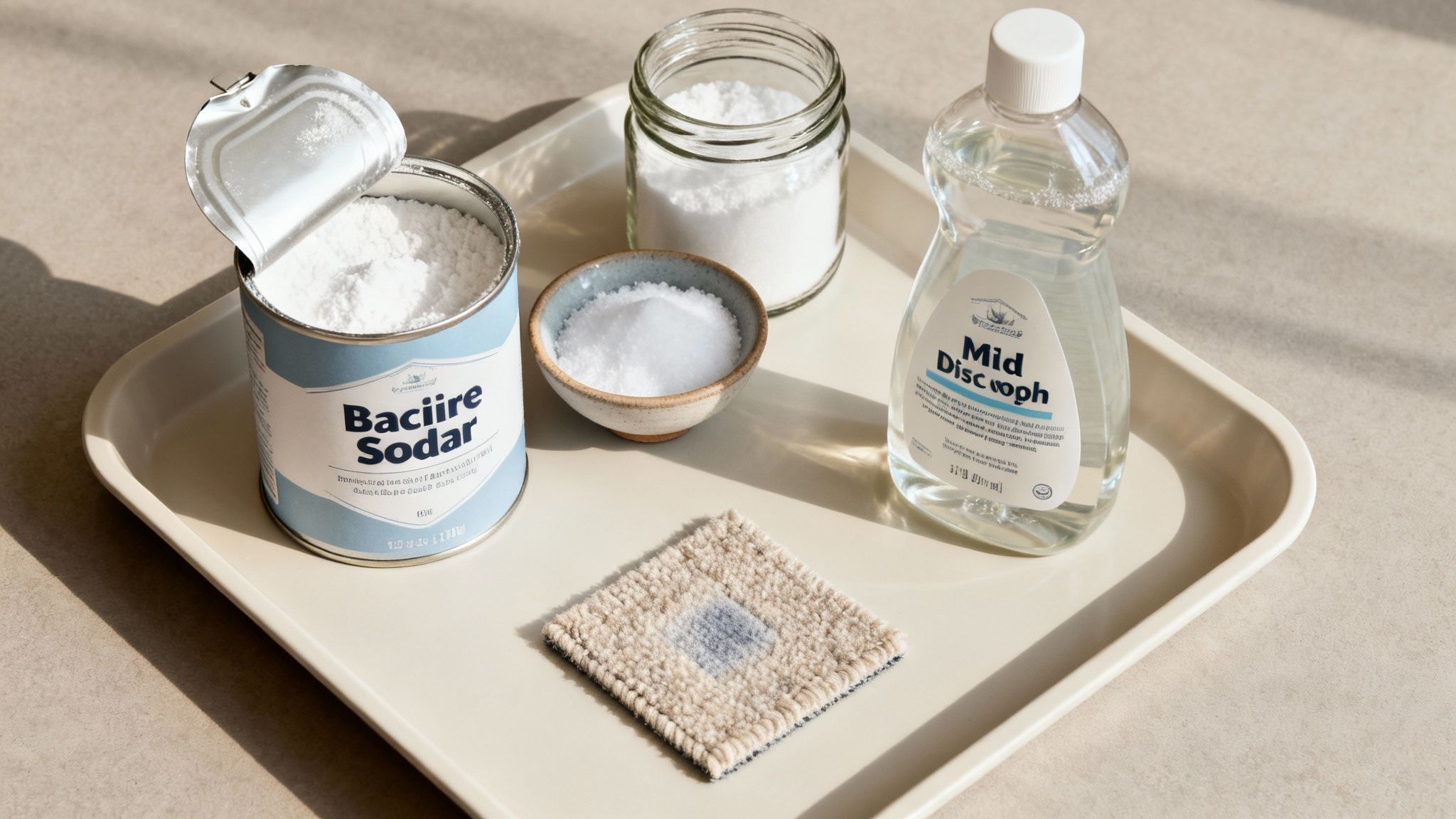
Before you start mixing up a homemade carpet cleaner, it pays to understand the tools you're working with. These everyday household items have some serious cleaning muscle, but using them the right way is what separates a sparkling success from a DIY disaster. Think of this as your pre-flight safety check.
Most of the recipes you’ll find rely on a few key players from your pantry. Knowing what each one does helps you figure out why a particular solution works—and just as importantly, what its limits are.
The Kitchen Chemistry Behind Clean Carpets
The magic of any homemade cleaner really just comes down to basic chemistry. Each ingredient is in the mix for a reason, whether it’s to lift dirt, stamp out odours, or break down a tough stain.
- White Vinegar: This is your acidic powerhouse. The acetic acid in vinegar is fantastic for dissolving everyday grime and cutting through mineral deposits from spills. It's also a natural deodoriser, which is why you see it in almost every recipe for tackling pet smells.
- Baking Soda (Sodium Bicarbonate): Acting as a gentle abrasive, bicarb soda helps to scrub away dirt without being too rough on carpet fibres. Its real superpower, though, is absorbing odours. A simple sprinkle over a dry carpet is one of the easiest ways to freshen up an entire room.
- Mild Dish Soap: A good, clear dish soap is a surfactant, which is a fancy way of saying it breaks the surface tension of water. This helps water and your cleaning solution get deeper into the carpet fibres to lift away greasy, oily messes. The key words here are mild and clear—coloured soaps can leave their own stain behind.
- Salt: You’ll often see salt recommended for wet spills like red wine, and for good reason. It’s incredibly absorbent and works by drawing liquid up and out of the carpet fibres before it has a chance to set.
Always stick to a clear or white dish soap. Those blue, green, or orange liquids contain dyes that can easily transfer to light-coloured carpets, leaving you with a brand new stain while you're trying to fix the old one.
Carpet Fibres and Why They Matter
Not all carpets are created equal, and your homemade solution can have a very different effect depending on the material under your feet. What works like a charm on a synthetic rug could be a complete catastrophe for natural wool.
Synthetic carpets, like nylon and polyester, are pretty tough cookies. They can generally handle mildly acidic solutions (like diluted vinegar) without any fuss. These materials are incredibly common in modern Australian homes because they’re built for durability and stain resistance.
Natural fibres are a whole different ball game. Wool, for instance, is a delicate protein fibre. Dousing it in a highly acidic cleaner like straight vinegar can weaken and damage the fibres over time, causing them to wear out much faster. A wool carpet needs a much more gentle, pH-neutral approach.
The One Step You Absolutely Cannot Skip: Spot Testing
If you only take one piece of advice from this entire guide, make it this one: always, always perform a spot test. This is the single most important thing you can do to prevent a widespread disaster like discolouration or fibre damage.
Find a hidden patch of your carpet—under the sofa, inside a wardrobe, or on a leftover scrap from the installation if you have one. Apply a small amount of your homemade cleaning solution to that spot. Let it sit for a few minutes, then blot it firmly with a clean, white cloth. Once it's completely dry, check carefully for any change in the carpet's colour or texture.
This simple five-minute check is your insurance policy. It can save you from the massive headache and cost of ruining an entire room's worth of carpet, confirming that your solution is safe before you tackle that visible stain.
Targeted Recipes For Common Household Stains
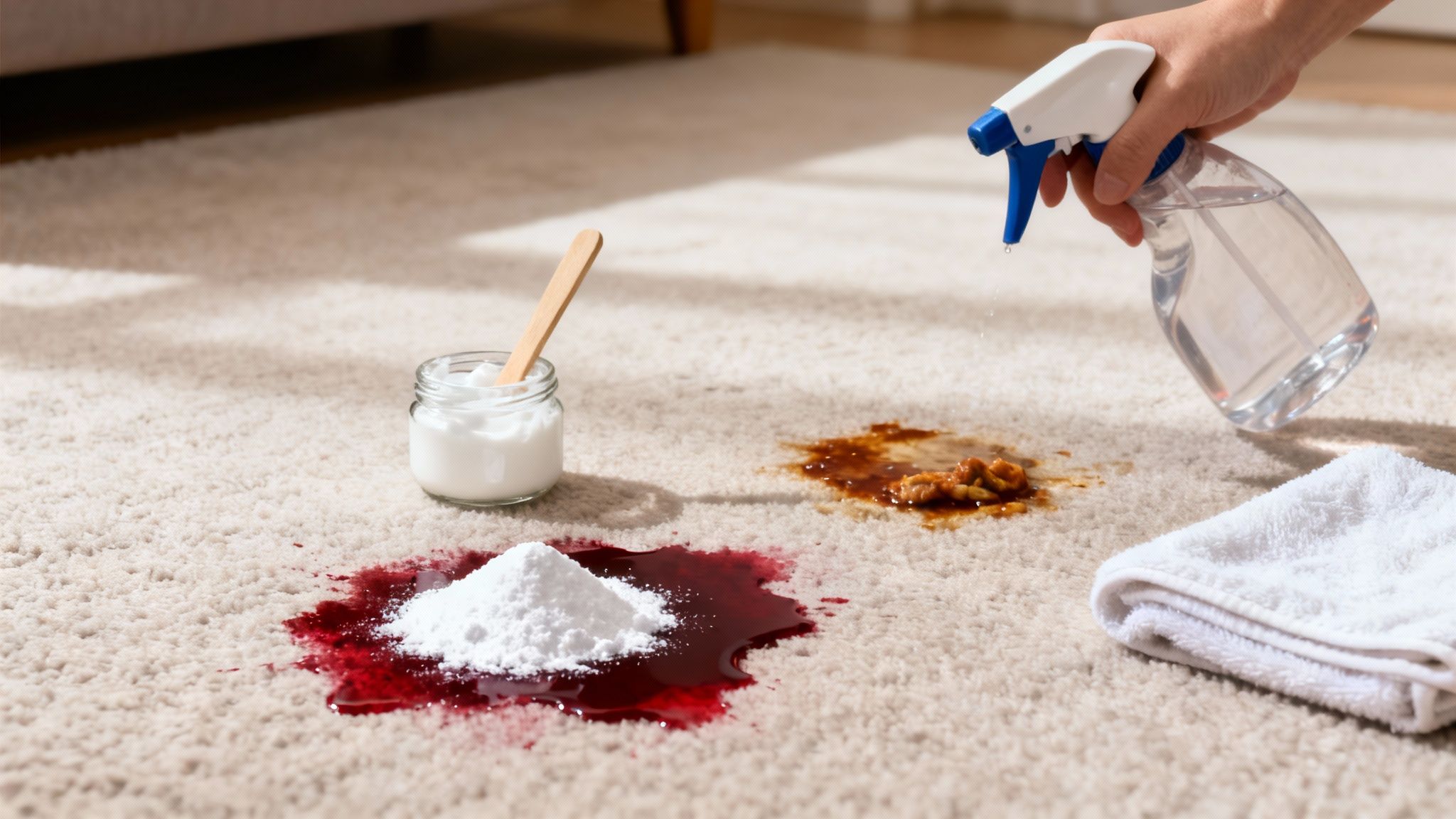
While having a general-purpose solution is a great start, the real secret to DIY success is matching the remedy to the mess. A greasy pizza drop needs a completely different approach than muddy paw prints or that dreaded splash of red wine. One-size-fits-all rarely works for stubborn stains.
This is where we get practical. Let's move beyond the basics with targeted recipes designed for the most common household spills. By tailoring your approach, you seriously boost your chances of getting that stain out for good.
The Gentle Deodoriser For a Quick Freshen-Up
Sometimes your carpet doesn’t need a deep clean; it just needs a little lift. Lingering odours from daily life can make a room feel stale, but this simple dry treatment can revitalise your space in just a few hours without any scrubbing.
This is the perfect trick to use before guests arrive or for regular maintenance between professional cleans. It’s incredibly gentle and safe for virtually all carpet types, even delicate wool.
Your Recipe and Method:
- Ingredients: 1 cup of baking soda and 5-10 drops of your favourite essential oil (lavender or lemon are great choices).
- Application: In a small bowl, mix the essential oil thoroughly into the baking soda, breaking up any clumps. Sprinkle this scented powder evenly over the entire carpet or just the targeted area.
- Dwell Time: Let the mixture sit for at least 30 minutes. For stronger odours, leaving it for a few hours or even overnight will give you the best results.
- Removal: Vacuum the area thoroughly. Make several slow passes to ensure all the powder is lifted from the carpet fibres.
The Ultimate Paste For Greasy Food Stains
Grease and oil from things like butter, salad dressing, or last night's takeaway can be a nightmare. Water-based cleaners often just smear the oil around, making the problem worse. The trick is to use something that can absorb the grease right out of the fibres.
Cornstarch is brilliant for this. It acts like a sponge, drawing the oil up and out of the carpet so you can simply vacuum it away.
Your Recipe and Method:
- Ingredients: Cornstarch and a small amount of cold water.
- Application: First, gently scrape off any solid food bits with a dull knife. Then, mix just enough cold water with the cornstarch to form a thick, spreadable paste.
- Dwell Time: Apply the paste directly onto the greasy stain, making sure it’s completely covered. Let it sit until it’s completely dry and hardened, which might take a few hours.
- Removal: Once it's dry, gently break up the paste with your fingers or a soft brush and vacuum up all the residue. If a faint spot remains, a light spritz with a diluted vinegar solution can often clear it up.
The Two-Step Attack On Pet Accidents
When it comes to pet urine, you're fighting two battles at once: the visible stain and the invisible, lingering odour caused by uric acid crystals. This two-part approach tackles both issues head-on. The vinegar neutralises the ammonia, while the baking soda absorbs that stubborn smell.
Important Note: For pet stains, you must act as quickly as possible. The longer urine sits, the more it bonds with the carpet fibres and seeps into the underlay, making it exponentially harder to remove completely.
Your Recipe and Method:
- Neutralise First: Blot the fresh accident firmly with a thick towel to absorb as much liquid as you can. Mix equal parts white vinegar and cold water in a spray bottle. Lightly spray the affected area, working from the outside in to avoid spreading the stain.
- Deodorise Second: While the area is still damp from the vinegar solution, sprinkle a generous handful of baking soda over the top. You'll probably see a slight fizzing reaction—that's a good sign it's working!
- Wait and Vacuum: Let the baking soda dry completely. This part is crucial, as it’s absorbing both the moisture and the odour. Once it's bone dry (this could take overnight), vacuum the area thoroughly.
The First Response For Red Wine Spills
Seeing a glass of red wine topple onto a light-coloured carpet is a moment of pure panic. The absolute key here is immediate action. Don't scrub! Your first goal is to absorb as much of that wine as you possibly can before it has time to set.
Salt is an incredible first-aid tool in this scenario. Its crystalline structure is highly absorbent and will literally pull the wine up and out of the carpet fibres.
Your Recipe and Method:
- Blot, Don't Rub: Immediately blot the spill with a clean, dry cloth or paper towel. Your goal is to soak up the excess, not spread it.
- Apply Salt Liberally: Pour a large amount of table salt directly onto the stain, completely covering it. Seriously, you can't use too much here.
- Let It Work: As the salt sits, you'll see it start to turn pink as it wicks the wine out of the carpet. Leave it until it looks dry, which usually takes a few hours.
- Vacuum: Once the salt has done its job, simply vacuum it all up.
Stain-Specific Homemade Solution Guide
Not all stains are created equal, so having a quick reference can be a lifesaver. This table matches some of the most common household spills with the best DIY remedy to tackle them.
| Stain Type | Primary Ingredient(s) | Application Method |
|---|---|---|
| Pet Urine | White Vinegar & Baking Soda | Spray vinegar solution, cover with baking soda, let dry, vacuum. |
| Red Wine | Table Salt | Blot spill, cover generously with salt, let sit, vacuum. |
| Grease/Oil | Cornstarch & Water | Apply a thick paste, let it harden completely, then vacuum. |
| Mud | Water & Mild Dish Soap | Let mud dry, scrape off excess, vacuum, then blot with soapy water. |
| Coffee/Tea | White Vinegar & Water | Blot stain, spritz with a 1:1 vinegar/water solution, blot again. |
Remember to always spot-test any solution in a hidden area first. While these methods are effective for many situations, they have their limits, especially on older or more complex stains.
Recent data from the Australian Bureau of Statistics highlights that 92% of Melbourne homes with carpet deal with allergen buildup annually. While 61% try DIY methods first, a Choice magazine trial found a 47% failure rate on tough stains like red wine. Professional hot water extraction, by contrast, outperforms DIY methods by 89% in deep dirt removal. Discover more insights about the effectiveness of professional cleaning methods.
For more helpful tips on tackling messes around the house, check out this excellent guide on how to clean a fabric sofa. Many of the principles for stain removal can be adapted for different types of fabric.
Of course. Here is the rewritten section, crafted to sound like an experienced human expert while adhering to all your requirements.
Common DIY Carpet Cleaning Mistakes to Avoid
The idea of mixing up your own carpet cleaning solution can feel quite satisfying. But even with the best intentions, a few common slip-ups can turn a simple cleaning job into a costly disaster. Believe me, learning from others' mistakes is a much cheaper education than making them yourself.
Too often, people dive in with enthusiasm only to find they've created a bigger problem than the one they started with. From soggy carpets to stubborn, sticky residues that attract even more dirt, these frequent errors are entirely preventable with a bit of foresight.
The Dangers of Over-Wetting Your Carpet
One of the most frequent and damaging mistakes is simply using too much water or solution. It’s a natural instinct to think "more is better," but when it comes to carpets, the complete opposite is true. When you oversaturate the fibres, the excess moisture soaks right through the carpet backing and into the underlay.
Once that moisture is trapped, it becomes a perfect breeding ground for mould and mildew. This leads to those unpleasant musty odours and can even pose health risks. Beyond that, it can damage the carpet backing itself, causing it to separate, stretch, or rot over time. Your subfloor, whether it's wood or concrete, can also suffer significant damage from prolonged dampness.
Pro Tip: Always use a spray bottle for your homemade solution. It lets you apply a fine, controlled mist directly onto the stain rather than pouring liquid on, which almost guarantees you'll use too much. The goal is to dampen the fibres, not drown them.
Scrubbing Too Aggressively
When you’re staring down a tough stain, the urge to grab a stiff brush and scrub with all your might is powerful. Unfortunately, this is one of the worst things you can do. Aggressive scrubbing doesn’t actually lift the stain; what it does is permanently damage the carpet fibres.
All that friction causes the delicate fibre tufts to untwist and fray. This creates a fuzzy, worn-out patch that’s completely irreversible. Once the fibres are damaged, that spot will look different from the rest of the carpet forever—often appearing duller and, ironically, attracting dirt more easily. A gentle blotting motion is always the way to go.
Leaving Behind a Sticky Residue
This is the silent mistake that keeps on causing problems long after you've put your cleaning supplies away. If you don’t thoroughly rinse and extract your cleaning solution, you're guaranteed to leave behind a sticky soap or detergent residue.
This residue acts like a dirt magnet. While the carpet might look clean for a day or two, that sticky patch will attract new soil, dust, and grime at an alarming rate. Before you know it, the original spot reappears as a dark, dirty patch that looks even worse than before.
It’s not just anecdotal, either. A recent report analysing 5,000 DIY cleaning claims found that 74% of users in Victoria experienced carpet fibre damage from homemade solutions. A primary culprit was overly sudsy mixes that trapped moisture, leading to bacteria growth in 55% of cases. You can review the full findings from Master Cleaners Australia to see just how common these issues are.
Using the Wrong Ingredients
Not everything under your kitchen sink is safe for carpets. Using the wrong products can lead to disastrous outcomes like permanent discolouration or chemical burns on the fibres.
Here are a few common ingredient errors to steer clear of:
- Coloured Dish Soaps: The dyes in blue, green, or orange soaps can easily transfer to your carpet, leaving you with a brand-new stain in place of the old one.
- Ammonia or Bleach: These are far too aggressive for most carpet fibres. They can strip colour and weaken the material, especially on natural fibres like wool.
- Excessive Vinegar: While diluted vinegar is a fantastic cleaner, using too much of it—or using it undiluted—can be too acidic for delicate natural fibres, potentially causing damage over time.
Always stick to the tested and safe ingredients mentioned earlier in this guide—clear dish soap, white vinegar, and baking soda. And most importantly, always perform a spot test in a hidden area before applying any solution to a visible part of your carpet. That simple check is your best defence against an irreversible mistake.
Knowing When To Call a Professional Cleaner
A good homemade carpet cleaning solution is fantastic for tackling life's little spills and giving your carpet a quick refresh. But it’s just as important to know its limits. There comes a point where even the most determined DIY effort won't be enough to restore your carpet's true colour and freshness. Knowing when to put down the spray bottle and pick up the phone is the key to protecting your investment.
Sometimes, a stain isn’t just sitting on the surface; it's soaked deep into the carpet padding and maybe even the subfloor beneath. When that happens, a surface clean just can't reach the source of the problem. This is where you need to switch from a DIY mindset to seeking guaranteed, professional results.
This simple guide should help you figure out if your carpet stain needs a professional touch.
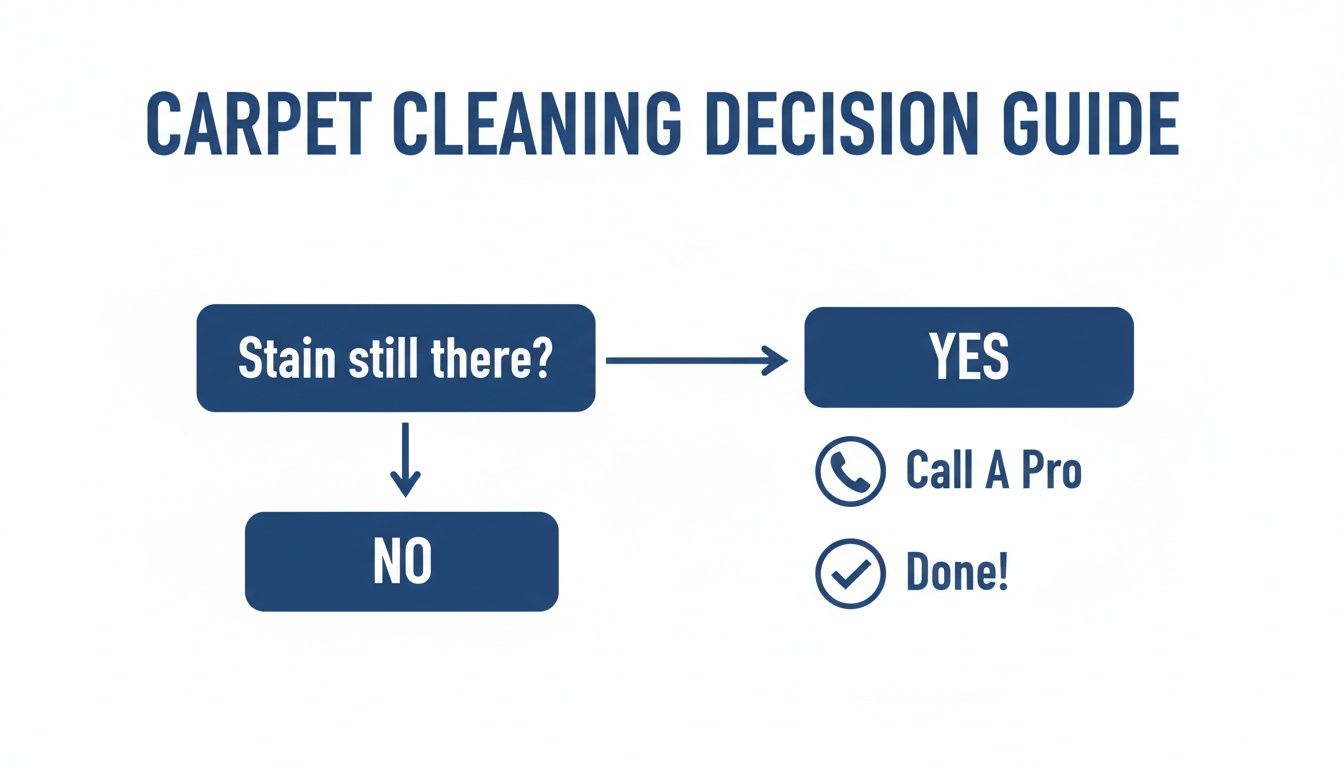
As the chart shows, there's a clear turning point: if your best attempt doesn't get the stain out, it's time to call in the experts.
Signs a DIY Solution Is Not Enough
Some situations are clear red flags that you're dealing with something beyond a homemade remedy. Trying to tackle these with vinegar and bicarb can often make things worse by spreading the stain or locking in odours for good.
You should always call for professional help when you see:
- Deep-Set, Old Stains: A stain that's been sitting for weeks, months, or even years has had time to chemically bond with the carpet fibres. A simple surface treatment just doesn't have the power to break those bonds.
- Large Areas of Discolouration: If you're looking at significant patches of discolouration from spills, heavy foot traffic, or sun fading, a professional clean is the only way you'll get a uniform, even appearance again.
- Persistent Odours: Smells from pet accidents, smoke, or mildew that hang around despite your best efforts mean the source is trapped deep in the underlay. Only a professional steam clean can flush it out completely.
- Essential End-of-Lease Cleaning: To make sure you get your bond back, most rental agreements require a professional carpet clean. DIY methods almost never meet the high standards property managers expect.
The Power of Professional Equipment
The real difference between a DIY clean and what a service like Right Price Carpet Cleaning can do comes down to technology and technique. We use powerful, truck-mounted steam cleaning machines that get results impossible to replicate with a rented machine or a spray bottle.
These machines heat water to a much higher temperature, which is crucial for properly sanitising and breaking down stubborn grime. Even more importantly, they generate incredible suction power that pulls virtually all the dirt, allergens, and moisture from deep within your carpet. It's not just a surface clean; this process removes the embedded grit that wears down fibres over time, actually extending the life of your carpet.
A professional hot water extraction clean removes up to 94% of household allergens, including dust mites and pet dander. This deep-down clean significantly improves your home's indoor air quality in a way that surface cleaning simply cannot.
When a Professional Is the Only Real Option
At the end of the day, there are scenarios where calling a professional isn't just a better option—it's the only one. If you're dealing with delicate or antique rugs made of wool or silk, trying a homemade solution is a huge risk. Water damage from a burst pipe or flood also requires immediate professional help to prevent permanent damage and mould growth.
For guaranteed results, especially for the tough jobs that affect your home's health and your peace of mind, there's no substitute for professional expertise. A service like Right Price Carpet Cleaning brings the right equipment, knowledge, and experience to handle these challenges safely and effectively, restoring your carpet and giving you a truly clean foundation for your home.
Frequently Asked Questions
It’s one thing to mix up a DIY solution, but it's another to know all the little details that come up during the clean. After years of talking to homeowners across Melbourne, we've found that a few questions pop up time and time again.
Let's clear up some of the common uncertainties. Getting these details right is the key to a successful spot clean—and knowing when it’s time to call in the professionals.
Can I Use a Homemade Solution in a Rental Carpet Cleaner?
This is probably the most common question we hear, and the answer is a hard no. We strongly advise against it. Those rental machines you grab from the supermarket are built for one thing: commercial, low-foaming cleaning solutions. They simply aren’t designed to handle a DIY mix.
If you pour a vinegar and dish soap solution into one, you’re asking for trouble. The dish soap will create a mountain of foam that can easily get sucked into the machine's motor, causing serious damage. On top of that, homemade recipes often leave behind a sticky residue that the machine’s weak suction can’t fully pull out of your carpet.
Remember, using a non-approved solution will almost certainly void your rental agreement. That means you could be on the hook for hundreds of dollars in repair costs. Always stick to the product they recommend at the store.
How Often Should I Use a Vinegar Solution on My Carpet?
Vinegar is a brilliant spot cleaner, but you have to use it sparingly. Because it’s acidic, it’s best reserved for one-off spot treatments, not for cleaning an entire room or as part of your weekly routine. Too much of a good thing can backfire.
On most synthetic carpets like nylon or polyester, a heavily diluted mix—think one part vinegar to at least 10 parts water—is usually fine for a fresh spill. But if you use it too often, the acidity can start to dull your carpet's colour or even weaken the fibres over time.
This is even more critical for natural fibres. Wool is particularly sensitive to pH changes, and repeated exposure to an acidic cleaner like vinegar can cause permanent damage. For a safe, deep clean that protects your investment, the industry standard is a professional steam clean every 12-18 months.
Does Baking Soda Permanently Remove Carpet Odours?
Baking soda is a fantastic deodoriser for surface-level smells. It works by absorbing odour molecules on contact, which is why sprinkling it over a dry carpet, letting it sit, and vacuuming it up leaves a room smelling much fresher. It’s a great trick for tackling everyday mustiness.
But it has its limits. Baking soda can only absorb what it can physically touch. So while it’s great for the surface, it really only masks odours that have soaked deep into the carpet padding, like a bad pet urine accident or the lingering smell of smoke.
To get rid of those deep-set odours for good, you need to flush the source out from the underlay itself. That’s where professional hot water extraction is non-negotiable. It’s the only way to rinse and extract contaminants from the very base of your carpet, ensuring the smell is gone permanently.
When a DIY fix just won’t cut it, you need the power and precision of a professional clean. Right Price Carpet Cleaning uses powerful, truck-mounted equipment that delivers a deeper, safer, and longer-lasting result than any homemade solution ever could. Get your instant online quote today!
Recent Comments