



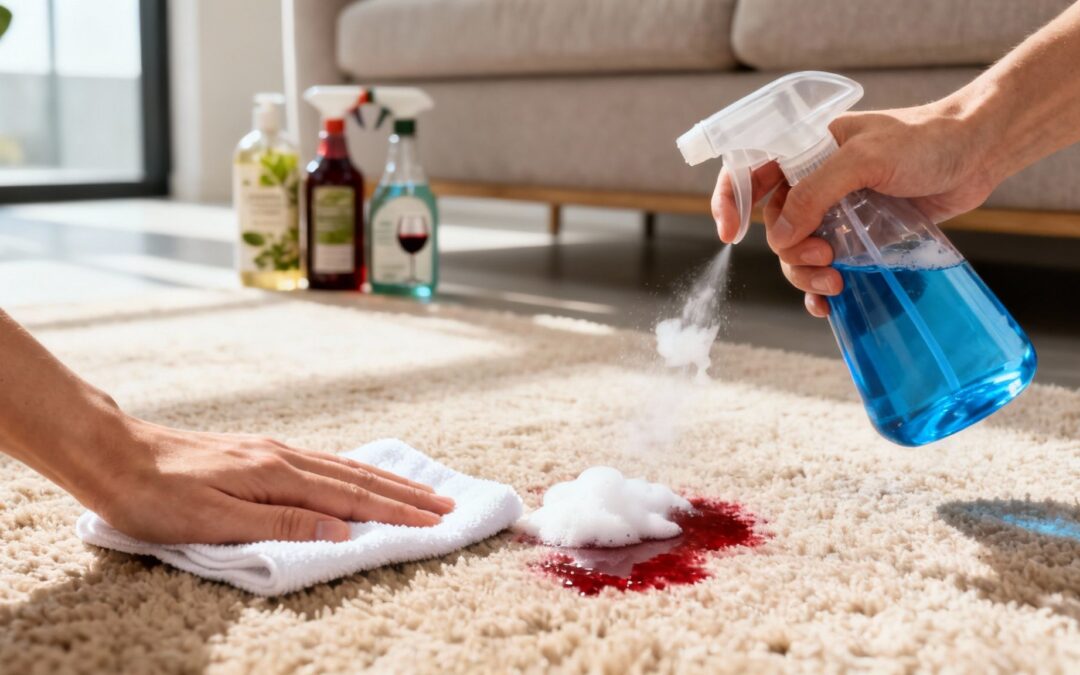
Staring at a fresh spill feels like a race against the clock. So, what actually makes a good carpet stain remover? The short answer is that the best one is always the one designed for your specific problem, whether that’s red wine, muddy paw prints, or a mystery mark you just discovered.
Your Quick Guide to Winning the War on Carpet Stains
A stubborn carpet stain can make an entire room feel messy. Your eye goes straight to it, and it can become a constant source of frustration. But the good news is, most spills are completely manageable if you act fast and use the right approach.
Think of stain removal less like a single magic spray and more like having a toolkit. You wouldn't use a hammer to turn a screw, right? In the same way, you shouldn't expect one cleaner to work on every single type of mess.
The secret to success is understanding your opponent. Different stains have different chemical makeups, which means they need specific treatments to break them down properly. A greasy food stain needs a solvent to dissolve the oil, while an organic stain like pet urine needs enzymes to literally eat the mess and eliminate the odour. Using the wrong product might do nothing at all, or worse, it could set the stain permanently or even damage your delicate carpet fibres.
Matching the Solution to the Spill
To pick a good carpet stain remover, you first need to figure out what kind of stain you’re dealing with. Is it oil-based, water-based, or organic? This first step guides your entire strategy. For example, a cleaner that works wonders on your morning coffee might be useless against an ink smudge. This guide will help you build that know-how so you can confidently grab the right tool for the job.
We’ll explore everything from powerful store-bought formulas to some handy DIY fixes for those smaller, everyday incidents. You'll learn how to read product labels and spot the active ingredients that will actually get the job done. Most importantly, we'll clarify when it's time to stop scrubbing and call in a professional—a move that could save your carpet from permanent damage.
Let’s get you prepared for any stain that comes your way.
A quick response is your greatest advantage in stain removal. Over 90% of common household stains can be successfully removed if treated within the first few hours, preventing them from bonding with carpet fibres.
To get you started, here's a cheat sheet to help you make the right first move when a spill happens. Acting quickly with the right technique gives you the best chance of successful removal before it turns into a major headache.
Quick Action Plan for Common Carpet Stains
| Stain Type | Your Immediate First Step | Look for This Active Ingredient | When to Call a Professional |
|---|---|---|---|
| Red Wine/Coffee | Blot gently with a dry, white cloth to absorb excess liquid. Do not rub. | An oxidising agent (like hydrogen peroxide) to break down colour molecules. | If the stain is large, has set for hours, or is on a delicate natural fibre. |
| Mud/Dirt | Let it dry completely, then vacuum up as much of the solid debris as possible. | A surfactant-based cleaner to lift away remaining particulate matter. | If the mud has been ground deep into high-pile carpet, leaving discolouration. |
| Pet Urine | Blot thoroughly, then rinse with a small amount of cold water and blot again. | An enzymatic cleaner to digest the uric acid crystals and eliminate odours. | If the odour persists after cleaning or the stain keeps reappearing (wicking). |
| Grease/Oil | Scrape off any excess, then apply an absorbent powder like cornstarch to soak up the oil. | A solvent-based cleaner designed to dissolve lipids and oily residues. | For large, set-in grease stains that have soaked into the carpet padding. |
Having this basic game plan means you're already halfway to solving the most common carpet disasters. For everything else, a little more knowledge goes a long way.
The Science Behind a Good Stain Remover
Ever wondered what’s actually going on inside that bottle of carpet stain remover? It’s not magic, even though the results can feel like it. It's all about targeted chemistry, and once you understand the basics, you can pick the right product for the job every single time.
Think of it this way: a stain is like a lock, and the remover is the key. A coffee spill has a completely different chemical structure than a greasy footprint from the garage. You can’t expect one key to open every single lock, which is why that "all-purpose" cleaner you have under the sink often falls short on the really tough messes. To win the battle, you have to match the chemical solution to the chemical problem.
The Three Main Types of Stain Removers
Most carpet cleaners you’ll find on the shelf fall into one of three camps. Each one has a different game plan for tackling stains, and knowing how they work lets you read the label like a pro.
Enzymatic Cleaners: These are your biological specialists. They’re packed with enzymes—natural proteins designed to accelerate chemical reactions—that literally digest organic stains like pet urine, blood, vomit, or that bit of dropped pizza. Imagine them as microscopic Pac-Men programmed to eat the specific proteins and fats causing the stain and the odour.
Oxidising Agents: Got a colourful spill like red wine, black coffee, or grape juice? You need an oxidiser. These cleaners, often powered by ingredients like hydrogen peroxide, work by chemically breaking the bonds in chromophores (the part of a molecule that gives it colour). This process essentially bleaches the colour out of the stain, making it invisible without harming your carpet’s dye when used correctly.
Solvents: Oily, greasy messes from makeup, ink, or greasy food just laugh at water-based cleaners. This is where solvents come in. They work by dissolving the greasy gunk, lifting it away from the carpet fibres so you can blot it up and get rid of it for good.
Why pH Balance is So Important
Beyond the main ingredient, the pH level of a cleaner is something you absolutely cannot ignore. The pH scale, running from 0 (very acidic) to 14 (very alkaline), tells you how a cleaner will react with both the stain and your carpet. 7 is neutral, just like pure water.
Using a cleaner with the wrong pH can create a bigger disaster than the original stain. A highly alkaline solution (pH 10+) can permanently yellow a wool carpet, while the wrong acidic cleaner might set a stain forever, making it impossible to remove.
Most common household stains are acidic, which is why many general-purpose cleaners lean slightly alkaline to help neutralise them. But it's a delicate balancing act. A well-formulated stain remover has a pH powerful enough to break down the stain but gentle enough not to harm your specific carpet fibres.
Getting this science right is a big deal. The Australian carpet cleaning services market is tipped to hit $611.5 million by 2025, with post-pandemic hygiene still front of mind for everyone. Here in Melbourne, where around 65% of households have carpet in their main living areas and an estimated 80% deal with a spill each year, the demand for products that actually work is huge. You can learn more about these market trends and their impact on the industry.
By understanding these core ideas—the "lock and key" approach and the critical role of pH—you stop guessing and start making smart choices. You can confidently pick a product that not only gets the job done but also protects your carpet for years to come.
How to Match the Remover to Your Stain and Carpet
Picking the wrong stain remover is a bit like trying to open a locked door with the wrong key. You can jiggle it and force it, but you'll probably just end up frustrated and might even break the lock. Using a product that isn’t right for your specific situation can be a costly mistake, potentially setting a stain for good or damaging your carpet fibres beyond repair.
This is where we get practical. It’s not enough to know what an enzyme cleaner is; you need to know exactly when to reach for it. How do you safely tackle a pet accident on a delicate wool rug versus a coffee spill on a durable synthetic carpet? The secret lies in matching the cleaner to both the stain and the carpet material.
Getting this right is crucial. The visual guide below simplifies that first decision, helping you match the right type of remover to the category of your stain.
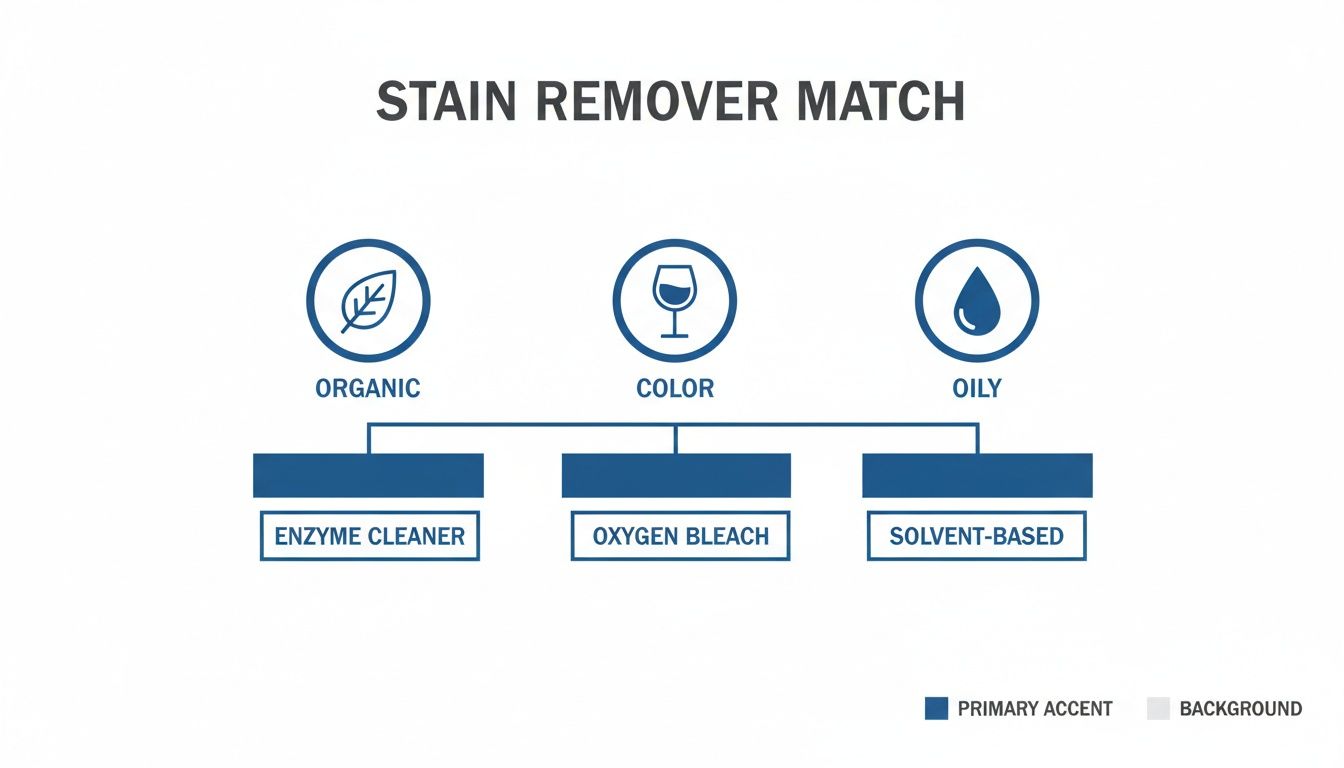
As you can see, your first move depends on whether the stain is organic, colour-based, or oily. This points you toward the correct chemical approach to break it down effectively.
First, Know Your Carpet Fibres
Before you even think about the stain, you have to know what your carpet is made of. Different fibres react very differently to cleaning agents. What works wonders on one can be a complete disaster on another.
Synthetic Fibres (Nylon, Polyester, Olefin): Think of these as the workhorses of the carpet world. They’re generally more durable, stand up well to water-based stains, and can handle a wider range of cleaning solutions. Most off-the-shelf stain removers are made with these materials in mind.
Natural Fibres (Wool, Sisal, Cotton): These materials are beautiful but demand a much gentler touch. Wool, for instance, is highly sensitive to high pH levels. An alkaline cleaner can cause permanent yellowing and destroy the fibres. It’s absolutely essential to use a pH-neutral, wool-safe product on these delicate carpets.
Expert Tip: Always check the manufacturer’s cleaning recommendations for your carpet if you can. Treating a wool carpet like a synthetic one is one of the fastest ways to cause irreversible damage.
Pairing Removers With Common Stains
With your carpet type in mind, you can now confidently choose your weapon. Each common household stain has a specific weakness, and the right product is the one that exploits it perfectly.
For Red Wine and Coffee Stains
These are pigmented stains, which means you need to chemically alter their colour.
- Best Bet: An oxidising remover, which often contains hydrogen peroxide. It works by breaking down the colour molecules, effectively making the stain invisible.
- Carpet Match: Generally safe for synthetics. On natural fibres, use extreme caution and only wool-safe approved products after a thorough patch test in a hidden spot.
For Grease and Oil Stains
Think greasy food, makeup, or ink. Water-based cleaners simply won’t cut it here.
- Best Bet: A solvent-based spot remover is what you need. It dissolves the oily components, allowing you to lift them from the carpet fibres.
- Carpet Match: Effective on most synthetic carpets. Test carefully on wool, as some solvents can strip the natural lanolin that protects the fibres. For particularly tough marks, such as when you’re removing stubborn glue stains from carpet, specialised guides offer more targeted advice.
For Pet Stains and Organic Messes
This covers urine, vomit, blood, and most food spills.
- Best Bet: An enzymatic cleaner is non-negotiable. The enzymes in these products literally digest the proteins and uric acid in the stain, eliminating both the mark and the odour at the source.
- Carpet Match: Safe for almost all carpet types, including wool. This makes it a versatile and essential tool for any pet owner.
Knowing how to pair the right product with the right problem is more important than ever. The Australia-NZ carpet cleaning sector is projected for 4.8% growth through 2035, driven by a greater focus on home hygiene. In Melbourne, where 75% of homes have children or pets, stains are a daily reality.
Yet, DIY products often only achieve a 40-50% success rate compared to the 98% effectiveness of professional methods. By correctly identifying your carpet and stain, you dramatically increase your chances of success and solve the problem without accidentally creating a new one.
The Right Way to Apply Stain Remover
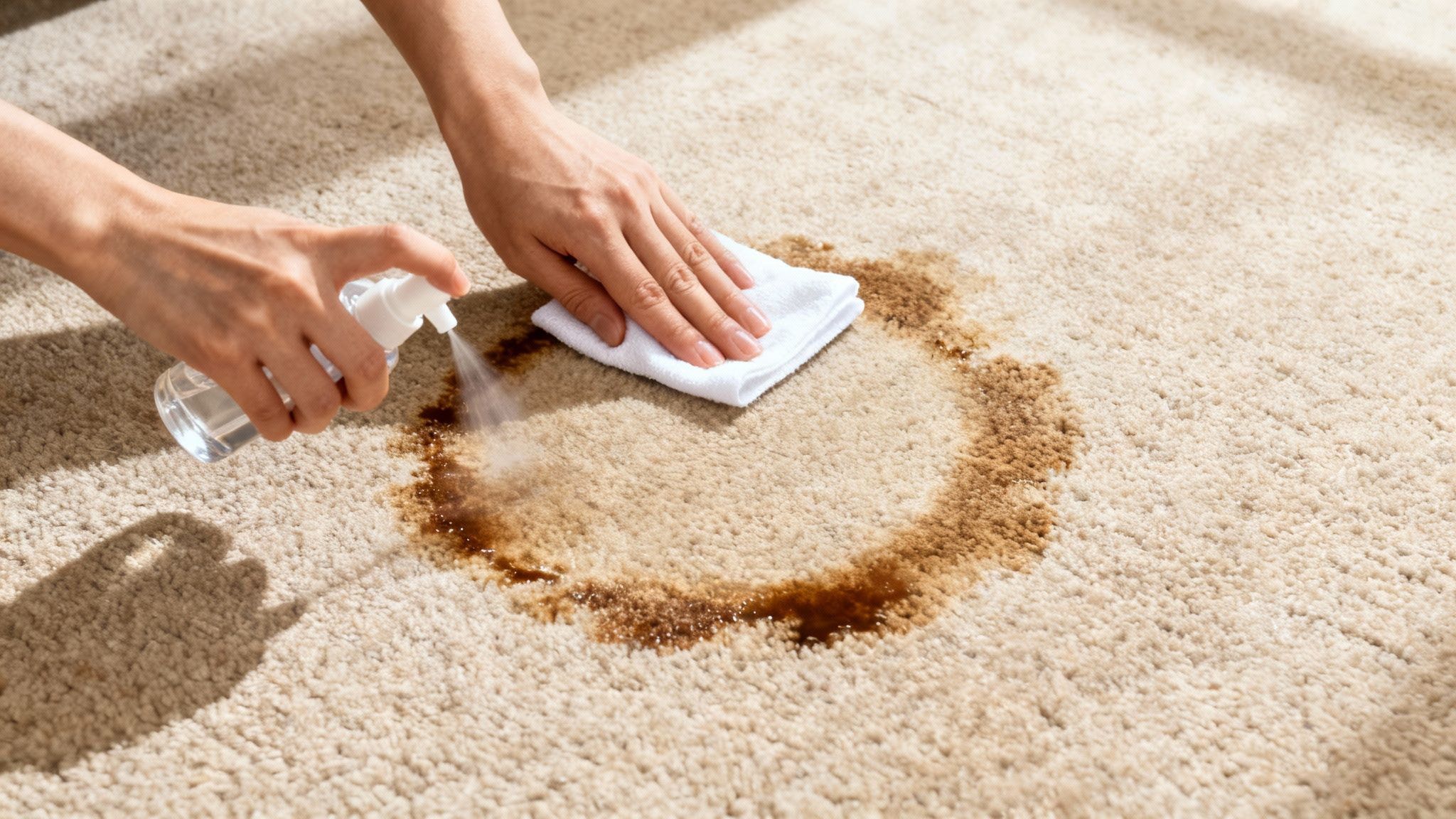
Having the best product on hand is a fantastic start, but it’s only half the battle. Your success in getting rid of a stubborn mark often comes down to how you use it. The right technique is what separates a flawless result from an accidental disaster.
Think of it like this: a surgeon can have the most advanced tools in the world, but without knowing the proper procedure, things can go sideways fast. The same principle applies here. A good carpet stain remover needs to be applied correctly to work its magic and protect your investment.
The Golden Rules of Stain Removal
Before you even think about spraying anything, commit these rules to memory. They are the non-negotiables of effective and safe stain treatment, preventing common mishaps and giving you the best shot at a perfect finish.
Always Test First: This is the most critical step, period. Find an out-of-the-way spot—inside a cupboard, under the sofa, anywhere it won't be seen—and apply a small amount of the cleaner. Let it sit for a few minutes (or as directed on the label), then blot with a clean white cloth to check for any colour transfer or fibre damage. Skipping this test is a gamble you don’t want to lose.
Blot, Never Rub: Your first instinct might be to scrub a stain into submission, but that’s the worst thing you can do. Rubbing just spreads the stain and grinds it deeper into the carpet fibres, turning a small problem into a much bigger one. Instead, gently blot the area with a clean, dry, white cloth, pressing down firmly to soak up as much of the spill as possible.
Work from the Outside In: When you start applying the cleaner, always begin at the outer edge of the stain and work your way toward the centre. This simple trick contains the mess and stops you from accidentally spreading the stain outwards.
A Step-by-Step Application Masterclass
Once you’ve pre-tested your product and blotted up any excess liquid, you’re ready to get to work. Follow these steps for a controlled and effective treatment.
Apply Sparingly: Lightly spray or dab the solution onto the stain. Resist the temptation to drench the area. Over-saturating the carpet can soak the underlay and even the subfloor, creating a recipe for mould, mildew, and persistent odours. Less is more.
Let It Dwell: Give the cleaner time to do its job. Most products need a few minutes to penetrate and break down the stain molecules. Check the label for the recommended time, but it’s typically around 3-5 minutes.
Blot Again: Grab a fresh, clean, white cloth, dampen it slightly, and gently blot the area again. You should start to see the stain transferring from the carpet to your cloth. Keep going until the stain is lifted.
Rinse Lightly: Dampen another clean cloth with cold water and blot the area one last time. This rinses out any cleaning residue. Leftover soap is sticky and actually attracts dirt over time, which is why some stains seem to magically reappear.
Dry Thoroughly: Finally, place a thick, dry towel over the damp patch and weigh it down with something heavy (like a stack of books). This acts like a poultice, wicking up any remaining moisture, helping the carpet dry faster and preventing those dreaded watermarks.
DIY Solutions Versus Store-Bought Removers
When a stain hits the carpet, the first thought is usually a frantic dash to the pantry. Do you mix up a home remedy, or grab that trusty spray bottle from under the sink? Both have their place, but knowing when to use each is the secret to winning the battle against stains.
DIY solutions, like the classic vinegar and bicarb soda combo, are brilliant for fresh, minor spills. They’re cheap, always on hand, and you know exactly what’s in them. If you’ve just dribbled a bit of coffee or tracked in a small muddy footprint, a quick homemade paste will often get the job done without any fuss.
But let’s be honest, their power only goes so far. These pantry staples don't have the specialised chemical muscle to tackle the really tough stuff. When you're up against a set-in red wine disaster, a greasy pizza drop, or a stubborn pet accident, a DIY mix might only fade the stain, leaving a ghostly reminder behind.
The Power of Professional Formulations
This is where store-bought removers really shine. These aren’t just random concoctions; they’re scientifically formulated products designed by chemists to dismantle specific types of stain molecules.
- Convenience: They're ready to go straight out of the bottle, which is exactly what you need when time is of the essence.
- Specialised Power: Commercial cleaners are packed with potent surfactants, solvents, or enzymes that you simply won’t find in your kitchen.
- Proven Results: Good brands invest heavily in testing to make sure their formulas work across a huge range of stains and carpet fibres.
Thinking about the principles behind stain removal can also be a big help. For instance, this guide on how to clean mattress stains tackles tricky spills like blood and wine, and the core techniques—blotting, testing, and matching the cleaner to the stain—are just as relevant for your floors.
Embracing Eco-Friendly Options
Luckily, the choice isn't just between homemade potions and harsh chemicals anymore. More and more of us are looking for powerful cleaners that are also kind to the environment. This trend is a big deal, fuelling growth in the Australian carpets and rugs market, which is expected to hit USD 2,633.7 million by 2034. A huge part of that is the demand for sustainable, non-toxic products for our homes.
When you're looking for a greener store-bought option, keep an eye out for labels that mention:
- Biodegradable Surfactants: These are the workhorse cleaning agents, but they break down naturally without harming waterways.
- Plant-Based Ingredients: Formulas using ingredients derived from corn or coconut are becoming much more common and effective.
- Non-Toxic and Fragrance-Free Formulas: A must-have for homes with kids, pets, or anyone with chemical sensitivities.
Choosing eco-friendly products is something we take seriously in the professional world, too. At Right Price Carpet Cleaning, we use green pretreatments that get rid of up to 98% of dirt and allergens while being safer for your family and the planet.
So, what's the verdict? For a small, fresh spill, a DIY fix is a great first move. But for anything more serious, a well-chosen, store-bought remover—especially a green one—gives you the targeted power you need to get a truly clean result, perfectly bridging the gap until it’s time to call in the pros.
When to Call in a Professional Carpet Cleaner
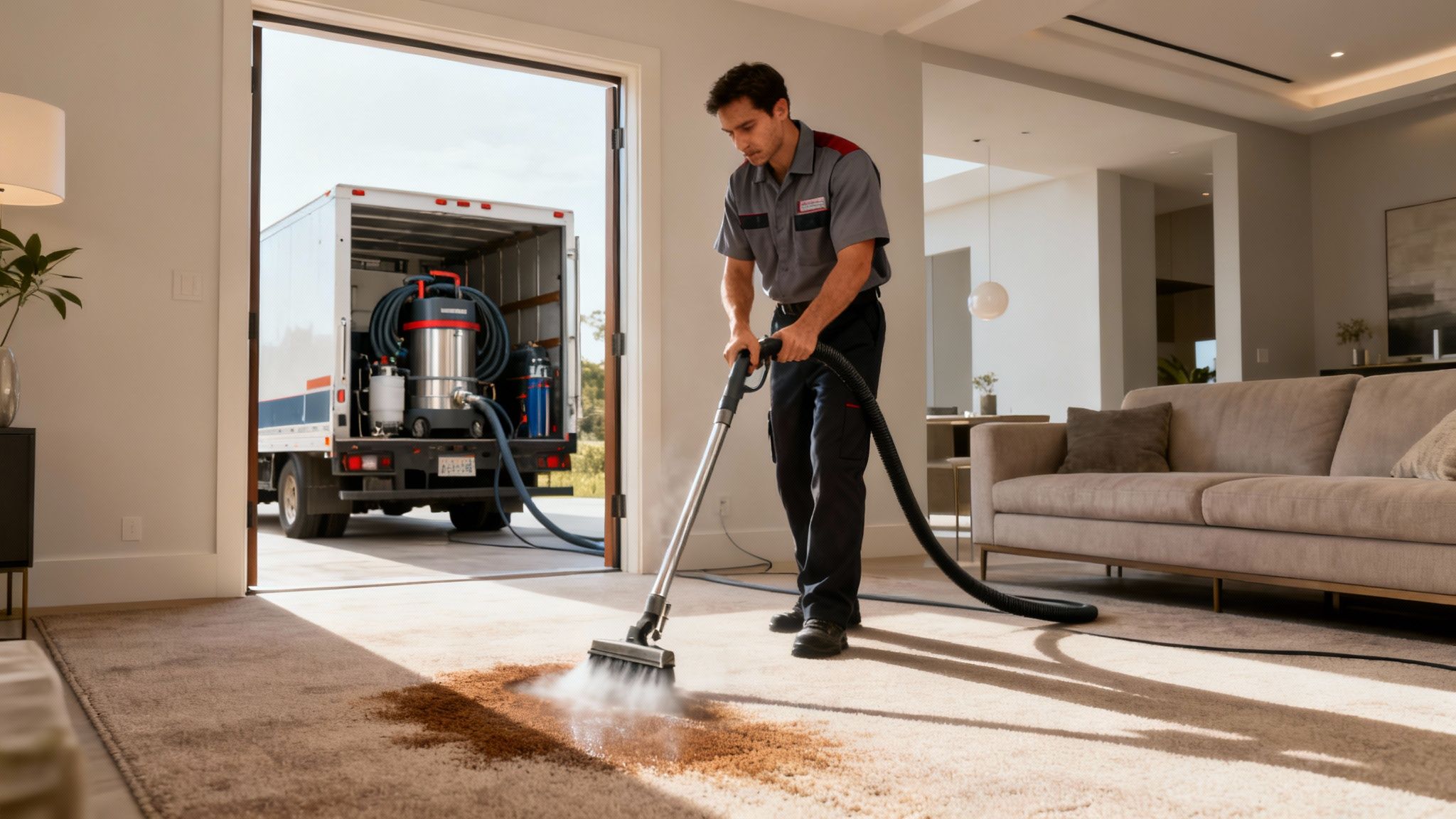
While the right technique and a good carpet stain remover can conquer many household spills, knowing your limits is the key to protecting your carpet. Sometimes, the smartest move isn't to scrub harder but to pick up the phone. Calling a professional cleaner isn't admitting defeat; it's a strategic choice for situations where DIY methods could easily do more harm than good.
Think of it like this: you can handle a leaky tap with a wrench, but you wouldn't try to replumb your entire house. Some stains are just too complex for over-the-counter products. Pushing a consumer-grade cleaner too far can permanently set a stain, bleach delicate fibres, or even lead to mould deep within the carpet padding.
Recognising when a stain is beyond a DIY fix is crucial. It’s the difference between a successful rescue and a costly replacement.
Red Flags That Signal You Need a Pro
If you run into any of these scenarios, it’s time to step away from the spray bottle and get an expert opinion. These are clear signs that the stain requires specialised equipment and knowledge that store-bought solutions simply can't provide.
- The Stain is Old or Set-In: A stain that's been sitting for days, weeks, or even months has had time to chemically bond with the carpet fibres. At that point, it’s incredibly resistant to standard removal methods.
- The Spill is Very Large: A big liquid spill doesn't just sit on the surface. It soaks right through the carpet backing into the underlay and potentially the subfloor, creating a risk of mould and persistent odours that surface cleaning will never reach.
- The Stain Keeps Coming Back: If a spot vanishes after you clean it only to reappear a few days later, you’re probably dealing with "wicking." This means the source of the stain is deep in the carpet backing or underlay, and as the carpet dries, moisture draws it back up to the surface.
- Your Carpet is Made of Delicate Material: Natural fibres like wool, silk, or sisal, as well as pricey antique rugs, are extremely sensitive to the pH levels and chemicals in many standard cleaners. The wrong product can cause irreversible discolouration or fibre damage in an instant.
The Professional Advantage: Power and Precision
So, what can a professional do that you can’t? The answer comes down to their gear and their expertise. Companies like Right Price Carpet Cleaning use truck-mounted hot water extraction systems—the undisputed heavyweights of the cleaning world.
A professional hot water extraction machine can generate water pressure and vacuum suction up to 20 times more powerful than a rental unit. This allows it to blast away and extract dirt and stain residue from the deepest part of the carpet pile, something a DIY approach can never achieve.
This immense power, combined with a technician’s understanding of stain chemistry, allows them to safely remove messes you thought were permanent. They have an entire arsenal of specialised, professional-grade spotters to precisely target and dissolve everything from ink and rust to old pet stains. For those stubborn challenges, calling a professional is making the smartest, most effective choice to save your carpet.
Frequently Asked Questions About Carpet Stains
Even with the best game plan, questions always pop up when you're staring down a stubborn stain. Here are some quick, no-nonsense answers to the things we get asked most often about choosing and using a good carpet stain remover.
Can I Use the Same Stain Remover on My Carpet and Upholstery?
That’s a risky move. Upholstery fabrics are often a completely different beast to carpets—they can be far more delicate and use less stable dyes. What works wonders on your floor could easily cause permanent discolouration or texture damage on your sofa.
Before you do anything, check the furniture's cleaning code tag. The safest approach is always to use a product specifically made for upholstery and to perform a patch test in a hidden spot, like under a cushion, to see how the fabric reacts.
How Long Do I Have Before a Stain Becomes Permanent?
Honestly? The clock starts ticking the second the spill happens. The faster you act, the better your chances of getting it all out.
Stains with powerful pigments—think red wine, coffee, or curry—can start to chemically bond with carpet fibres in just a few minutes. Even if a stain seems to disappear after a quick clean, any leftover residue can act like a magnet for dirt, causing the spot to mysteriously reappear over time. It's best to treat every new stain like an emergency.
While you can tackle most spills with quick action, the uric acid in pet urine is a special case. It never truly goes away on its own and can actually smell worse as it decomposes, which is why an enzymatic cleaner is non-negotiable for breaking it down completely.
Is It Worth Calling a Pro for Just One Small Stain?
For a notoriously difficult stain like ink, an old coffee spill, or anything you've already tried (and failed) to remove, the answer is a definite yes. A professional cleaner doesn’t just have one or two bottles under the sink; we have an entire arsenal of specialised treatments that aren't available on store shelves.
More importantly, a pro brings the expertise to correctly identify the stain's chemistry and your carpet’s fibre type, letting them match the perfect treatment to the problem. Using the wrong product can set a stain forever, so calling in an expert is often the cheapest solution in the long run to save your carpet.
When a stain is too tough or you just want that guaranteed, deep-down clean, trust the team at Right Price Carpet Cleaning. Our professional-grade equipment and specialised treatments get rid of what others leave behind. Get your instant quote online today!
Recent Comments