



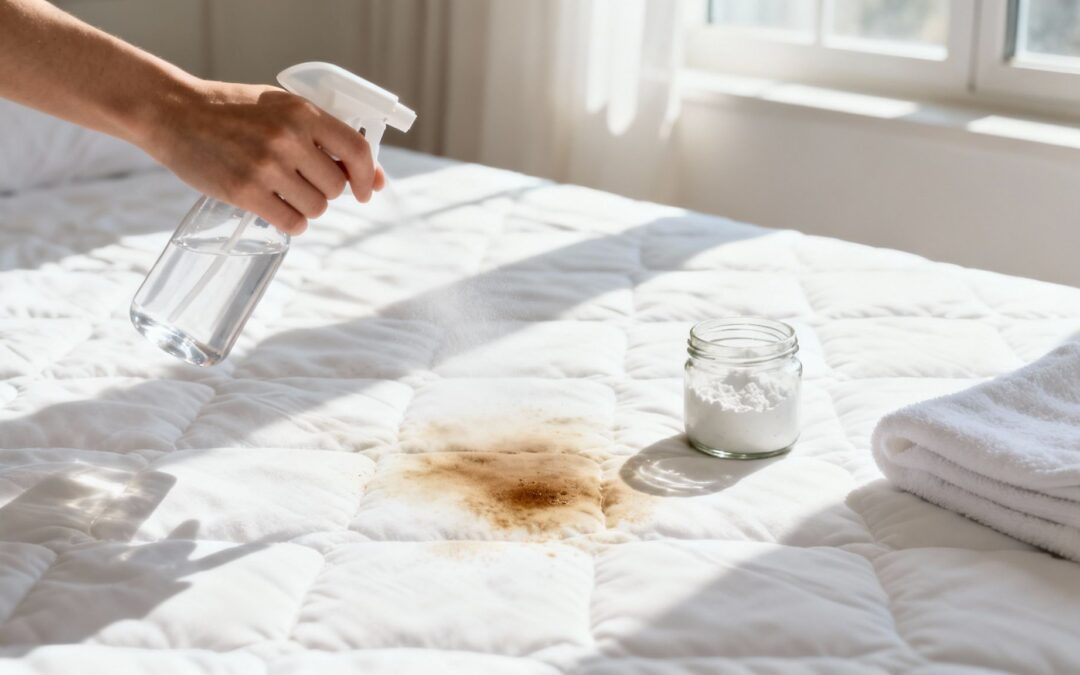
That sinking feeling when coffee, wine, or a late-night accident happens on your mattress is universal, but the stain doesn't have to be. Your most powerful tool here is speed. The moment a spill occurs, the clock starts ticking.
Fresh stains are so much easier to lift than those that have settled deep into the fabric and foam layers.
Your First Response to Mattress Stains
When it comes to getting mattress stains out, the key is to act fast. For most spills, the first thing you need to do is blot the area with a clean, dry cloth to absorb as much of the liquid as you can. Whatever you do, never rub. Rubbing just grinds the stain deeper into the mattress fibres.
Immediate action stops the liquid from seeping into the mattress core, where it can cause permanent discolouration, lingering odours, and even become a breeding ground for mould or mildew. The longer you wait, the harder the stain sets in, and as cleaning experts often point out, it could become permanent. If you're looking for more details on general mattress care, Sealy Australia has some great insights on how often to clean your mattress.
What to Do in the First Five Minutes
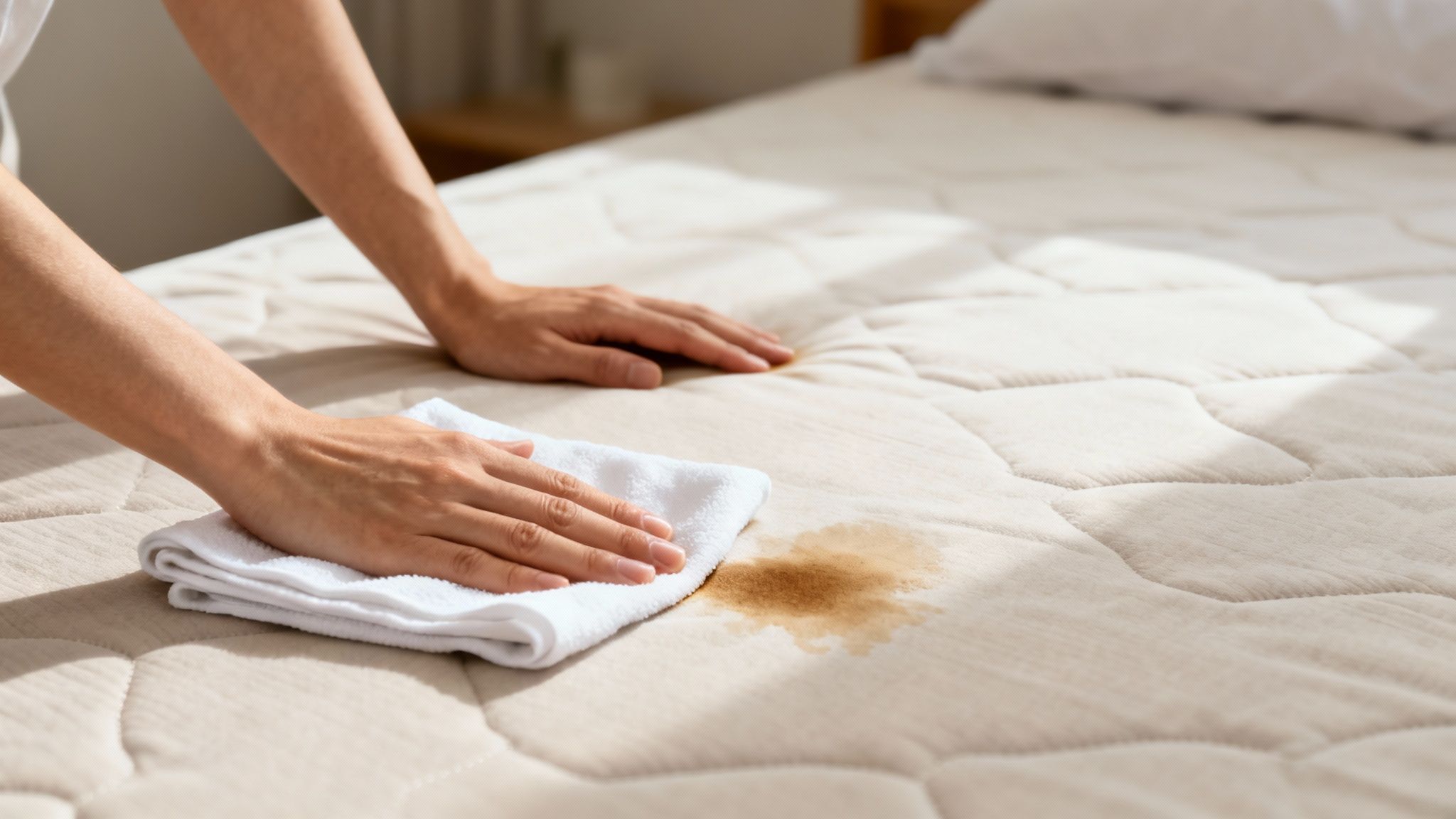
What you do right away can make all the difference. First, strip any bedding off the mattress immediately. This stops the stain from spreading and gives you clear access to the problem area.
Next, grab a clean, dry towel or some paper towels and start blotting the stain gently. Always start from the outside edge of the spill and work your way in—this simple trick stops you from accidentally making the stain bigger. Apply firm pressure to soak up as much moisture as possible, and keep swapping for fresh towels as they get saturated.
The Golden Rule: Always blot, never rub. Rubbing doesn't just push the stain deeper; it can also fray the delicate fibres of your mattress cover, causing pilling and permanent damage.
Quick Stain Treatment Guide
Different spills need slightly different approaches in those first few critical moments. While a good DIY cleaning paste works wonders later on, the initial response is all about containment and immediate treatment.
Think of this table as your emergency action plan for the most common mattress accidents.
| Stain Type | Best Initial DIY Solution | Key Tip |
|---|---|---|
| Urine/Sweat | Blot with a 50/50 mix of white vinegar and water. | The vinegar helps neutralise the uric acid and odour. |
| Blood | Blot only with cold water. | Hot water will set the protein in the blood, making it permanent. |
| Wine/Coffee | Blot with cold water, then apply a paste of salt or bicarb soda. | The salt/bicarb helps draw the liquid out of the fibres. |
| Grease/Oil | Sprinkle bicarb soda or cornflour directly onto the stain. | Let it sit for 15-20 minutes to absorb the oil before scraping off. |
Using the right first-response solution gives you a much better chance of completely removing the stain before it has a chance to settle in.
Your DIY Mattress Cleaning Toolkit
Before you can tackle any mattress stain, you need the right gear. The good news? Your most powerful weapons are probably already hiding in your kitchen pantry, which means you can skip the expensive, harsh commercial chemicals. Putting together a simple, effective DIY cleaning toolkit is your first step to stain-fighting success.
You don’t need a chemistry degree to get why these household items work so well. It all comes down to basic reactions that break down, lift, and neutralise common stains and smells. With just a few key ingredients, you'll be ready for almost any spill or accident.
Core Cleaning Ingredients
Think of these four items as the foundation of your mattress cleaning arsenal. Each one has a specific job, and when you combine them, they create powerful solutions for a huge range of stains.
- Baking Soda (Bicarbonate of Soda): This is your go-to for soaking up liquids and killing odours. Its slightly alkaline nature helps break down acidic stains, like those from sweat or urine.
- Plain White Vinegar: As a mild acid, vinegar is fantastic for dissolving stains and killing bacteria. It’s especially good at breaking down the uric acid in urine, which is what causes those stubborn, lingering smells.
- 3% Hydrogen Peroxide: This is a powerful oxidising agent, making it excellent for lifting tough, organic stains like blood. It works by causing a chemical reaction that breaks down the molecules responsible for the colour in the stain.
- Gentle Dish Soap: A few drops of a clear, mild dish soap (without any bleach or moisturisers) act as a surfactant. This basically helps lift dirt and grease away from the mattress fibres, making them easier to blot up.
Always test hydrogen peroxide on a small, hidden spot of your mattress first. While it’s safe for most fabrics, it can have a mild bleaching effect on some coloured materials. Better safe than sorry.
Crafting Your Cleaning Solutions
Having the ingredients is one thing, but knowing how to mix them for maximum impact is the real key. You won’t need complicated recipes—just a couple of simple, field-tested mixtures you can whip up in minutes. These two solutions will handle the vast majority of mattress stains you'll ever face.
The All-Purpose Stain-Lifting Spray
This should be your first line of defence for most common stains, especially protein-based ones or anything with a strong smell.
- Combine one cup of 3% hydrogen peroxide and three tablespoons of baking soda in a spray bottle.
- Add two to three drops of clear dish soap.
- Gently swirl the bottle to mix everything together. Don't shake it hard, as the pressure can build up. It’s best to use this solution right after you mix it, as the hydrogen peroxide starts to break down over time and loses its punch.
The Odour-Busting Vinegar Solution
For stains that are more about the smell than the sight, like sweat marks or light urine spots, a simple vinegar spray works wonders.
- Just mix a solution of 50% plain white vinegar and 50% water in a spray bottle.
- This mix is perfect for lightly misting over affected areas to neutralise odours without soaking the mattress fabric.
With these simple ingredients and easy-to-make solutions, you're fully equipped to tackle almost any mattress stain that comes your way. Having them on hand means you can act fast, which is honestly the most important factor in successful stain removal.
Tackling Specific Mattress Stains Head-On
Life happens, and sometimes it happens on your mattress. While a general cleaning paste is a great all-rounder, some stains are just tougher than others. The usual culprits—urine, blood, sweat—have their own unique chemistry, which means they need a more targeted approach to really break them down and lift them for good.
This is where we get into the nitty-gritty. Think of it less like cleaning and more like outsmarting the stain. Whether it's a child's nighttime accident or a clumsy coffee spill, each mess calls for a slightly different reaction to get the job done without harming your mattress. Don’t worry, though; we're still using the same simple, everyday ingredients from your DIY toolkit.
This handy little decision tree can help you figure out exactly which solution is right for the job.
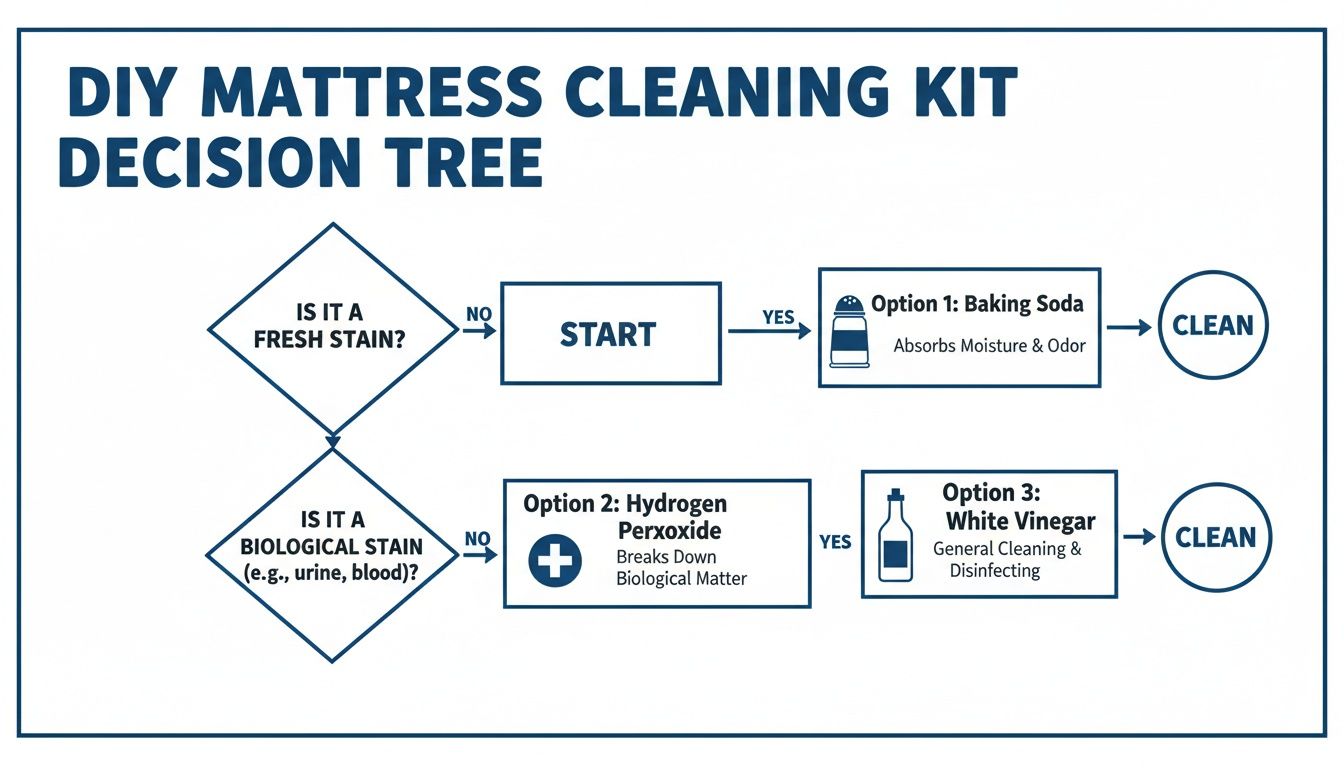
As you can see, your go-to ingredients—baking soda, vinegar, and hydrogen peroxide—can be mixed and matched to tackle just about anything, from a fresh spill to a stubborn old biological stain.
How to Get Urine Stains Out of a Mattress
Whether it’s from a pet or a potty-training toddler, urine is one of the most frequent (and frustrating) mattress stains. The problem is two-fold: you've got the visible stain, and then you have that lingering odour from uric acid crystals embedding themselves in the fabric. A simple surface wipe won't touch it; you need to neutralise the acid itself.
First thing's first: blot up as much of the liquid as you can with a dry towel. Then, grab your white vinegar solution. Lightly spray the stained area with your 50/50 mix of vinegar and water until it's damp, but not soaked. Let that sit for about 10-15 minutes. The vinegar gets to work straight away, breaking down that uric acid.
After the vinegar has done its job, blot the area again with a fresh, dry cloth. Now for the real powerhouse: baking soda. Sprinkle a generous, thick layer over the entire damp area. Seriously, don't be shy here—you want to completely cover it.
You'll know the baking soda is working its magic when it starts to clump up. It’s actively pulling the remaining moisture and the dissolved urine right out of the mattress fibres.
Leave the baking soda on for as long as you possibly can. Ideally, for 8 to 10 hours or even overnight. Once it's completely dry, just vacuum it all up using your vacuum’s upholstery attachment. This one-two punch should lift the stain and kill the smell. If it's a really old or stubborn stain, you might need to give it a second round.
Removing Tough Blood Stains
If you remember one thing about treating blood stains, make it this: always use cold water. Hot water is your enemy here. It will literally cook the proteins in the blood, setting the stain permanently into the fabric. It’s a classic mistake that can turn a fixable problem into an impossible one.
Start by blotting the fresh stain with a cloth dampened with cold water. This helps lift some of the blood before you bring in your cleaning solution. Just remember to dab gently from the outside edges inward to stop it from spreading.
Next up is your 3% hydrogen peroxide. This stuff is brilliant for organic stains like blood because it oxidises them, breaking down the biological compounds. Pour a small amount directly onto the bloodstain. You'll see it fizz and foam up almost immediately—that's the sign it's working hard to lift the blood out of the fibres.
- Let the peroxide fizz away for about five minutes.
- Gently blot up the foam with a clean, dry cloth.
- Keep repeating the process until the stain has vanished.
Once the stain is gone, give the area a final blot with a cold, damp cloth to "rinse" it, then follow with a dry cloth to soak up as much moisture as possible.
Tackling Sweat and Body Oil Stains
Over time, sweat and natural body oils build up and can leave behind those tell-tale yellowish stains. These tend to creep up on you, often going unnoticed until they’ve become quite obvious. The secret to getting rid of them is using a solution that can effectively cut through the oils and lighten the discolouration.
Your all-purpose cleaning spray—the one with hydrogen peroxide, baking soda, and a drop of dish soap—is your best friend for this task. The dish soap is fantastic for breaking down the oils, while the peroxide provides the bleaching power to tackle that yellowing.
Spray the solution evenly over the stained spots. Let it sit for around 20-30 minutes so the ingredients have time to penetrate the fabric and get to work on the grime.
After it's had a chance to sit, use a clean cloth dampened with cool water to gently blot the area. You’re not trying to rinse it, just lift the loosened grime and the cleaning solution itself. Finish by blotting with a dry towel to absorb any leftover moisture.
What About Set-In and Old Stains?
Fresh stains are always easier to deal with, but an old stain isn't a lost cause. It just requires a bit more muscle. For older, more stubborn stains—especially from urine or other biological sources—you need to bring out the heavy-duty DIY treatment. This usually means a more potent solution and a much longer waiting time.
Research backs this up. A powerful combo of laundry detergent, water, and hydrogen peroxide, left to sit for up to eight hours, has been shown to remove around 80% of old urine stains. For old blood stains, which are common in homes with kids, hydrogen peroxide on its own is a hero, clearing up 88% of stains on the first go. You can dig into more of these findings on mattress cleaning from CHOICE Australia.
To make a potent paste for those stubborn old stains:
- Mix baking soda, a little bit of salt, and just enough water to form a thick paste.
- Spread the paste directly onto the old stain in a thick layer.
- Let the paste dry completely. This might take several hours. As it dries, it will pull the stain up from deep inside the fibres.
- Once it's hard and crusty, scrape it off with a spoon or a dull knife.
- Vacuum the area thoroughly to get rid of any leftover residue.
For the really tough spots, you might need to repeat this process or follow up with a light spritz of your hydrogen peroxide solution to deal with any lingering discolouration. The key with old stains is patience—they didn't happen overnight, so they might take a little more work to remove.
Drying and Deodorising Your Mattress Correctly
Getting the stain out is a massive win, but the job isn’t quite finished. Now comes the crucial final stage: drying and deodorising. Trust me, skipping this part is a recipe for disaster. Any trapped moisture can quickly lead to mould, mildew, and a musty smell that’s even harder to get rid of than the original stain.
Properly drying your mattress is non-negotiable. It keeps it hygienic and actually extends its lifespan. A damp mattress is the perfect breeding ground for bacteria and allergens, so taking the time to get it bone dry is essential.
Promoting Airflow for Effective Drying
The best way to dry a spot-cleaned mattress is with good old-fashioned air circulation. Your main goal here is to get air moving over and around the damp area to speed up evaporation. Whatever you do, don't be tempted to put your sheets back on while the mattress is still even slightly damp.
Here are a few simple but incredibly effective methods to get things drying faster:
- Create a cross-breeze: Open up the windows and doors in the room. A natural breeze flowing through is often the most effective method, and it costs nothing.
- Bring in the fans: Position a couple of portable fans to blow directly across the damp surface of the mattress. This constantly pushes moist air away and replaces it with drier air.
- Use a dehumidifier: If you live in a humid climate like many parts of Australia, a dehumidifier is an absolute game-changer. It will actively pull moisture out of the air, creating a much better environment for your mattress to dry.
Pro Tip: If you can, prop the mattress up on its side against a wall. This exposes both the top and bottom surfaces to the air, which can dramatically cut down on drying time and stop moisture from settling deep inside the mattress core.
The Power of Sunlight and Bicarbonate of Soda
Once the mattress feels mostly dry to the touch, it's time for the finishing touches. Sunlight is nature’s sanitiser; it helps kill off any remaining bacteria and gives the mattress a final drying boost. If you can safely move your mattress into a sunny spot for an hour or two, I highly recommend it. Just be careful not to leave it in harsh, direct sun for too long, as this can sometimes damage certain mattress materials.
Now for the real hero of deodorising: bicarbonate of soda (baking soda). This pantry staple is brilliant at absorbing any lingering moisture and odours from deep within the mattress fibres.
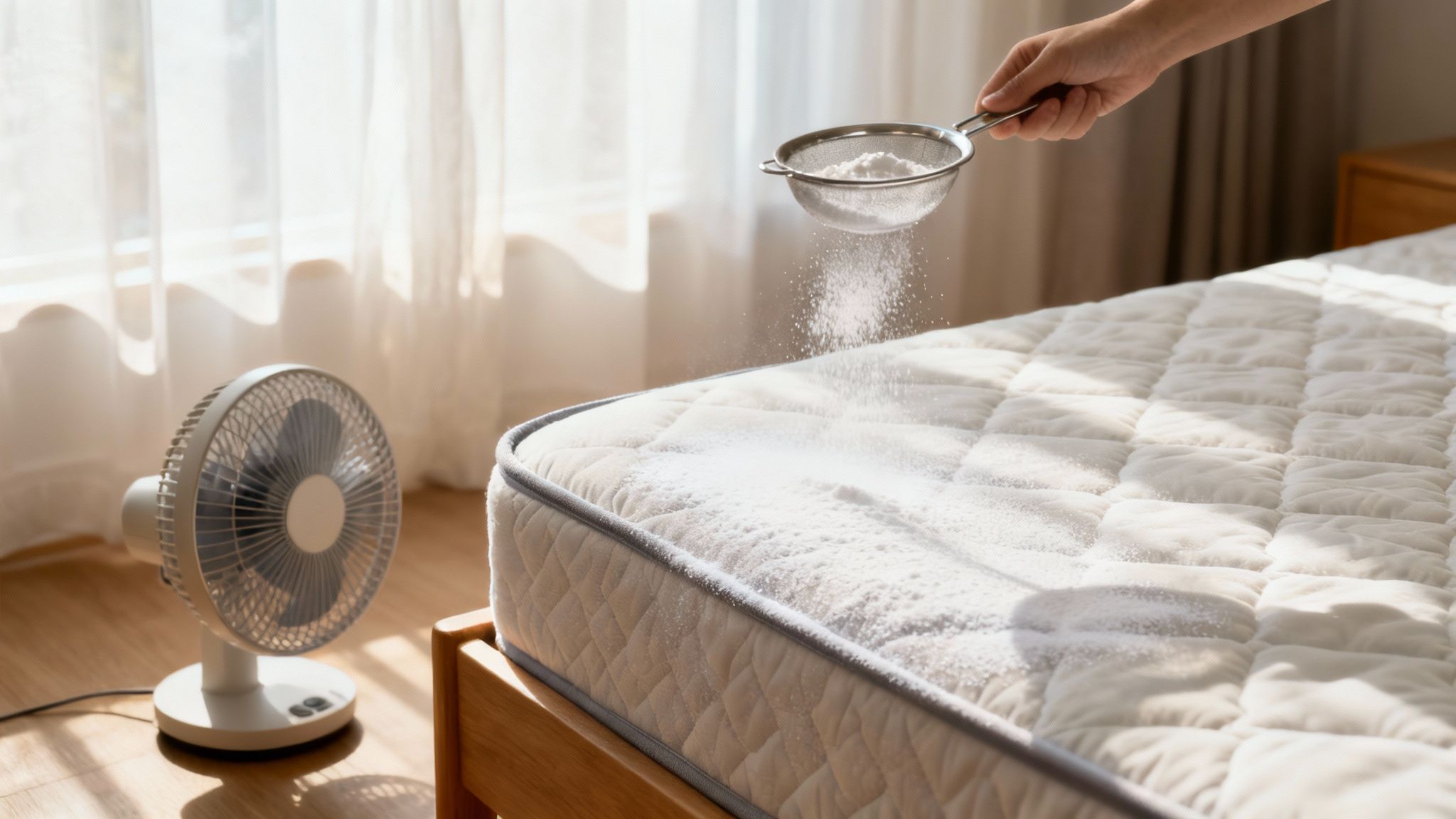
Simply sprinkle a thick, generous layer of bicarb soda over the entire treated area. Don't be shy here—you want a substantial coating. Let it sit for as long as you can, preferably for at least 8 hours, or even a full 24 hours if the room can be spared.
This waiting period gives the bicarb soda time to work its magic, soaking up that last bit of dampness and neutralising any odour-causing molecules. Once time's up, grab your vacuum's upholstery attachment and thoroughly suck up all the powder. Your mattress should now be completely dry, clean, and smelling fresh.
Deodorising Pastes for Tougher Odours
For particularly strong smells, just sprinkling powder might not cut it. In these cases, a bicarb soda paste offers a more intensive treatment. In fact, for many pet-loving households in places like Melbourne, a simple paste of bicarb soda and cold water (in a 2:1 ratio) is a proven method. When applied for 30 minutes and then vacuumed off, it can deodorise up to 80% of lingering odours.
The key is to avoid over-saturating the mattress, as foam can absorb moisture slowly, risking mildew in humid conditions. You can find more practical household health tips on how to keep your bed clean from health experts at myDr.
Keeping Your Mattress Clean and Stain-Free
Once you've mastered the art of spot-cleaning, the best strategy is to shift from reactive cleaning to proactive prevention. After all, the easiest way to handle mattress stains is to stop them before they even happen. A few simple habits will not only keep your mattress looking pristine but also extend its life and create a much healthier place to sleep.
The single best investment you can make is a high-quality waterproof mattress protector. Think of it as an insurance policy for your bed. A good one creates an impermeable barrier against spills, sweat, body oils, and accidents, making sure nothing ever gets through to the mattress itself. Modern protectors are a world away from the crinkly, plastic sheets you might remember; today’s versions are breathable, comfortable, and completely silent.
Establish a Simple Cleaning Routine
Beyond a protector, a regular cleaning schedule is your next best line of defence. This doesn't have to be some massive chore. A simple monthly routine can make a huge difference, especially if you suffer from allergies.
The cornerstone of this routine is vacuuming. Grab your vacuum’s upholstery attachment and go over the entire surface—top, sides, and even the box spring. You’d be amazed at how much dust, dead skin cells, hair, and other debris this quick task removes.
A clean mattress is about more than just looks; it's about health. Dust mites thrive in the warm, humid environment of a mattress, feeding on the skin cells we shed every night. Regular vacuuming is one of the most effective ways to keep their population in check.
This small effort seriously improves your sleep hygiene. It’s pretty shocking, but a recent study found that 76% of people in Australia don't vacuum their mattresses regularly. This means they could be sharing their bed with anywhere from 100,000 to 10 million dust mites. The Dyson Global Dust Study revealed some pretty eye-opening facts about what's hiding in our mattresses.
Long-Term Mattress Care Habits
Weaving a few other small habits into your routine will keep your mattress in top shape for years. These simple actions prevent the buildup of moisture and grime that lead to stains and odours down the track.
- Air It Out Daily: When you get up, pull your duvet and blankets right back for at least 30 minutes. This lets moisture from your body evaporate instead of getting trapped, which helps stop mildew and musty smells.
- Rotate Your Mattress: Every three to six months, spin your mattress 180 degrees (head to foot). If it's a double-sided model, flip it over, too. This simple step ensures it wears evenly and helps prevent those annoying body impressions from forming.
- Wash Bedding Weekly: Chuck your sheets, pillowcases, and mattress protector in a hot wash every week. This kills dust mites and gets rid of all the sweat and oils that build up.
By making prevention a priority, you’ll save yourself the stress of emergency stain removal later on. For a deeper dive into keeping your mattress in great condition, check out these comprehensive mattress maintenance and cleaning tips. Taking these steps means your mattress will stay a clean, comfortable, and healthy place to rest for its entire lifespan.
When to Call in the Professionals
You’ve blotted, sprayed, and sprinkled bicarb soda with the best of them. For most everyday spills and mishaps, a good DIY clean is often all you need. But there are times when even the most determined effort meets its match.
Knowing when to step back and call in an expert isn't about admitting defeat. It’s a smart move to protect your mattress, your time, and your health.
Some situations are just too big for household cleaning sprays. If you're looking at a huge stain that has soaked through a large area, or a stubborn, set-in stain that’s been there for weeks (or months!), a professional service is your best bet. The same goes for a persistent odour that just won't go away, no matter what you try. That’s a sure sign the problem is deep within the mattress layers, far beyond where your sprays can reach.
Knowing When You're Outmatched
Sometimes, the risk of accidentally damaging your mattress is higher than the reward of trying to clean it yourself. This is especially true for certain materials that need a specialised touch.
- Memory Foam and Latex Mattresses: These materials are like giant sponges. Using too much water can easily damage the foam structure, leading to deterioration and creating the perfect hidden breeding ground for mould.
- Mystery Stains: If you have no idea what caused a stain, you could easily use a cleaning agent that reacts badly and sets it permanently. A pro can identify the source and use the right treatment.
- Major Water Damage: If your mattress has been caught in a flood or a serious leak, it's completely waterlogged. This is a job for professional water extraction to prevent severe mould and structural breakdown.
A professional cleaner's biggest asset is their experience. They can correctly identify the stain type and mattress material, then choose the exact cleaning method that’s both safe and effective.
The Professional Advantage: Deep Cleaning and Sanitisation
While your home remedies are great for surface spots, professional-grade equipment delivers a deep clean and sanitisation that you simply can't replicate. For those really tough stains, knowing when to call for professional carpet and furniture cleaning services can be the difference between saving your mattress and having to replace it.
Specialist mattress cleaners use powerful, truck-mounted hot water extraction systems—often called steam cleaning. This gear is a game-changer. It injects hot water and a specialised cleaning solution deep into the mattress fibres and then immediately vacuums out the dirty water, pulling all the dirt, bacteria, and allergens with it.
This process does more than just get rid of stains. Professional truck-mounted systems heat water to 100°C, a temperature that kills 99.9% of bacteria, allergens, and odour-causing microbes. Compare that to the estimated 60% effectiveness of many DIY methods. This high-heat sanitisation is especially important if you suffer from dust mite allergies or after someone's been sick. You can read more about the benefits from the experts at CHOICE Australia.
Ultimately, investing in a professional clean is about more than just stain removal. Expert services can extend the life of your mattress by as much as 40%, saving you thousands compared to buying a new premium mattress every few years. It's a strategic choice for your family's health and the longevity of your bed.
When a stain is just too stubborn or you want the peace of mind that comes with a truly deep clean, Right Price Carpet Cleaning is here to help. Our professional, truck-mounted steam cleaning technology revitalises mattresses across Melbourne, eliminating tough stains and sanitising your sleep surface. Get your instant online quote today at https://rightpricecarpetcleaning.com.au and get ready for a healthier, fresher bed.
Recent Comments