



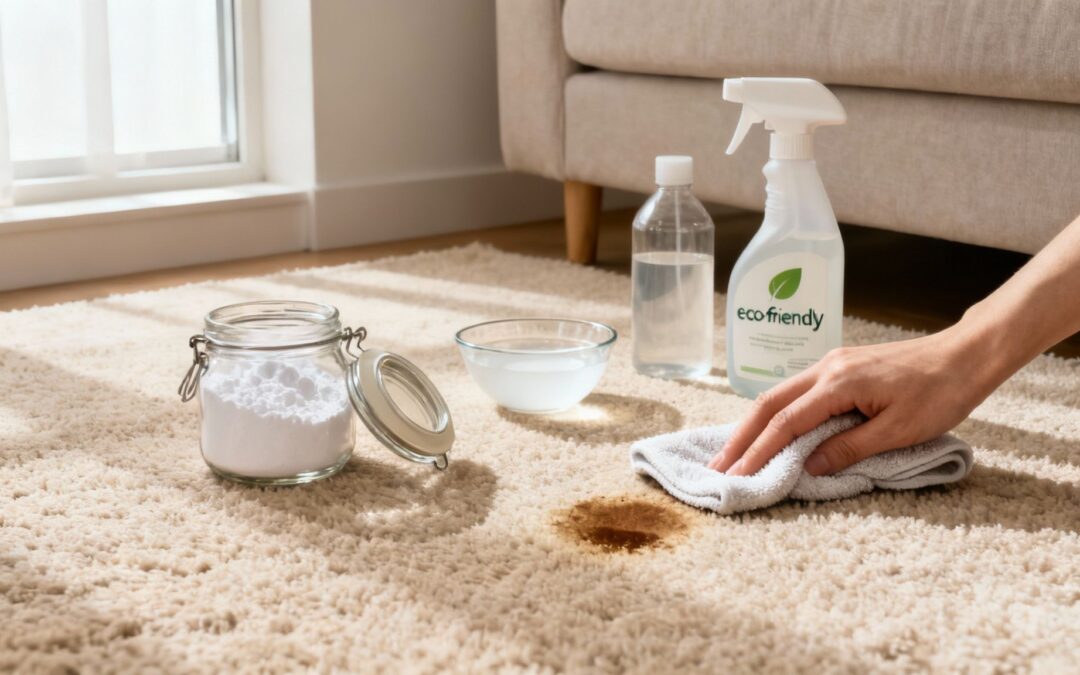
When you're staring at a grubby patch on your carpet, it’s tempting to reach for a heavy-duty chemical cleaner. But honestly, some of the most effective solutions are probably already sitting in your kitchen pantry. Forget the harsh smells and mysterious ingredients—you can whip up a seriously powerful cleaner with just a few everyday items.
The best part? It’s not just cheaper. You get full control over what goes onto your floors, which is a big win for homes with kids and pets.
Your Go-To Recipes for Homemade Carpet Cleaners
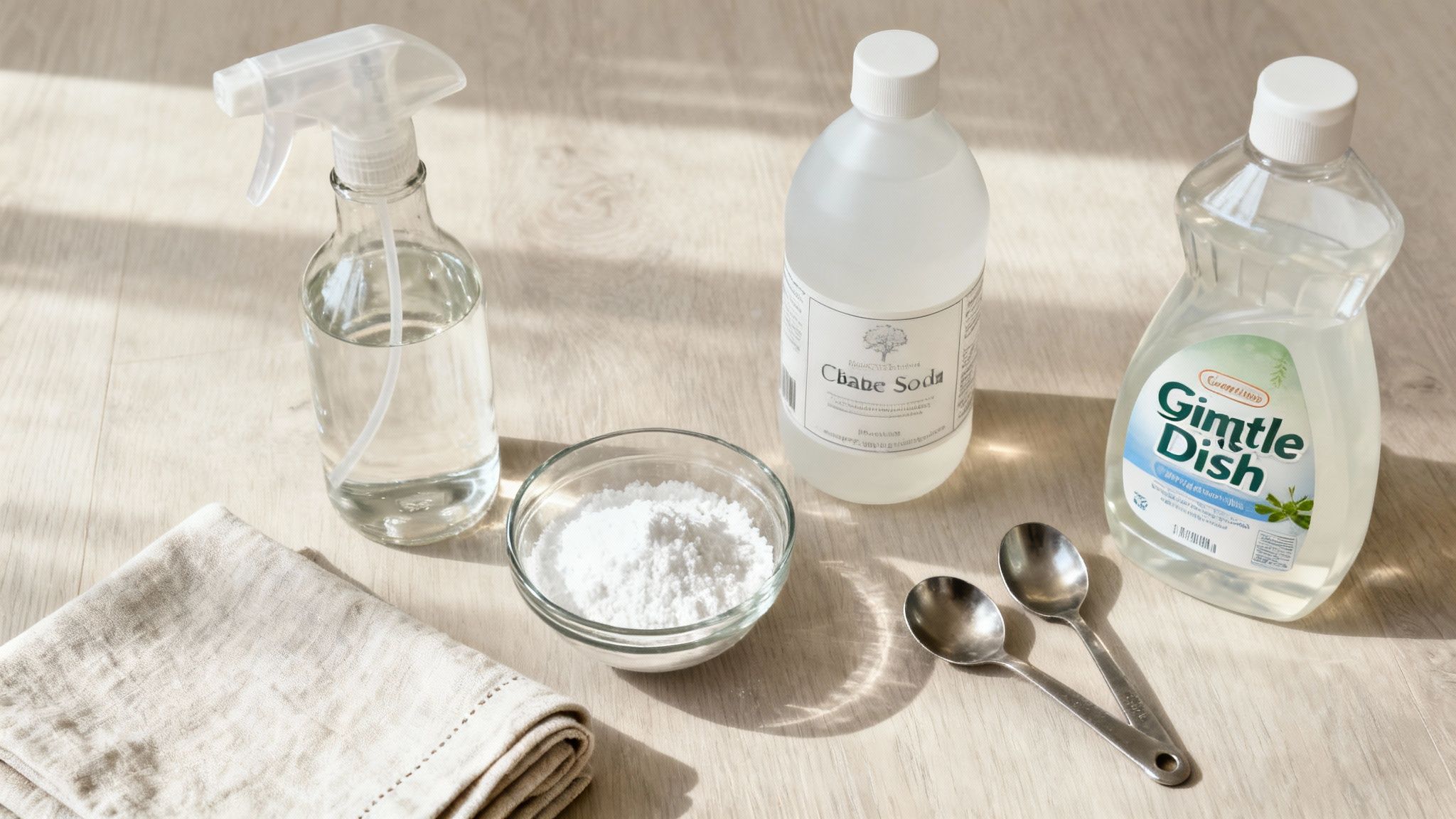
Here are three tried-and-true recipes I've used countless times, each designed for a different kind of carpet calamity.
But before you start spraying, a quick word of caution. Always test any new cleaning mix on a small, hidden spot first. Think inside a wardrobe, under the sofa, or any other place that's out of sight. This simple check takes just a few minutes and saves you from the potential heartache of discolouring your carpet.
The All-Purpose Carpet Refresher
This is my go-to for breathing new life into those well-trodden areas like hallways and the spot right in front of the couch. It’s perfect for lifting general grime and dullness without being too harsh for regular use.
- What you'll need: Just mix 2 cups of warm water with 1 cup of white vinegar. Pour it into a clean spray bottle and give it a gentle shake.
- How to use it: Lightly mist the area. The key is to dampen the fibres, not soak them. Let it sit for about five minutes—this gives the vinegar time to work its magic and break down the dirt. Then, grab a clean, dry cloth and blot the area firmly to lift the moisture and grime.
The Stubborn Stain Buster
For those panic-inducing spills—coffee, red wine, you name it—this is the formula you need. The trick is to get to it fast, before the stain has a chance to really settle in.
Pro Tip: Always, always blot a fresh spill. Never rub it. Rubbing just grinds the stain deeper into the carpet fibres and makes your job ten times harder.
First, mix up a paste with equal parts white vinegar and baking soda. It'll start to fizz and bubble, which is exactly what you want. Apply this paste directly onto the stain and let that fizzing action lift the stain particles out of the fibres. After a few minutes, gently blot with a damp cloth to rinse, and follow up with a dry cloth to soak up any leftover moisture.
The Pet-Safe Odour Neutraliser
Pet accidents are a fact of life for animal lovers, but the lingering smells don't have to be. This recipe is completely safe for your furry mates and genuinely eliminates odours instead of just covering them up. The secret is baking soda, a natural deodorising powerhouse.
If you're looking for more eco-friendly ways to keep your entire house clean, exploring different natural floor cleaning solutions can give you some great ideas for other surfaces.
To get started, make sure the problem spot is completely dry. Sprinkle a generous amount of dry baking soda over the area and use a soft brush to gently work it into the carpet fibres. Let it sit for at least a few hours (overnight is even better) to absorb all those nasty odours. Finally, vacuum it all up thoroughly. The result? A fresh, clean-smelling carpet without a single harsh chemical.
Quick Guide to Homemade Carpet Cleaner Recipes
To make things even easier, here's a quick rundown of the recipes we just covered. It’s a handy reference for when you need to act fast.
| Recipe Type | Best For | Key Ingredients | Approximate Cost |
|---|---|---|---|
| All-Purpose Refresher | General grime in high-traffic areas | White Vinegar, Warm Water | Under $1 |
| Stubborn Stain Buster | Fresh spills like wine, coffee, or juice | White Vinegar, Baking Soda | Under $2 |
| Pet-Safe Odour Neutraliser | Eliminating pet odours safely | Baking Soda | Under $2 |
These simple, low-cost recipes can handle most everyday carpet issues. Having the ingredients on hand means you’re always ready to tackle messes the moment they happen.
The Simple Science Behind DIY Carpet Cleaning
Ever wondered why a simple mix of vinegar and bicarb soda fizzes up and actually works on a stubborn stain? It’s not some old wives' tale; it's just basic chemistry doing its thing. Once you understand the science behind your homemade carpet cleaning solutions, you can pick the right ingredients for the job with a lot more confidence.
At its core, cleaning is all about reactions. Most of the dirt, food spills, and grime you find on your carpet are slightly acidic. Commercial cleaners often throw harsh alkaline chemicals at the problem, but you can get a similar result using much gentler stuff from your pantry. It’s a pretty clever way to tackle messes without bringing mystery chemicals into your home.
The Power of pH Balance
The real workhorse in so many DIY recipes is white vinegar. Its cleaning power comes down to its acidic nature. When you put a vinegar solution on an alkaline stain or odour source—like a pet urine spot—it gets to work neutralising it. This reaction breaks down the stain's structure, making it much easier to lift out of the carpet fibres. It basically dissolves the bonds holding the grime in place.
Then you’ve got bicarbonate of soda (baking soda), which is a mild alkali. When it hits an acidic spill, you get that classic fizzing. That little eruption does more than just look impressive; it physically helps lift dirt particles up and away from the carpet pile. Think of it as a gentle, effective scrubbing agent that won't damage the fibres.
A 2022 CHOICE Australia test found that homemade carpet cleaning solutions actually outperformed 40% of commercial stain removers on tough spills like red wine and coffee. One specific recipe even managed 78% stain removal on sauce stains, proving that pantry staples can pack a serious punch. You can check out the full test results about these effective homemade cleaners on choice.com.au.
How Different Ingredients Work Together
The real magic happens when you combine ingredients to create a cleaner that tackles the problem from multiple angles.
- Vinegar (Acid): This is your grime-dissolver. It's fantastic for breaking down minerals and neutralising alkaline odours.
- Baking Soda (Alkali): Acts as a soft abrasive to scrub away stains and is an absolute champion at absorbing nasty smells.
- Dish Soap (Surfactant): A little drop of this stuff reduces the surface tension of water. That allows your cleaning solution to get deep into greasy or oily stains and lift them away.
When you mix vinegar and bicarb soda, you create a brief but powerful fizz that physically loosens debris. Add a tiny bit of dish soap to the mix, and it helps trap the lifted dirt and oil, stopping it from settling back into the carpet while you blot it all up. This simple teamwork is why homemade solutions can be so surprisingly effective on a whole range of common household messes.
Right, you've mixed up your magic cleaning potion. That’s a solid first step. But how you actually use it is what separates a sparkling clean carpet from a soggy, discoloured mess. A great recipe applied the wrong way can make things much, much worse.
Let’s walk through how to do this properly, so you end up with cleaner carpets, not a bigger headache.
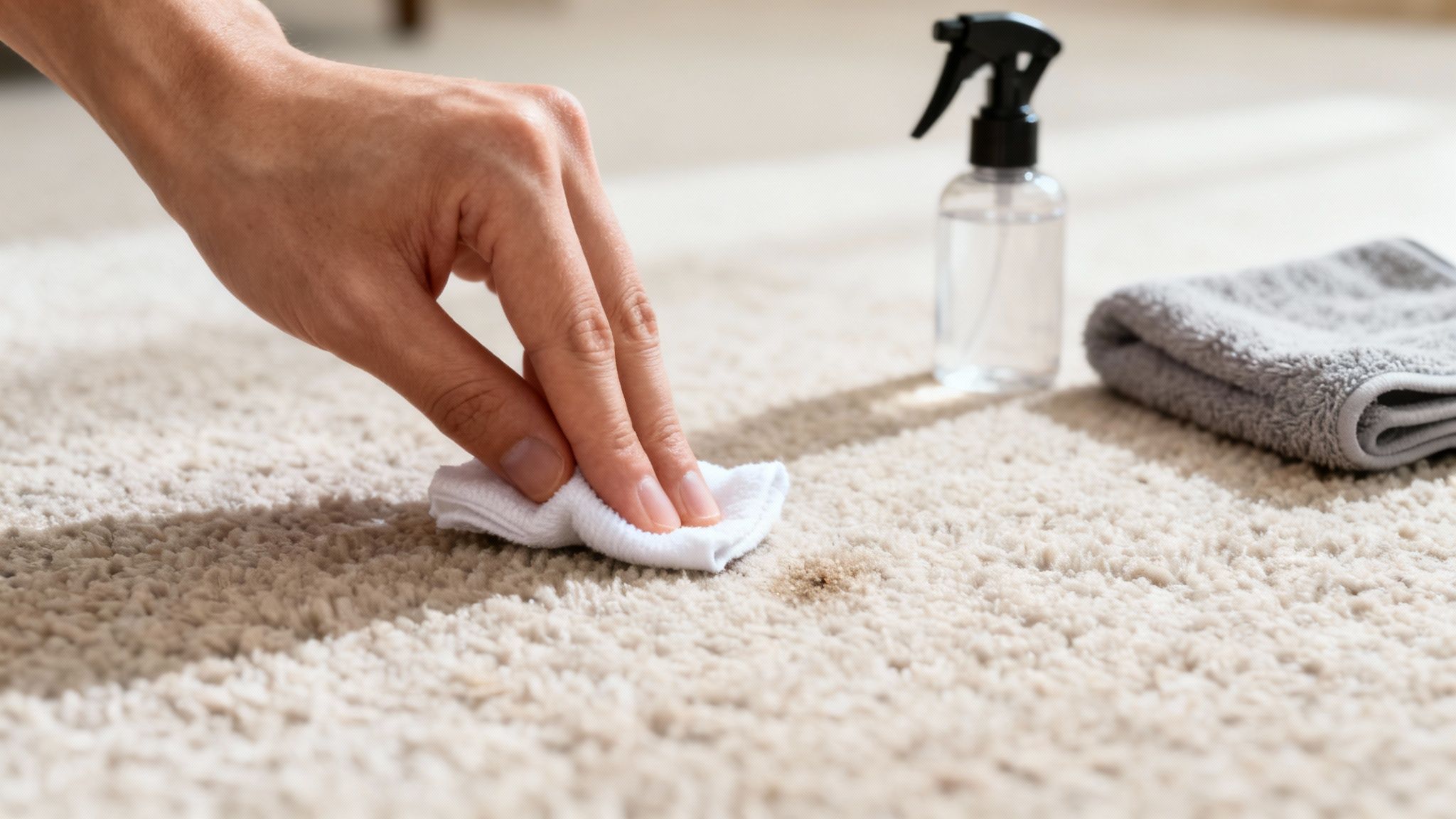
Before you even think about tackling that big, obvious stain in the middle of the room, you need to do a patch test. Seriously, don't skip this. It's the single most important step that can save you from a very expensive mistake. Even the most natural, gentle ingredients can have a weird reaction to certain carpet dyes or fibres.
Finding the Perfect Test Spot
Your mission here is to check for colourfastness and any weird reactions somewhere nobody will ever see. You’re looking for any sign of the colour bleeding, fading, or the carpet texture going funny.
- Inside a wardrobe: The carpet tucked away in the back corner is a perfect spot.
- Under a heavy piece of furniture: Slide the sofa out a bit and test on a patch that hasn’t seen daylight in years.
- On a leftover carpet scrap: If you were clever enough to keep an offcut from the installation, now’s its time to shine.
Just apply a tiny amount of your solution, let it sit for a few minutes, and then press a clean white cloth onto it. Check the cloth—any colour transfer is a big red flag. If the cloth is clean and the carpet patch looks exactly the same after it dries, you're good to go.
The Blotting Technique: Do Not Scrub!
When that spill happens, every instinct will tell you to get in there and scrub like mad. Fight that urge. Scrubbing is the absolute worst thing you can do for a stain. All it does is fray the carpet fibres, push the stain deeper, and spread it wider. You’ll end up with a permanent fuzzy patch that looks worse than the original stain.
Instead, you need to blot.
Grab a clean, dry, white cloth (so you don't accidentally transfer dye onto your carpet) and press it firmly onto the stain. Lift, find a clean spot on the cloth, and press down again. Your goal is to lift the liquid up and out of the carpet, not grind it further in.
Key Takeaway: Always blot from the outside edge of the stain and work your way inwards. This simple trick contains the spill and stops it from spreading into an even bigger problem.
Application and Drying, Done Right
Okay, you've blotted up as much of the initial spill as you can. Now it’s time for your homemade solution.
Lightly mist the stained area using your spray bottle. The key word here is mist. You want to dampen the carpet fibres, not soak the carpet right through to the underlay. Over-saturating is a one-way ticket to watermarks and potential mould growth.
Let the solution sit for about five to ten minutes. This gives it time to work its magic and break down the stain.
Next, start blotting again, but this time with a fresh, slightly damp cloth to "rinse" the cleaner out. Follow that up by blotting with a completely dry cloth or a thick stack of paper towels. Put some real weight into it—you want to absorb every last bit of moisture.
To get it dry faster and avoid those annoying water rings, lay a clean, dry towel over the damp spot and weigh it down with something heavy, like a stack of books. You can also point a fan directly at the area to speed things along. Getting it properly dry is non-negotiable if you want to avoid that musty smell of mould and mildew setting in.
Common DIY Carpet Cleaning Mistakes to Avoid
Jumping into DIY carpet care is a great way to tackle minor spills, but a few common missteps can quickly turn a small issue into a permanent headache. Think of this as your "what not to do" guide. Knowing how to avoid these simple errors is just as crucial as having the right homemade cleaning recipe.
The number one mistake I see people make is going overboard with soap or dishwashing liquid. It’s a natural instinct to think more suds mean a deeper clean, but with carpets, the opposite is true.
Excess soap leaves behind a sticky, tacky residue that’s almost impossible to rinse out completely by hand. This residue becomes a dirt magnet, attracting fresh grime and causing the spot to look dirty again in no time.
Over-Wetting Your Carpet
Another huge pitfall is drenching the carpet with water or your cleaning solution. When you soak a spot, that moisture doesn't just stay on the surface; it seeps deep into the carpet's backing and the underlay beneath. This creates a whole new set of problems you definitely want to avoid.
- Mould and Mildew: A damp underlay is the perfect breeding ground for mould. Before you know it, you're dealing with a musty smell that’s incredibly difficult to get rid of without professional help.
- Fibre Damage: Natural fibres like wool are especially vulnerable. If they stay wet for too long, they can weaken or even begin to rot.
- Wicking and Water Stains: As all that excess water evaporates, it can pull up dirt from deep within the carpet pile, leaving an ugly brownish or yellowish ring around the area you were trying to clean.
Your goal should always be to use the least amount of moisture necessary to do the job. A light mist from a spray bottle is often all you need to let the cleaning solution work its magic on the surface fibres.
The Dangers of Aggressive Scrubbing
When you’re staring down a stubborn stain, the urge to grab a brush and scrub for all you're worth is powerful. Please, resist it. Scrubbing doesn't actually lift the stain out. Instead, it just grinds the dirt particles deeper into the carpet pile.
Worse yet, that aggressive friction frays the delicate fibres, permanently damaging the carpet's texture. You’ll be left with a fuzzy, worn-looking patch that stands out even more than the original stain ever did. The right way is to always blot gently with a clean cloth, which lifts the stain upwards and out of the carpet without causing damage.
A professional insight from Right Price Carpet Cleaning highlights that around 70% of their repair jobs are due to failed DIY attempts. A common culprit is soap residue, which can reduce a carpet's lifespan by an average of 18 months. In Melbourne’s humid climate, DIY shampooing often leaves 40% more moisture behind, significantly increasing the risk of mould. You can read more about these common carpet cleaning issues and their solutions.
Knowing When to Call a Carpet Cleaning Professional
While homemade carpet cleaning solutions are fantastic for handling fresh spills and a bit of general upkeep, it's so important to know their limits. There are definitely times when a DIY approach can fall short or, even worse, risk making a problem much bigger.
Knowing when to step back and call in an expert like Right Price Carpet Cleaning is the key to protecting your carpet and keeping it looking great for years to come.
Think of it like this: homemade remedies are first aid for your carpet. They’re brilliant for immediate, surface-level issues. But they just don't have the power to perform the deep, restorative "surgery" that carpets occasionally need to get rid of deeply embedded grime, allergens, and bacteria.
When DIY Is Not Enough
Some cleaning challenges are just too complex for a spray bottle of vinegar and water. A professional call-out is the smarter, safer choice in a few specific situations.
- Deeply Set-In Stains: If a stain has been sitting there for weeks or months, it has likely bonded chemically with the carpet fibres. DIY solutions might lighten it, but they rarely have the grunt to break it down completely.
- Persistent Pet Odours: When a pet accident soaks through the carpet pile into the underlay and even the subfloor, a surface clean won’t touch it. Professionals use specialised enzymes and powerful extraction methods to neutralise those odours right at their source.
- Water Damage or Flooding: Never, ever try to handle significant water damage yourself. Professional carpet cleaners have industrial-grade equipment to extract huge amounts of water and properly dry the carpet, underlay, and subfloor to prevent dangerous mould growth.
- Widespread Soiling: For carpets that are just uniformly grubby from years of foot traffic, spot cleaning won't make a dent. Only a professional deep steam clean can lift that embedded dirt and restore the colour and texture across the entire room.
This flowchart really highlights some of the critical mistakes people make, like using the wrong technique on delicate fibres or over-wetting the carpet.
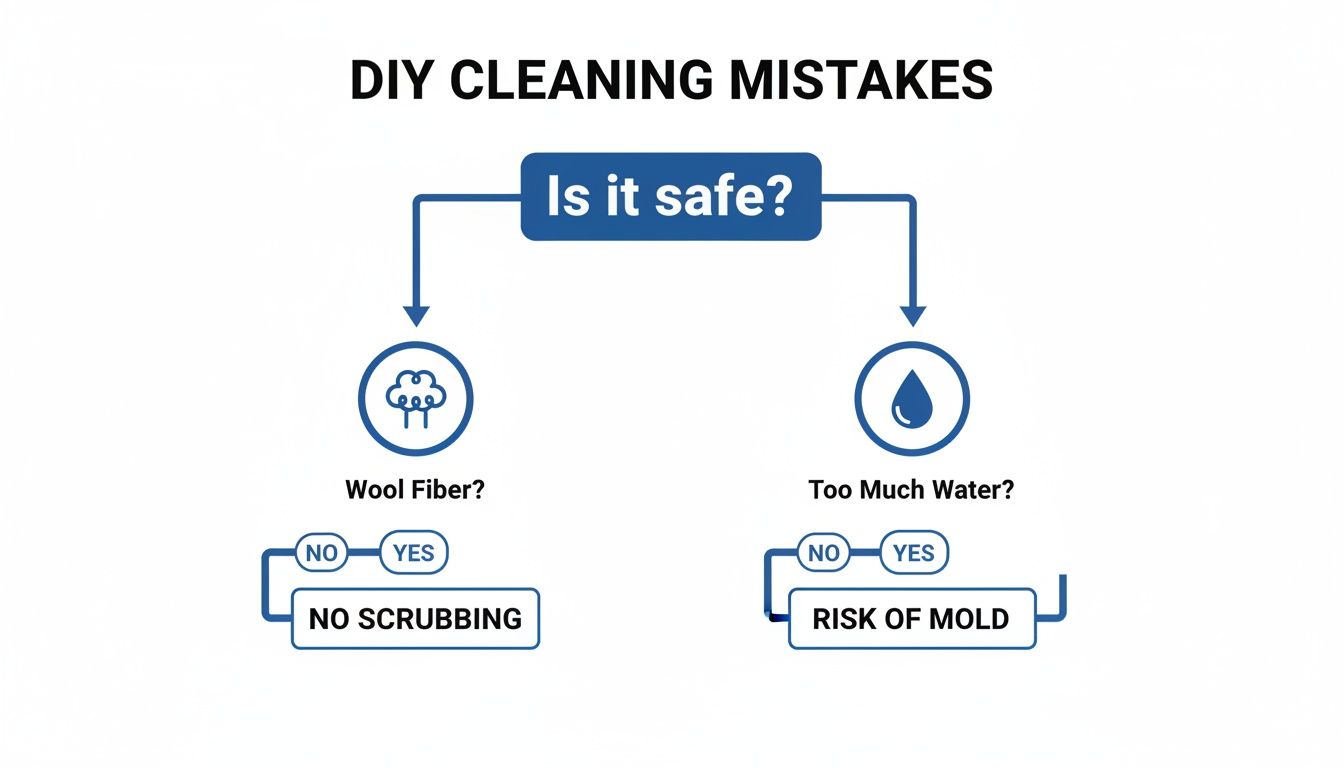
The main takeaway here is that poor technique or using far too much water can easily lead to irreversible damage or a nasty mould problem, turning a simple cleaning job into a major headache.
The Professional Advantage
The real difference between DIY and professional cleaning boils down to two things: equipment and expertise. A professional service uses powerful, truck-mounted steam cleaning machines that heat water to a very high temperature and use immense suction to pull out absolutely everything from deep within the fibres.
A professional steam clean doesn't just remove surface dirt; it extracts dust mites, pollen, bacteria, and other allergens that have settled deep in your carpet. This can make a huge difference to your home's indoor air quality.
Research really backs this up, showing that DIY effectiveness can plummet to just 50% on dirt that's been in the carpet for over a year. In contrast, professional steam methods can extract up to four times more contaminants, which is vital for allergy sufferers—especially considering Australia's high asthma rates.
The same data also showed that while quick action with a vinegar solution can work well, over-wetting during a DIY attempt can extend drying times by a massive 36 hours, seriously increasing the risk of mould. You can discover more insights about these DIY carpet cleaning findings online.
Your Questions About Homemade Carpet Cleaners Answered
When you start mixing up your own carpet cleaning solutions, a few questions are bound to pop up. Getting straight answers gives you the confidence to tackle messes the right way, without causing any accidental damage. Let's clear up some of the most common queries we hear.
A big one is whether you can pour your DIY mix into a rental carpet cleaning machine. The short answer? Please don't. It’s a really bad idea. Those machines are specifically built to work with low-foaming, commercial-grade solutions. A homemade mix, especially one with dish soap, can create a mountain of suds that could overwhelm the machine’s motor. Worse yet, it leaves behind a sticky residue that’s nearly impossible to rinse out completely, attracting even more dirt later on. Using an unapproved cleaner could also void your rental agreement, so stick to the recommended products for machines and save your homemade recipes for spot treatments by hand.
How Often Should I Use DIY Solutions?
For general upkeep, think of these solutions as your go-to for light maintenance, not a substitute for a deep clean. A light misting of a vinegar-and-water solution every month or two can do wonders to refresh the fibres in high-traffic spots. A dry baking soda treatment is also fantastic for monthly deodorising.
Here’s a good rule of thumb:
- Stains: Treat them immediately, as soon as they happen.
- Odours: Use the baking soda method monthly or whenever things start smelling a bit stale.
- Deep Cleaning: A professional steam clean is still your best bet every 12-18 months. This is the only way to remove the deep-seated grit, grime, and allergens that homemade solutions just can't touch.
Are These Solutions Safe for All Carpet Types?
No, and this is a critical point. While most simple vinegar and baking soda recipes are perfectly fine for synthetic carpets like nylon or polyester, you need to be much more careful with natural fibres.
Wool, for example, is a delicate fibre that can be permanently damaged by anything too acidic or too alkaline. The wrong solution can cause discolouration or even weaken the fibres over time. And if you have silk or other specialty materials, they should only ever be handled by a professional.
No matter what type of carpet you have, always do a spot test in a hidden area first—think inside a cupboard or under the sofa. This simple step is your best defence against a costly mistake.
What Is the Best Way to Tackle Old Stains?
Old, set-in stains are the final boss of carpet cleaning. They’ve had time to chemically bond with the carpet fibres, making them incredibly tough to remove. You can try making a paste of vinegar and baking soda and letting it sit for a while, but honestly, the odds of it disappearing completely are pretty low.
This is where professional-grade equipment and specialised solvents make all the difference. A professional technician has the tools to break down old stains at a molecular level, achieving results that a household remedy simply can't compete with.
Beyond just cleaning, knowing a bit about general carpet maintenance can really extend the life of your flooring. For instance, you might find it useful to learn how to fix frayed carpet edges.
When your DIY efforts just aren't cutting it and your carpets need a real refresh, the expert team at Right Price Carpet Cleaning is here to help. For a deeper clean that lifts out embedded grime and allergens, get an instant quote and book your professional steam cleaning online today. https://rightpricecarpetcleaning.com.au
Recent Comments