



TL;DR: In many Melbourne homes, the floor still looks dull after mopping because the problem sits in the grout lines, textured tile surface, soap film, grease, or post-build residue. For common ceramic and porcelain tiles, a professional deep clean usually gets further than home mopping because it lifts and extracts built-up soil instead of pushing it around the floor. If the issue is grout haze after a renovation, the right fix may be a targeted acid wash rather than more scrubbing. If the issue is mould in a humid bathroom, treatment and drying matter as much as the clean itself.
You see this a lot in Melbourne. A bathroom in a newer apartment stays damp because the fan is weak. An entry floor in the eastern suburbs picks up fine grit after every rainy week. A family kitchen in the west looks clean at night, then patchy again by morning once the light hits the grease film and tracked-in dust.
That gap between a quick mop and a proper deep clean is where homeowners get frustrated. The floor can feel cleaner underfoot and still look tired. Grout keeps its darker colour. Corners near showers, laundries, and toilets hold moisture staining or early mould, especially through cooler months.
A good result starts with identifying the actual problem. General dirt, grease, soap scum, grout haze, mineral residue, and mould do not respond the same way. Some floors are fine with a careful DIY clean. Others need commercial equipment, the right chemistry, and enough extraction to remove what the scrubber loosens.
That matters if you are getting a property ready for an end-of-lease inspection, helping an NDIS participant keep wet areas safer and more hygienic, or trying to bring old tiles back without replacing them. A local Melbourne service should be able to tell you what can realistically be improved, what stains are permanent, and whether sealing makes sense after cleaning.
The End of Dull Floors A Guide to Reviving Your Tiles
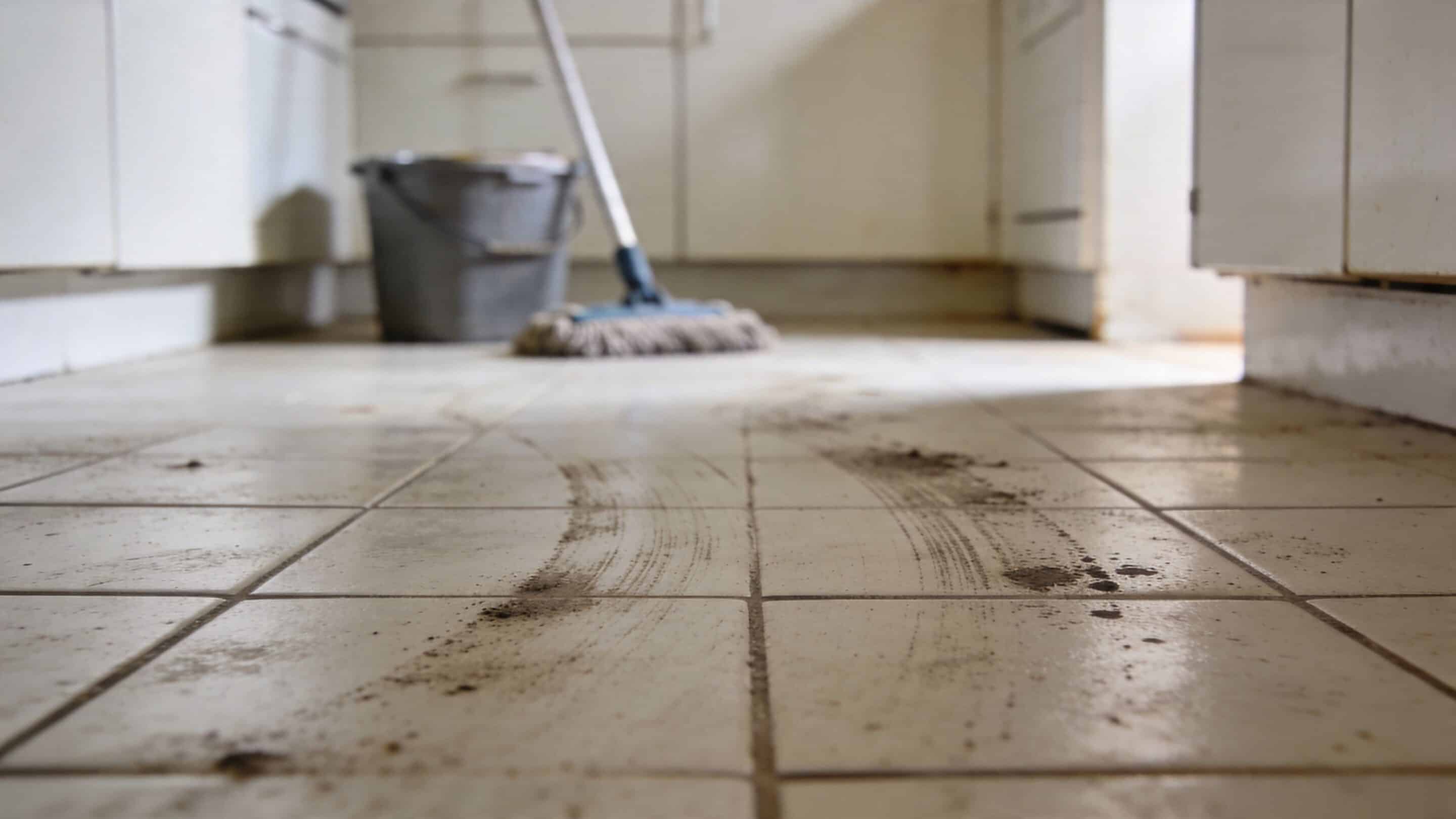
A lot of people call for help after hitting the same wall. They mop, the floor dries, and the tiles still look flat. The grout still looks darker than it should. In some spots, especially near the stove, shower, laundry, or back door, the floor can look worse a day later.
That frustration makes sense. A tile floor can be technically “clean” on the surface and still hold grime deep in the grout lines and textured finish. Melbourne homes see this all the time in open-plan kitchens, compact bathrooms with limited ventilation, and living areas that connect straight to patios or gardens.
What dull tiles usually mean
A dull floor doesn’t always mean the tile itself is damaged. It often points to one of a few practical issues:
- Built-up soil in grout lines that keeps showing through after mopping
- Grease film in kitchens that attracts fresh dust quickly
- Soap residue in bathrooms that leaves a hazy finish
- Post-renovation haze from grout or cement residue
- Moisture-related discolouration in corners, around toilets, or near showers
Some of these problems respond well to home cleaning. Others don’t. If you treat grout haze like grease, or mould like everyday dirt, you waste time and can make the floor harder to restore.
Practical rule: If your tiles look cleaner when wet but dull again once dry, you’re often dealing with residue, embedded grime, or haze rather than a simple surface dust problem.
The right result to aim for
People often say they want their tiles to look “new again”, but there are different levels of improvement. You might want a freshen-up before guests arrive. You might need a bond-ready clean. You might need a hygienic reset after damp weather, flooding, or a long period of neglect.
That’s why the best tile cleaning approach isn’t one magic product. It’s matching the method to the problem. Once you know whether you’re dealing with soil, haze, mould, or staining, the path gets much clearer.
Understanding Why Your Tiles and Grout Get So Dirty
You mop the floor, let it dry, and the grout still looks patchy. That usually means the dirt is sitting below the surface, not floating on top of it.
Tiles and grout soil differently. The tile face, especially on glazed ceramic and many porcelain floors, is relatively easy to wipe down. Grout is the problem area. It is rougher, more absorbent, and far better at holding onto dirty water, soap residue, kitchen grease, fine dust, and the black grit that gets walked in after a wet Melbourne day.
Grout holds contamination below the surface
This is why a floor can look half-clean after a mop. The tile may brighten up, while the grout lines stay dull because the contamination has settled into the pores and joints. I see this constantly in family homes, rentals, and older bathrooms where people have cleaned regularly but never really extracted what is stuck in the grout.
Product residue makes it worse. Too much detergent, supermarket disinfectants, and heavy soap-based cleaners often leave a film behind. That film grabs new soil fast. After a while, homeowners are cleaning a layer of residue and dirt together, not the original tile surface. A practical guide to cleaning tile and grout floors properly helps explain why dry soil removal and rinsing matter as much as the cleaner itself.
Why Melbourne homes have recurring tile problems
Melbourne conditions are hard on tiled areas. In winter, bathrooms and laundries stay damp longer, especially in homes with weak ventilation. In summer, humidity can feed mould growth around showers, toilets, and shaded corners. Entry tiles pick up fine grit, moisture, and garden soil. Kitchen floors collect cooking oil, food spills, and sticky residue that a quick mop tends to spread around rather than remove.
Some households cop more wear than others. Pets track in dirt. Kids spill everything. Wheelchairs, walkers, and prams grind soil into grout lines and textured tiles. For NDIS households or homes where cleaning has to be efficient and predictable, that build-up becomes more than a cosmetic issue. It can affect hygiene and slip resistance as well.
Tile type changes what “dirty” looks like
Different surfaces trap dirt in different ways.
| Surface | How it behaves | What usually goes wrong |
|---|---|---|
| Ceramic tile | Usually simpler to maintain | Residue build-up, dirty grout, greasy film |
| Porcelain tile | Dense and durable | Textured finishes hold grime, grout still stains |
| Natural stone | More porous or chemically sensitive | Acidic or harsh cleaners can etch, dull, or mark it |
Textured porcelain is a common trap. Homeowners choose it because it looks modern and gives good slip resistance, then get frustrated because it never seems to come fully clean. The texture holds onto fine soil, and standard mopping often leaves dirty water sitting in the low points.
Natural stone is a separate category again. Travertine, limestone, marble, and slate need the right chemistry and a gentler approach. One wrong cleaner can leave etching or permanent dull patches. If there is cured renovation residue or bathroom sealing mess on the surface, removing silicone caulk residue from tile calls for a different method from normal washing.
Why the floor still looks dirty after regular cleaning
The usual pattern is simple. Soil gets walked in, mixed with moisture or detergent, pushed into grout and textured areas, then left behind in thin layers. Each quick clean improves the surface a bit, but the deeper build-up stays put.
That is why grout discolouration often has more to do with trapped contamination than permanent colour loss. And it is why a floor can look tired before it is worn out.
DIY Cleaning Efforts vs Professional Power
DIY tile cleaning has its place. It’s useful for routine upkeep, quick spill response, and keeping a decent floor from getting worse. But it helps to be honest about what each method can and can’t do.
A lot of disappointment comes from using a maintenance method for a restoration problem. Mopping, spot scrubbing, and grout pens can improve appearance. They usually don’t remove ingrained soil.
What DIY does well
For lightly soiled ceramic or porcelain tiles, home cleaning can be enough if you stay consistent. Vacuum or dry sweep first, use a suitable cleaner sparingly, and don’t soak the floor. A microfiber mop usually beats an old string mop because it leaves less dirty water behind.
DIY is also reasonable when the issue is small and localised. One splashback area. A bathroom corner. A fresh spill. A bit of residue around a repair job. If you’ve got cured silicone smeared on tile edges after a bathroom update, this guide to removing silicone caulk residue from tile is a useful companion because that problem needs a different technique from standard washing.
Where DIY starts falling short
The limits show up when the whole floor is affected. Dark grout through traffic lanes, greasy kitchen tiles, bathroom joints that stay blotchy, or a rental property that has had years of rushed cleaning all need more than elbow grease.
Common DIY methods break down like this:
- Regular mopping is fast and familiar, but it often leaves behind dirty water and residue on already soiled floors.
- Household scrubbing can help small sections, but it’s labour-heavy and easy to do unevenly.
- Grout pens improve appearance for a while, but they cover the issue rather than remove it.
- Domestic steam mops can freshen a surface, though they don’t have the pressure, agitation, or extraction of professional systems.
For homeowners trying to compare service options, it also helps to see what a dedicated tile and grout floor cleaning service is built to handle.
DIY vs Professional Tile Cleaning At a Glance
| Method | Effectiveness | Average Cost (Melbourne) | Time Investment | Best For |
|---|---|---|---|---|
| Dry sweep and pH-neutral mop | Good for light maintenance | Low | Low to moderate | Weekly upkeep |
| Hand scrubbing grout lines | Mixed, depends on area size and soil depth | Low to moderate | High | Small problem spots |
| Grout pen or cosmetic touch-up | Appearance only | Low | Moderate | Short-term visual improvement |
| Domestic steam mop | Surface freshen-up | Moderate | Moderate | Light routine cleaning |
| Professional deep clean | Best for embedded grime, haze, end-of-lease work, and larger areas | Higher upfront | Low for homeowner | Whole-floor reset |
The trade-off that matters most
Professional cleaning isn’t just “stronger”. It combines agitation, heat, chemistry, and extraction in one process. That last part matters. If loosened grime isn’t extracted away, much of it stays on the floor.
When readers ask me what best tile cleaning really means, the honest answer is this: for maintenance, DIY can be perfectly sensible. For revival, hygiene issues, or a floor that still looks dirty after repeated effort, professional equipment changes the result.
If you’re scrubbing the same grout lines every month and they never return to a clean baseline, the issue usually isn’t effort. It’s tool limitation.
A Deep Dive Into Professional Cleaning Methods
A floor can look washed and still be holding months of grime in the grout lines and surface texture. I see this a lot in Melbourne homes, especially in bathrooms, laundries, and open-plan living areas where humidity, foot traffic, and residue from cleaning products all build up together.
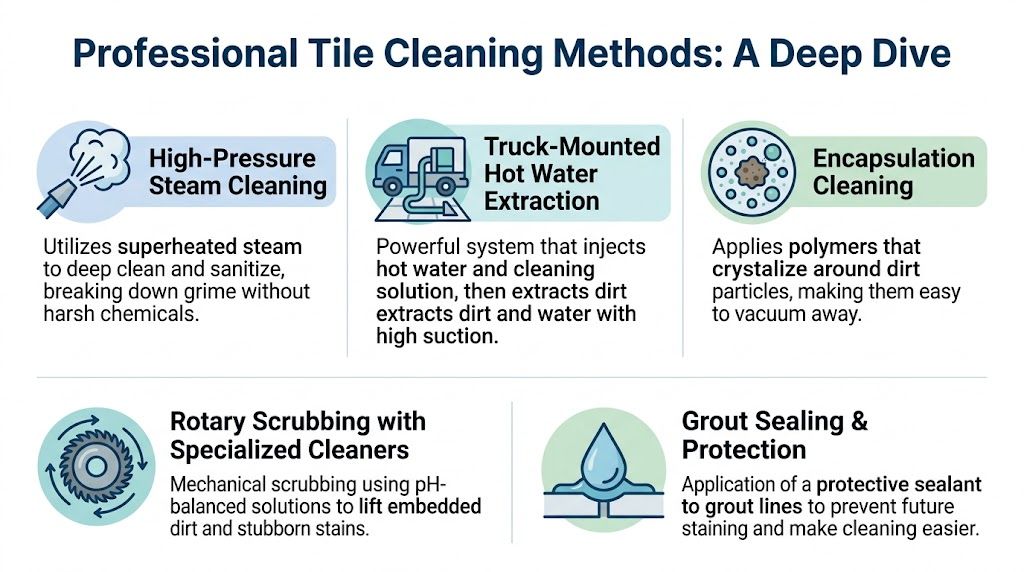
Professional tile cleaning is a set of methods, not a single machine or a one-size-fits-all service. The right approach depends on what is on the floor. Everyday soil needs one process. Builder’s haze needs another. Grout that is worn, patchy, or permanently stained may need restoration rather than another cleaning pass.
High-pressure scrubbing and extraction
Ceramic and porcelain floors in Melbourne homes usually respond best to scrub-and-extract cleaning. This is the method that resets a floor after regular mopping has stopped making a visible difference.
The sequence matters. Dry soil is removed first. A suitable cleaning solution is applied and given time to work. The floor is then scrubbed with machine agitation, and the loosened slurry is extracted instead of being pushed around the room. That extraction step is the part many DIY methods miss.
In practice, this method works well on kitchen traffic lanes, bathroom tiles with body oil build-up, and textured porcelain that traps grime in the surface. It is also the service many tenants and property managers expect for end-of-lease work when the grout has darkened across larger areas.
Why tools and rinse technique change the result
Good operators do not just run a machine over the floor and leave. Brush choice, water control, and rinse quality all affect the finish.
Soft to medium brushes are usually safer on common glazed tiles and standard grout joints. The goal is to clean the pores and texture without being overly aggressive. If the rinse is poor, detergent residue can stay behind and the floor soils faster again. If the pressure is too high for the tile or grout condition, older joints can start to show their age.
That is one reason quotes can vary. A quick surface wash is cheaper, but it will not deliver the same result as a slower clean with proper agitation, edge work, and extraction.
When acid washing is the right tool
New builds and renovated homes are a different job. If the tiles look cloudy, chalky, or streaked soon after installation, the issue is often grout haze or construction residue rather than normal dirt.
Marazzi’s guidance on post-installation washing explains that cement-based haze often needs a dedicated acidic cleaner and careful neutralising afterwards (Marazzi end-of-site washing protocols). That process is targeted. It is not routine maintenance, and it is not something I would recommend as a casual DIY fix on a finished floor.
Section size, dwell time, tile type, and grout condition all matter. Natural stone and acid-sensitive surfaces need extra caution, and even porcelain needs the right product and rinse procedure. If the floor is brand new and still looks dull after repeated washing, ask whether the service includes haze removal rather than standard tile cleaning.
If the problem goes beyond residue and into failed joints, loose sections, or damage from poor installation, specialist tile and grout removal work may be the more sensible next step.
Trade note: Acid cleaning is for specific post-build residue problems. It is not a general answer for everyday dirty grout.
Restoration and protection
Some floors come up well after deep cleaning. Others clean evenly enough to show what the actual problem was all along. Permanent staining, worn grout, old repairs, and patchy sealing are common examples.
That is where restoration work starts. It can include grout recolouring, targeted sealing, or localised repair work in problem areas. This is especially relevant in Melbourne bathrooms and wet areas where moisture and mould have repeatedly affected the same joints.
For homeowners managing NDIS cleaning support or preparing a property for lease handover, this distinction matters. Cleaning removes contamination. Restoration deals with wear, damage, and appearance issues that remain after the floor is clean.
Clear Signs You Need to Call a Professional
You mop on Saturday, the floor dries, and by Sunday the grout still looks dark. That is usually the point where routine cleaning has reached its limit.
In Melbourne homes, I see the same pattern again and again. Tile faces improve quickly, but the joints, textured surfaces, and wet-area corners keep holding soil, soap residue, body oils, or mineral build-up. The question is less "should a pro clean tiles better than a mop?" and more "what is the floor telling you?"
The grout has stopped responding
If grout lines stay patchy after proper scrubbing, that usually means the discolouration is sitting deep in the pores or has built up over a long period. Household brushes can improve the surface, but they often cannot rinse contamination right out of the joint.
Look at the pattern. Dark traffic lanes through a hallway, blackening around the toilet base, or orange-brown staining in a shower are useful clues. They point to different problems, and each needs a different treatment.
The floor still feels wrong after cleaning
Appearance is one sign. Feel is another.
Call a professional if the tiles still feel sticky, gritty, greasy, or rough after they have been cleaned and dried properly. Sticky often points to detergent residue or built-up soil. Grit underfoot usually means dirt is still sitting in textured porcelain or grout pits. A rough haze after renovation can mean grout film, adhesive residue, or builder's dust bonded to the surface.
Those are diagnostic signs, not just frustrations.
Mould keeps returning in the same spots
A small spot of bathroom mould can be handled at home. Repeated regrowth along silicone edges, grout joints, or poorly ventilated corners is different. In Melbourne, that is common in ensuites, older bathrooms, and laundry areas where humidity lingers.
If mould comes back within days or keeps spreading along the same line, there is usually a moisture issue, contamination below the surface, or both. At that point the job is about removal and drying, not another quick wipe.
You can see uneven results from your own cleaning
Patch-cleaning often creates a new problem. One bright section beside dull grout, or a scrubbed shower floor beside untreated edges, makes the whole area look worse.
This matters in real estate handovers. For end-of-lease work, agents and property managers usually notice inconsistency before they notice perfection. A professionally cleaned floor should look even across the room, not just cleaner in the spots you had time to attack.
The job has crossed into safety, access, or time pressure
Some floors need more effort than they are worth to do by hand. That is especially true if:
- the area is large and the work means hours on knees, shoulders, and wrists
- the floor stays slippery after washing, which can indicate residue or ingrained contamination
- someone in the home has asthma, allergies, or mobility limits
- you need the area turned around quickly for an inspection, support worker visit, open home, or family use
- the tiles are in an NDIS-supported household where hygiene, access, and reliability matter as much as appearance
I tell clients to treat these as practical triggers. Once the floor is affecting safety, health, or a deadline, DIY stops being the cheap option.
Damage is starting to look like dirt
This catches homeowners out all the time. Worn grout, etching, failed sealers, and old repairs can read as "still dirty" even after a decent clean. If the colour looks uneven no matter what you use, or the joints are cracking, missing, or staying wet longer than the rest of the floor, cleaning alone may not solve it.
A good technician should tell you that plainly. Some floors need cleaning first so the actual condition is visible. Some need restoration or repair, not more scrubbing.
How to Choose the Best Tile Cleaning Service in Melbourne
You ring one company and get a cheap quote in two minutes. You ring another and they start asking what tile you have, whether the grout is sealed, if the bathroom stays damp, and how quickly you need the floor dry. The second call usually tells you more about the result you are likely to get.
Good tile cleaning in Melbourne is rarely just a basic mop with stronger chemicals. Older brick homes, newer apartment bathrooms, and busy family kitchens all soil up differently, and our mix of damp winters, condensation, and mould-prone wet areas changes how a job should be handled. A decent operator will talk you through that without hiding behind vague terms.
Start with process, not price
Ask how they clean, in order. If they cannot explain the steps clearly, they probably do not have a consistent system.
A proper service should cover:
- dry soil removal first, so grit and loose dirt are not turned into sludge
- the right product for the soil type, whether that is grease, soap scum, body oils, or renovation dust
- mechanical agitation, because grout usually needs more than a spray-on treatment
- hot water extraction or another clear rinse method, so residue is removed instead of spread around
- realistic drying advice, based on airflow, humidity, and the size of the area
Truck-mounted systems often give better heat and stronger extraction than smaller portable units, especially on heavily soiled grout. Portable machines still have a place in high-rise buildings or sites with access limits. The point is not the machine alone. It is whether the technician knows why that method suits your floor.
If you want a clearer idea of what a proper tile and grout cleaning process should include, compare the steps before you book.
Check whether they understand Melbourne jobs
A local service should sound local. That means they understand bathrooms that stay damp in winter, laundry floors that grow mould around edges, and entry tiles that cop fine grit and muddy traffic after rain.
It also means they can handle the jobs Melbourne clients ask for. End-of-lease cleans need timing, paperwork, and a result that looks even under inspection lighting. NDIS households often need reliable arrival windows, clear communication, and safer drying times so access is not disrupted longer than necessary. Those are practical service standards, not marketing extras.
Trust signals that matter in a home
Insurance and police checks matter because you are letting someone into your house, often for several hours. Clear pricing matters because tile cleaning quotes can blow out if the company treats every grout line, stain, or wet area as an add-on after arrival.
I would also ask what tiles they clean every week. Ceramic and porcelain are common across Melbourne homes and usually straightforward. Natural stone is different. Terracotta, travertine, and acid-sensitive surfaces need more care, and a good technician will say so early instead of testing products first and explaining later.
What to ask before booking
A short phone call can save a wasted appointment. Ask these questions directly:
What method are you using for my tile type and soil level?
The answer should be specific, not “steam clean everything”.Is the quote fixed, or could it change on site?
If it can change, ask exactly why.How long will the floor stay damp?
Melbourne humidity can slow drying in bathrooms, apartments, and shaded rooms.Do you handle mould-affected grout, post-renovation haze, or just general soil?
Those are different jobs.Have you done end-of-lease or support-funded cleaning work before?
Experience with deadlines and access needs makes a difference.
Read reviews like a technician would
Skip past generic praise and look for details. Useful reviews mention whether the grout changed evenly, whether the technician explained what would and would not improve, and whether the floor stayed cleaner afterward instead of turning sticky from residue.
If you are comparing products for touch-ups between visits, this guide to best floor cleaners for every surface can help you avoid using the wrong cleaner on tile, grout, or mixed flooring in the same home.
The best tile cleaning service in Melbourne is usually the one that gives the clearest diagnosis before the job starts. Cheap quotes are easy to find. Clear process, honest limits, and solid local experience are harder to find, and they matter more once the machine is on your floor.
Keeping Your Tiles Sparkling After a Professional Clean
A good deep clean gives you a reset. What you do after that decides how long the floor keeps its brighter look.
Most homeowners don’t need a complicated routine. They need a few habits they will stick to, especially in Melbourne homes where moisture and tracked-in grit can undo a fresh clean quickly.
Practical habits that make the biggest difference
- Vacuum or sweep before mopping so grit doesn’t turn into muddy residue.
- Use a pH-neutral cleaner sparingly instead of pouring in extra product for “strength”.
- Blot spills early in kitchens, especially oils, sauces, and coffee.
- Run exhaust fans and open windows when you can in bathrooms and laundries to reduce damp hold.
- Use mats at entries so outside dirt stays near the door, not in the grout.
- Rinse your mop head or change pads often so you’re not putting dirty water back down.
If you’re unsure which products are suitable across mixed surfaces in the home, this guide to best floor cleaners for every surface can help you avoid using one harsh cleaner everywhere.
What not to do after a deep clean
Avoid the usual backslides:
- Don’t over-wet the floor during routine cleaning
- Don’t mix random chemicals because one worked on a different surface
- Don’t ignore corners and edges where grime starts rebuilding unnoticed
- Don’t assume all tile cleaners are interchangeable
If you want a maintenance product designed for regular tile care, it’s worth looking at a dedicated tile floor cleaner option instead of grabbing the harshest bottle on the supermarket shelf.
The simplest maintenance plan is often the best one. Keep dry soil off the floor, use mild chemistry, and control bathroom moisture before it settles into the grout again.
Keep expectations realistic
Even after professional work, tile floors still live a hard life. Kitchens get greasy. Bathrooms stay humid. Entryways collect grime. The goal isn’t to keep the floor untouched. It’s to stop small contamination from becoming another heavy restoration job.
Frequently Asked Questions About Tile Cleaning
Is professional steam cleaning safe for natural stone
Not always in the same way it’s used on ceramic or porcelain. Natural stone needs a more cautious approach because the wrong chemistry or too much heat and moisture can create new problems. If you have marble, travertine, slate, or another stone surface, tell the cleaner before booking and ask for a stone-specific method.
How long does tile and grout cleaning take
It depends on the area size, soil level, access, and whether you need a basic deep clean or something more specialised like haze removal. A technician should be able to give you a realistic estimate once they know the tile type and the condition of the floor.
Will the process be noisy or disruptive
Professional equipment does create some operational noise, but the bigger issue for most households is access. You may need to keep off the floor while work is underway and during drying. Good technicians usually work in sections and explain what areas you can still use.
How often should tiles be professionally cleaned
That depends on foot traffic, moisture exposure, and how well the floor is maintained between visits. Busy kitchens, bathrooms, rentals, and homes with pets, kids, or mobility aids usually need attention sooner than low-traffic rooms.
Can professional cleaning fix every stain
No. Cleaning removes soil and residue. It won’t always reverse permanent etching, damaged grout, or previous repair issues. A trustworthy cleaner will tell you whether the floor needs deep cleaning alone or whether restoration work is also on the table.
If your tiles still look dull after regular mopping, or you need help with end-of-lease, mould-related, or accessibility-focused cleaning, Right Price Carpet Cleaning offers professional truck-mounted tile and grout cleaning across Greater Melbourne. Their family-owned team has been operating since 2007, with fully insured, police-checked technicians, transparent flat-rate pricing, online quotes and booking, on-the-way tracking, eco-friendly pretreatments, and a 100% satisfaction guarantee.
Recent Comments