



Boxes are stacked in the hallway. The fridge is half empty. There’s tape stuck to your shoes, the keys are due back soon, and the one job still hanging over everything is the bond clean.
That’s usually the point where stress kicks in. Not because tenants don’t want to leave a place clean, but because “clean enough” at end of lease is different from ordinary house cleaning. A lived-in home can look tidy and still fail on oven grease, shower grout, carpet marks, window tracks, or the dust sitting on top of the split system.
If you’re searching for end of lease clean geelong, you’re probably trying to answer three questions fast. What does the agent expect? What can you handle yourself? And where is professional help worth paying for?
This guide is written from the practical side of the job. It focuses on what property managers notice, what tenants commonly miss, and why carpets, tile, grout, and upholstery often decide whether a bond return goes smoothly or turns into a back-and-forth.
The End of Lease Challenge in Geelong
Moving out creates a strange mix of relief and pressure. You might be excited about the next place, but the current one suddenly becomes a checklist of unfinished jobs. A few boxes left in the garage. Marks behind the couch. Crumbs in drawers. A shower screen that looked fine for months until the light hit it side on.
Most tenants hit the same wall. They clean the visible areas first, then realise the final inspection isn’t about whether the place feels neat. It’s about whether the property has been returned in a condition that stands up to close inspection when it’s empty.
An empty property tells on everything. Grease on the rangehood filter. Dust on skirting boards. Pet hair trapped along carpet edges. A ring in the toilet bowl. Grime in sliding door tracks. Once the furniture is gone, there’s nowhere for those details to hide.
Practical rule: End-of-lease cleaning is not a spring clean. It’s a reset of the property for handover.
That’s why the process feels bigger than expected. Tenants often leave the hardest surfaces until last. Carpets, grout lines, upholstery, and oven interiors are the jobs that take the most effort and the least forgiving to rush.
The good news is that a bond clean becomes manageable once you stop treating it like one giant task. Break it into legal standard, room-by-room priorities, specialist surfaces, timing, and proof. When those pieces are handled properly, the job stops feeling vague and starts feeling controllable.
Understanding Geelong Landlord Expectations
The standard in Victoria is simpler than many tenants think, but it’s also stricter in practice than a general tidy-up. The property needs to be returned in a reasonably clean condition that matches the state recorded at the start of the tenancy, allowing for fair wear and tear, according to Consumer Affairs Victoria Guideline 2 on cleanliness.
What reasonably clean actually means
“Reasonably clean” doesn’t mean brand new. It means the property should be returned close to the condition shown in the entry report, except for normal ageing and use.
That distinction matters. Faded carpet in a walkway may be wear and tear. A fresh wine stain, pet odour, or greasy film built up around cooking areas isn’t. Scuffed paint from ordinary living may be accepted. Sticky marks on walls, dirty switches, and dust-packed vents usually won’t be.
Think of the clean as resetting a stage for the next resident. The agent isn’t judging how hard you tried. They’re comparing the property against the condition record and looking for anything that still needs tenant attention.
What landlords can and can’t require
One of the biggest myths in move-out cleaning is that landlords can demand professional cleaning for the entire property no matter what. That isn’t the rule.
According to the same Consumer Affairs Victoria guidance, landlords can only require professional steam cleaning of carpets if the carpets were professionally cleaned immediately before the tenancy or if the tenant caused damage beyond fair wear and tear, such as significant staining. That’s a very different standard from a blanket “professional clean required” claim.
If a requirement isn’t supported by the entry condition and the tenancy terms, it should be checked carefully before you assume you must pay for it.
That said, there’s a practical side to this. Even where professional services aren’t strictly mandated across the whole home, specialist cleaning often makes sense for surfaces that attract disputes. Carpet, grout, shower glass, upholstery, and ovens are the usual examples.
What property managers usually inspect closely
Agents tend to focus on places where dirt builds up in overlooked spots and where poor cleaning is obvious in an empty property. These areas are common failure points:
- Kitchen grease: Oven doors, racks, trays, splashbacks, stovetops, and rangehood filters.
- Bathroom build-up: Soap scum, mould around seals, grout discolouration, exhaust dust, and water marks on glass.
- Carpet condition: Stains, odours, matted traffic lanes, edges, and proof of steam cleaning where needed.
- Joinery details: Cupboards, drawers, wardrobes, shelf tops, and handles.
- Finishing points: Light switches, skirting boards, blinds, window tracks, and door frames.
Fair wear and tear versus avoidable cleaning issues
A useful test is this. Could the issue be fixed with proper cleaning, or is it the result of age and normal use?
Use that test before the inspection and be honest about it. If the problem is dirt, grease, soap build-up, pet hair, food residue, or spills, that’s usually your responsibility. If it’s ageing, sun fade, worn fibres, or minor deterioration from normal use, it may fall under wear and tear.
That’s why the entry condition report matters so much. It’s the benchmark. If you still have your copy, use it while cleaning. It tells you what standard you’re being measured against.
The Ultimate End of Lease Cleaning Checklist
A proper bond clean isn’t just one pass with spray and a cloth. It’s a top-to-bottom, inside-and-out job. In Geelong, professional teams report that unaddressed oven grease and bathroom mould cause over 70% of initial cleaning disputes, and that meeting those standards with pro services can lift bond recovery from a typical 60% for DIY to over 98% according to Geelong Local End of Lease Bond Cleaning.
Use the checklist below as a working document, not a quick skim.
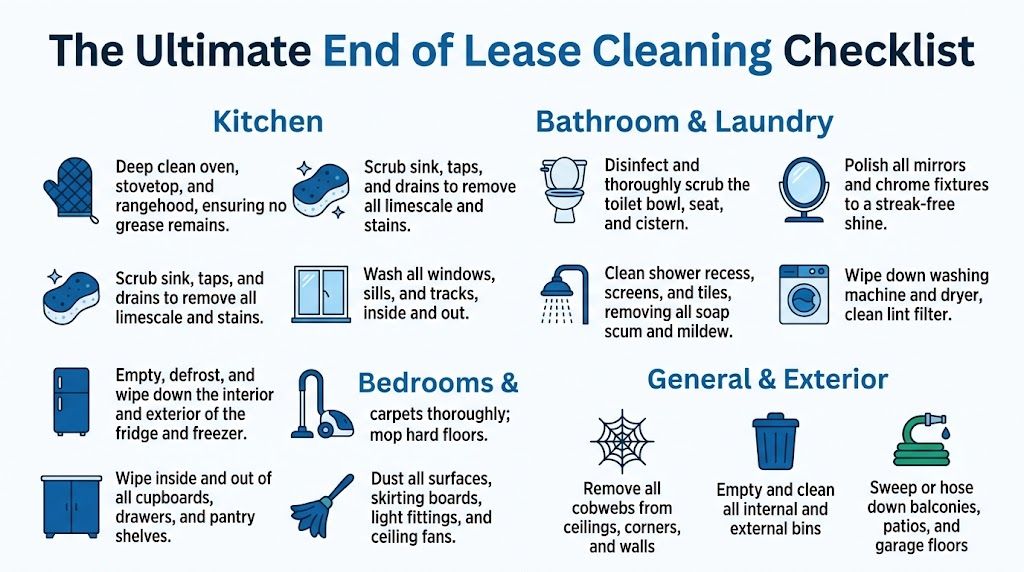
Kitchen cleaning that passes inspection
The kitchen is where many otherwise good cleans fall apart. Grease travels. It settles on more than the stovetop, and agents know exactly where to look.
Start with the oven while it’s cold and empty. Remove racks and trays, soak them, and clean the interior glass, door seals, side rails, and corners. Wipe the stovetop, burner caps, control knobs, splashback, and the outside of the oven as well.
Then move higher and wider:
- Rangehood and filters: Degrease the hood exterior and wash removable filters thoroughly.
- Cupboards and drawers: Empty them completely. Wipe interiors, shelf edges, tracks, handles, and the tops of overhead cupboards.
- Benches and sink: Remove scale, stains, and food residue around taps, drains, and joins.
- Appliances left behind: Clean inside and outside of the dishwasher, microwave space, and any included fridge.
A kitchen can smell clean and still fail if the rangehood is sticky or crumbs remain in cutlery drawers.
Bathrooms and laundry rooms
Bathrooms need detailing, not just disinfecting. Soap scum on glass, mould in silicone, and residue around tap bases are what hold up a final approval.
Clean these areas carefully:
Shower recess and screen
Remove soap film from glass, tracks, tiles, recess corners, and around the drain.Toilet
Clean the bowl, under the rim, seat hinges, cistern, pedestal, and surrounding floor.Vanity and mirrors
Polish taps, wipe drawers and cupboard interiors, and leave mirrors streak free.Bath and grout lines
Check for residue where the wall meets the tub and where grout has darkened.Laundry fittings
Wipe the trough, taps, cabinet fronts, machine recess, lint areas, and skirting.
A bathroom usually fails on detail, not effort. The room might smell fresh but still be marked down for mould spots, soap haze, or neglected grout.
Bedrooms and living areas
These rooms look simpler, but they expose poor finishing work once the furniture is gone. Empty space makes dust and wall marks stand out.
Focus on the edges and high surfaces first. Tops of wardrobes, shelves, curtain rails, blinds, and door frames gather dust that tenants rarely notice while living there. Then work downward to switches, skirting boards, power points, built-ins, and floor edges.
For walls, spot clean only where appropriate. Don’t scrub paint aggressively and create obvious shiny patches. Wardrobes should be wiped inside, including rails, shelves, corners, and tracks if they have sliding doors.
Flooring needs a different approach depending on the surface:
- Carpets: Vacuum slowly and in two directions. Pay attention to edges, under built-ins, and traffic lanes.
- Timber or vinyl: Remove dust first, then mop lightly so no residue or streaking is left.
- Tiles: Clean corners, grout lines, and around toilet bases or entry points where soil gathers.
If you want an extra reference point while preparing, Edinhart’s ultimate rental property cleaning checklist is a useful cross-check against common handover items.
Windows, tracks, and the spots agents always notice
Window tracks are one of the most commonly missed details in any end of lease clean geelong job. They collect dead insects, dust, and black residue, especially in sliding doors and older frames.
Check these carefully:
- Window glass: Inside glass should be free of smears and fingerprints.
- Tracks and sills: Vacuum loose debris first, then wipe built-up grime.
- Blinds and screens: Dust slats, edges, and corners. Clean flyscreens gently.
- Doors and frames: Wipe handles, edges, tops, and threshold areas.
The same goes for vents, light fittings, and switches. If it’s eye-level or above-head and has visible dust, it should be cleaned.
General areas and outside handover items
The last part of the job is where tired tenants rush, and that’s usually a mistake. General presentation still matters.
Walk through and finish these:
- Cobweb removal: Corners, ceilings, eaves near doors, garage edges.
- Bins: Empty and rinse if needed.
- Outdoor areas: Sweep balconies, patios, porches, and garage floors.
- Rubbish check: Remove every last item from cupboards, drawers, storage cages, and sheds.
- Utility access points: Leave meter boxes and service areas tidy if accessible.
A clean property should feel empty, neutral, and ready for the next person to walk in without seeing any trace of the move.
Budgeting for Your Geelong Bond Clean
Price surprises usually happen when tenants compare a basic cleaner’s quote with an actual end-of-lease scope. They sound similar, but they’re not the same job.
Recent Geelong task data shows the average cost of end-of-lease cleaning ranges from $250 to $500, with a median around $400 for a standard 3-bedroom home, and the work typically takes 4 to 8 hours for a team of 2 to 3 professional cleaners, based on recent Airtasker end-of-lease cleaning data for Geelong.
What affects the final price
The biggest pricing variable isn’t the suburb. It’s the condition of the property and the amount of specialist work involved.
A cleaner pricing a vacant, well-kept unit with no pet issues and a lightly used oven is looking at a very different job from a family home with carpet marks, bathroom build-up, greasy cooking residue, and lots of internal glass. Extras such as balconies, garages, wall spot cleaning, or steam cleaning receipts can also affect the quote.
Here’s a simple way to understand it:
| Property factor | Likely effect on quote |
|---|---|
| Size of property | More rooms usually mean more labour time |
| Condition at move-out | Heavier grease, mould, or soil increases effort |
| Specialist surfaces | Carpet, tile, grout, and upholstery often add scope |
| Access and logistics | Parking, power, water access, and key collection can matter |
| Agent requirements | Receipts or stricter handover expectations can shape the service |
Time planning matters as much as price
A bond clean shouldn’t be squeezed into the same rushed window as the removals truck. If the property is still full of boxes or furniture, every task takes longer and some surfaces can’t be cleaned properly at all.
That’s why it helps to leave a clear day between moving out and the final inspection if you can. It gives the cleaners a vacant property to work through properly and gives you time to do a last walkthrough afterward.
For readers trying to estimate the spend before booking, this guide to end of lease clean cost is a practical starting point for understanding how pricing is usually broken down.
Realistic budgeting advice
Don’t budget only for “cleaning”. Budget for handover readiness. That may include carpet steam cleaning, a receipt for agent records, extra attention on bathrooms, or time to return for minor touch-ups if required.
The cheapest quote isn’t always the cheapest outcome. If a low-cost service leaves behind grease, mould, or carpet issues, the cost often reappears as a re-clean, delayed bond return, or deduction.
DIY Clean vs Hiring Professional End of Lease Cleaners
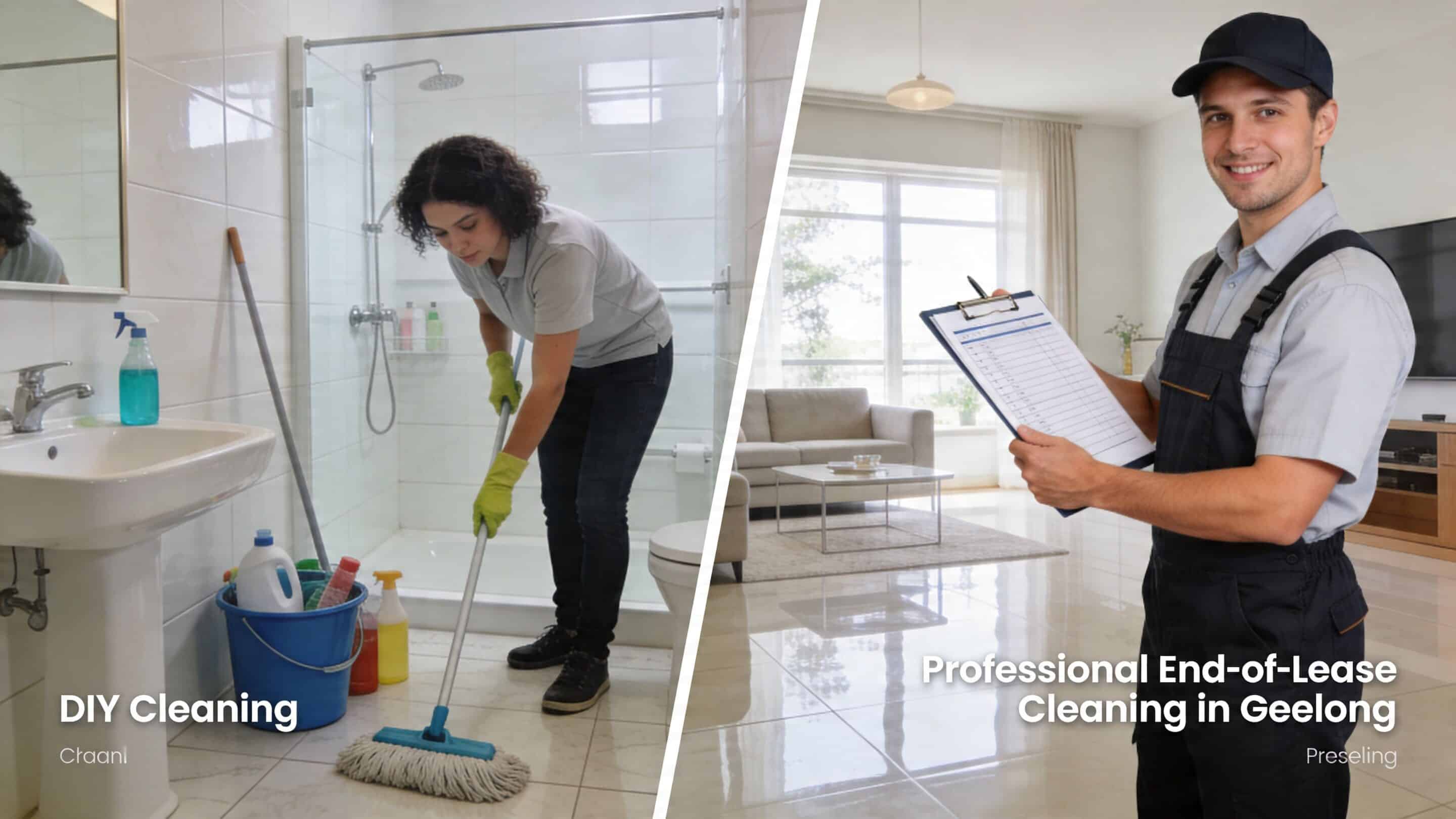
This decision usually comes down to time, confidence, and risk tolerance. Plenty of tenants can do a solid general clean. Fewer can produce an inspection-ready finish across ovens, grout, shower glass, carpet, and upholstery while also managing a move.
A trained team can complete a professional end-of-lease clean for a smaller apartment or house in 4 to 8 hours, and that time investment matters because DIY attempts often fall short and can put a bond at risk that may be worth up to four weeks’ rent, as outlined in this bond clean timing guide from Oz Cleaning Geelong.
When DIY makes sense
DIY can work if the property is small, well maintained, and you have time to clean after everything is moved out. It also helps if you’re realistic about what you can do properly.
DIY is usually strongest when the tasks are straightforward:
- Dusting and wiping: Skirting boards, shelves, switches, and wardrobes.
- Basic floor care: Vacuuming and mopping where there are no major stains.
- General bathroom upkeep: If there’s only light soap residue and no heavy mould issue.
- Final presentation: Removing rubbish, checking cupboards, wiping doors and frames.
Where DIY often struggles is consistency. Tenants get tired, run out of time, or clean the visible parts only. That’s when little misses start stacking up.
Where professionals earn their fee
Professional cleaners bring systems, not just effort. They know the inspection points, they work in an order that avoids re-soiling cleaned areas, and they have stronger equipment for carpets, grout, ovens, and wet areas.
The main benefit isn’t only labour saved. It’s reduced risk on problem surfaces.
You’re not just paying for cleaning. You’re paying for fewer blind spots.
Specialist carpet work is a good example. A domestic rental machine or supermarket spot remover can help appearance in the short term, but it often won’t address embedded soil, odours, or residues the way professional extraction can. The same goes for bathroom grout and neglected upholstery.
If you’re weighing that trade-off specifically for flooring, this comparison of DIY carpet cleaning versus professional services explains where home methods usually fall short.
A practical way to decide
Use this test:
| If this sounds like you | Best fit |
|---|---|
| Small property, light wear, spare time, no major stains | DIY may be enough |
| Large home, pet issues, greasy kitchen, marked carpet | Professional help is safer |
| You’re exhausted from moving and short on time | Hire out the high-risk tasks |
| Agent is strict and wants receipts for carpet work | Professional service is usually the cleanest path |
A mixed approach is often the smartest one. Handle dusting, rubbish removal, and cupboard wipe-downs yourself. Bring in specialists for carpets, tile, grout, upholstery, or any surface where a weak result could cost you more later.
Choosing a Reputable Geelong Cleaning Service
Not every company offering a bond clean is set up the same way. Some do genuine end-of-lease work. Others do standard house cleans and market them as bond cleans because the phrase gets searched.
The difference shows up on inspection day.
What to check before you book
Start with the basics. Confirm the business has an ABN, insurance, and a clear process for end-of-lease jobs. If the cleaner can’t explain what happens if the agent asks for a re-clean, that’s a warning sign.
Ask direct questions like these:
- Is the quote fixed or estimated? You need to know what could change.
- What exactly is included? Ovens, inside cupboards, windows, tracks, and carpet work should be spelled out.
- Do you provide receipts where needed? This matters for carpet steam cleaning in particular.
- What happens if the agent isn’t satisfied? Check the terms of any bond-back or satisfaction promise.
- Who attends the job? You want to know whether it’s a team, subcontractor, or solo operator.
Good signs and red flags
A reliable cleaner is usually easy to pin down on details. They’ll ask about property size, condition, carpeted areas, pets, parking, key access, and inspection timing. Those questions are a good sign because they show the cleaner understands the scope.
Red flags tend to look like this:
- Very vague inclusions
- Cash-only arrangements with no paperwork
- No mention of insurance
- No process for re-cleans or agent feedback
- Quotes given instantly without asking anything about the property
A proper bond clean quote should feel specific. If it sounds too generic, the service probably is.
Read reviews the right way
Don’t just look for a high star rating. Read the recent reviews and look for comments about end-of-lease work specifically. A company might be excellent for weekly domestic cleaning and still not be the right choice for a vacancy handover.
Look for mentions of punctuality, communication, receipts, re-clean handling, and whether the property passed inspection without fuss. Those details tell you more than broad praise.
A cleaner doesn’t need to promise perfection. They do need to show they understand handover standards and know how to respond if an agent raises an issue.
Your Pre-Inspection Walkthrough Checklist
This is the last pass, not another deep clean. The property should already be vacant and cleaned. Your job now is to spot small misses before the property manager does.
Walk room by room with all lights on and curtains open. Look from the doorway first, then from close range. Empty rooms reveal things quickly.
Use this final check:
- Remove everything: No rubbish, hangers, food, cleaning products, or forgotten items in cupboards, drawers, garage shelves, or outdoor areas.
- Check the obvious touch points: Door handles, switches, taps, toilet flush buttons, and appliance fronts should be clean and not sticky.
- Open and inspect: Wardrobes, vanity cupboards, kitchen drawers, oven door, dishwasher, and laundry storage.
- Look down: Corners, skirting edges, under sinks, toilet surrounds, and window tracks.
- Look up: Light fittings, exhaust covers, fans, curtain rails, and air-conditioning vents.
- Check outside: Mailbox area, balcony, patio, garage floor, and bins if they’re part of the tenancy condition.
- Take photos: Capture each room, plus close shots of carpets, oven, bathrooms, and any repaired or cleaned problem area.
If the lease requires lawns or exterior tidying, make sure that’s handled before the inspection window. The same goes for keys, remotes, and access devices. Have them organised and ready to return.
A slow ten-minute walkthrough can save a lot of argument later.
Secure Your Bond with Specialist Carpet and Tile Cleaning
General cleaning gets a property presentable. Specialist cleaning is what often gets it over the line.
Most Geelong end-of-lease services bundle carpet cleaning into a general package, but that can miss the strategic importance of targeted carpet treatment during move-out. As noted by End of Lease Cleaning Geelong, specialist steam cleaning gives tenants proof of remediation for the areas most closely checked during inspection.
Why carpets need specialist attention
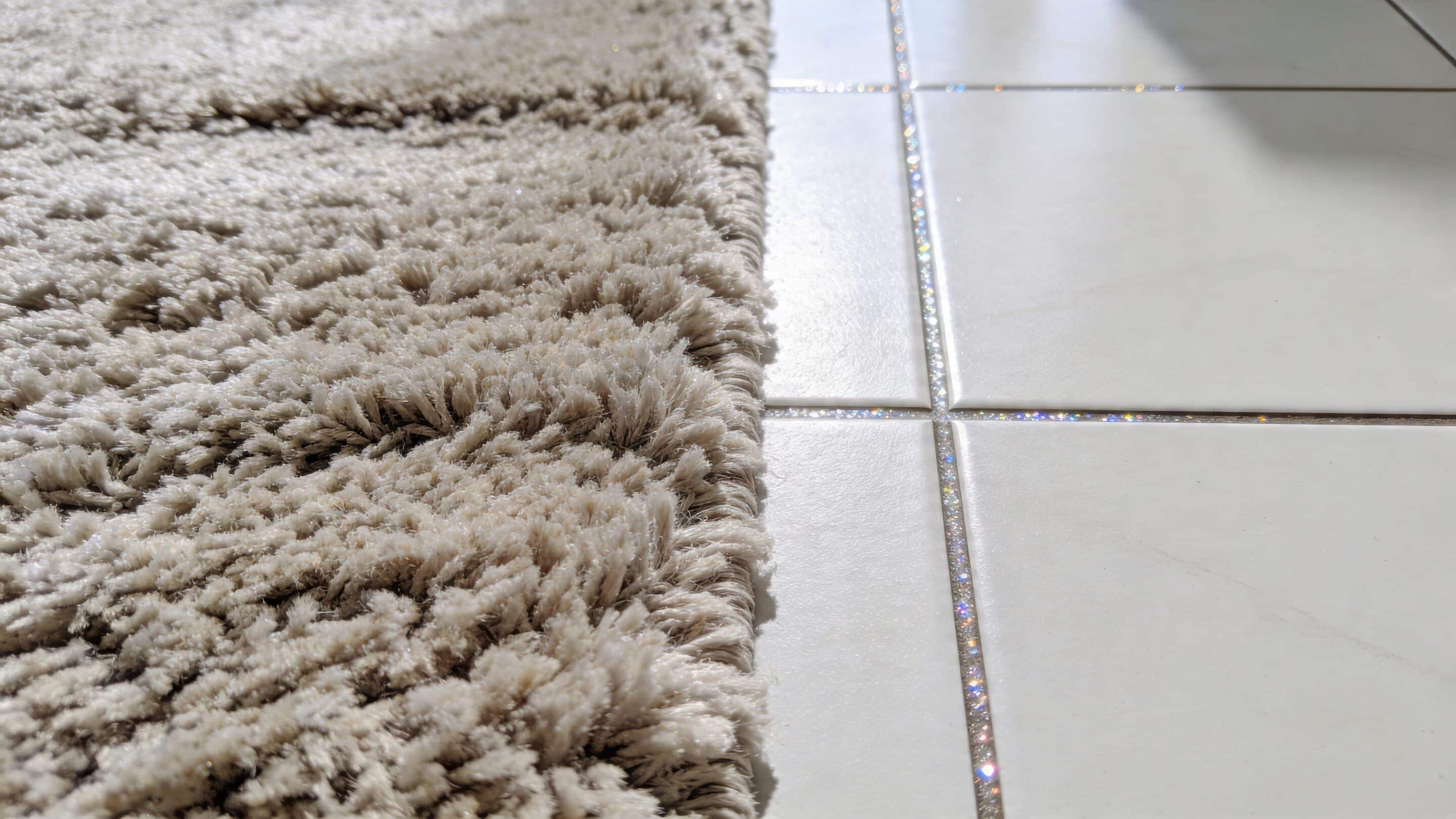
Carpet problems aren’t always obvious until the room is empty. Furniture has been covering parts of the pile for months or years. Once it’s gone, traffic lanes, spots, odours, and colour variation become much easier to see.
Steam cleaning also produces something tenants often need at handover. Proof that the most scrutinised soft surface in the property was professionally treated. That matters when the entry condition, tenancy terms, or a stain issue puts the carpet in focus.
Tile and grout are frequent trouble spots
Bathrooms, laundries, and kitchen floors often fail not because the tenant ignored them, but because grout holds on to soil and discolouration far more stubbornly than smooth tile faces. Standard mopping won’t shift ingrained grime along grout lines or edges around fittings.
If you’ve got porous or decorative tile at the property, surface-safe methods matter too. For background on preserving that kind of finish, this guide on properly cleaning cement tiles is worth reading before using harsh products.
Upholstery matters more than tenants think
Upholstery isn’t always part of a standard end-of-lease scope, but it can matter in furnished rentals or where a sofa, mattress, or fabric headboard has picked up odours and marks that affect the overall handover impression. Soft furnishings hold dust, allergens, and smells in a way hard surfaces don’t.
Where carpets and tiled areas are the concern, specialist treatment usually gives the best return because those surfaces are labour-heavy, highly visible, and difficult to restore with ordinary household tools. Tenants looking into dedicated hard floor restoration can compare options through professional tile and grout cleaning services before the final inspection date.
If you need help with the surfaces that cause the most bond trouble, Right Price Carpet Cleaning is a practical option for end-of-lease carpet, upholstery, and tile cleaning. They’re family-owned, fully insured, use powerful truck-mounted steam cleaning equipment, offer flat-rate pricing and instant online quotes, and back the work with a 100% satisfaction guarantee. If you want the move-out clean to feel less risky and more organised, they’re worth contacting before your inspection is booked.
Recent Comments