


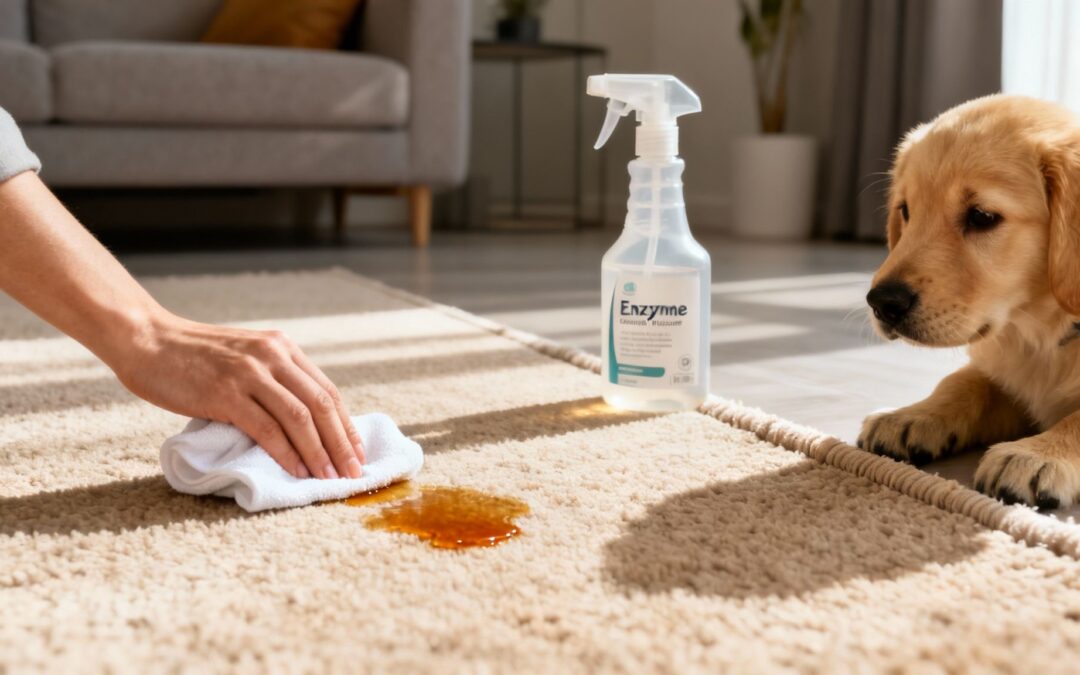
That little puddle of dog urine on your carpet is more than just a surface-level mess. It’s actually a multi-layered problem attacking your flooring from the inside out. While the liquid quickly vanishes past the visible fibres, the real damage happens when uric acid crystals form deep in your carpet’s backing and underlay, creating a permanent source of that awful smell.
The Unseen Damage of Dog Urine on Carpet
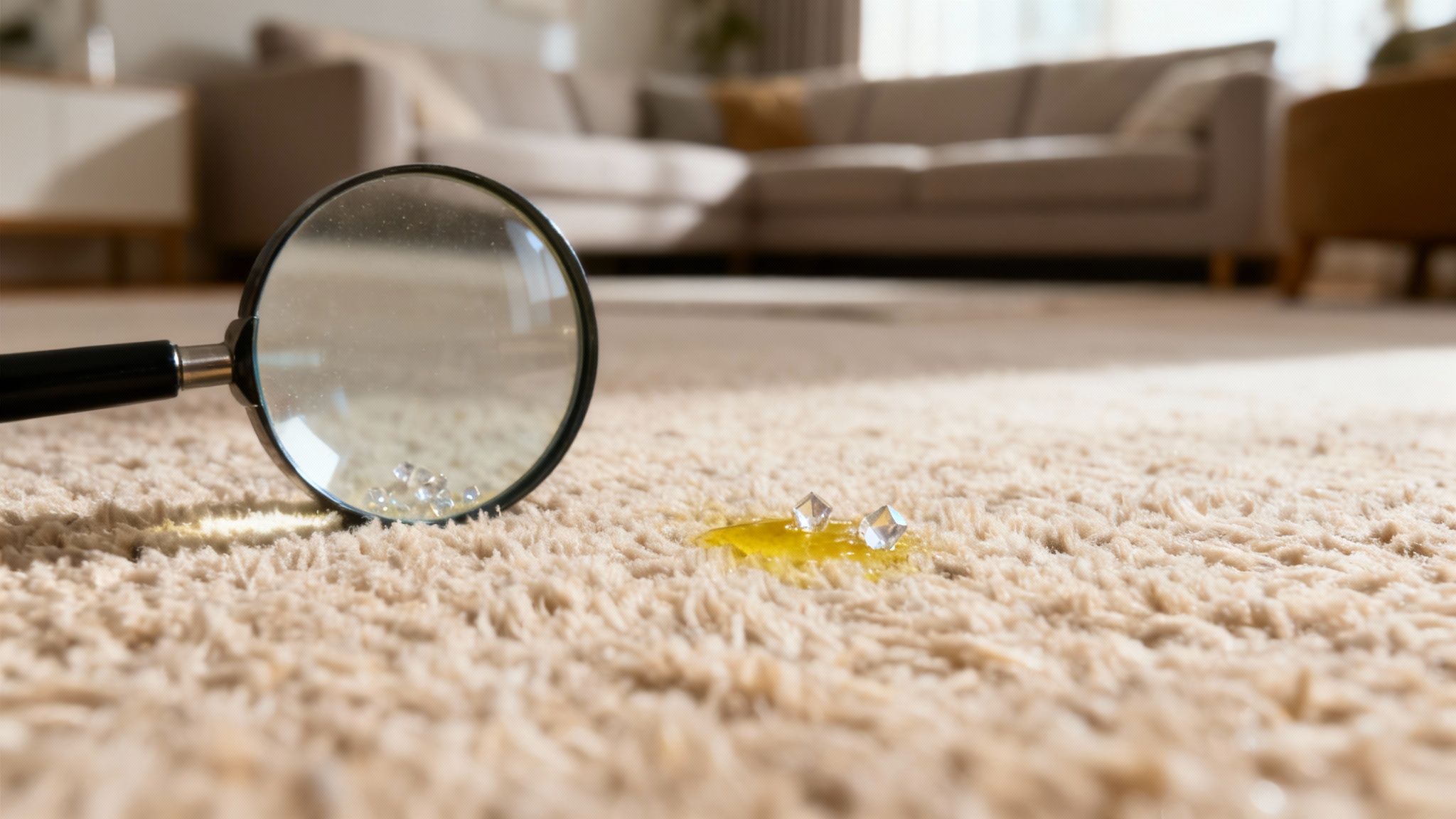
The moment your dog has an accident, the warm, acidic urine starts a chemical reaction with your carpet’s dyes. It doesn’t just sit on top. It seeps deep into the fibres, through the carpet backing, and often saturates the underlay and even the subfloor beneath. This hidden saturation is where the most lasting damage happens.
As the liquid part evaporates, it leaves behind concentrated uric acid crystals. These stubborn, non-soluble crystals are the true culprits behind that lingering smell you can’t get rid of. They lie dormant when dry, but any hint of moisture will reactivate them. That’s why you’ll suddenly get a whiff of strong ammonia on a humid Melbourne day or even after a basic steam clean—the humidity has simply reawakened the crystals.
Beyond the Odour
The damage goes far beyond just a bad smell. The chemical components in dog urine can cause irreversible harm to your flooring investment, which is why treating it properly is so crucial.
Here’s what’s really going on under the surface:
- Permanent Dye Alteration: The ammonia in urine can bleach or permanently change the dyes in your carpet. A beige carpet might develop a permanent orange or yellow stain as the urine strips out the cooler blue dye components, leaving only the warmer tones behind.
- Fibre and Backing Degradation: Over time, the acidic nature of urine can eat away at the latex adhesive holding the carpet fibres to their backing. This can lead to delamination, where the layers of the carpet separate and cause unsightly ripples or bubbles.
- Bacterial Breeding Ground: The damp, enclosed environment created by urine saturation is a perfect breeding ground for nasty bacteria. This not only fuels the odour but also poses a real risk to your home's air quality and hygiene.
This hidden bacterial growth is a major concern. While dog saliva contains over 20 bacteria species, urine and faeces can harbour an astonishing 23 million fecal coliforms per gram, turning a soiled carpet into a potent source of allergens. Discover more insights about what dogs leave behind in your carpet from Australian cleaning experts.
Ultimately, if you don't address dog urine on carpet the right way, you're only cleaning the tip of the iceberg. The real fight is against the unseen crystals and bacteria embedded deep within your floor, silently compromising its structure and your family's health.
Your First Response to a Fresh Urine Stain
That moment you spot a fresh urine stain on the carpet, you know you’re in a race against the clock. Acting fast is everything—it stops the stain from setting in and prevents those pesky uric acid crystals from forming deep in the underlay. A few minutes of quick work now can save you hours of scrubbing later.
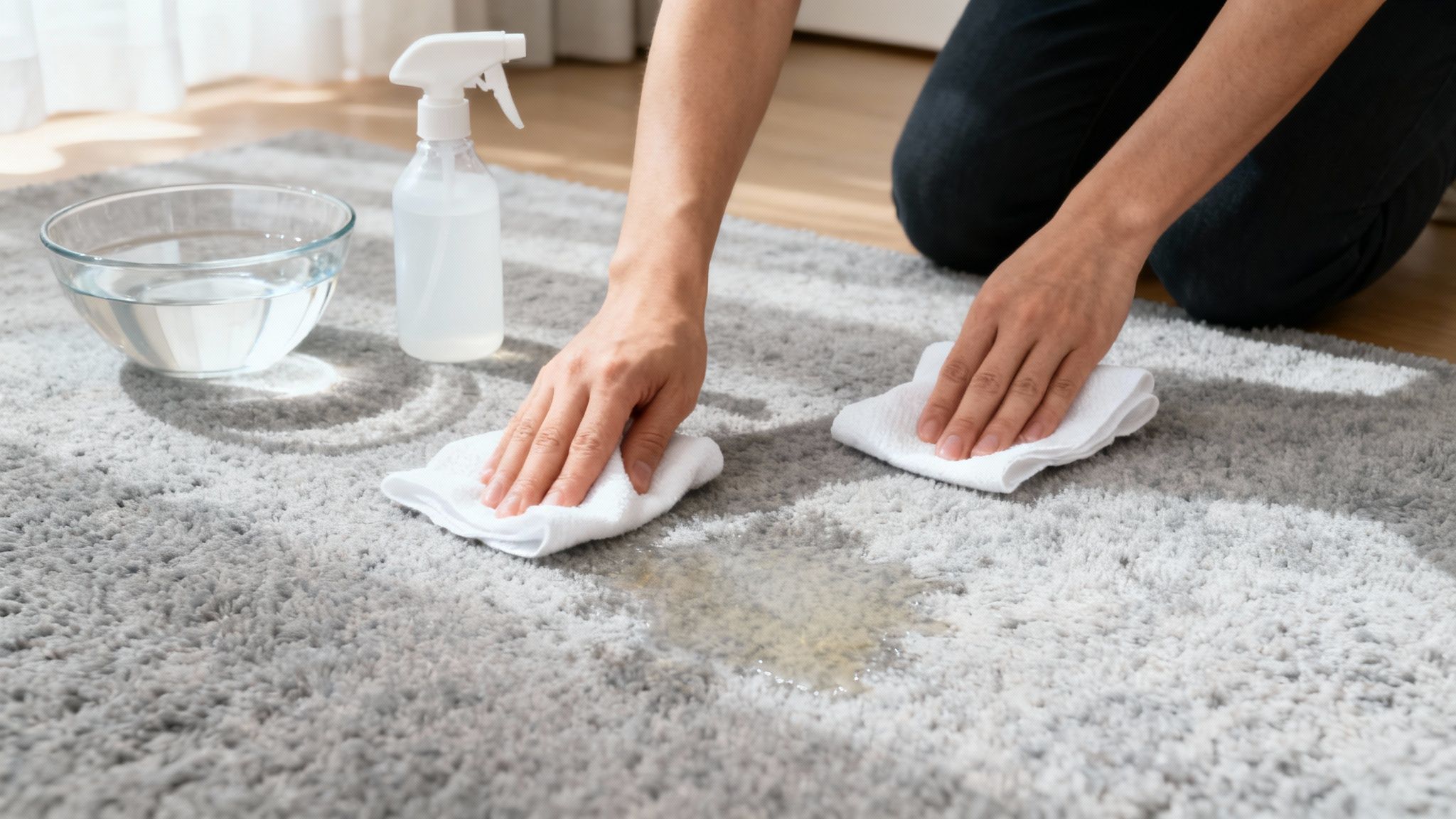
Before you even get down on the floor, grab your supplies. You'll want clean, white microfibre cloths, as coloured towels can sometimes transfer dye onto your carpet. A spray bottle with cool water is also a must-have.
Don't forget a pair of protective gloves to keep things hygienic. Getting that urine up quickly also helps cut down on airborne bacteria that can flare up allergies. A little prep makes the whole cleanup process go much smoother.
- Microfibre cloths are brilliant for soaking up moisture without leaving lint behind.
- A spray bottle gives you control so you don't over-saturate the carpet.
- Gloves are a simple way to keep your hands safe from bacteria.
- A small bin is handy for tossing used cloths right away.
The Blotting Technique: Your Most Important Move
The goal here is to draw the liquid out before it has a chance to sink into the lower layers of your carpet. Gently pat the stain; never rub or scrub it. Rubbing just pushes the urine deeper into the fibres, making your job harder.
- Place a dry, clean cloth over the wet spot.
- Press down firmly to absorb as much moisture as possible.
- As the cloth gets damp, fold it to a clean, dry section and repeat.
- Keep going until your cloth comes away almost dry.
"Blot, don't scrub" is the golden rule we carpet cleaners live by. It’s the single best thing you can do to prevent a small spot from becoming a deep-set stain.
A Simple DIY Cleaning Solution
For mild accidents, a simple mix of vinegar and water can work wonders to neutralise odours and stop the uric acid from reactivating later. Best of all, it uses things you probably already have in your pantry.
- Combine 250 millilitres of white vinegar with 500 millilitres of cool water.
- Add a small squirt of mild, dye-free dish soap to help cut through any residue.
- Always test your solution on a hidden spot first, like inside a closet or under the sofa, to check for colourfastness.
Once you've mixed it up, lightly spray the affected area. You don't want to soak it—just dampen it. Let the solution sit for a couple of minutes to start breaking down the urine compounds, then get back to blotting with a fresh, dry cloth until the area feels only slightly moist.
Drying and What Comes Next
Now, you need to let the carpet air dry completely before putting any furniture back. You can speed things up by pointing a fan at the spot or opening a window to get the air circulating.
- Position a fan to blow air directly across the treated area.
- Try to avoid walking on the patch until it's completely dry to the touch.
- Check on it after a couple of hours. If it still feels damp, give it one last blot.
Once it's totally dry, run the vacuum over the area. This helps lift the carpet fibres and restore their natural texture. If you can still detect a faint odour, it might be time to bring in the professionals for a steam clean.
For a guaranteed fresh and clean result, the team at Right Price Carpet Cleaning is ready to help. We offer clear, flat-rate pricing and tracked appointments to make it easy.
Dealing With Old Stains and That Lingering Smell
So you’ve found a mysterious, dried-out stain. This is where the real challenge begins. Unlike a fresh puddle, a set-in dog urine stain has had plenty of time to bond with your carpet fibres on a chemical level. This is exactly why your trusty all-purpose spray or a bit of vinegar doesn't seem to make a dent.
The problem runs deep—right into your carpet’s underlay. When dog urine dries, the water evaporates, but it leaves behind concentrated uric acid crystals. These stubborn crystals don’t dissolve in water and are the true source of that sharp ammonia smell that always seems to come back on a humid day.
Why You Need an Enzymatic Cleaner
To properly tackle old dog urine stains and their odours, you need to bring in the big guns. This is where an enzymatic cleaner becomes your best friend. Think of the enzymes in these formulas as tiny, highly specialised cleaners, designed to hunt down and break down organic waste.
Instead of just covering up the smell or cleaning the surface stain, these beneficial bacteria get to work on the uric acid crystals, breaking them down into simple, odourless gases. It's the only method that truly destroys the source of the problem for good.
- Don’t Be Shy With It: For an enzymatic cleaner to do its job, it needs to reach every last bit of the urine residue. That means you have to apply it generously, letting it soak right through the carpet fibres to the underlay, just like the original accident did.
- Give It Time: These cleaners aren't instant. The enzymes need time to work their magic. Once you've applied the cleaner, cover the spot with a damp towel and let it sit for at least 12-24 hours. This keeps the area moist, allowing the enzymes to stay active and do their thing.
- Rinse and Check: After the waiting period, grab some clean cloths and blot the area to soak up the excess moisture, then let it air dry completely. For really bad stains, you might even need to repeat the process.
A common mistake we see is people reaching for harsh, general-purpose cleaners. In one case we dealt with in Melbourne, a family's 12-month-old wool carpet was permanently damaged by their Jack Russell. Their DIY attempts with laundry detergent left a sticky residue that locked the stains in and ruined the fibres. You can learn more about how the wrong products can ruin your carpet from this in-depth case study.
A DIY Paste for Stubborn Yellowing
Sometimes, even after the smell is gone, you’re left with a faint yellow stain. A carefully made paste can help lift that final bit of discolouration, but you need to be extremely careful. This approach isn't suitable for all carpet types, especially delicate ones like wool.
You absolutely MUST do a patch test first.
- Find a spot on your carpet that’s completely out of sight—think inside a wardrobe or under a heavy sofa.
- Apply a very small amount of the paste and let it sit for about 10-15 minutes.
- Blot it clean, let it dry, and then check for any colour loss or damage to the fibres. Don't skip this.
If the test goes well, you can mix up a gentle paste using bicarbonate of soda and a 3% hydrogen peroxide solution. Make sure it's only 3%; anything stronger will likely cause damage. Mix it into a paste, apply a thin layer over the stain, let it dry completely, and then vacuum up all the residue.
This is your advanced toolkit for dealing with the ghosts of accidents past. While these methods are effective, remember that urine that has soaked deep into the padding often needs professional equipment to be fully removed.
Knowing When to Call a Melbourne Carpet Pro
Let’s be honest, despite your best efforts with blotting, enzyme cleaners, and DIY pastes, sometimes you just hit a wall. You’ve treated the same spot multiple times, but the moment a humid Melbourne day rolls around, that faint, sharp smell of ammonia is back.
This is the tell-tale sign that the problem has gone far deeper than any household tool can reach.
When dog urine soaks through the carpet backing and settles into the underlay, it creates a concentrated deposit of uric acid crystals. That portable spot cleaner or hired machine from the supermarket just doesn’t have the grunt to flush it out. They might give the surface fibres a decent clean, but they can't generate the intense heat and powerful suction needed to extract contaminants from the very foundation of your carpet.
The Professional Equipment Difference
This is where a professional-grade, truck-mounted hot water extraction system comes in. It’s in a completely different league, and these machines are the gold standard for a reason.
- Intense Heat: They heat water to extremely high temperatures, which is absolutely crucial for breaking down stubborn urine crystals and killing off lingering bacteria.
- Powerful Suction: The vacuum power is immense. It’s strong enough to pull moisture and dissolved contaminants from deep within the carpet pad, which not only removes the source but also prevents mould and drastically cuts down drying times.
- Targeted Chemistry: We use specialised, pH-balanced pre-treatments and neutralisers that are far more effective than over-the-counter products. They’re designed to dissolve urine salts without risking damage to delicate carpet fibres.
A professional clean isn't just about making the carpet look clean; it's about restoring its hygiene from the underlay up. It’s the only way to be certain you've removed the source of the odour, not just temporarily masked it.
This visual guide shows the typical steps involved when you're tackling a stubborn stain, moving from the initial treatment to more advanced methods.
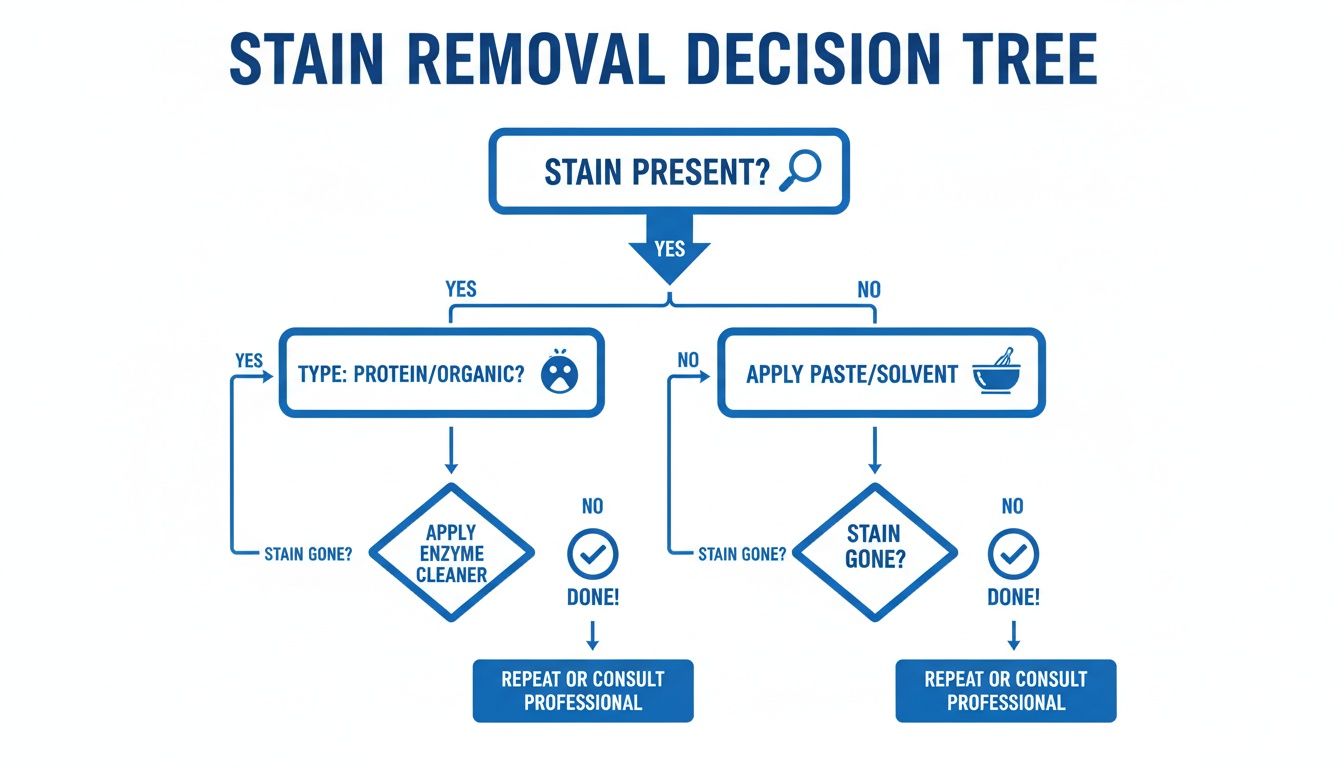
As this decision tree illustrates, the approach to stain removal often escalates from basic enzymatic treatments to more intensive solutions when you’re dealing with persistent issues.
End of Lease and Tenancy Disputes
For Melbourne renters, untreated dog urine on carpet can become a serious financial headache. When it comes to tenancy disputes, lingering pet odours are not considered 'fair wear and tear,' leaving tenants liable for professional cleaning or, in worst-case scenarios, even carpet replacement costs.
We’ve seen renters across Greater Melbourne face bond deductions of over $1,000 for urine damage, simply because it accelerates the deterioration of carpet fibres and creates unsanitary living conditions.
When choosing a Melbourne carpet pro, looking for businesses that uphold their best practices in customer service can make the whole process smoother right from the first call. A professional report detailing a deep steam clean and odour neutralisation is often your best defence against losing your bond.
So, when is it time to make the call? If the stain is larger than your hand, the odour keeps coming back, or you’re getting ready for an end-of-lease inspection, it’s time to call in the experts. Investing in a professional clean will save you time, stress, and potentially hundreds of dollars in the long run.
Preventing Future Accidents and Protecting Your Carpet
Winning the battle against dog urine stains is about playing both offence and defence. Once you've cleaned up an accident, the real work begins: making sure it doesn't happen again. This isn't just about protecting your carpet—it’s about strengthening the bond you have with your dog.
First, you need to figure out why it happened. With puppies, it’s all about consistent house training. Regular potty breaks, big praise for going outside, and using a crate are your best friends here. Their bladders are tiny, so they need frequent chances to get it right.
If an older, house-trained dog suddenly starts having accidents, it’s often a red flag. A trip to the vet is a must to rule out health issues like urinary tract infections, kidney problems, or diabetes. These are common culprits for incontinence in senior pets.
Building a Pet-Friendly Carpet Care Routine
Keeping your carpet in top shape is just as important as managing your pet's behaviour. A simple, consistent routine will keep your home smelling fresh and help your floors last longer.
Here’s what I recommend from years of experience:
- Vacuum Thoroughly and Often: Get the vacuum out at least twice a week for high-traffic areas. This pulls up pet hair, dander, and dirt before it gets ground deep into the fibres where odours love to hide.
- Invest in Pet-Friendly Mats: Pop some durable, washable mats at your entryways and in your dog's favourite chill-out spots. They’re a brilliant first line of defence, catching dirt and minor dribbles before they ever hit the main carpet.
- Schedule Professional Cleaning: Lock in a professional deep clean at least once a year. This isn't just for stubborn stains; it’s essential maintenance. A pro clean removes the deep-down grit and allergens your household vacuum simply can't touch.
Sometimes accidents are tied to stress. If that sounds like your situation, learning how to reduce dog separation anxiety can be a game-changer. A calm, happy dog is far less likely to urinate out of fear when you pop out to the shops.
Proactive prevention is always more effective—and a lot less stressful—than reactive cleaning. A little bit of foresight with training and maintenance will save you from the headache of repeated accidents and protect your flooring investment for years.
At the end of the day, a clean, fresh-smelling home is a team effort between you and your pet. By tackling both the training and the carpet care, you create a healthier, happier space for everyone to enjoy.
Common Questions About Dog Urine on Carpet
When you’re staring at a new puppy puddle, it’s easy to get conflicting advice. Homeowners across Melbourne often ask the same questions, and getting clear, straightforward answers is the best way to protect your carpet and keep your home smelling fresh.
Will the Smell Ever Really Go Away?
This is the big one. The good news is, yes, the smell of dog urine can be completely eliminated. The bad news? It all comes down to whether you successfully remove the source: the uric acid crystals.
For a small, fresh accident, a high-quality enzymatic cleaner will usually do the trick. These cleaners are designed to break down the specific molecules that cause the odour. Job done.
But what about older, larger, or multiple stains? If you've got a persistent smell, it's almost certainly coming from deep within the carpet underlay. At that point, a surface clean just won't cut it. The only reliable solution is a professional hot water extraction to completely flush out those crystals and permanently kill the odour, not just mask it for a few days.
Can I Just Use My Household Steam Cleaner?
It’s a tempting idea, but please don’t. Using a regular household steam cleaner on a urine stain is one of the most common—and critical—mistakes we see.
The intense heat from a standard steamer will actually bond the urine proteins to your carpet fibres. It essentially ‘cooks’ the stain right in, setting it permanently. Once that happens, it becomes almost impossible for even a professional to get it out later.
Professionals get around this by using specific pre-treatment solutions that break down the urine before applying any heat or extraction. This ensures the stain is lifted out, not locked in forever.
How Do I Stop My Dog Peeing in the Same Spot?
If you’re dealing with a repeat offender, you’re not alone. Dogs are drawn back to the same spot by scent, even if it’s completely unnoticeable to our human noses. The only way to break the cycle is with total odour neutralisation.
Start by treating the area meticulously with an enzymatic cleaner designed to destroy every last urine molecule. If your dog still returns to the spot after you’ve cleaned it thoroughly, that’s a huge red flag. It means residue is still lurking in the carpet backing or underlay.
When that happens, a professional deep clean is your next logical step to remove the final scent triggers. It's also a good idea to chat with your vet to rule out any underlying health issues that might be causing the recurring accidents.
When you need absolute certainty that every trace of dog urine is gone for good, you need the power of professional equipment. Right Price Carpet Cleaning has been helping Melbourne families since 2007, using powerful truck-mounted steam cleaning to restore carpets and eliminate stubborn odours. Get your instant quote and book online today.
Recent Comments