



We’ve all been there.That heart-stopping moment when a mug of coffee takes a nosedive onto the carpet, your clothes, or the couch. It’s a universal feeling of dread. But before you panic, know this: your first few minutes are the most critical. Acting fast is the secret to stopping that brown splash from becoming a permanent fixture.
Your First Response to a Fresh Coffee Spill
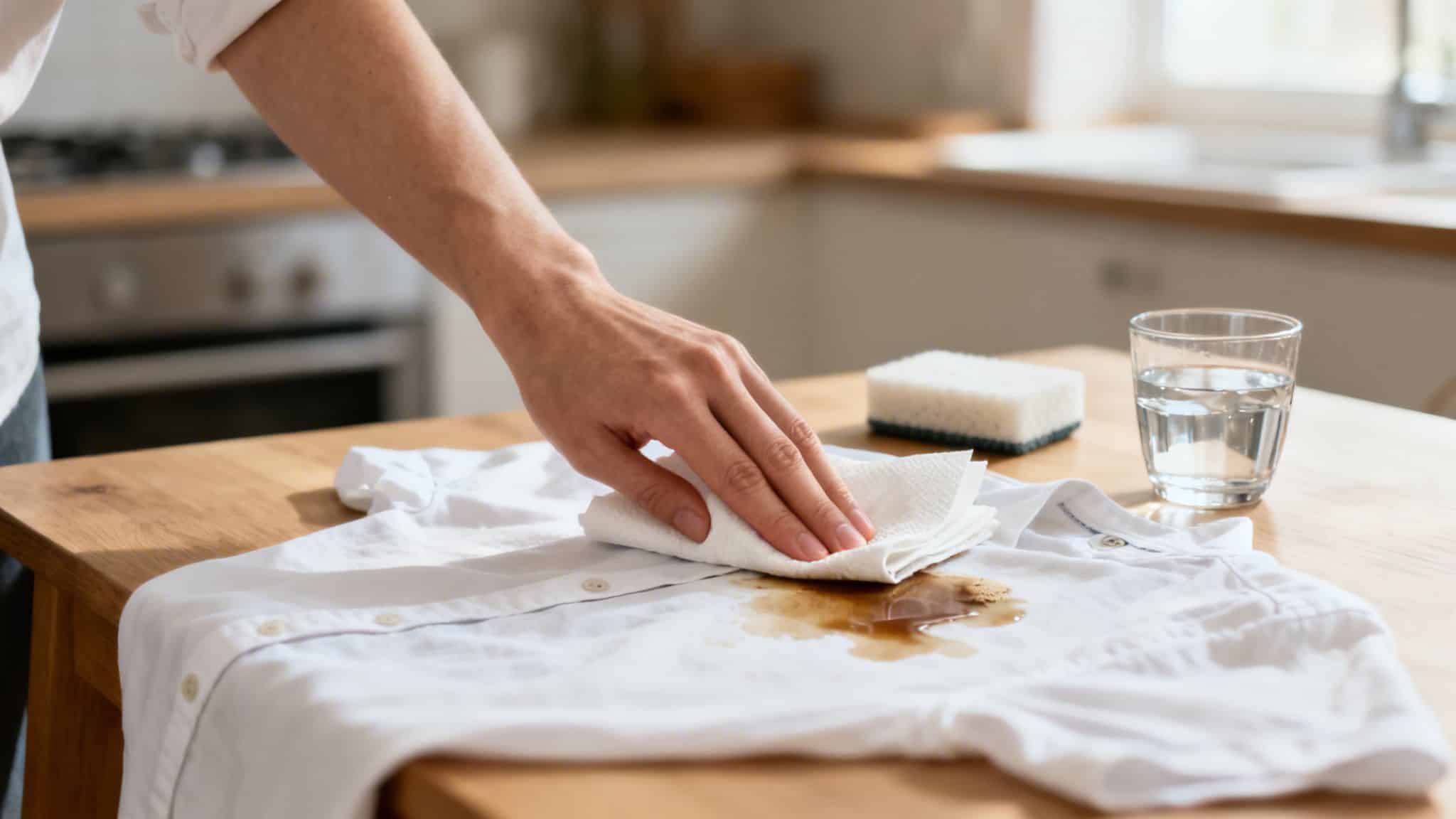
When a coffee disaster strikes, your first instinct might be to grab a cloth and start scrubbing for dear life. Don’t do it. Frantic rubbing is the single worst thing you can do, as it just grinds the coffee deeper into the fibres and makes the stain bigger.
Right now, your mission is simple damage control, not a deep clean. Think of it as first aid for your fabric. The goal is to stop the "bleeding"—or in this case, to stop the stain from spreading and setting in.
The Golden Rules: Blot and Cool Down
In this coffee emergency, your two best friends are a clean, absorbent cloth (or a stack of paper towels) and some cold water. First, gently lay the cloth over the spill and press down firmly to soak up as much liquid as possible. Lift, grab a fresh section of the cloth, and repeat until you’re barely pulling up any more coffee. Remember, it’s all about blotting, not rubbing.
Once you’ve blotted the excess, dampen a new cloth with cold water and continue to dab the stain. The cold water works to dilute what’s left of the coffee and, importantly, stops the tannins from bonding to the material—a chemical process that hot water would actually speed up.
It’s no surprise that in a city like Melbourne, spills are just part of the daily coffee ritual. A 2023 survey revealed that 62% of homeowners in the Greater Melbourne area named coffee as their number one carpet stain headache. While blotting with cold water is the perfect first move, it generally only removes about 30-40% of the stain on its own.
Immediate First Aid for Fresh Coffee Spills
Your next move will depend entirely on where that coffee landed. For a shirt, you’ll probably head straight to the sink, but for a rug, you need to work on the spot. This quick reference table outlines the crucial first steps to take, no matter the surface.
| Surface Type | Step 1 Blot Immediately | Step 2 Apply Cold Water | Step 3 Absorb Moisture |
|---|---|---|---|
| Carpet | Press firmly with a dry, white cloth to absorb. | Sparingly dab with a cloth dampened with cold water. | Place a dry towel on the spot and weigh it down. |
| Upholstery | Blot gently from the outside in to prevent spreading. | Use a spray bottle to lightly mist with cold water. | Press a dry cloth onto the area until it feels damp. |
| Clothing | Blot excess, then rinse from the back with cold water. | Run cold water through the fabric from behind the stain. | Continue blotting with a dry cloth after rinsing. |
While these first-aid steps are incredibly effective for fresh spills, sometimes a more stubborn spot needs a bit more firepower. For those situations, you might find our guide on mixing a homemade carpet cleaning solution helpful for the next phase of the cleanup.
Tackling Stubborn, Set-In Coffee Stains
What happens when you don’t catch the spill right away? We’ve all been there. You find it a day, or even a week, later—a dark, ominous patch that has well and truly become one with your carpet fibres. This is where we move beyond first aid and into the real battle of getting out coffee stains that have had time to dry and set.
An old coffee stain is a different beast entirely. Over time, the tannins in coffee—the same compounds that give wine and tea their colour—chemically bond with the fibres of your carpet or upholstery. This process is sped up by heat, which is precisely why dousing a fresh spill with hot water is one of the worst things you can do.
For a dried stain, you’re going to need a solution with a bit more oomph. Fortunately, you can often create a highly effective cleaner using just a few common household items. No need to rush out for harsh chemicals; a simple DIY recipe often does the trick.
A Powerful DIY Stain-Lifting Formula
For most synthetic carpets and durable upholstery, a simple solution of white vinegar and dish soap is your best bet. The acidity in the vinegar is fantastic for breaking down those stubborn tannins, while the dish soap helps lift any oils or sugars left behind from milk or sweeteners.
Here’s a simple, reliable recipe we turn to time and again:
- Mix one tablespoon of liquid dish soap (a gentle, clear one works best).
- Add one tablespoon of white vinegar.
- Combine these with two cups of warm water.
Before you go anywhere near the stain, always test your solution on an inconspicuous area first. Try a small spot inside a wardrobe, under a sofa cushion, or on a spare carpet scrap to make sure it doesn't cause any discolouration.
Key Takeaway: Patience is non-negotiable when dealing with set-in stains. Unlike fresh spills that react quickly, old stains require the cleaning solution to sit and work for at least 10-15 minutes to effectively dissolve the bonded tannins. Rushing this step is a common reason for failure.
The Application Method Matters
Once you've confirmed your solution is safe to use, the application process is just as important as the recipe itself. Whatever you do, don't pour the liquid directly onto the stain. This can easily over-saturate the carpet backing and lead to a bigger problem called "wicking," where the stain mysteriously reappears as the carpet dries.
Instead, follow these steps for a more controlled attack:
- Lightly dampen a clean, white cloth with your cleaning solution.
- Blot the stain with the damp cloth, always working from the outside edge toward the centre. This simple trick prevents the stain from spreading outwards.
- Let it sit for about 15 minutes. You might need to gently reapply the solution with your cloth to keep the area damp while the vinegar and soap do their work.
- Blot with a fresh cloth and cold water to "rinse" the area, which removes the cleaning mixture and the dissolved stain.
- Absorb all moisture by pressing down firmly with a clean, dry towel. Stand on it if you have to!
You might need to repeat this entire process two or three times for a particularly nasty mark. Each attempt should lift more of the stain, so don't get discouraged. The goal is gradual improvement, not an instant miracle. For more advanced options, exploring the best products to remove carpet stains can give you some extra firepower for those truly tough spots.
Custom Stain Removal for Different Surfaces
Treating a coffee stain is never a one-size-fits-all job. A splash on your wool rug needs a far gentler touch than a drip on a durable cotton shirt. The real secret to success is matching your cleaning method to the material, which helps you avoid disasters like colour loss or texture damage.
For instance, a synthetic carpet can usually handle a vinegar-based solution just fine, but that same mixture could easily ruin the delicate natural fibres of a wool or silk rug. Upholstery, of course, has its own set of rules, usually found on a small tag hidden somewhere on the furniture.
Reading Upholstery Cleaning Codes
Before you even think about tackling a coffee stain on your couch or favourite armchair, you need to find its cleaning code. This little tag tells you exactly what’s safe to use on the fabric.
- W: This means the fabric is water-safe. You can use water-based cleaning solutions.
- S: This code stands for “solvents.” You must use a water-free, solvent-based cleaner. Using water on these fabrics can leave a permanent ring.
- W/S: This indicates you can use either water-based or solvent-based cleaners, giving you more flexibility.
- X: This is the most delicate category. It means vacuum only—do not use any liquid cleaners, as they will almost certainly cause damage.
Ignoring these codes is a fast track to a much bigger, more permanent problem than a simple coffee stain. A quick check can save you from a very costly mistake.
This decision tree is a great visual guide for those first crucial steps when you're facing a dried coffee mark, right after you've figured out your surface type.
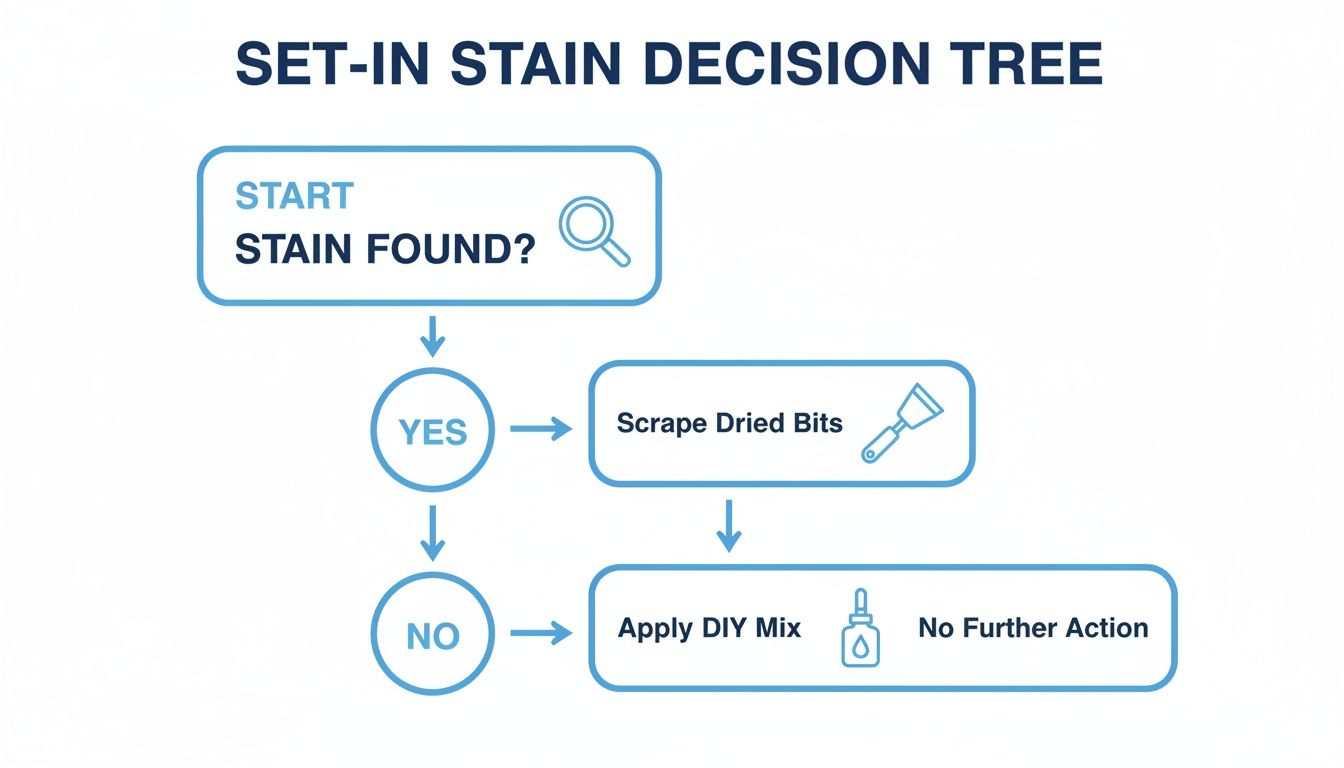
As the chart shows, always remove any dry debris first before you carefully apply your cleaning mix. It’s a fundamental step that makes a huge difference.
Tailoring Your Technique for Common Materials
So, let’s get specific. For something like a cotton shirt, you can afford to be a bit more aggressive. Pretreat the stain with a dab of liquid laundry detergent, gently rubbing it in before tossing the shirt in a cold wash. Denim is similarly tough and handles this approach well.
Spills on hardwood, on the other hand, are a completely different ball game. That process involves very careful blotting and specific cleaners to avoid damaging the wood's finish. For tricky spills on these surfaces, a comprehensive wood floor stain removal guide can be an invaluable resource for tackling different types of persistent marks.
With Melbourne's thriving coffee scene, stain removal has become a major concern. As consumption soars, contributing to Australia's 2 billion disposable cups used annually, local businesses have seen a 40% rise in upholstery stain calls since 2015. Data shows 55% of pre-lease inspections in Melbourne flag coffee marks on sofas and rugs. Professionals use targeted pretreatments that break down oils in milky coffees, achieving a 92% success rate on leather, where a simple vinegar solution often fails.
Understanding your surface is the most critical step in figuring out how to get out coffee stains for good. If you're ever in doubt, always test your cleaning solution on a small, hidden spot first.
When DIY Stain Removal Goes Wrong
Even with the best of intentions, sometimes a DIY attempt to get rid of a coffee stain can go sideways, leaving you with a bigger, more frustrating mess than you started with. We’ve all been there—that moment of panic when you realise you’ve actually made things worse.
Don't despair just yet. Most of these common blunders are fixable. Think of this as your troubleshooting guide for rescuing your carpet or couch when a simple clean-up turns into a disaster. We’ll walk through the most frequent mishaps and give you the practical advice to get back on track.
The Stain Spread and Got Bigger
It’s a classic mistake. You attack the coffee spill with a ton of elbow grease, scrubbing furiously with a cloth, only to watch in horror as the small spot blooms into a large, faint patch.
What went wrong: The problem is aggressive scrubbing. It doesn’t lift a stain; it just pushes the coffee particles outwards and grinds them deeper into the carpet or upholstery fibres. You’ve effectively smeared the stain across a much wider area.
How to fix it: First, stop scrubbing immediately. If the area is still damp, grab a fresh, clean cloth and start blotting from the new, outer edge of the stain. Work your way inwards. This corrals the spill and stops it from expanding any further. Once you’ve contained it, you can go back to your cleaning solution (like the vinegar mix), dabbing it on gently and letting it sit before blotting it out.
The Stain Is Gone, But Now There's a Sticky Patch
Success! You managed to lift the coffee stain, but now your carpet has a slightly stiff, sticky spot in its place. Over the next few days, you notice this exact spot is attracting dirt and dust like a magnet, quickly forming a new, dark patch.
What went wrong: This usually means you either used too much cleaning solution or didn't rinse it out properly. That leftover soap or detergent residue is sticky and will grab onto any dirt that comes its way.
Pro Tip: This is one of the most common DIY errors we see. A professional steam clean uses powerful hot water extraction to pull all the cleaning agents and dissolved dirt out of the fibres. It’s why professionally cleaned carpets stay cleaner for much longer.
How to fix it: You just need to "rinse" the residue out. Lightly mist the sticky spot with plain cold water from a spray bottle—be careful not to soak the area by pouring water on it. Then, take a clean, dry towel and blot the moisture up. To finish, place a fresh, dry section of the towel over the spot, weigh it down with something heavy (like a stack of books), and leave it for a few hours to absorb every last bit of moisture and residue.
I Used Hot Water and Now the Stain Won’t Budge
In a moment of haste, you blasted the coffee stain with hot water, hoping it would simply wash away. Instead, the stain seems to have been permanently fused to the fabric.
What went wrong: Hot water is the enemy of a coffee stain. It chemically changes the tannins in coffee, essentially "cooking" them right into the fibres of your carpet or clothing. This creates a chemical bond that’s much, much more difficult to break than a simple spill.
How to fix it: This one is tough, but not always a lost cause. You’ll need to repeatedly apply a vinegar-based solution, letting it sit for at least 20-30 minutes each time to slowly break down that set-in stain. After each soak, blot thoroughly with cold water. You'll need to be patient here; this might take several attempts. If the stain is still there after two or three rounds, it's a clear sign that you need a professional’s touch to fix it.
When to Call a Professional Melbourne Cleaner
You’ve blotted, you’ve mixed your vinegar solution, you might have even said a little prayer. But that stubborn coffee stain is still staring back at you from the middle of your beautiful carpet. Knowing when to put down the cloth and pick up the phone is a skill in itself—one that can save you from turning a small spill into a permanent eyesore.
Calling in a professional isn’t admitting defeat. It’s making a smart call to protect your investment, whether it’s a pricey rug, your favourite armchair, or brand-new carpeting.
When It’s Time to Throw in the Towel
I’ve seen it countless times—a well-intentioned DIY job that accidentally sets a stain, strips colour, or damages delicate fibres. Certain situations are just best left to those with the right tools and training.
Here are the clear signs it’s time to call in the experts:
- The stain is on delicate fabric: Materials like silk, wool, viscose, or velvet are incredibly sensitive. Using the wrong product can cause irreversible damage, from colour loss to fibre deterioration.
- The spill was very large: A whole mug of coffee doesn't just sit on the surface. It soaks deep into the carpet underlay or the foam inside your couch cushions. A surface clean won’t reach it, and you’ll likely see the stain reappear as the area dries—a frustrating process called "wicking."
- The stain is on a light-coloured surface: White, cream, or beige carpets and furniture are notoriously unforgiving. A professional has the equipment to completely flush the stain out, preventing that faint brown or yellow shadow from lingering.
- Your DIY attempts have failed: If you've given it a solid go with a homemade solution and the stain hasn’t budged, it's time to stop. Further scrubbing can damage the carpet pile and make professional removal even harder.
A true professional doesn't just start blasting a stain. They first diagnose the stain and the material it's on. This is the most crucial step. It ensures your wool rug or linen sofa is treated with the correct, pH-balanced chemicals, preventing a costly mistake.
DIY vs Professional Coffee Stain Removal
Deciding whether to tackle a coffee stain yourself or call in a pro often comes down to weighing the risks and benefits. For small, fresh spills, a DIY approach can work wonders. But for older, larger, or more delicate situations, professional steam cleaning offers a level of effectiveness that's hard to match.
Here’s a quick comparison to help you choose the right path.
| Factor | DIY Method | Professional Steam Cleaning |
|---|---|---|
| Effectiveness | Best on fresh, small spills. May leave a faint mark on set-in stains. | Highly effective on both fresh and old stains. Can remove deep-set discolouration. |
| Risk of Damage | Moderate to high. Risk of setting the stain, colour loss, or damaging delicate fibres. | Very low. Technicians match cleaning agents to fabric type, ensuring a safe process. |
| Time Investment | Can take 30+ minutes of blotting, mixing, and treating, often with multiple attempts. | The actual cleaning is fast, usually done in 10–15 minutes with powerful equipment. |
| Equipment | Household cloths, sponges, and store-bought or homemade solutions. | Commercial-grade, truck-mounted hot water extraction machines and specialised chemicals. |
| Cost | Low initial cost for supplies, but can become expensive if damage occurs. | Higher upfront cost, but often saves money by preventing permanent damage and replacement. |
While a DIY fix is tempting, the peace of mind and superior results from a professional service are often worth the investment, especially when it comes to preserving your valuable furnishings.
The Science Behind Professional Steam Cleaning
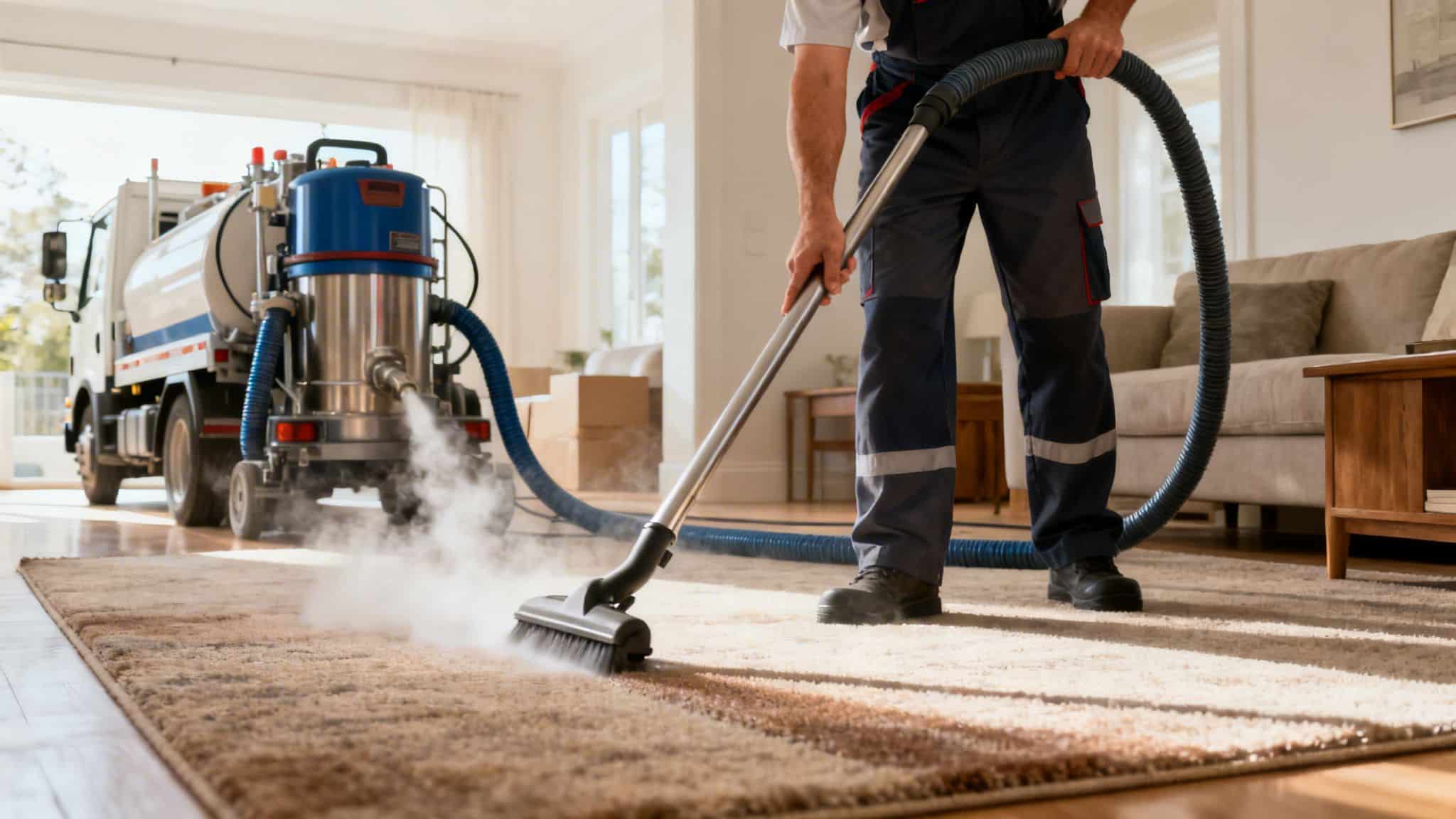
So, what’s the secret weapon a professional has that you don’t? It really comes down to three things: heat, power, and chemistry. The truck-mounted steam cleaning machines we use at Right Price Carpet Cleaning are in a completely different league than any rental unit you can hire.
These machines heat water to a temperature that’s hot enough to dissolve the stubborn tannins and oils in coffee that have bonded with your carpet fibres. This high-temperature steam is then injected deep into the carpet along with specialised, pH-balanced cleaning agents designed specifically for this type of stain.
Finally, the industrial-strength vacuum is powerful enough to pull out everything—the hot water, the cleaning solution, and every last bit of the dissolved coffee stain—from the very base of the carpet pile. This deep flushing action is what prevents stains from wicking back to the surface and ensures a complete clean.
If you're up against a coffee stain that just won't quit, learning more about the benefits of professional carpet cleaning in Melbourne can help you decide. It’s the safest and surest way to get your carpet or furniture looking new again.
Common Questions About Coffee Stain Removal
Even with the best guide, there are always a few tricky situations and lingering myths about coffee stains that can leave you second-guessing your approach. We get asked the same questions all the time, so we’ve put together some clear, direct answers to help you get over those final hurdles.
Honestly, getting these details right can be the difference between a successful clean and a permanent mark. It all comes down to understanding the 'why' behind the methods.
Can I Use Hairspray or Bleach on a Coffee Stain?
This is a classic question rooted in old household myths, and the answer is a very firm no. Using hairspray is a terrible idea; its alcohols and polymers can actually set the stain, damage delicate carpet fibres, or even leave a sticky residue that just attracts more dirt.
Bleach is even worse for your carpet or upholstery. It’s a powerful oxidising agent that doesn’t just remove the coffee—it permanently strips the colour from the fabric. You'll trade a brown stain for a glaring white or yellow patch that is absolutely impossible to fix. It's always best to stick to gentle, tested solutions and remember to spot-test first.
Does the Type of Coffee Matter?
It definitely does. The kind of coffee you've spilt has a big impact on how you should clean it. A black coffee spill, for instance, is a relatively straightforward tannin stain.
But if you’ve added milk, cream, or sugar, you're dealing with a much more complex problem. These additions introduce proteins and fats into the equation, which won't respond to a simple tannin treatment. You’ll need a detergent-based solution first to break down those extra components before you can properly tackle the coffee stain itself.
For anyone keen on natural solutions, learning how to make a natural vinegar cleaner can give you an effective, eco-friendly option for tackling all sorts of household messes.
Why Did My Coffee Stain Come Back?
Ah, the dreaded reappearing stain. This is a frustratingly common issue known as wicking, and it happens when a spill soaks deep into the carpet backing or the underlay. You might have cleaned the surface fibres perfectly, but the moisture from your cleaning has dissolved leftover coffee residue hidden deep down.
As the carpet dries, this newly dissolved coffee gets drawn up the fibres to the surface, almost like a wick in a candle. This is what makes the stain "reappear." Wicking is a dead giveaway that the spill was too deep for a surface clean and really needs the powerful extraction of a professional machine to properly flush it out.
How Quickly Should I Call for Help?
While immediate blotting is always your best first move, we recommend calling a professional if the stain is larger than your hand or if it's on a delicate, light-coloured material. If your own gentle cleaning attempts aren't showing much improvement, that's your cue to stop and call for backup.
The longer a stain sits, the higher the risk of it becoming permanent. Acting within 24-48 hours gives a professional the absolute best chance at achieving 100% removal.
Don't let a stubborn coffee stain ruin your day or your beautiful decor. If the DIY methods just aren't cutting it, the expert team at Right Price Carpet Cleaning has the professional equipment and know-how to restore your carpets and upholstery. Get your instant quote online today!
Recent Comments