


Ever found yourself wondering why that stubborn musty smell just won’t leave your Melbourne home? You’re not alone. Our city's unique climate, with its damp, chilly winters and notoriously unpredictable weather, can turn a property into the perfect incubator for mould. This makes professional melbourne mould removal less of a simple cleaning job and more of a crucial health safeguard for your family.
Why Melbourne Is A Prime Breeding Ground For Mould
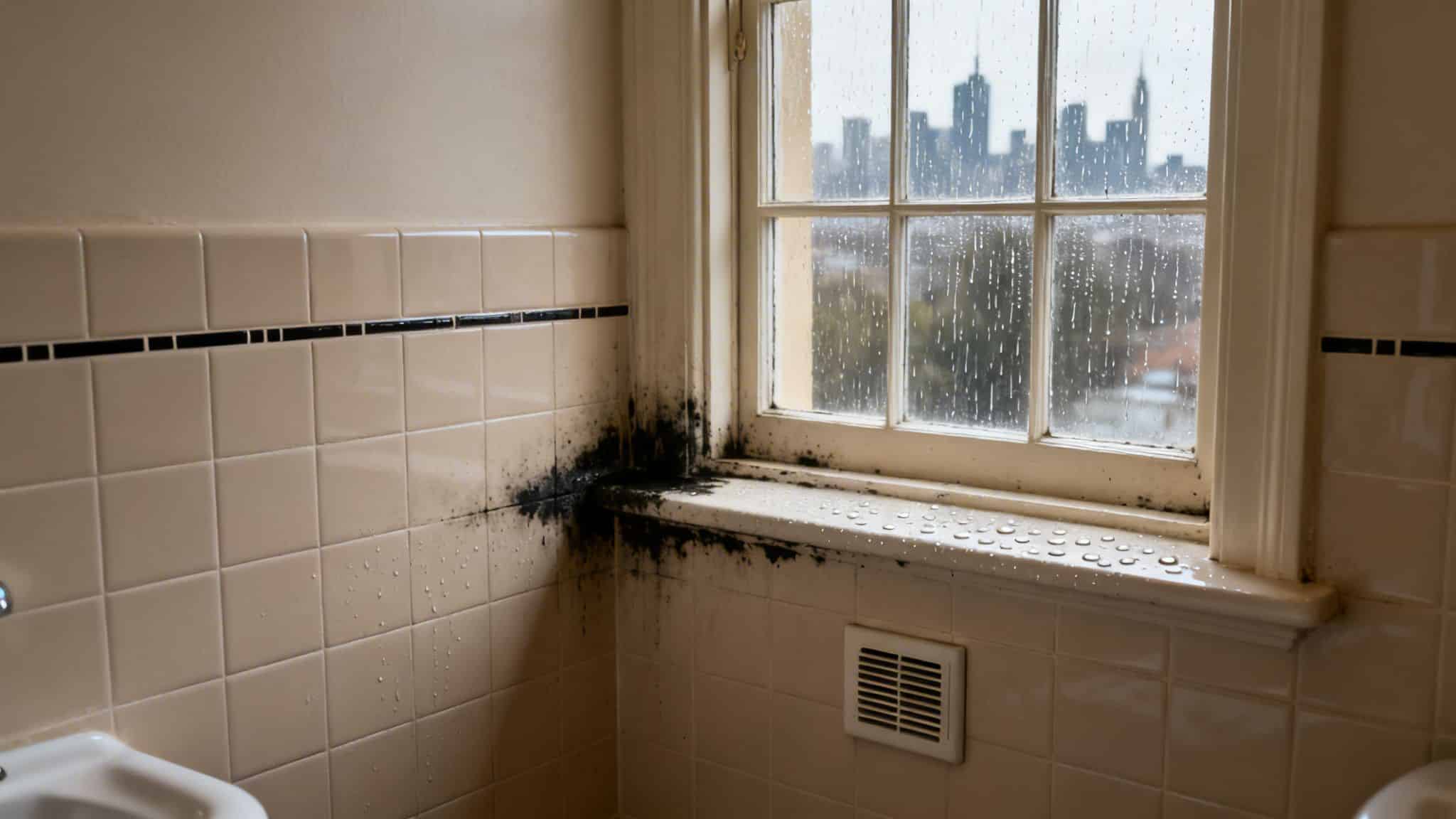
Melbourne's famous "four seasons in one day" isn't just a quirky talking point—it's one of the main reasons so many local homes end up battling mould. The mix of cool, damp winters and unexpected humid spells creates the perfect environment for mould spores to settle in and start growing. All it takes is for that airborne moisture to hit a cold surface, and you've got condensation. That's the water source mould has been waiting for.
This issue gets a lot worse when you consider the city’s mix of housing. From older Victorian terraces with built-in ventilation headaches to modern, airtight homes that can trap moisture inside, many properties are unknowingly rolling out the welcome mat for mould.
Common Melbourne Mould Hotspots
Mould isn't picky. If it finds moisture and something to feed on, it will grow. In Melbourne homes, we constantly see it pop up in the same kinds of places that are prone to dampness.
- Bathrooms: All that steam from hot showers raises the humidity, turning ceilings, tile grout, and window sills into prime real estate for mould.
- Wardrobes: Poor airflow, especially in built-in robes on cold, external walls, lets moisture build up. Before you know it, there's mould growing on your clothes, shoes, and the back wall.
- Window Frames: On a cold winter morning, condensation on the glass provides a steady drip of water, encouraging mould to take hold on the frames and nearby plaster.
- Behind Furniture: Big items like bedheads and bookcases pushed up against a wall can stop air from circulating, trapping moisture and creating a hidden mould problem.
It's not just a hunch; the data shows Melbourne is a major mould hotspot. The relentless wet weather we've had has caused a huge spike in demand for professional mould removal right across the city. In a national analysis, Melbourne received a worrying mould score of 73.83 out of 100, marking it as one of Australia’s mouldiest capitals. One report even noted a 12% jump in removal jobs after a particularly wet winter, showing just how directly our weather affects our homes. You can read more on how these local conditions create the perfect storm on propertyupdate.com.au.
This isn't just a surface stain you can wipe away. When mould gets into porous materials like carpet or plaster, it becomes deeply embedded, releasing spores and that signature musty smell that no amount of surface cleaning can fix. This is especially true after a serious water event, where professional flood damage restoration is absolutely critical.
Understanding these local risks makes it clear why a simple spray-and-wipe often isn't enough. For lasting melbourne mould removal, you have to get to the root cause of the moisture—it's the first thing any true professional will investigate. You can also learn more about our specialised approach to water damage in our guide to flood damage restoration services in Melbourne.
The Hidden Health Dangers Of Household Mould
That patch of mould in the corner of your bedroom or on the bathroom ceiling is more than just an unsightly blemish; it’s a silent threat to your family's health. Think of it this way: a mould colony is constantly releasing countless tiny, invisible particles called spores into the air. These spores are how mould travels and finds new places to grow, and they’re the main culprit behind mould-related health problems.
When you breathe them in, these spores can act like tiny invaders in your respiratory system. For many people, this triggers an immune response that feels a lot like a persistent cold or hay fever that just won't clear up. It’s your body's way of trying to fight off these foreign particles.
From A Cough To Chronic Conditions
Often, the first symptoms are subtle enough to be brushed aside. You might notice a nagging cough, a constantly runny nose, itchy eyes, or even unexplained skin rashes. But for vulnerable individuals, what begins as a minor irritation can quickly escalate into a serious health concern.
This is especially true for:
- Children and the elderly, whose immune systems are either still developing or naturally more compromised.
- Anyone with pre-existing respiratory conditions, like asthma, where spores can be a major trigger.
- People with a weakened immune system, including NDIS participants with specific health needs.
For these groups, mould exposure can set off an asthma attack or, with prolonged contact, even lead to the development of chronic respiratory conditions. It’s a serious risk that makes prompt melbourne mould removal an essential health measure, not just a cosmetic fix.
Mould doesn't just sit on the surface. It also releases microscopic volatile organic compounds (MVOCs) into the air. These are the gases behind that distinct musty, damp smell, and they're known to contribute to symptoms like headaches, dizziness, and nausea.
The Problem With Different Mould Types
While "toxic black mould" gets all the headlines, the truth is that any type of indoor mould has the potential to cause health problems. The specific reaction really depends more on a person's individual sensitivity and the level of exposure, not just the colour of the mould. Different species produce different mycotoxins, which can lead to a wide range of symptoms.
It’s useful to understand the specific dangers, and you can learn more about the health risks of black mold on window sills to see how even small patches can impact your home's air quality. The key takeaway is simple: all visible mould should be treated with caution. Ignoring it only allows it to spread, increasing the concentration of airborne spores and elevating the health risks for everyone in your home. Getting it removed professionally is the only way to be sure the air you're breathing is clean and safe again.
What Professional Mould Removal Actually Involves
If you think mould removal is just a matter of grabbing a spray bottle of bleach and a few paper towels, it’s time to pull back the curtain. Professional Melbourne mould removal isn’t a quick cleaning job; it’s a detailed environmental health procedure. It's a multi-step process that goes way beyond just wiping away the visible stains to get to the root of the problem and make sure it doesn’t come back.
This is a whole different world from what you can achieve on a weekend DIY project. It all starts with a technician who thinks more like a detective. Using specialised tools like moisture meters and thermal imaging cameras, they hunt down the hidden water source that’s feeding the mould in the first place. Honestly, this assessment is the most critical step. Without it, any cleanup is just putting a temporary bandage on a much bigger problem.
The stats on water damage in Victorian homes are pretty eye-opening. A major study by the Victorian Building Authority (VBA) found that a massive 92% of over 2,100 domestic insurance claims were directly caused by water issues—creating the perfect breeding ground for mould. Another VCOSS survey of private rentals revealed that 19% had visible, widespread mould, often due to poor ventilation. This is exactly why a professional assessment is the only way to get a lasting solution. You can dig into more of the VBA's findings on indoor mould research in Victoria.
This infographic breaks down how those seemingly tiny spores can cause some serious health problems.
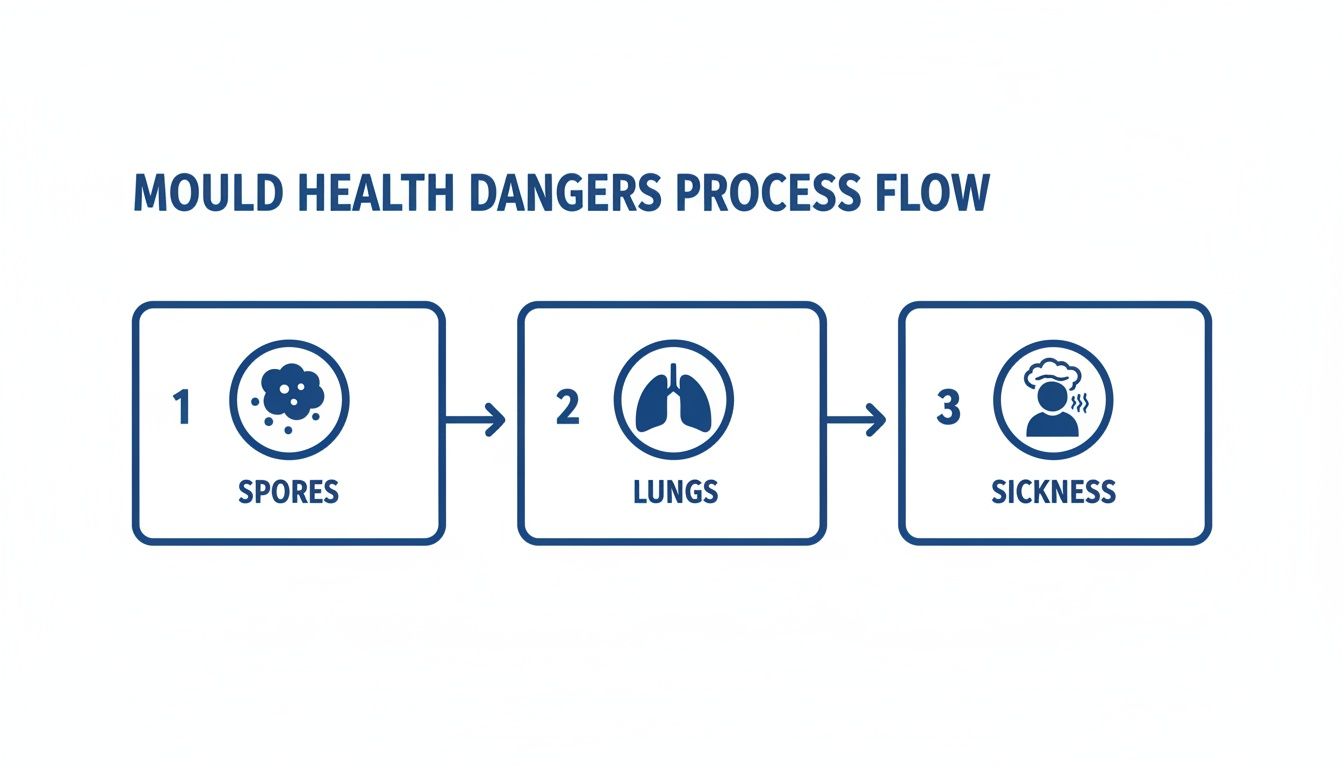
It’s a clear visual reminder of the direct link between mould in your home and your family’s health, highlighting why proper removal is so important.
Setting The Stage For Safe Removal
Once the moisture source is pinpointed, the real work starts with containment. This is a critical safety step you just won't see in a DIY attempt. Professionals use heavy-duty plastic sheeting and negative air pressure machines to completely seal off the affected room from the rest of your house.
This creates a self-contained work zone. Think of it like a temporary quarantine room that stops millions of microscopic spores from flying into the air and spreading to clean areas while the removal is underway.
Inside this contained space, powerful air scrubbers fitted with HEPA filters run constantly. These machines are designed to capture airborne particles as small as 0.3 microns—much tinier than a single mould spore—to scrub the air clean while the technicians get to work.
When you're deciding how to tackle a mould problem, it's helpful to see a direct comparison of what you're getting with a professional service versus what's achievable on your own.
Professional Mould Removal Vs DIY Attempts
| Aspect | Professional Removal | DIY Attempt |
|---|---|---|
| Effectiveness | High. Addresses the root cause (moisture) and removes hidden mould. | Low to moderate. Often only cleans visible surface mould, leaving roots behind. |
| Safety | High. Uses full containment, negative air pressure, and HEPA filtration to prevent cross-contamination. | Low. Spores can easily become airborne and spread throughout the home, increasing health risks. |
| Equipment | Specialised tools like thermal cameras, moisture meters, and commercial-grade air scrubbers. | Basic tools like spray bottles, cloths, and off-the-shelf cleaning products. |
| Long-Term Results | Excellent. Aims for permanent removal and includes preventative measures. | Poor. Mould often returns quickly because the underlying moisture issue isn't fixed. |
| Expertise | IICRC-certified technicians who understand mould behaviour on different materials. | Relies on internet tutorials, which may not be suitable for the specific situation. |
The table makes it clear: while a DIY approach might seem cheaper upfront, it often fails to solve the problem for good and can even make it worse.
The Removal Process For Different Surfaces
How the mould is actually removed comes down to the surface it has taken over. Different materials need different approaches because mould behaves uniquely on each one.
1. Non-Porous Surfaces (Tiles, Glass, Metal)
For hard surfaces that don't absorb water, technicians use specialised, high-strength anti-microbial cleaning agents to wipe the mould away completely. The goal here is to kill every last trace and sanitise the surface.
2. Porous Surfaces (Plasterboard, Wood, Insulation)
When mould gets into porous materials, it's like a weed with deep roots. Just wiping the surface does nothing to the intricate network of hyphae (mould roots) growing inside. In these situations, the affected material almost always needs to be carefully cut out, bagged, and safely removed. Trying to clean it is a losing battle.
3. Soft Furnishings (Carpets, Upholstery, Rugs)
Fabrics are a unique challenge. For things like carpets and couches, powerful truck-mounted hot water extraction is the gold standard. This method blasts a specialised cleaning solution and hot water deep into the fibres, killing the mould and then sucking it—along with the dirt and moisture it was feeding on—right out. You can learn more in our detailed guide on how to get rid of carpet mold.
Professional equipment is on another level compared to any rental machine. A truck-mounted system heats water to a much higher temperature and uses incredible suction to remove nearly all the moisture, which is absolutely vital for stopping mould from growing back.
Once the physical removal is done, the entire area is vacuumed with a HEPA-filtered vacuum to catch any stray spores. Technicians might then apply a preventative anti-microbial coating to help stop future growth. It's a methodical, multi-faceted approach. For instance, knowing how to remove mold from siding safely shows how techniques vary even for exterior surfaces. This is why professional Melbourne mould removal provides lasting results where DIY efforts almost always fall short.
Decoding The Cost Of Mould Removal In Melbourne
When you find mould creeping into your home, one of the first questions that pops into your head is, "How much is this going to set me back?" The truth is, quoting for professional Melbourne mould removal isn't like picking an item off a shelf—there’s no single price tag. It's much more like quoting for a bathroom reno; the final cost depends entirely on what the job involves.
Several key factors will shape the quote. Think of these as the building blocks a technician uses to figure out the price. Understanding them will help you make sense of the numbers and choose the right service for your home.
Key Factors That Determine The Price
A professional quote isn't just a number pulled out of thin air. It’s calculated based on what’s needed to get the job done right. The more work, specialised gear, and bigger the space, the more you can expect to invest.
Here are the main things that drive the cost:
- Size of the Affected Area: This one’s the most straightforward. Cleaning up a small patch of mould in a bathroom corner is obviously going to cost a lot less than dealing with an entire bedroom or the space under your floor.
- Location and Accessibility: Mould growing on an easy-to-reach living room wall is simpler to tackle than mould hiding inside a ceiling cavity or a tight, cramped subfloor. Tricky spots require more time, effort, and specific safety gear.
- Type of Material Affected: The surface type makes a huge difference. Getting mould off non-porous surfaces like tiles is relatively simple. But when it gets into porous materials like plasterboard, timber, or carpet, the material often needs to be physically removed and replaced, which adds to the bill.
- Level of Contamination: A light, surface-level bit of growth is a world away from a deep, established colony that’s been festering for months. The more severe the problem, the more intensive the containment, cleaning, and air filtering will need to be.
Think of an initial mould assessment as a crucial first investment. It takes you from a place of guesswork to having a clear, actionable plan. A professional will map out the full extent of the issue—including any hidden mould—so you get an accurate quote with no nasty surprises down the line.
Understanding Typical Melbourne Cost Brackets
While every job is different, industry averages can give you a realistic idea of what to expect. For a small, contained job in a bathroom or laundry, you might be looking at $300 to $500. For a larger room like a bedroom or living area with moderate growth, the cost could be anywhere from $500 to $4,000, depending on how bad it is and how hard it is to get to.
Jobs involving dense growth or difficult-to-access areas can push the price into the $800 to $4,000 range. For major, whole-house remediation projects, the cost can easily go beyond $6,000. These figures cover the entire process, from setting up containment and removing the mould to scrubbing the air and final clearance testing. For a detailed picture, a professional mould assessment in Melbourne typically costs between $500 and $1,500 for a standard home. You can find more detail in this cost breakdown from Mould Cleaning Australia.
Why The Cheapest Quote Is Rarely The Best Value
It’s always tempting to go for the lowest price, but when it comes to mould, that can be a very costly mistake. A suspiciously cheap quote is often a red flag that a company is cutting corners. They might skip vital steps like proper containment, HEPA air filtration, or—most importantly—finding and fixing the moisture source that caused the mould in the first place.
This not only puts your family’s health at risk by spreading spores all through your home, but it also pretty much guarantees the mould will be back. A reputable service like Right Price Carpet Cleaning gives you a transparent quote that covers every single step needed for a solution that lasts. Investing in a thorough, professional job means it’s done right the first time, giving you peace of mind and saving you a lot of money and stress in the long run.
Choosing The Right Mould Removal Expert
When you’ve got mould threatening your home, picking a professional to handle the cleanup isn't just another item for the to-do list. It’s a crucial decision that impacts your property’s health and your family’s wellbeing.
The market for Melbourne mould removal is filled with all kinds of operators, but not all of them offer the same level of service. Knowing how to spot a genuine expert is your best defence against a botched job that only makes things worse.
A reputable company is transparent and professional from the moment you first get in touch. They should have no issue proving their credentials because this is definitely not a job for a general handyman.
Vetting A Mould Removal Company
Before you hire anyone, it pays to run through a quick checklist. A real expert will have no problem giving you clear answers and showing you the paperwork for every single point. Think of this as your way of sorting the seasoned pros from the risky operators.
- Check for IICRC Certification: The Institute of Inspection, Cleaning and Restoration Certification (IICRC) is the gold standard for our industry. Technicians with this certification have been properly trained in the best practices for mould removal. Don’t settle for less.
- Verify Their Insurance: Always ask to see a copy of their public liability insurance certificate. This protects you and your property in the unlikely event that something goes wrong during the job.
- Look for Proven Experience: A company with years of hands-on experience in mould removal will have a deep understanding of Melbourne's unique climate challenges. They should have a portfolio of work and genuine customer reviews to back it up.
These initial checks will help you build a shortlist of qualified candidates, getting you one step closer to finding a reliable partner for your Melbourne mould removal needs. From there, it’s time to dig a little deeper into their process.
Critical Questions To Ask A Contractor
Once you're on the phone with a potential contractor, asking the right questions can tell you everything you need to know about their skill and approach. Don’t be shy about it; a true professional will appreciate your diligence.
Your goal is to find a company that focuses on a permanent solution, not just a quick cosmetic fix. An expert knows that the mould will inevitably return without identifying and fixing the root cause—the moisture source.
Here are the essential questions you need to ask:
"What is your process for finding the moisture source?"
A proper answer should involve more than just a quick look around. Listen for them to mention tools like moisture meters or thermal imaging, which shows they’re serious about solving the underlying problem."How will you contain the area to prevent spores from spreading?"
This is a big one. You should hear keywords like "containment barriers," "negative air pressure," and "HEPA air scrubbers." If they can’t explain their containment strategy, it’s a major red flag."Do you offer a guarantee on your work?"
A confident, reputable company will stand behind its service. At Right Price Carpet Cleaning, for example, we back our work with a 100% satisfaction guarantee because we follow a proven, thorough process that gets results.
By arming yourself with this knowledge, you can confidently choose an expert who will get the job done right the first time, ensuring your home is safe, healthy, and truly mould-free.
Keeping Your Home Mould-Free For Good
So, the professionals have finished their work, and the visible mould is finally gone. That’s a huge relief. But the job isn't quite over. Getting rid of mould is one thing; keeping it away for good is another challenge entirely. To stop it from creeping back, you need to make your home an unwelcome place for mould spores.
It all comes down to controlling the two things mould needs to survive: moisture and stagnant air. Think of it like pulling weeds. If you don't do something about the damp soil they love, they'll just pop right back up. The same goes for mould. Thankfully, this doesn't mean you need to renovate your house—just build a few simple, consistent habits that are perfect for Melbourne's changeable climate.
Master Your Home's Airflow
Mould absolutely thrives in still, damp air. The most powerful preventative measure you can take is simply to get the air moving, especially in those classic problem spots like bathrooms and laundries.
A few small adjustments to your daily routine will make all the difference:
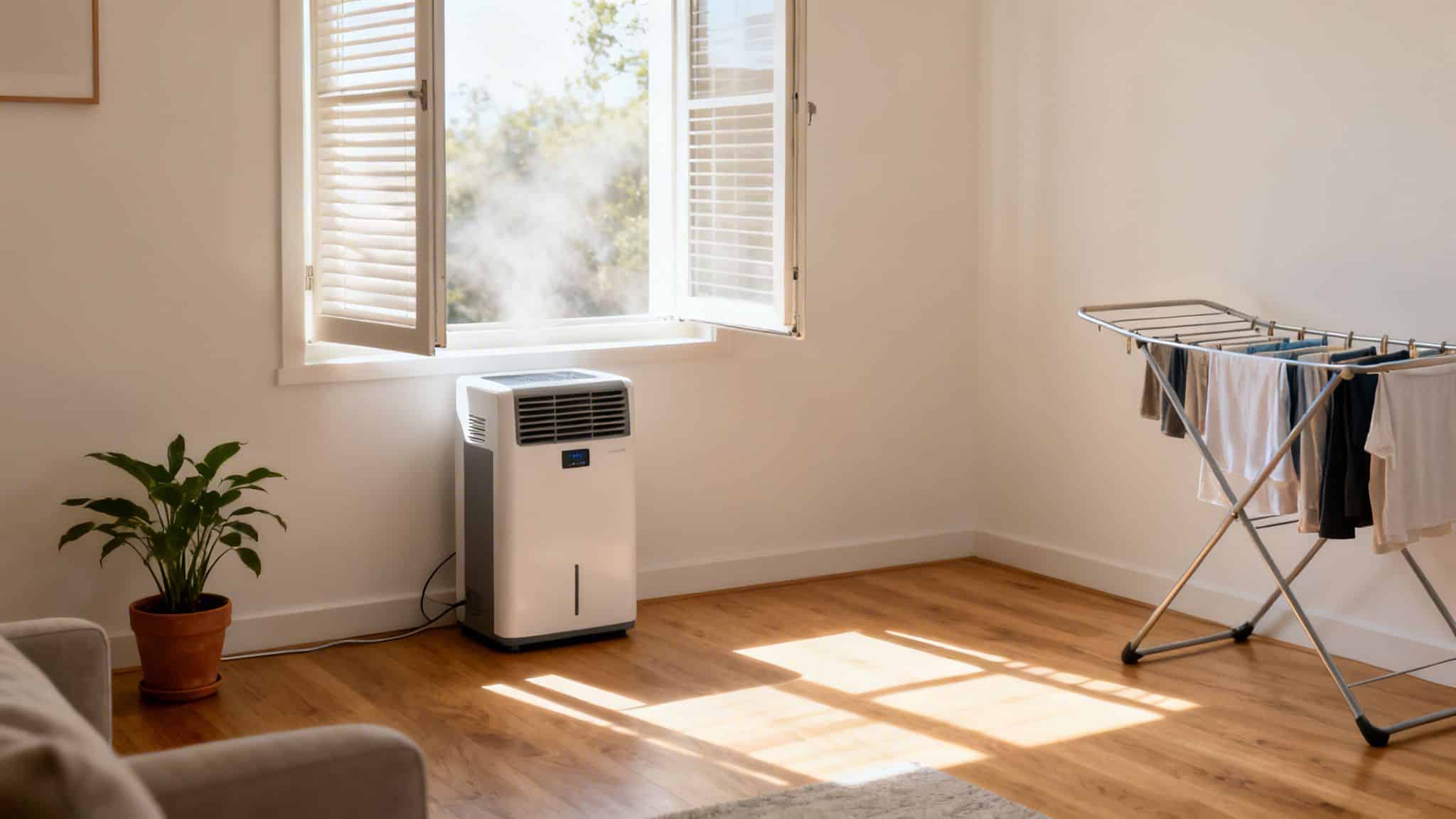
- Run your exhaust fans: Always flick the fan on in the bathroom before you shower and leave it running for at least 15-20 minutes afterwards. This is non-negotiable. It pulls all that steam and moisture straight outside before it has a chance to settle on your walls and ceiling.
- Ventilate while you cook: Get into the habit of using the rangehood fan every single time you cook, particularly when you're boiling water.
- Create a cross-breeze: Whenever the Melbourne weather is on your side, open windows on opposite sides of the house for about 15 minutes. This simple trick flushes out all the old, damp air and brings in the fresh stuff.
Don't let your bathroom become a petri dish for mould. A powerful exhaust fan is your best defence. You can learn more in our detailed guide on how to eliminate bathroom mould for good.
Actively Manage Moisture Levels
Once you've got the air moving, the next mission is to tackle humidity. Melbourne’s damp winters and drizzly days can make indoor humidity levels skyrocket, so you might need a bit of extra help to keep things dry.
Strategic Use of Dehumidifiers
A quality dehumidifier is one of the best investments you can make for a healthy home. You don't need to have it running 24/7. Just use it strategically. Fire it up for a few hours in rooms that lack good ventilation, inside damp wardrobes, or on those especially miserable, rainy days. They’re also a lifesaver when you're drying laundry indoors, as they pull all that moisture from your wet clothes right out of the air.
Prompt Leak Repairs
Even a tiny, slow drip can create a massive mould headache down the line. Get into the habit of doing a quick check for any signs of water damage:
- Under the sinks in your kitchen, bathroom, and laundry.
- Around window frames and sills after it rains.
- On ceilings, especially under any upstairs bathrooms.
Fixing a leaky pipe or resealing a window right away is infinitely easier (and cheaper) than dealing with a full-blown Melbourne mould removal job later. Lastly, every now and then, pop outside and make sure your gutters and downpipes are clear. Making sure rainwater flows away from your home's foundations is a simple but crucial step in keeping your property dry and mould-free for the long haul.
Common Questions About Melbourne Mould Removal
Deciding to call in the professionals for a mould problem is a big step, but it’s completely normal to have a few questions about what happens next. We get it. To help clear things up, here are some straightforward answers to the questions we hear most often about our Melbourne mould removal services.
How Long Does The Mould Removal Process Take?
Honestly, it all comes down to the size of the job. If we’re talking about a small, isolated patch of mould in a bathroom corner, a technician can often have it sorted from start to finish in just a few hours.
But for a bigger problem that’s spread to a few rooms or is hiding away in a wall cavity, it’s a different story. A proper job could take several days. That time includes carefully setting up containment, removing affected materials, a deep, thorough clean, and final air quality tests. When it comes to things like carpet mould, our powerful truck-mounted gear really shines, deep cleaning and pulling out moisture so efficiently that it keeps the disruption to your home at an absolute minimum.
Is The Process Safe For My Family And Pets?
Yes, 100%. Keeping your family and pets safe isn't just a part of the job—it's our top priority. We follow strict, proven protocols to make sure the entire process is completely safe for everyone, from young children to the elderly and, of course, your furry friends.
Our certified technicians do this by:
- Setting up containment barriers: We use heavy-duty plastic sheeting to completely seal off the work zone. This stops any stray spores from becoming airborne and drifting into other parts of your home.
- Using HEPA filtration: Industrial-grade air scrubbers run throughout the process, capturing microscopic spores right out of the air and purifying it as we work.
- Choosing safe products: We use non-toxic, eco-friendly cleaning agents that are tough on mould but perfectly safe for people and pets once we're done.
A professional team doesn't just get rid of the visible mould; we make sure the air in your home is genuinely clean and healthy before we even think about calling the job finished.
Will The Mould Just Come Back Again?
This is a fair question and probably the biggest worry for anyone who’s tried a DIY fix only to see the mould creep back. A professional job is designed to be a long-term solution, not just a quick cover-up.
The secret is that we don't just scrub away the mould you can see. A massive part of our process is finding and helping you address the underlying moisture source that let the mould grow in the first place.
A job isn't complete until the 'why' is solved. Simply wiping away mould without fixing the leak, condensation issue, or ventilation problem is like mowing over a weed—it's guaranteed to grow back.
An expert will always give you clear, actionable advice on fixing the root cause. It's the only way to break the cycle for good.
Can Mould Be Fully Removed From Carpets And Upholstery?
In most situations, absolutely. This isn't a job for a simple surface wipe. Professional hot water extraction (often called steam cleaning) is powerful enough to properly restore carpets and upholstery. The technique forces high-pressure hot water and specialised cleaning solutions deep into the fibres to kill mould spores at their source.
Then, the powerful suction from our truck-mounted machines extracts everything—the dead mould, trapped dirt, allergens, and most importantly, the moisture. We’ll always do an initial inspection to confirm if an item is salvageable, but more often than not, this method is incredibly effective at saving contaminated soft furnishings.
Ready to finally get rid of that stubborn mould and ensure your home is healthy and safe? At Right Price Carpet Cleaning, our IICRC-certified technicians provide thorough, guaranteed mould removal services across Melbourne. Get an instant, transparent quote online and book a time that works for you. Visit us online to secure your booking today!
Recent Comments